WORLDEF ISTANBUL 2026 - Early Bird Registration Ends Soon

Register Now

Qatar E-Commerce Heads Toward $7.75B as Festive Shopping Boosts Growth by 9.3%

qatar-e-commerce-heads-toward-dollar775b-as-festive-shopping-boosts-growth-by-93percent

Eid shopping continues to shape consumer behavior in Qatar, with more people turning to online platforms for convenience, better deals, and faster delivery. Seasonal campaigns and festive promotions are playing a key role in driving digital activity, especially across mobile apps and large online marketplaces.

This shift is becoming more visible each year. What was once mostly limited to big campaign periods is now turning into a more consistent habit, with consumers relying on e-commerce not only during holidays but also for everyday purchases.

A Market Growing Steadily

Qatar’s e-commerce market is expected to grow from around $4.54 billion in 2025 to $4.96 billion in 2026, eventually reaching $7.75 billion by 2031. With an annual growth rate of 9.3%, the market is expanding at a steady and sustainable pace.

These figures highlight a maturing ecosystem where both local and international players are investing more in digital infrastructure, logistics, and customer experience. As competition increases, service quality and delivery speed are becoming key differentiators.

Online and Offline Retail Go Hand in Hand

Despite the rapid growth of online shopping, physical retail remains an essential part of the experience in Qatar. Shopping malls continue to attract strong foot traffic, particularly during festive periods where shopping is also seen as a social and cultural activity.

Instead of replacing traditional retail, e-commerce is complementing it. Consumers are increasingly combining both channels — using online platforms for speed and convenience, while still visiting physical stores for categories like fashion, luxury items, and gifting.

This balanced behavior is pushing retailers to rethink their strategies and create more seamless experiences across channels.

What’s Driving the Shift

Several factors are supporting the continued growth of e-commerce in Qatar. High smartphone penetration and mobile-first behavior are making online shopping more accessible than ever. At the same time, faster delivery options and improved logistics networks are raising consumer expectations.

Promotional campaigns, competitive pricing, and growing trust in digital payment systems are also encouraging more people to shop online. In response, brands are investing in omnichannel strategies such as click-and-collect services, app-based offers, and integrated customer journeys.

Qatar’s e-commerce market is not just growing — it is evolving into a more connected and experience-driven ecosystem. As digital and physical retail continue to merge, businesses that adapt quickly and deliver seamless shopping experiences will be best positioned to capture long-term growth.

Source: Zawya

WTO Faces 2026 Deadline as U.S. Pushes for Permanent E-Commerce Tariff Ban

WTO headquarters in Geneva during discussions on global e-commerce tariff rules

The United States is intensifying efforts to make the World Trade Organization’s (WTO) long-standing e-commerce tariff moratorium permanent, a move that could significantly reshape global digital trade rules in 2026.

The moratorium, first introduced in 1998, prevents countries from imposing customs duties on electronic transmissions such as software, digital media and other online-delivered goods. While it has been renewed regularly, the current agreement is set to expire by March 31, 2026, unless WTO members reach a new consensus.

U.S. Push for Permanent Global E-Commerce Rules

Washington is now pushing for a permanent extension of the moratorium ahead of the WTO’s upcoming ministerial conference. The proposal aims to provide long-term certainty for businesses operating in the digital economy, particularly those involved in cross-border e-commerce.

Supporters argue that maintaining a tariff-free digital environment is essential for sustaining global e-commerce growth. Without the moratorium, companies could face new costs and regulatory fragmentation, potentially slowing down international digital trade.

The U.S. position is backed by several developed economies and global technology firms, which see the moratorium as a key pillar supporting innovation, entrepreneurship and seamless digital transactions.

Rising Opposition from Developing Economies

Despite strong support from advanced economies, the proposal remains controversial. Several developing countries have expressed concerns that making the moratorium permanent could limit their ability to generate revenue from digital imports.

As more goods and services shift from physical to digital formats, governments risk losing traditional tariff income. For some developing economies, customs duties represent a significant share of public revenue, making the issue both economic and political.

Critics also argue that the current system disproportionately benefits countries with strong digital export capabilities, widening the global digital divide.

High Stakes for Global Digital Trade

The outcome of the negotiations will have far-reaching implications for the future of global e-commerce. If the moratorium is extended permanently, it could reinforce a stable and open digital trade environment.

However, if negotiations fail and the moratorium expires, countries may begin introducing tariffs on digital goods, leading to increased costs for businesses and consumers. Such a shift could fragment global digital markets and create new barriers to cross-border e-commerce.

Outlook: Uncertainty Ahead of WTO Decision

With the deadline approaching, WTO members face mounting pressure to find common ground. The debate reflects broader tensions within the global trading system, where balancing innovation, fairness and economic sovereignty remains a challenge.

As digital trade continues to expand, the decision on the e-commerce tariff moratorium will play a critical role in shaping the next phase of global commerce.

Source: LA Times, WTO, industry analysis

E-commerce in the Shadow of the 2026 Gulf Crisis

e-commerce

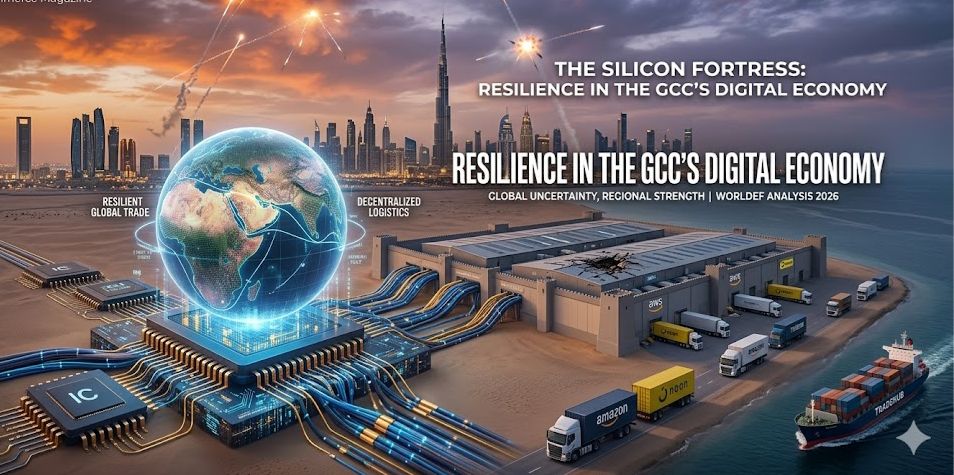
E-commerce in the GCC is facing its most significant resilience test to date. The sirens that echoed across Abu Dhabi and Dubai in early March 2026 told two very different stories. To the global news cycle, the sight of air defence streaks over the Burj Khalifa signalled a region at a breaking point. But on the ground, the reality was a testament to the UAE’s sophisticated national readiness. Despite almost 2000 drone and missile threats intercepted by the Ministry of Defence this month, there has been no chaos and no panic. Malls remain open, schools have seamlessly pivoted to remote learning, and the government’s 4-to-6-month strategic reserve of essential goods has kept shelves full and prices stable. Yet, while the streets are quiet, the digital economy, the “invisible engine” of the Gulf, is experiencing a profound and unprecedented stress test.

I. The Physicality of E-commerce: A Logistics Architecture Under Siege

The fundamental paradox of the Middle Eastern digital economy is its reliance on physical bottlenecks. While a consumer in Riyadh interacts with a sleek interface, the fulfilment of that transaction depends on a hyper-efficient network of shipping lanes and air corridors. The current escalation has exposed the jugular vein of this system: the Strait of Hormuz.

With the waterway effectively closed to commercial traffic, the maritime lifeblood of GCC e-commerce has slowed to a trickle. War-risk insurance premiums for containers have jumped to 1% of hull value, a staggering increase from the 0.02% seen in January. For the high-volume, low-margin world of digital trade, these costs are transformative. Furthermore, the GCC’s status as an aviation hub has been tested by the imposition of rolling airspace closures. With air-cargo capacity slashed, the “Next-Day Delivery” promise has, for many, been replaced by a “Wait-and-See” reality.

II. E-commerce Platforms as Geopolitical Infrastructure

In this crisis, e-commerce platforms have ceased to be mere marketplaces; they are now critical national infrastructure. The “real damage” became clear on March 1st, when Amazon Web Services (AWS) confirmed drone strikes damaged two data centres in the UAE and one in Bahrain. This was the first publicly confirmed military strike on a hyperscale cloud provider, and the ripple effects were immediate.

Amazon’s Defensive Pivot: Amazon temporarily shuttered its Abu Dhabi fulfilment centre and suspended deliveries across the emirate. While nearly 300,000 third-party sellers face delays, the company’s decision was rooted in a “safety-first” protocol rather than a failure of the system itself.

The Noon Resilience: Conversely, Noon has leveraged its hyper-local “dark store” network to maintain service. While global giants have paused, local players are proving that a decentralised, regional-first logistics model is better suited for a kinetic environment.

The Fintech Pulse: The strikes on cloud infrastructure led to “higher error rates” for digital payment gateways such as Tabby, Tamara, and PayTabs. However, the UAE’s rapid shift to software-based recovery paths has prevented a total financial freeze, allowing the domestic economy to continue functioning even as its global links are strained.

III. Supply Chain Fragility in a Digital Marketplace

The current crisis has effectively broken the traditional drop-shipping and cross-border models. The UAE, long the region’s re-export hub, is navigating a pincer movement of geopolitical risk.

  1. Inventory Paralysis: As container routes are rerouted around the Cape of Good Hope, restocking lead times have doubled. For B2B platforms like Tradeling, this means empty shelves and stalled projects.
  2. The Logistics Heavyweights: While Aramex and DHL continue to move goods, they are doing so under a “war-risk” framework. The rerouting of shipments to alternative ports and the rise in surcharges have made “free shipping” a relic of the pre-war era.
  3. The Ambition Test: The GCC’s goal of becoming a $135 billion e-commerce market by 2025 is currently facing the reality of $90+ oil and 300% insurance spikes. This is a moment of forced evolution for every player from Namshi to Talabat.

IV. Solutions and the Path Forward

The damage is real, estimated to be a 1.8-percentage-point drag on 2026 GDP forecasts, but the solutions being forged in the heat of this crisis will define the next decade.

The Saudi Land Bridge: To bypass the Strait of Hormuz, the region is accelerating rail and road corridors connecting the UAE directly to Saudi Arabia’s Red Sea ports.

Sovereign Digital Rails: There is an urgent push for domestic payment systems and “Hardened Edge Computing”, smaller, decentralised data centres that can survive localised strikes without bringing down the entire regional network.

Decentralised Warehousing: The era of the “Mega-Fulfilment Centre” is giving way to a “Micro-Hub” strategy, distributing inventory across more locations to minimise the impact of a single facility’s closure.

Conclusion: A Negative Shock, a Positive Evolution

The outlook for the Gulf’s digital economy is a complex binary. In the short term, the outlook is negative: the loss of momentum during the crucial Ramadan season and the physical damage to infrastructure are significant setbacks. However, the long-term outlook is overwhelmingly positive.

By stripping away the illusion of “frictionless” trade, this crisis is forcing the GCC to build the world’s most resilient, sovereign digital ecosystem. The UAE and its neighbours are not just surviving a war; they are redesigning the architecture of the 21st-century economy. The “Silicon Mirage” has vanished, replaced by a “Silicon Fortress”, a digital economy that is as rugged as it is ambitious. The Gulf is no longer just a place where the world’s goods pass through; it is becoming the place where the future of resilient trade is written. The Gulf is moving from being a “transit hub” for global goods to a “fortress of inventory,” a shift that will ultimately make it the world’s most resilient digital market by 2027.

Burak Yalım

Editor in Chief

Global E-Commerce Access Expands for Women Entrepreneurs in 2026 Through Postal Networks

Global e-commerce access for women entrepreneurs supported by postal networks and small business logistics

Global postal networks are playing an increasingly important role in expanding e-commerce opportunities for women entrepreneurs, helping to reduce long-standing barriers in global trade participation.

New insights from the Universal Postal Union (UPU) show that postal systems are evolving beyond traditional delivery services to become key enablers of inclusive digital commerce. The findings were highlighted במסגרת the UN Trade and Development (UNCTAD) “eTrade for Women” initiative, which focuses on empowering women-led businesses in the global digital economy.

Postal Networks Support Women Entrepreneurs in E-Commerce

With one of the most extensive physical infrastructures worldwide, postal networks offer critical support for small businesses, especially in underserved and rural areas. Their broad reach allows women entrepreneurs to access international markets, even where logistics and digital tools are limited.

Postal services help simplify cross-border trade by enabling shipping, facilitating customs processes and connecting businesses to global customers. For many women-led enterprises, this infrastructure provides a practical entry point into e-commerce.

Women Entrepreneurs Benefit from Digital and Financial Services

Beyond logistics, postal operators are increasingly offering digital and financial services that support business growth. These include digital payment solutions, e-commerce platforms and financial tools that help entrepreneurs manage and scale their operations.

Access to such services is particularly important for women entrepreneurs, who often face challenges in accessing traditional banking systems and digital resources. By integrating logistics with financial inclusion, postal networks are helping create more accessible pathways into global e-commerce.

E-Commerce Growth Creates Opportunities for Women Entrepreneurs

As global e-commerce continues to expand, demand for efficient and reliable delivery systems is rising. Postal networks are well-positioned to handle the growing volume of small parcels, making them essential partners for micro, small and medium-sized enterprises.

Initiatives led by UPU aim to simplify export procedures, improve coordination with customs authorities and reduce trade barriers. These efforts are helping women entrepreneurs participate more actively in cross-border e-commerce and reach new customer bases.

Toward a More Inclusive Digital Trade Ecosystem

The transformation of postal networks reflects a broader shift toward more inclusive digital economies. By combining logistics, digital services and financial tools, postal systems are evolving into key infrastructure supporting global trade participation.

Looking ahead, continued collaboration between governments, international organizations and postal operators will be essential to scale these solutions. Expanding access for women entrepreneurs will remain a critical factor in building a more balanced and inclusive global e-commerce ecosystem.

Source: Universal Postal Union (UPU)

Growth in E-Commerce Slows in 2026 as Infrastructure Becomes a Critical Barrier

Growth in E-Commerce Slows in 2026 as Infrastructure Becomes a Critical Barrier

As global e-commerce continues to expand, a new limitation is becoming increasingly clear: growth is no longer driven solely by demand, but constrained by operational infrastructure.

Industry experts highlight that many e-commerce businesses are reaching a point where their internal systems-ranging from logistics and fulfillment to customer service and data management – are struggling to keep pace with rising order volumes. This shift signals a turning point for the sector, where scaling operations has become just as critical as driving sales.

Infrastructure Becomes the Real Growth Bottleneck

For years, e-commerce growth strategies focused on customer acquisition, digital marketing, and conversion optimization. However, as transaction volumes grow, operational capacity is emerging as the primary constraint.

From inventory management to last-mile delivery, inefficiencies across the supply chain can slow expansion and negatively impact the customer experience. Companies that fail to invest in scalable systems risk delays, higher operational costs, and reduced customer satisfaction.

Logistics, Data and Systems Under Pressure

Modern e-commerce relies on complex, interconnected systems that integrate logistics, payments, inventory, and customer experience. When these systems are outdated or fragmented, they create bottlenecks that limit scalability.

Experts emphasize that operational infrastructure should no longer be viewed as a background function. Instead, it is becoming a strategic driver of performance, profitability, and long-term competitiveness.

Shift Toward Sustainable Scaling

The industry is also moving away from “growth at all costs” toward more sustainable expansion models. Businesses are increasingly prioritizing operational efficiency, cost control, and resilience.

This shift reflects a broader understanding that scaling without strong infrastructure can lead to operational breakdowns. As a result, companies are investing more in automation, integrated platforms, and data-driven decision-making to support long-term growth.

A New Priority for E-Commerce Leaders

As the e-commerce landscape evolves, operational infrastructure is becoming a central focus for executives and investors alike. Businesses that build strong, scalable systems will be better positioned to handle future growth and adapt to changing market dynamics.

Those that fail to modernize their infrastructure may struggle to remain competitive in an environment where speed, efficiency, and reliability are essential.

Source: Forbes
Image credit: rawpixel.com / Freepik

For more insights on global e-commerce trends and industry developments, visit WORLDEF.

Cross-Border E-Commerce Under Increasing Pressure in 2026 as Returns Surge

Cross-border e-commerce logistics network showing global shipment routes as international returns rise in 2026

Cross-border e-commerce is entering a new phase of complexity as international returns continue to rise, creating operational and financial challenges for online retailers worldwide.

According to recent industry insights, global logistics providers are expanding their return management capabilities in response to a sharp increase in cross-border product returns. Companies such as ePost Global and ShipWise are strengthening their international return solutions to help merchants better manage reverse logistics.

Rising Costs and Operational Challenges

As international sales grow, so does the volume of returned goods. Unlike domestic returns, cross-border returns involve higher shipping costs, longer transit times, and more complex customs procedures. These factors are significantly increasing operational pressure on e-commerce businesses.

Industry experts note that inefficient return processes can quickly erode profit margins, particularly for small and mid-sized merchants. Managing international returns requires coordination across multiple logistics partners, customs authorities, and regional regulations—making it one of the most challenging aspects of global e-commerce expansion.

Logistics Providers Expand Return Solutions

To address these challenges, logistics companies are investing in new infrastructure and services designed to streamline international returns. Enhanced tracking systems, localized return hubs, and consolidated shipping solutions are becoming increasingly important.

These improvements aim to reduce costs and improve the customer experience, as consumers expect seamless return processes regardless of where a product is shipped from. Faster and more transparent return handling is now seen as a competitive advantage in cross-border e-commerce.

Customer Expectations Continue to Rise

Consumer expectations around returns are also evolving. Shoppers increasingly demand flexible return policies, faster refunds, and simplified processes—even for international purchases.

This shift is pushing retailers to rethink their return strategies. Offering easy returns is no longer optional; it has become a critical factor in customer satisfaction and brand loyalty. However, balancing customer expectations with rising logistics costs remains a key challenge.

A Turning Point for Cross-Border E-Commerce

The surge in international returns highlights a broader transformation in global e-commerce. As cross-border trade continues to grow, reverse logistics is becoming a central focus for both retailers and logistics providers.

Industry players emphasize that businesses that invest in efficient return management systems will be better positioned to compete in the evolving global market. Those that fail to adapt may struggle to maintain profitability as return volumes continue to increase.

Source: Yahoo Finance

5.8 Billion Shipments Raise Alarm as EU Industry Pushes for Immediate Action on Imports

E-commerce industry faces surge in cross-border shipments as parcels pile up in EU logistics warehouse

A coalition of European industry and retail organisations has called on the European Union to take urgent action to address growing challenges linked to cross-border e-commerce imports.

In a joint statement released in Brussels, industry groups warned that existing regulatory gaps are undermining fair competition, weakening consumer protection, and putting increasing pressure on the EU’s Single Market.

Surge in Cross-Border E-Commerce Imports

The rapid expansion of global e-commerce has significantly increased the volume of small parcels entering the EU. In 2025 alone, around 5.8 billion shipments were delivered into the bloc, creating serious challenges for customs authorities and market surveillance systems.

Many of these imports reportedly fail to comply with EU standards, including product safety rules, VAT obligations, environmental regulations, and intellectual property protections. This situation allows non-compliant sellers—often based outside the EU—to gain a competitive advantage over European businesses that are required to meet stricter regulatory requirements.

Risks for Consumers and Businesses

Industry representatives say the current system exposes consumers to unsafe or misleading products, particularly in categories such as electronics, textiles, and consumer goods.

At the same time, European companies face increasing pressure from unfair competition, as non-EU sellers can bypass compliance costs and regulatory checks. The coalition also highlighted the broader economic impact, warning that these trends could harm local industries, disrupt supply chains, and accelerate the decline of physical retail across European cities.

Recent EU data further supports these concerns, showing that a significant share of imported e-commerce goods fail to meet EU safety standards, reinforcing calls for stronger enforcement mechanisms.

Call for Faster Regulatory Action

While the EU is already working on reforms under the Union Customs Code—particularly the introduction of the “deemed importer” system—industry groups argue that the current timeline is too slow. The system is not expected to be fully implemented until 2028.

Instead, the coalition is urging policymakers to introduce interim measures that can be applied immediately. One key proposal is to require all non-EU sellers to appoint a legally responsible representative within the EU. This would make it easier for authorities to enforce compliance and ensure accountability across cross-border transactions.

Strengthening Environmental and Compliance Rules

Another major concern raised by the coalition relates to environmental obligations. Industry groups are calling for stricter enforcement of Extended Producer Responsibility (EPR) rules, particularly in areas such as packaging, electronics, batteries, and textile waste.

Ensuring that online marketplaces and foreign sellers comply with these requirements would help prevent “free-riding” practices and create a more level playing field for European businesses operating under sustainability regulations.

A Growing Push for Immediate Change

The coalition’s message is clear: action cannot wait. With e-commerce imports continuing to grow at scale, industry leaders are urging the European Commission and Member States to accelerate reforms and introduce practical enforcement measures now—rather than relying solely on long-term regulatory changes.

They argue that faster intervention is essential to protect consumers, restore fair competition, and maintain the integrity of the EU’s internal market.

Source: EURATEX

APAC E-Commerce: 5 Growth Opportunities as Regulators Tighten Product Claim Rules

APAC e-commerce growth trends across Asia-Pacific markets

APAC e-commerce markets are expanding rapidly, but stricter regulations on misleading product claims are reshaping how food and nutraceutical brands sell products online across the region. As digital commerce expands across Asia-Pacific, regulators are paying closer attention to how products are marketed on online marketplaces and social commerce platforms.

Industry experts say misleading claims – particularly in sectors such as food supplements, functional foods and nutraceutical products – have become a growing concern for regulators. The shift reflects an effort to protect consumers and ensure that product marketing aligns with scientific evidence and regulatory standards.

APAC Regulators Increase Scrutiny of Product Claims

Regulatory bodies across several markets in the Asia-Pacific region are increasing oversight of online marketing claims. Authorities are particularly focused on exaggerated health benefits and unsupported product statements that appear on digital marketplaces and social media platforms.

Experts warn that companies relying on aggressive or misleading messaging could face reputational damage and regulatory penalties. As enforcement strengthens, brands are being encouraged to adopt clearer labeling practices and provide credible scientific support for product claims.

Stronger Oversight of Online Health and Food Marketing

Authorities are paying closer attention to how food and nutraceutical products are promoted through digital channels. Claims related to immunity, weight management and disease prevention have become key areas of regulatory focus.

This growing oversight is expected to reshape marketing strategies across the region’s rapidly evolving e-commerce ecosystem.

Opportunities Emerging for Transparent Brands

While tighter rules may create challenges for some companies, industry observers say the changes could benefit brands that prioritize transparency and compliance.

Companies that provide accurate product information and credible scientific backing may gain stronger consumer trust. As misleading claims become harder to sustain in the market, compliant brands may find new opportunities to differentiate themselves.

Social Commerce Continues to Drive Online Sales

Despite regulatory pressure, digital platforms remain central to the region’s retail ecosystem. Social commerce platforms and online marketplaces continue to drive cross-border sales, particularly in markets with highly connected consumers.

Experts note that platforms such as TikTok and other social commerce channels are increasingly used to promote wellness and food products, though brands must ensure that promotional messages comply with local rules.

Fragmented Rules Create Challenges for APAC Cross-Border Sellers

One of the biggest challenges for companies operating in the region is the fragmented regulatory environment. Each country maintains different rules regarding labeling, product claims and ingredient approvals.

China, for example, enforces strict safety standards for food and nutraceutical products, while India is emerging as a fast-growing digital market with increasingly active regulatory oversight.

As a result, companies expanding across APAC often need to adjust compliance strategies and product messaging for each individual market.

Overall, the region continues to present strong long-term potential for global brands. However, success in APAC e-commerce increasingly depends on regulatory compliance, transparent communication and a strong understanding of local market requirements.

Source: FoodNavigator-Asia

Air Cargo Shifts: 5 Ways E-Commerce Growth Is Reshaping Global Logistics

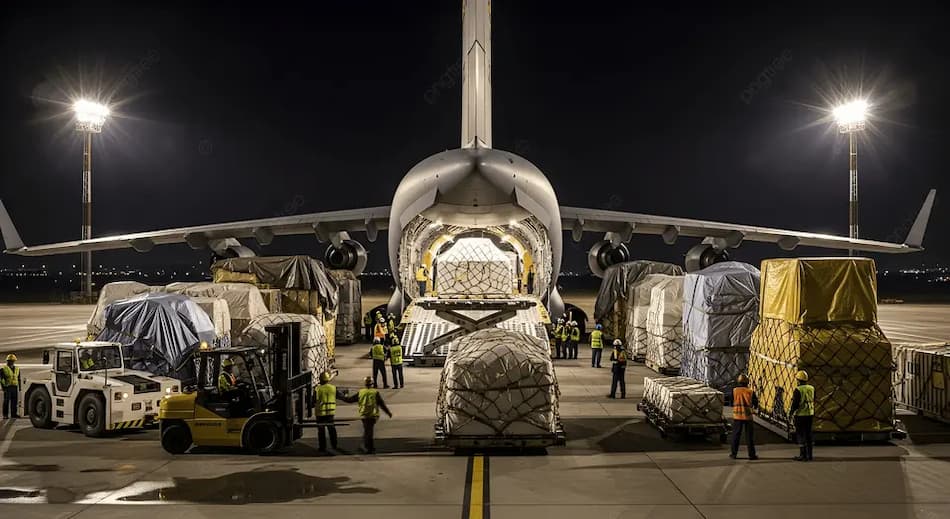
Air cargo aircraft loading freight at an international airport logistics hub

Global air cargo networks are undergoing significant changes as geopolitical tensions and the rapid growth of e-commerce reshape the movement of goods across international markets.

Airlines, logistics companies and cargo operators are increasingly adjusting their routes and supply chain strategies to respond to shifting trade patterns, regulatory pressures and disruptions in key aviation corridors. At the same time, the continued expansion of cross-border online shopping is driving strong demand for faster and more reliable air freight services.

Industry analysts say the intersection of geopolitical developments and digital commerce is accelerating structural changes across the global air freight sector.

E-Commerce Demand Continues to Drive Air Freight Growth

The rapid expansion of e-commerce has become one of the most important forces shaping global air cargo demand. Online marketplaces and international retailers rely heavily on air freight to transport high-value and time-sensitive goods quickly between production centers and consumer markets.

As consumers increasingly expect faster delivery times, logistics providers are expanding their air freight capacity and improving operational efficiency to support global e-commerce supply chains.

Air freight offers a major advantage for online retail shipments because of its speed and reliability compared with other transportation methods. This makes it a critical component of cross-border e-commerce logistics, particularly for electronics, fashion products and other high-demand consumer goods.

Industry data suggests that e-commerce shipments now represent a growing share of global air cargo volumes, reflecting the increasing role of digital commerce in international trade.

Geopolitical Developments Affect Global Cargo Routes

Recent geopolitical tensions have also created new challenges for the air freight industry. Disruptions affecting certain regions, particularly in parts of the Middle East, have forced airlines to adjust flight paths and rethink their logistics strategies.

Air cargo carriers that previously relied on established aviation corridors must now consider alternative routes, which can increase operating costs and extend transit times.

These developments highlight how geopolitical uncertainty can quickly influence global logistics networks. However, air cargo operators have demonstrated flexibility by adapting their routes and maintaining supply chain continuity despite changing conditions.

Trade Policies and Regulations Add Complexity

In addition to geopolitical risks, shifting trade policies and regulatory changes are also influencing global cargo flows.

Tariffs, export controls and evolving trade regulations can alter the economics of cross-border shipping, forcing logistics companies and online retailers to reconsider traditional supply chain routes.

As a result, many global companies are diversifying their logistics strategies and investing in more resilient supply chain infrastructure to reduce exposure to policy changes.

This approach allows businesses to maintain stable international delivery operations even as the regulatory environment continues to evolve.

Air Cargo Industry Adapts to a Changing Market

Despite these challenges, the long-term outlook for the air cargo industry remains closely tied to the continued growth of e-commerce.

Airlines and logistics providers are investing in digital technologies, automation and improved tracking systems to increase efficiency and support the rising volume of online retail shipments.

New cargo hubs and logistics infrastructure are also being developed in several regions as companies seek to strengthen supply chain resilience and improve global connectivity.

As geopolitical dynamics and global trade patterns continue to shift, air freight will remain a critical backbone of international e-commerce logistics, ensuring that goods move quickly and efficiently across borders.

The evolving relationship between geopolitics and digital commerce is likely to continue reshaping global air cargo networks in the years ahead.

Source: Aviation Week

JD.com Launches Joybuy Across 6 European Countries in Bold Expansion

JD.com launches Joybuy e-commerce platform in Europe to compete with Amazon

Chinese e-commerce giant JD.com has launched its new online retail platform Joybuy across six European countries, marking one of the company’s most significant international expansion moves to date. The rollout signals JD.com’s ambition to challenge established players such as Amazon in one of the world’s most competitive digital retail markets.

The platform debuted in the United Kingdom, Germany, France, the Netherlands, Belgium and Luxembourg, offering a broad assortment of products ranging from consumer electronics and home appliances to beauty items and groceries. At launch, the marketplace includes more than 100,000 products from global brands including Apple and Samsung.

JD.com Accelerates Global Expansion

The European launch comes as JD.com looks beyond its domestic market for growth. Competition in China’s e-commerce sector has intensified in recent years, pushing major platforms to explore new international opportunities.

By introducing Joybuy in Europe, JD.com is positioning itself as a direct competitor to Amazon while also expanding the global reach of both Chinese and international brands through its marketplace infrastructure.

Founded by billionaire entrepreneur Liu Qiangdong, JD.com has grown into one of the world’s largest online retailers. The company generated more than $150 billion in annual revenue and has built a reputation for its integrated logistics network and fast delivery capabilities.

Fast Delivery at the Core of the Strategy

A key feature of Joybuy’s European rollout is its focus on rapid delivery. JD.com plans to leverage its logistics infrastructure to provide same-day and next-day delivery services in major cities. Orders placed earlier in the day may arrive within hours, giving the platform a competitive advantage in markets where delivery speed is increasingly critical to consumer choice.

The company has invested heavily in logistics infrastructure across Europe, including dozens of warehouses and distribution centers that support its proprietary delivery network. This integrated supply chain approach has long been a defining feature of JD.com’s operations in China and is expected to play a central role in its European strategy.

Competing in Europe’s Crowded E-Commerce Market

Europe represents one of the most developed and competitive e-commerce markets globally. Amazon currently dominates much of the region’s online retail sector, while Chinese platforms such as Temu and Shein have also been expanding aggressively across Western markets.

JD.com hopes its combination of competitive pricing, global brands and fast delivery will help the company attract European consumers looking for alternatives to existing platforms.

Industry analysts note that the move could intensify competition in the region, particularly as global e-commerce companies continue to expand logistics networks and cross-border marketplaces.

A Long-Term Bet on Overseas Growth

The Joybuy launch represents JD.com’s largest overseas expansion initiative so far and highlights the company’s long-term strategy to reduce reliance on China’s domestic market.

If successful, the platform could become a major new channel for international brands while also giving Chinese merchants broader access to European consumers.

Source: Business Standard