WORLDEF ISTANBUL 2026 - Early Bird Registration Ends Soon

Register Now

Tough E-Commerce Regulation in the EU; Platforms to Be Held Responsible as “Importers”

EU

The European Union (EU) has signed off on one of the most comprehensive customs reforms of the last 50 years in response to the rapid growth of e-commerce. With the new regulation, significant responsibilities are being introduced especially for platforms engaged in cross-border online sales.

The European Union (EU) approved a comprehensive reform of its customs systems. Representatives of the European Parliament and the governments of EU member states reached a critical agreement late on Thursday, March 26, after lengthy negotiations, and the final details of the new reform were clarified.

As part of the reform, the way has been opened for imposing fines on Chinese e-commerce platforms if they sell illegal or unsafe products. The EU aims to coordinate the collection of customs duties and safety checks more effectively in response to the very high volume of low-value e-commerce parcels entering the bloc.

E-Commerce Platforms Will Be Directly Responsible for the Customs Duties and Safety of the Products They Sell

One of the most striking elements of the reform is that e-commerce platforms will now be treated as “importers.” In this context, platforms such as Amazon, Temu, Shein, and similar companies will be directly responsible for the customs duties and product safety of the goods they sell. In addition, serious fines and operational restrictions are also on the agenda for companies that systematically fail to comply with the rules. Companies that continuously violate the bloc’s rules could face fines ranging from 1% to 6% of their total EU sales over the previous 12 months.

The New Structure Will Become Operational in 2028

At the center of the new system is the European Customs Authority, which will be established in Lille, France. A team of 250 staff members working there will track parcels and manage the new EU data hub, which will provide a centralized, digital overview of incoming goods. The data hub is planned to become operational for e-commerce consignments in 2028 and to cover all imported goods as of March 1, 2033. At the same time, thanks to the digital data platform to be created, companies will be able to share customs information through a single system. This system is expected both to accelerate procedures and to save billions of euros annually.

The Reform Package Focuses on the Import of Low-Value Goods

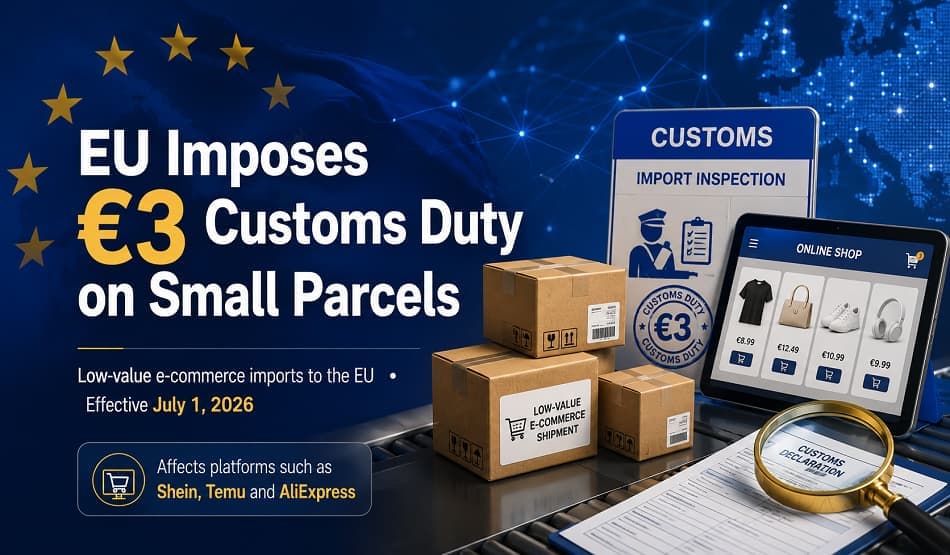
The reform package focuses particularly on the import of low-value goods. It is stated that more than 90% of the 5.9 billion low-value items that entered the EU in 2025 came from China. For this reason, as of July 1, 2026, a fixed fee of 3 euros will be applied to goods valued below 150 euros. In addition, an extra “handling fee” is planned to be introduced for each shipment by November 1, 2026. With the new regulation, it will become mandatory for all transaction data to be transmitted to the customs system at the time of sale. In this way, authorities will be able to conduct risk analysis before the products cross the border.

EU officials emphasize that the main purpose of the reform is to prevent tax losses, reduce smuggling, and manage the growing volume of e-commerce more effectively. Countries such as Türkiye, which have strong trade ties with the EU, are also expected to be directly affected by this new system.

Nearly 6 Billion E-Commerce Parcels Entered the EU in 2025

The EU does not apply customs duties to parcels valued at less than 150 euros ($173.85). This has supported the rapid growth of online shopping platforms such as Shein, Temu, and AliExpress, which send packages directly from China to customers. According to research, the total number of parcels entering EU countries reached 5.8 billion in 2025. Among these parcels, 60% to 65% of imported cosmetic products, including make-up, food supplements, and personal protective equipment such as bicycle helmets, do not comply with the EU’s safety rules.

EU Delegation Will Go to China

As part of the reform, the EU will send a nine-member delegation to Beijing and Shanghai to address problems in the digital and e-commerce sector. According to a statement from the EU Delegation to China, the purpose of this visit is to promote fair competition between China and the bloc. During the three-day meetings, European lawmakers will meet not only with Chinese legislators and market regulators but also with representatives of Shein, Alibaba, and Temu.

Indonesia Signals 3 New Controls as E-Commerce Imports Surge Raises Concerns

Indonesia Signals 3 New Controls as E-Commerce Imports Surge Raises Concerns

Indonesia is moving toward tighter control of its e-commerce market as concerns grow over the dominance of low-cost imported goods, particularly from China. Policymakers are increasingly signaling that stronger regulatory measures may be introduced to protect local businesses and ensure fair competition.

Why Business Concerns Are Rising in Indonesia’s E-Commerce Market

Authorities have raised alarms about the rapid growth of cross-border e-commerce, where foreign sellers – often offering significantly lower prices—are gaining substantial market share. This trend is putting pressure on domestic merchants, especially small and medium-sized enterprises that struggle to compete on pricing and scale.

Government signals suggest that Indonesia may introduce stricter rules targeting imported goods sold through online platforms. These measures could include tighter product compliance checks, taxation adjustments and enhanced oversight of digital marketplaces operating within the country.

The rise of major regional platforms such as TikTok Shop and Shopee has accelerated the inflow of cross-border products, reshaping consumer behavior and intensifying competition. While this has expanded product availability and affordability for consumers, it has also raised concerns about the long-term sustainability of local retail ecosystems.

Across Southeast Asia, similar regulatory trends are emerging. Countries in the region are increasingly exploring ways to balance the benefits of digital trade with the need to protect domestic industries. This includes introducing new tax frameworks, strengthening compliance requirements and monitoring foreign seller activity more closely.

For the global business community, Indonesia’s direction signals a broader shift in how governments approach e-commerce growth. As markets mature, there is a growing emphasis on regulation, fair competition and economic balance.

The outcome of these developments could reshape how international sellers operate in Southeast Asia, influencing pricing strategies, logistics models and market entry approaches. For businesses looking to expand in the region, adapting to evolving regulatory environments will become a critical factor for long-term success.

Source: TechNode Global

Lille in 2026 Selected to Host New EU Customs Authority as Trade Pressures Rise

Lille in 2026 Selected to Host New EU Customs Authority as Trade Pressures Rise

The European Union has selected the French city of Lille as the headquarters of its new Customs Authority, marking a major step in the bloc’s efforts to modernise its trade and customs systems.

The decision follows a competitive bidding process involving several European cities, including Rome, Warsaw, The Hague and Bucharest. In the final round, Lille secured the position, reinforcing France’s central role in shaping the future of EU customs operations.

The new authority is expected to be established in 2026 and could become fully operational by 2028, although timelines remain subject to final negotiations.

A Central Hub for EU Customs Reform

The creation of the EU Customs Authority is part of a broader overhaul of the EU customs framework. The reform aims to address growing challenges linked to rising trade volumes, fragmented national systems and the rapid expansion of e-commerce.

In particular, the surge in low-value shipments and cross-border online trade has placed increasing pressure on existing customs infrastructure. The new authority is expected to play a key role in improving coordination, strengthening enforcement and supporting a more unified approach across member states.

Beyond enforcement, the authority will also contribute to the development of a more digital and data-driven customs system, aligning with the EU’s wider strategy to modernise trade operations.

Why Lille Was Selected

Lille’s selection reflects both strategic and operational advantages. Located at a key crossroads of European trade routes, the city offers strong logistics connectivity and proximity to major markets, including the UK and Northern Europe.

France also highlighted its experience in managing large trade flows and its established customs infrastructure as part of its bid. The country remains one of the EU’s primary entry points for goods, handling a significant share of incoming parcels.

In addition, Lille presented a ready-to-use infrastructure plan and committed to supporting operational costs, strengthening its position in the final decision process.

What This Means for E-Commerce and Trade

The establishment of the EU Customs Authority comes at a time when global trade is becoming increasingly complex. Geopolitical tensions, shifting tariffs and the continued rise of e-commerce are forcing governments to rethink how goods are monitored and regulated.

For e-commerce businesses, the move signals a shift toward more structured and centralised customs processes. Combined with upcoming regulatory changes such as the removal of de minimis thresholds, the EU is moving toward tighter control over cross-border flows.

As previously highlighted in WORLDEF’s coverage of customs and e-commerce trends, the future of cross-border trade will be defined less by speed alone and more by compliance, data accuracy and operational resilience.

The decision to base the authority in Lille underlines the EU’s intention to build a more integrated and technologically advanced customs system. For businesses operating across borders, this marks another step toward a more regulated, but also more predictable, trade environment.

Source: Euronews

3 Key Changes in EU De Minimis Rules and What It Means for UK E-Commerce Growth

EU Ends De Minimis in 2026 and UK E-Commerce Must Adapt Fast

The European Union (EU) is preparing to remove its de minimis threshold, a decision that will reshape how cross-border e-commerce operates across the region. For UK-based brands, the change goes beyond regulation. It directly affects pricing, logistics, and the overall customer journey.

For years, shipments valued under €150 could enter the EU without customs duties. This allowed brands to keep costs low and move goods quickly across borders, supporting the rapid growth of direct-to-consumer models. That advantage is now coming to an end.

From July 2026, all goods entering the EU will be subject to customs duties, regardless of value. A simplified flat-rate duty, expected to be around €3 for low-value shipments, will replace the previous exemption. The result is clear. Small parcels will no longer benefit from duty-free treatment.

Rising Costs and Changing Customer Expectations

The shift is part of a broader effort by EU regulators to bring more control and balance to the market. As cross-border volumes have surged, authorities have moved to close gaps in the system, improve tax collection, and create fairer conditions for domestic retailers.

For UK e-commerce brands, the impact will be immediate. Products that once moved across borders with minimal cost will now carry additional charges, putting pressure on already tight margins. This is particularly relevant for low-value, high-volume categories where even small cost increases can affect profitability.

There is also a direct link to customer experience. Higher landed costs, especially when passed on at checkout or delivery, can reduce conversion rates and increase cart abandonment. What used to be a seamless cross-border purchase may become more complex and less predictable for consumers.

Operational Pressure Is Increasing

At the same time, operational expectations are rising. Every shipment will require accurate and complete customs data, including product classification, origin, and declared value. As all goods fall under full customs procedures, enforcement is expected to become stricter.

For many brands, this means moving away from simplified processes and investing in more structured compliance systems. As previously highlighted in WORLDEF’s coverage of global e-commerce regulation shifts, cross-border trade is becoming increasingly defined by compliance, transparency, and operational precision rather than speed alone.

How Brands Are Preparing for 2026

With the 2026 deadline approaching, brands are starting to rethink their strategies. Pricing models need to be recalculated to reflect new duty structures. Shipping approaches, particularly the balance between delivering duties paid upfront or passing costs to the customer, are becoming more critical.

Product strategies are also under review. Some low-value items may no longer be commercially viable under the new conditions, pushing brands to reassess their assortments. At the same time, interest in EU-based fulfillment is growing, as local distribution offers a way to reduce friction and maintain delivery performance.

The removal of de minimis is part of a wider global shift. As international e-commerce continues to scale, governments are moving toward more controlled and transparent systems. Duty-free thresholds are gradually disappearing, replaced by frameworks designed to manage volume, ensure compliance, and protect local markets.

The change is coming fast. For UK brands, adapting early will not just reduce risk, it will define their ability to compete in a more structured and cost-sensitive e-commerce environment.

Source: GFS Deliver

EU Inc.: 5 Major Changes Set to Boost Startup Scaling in Europe

EU Inc. startup scaling in Europe visual showing digital growth and connected ecosystem

The European Union is preparing a major transformation in its startup ecosystem with the introduction of EU Inc., a new framework designed to make it significantly easier for companies to scale across the region.

For years, European founders have faced a structural disadvantage compared to their counterparts in the United States. While the U.S. operates under a single legal and regulatory system, startups in Europe must navigate 27 different national frameworks, each with its own rules on incorporation, taxation, and compliance.

EU Inc. aims to solve this fragmentation by introducing a unified, optional system that allows startups to operate more seamlessly across the EU single market.

Tackling Europe’s Fragmentation Problem

One of the biggest barriers to startup growth in Europe has been regulatory complexity. Expanding beyond a home country often means rebuilding legal structures, adapting to new compliance systems, and managing multiple jurisdictions at once.

The EU Inc. initiative introduces what policymakers describe as a “28th regime” — an additional, standardized corporate framework that companies can choose instead of relying solely on national systems.

This model is designed to reduce administrative friction and create a more consistent environment for scaling businesses across borders.

Faster and Simpler Company Formation

A key feature of EU Inc. is its digital-first approach to company creation and management. Startups would be able to register and begin operating through a fully online process, significantly reducing both time and costs.

According to recent proposals, businesses could be established in as little as 48 hours, a move aimed at bringing Europe closer to the efficiency of markets like the United States.

The system would also introduce more standardized procedures for areas such as employee stock options and insolvency rules, helping startups attract investment and scale more efficiently.

Closing the Global Competitiveness Gap

Despite strong innovation and early-stage startup activity, Europe continues to lag behind global leaders when it comes to scaling companies.

Data shows that while startup creation rates in Europe are comparable to the U.S., the region produces significantly fewer high-value companies. By early 2025, the EU had around 110 unicorns, compared to hundreds in the United States and China.

This gap is largely driven by structural challenges, including fragmented markets, limited access to late-stage funding, and regulatory complexity. As a result, many European startups choose to relocate or expand abroad to access better growth opportunities.

EU Inc. is designed to reverse this trend by making it easier for companies to remain and scale within Europe.

Supporting Investment and Talent Growth

The EU Inc. initiative is part of a broader strategy to strengthen Europe’s startup ecosystem. Alongside regulatory simplification, policymakers are working to improve access to capital, attract global talent, and enhance infrastructure for innovation.

The EU Startup and Scaleup Strategy focuses on creating a more supportive environment for high-growth companies by improving financing options, enabling faster market expansion, and building stronger innovation networks.

Together, these efforts aim to position Europe as a more competitive destination for startups and scale-ups.

Limitations and Ongoing Challenges

While EU Inc. represents a major step forward, it is not a complete solution. Companies operating under the new framework will still need to comply with national rules related to taxation, labor laws, and other local regulations.

Experts also note that simplifying legal structures alone may not fully address deeper challenges such as operational complexity, leadership, and cross-border team management.

Nevertheless, EU Inc. is widely seen as a critical foundation for improving Europe’s ability to scale innovative businesses.

A Turning Point for Europe’s Startup Ecosystem

The introduction of EU Inc. signals a clear shift in Europe’s approach to entrepreneurship and innovation. By reducing fragmentation and streamlining business operations, the EU is taking a significant step toward building a more integrated and globally competitive startup ecosystem.

If successfully implemented, the initiative could help Europe retain more high-growth companies, attract international investment, and close the gap with global innovation leaders.

Source: European Business Magazine, European Commission, Reuters

5.8 Billion Shipments Raise Alarm as EU Industry Pushes for Immediate Action on Imports

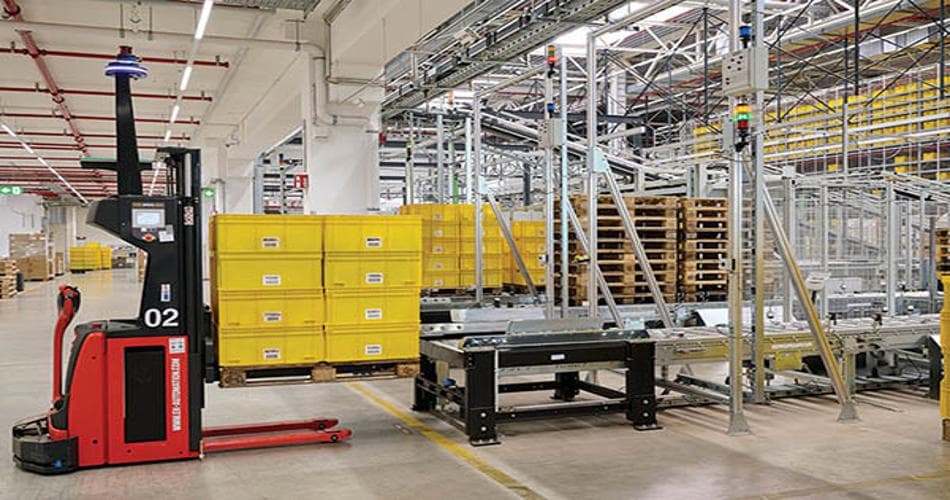
E-commerce industry faces surge in cross-border shipments as parcels pile up in EU logistics warehouse

A coalition of European industry and retail organisations has called on the European Union to take urgent action to address growing challenges linked to cross-border e-commerce imports.

In a joint statement released in Brussels, industry groups warned that existing regulatory gaps are undermining fair competition, weakening consumer protection, and putting increasing pressure on the EU’s Single Market.

Surge in Cross-Border E-Commerce Imports

The rapid expansion of global e-commerce has significantly increased the volume of small parcels entering the EU. In 2025 alone, around 5.8 billion shipments were delivered into the bloc, creating serious challenges for customs authorities and market surveillance systems.

Many of these imports reportedly fail to comply with EU standards, including product safety rules, VAT obligations, environmental regulations, and intellectual property protections. This situation allows non-compliant sellers—often based outside the EU—to gain a competitive advantage over European businesses that are required to meet stricter regulatory requirements.

Risks for Consumers and Businesses

Industry representatives say the current system exposes consumers to unsafe or misleading products, particularly in categories such as electronics, textiles, and consumer goods.

At the same time, European companies face increasing pressure from unfair competition, as non-EU sellers can bypass compliance costs and regulatory checks. The coalition also highlighted the broader economic impact, warning that these trends could harm local industries, disrupt supply chains, and accelerate the decline of physical retail across European cities.

Recent EU data further supports these concerns, showing that a significant share of imported e-commerce goods fail to meet EU safety standards, reinforcing calls for stronger enforcement mechanisms.

Call for Faster Regulatory Action

While the EU is already working on reforms under the Union Customs Code—particularly the introduction of the “deemed importer” system—industry groups argue that the current timeline is too slow. The system is not expected to be fully implemented until 2028.

Instead, the coalition is urging policymakers to introduce interim measures that can be applied immediately. One key proposal is to require all non-EU sellers to appoint a legally responsible representative within the EU. This would make it easier for authorities to enforce compliance and ensure accountability across cross-border transactions.

Strengthening Environmental and Compliance Rules

Another major concern raised by the coalition relates to environmental obligations. Industry groups are calling for stricter enforcement of Extended Producer Responsibility (EPR) rules, particularly in areas such as packaging, electronics, batteries, and textile waste.

Ensuring that online marketplaces and foreign sellers comply with these requirements would help prevent “free-riding” practices and create a more level playing field for European businesses operating under sustainability regulations.

A Growing Push for Immediate Change

The coalition’s message is clear: action cannot wait. With e-commerce imports continuing to grow at scale, industry leaders are urging the European Commission and Member States to accelerate reforms and introduce practical enforcement measures now—rather than relying solely on long-term regulatory changes.

They argue that faster intervention is essential to protect consumers, restore fair competition, and maintain the integrity of the EU’s internal market.

Source: EURATEX

EU E-Commerce: 35% of Consumers Face Problems When Shopping Online

Digital e-commerce shopping interface

E-commerce across the European Union continues to expand, but a growing number of consumers are encountering problems while shopping online. According to new data released by Eurostat, more than a third of online shoppers in the European Union reported encountering problems when buying products or services through websites or mobile apps.

The findings highlight ongoing challenges in the digital retail experience even as e-commerce adoption across the region continues to rise.

Online Shopping Issues Affect Over One-Third of EU Consumers

Eurostat’s latest survey on the use of information and communication technologies shows that 35.4% of online shoppers in the EU experienced at least one problem when purchasing online in 2025.

The study analyzed consumer experiences across member states and revealed considerable variation between countries. The highest shares of shoppers reporting issues were recorded in Malta, where 64% of consumers encountered problems while shopping online. The Netherlands followed with 57.9%, while Luxembourg reported 51.4%.

In contrast, several EU countries showed far lower rates of customer difficulties. Portugal recorded the lowest share, with only 4.5% of online buyers reporting problems. Greece and Latvia also saw relatively low levels of consumer complaints at 10.6% and 13.3%, respectively.

The wide differences suggest that infrastructure, logistics performance, platform quality and consumer protection mechanisms may vary significantly across national e-commerce ecosystems.

Delivery Delays Remain the Most Common Complaint

Among the various problems identified in the survey, late delivery was the most frequently reported issue. Nearly one in five EU online shoppers (19.9%) said their orders arrived later than expected.

Logistics delays can occur for several reasons, including cross-border shipping complexities, warehouse processing times and disruptions in supply chains. As e-commerce volumes increase, delivery performance has become one of the most critical factors influencing customer satisfaction.

The second most common issue was related to website usability. Around 11.5% of shoppers reported that websites or apps were difficult to use or did not function properly during the purchasing process.

Meanwhile, 10.4% of consumers reported receiving incorrect or damaged goods or services after completing their orders.

These findings highlight the importance of not only reliable logistics networks but also well-designed digital shopping interfaces.

E-Commerce Continues to Grow Across Europe

Despite these challenges, online shopping remains a dominant retail channel in Europe. Eurostat data shows that 78% of EU internet users purchased goods or services online in 2025, reflecting the continued expansion of digital commerce across the region.

The highest participation rates are typically seen among younger age groups, particularly consumers aged 25–34 and 35–44, who represent the largest share of online buyers in the EU.

Industry analysts note that while consumer adoption is strong, improving the overall reliability of delivery services and platform performance will be key to sustaining growth in Europe’s e-commerce market.

For retailers and marketplaces operating in the region, addressing logistics efficiency, improving user experience and strengthening product quality controls could play a crucial role in reducing customer complaints and building long-term consumer trust.

Source: Eurostat