WORLDEF ISTANBUL 2026 - Upcoming Event

Register Now

Indonesia Plans New E-Commerce Rules After Seller Complaints

Indonesia Plans New E-Commerce Rules After Seller Complaints

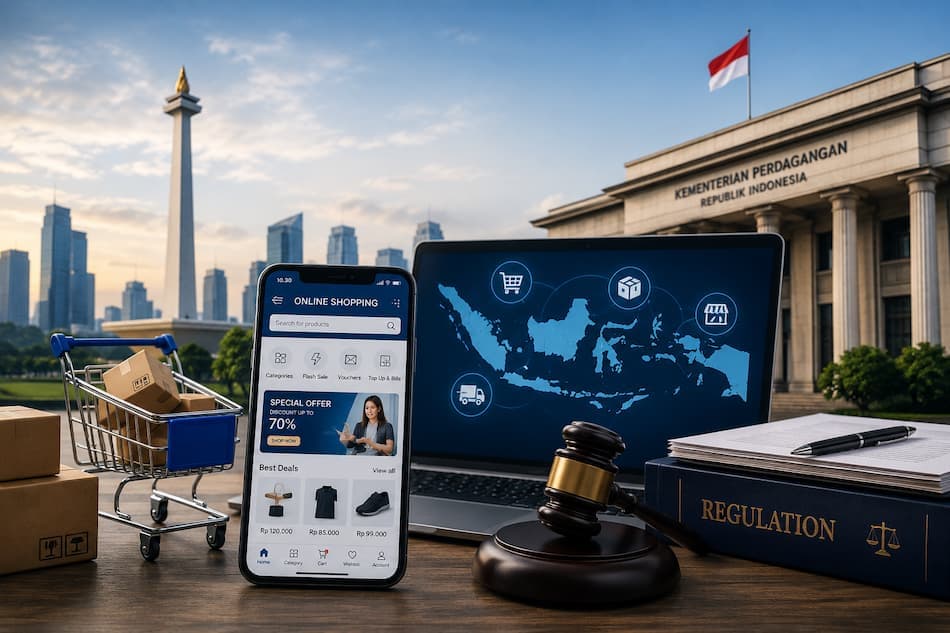
Indonesia is preparing to revise its e-commerce regulations following growing complaints from online sellers about rising platform fees and operational costs. The move reflects the government’s broader effort to create a fairer and more sustainable digital commerce ecosystem while strengthening protections for local businesses and consumers.

What Happened?

Indonesia’s Trade Ministry announced plans to revise Minister of Trade Regulation Number 31 of 2023, which currently governs e-commerce activities in the country. Trade Minister Budi Santoso stated that the revision comes after many sellers, especially small businesses, raised concerns over high administrative and logistics fees charged by online marketplaces.

While the government has not yet shared the full details of the revised regulation, officials confirmed that discussions with industry stakeholders are ongoing and that the new rules will focus on improving fairness across the sector.

Why Is Indonesia Revising the Rules?

Indonesia is one of Southeast Asia’s largest and fastest-growing e-commerce markets. However, increasing competition among platforms has also led to concerns from sellers regarding profitability and sustainability.

According to the Trade Ministry, the revised regulation aims to:

  • Protect local products and MSMEs (Micro, Small, and Medium Enterprises)
  • Improve consumer protection
  • Encourage marketplaces to prioritize domestic products
  • Build a healthier and more sustainable e-commerce ecosystem
  • Strengthen collaboration between platforms, sellers, and regulators

Government officials emphasized that consultations with businesses and digital economy stakeholders are still continuing before the regulation is finalized.

Indonesia Increases Oversight of Digital Platforms

The planned revision comes as Indonesia continues tightening oversight across its digital economy. Earlier this month, authorities also introduced stricter child protection requirements for e-commerce platforms under new electronic system governance rules.

The measures require platforms to implement age verification systems, parental consent mechanisms for minors, and stronger privacy protections for children’s data.

These developments highlight Indonesia’s growing focus on building a more regulated, locally supportive, and consumer-focused digital marketplace environment.

What This Means for the Industry

If implemented, the revised rules could significantly impact how major e-commerce platforms operate in Indonesia. Marketplaces may face stricter obligations related to fee structures, seller protections, and domestic product prioritization.

The changes could particularly benefit local MSMEs, which play a major role in Indonesia’s economy but often struggle with rising costs on digital platforms.

For international and regional e-commerce companies, the upcoming regulation may also indicate stronger localization requirements and increased government involvement in marketplace operations.

Source

Indonesia May Introduce E-Commerce Ban for Under-16s

Indonesia

The Indonesian government is considering an e-commerce ban for users under the age of 16. The country had already introduced a comprehensive social media ban for teenagers.

Indone sia’s Minister of Communication and Digital Affairs, Meutya Hafid, told AFP: “E-commerce platforms are next, because we found that children became victims of scams through e-commerce.”

“App Addiction” at Record Levels in Indonesia

The Southeast Asian archipelago, with a population of more than 284 million, has one of the highest concentrations of social media users in the world.

In March, the country began enforcing a social media ban for under-16s. The ban aims to protect around 70 million children from the threats of online pornography, cyberbullying, and internet addiction.

The country initially targeted platforms considered “high risk” for children: YouTube, TikTok, Facebook, Instagram, Threads, X, Bigo Live, and Roblox.

It is stated that this ban will apply to all digital platforms, including e-commerce sites.

Indonesia Signals 3 New Controls as E-Commerce Imports Surge Raises Concerns

Indonesia Signals 3 New Controls as E-Commerce Imports Surge Raises Concerns

Indonesia is moving toward tighter control of its e-commerce market as concerns grow over the dominance of low-cost imported goods, particularly from China. Policymakers are increasingly signaling that stronger regulatory measures may be introduced to protect local businesses and ensure fair competition.

Why Business Concerns Are Rising in Indonesia’s E-Commerce Market

Authorities have raised alarms about the rapid growth of cross-border e-commerce, where foreign sellers – often offering significantly lower prices—are gaining substantial market share. This trend is putting pressure on domestic merchants, especially small and medium-sized enterprises that struggle to compete on pricing and scale.

Government signals suggest that Indonesia may introduce stricter rules targeting imported goods sold through online platforms. These measures could include tighter product compliance checks, taxation adjustments and enhanced oversight of digital marketplaces operating within the country.

The rise of major regional platforms such as TikTok Shop and Shopee has accelerated the inflow of cross-border products, reshaping consumer behavior and intensifying competition. While this has expanded product availability and affordability for consumers, it has also raised concerns about the long-term sustainability of local retail ecosystems.

Across Southeast Asia, similar regulatory trends are emerging. Countries in the region are increasingly exploring ways to balance the benefits of digital trade with the need to protect domestic industries. This includes introducing new tax frameworks, strengthening compliance requirements and monitoring foreign seller activity more closely.

For the global business community, Indonesia’s direction signals a broader shift in how governments approach e-commerce growth. As markets mature, there is a growing emphasis on regulation, fair competition and economic balance.

The outcome of these developments could reshape how international sellers operate in Southeast Asia, influencing pricing strategies, logistics models and market entry approaches. For businesses looking to expand in the region, adapting to evolving regulatory environments will become a critical factor for long-term success.

Source: TechNode Global