WORLDEF Prime Antalya 2026 — Early Bird Discounts

Register Now

Russian E-Commerce Brands Seek Kremlin Aid as Losses Approach 1 Trillion Rubles

Russian e-commerce brands

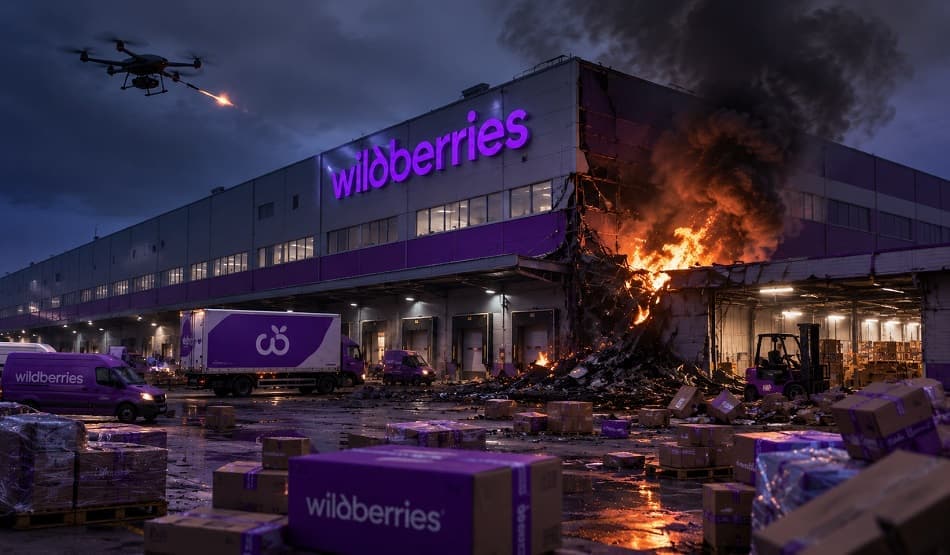
Russian e-commerce brands have requested financial support from the federal government following losses to warehouse and logistics infrastructure caused by Ukrainian drone strikes. In a letter sent to Prime Minister Mikhail Mishustin, the Association of Digital Platforms (ACP), which includes companies such as Ozon, Yandex, Avito, Kuper and Wildberries, called for non-repayable federal assistance for affected sellers. The association requested that the amount of support be determined based on actual losses and the scale of companies’ operations.

Russian E-Commerce Brands Also Request Tax Deferrals

In addition to direct financial assistance, the ACP requested that businesses affected by the strikes be granted at least a six-month deferral or installment plan for taxes and mandatory payments. The cancellation of penalties and late-payment charges incurred during the period in which normal operations were disrupted was also among the demands. The total amount of public support requested could reportedly reach hundreds of billions of rubles.

Wildberries and Sellers’ Losses Could Approach $12 Billion

According to Data Insight estimates, Wildberries’ direct losses related to its warehouse infrastructure stand at between 147 billion and 223 billion rubles. When the costs of demolition, debris removal and restoring the sites for future use are included, the figure could rise to 278 billion rubles. The value of goods lost by sellers in the warehouses was estimated at between 445 billion and 507 billion rubles. According to estimates by the Association of Product Suppliers to Electronic Marketplaces, seller losses could reach 600–700 billion rubles, while the total damage could approach 1 trillion rubles, or approximately $12 billion.

ACP President Margarita Evstigneeva said some sellers had lost up to 95 percent of their total inventory. Evstigneeva stated that Wildberries had paid small sellers an average of between 2,000 and 30,000 rubles, adding that these payments did not cover even 20 percent of their losses.

Payment and Cash Flow Problems in E-Commerce Operations

Following the strikes, Wildberries reportedly experienced a decline in revenue, while signs of a cash flow shortfall emerged. Sellers reported widespread delays in payments for goods sold, while the company’s subsidiary WB Bank reportedly began raising funds from retail customers through short-term deposits offering annual interest rates of more than 14 percent.

For Russian e-commerce brands, the loss of physical warehouse capacity is also affecting fulfillment, inventory management and retail delivery processes. Although AI-powered inventory planning and automation systems are becoming increasingly widespread in modern e-commerce, it was reported that all of Wildberries’ major warehouses had been taken out of operation and that approximately one-third of its total storage capacity had been lost.

Kremlin-Linked Source Warns of a “Wave of Bankruptcies”

It remains uncertain whether the support requested for Russian e-commerce brands will be provided. A source close to the Kremlin described the developments at Wildberries as a “serious blow” to the economy and said there were not enough funds available to cover sellers’ losses. The source said, “There will be a wave of bankruptcies. No one has that much money to support the sellers.” (Russian e-commerce brands)

Ozon’s Tatarstan Warehouse Evacuated Following Drone Attack Alert

Ozon

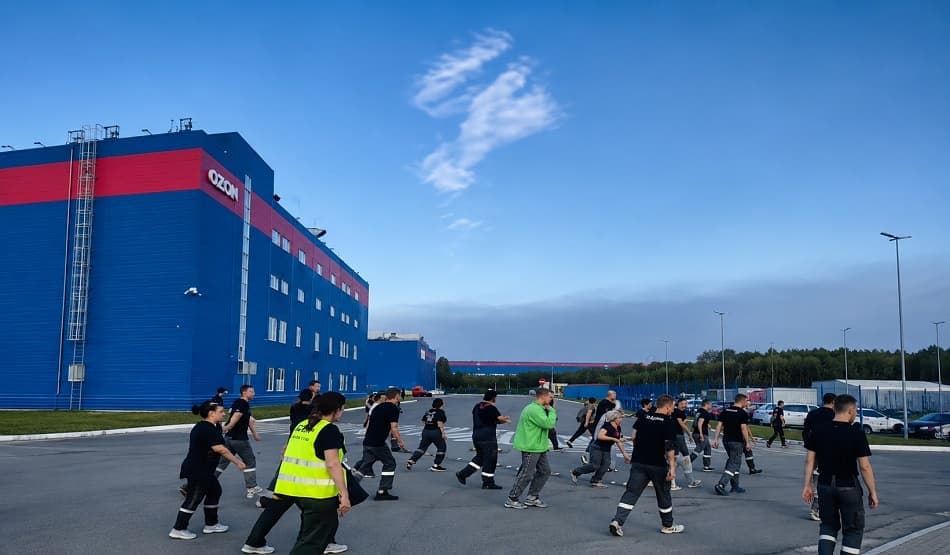
Russia’s second-largest e-commerce company, Ozon, evacuated its logistics center in the city of Zelenodolsk in the Tatarstan region due to the threat of a Ukrainian drone. The company stated that employees were removed from the facility within a few minutes and that there were no fatalities or injuries in the incident. While no damage occurred at the warehouse, retail and order operations resumed following security checks.

Ozon Employees Evacuated Just Before the Attack

Ozon employees were evacuated from the warehouse shortly before a drone attack occurred near the facility. It was reported that an explosion took place near the site shortly after the employees had left.

In another video shared on social media that could not be independently verified, a drone was seen crashing into the ground at a certain distance after the employees had moved away from the warehouse, followed by a loud explosion. The company reported that the logistics center was not damaged in the attack.

Wildberries Warehouses Have Been Targeted Since July 18

Since July 18, 2026, Ukraine has targeted at least 12 warehouses belonging to Wildberries, Ozon’s largest rival. The attacks were reported to be aimed at disrupting operations within Russia’s consumer economy and e-commerce logistics infrastructure.

One day before the incident, Ozon had warned that its own logistics infrastructure could also be at risk. Since Oz on and Wildberries warehouses are located close to one another in several regions, including Zelenodolsk, it remained unclear which facility was targeted in the attack. Following the incident, Robert Brovdi, commander of Ukraine’s drone forces, shared a message on Telegram stating that “the concentration of Ozon had exceeded the critical norm.”

Ukrainian President Volodymyr Zelensky claimed that Wildberries facilities were being used as logistics centers supplying Russian forces with drone components and other equipment. The Kremlin denied the allegation that Wildberries was involved in military supply operations.

EU Sanctions Ozon and Wildberries Financial Units

On July 24, 2026, the European Union added the financial services units of Ozon and Wildberries to its sanctions list. Oz on stated that the sanctioned subsidiary did not operate outside Russia and had no assets abroad. It is known that approximately one-third of Moscow-listed Ozon is owned by the Russian private equity company AFK Sistema, which has investments in the telecommunications, agriculture, and healthcare sectors. The Norwegian Sovereign Wealth Fund also reported that it held shares in Ozon as of December 2025. The company’s depositary receipts traded on Nasdaq until 2023.

Russian E-Commerce and Banking Are Converging: Sberbank at the Table for Ozon

Ozon

It has been claimed that Sberbank, Russia’s largest state-owned bank, is holding talks to acquire a significant stake in Ozon, one of the country’s leading e-commerce platforms. The claim has taken the integration between Russia’s e-commerce and finance sectors to a new level. According to market sources, the potential deal size could exceed $4 billion.

Recently, the interest of state-backed financial institutions in e-commerce companies has been drawing attention in Russia. Following the recently announced cooperation between VTB and Wildberries, it is now suggested that Sberbank is holding talks to acquire a stake in Ozon.

The move in question is seen not only as an investment, but also as a reshaping of the competition between the banking sector and the rapidly growing fintech activities of e-commerce platforms. In recent years, Ozon and Wildberries had approached the traditional areas of activity of banks by making significant investments in payment systems, digital wallets, and consumer finance.

Ozon’s Gross Merchandise Value Rose to 1.14 Trillion Rubles

Ozon continues to grow in Russia, Türkiye, Kazakhstan, Azerbaijan, Georgia, and other regional markets where it operates. In the first quarter of 2026, the company increased its gross merchandise value by 36 percent year-on-year to 1.14 trillion rubles. In the same period, the number of orders rose by 83 percent to 807.7 million, while the number of active customers reached 67.3 million. The company also reached an important milestone in profitability by generating a net profit of 4.5 billion rubles in the first quarter.

Debt Pressure Could Accelerate the Sale

Markets believe that AFK Sistema’s possible sale of its stake in Ozon may be driven by the holding company’s financial obligations. The company’s latest financial statements had drawn attention with its high debt level and significant net loss. According to experts, the sale of Ozon shares could help the holding company strengthen its financial structure and reduce its debt burden.

A New Era in Russia’s Internet Economy

Analysts note that state-linked investors and financial institutions are becoming increasingly influential in Russia’s digital economy companies. Ownership changes in strategic digital platforms such as VK, Yandex, and Ozon in recent years indicate that the internet economy is moving toward a more centralized structure. If the potential Sberbank-Ozon deal takes place, e-commerce, fintech, and banking in Russia are expected to become more integrated, and the boundaries between sectors are expected to become even more blurred.

Ozon Global Shares Strong Growth and New Seller Opportunities in Latest Update

Ozon Global Shares Strong Growth and New Seller Opportunities in Latest Update

Ozon Global Türkiye has announced a series of platform updates and performance highlights, reinforcing its rapid expansion and growing appeal among international sellers, particularly from Türkiye.

The company reported that 2025 marked a strong growth year, with total revenue reaching approximately $49.99 billion, representing a 45% increase year-over-year. At the same time, the total number of delivered orders climbed to 2.48 billion, up 69%, while average annual orders per customer rose to 38, reflecting stronger user engagement.

Marketplace Momentum Continues

The platform’s growth is also visible in seller performance. Turkish merchants recorded a 48% increase in revenue, highlighting rising cross-border demand and the effectiveness of Ozon’s marketplace tools.

In addition, the company strengthened its position in the regional tech ecosystem, ranking second among Russia’s most valuable internet companies, with a valuation of around $28 billion.

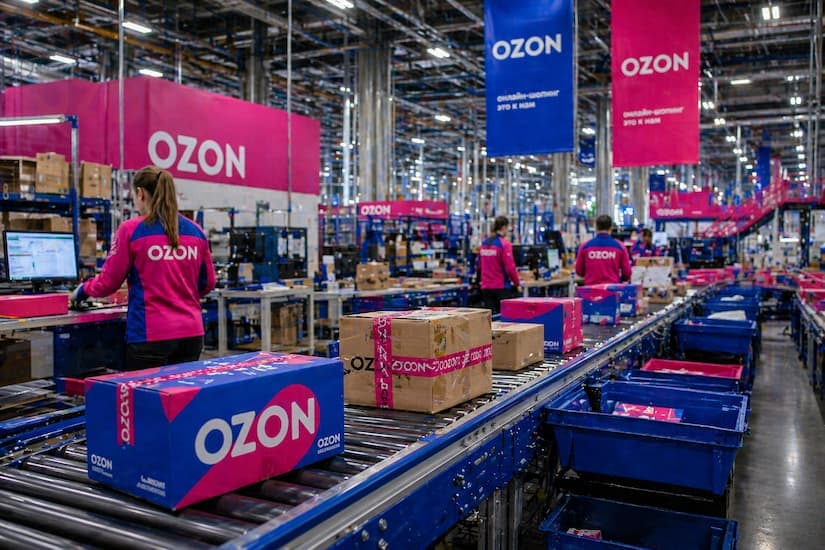
As one of the leading multi-category e-commerce platforms in the region, Ozon continues to leverage its extensive logistics network and marketplace infrastructure to expand internationally and attract new sellers.

New Logistics and Seller Tools

To further support cross-border commerce, Ozon Global introduced a new air cargo delivery channel via TT Express TR, enabling faster shipments from Türkiye to Russia.

Alongside logistics improvements, the company launched updated seller onboarding guides, focusing on product listing optimization and logistics models such as rFBS. These resources aim to simplify entry for new merchants and improve operational efficiency.

Community Engagement and Expansion

Ozon Global is also investing in its seller ecosystem through offline engagement. A recent networking event in Istanbul brought together over 100 participants, offering insights into the Russian market and opportunities for Turkish businesses.

Strategic Outlook

With continued investment in logistics, seller enablement, and marketplace growth, Ozon Global is positioning itself as a key gateway for cross-border e-commerce between Türkiye and Russia.

The latest updates underline a clear strategy:

  • expand international seller participation
  • enhance delivery infrastructure
  • and strengthen platform usability

As global e-commerce competition intensifies, Ozon’s combination of scale, logistics capabilities, and localized seller support is expected to play a central role in its next phase of growth.

Source