WORLDEF Prime Antalya 2026 - Upcoming Event

Register Now

DHL and USPS Sign $10 Billion Deal to Reshape U.S. E-Commerce Deliveries

DHL and USPS Sign $10 Billion Deal to Reshape U.S. E-Commerce Deliveries

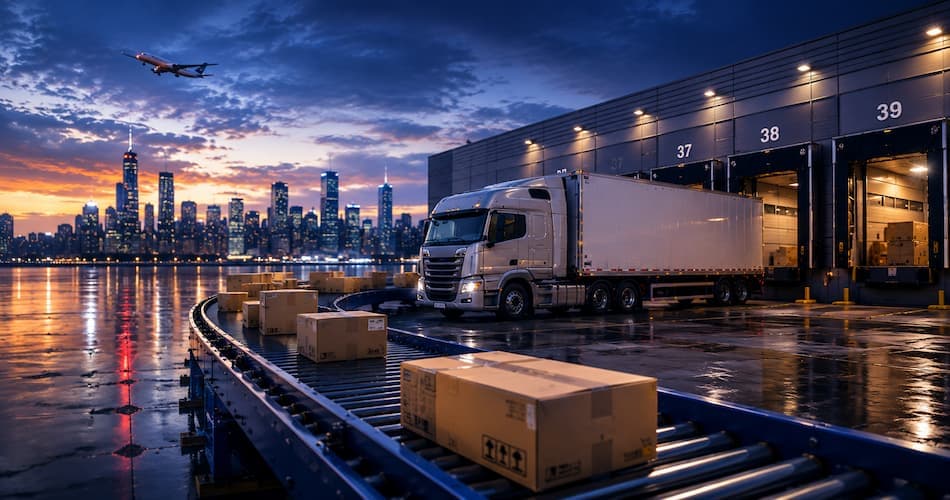
The logistics industry witnessed one of its largest partnership agreements in recent years as DHL eCommerce and the United States Postal Service (USPS) announced a long-term exclusive contract valued at more than $10 billion. The agreement strengthens a relationship that has existed for over 25 years and signals a new phase in the evolution of last-mile delivery across the United States.

Under the agreement, DHL eCommerce will continue to manage parcel pickup, sorting, and transportation through its nationwide network of 19 automated hubs, while USPS will remain the exclusive provider responsible for final-mile delivery. The partnership gives DHL access to USPS’s extensive delivery infrastructure, which serves more than 170 million addresses across over 41,000 ZIP Codes six days a week.

A Strategic Move for U.S. E-Commerce Growth

The deal arrives at a time when global e-commerce volumes continue to rise and logistics providers are under increasing pressure to improve delivery speed, efficiency, and cost management. Rather than investing heavily in building a dedicated residential delivery network in the United States, DHL has chosen to deepen its collaboration with USPS, allowing the company to scale operations while leveraging an already established nationwide infrastructure.

According to DHL eCommerce Americas CEO Scott Ashbaugh, the agreement creates a more stable platform for customers and supports the company’s long-term expansion plans in the U.S. market. Industry analysts also view the partnership as a practical response to the growing complexity of parcel delivery, where final-mile logistics remain one of the most expensive and operationally demanding stages of the fulfillment process.

USPS Strengthens Its Commercial Logistics Position

For USPS, the agreement represents a major commercial win as the organization continues efforts to diversify revenue streams and strengthen its financial position. The Postal Service has increasingly positioned itself as a critical logistics infrastructure partner for major parcel carriers, offering nationwide reach that would be difficult and costly for private operators to replicate independently.

The contract is expected to generate more than $10 billion in revenue over its duration, making it one of the most significant agreements in USPS’s parcel delivery business. The partnership also reinforces a broader industry trend where logistics providers focus on specialized segments of the delivery chain while relying on strategic partnerships for nationwide residential coverage.

As competition intensifies across the global e-commerce logistics sector, the DHL-USPS agreement highlights how collaboration, infrastructure sharing, and operational efficiency are becoming central to long-term growth strategies. With parcel volumes projected to continue rising throughout the decade, both organizations are positioning themselves to capture a larger share of the expanding U.S. e-commerce market.

Source

Amazon Becomes the Largest Carrier in the U.S., Delivering 6.7 Billion Packages in 2025

Amazon

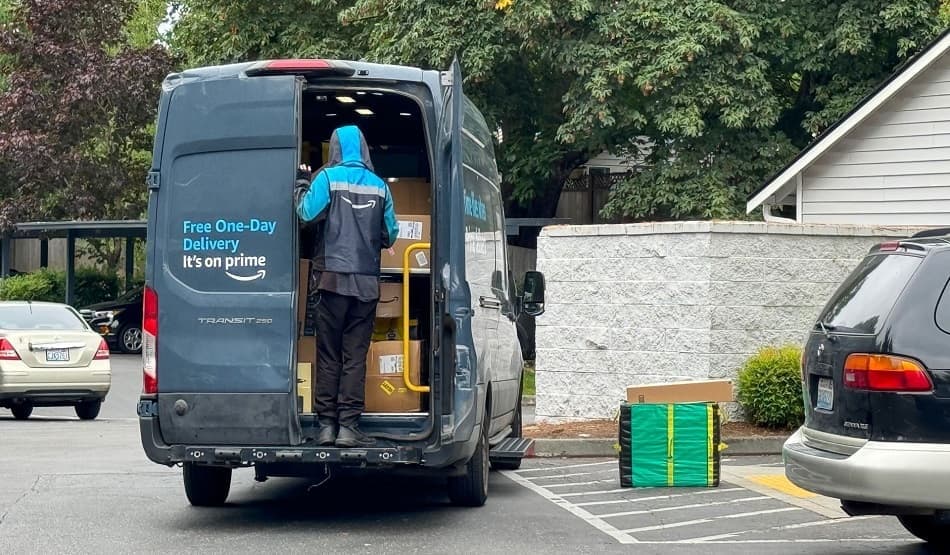
Amazon became the largest carrier in the United States by parcel delivery volume in 2025. According to ShipMatrix data, the company narrowly surpassed the U.S. Postal Service (USPS), delivering 6.7 billion packages in 2025, compared with USPS’s 6.6 billion. During the same period, UPS handled 4.4 billion packages, while FedEx delivered 3.6 billion. This picture shows that Amazon is no longer only an e-commerce giant, but also one of the country’s most powerful last-mile logistics players.

Dependence on USPS Has Declined

Three main factors stand out behind Amazon’s rise: growth in online sales volume, the expansion of its rural delivery network, and reduced dependence on UPS. As Reuters previously reported, Amazon plans to invest more than $4 billion by the end of 2026 to expand its rural coverage. This is helping the company scale its own network while relying less on external carriers.

The U.S. Domestic Parcel Market Reached 23.9 Billion Shipments

Across the market as a whole, growth remained limited. According to ShipMatrix, the U.S. domestic parcel market reached a total of 23.9 billion shipments in 2025, with annual volume growth of only 0.4%. Revenues, however, rose by 4.1%. A major reason for this was that large carriers supported their revenues through price increases. The projected compound annual growth rate for the next three years stands at 3.9%.

The Balance of Power in the U.S. Logistics Market Has Shifted Permanently

Another notable development is that traditional carriers are moving away from low-margin e-commerce deliveries. UPS and FedEx are shifting toward healthcare, data centers, and higher-yield enterprise segments instead of low-value B2C shipments to homes. This is opening space not only for Amazon, but also for Walmart, Target, and smaller parcel carriers. According to ShipMatrix data, the volume of carriers outside the top four increased by 13% year over year in 2025.

Amazon’s overtaking of USPS signals that the balance of power in the U.S. logistics market has changed permanently. Pitney Bowes had previously projected that Amazon would not take the lead until 2028. The company has crossed that threshold earlier than expected.

Amazon to Reduce USPS Package Volume

Meanwhile, Amazon is reportedly planning to reduce the number of packages it ships through the U.S. Postal Service by at least two-thirds by this fall. This shift is expected to accelerate as the current contract expires in the September–October 2026 period. Amazon is not expected to sever ties with USPS completely; however, the company is said to be preparing for a smaller-scale partnership while shifting delivery volume to its own network and alternative carriers.

The most critical impact of this decision may be felt on the USPS side. USPS currently handles about 1.7 billion Amazon packages annually, and the agency has already warned Congress that it could face a cash squeeze in the fall of 2026. It is reported that the Postal Service’s accumulated net losses since 2007 have exceeded $118 billion, while new Postmaster General David Steiner has said the system is not sustainable in its current form.

Amazon to Invest More Than $4 Billion to Expand Rural Delivery Capacity

The picture looks different from Amazon’s side. The company has aggressively expanded its own logistics network in recent years. Amazon plans to invest more than $4 billion by the end of 2026 to increase its rural delivery capacity. In doing so, it aims to reduce its dependence on USPS, especially in rural areas.

For USPS, the issue is not only the loss of Amazon volume; if that volume declines, part of the delivery infrastructure expanded in recent years could also be left underutilized. For that reason, the agency has reportedly launched a competitive bidding process for its last-mile delivery network and has received offers from more than 20 companies. However, Amazon’s decision to reduce volume shows that the center of gravity in U.S. e-commerce logistics is now shifting more clearly toward in-house networks.