WORLDEF ISTANBUL 2026 - Upcoming Event

Register Now

E-Commerce Tensions Rise: South Korea Calls for “Mutual Respect” in US Dispute

E-Commerce Tensions Rise: South Korea Calls for “Mutual Respect” in US Dispute

South Korea has called for “healthy” and mutually respectful relations with the United States as tensions escalate over an ongoing investigation into e-commerce giant Coupang.

Speaking at a cabinet meeting, President Lee Jae Myung emphasized the importance of maintaining strong alliances while addressing disputes through “common sense and principles.”

The remarks come amid growing friction between Seoul and Washington following a probe into Coupang, a US-listed e-commerce company, after a major data breach exposed the personal information of more than 33 million users.

E-Commerce Probe Triggers Lawmakers’ Pushback Against US Pressure

The issue has sparked political reaction inside South Korea. Around 90 lawmakers have criticized what they describe as US interference in domestic legal matters related to the investigation.

The group plans to formally protest to the US embassy in Seoul, insisting that the probe should proceed independently without external influence.

The dispute has also drawn attention due to Coupang’s lobbying activity in Washington. Reports indicate the company has spent over $1 million this year engaging with US policymakers, including the White House and Congress.

Data Breach at the Center of Diplomatic Friction

At the core of the conflict is a massive cybersecurity incident disclosed in 2025, which compromised sensitive customer data such as names, phone numbers, and delivery details.

The investigation into the breach has triggered broader geopolitical concerns, as US officials and lawmakers have raised questions about whether American firms are being unfairly targeted.

Recent developments suggest the situation is evolving beyond a regulatory issue into a diplomatic challenge, with both countries attempting to balance legal processes and strategic cooperation.

A Test for US–South Korea Economic Relations

The Coupang case highlights the growing intersection between e-commerce regulation, data security, and international relations. While both governments have reiterated their commitment to cooperation, the dispute underscores how digital economy issues can quickly escalate into broader geopolitical tensions.

For global e-commerce stakeholders, the situation serves as a reminder that data governance and cross-border business operations are increasingly tied to political dynamics, especially when major platforms operate across jurisdictions.

Source

40 Billion Boost EU Small Businesses Hit Record Amazon Sales Milestone

40-billion-boost-eu-small-businesses-hit-record-amazon-sales-milestone

Small and medium-sized enterprises across Europe have reached a new level of scale, generating more than €40 billion in sales through Amazon. The figure marks a record milestone and reflects the increasing reliance of European businesses on digital marketplaces to expand beyond local economies.

The growth is closely tied to the continued rise of cross-border e-commerce within the European Union. A significant share of total sales comes from exports, with EU-based SMEs generating €17 billion in cross-border revenue. Of that, €13.5 billion was driven by trade within EU countries, highlighting the importance of regional integration in enabling digital commerce.

Marketplace Infrastructure Expands SME Reach

For many European sellers, Amazon has evolved from a sales channel into a core infrastructure layer supporting international expansion. By providing fulfillment networks, warehousing, delivery solutions, and localized storefronts, the platform allows SMEs to operate across multiple markets without establishing a physical presence in each country.

This shift has enabled smaller businesses to compete in ways that were previously limited to large enterprises. Instead of navigating fragmented logistics systems independently, sellers can rely on centralized operations that simplify shipping, inventory management, and customer service.

At the same time, the ability to reach customers across borders has contributed to a more diversified revenue base. Rather than depending solely on domestic demand, SMEs are increasingly building international customer portfolios, reducing exposure to local market fluctuations.

Cross-Border Trade Becomes Core Strategy

The strong export figures indicate that cross-border commerce is no longer a secondary growth lever for European SMEs. Instead, it is becoming a central component of their business models. Access to a broader customer base, combined with streamlined logistics, has lowered the barriers to international expansion.

This transformation is particularly important in a region like Europe, where multiple languages, currencies, and regulatory environments historically made cross-border trade complex. Digital marketplaces are helping to standardize many of these processes, making it easier for businesses to scale regionally.

Regulatory Complexity Continues to Challenge Growth

Despite the progress, structural challenges remain. European SMEs still operate within a fragmented regulatory landscape that includes varying VAT systems, compliance requirements, and environmental regulations across different countries.

These differences create additional administrative burdens, increasing operational costs and slowing down expansion efforts. For smaller businesses with limited resources, navigating these complexities can become a significant barrier to growth, even when demand exists.

Industry stakeholders continue to highlight the need for greater harmonization across EU markets. Simplifying tax structures and aligning regulatory frameworks could further accelerate cross-border trade and improve competitiveness.

A Defining Moment for European Digital Commerce

The €40 billion milestone underscores a broader shift in how European SMEs approach growth. Digital marketplaces are no longer supplementary tools but are becoming foundational to how businesses operate, scale, and compete internationally.

As infrastructure continues to improve and regulatory discussions evolve, the role of platforms like Amazon in shaping Europe’s e-commerce landscape is expected to expand further.

Source

Kenya to Establish State-Backed E-Commerce Platform for Small Businesses

e-commerce

Kenya has launched a feasibility study for a potential state-backed online marketplace for micro, small, and medium-sized enterprises (MSMEs). The project will enable millions of small businesses to access online trade.

According to a statement by Kenya’s State Department for Micro, Small and Medium Enterprises Development, the project is being carried out under the Kenya Jobs and Economic Transformation Project (KJET), a multi-component initiative supported by the World Bank. Accordingly, the government is seeking consultants to evaluate alternatives such as scaling up existing private digital marketplaces or developing a government-led or public-private partnership platform. The government is focusing on how MSMEs, which are the backbone of Kenya’s economy, can be integrated into formal digital commerce channels.

The feasibility study for the state-backed e-commerce platform has been structured to keep multiple implementation pathways open. Within this framework, the option of expanding existing private platforms by identifying policy, financial, and coordination mechanisms through which the government can increase MSME participation is being evaluated.

As part of the project, MSME segments will be profiled. Then, priorities will be determined, and demand for the digital marketplace will be analyzed within the scope of both sellers’ and buyers’ needs. In addition, mobile money use and the digital payment system will also be examined. The study will also evaluate the feasibility of an e-commerce marketplace to be established under government leadership or through a public-private partnership.

Evaluations Will Be Requested from the Consultant for the State-Backed E-Commerce Marketplace

The consultant who will evaluate the planned state-backed e-commerce marketplace in Kenya will be asked to estimate operational and financial costs, identify potential revenue streams, and determine the scale and duration of any public subsidies that may be required. The consultant will also be asked to analyze issues such as governance structures, oversight mechanisms and risk mitigation measures, licensing, registration requirements, consumer protection rules, data protection obligations, cybersecurity standards, dispute resolution mechanisms, and platform accountability.

One of the central components of the study will also be to assess Kenya’s readiness to support broader participation in digital marketplaces. In this context, connectivity and device access, interoperability of digital payments, hosting and cybersecurity capacity, and the effectiveness of last-mile logistics systems that remain uneven across the country will be examined.

According to data from the Central Bank of Kenya (CBK), there are approximately 7.4 million MSMEs in the country. These businesses employ an estimated 14–16 million people. The sector accounts for approximately 40 percent of GDP. Available data also shows that MSMEs in Africa are held back from the digital marketplace due to a lack of operational capacity to use e-commerce platforms and fear of fraud.

Top 3 Nordic Retailers Lead Europe’s Cross-Border Seller Ranking

Top 3 Nordic Retailers Lead Europe’s Cross-Border Seller Ranking

Europe’s cross-border ecommerce market is being led by major Nordic multichannel retailers, with Ikea, Jysk and H&M ranking as the best-performing cross-border sellers in Europe. The ranking comes from the eighth edition of the TOP 500 B2C Cross-Border Retail Europe report by Cross-Border Commerce Europe.

The report evaluates companies based on several factors, including sales performance, SEO indicators, international market presence, cross-border visitors, brand authority and local customer options. Ikea kept its leading position, while Jysk moved up from fifth place to second. H&M remained in third place.

Retail Leaders Dominate Cross-Border Sellers in Europe

The top three companies all come from the Nordics and have strong physical retail backgrounds, showing that store-based brands continue to play a major role in online international commerce. Germany’s Zalando is the first pure online player on the list.

Cross-Border Commerce Europe estimates that cross-border ecommerce spending in Europe reached 108 billion euros in 2025, excluding travel. The TOP 500 companies generated 86 billion euros in cross-border online sales, marking 25 percent growth compared to the previous year.

Despite this growth, the market is entering a slower and more stable phase, shaped by macroeconomic pressure and a stronger focus on profitability and operational efficiency.

Source

Read more e-commerce news on WORLDEF.

L’Oréal Reported More Than $14 Billion in Sales in the First Quarter; E-Commerce Reached Double-Digit Figures

L'Oréal

L’Oréal announced that its adjusted like-for-like sales increased by 6.7 percent throughout the first quarter of 2026. It also stated that this growth outpaced the wider global beauty market. The company’s e-commerce sales recorded double-digit growth in Europe and emerging markets.

L’Oréal reported $14.22 billion in sales in Q1 2026. The cosmetics group emphasized that growth was achieved across all divisions, regions, and sales channels. The company announced that adjusted like-for-like sales (LFL) increased by 6.7 percent throughout Q1. It stated that this was above the overall global beauty market.

Europe Made the Biggest Contribution to LOréal’s Sales; Professional Products Delivered the Strongest Performance

According to the data announced by L’Oréal, the company’s sales increased by 3.6 percent compared to the same period of the previous year. LFL growth stood at 7.6 percent. At constant exchange rates, revenue increased by 9.1 percent. However, exchange rate movements had a 5.5 percent negative impact on sales. Every division and every region made a positive contribution throughout Q1.

The biggest contribution came from Europe. Double-digit growth was seen in emerging markets. Professional Products was the strongest-performing division, with 13.1 percent growth. The performances of the other divisions were as follows: dermatological beauty (+10.2 percent), luxe (+5.6 percent), and consumer products (+4.1 percent).

E-Commerce Sales Recorded Double-Digit Growth

The main drivers of L’Oréal’s growth throughout Q1 2026 were fragrances and haircare products. The skincare division reached strong levels of innovation. E-commerce sales recorded double-digit growth, led by Europe and emerging markets. Geographically, Europe reported growth of 5.5 percent, while North America grew by 7.6 percent. North Asia increased by 4.8 percent, South Asia Pacific, Middle East and North Africa – Sub-Saharan Africa rose by 15.4 percent, and Latin America increased by 5.1 percent. On the other hand, North Asia sales declined by 9 percent.

5 Major Moves Instacart’s Instaleap Deal Boosts LATAM Expansion

5 Major Moves Instacart’s Instaleap Deal Boosts LATAM Expansion

Instacart has acquired Instaleap as part of its strategy to expand its enterprise retail technology beyond North America and strengthen its presence in Latin America. The move marks a significant step in the company’s international growth plans, particularly in regions where digital grocery and e-commerce adoption are accelerating.

Instaleap provides e-commerce infrastructure, fulfillment solutions, and order management systems for grocery retailers. The company works with dozens of retail partners across nearly 30 countries, including key markets in Latin America. Through this deal, Instacart gains immediate access to an established network of retailers and operational capabilities in the region.

The acquisition reflects Instacart’s ongoing shift from a delivery-focused platform toward a broader enterprise technology provider. By integrating Instaleap’s solutions, the company aims to support retailers with tools for managing online operations, fulfillment, and omnichannel commerce.

Instaleap Integration Expands Global Retail Technology Capabilities

Following the acquisition, Instaleap will continue operating as a separate subsidiary while being integrated into Instacart’s enterprise platform. The integration is expected to bring together regional expertise with Instacart’s existing technologies, including its storefront solutions, advertising tools, and data-driven systems.

Instacart plans to gradually introduce its product suite to Instaleap’s existing clients, enabling retailers in Latin America to access more advanced digital commerce capabilities. At the same time, the platform’s infrastructure is expected to support expansion into new international markets.

The expansion comes as global retailers increasingly invest in digital transformation and omnichannel strategies. Latin America continues to attract attention as a fast-growing e-commerce market, making it a strategic focus for global technology providers.

With this acquisition, Instacart strengthens its position in the global e-commerce ecosystem while accelerating its efforts to scale retail technology solutions across new regions.

Source

Latin America E-Commerce Boom: 3 Key Growth Signals as Mercado Libre Expands Globally

Latin America E-Commerce Boom: 3 Key Growth Signals as Mercado Libre Expands Globally

The Latin American e-commerce market is entering a new phase of rapid expansion, driven by increasing digital adoption, cross-border trade, and platform investments led by Mercado Libre.

According to recent insights, the region remains one of the most underpenetrated yet high-potential e-commerce markets globally. With internet access rising and mobile commerce accelerating, Latin America is positioned for sustained double-digit growth over the coming years. Mercado Libre, the region’s dominant marketplace, continues to play a central role in shaping this growth trajectory.

Mercado Libre Targets Global Seller Expansion

A key development in 2026 is the platform’s strategic push to onboard international sellers, particularly from China. This move aims to significantly expand product variety, pricing competitiveness, and cross-border trade volumes across Latin America.

By strengthening its global seller network, Mercado Libre is not only enhancing consumer choice but also positioning itself as a bridge between Asian manufacturers and Latin American consumers. This mirrors a broader global trend where marketplaces increasingly integrate international supply chains to stay competitive.

Untapped Market Opportunity Across the Region

Despite strong growth, Latin America still has substantial room for expansion compared to more mature markets like the U.S. and Europe. Large portions of the population are only beginning to adopt online shopping, especially in rural and underserved areas.

Industry data indicates that billions of dollars in additional e-commerce sales are expected in the near term, with both large platforms and small-to-medium sellers benefiting from the surge.

This “white space” opportunity is attracting both regional leaders and global competitors, intensifying the competitive landscape.

Logistics and Fintech Driving Growth

Another major driver behind the region’s e-commerce momentum is infrastructure investment. Mercado Libre continues to expand its logistics network and fintech services, including payments and credit solutions, to support merchants and improve delivery speeds.

Recent investments in fulfillment centers and financial services highlight a broader strategy: building a full ecosystem rather than just a marketplace. This integrated approach is helping reduce friction in online transactions and enabling more consumers to participate in digital commerce.

Outlook

As digital adoption continues and cross-border trade increases, Latin America is expected to remain one of the fastest-growing e-commerce regions globally. Mercado Libre’s expansion strategy, combined with rising consumer demand, signals that the region is moving from an emerging market to a key global e-commerce hub.

Source

EU Regulators Challenge JD.com’s $2.5B Economy Acquisition

EU Regulators Challenge JD.com's $2.5B Economy Acquisition

The European Union has launched a formal review into whether JD.com’s planned $2.5 billion acquisition of German retailer Ceconomy involves unfair state subsidies from China.

The investigation, led by the European Commission, is being conducted under the EU’s Foreign Subsidies Regulation (FSR) – a relatively new framework designed to prevent non-EU government support from distorting competition within the bloc.

Deadline set for initial findings

Regulators have set a May 28, 2026 deadline for the preliminary assessment. If concerns persist, the Commission may escalate the case into a full-scale investigation, potentially requiring JD.com to make concessions to proceed with the deal.

Interestingly, the acquisition does not fall under standard EU merger control rules, but is instead being scrutinized purely on subsidy-related concerns, highlighting the growing importance of the FSR in cross-border deals.

Strategic expansion into Europe

If approved, the deal would significantly strengthen JD.com’s international presence by giving it control over Ceconomy’s well-known retail brands, including MediaMarkt and Saturn, which operate across Europe.

This move is part of JD.com’s broader global expansion strategy as Chinese e-commerce giants increasingly look beyond domestic markets for growth.

Mixed regulatory response across Europe

While the EU review is ongoing, the deal has already triggered different reactions at the national level:

  • Italy has approved the transaction with conditions
  • Austria has raised concerns and continues its own scrutiny
  • Other EU countries are monitoring the situation closely

These parallel reviews underline the growing sensitivity around foreign investments in strategic retail and technology sectors.

Why this matters for e-commerce

This case is a strong signal that Europe is tightening oversight on global e-commerce players, especially those backed by state-linked financing. The outcome could:

  • Set a precedent for future Chinese acquisitions in Europe
  • Impact how global e-commerce firms structure cross-border deals
  • Accelerate regulatory fragmentation across EU markets

As the bloc balances openness to investment with competitive fairness, deals like JD.com-Ceconomy are becoming key test cases for the future of international commerce.

Source

Cost Pressure Europe’s 2026 E-Commerce Rules Drive Higher Shipment Costs

Cost Pressure Europe’s 2026 E-Commerce Rules Drive Higher Shipment Costs

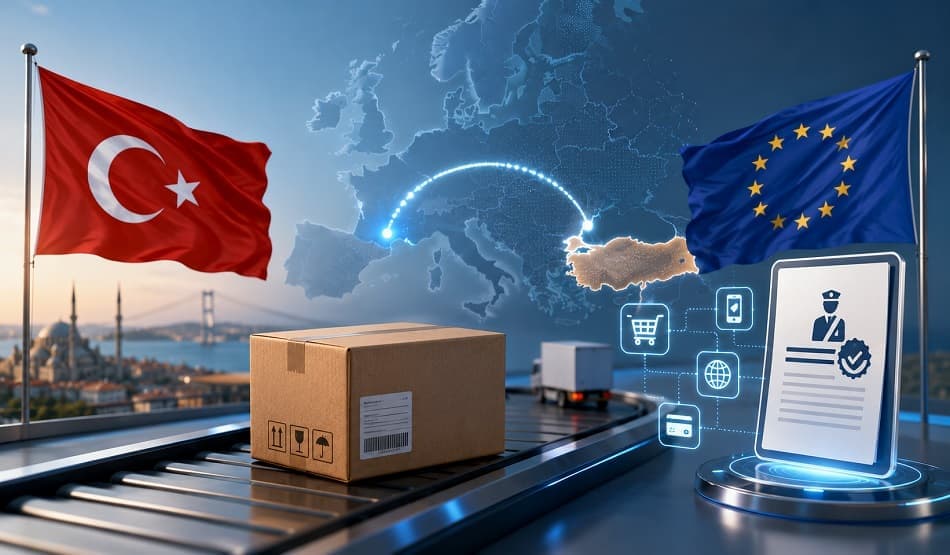
Europe is preparing for a major shift in cross-border online trade as new customs rules begin to reshape the cost of low-value e-commerce shipments. The European Union is ending the €150 duty de minimis threshold from July 1, 2026, meaning imported goods that previously entered the bloc without customs duties may soon face additional charges.

The change comes at a time when low-value parcel volumes remain exceptionally high across the region. In 2025, more than 5.8 billion low-value e-commerce parcels were shipped into the EU. Until now, many of these shipments were exempt from customs duties if they remained below the €150 threshold, allowing international sellers to maintain competitive pricing.

End of Duty-Free Imports Adds New Cost Layers

From mid-2026, that cost equation will begin to change. Under the new approach, imports could become subject to customs duties regardless of order value. The EU is also introducing a temporary €3 customs duty per item category, tied to HS6 product classifications.

This means mixed-product orders may trigger multiple fees. For example, a parcel containing a shirt and jeans could be charged separately for each category, increasing total costs per shipment.

Additional Country-Level Fees Begin to Appear

Some EU countries are already implementing additional fees ahead of the broader reform. Italy plans a €2 per parcel charge, while Romania has introduced fees of around €5 per parcel. In France, a €2 per product category fee has also been applied.

The EU has additionally approved a €2 handling fee per parcel, expected to roll out across member states later in 2026. These costs will be applied alongside VAT and customs duties.

Impact on Pricing, Logistics and Strategy

For e-commerce businesses, the shift introduces both financial and operational challenges. Lower-value orders may become less viable under current pricing models, while customs classification and compliance requirements become more critical.

The broader shift signals a move toward stricter control of cross-border e-commerce imports in Europe. As the new framework takes effect, brands will need to adjust their pricing strategies, logistics structures, and customer experience to adapt to a more regulated environment.

Source

Zalando Plans Bulgaria Launch in August 2026 as Strong European Growth Continues

Zalando Plans Bulgaria Launch in August 2026 as Strong European Growth Continues

Zalando is preparing to launch its platform in Bulgaria, with the rollout expected on August 1, 2026, according to information shared through its Partner Program. The move is part of the company’s ongoing expansion strategy across Europe.

The German-based online fashion and lifestyle platform had previously confirmed plans to enter three new markets in 2026: Portugal, Greece, and Bulgaria. Operations in Portugal and Greece have already been launched earlier this year, while Bulgaria is set to become the next market added to its network.

Partner Program Signals Market Entry Preparation

Although Zalando has not yet officially opened its platform to Bulgarian consumers, preparations are already underway. The company has started onboarding brands and retailers through its Partner Program, enabling them to prepare their product listings and integrations ahead of launch.

The Partner Program allows third-party brands to sell directly on Zalando’s platform, using its infrastructure for logistics, payments, and customer access. This model enables Zalando to expand into new markets without relying solely on its own inventory.

Brands joining the platform ahead of launch are expected to be ready for immediate sales once the Bulgarian site goes live.

Bulgaria Becomes Next Step After Southern Europe Expansion

The expansion into Bulgaria follows Zalando’s recent entries into Portugal and Greece, both of which were announced and launched in early 2026. These additions mark a continued effort by the company to increase its presence in Southern and Eastern Europe.

Zalando currently operates in more than 20 European markets and serves over 50 million active customers. Its platform offers a wide range of fashion, footwear, and lifestyle products from both global brands and local retailers.

Marketplace Model Supports Scalable Growth

Zalando’s hybrid business model combines direct retail operations with marketplace functionality. Through this structure, the company integrates partner brands into its ecosystem, allowing them to manage assortment and pricing while leveraging Zalando’s customer base.

The onboarding of partners ahead of the Bulgaria launch indicates that the company is following a phased expansion approach, preparing supply and operational capacity before opening the platform to consumers.

Timeline and Rollout Details

While Zalando has not issued a detailed public announcement specifically for Bulgaria, internal partner communications point to an August 1, 2026 launch timeline.

Further updates regarding local operations, logistics partnerships, and marketing activities are expected to be shared closer to the official launch date.

Source

For more insights and the latest updates, read more on WORLDEF News