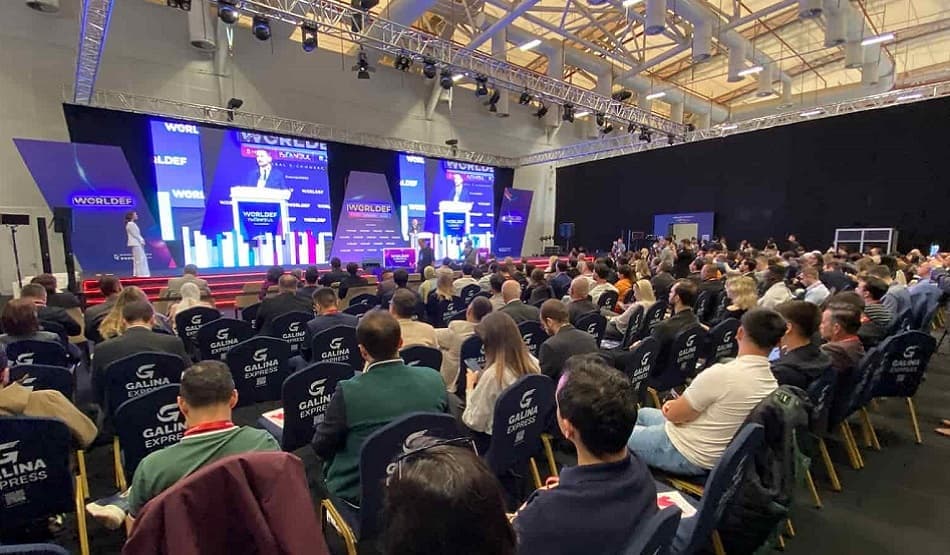
WORLDEF ISTANBUL 2026 - Upcoming Event

Register Now

DIEZ Reports 19.4% Revenue Growth as Dubai Strengthens Global Competitiveness

DIEZ Reports 19.4% Revenue Growth as Dubai Strengthens Global Competitiveness

Dubai Integrated Economic Zones (DIEZ) has announced strong financial and operational performance, highlighting its growing role in reinforcing Dubai’s position as a global economic and technology hub.

According to the latest figures, DIEZ recorded a 19.4% increase in revenue alongside a 17.8% rise in net profit, signaling sustained momentum across its integrated economic zones. These results reflect continued investor confidence and the effectiveness of Dubai’s pro-business ecosystem.

Integrated ecosystem drives expansion

DIEZ’s ecosystem continues to expand rapidly, with a 24.6% growth in the number of registered companies operating within its zones. The total workforce has also increased significantly, reaching 106,359 employees, marking a 26.2% rise in overall employment.

This growth underscores the attractiveness of Dubai as a destination for global enterprises, startups, and technology-driven businesses seeking regional and international expansion.

Major investments to fuel future technologies

Looking ahead, DIEZ is focusing heavily on strategic innovation and infrastructure development through key projects such as District IO and Block 14. These initiatives are expected to play a central role in advancing emerging technologies and digital transformation.

The organization has outlined ambitious targets, including:

  • $12.8 billion in total investments
  • Attraction of 6,500 global companies
  • Creation of 70,000 new job opportunities over the next decade
  • $30 billion in expected foreign direct investment by 2036
  • A projected $103 billion contribution to GDP by 2036

These figures highlight DIEZ’s long-term vision to position Dubai at the forefront of global innovation, particularly in areas such as AI, digital commerce, and advanced technologies.

Dubai strengthens its global economic positioning

The latest performance reinforces Dubai’s broader strategy to enhance its global competitiveness through innovation, infrastructure, and investor-friendly policies. By fostering a dynamic and scalable business environment, DIEZ continues to support the emirate’s ambition to become a leading global hub for future industries.

As global competition intensifies, DIEZ’s growth trajectory signals not only strong local performance but also Dubai’s increasing influence in shaping the future of international trade and technology ecosystems.

Source

Network International Partners with WooCommerce to Strengthen E-Commerce Payments

Network International

Network International (Network), the leading fintech company across the Middle East and Africa (MEA), has entered into a strategic partnership with WooCommerce, one of the world’s most widely used open-source e-commerce platforms. Through this collaboration, merchants in the MEA region will be able to integrate Network’s payment features directly into their WooCommerce stores. This partnership will enable merchants to access seamless, secure, and locally relevant payment solutions.

Network International’s Plugin Is Now Available on WooCommerce

The partnership between Network International and WooCommerce introduces several major enhancements designed especially to support merchants and accelerate digital adoption across the region. Network’s powerful payment plugin, “N-Genius Online by Network for WooCommerce,” is now available for installation directly through the WooCommerce Marketplace. The plugin will be prominently featured within WooCommerce’s payment settings interface, providing high visibility to merchants looking for a payment provider or seeking to optimise their existing infrastructure.

Merchants can activate Network International’s payment solution within seconds. This allows them to go live instantly and begin accepting payments faster. The integration also supports local payment methods. By adhering to specific compliance frameworks, it meets settlement preferences suitable for MEA merchants. In this way, it delivers a seamless, secure, and fully compliant payment experience tailored to regional needs.

“The Collaboration Will Deliver an Unparalleled Payment Experience to Consumers Across the Region”

Martin Pitcock, SVP of E-Commerce and Digital Experience at Network International, said: “By integrating our advanced payment solutions seamlessly into one of the world’s most popular e-commerce platforms, we are making it easier for MEA merchants to access secure, localised, and efficient payment processing services. This collaboration will increase the adoption of digital commerce across the region, drive economic growth, and advance financial inclusion for many predominantly cash-based businesses, while also delivering an unparalleled payment experience to consumers across the region.”

“This Integration Addresses Critical Market Needs”

Kevin Wild, Director of Payment Partnerships at WooCommerce, said: “This integration addresses critical market needs; it simplifies the payment activation process and ensures that WooCommerce store owners can effectively serve their customers with trusted and compliant payment options. It also underscores our commitment to providing a robust and relevant platform for businesses worldwide.”

According to a study conducted by Euromonitor International in cooperation with EZDubai, the UAE’s e-commerce market is expected to exceed AED 50.6 billion by 2029.

5 Powerful Trends Driving Asia’s E-Commerce Growth Boom

5 Powerful Trends Driving Asia’s E-Commerce Growth Boom

Asia’s e-commerce landscape is entering a new phase of accelerated growth, driven by digital adoption, cross-border expansion, and evolving consumer behavior. As one of the world’s fastest-growing regions for online retail, Asia continues to reshape global commerce with new business models and technology-led transformation.

One of the most significant drivers is the rapid rise of cross-border e-commerce. With regional agreements and improved logistics infrastructure, businesses are increasingly selling beyond domestic markets. Southeast Asia, in particular, is emerging as a high-potential hub thanks to its expanding middle class and growing purchasing power.

Consumer behavior is also shifting quickly. Shoppers across Asia are becoming more digitally native, purchasing more frequently and expecting seamless online experiences. In markets like ASEAN, consumers regularly shop online and show strong openness to international brands, reflecting a broader trend toward globalized digital consumption.

Asia E-Commerce Is Entering a High-Growth, Tech-Driven Era

Another critical factor is the rise of mobile and social commerce. Platforms such as social media and messaging apps are playing an increasingly central role in product discovery and purchasing decisions. This shift is transforming how brands engage with consumers, emphasizing personalization, convenience, and real-time interaction.

Technology is also redefining the e-commerce ecosystem. From AI-driven recommendations to smart logistics and data infrastructure, businesses are investing heavily in digital capabilities. The growing demand for data services and digital infrastructure highlights how deeply integrated e-commerce has become within broader technological ecosystems.

At the same time, competition in Asia’s e-commerce market is intensifying. As more businesses enter the space, differentiation through customer experience, brand trust, and product quality is becoming increasingly important. Consumers are no longer driven solely by price, they are prioritizing authenticity, reliability, and overall value.

Finally, supply chain diversification is playing a major role. Companies are adopting new sourcing strategies across Asia, particularly in Southeast Asia, to ensure resilience and scalability. This shift is strengthening the region’s position as both a consumption and production powerhouse in global e-commerce.

Source

5 Strategic Gains as Ministry Advances E-Commerce Strategy with Regional Digital Trade Project

5 Strategic Gains as Ministry Advances E-Commerce Strategy with Regional Digital Trade Project

A government ministry has highlighted significant progress in its national e-commerce strategy while officially launching a new regional digital trade initiative aimed at accelerating economic integration and digital transformation.

The newly introduced “Digital Trade in the Southern Mediterranean Region” project represents a major step toward building a unified digital commerce ecosystem across multiple countries. The initiative is supported by the European Union and the German government, and implemented in partnership with international development agencies.

Strengthening Regional Digital Trade

The project will be rolled out across Jordan, Egypt, Morocco, and Tunisia, while also enabling knowledge exchange with countries such as Libya, Lebanon, Palestine, and Algeria.

Its primary objective is to enhance regional economic integration by improving countries’ readiness to participate in the global digital trade system. The initiative reflects a shared vision among participating nations to align with rapidly evolving global commerce trends and digital transformation priorities.

5 Key Pillars Driving the Strategy

The regional project is structured around five core pillars:

  • Development of national e-commerce strategies
  • Enhancement of digital tools and infrastructure
  • Facilitation of cross-border e-commerce
  • Empowerment of the private sector
  • Knowledge-sharing and regional collaboration

These pillars are designed to create a more inclusive and scalable digital economy, particularly for emerging markets.

Supporting SMEs and Digital Entrepreneurs

A major focus of the strategy is enabling small and medium-sized enterprises (SMEs) to enter and scale within the digital economy.

Programs such as EcomConnect and Click-Business have already supported businesses by providing access to e-commerce platforms, digital tools, and targeted training initiatives.

Additionally, collaborations with universities and institutions such as the TechForward initiative involving 12 universities are helping align education with private sector needs in areas like artificial intelligence, fintech, and digital platforms.

Building a Future-Ready Digital Economy

The ministry emphasized that these efforts are part of a broader strategy to ensure long-term economic resilience and competitiveness. By investing in digital trade infrastructure and cross-border collaboration, the initiative aims to position participating countries as active players in the global digital economy.

Source

Latin America’s $191B E-Commerce Boom: 4 Strategic Trends Sellers Must Master

Latin America’s $191B E-Commerce Boom: 4 Strategic Trends Sellers Must Master

Latin America is rapidly emerging as one of the most attractive frontiers in global e-commerce. With projected online sales reaching $191 billion, the region is outpacing many mature markets and offering significant opportunities for brands willing to adapt to its unique dynamics.

However, success in Latin America is not simply about entering a new geography, it requires a fundamental shift in strategy, particularly across mobile, payments, logistics, and customer experience.

Mobile-First Is Not Optional – It’s Everything

In Latin America, mobile commerce dominates the landscape. Between 70% and 85% of transactions happen via smartphones, making mobile optimization a critical requirement rather than a competitive advantage.

Consumers are not just browsing on mobile, they are shopping, communicating, and completing purchases through platforms like WhatsApp and regional super apps. Businesses that fail to integrate into these ecosystems risk missing the majority of their potential audience.

Payment Localization Unlocks Growth

One of the defining characteristics of the region is its large unbanked population, estimated at around 40% of consumers.

To address this, alternative payment methods have become essential. Systems like Brazil’s Pix and Mexico’s OXXO, alongside Buy Now Pay Later (BNPL) options, are driving inclusion and significantly increasing conversion rates. Global brands entering the market must prioritize localized payment solutions to compete effectively.

Logistics Speed Defines Competitive Advantage

Logistics has historically been a major barrier in Latin America, but this is rapidly changing. The rise of micro-fulfillment centers in urban areas is transforming delivery expectations, enabling same-day shipping in major cities.

Rather than relying solely on centralized warehouses, companies are adopting decentralized models that prioritize proximity to customers. This shift not only reduces delivery times but also improves reliability, an essential factor in a region where customer loyalty can be fragile.

AI-Powered Personalization Becomes Standard

Artificial intelligence is playing an increasingly central role in shaping the customer journey. From conversational commerce via chatbots to personalized product recommendations, AI is becoming the backbone of customer engagement.

In Latin America, where messaging platforms dominate communication, AI-driven interactions are not just enhancing support, they are actively driving sales.

A Market That Rewards Localization

Latin America’s e-commerce growth is driven not by scale alone, but by adaptability. Brazil and Mexico account for over 70% of regional volume, making them the ideal entry points for international sellers.

The brands that succeed will be those that rethink their entire operating model, building for mobile-first users, integrating local payment systems, optimizing last-mile delivery, and leveraging AI to personalize experiences at scale.

For global e-commerce players, Latin America is no longer a secondary market, it is a strategic growth engine for the next decade.

Source

Chinese Sellers Gain 1 Big Advantage on Russia’s Fast-Growing Shopping Platforms

Chinese Sellers Gain 1 Big Advantage on Russia’s Fast-Growing Shopping Platforms

Chinese sellers are expanding their presence across Russia’s fast-growing shopping platforms, as cross-border e-commerce between the two countries continues to strengthen. A new CGTN report published on April 19 highlights how Chinese merchants are finding new momentum in Russia’s online retail market, supported by rising demand, improving logistics, and a broader shift in regional trade patterns.

This trend reflects more than just marketplace growth. It shows how digital trade is becoming a practical bridge between neighboring economies at a time when supply chains, payment systems, and market access are being reshaped. Russian consumers are increasingly turning to large online marketplaces for price-competitive goods, while Chinese sellers are responding with a wider product range and faster fulfillment options.

Why Every Seller Is Targeting Russia’s E-Commerce Growth

One of the key reasons behind this growth is infrastructure. As cross-border logistics routes improve, Chinese products can reach Russian buyers faster and more reliably than before. Warehousing, customs processing, and marketplace integration are becoming more streamlined, helping sellers operate at greater scale. That operational progress matters because online retail success increasingly depends not only on product pricing, but also on delivery speed, inventory visibility, and customer trust.

The development also underlines the growing strategic role of shopping platforms in international commerce. Marketplaces are no longer just sales channels; they are becoming ecosystems that connect merchants, consumers, logistics providers, and payment networks. In the Russia-China corridor, that ecosystem is giving Chinese sellers a stronger foothold in a market that continues to adapt to new trade realities.

For the wider e-commerce industry, this story is another sign that regional digital trade corridors are becoming more influential. As businesses seek growth beyond traditional Western markets, neighboring high-demand markets with scalable marketplace infrastructure are attracting greater attention. Chinese sellers thriving on Russia’s shopping platforms is therefore not just a bilateral trade story. It is also a signal of how e-commerce is evolving into a more regional, resilient, and platform-driven model of global retail.

Source

Malaysia’s Online Shopping Boom Shows Strong 13% Growth Momentum

Malaysia’s Online Shopping Boom Shows Strong 13% Growth Momentum

Malaysia’s e-commerce sector continues to accelerate, driven by a sustained surge in online shopping behavior and increasing digital adoption across the country. The latest data highlights a strong upward momentum, positioning Malaysia as one of Southeast Asia’s most dynamic digital commerce markets.

The rapid growth is largely fueled by widespread smartphone usage, improved internet connectivity, and the rising confidence of consumers in digital payment systems. With more Malaysians shifting toward online platforms for everyday purchases, the country’s retail landscape is undergoing a significant transformation.

According to market insights, Malaysia’s e-commerce market is expected to maintain double-digit growth, supported by favorable government initiatives and a strong digital infrastructure. The sector is projected to grow at around 13% annually in the coming years, reflecting consistent expansion in both urban and emerging markets.

One of the key drivers behind this momentum is the country’s mobile-first consumer behavior. A large portion of online transactions are now completed via smartphones, making convenience and accessibility critical factors in shaping purchase decisions. Additionally, digital wallets and real-time payment systems are reducing friction, encouraging more users to shop online.

Mobile Shopping Behavior and Digital Payments Fuel Expansion

Malaysia’s young and tech-savvy population plays a central role in accelerating e-commerce adoption. Over 80% of consumers rely on mobile devices for shopping, while social commerce platforms such as live-stream shopping and in-app purchases are gaining traction.

At the same time, competitive dynamics among major platforms like Shopee, Lazada, and TikTok Shop are intensifying. These companies are investing heavily in user acquisition strategies, including discounts, free shipping, and integrated entertainment experiences. As a result, online shopping is evolving beyond simple transactions into a more engaging and interactive experience.

Another notable trend is the expansion of small and medium-sized enterprises (SMEs) into digital channels. Government-backed initiatives and improved access to financial tools are enabling more businesses to participate in the e-commerce ecosystem, increasing product diversity and market competition.

Despite the rapid growth, challenges remain. Rising customer acquisition costs and increasing competition are putting pressure on profitability. Additionally, logistical barriers in rural areas continue to limit nationwide accessibility.

Nevertheless, Malaysia’s e-commerce outlook remains highly positive. With continuous investment in infrastructure, digital payments, and innovation, the country is expected to sustain its growth trajectory and further strengthen its position as a key player in Southeast Asia’s digital economy.

Source

1 Strategic Boost as Bulgaria Strengthens E-Commerce Logistics Through New Partnership

1 Strategic Boost as Bulgaria Strengthens E-Commerce Logistics Through New Partnership

Bulgaria’s e-commerce logistics sector is entering a new phase of development as euShipments.com partners with Speedy, one of the country’s leading courier companies, to strengthen last-mile delivery capabilities.

The collaboration aims to enhance delivery performance and expand service coverage for online merchants operating in Bulgaria. Through this partnership, euShipments’ clients will gain access to Speedy’s full delivery portfolio, including home delivery and out-of-home (OOH) options such as parcel lockers and courier offices.

This move reflects the growing importance of efficient last-mile logistics in a rapidly evolving e-commerce landscape, where delivery speed and flexibility directly impact customer satisfaction.

Expanding Delivery Options and Performance

The integration between euShipments and Speedy is designed to provide a more seamless logistics experience for both merchants and end customers. With Speedy’s extensive infrastructure, businesses can now offer more flexible delivery choices, improving convenience and increasing successful delivery rates.

Speedy currently holds a strong position in the Bulgarian courier market, handling over 50 million parcels annually and serving more than 1 million customers.

For online sellers, this means access to a reliable and scalable last-mile network an essential component for growth in competitive e-commerce environments.

The partnership was also driven by operational challenges experienced during peak periods, particularly in late 2025, highlighting the need for stronger and more resilient delivery solutions.

Strengthening Bulgaria’s E-Commerce Ecosystem

Bulgaria is increasingly becoming an attractive market for e-commerce, supported by steady growth in online shopping and improving digital infrastructure. However, logistics remains a key differentiator in market success.

By combining euShipments’ cross-border logistics expertise with Speedy’s local delivery network, the partnership creates a fully integrated end-to-end solution for both domestic and international merchants.

Additionally, the collaboration supports features such as cash-on-delivery (COD) a widely preferred payment method in the region and efficient returns management, both critical for maintaining customer trust and operational efficiency.

A Regional Signal for Logistics Innovation

This partnership highlights a broader trend across Central and Eastern Europe: logistics providers are investing heavily in localized last-mile solutions to support cross-border e-commerce growth.

As competition intensifies, the ability to offer fast, flexible, and reliable delivery is becoming a core competitive advantage not just an operational necessity.

For retailers and logistics providers alike, Bulgaria’s latest move signals a clear direction: strong partnerships and integrated networks will define the future of e-commerce logistics.

Source

73% of Portuguese Shoppers Drive Smart Price-Focused Growth in E-Commerce

73% of Portuguese Shoppers Drive Smart Price-Focused Growth in E-Commerce

Portugal’s e-commerce market is increasingly shaped by price-conscious consumers, with new data revealing that 73% of online shoppers are primarily driven by price when making purchase decisions.

According to recent research, competitive pricing remains the dominant factor influencing consumer behavior in Portugal’s digital commerce ecosystem. In addition, 71% of shoppers are strongly influenced by promotions and discounts, reinforcing the importance of value-driven strategies for online retailers.

These findings highlight a clear trend: Portuguese consumers are becoming more rational and selective, prioritizing affordability while navigating a rapidly evolving e-commerce landscape.

Discounts, Comparison, and Smart Shopping Behavior

The growing sensitivity to price is also reflected in how consumers shop. Around 51% of Portuguese shoppers actively use price comparison tools before completing a purchase, indicating a shift toward more informed and strategic buying decisions.

However, price is not the only factor. Consumers are also placing increasing importance on trust, platform usability, and overall shopping experience. This suggests that while competitive pricing is essential, it must be combined with reliability and convenience to win customer loyalty.

Marketplaces continue to dominate the Portuguese e-commerce ecosystem, with 81% of consumers preferring to shop through these platforms, followed by official brand websites and retailer-owned online stores.

E-Commerce Growth with Higher Expectations

Portugal’s digital commerce sector is expanding, but with more demanding consumers. While 63% of shoppers report increasing their online purchases over the past two years, expectations around transparency, trust, and service quality are also rising.

This creates a dual challenge for businesses: competing on price while maintaining strong brand credibility and seamless user experiences.

Notably, around 32% of consumers shop online every month, signaling that e-commerce is becoming a habitual part of everyday life rather than an occasional activity.

A Strategic Signal for Retailers

For brands and marketplaces operating in Portugal, the message is clear: price competitiveness is critical but not sufficient on its own.

Retailers must strike a balance between attractive pricing, promotional strategies, and trust-building measures. In a market where consumers are increasingly informed and selective, long-term success will depend on delivering both value and reliability.

As economic conditions continue to influence purchasing behavior, Portugal stands as a strong example of how price sensitivity is reshaping e-commerce strategies across Europe.

Source

89% Pressure: German E-Commerce Sellers Struggle Under Heavy Bureaucracy

89% Pressure: German E-Commerce Sellers Struggle Under Heavy Bureaucracy

Germany’s e-commerce sector is facing growing operational pressure, as new data reveals that nearly 9 out of 10 online sellers consider bureaucracy a major burden on their businesses.

According to a survey conducted by Händlerbund, one of Germany’s leading retail associations, 56% of online sellers describe regulatory requirements as “very heavy,” while another 33% say the burden is consistently high. Combined, this represents 89% of sellers struggling with administrative complexity.

The findings highlight a structural challenge in one of Europe’s largest digital commerce markets where growth is increasingly constrained not by demand, but by compliance.

Compliance Overload Slowing Growth

The most significant pressure points for sellers stem from product safety regulations and packaging requirements, both of which demand extensive documentation and monitoring.

For many businesses, especially SMEs, staying compliant requires substantial time, financial resources, and operational focus. Instead of investing in growth, innovation, or customer experience, companies are allocating increasing effort to navigating complex legal frameworks.

This shift reflects a broader European trend. With the expansion of regulations such as the Digital Services Act and sustainability-related policies, online sellers are facing a rapidly evolving compliance landscape. While these frameworks aim to protect consumers and ensure fair competition, they also introduce significant administrative overhead.

A Balancing Act for Europe’s Digital Economy

Germany’s regulatory environment has long been known for its strict standards, particularly in areas like data protection, product safety, and consumer rights. While this creates a high level of trust among consumers, it also raises barriers for businesses especially smaller merchants trying to scale.

At the same time, policymakers are aware of the issue. Recent initiatives at both national and EU levels aim to reduce bureaucracy and digitize administrative processes, signaling a potential shift toward a more balanced approach between regulation and innovation.

Still, for now, many sellers remain caught between compliance obligations and competitive pressures. The challenge is no longer just about selling products online but about navigating a complex regulatory ecosystem efficiently.

As Europe continues to refine its digital economy policies, the key question remains: Can regulators maintain high standards without slowing down e-commerce growth?

Source