
WORLDEF Istanbul 2026 - Upcoming Event

Register Now

Unlocking E-Commerce in Africa: The Importance of Financing and Digital Infrastructure

Africa is experiencing rapid growth in the digital commerce sector, with e-commerce volumes expanding year after year. However, there are key challenges preventing the continent from fully realizing this potential. Chief among these is the difficulty medium-sized businesses face in accessing financing. While microfinance institutions support smaller enterprises, appropriate credit and investment options remain limited for mid-sized firms. Traditional banks often hesitate to invest in this area due to perceived high risks.

Innovative Approaches to E-Commerce Financing and Digital Transformation

To overcome these challenges, data-driven financing models are gaining prominence. Utilizing digital data such as e-commerce sales, inventory status, and customer feedback can improve credit assessment processes and help businesses access funding more easily. Moreover, data sharing between payment systems, logistics providers, and banks enables more accurate risk analysis.

Public-private partnerships that develop blended finance models facilitate access to capital through risk-sharing mechanisms, increasing the growth potential of businesses. The widespread adoption of mobile payment systems and strengthening of digital infrastructure in Africa also support e-commerce’s reach to broader audiences. This not only accelerates economic development but also delivers social benefits.

In conclusion, unlocking e-commerce in Africa requires easing access to financing and supporting digital transformation. These two elements form the foundation for a stronger digital commerce ecosystem and sustainable growth across the continent.

E-Commerce Tax Revenue in Kyrgyzstan Grows by 17.9% in the First Half of 2025

In the first half of 2025, Kyrgyzstan saw a 17.9% increase in tax revenue generated from e-commerce activities. This growth reflects a combination of rising online sales volumes and more effective tax monitoring systems, in line with the country’s broader digital economic transformation. A particularly notable rise was observed in taxes collected from foreign digital service providers, while local online businesses also began contributing more consistently.

During this period, local e-commerce stores contributed approximately 31 million Kyrgyz soms in taxes. According to government data, total tax revenue from e-commerce in 2024 had already increased nearly sixfold compared to the same period the previous year. This rapid growth is directly linked to the effective implementation of a 2% digital services tax rate introduced on electronic trade activities.

Digital Growth Drives E-Commerce Tax Collection

Data released by the Kyrgyz Ministry of Finance indicates that tax revenue from January to May 2025 alone reached 31 million soms. This demonstrates that digital sales are now a sustainable source of public revenue. Under national tax regulations, companies and individual entrepreneurs conducting online sales are subject to a 2% e-commerce tax. This obligation particularly applies to those selling through digital service providers and online marketplaces.

The Kyrgyz government introduced this taxation policy to support digital economy development and formalize previously unreported income streams. Platforms like Akta and Portal have enhanced transaction tracking, improving compliance and simplifying reporting processes. These systems have helped increase transparency within the e-commerce sector while contributing positively to the state budget.

In summary, the 17.9% increase in Kyrgyzstan’s e-commerce tax revenue in the first half of 2025 highlights how effective digital policies and tax enforcement can generate meaningful economic results. Expanding tax obligations for both local and foreign e-commerce players is proving beneficial for the country’s economic stability.

Ask ChatGPT

BigCommerce Rebrands as Commerce, Entering a New Era of AI‑Driven E‑Commerce

BigCommerce, a long-standing provider of e-commerce infrastructure solutions, announced a major transformation in 2025 as it rebrands under the new name “Commerce.” This strategic shift is far more than a visual makeover—it signals a deep evolution in the company’s technology and service model. Now operating as “Commerce.com, Inc.,” the brand brings together BigCommerce, Feedonomics, and Makeswift under one unified corporate identity.

At the heart of this change lies a concept the company calls “agentic commerce.” In this new model, shopping is not only conducted by people but also by AI-powered digital agents. These agents can search for products, make recommendations, and even complete purchases on behalf of users. The Commerce brand aims to provide future-ready infrastructure that aligns with this AI-driven vision of e-commerce.

A New Era in AI‑Driven E‑Commerce Infrastructure

With this rebranding, Commerce offers businesses faster growth, flexible deployment, and greater operational efficiency. BigCommerce continues to provide its adaptable platform, while Feedonomics enables optimized product catalog syndication across global digital channels. Makeswift allows brands to build custom storefronts through intuitive, drag‑and‑drop tools. Together, these three components create a modular and comprehensive commerce ecosystem.

As AI changes how consumers discover and interact with products, Commerce delivers data‑driven solutions that help brands remain visible and competitive in a shifting digital landscape. Multi‑storefront management, B2B capabilities, pricing optimization, and personalization are just some of the advanced features available. Through this transformation, Commerce isn’t just changing its name—it’s redefining its role in the global e-commerce industry.

The End of the US De Minimis Exemption Will Impact E-Commerce and Logistics Sectors

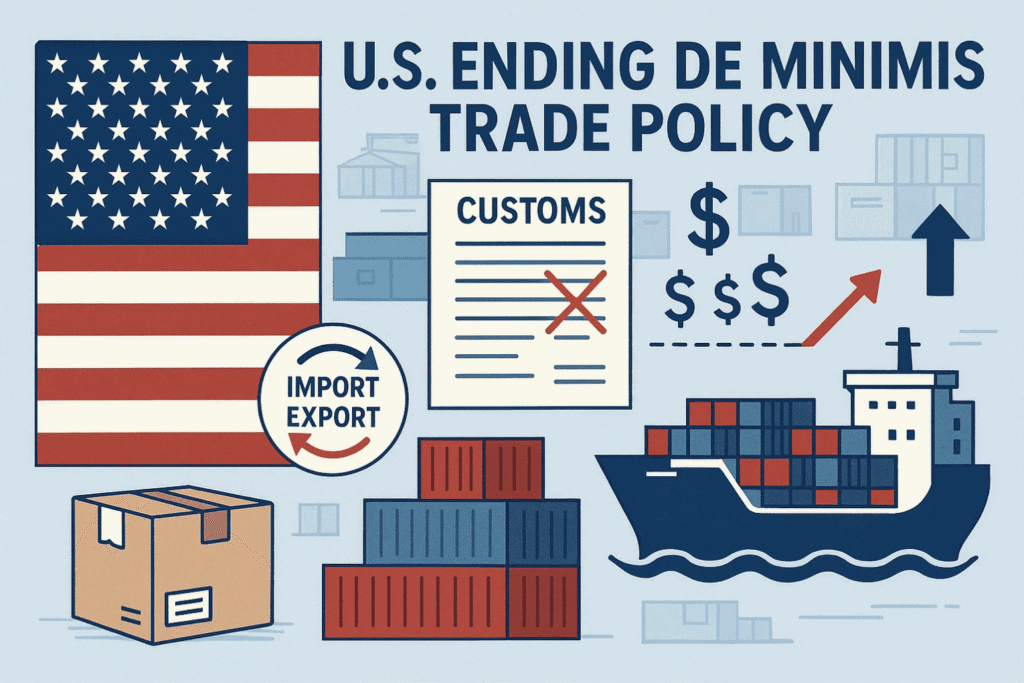
Starting August 29, 2025, the United States announced it will end the “de minimis” exemption for low-value imports from all countries. Previously, this exemption applied only to shipments from China and Hong Kong, allowing goods below a certain value to enter the US without customs duties. However, with the new regulation, all low-value packages entering US borders will now be subject to customs taxes.

This decision marks a significant turning point for international e-commerce platforms and logistics companies. With the removal of the de minimis exemption, all goods valued under $800 will now be taxed. This means increased costs for small and medium-sized shipments, especially those coming from China to the US. E-commerce sites will have to rethink their pricing strategies due to this new application.

Expected Changes in E-Commerce and Logistics

The broader application of customs duties may lead to higher prices for consumers. Shoppers who previously could purchase products for free or at low costs may now face additional charges. This could result in a decline in sales volumes for e-commerce platforms. Additionally, the air cargo and logistics sectors may see a decrease in shipment volumes due to this development. A reduction in air cargo traffic between China and the US is anticipated, which may require the adjustment of transportation capacities.

In conclusion, the US decision to end the de minimis exemption is seen as a major step that will change the dynamics of international trade. Both e-commerce companies and logistics providers will need to reshape their strategies to adapt to the new conditions.

GMG and Amazon Form Strategic Partnership to Transform Digital Retail Experience in MENA Region

Global health and retail company GMG has announced a strategic partnership with Amazon aimed at transforming the online shopping experience across the Middle East and North Africa (MENA) region. This collaboration focuses on offering attractive prices and deals in GMG’s core categories such as Sports, Health & Beauty, and Daily Essentials.

GMG’s New Vision for Digital Retail

As part of the partnership, GMG and Amazon will ensure faster delivery of high-demand products in food, lifestyle, and health categories. They also aim to increase access to GMG’s globally recognized and trusted brands, responding to the growing demand for fast, convenient, and quality service.

Through this agreement, GMG will accelerate its omnichannel strategy by leveraging Amazon’s best practices in artificial intelligence (AI), logistics, and customer service technologies. This move supports GMG’s vision to shape the future of retail in the region by seamlessly integrating its strong physical retail presence with digital experiences.

Mohammad A. Baker, GMG’s Vice Chairman and CEO, stated, “This partnership with Amazon marks a significant milestone in our digital commerce strategy. As consumer behaviors evolve, we are committed to delivering exceptional experiences powered by technology, speed, and relevance.”

Ronaldo Mouchawar, Vice President of Amazon Middle East, Africa, and Turkey, added, “We are proud to collaborate with GMG, a partner that shares our innovative spirit, customer-centric focus, and long-term thinking.”

Gambian Entrepreneur Ebrima Fatty Builds Africa-Focused Digital Marketplace

Ebrima Fatty, with over two decades of experience in both finance and technology, is reshaping e-commerce across Africa through AfricaSokoni, the London-based online marketplace he founded in 2017. The platform connects local producers, retailers, and artisans—particularly in East Africa, including Kenya—to regional consumer demand via a user-friendly online interface.

Ebrima Fatty’s AfricaSokoni: Supporting SMEs and Connecting Markets

AfricaSokoni—which means “market” in Swahili—empowers small and medium-sized enterprises (SMEs), farmers, and artisans by providing tools for inventory management, automated ordering, and supplier relationship support. The platform also offers financing, marketing assistance, packaging solutions, and logistic partnerships, creating new export opportunities for local producers.

Consumers benefit from access to a wide array of goods—ranging from electronics and fashion to home appliances and telecom products—through a streamlined online shopping experience. AfricaSokoni integrates order tracking, stock updates, and supplier coordination features that help stabilize supply chains and improve reliability for both businesses and end-users.

Besides entrepreneurship, Ebrima Fatty serves as a product manager at the Islamic Development Bank in Saudi Arabia, combining his public-sector insights with private-sector innovation. He earned a Master’s degree in Accounting and Finance from the University of Maiduguri, Nigeria in 2000, and began his professional career as a senior auditor at Deloitte that same year. Between 2001 and 2005, he served as financial controller for The Gambia’s Capacity Building for Economic Management Project, contributing to reforms in economic policy and private sector development.

Under his leadership, AfricaSokoni focuses on transforming local markets into regionally integrated digital networks. Fatty’s dual background in finance and technology fuels the platform’s mission: to empower African microentrepreneurs, enhance digital trade infrastructure, and expand cross-border e-commerce opportunities. His work signals a growing paradigm in African tech—where homegrown solutions and digital innovation drive inclusive economic growth.

Mataa Secures Investment to Expand Digital Commerce in Libya and North Africa

Mataa, a key player in North Africa’s digital commerce sector, has successfully completed a seed funding round to expand its operations in the region. This investment will strengthen the company’s goal of removing barriers to digital trade and delivering innovative solutions, particularly in Libya and its surrounding markets. Mataa aims to provide consumers with a faster, more reliable, and accessible shopping experience across the region.

Mataa’s Vision to Strengthen Digital Commerce Infrastructure

With this funding, Mataa plans significant improvements in logistics and digital payment infrastructure. The company is developing innovative technologies to overcome the challenges faced by e-commerce in the region, offering solutions that simplify processes for both sellers and buyers. The founding team, led by CEO Ibrahim Shuwehdi, is focused on driving the growth of the digital economy, especially in emerging markets like Libya.

According to Ibrahim Shuwehdi, this investment marks a crucial milestone for Mataa’s mission to accelerate the adoption of digital commerce and create new economic opportunities across North Africa.

The financial support from investors will enable Mata a to strengthen regional supply chains and optimize digital payment systems. Additionally, new projects aimed at enhancing customer experience are set to be launched. These initiatives are considered crucial for unlocking North Africa’s digital economy potential.

Mataa’s success is seen not only as a milestone for its own growth but also as a positive signal for the development of the venture capital ecosystem in the region. The rapid expansion of digital commerce in Libya and surrounding areas is expected to make a significant contribution to the region’s economic development.

“E-Commerce Will Evolve Significantly in 2025”

Vincenzo Toscano, Founder and CEO of Ecomcy, shared the company’s story with WORLDEF E-COMMERCE. Toscano said, “E-commerce will evolve significantly in 2025,” and shared the trends in e-commerce.

Ecomcy helps brands and businesses succeed in highly competitive marketplaces such as Amazon and Walmart. The company aims to provide innovative, data-driven strategies that optimize sales performance, increase profitability, and build a strong brand presence. Ecomcy strives not only to be a service provider but also to be a trusted partner in its clients’ growth journey.

Vincenzo Toscano stated that the e-commerce consulting industry is highly competitive, with many agencies offering similar services. He explained the areas in which Ecomcy differentiates itself as follows:  “We understand that every brand is unique, so we craft strategies that align with each client’s specific goals. Having worked with clients across the US, Europe, and Asia, we bring a global perspective to local markets. Our focus on measurable results ensures that every strategy delivers tangible growth. We prioritize building relationships that go beyond transactional services, aiming to be trusted advisors for our clients.”

What does Ecomcy offer to Amazon and Walmart sellers?

  • Amazon DSP Management: Advanced programmatic advertising strategies to target high-value audiences and increase brand visibility.
  • PPC Campaign Management: Custom strategies to optimize ad spend, improve ROI, and boost organic ranking.
  • SEO and Listing Optimization: Keyword-rich copywriting, image enhancements, and A+ Content to maximize conversion rates.
  • Product Launch Strategies: Data-driven plans to ensure successful product rollouts, including influencer marketing and promotional tactics.
  • Inventory and Supply Chain Management: Streamlined processes to prevent stockouts and optimize fulfillment costs.
  • Market and Competitor Analysis: Insights into market trends and competitive performance to make informed business decisions.

“E-commerce will evolve significantly in 2025”

Toscano also shared his predictions for the e-commerce ecosystem in 2025. “E-commerce will evolve significantly in 2025,” said Toscano, outlining some key trends as follows: “AI-driven tools will allow sellers to offer hyper-personalized experiences to their customers. Consumers will increasingly demand sustainable products and transparent supply chains.

Brands will need to blend their online and offline strategies seamlessly to capture more market share. Specialized, niche products will gain traction as consumers seek unique solutions tailored to their needs. From customer support to advertising, AI will continue to optimize and streamline processes for sellers.”

Who is Vincenzo Toscano?

Vincenzo Toscano is a seasoned e-commerce expert and entrepreneur with a rich background in helping brands thrive on platforms like Amazon and Walmart. Born in Italy and raised in Venezuela, Vincenzo moved to London, where he honed his skills over eight years, driving success for businesses in the competitive world of online retail.

As the founder of Ecomcy, a UK-based agency specializing in Amazon and Walmart marketing optimization, Vincenzo has built a reputation for delivering tailored strategies that transform businesses. Under his leadership, Ecomcy has become a trusted partner for brands globally, known for its data-driven campaigns, innovative approaches, and client-centric philosophy.

Vincenzo’s journey is marked by his passion for empowering brands to unlock their full potential. Through Ecomcy, he has redefined how businesses approach e-commerce, combining cutting-edge technology, deep market insights, and a personalized touch to help clients achieve sustainable growth.

His efforts have not only boosted sales and visibility for numerous brands but have also enabled them to build stronger connections with their audiences worldwide. Vincenzo’s mission is clear: to revolutionize the e-commerce landscape by offering unparalleled expertise and solutions that drive real impact for brands, no matter their size or industry.

Fynd is changing the future of retail technology

Fynd was founded in 2012 as a multi-platform technology company. Powering over 6,000 global brands and serving over 2,300 businesses, the company powers commerce for iconic names like Puma, Diesel, Tiffany & Co., Emporio Armani, Burberry, Hugo Boss, Superdry and Hamleys. By 2023, Fynd’s platforms served 600 million shoppers with $5 billion GMV. Fynd Co-Founder Farooq Adam told WORLDEF E-COMMERCE the company’s story.

Farooq Adam, Co-Founder of Fynd, said; “Our technology helps retail businesses achieve their goals and transform their operations—both online and offline. We simplify each step of the selling journey, from in-store shopping and e-commerce to order management, supply chain, and delivery, making retail more efficient and profitable.”

 “Our comprehensive ecosystem includes a fully composable unified commerce platform, robust order and store management systems, a warehouse and transport management platform, and specialized logistics modules, alongside hundreds of extensions to enhance online stores.” Adam he said.

The story of Fynd

Fynd was founded by Farooq Adam, Harsh Shah, and Sreeraman Mohan Girija (aka SMG!). The three saw an opportunity to bridge the gap between online and offline retail. By embracing innovation, they have successfully launched an in-store customer engagement solution in India and the UAE with brands like Diesel, Big Bazaar, Being Human, US Polo Association, and Giordano.

Fynd co-founders

  • Farooq Adam – Co-Founder 
  • Sreeraman Mohan Girija – Co-Founder 
  • Ronak Modi – Chief Business Officer – Global

 “We envisioned a future where technology seamlessly integrates with every aspect of selling”

Farooq Adam continued: “The idea of Fynd Commerce was born after a few years with the aim to enrich global commerce. We envisioned a future where technology seamlessly integrates with every aspect of selling. Fast forward to present day, we’re bringing our vision to life with backing from Reliance Jio—one of India’s biggest retailers and formerly from Google. Our constant innovation and expertise in technology have garnered global recognition, including a spot on Fast Company’s top 10 most innovative Asia-Pacific companies of 2022 and being featured as a Harvard Business School case study!”

“Leading retail innovation in the Middle East”

Farooq Adam, Co-Founder of Fynd, shared the following information; “Fynd is transforming retail across the Middle East, working with leading brands in Saudi Arabia, the UAE, and beyond. Our in-depth understanding of the region’s retail landscape enables us to tackle challenges like fragmented shopping journeys and supply chain disruptions, enhancing the customer experience.

Our unified commerce solutions empower brands to create seamless shopping experiences, allowing customers to shop from anywhere with ease. By optimizing order routing, we help reduce delivery times, increase satisfaction, and prevent sales loss.

With instant virtual try-ons (VR-powered), AR shopping, AI-driven assistants, and streamlined checkouts, we help brands craft memorable shopping experiences that appeal to today’s consumers. Our growing presence in the GCC is bringing us closer to our mission of changing retail in the region with future-ready tech.”

Unified commerce platform

Other information given by Farooq Adam is as follows; “Our marquee solution—Fynd Commerce, is an all-in-one platform for all commerce needs. The platforms enables brands to manage all incoming orders (from every channel), set-up automated algorithms and route them to the most efficient stock point and enable quick, cost-effective deliveries, all in one place.

Brands can also build and customize their ecommerce websites, add custom functionality with extensions and enable several easy payment options on them through the platform. Our team helps brands build highly scalable, customised order flows that support seamless selling on every front.”

What does Fynd promise?

  • AI-led commerce: At Fynd, we integrate AI across our platform to make retail faster, smarter, and simpler for the brands we work with. Our AI-powered solutions help streamline operations and elevate the shopping experience in ways that benefit both brands and their customers.
  • Smart cataloging solutions: Our advanced cataloging tools transform product images into polished, photoshoot-ready visuals, complete with models tailored to a brand’s specific aesthetic. This solution speeds up the process and ensures a high-quality, on-brand look for every product. Brands can also use GenAI to autofill and optimize catalog details, ensuring that product descriptions are accurate, engaging, and keyword-optimized—reducing manual work while enhancing the customer browsing experience.
  • Copilot.live for personalized shopping assistance: With Copilot.live, brands can quickly create and launch custom chatbots that engage with customers directly on their online stores. These chatbots act as virtual shopping assistants, providing answers to product questions, making recommendations, and even guiding customers through the checkout process. By streamlining customer interactions, Copilot.live helps transform and simplify the shopping journey, making it more intuitive and enjoyable.
  • AI-enhanced development and testing: Behind the scenes, our internal teams leverage AI to make development and testing faster and more effective. AI-driven tools support our engineers in writing and refining code, running simulations, and automating quality tests to ensure our platform performs at its best. This AI support accelerates innovation, allowing us to continuously improve our offerings and deliver top-tier solutions.

Farooq Adam concluded his words as follows; “Fynd is more than just AI-first—we’re an AI-led company. Our commitment to adopting the latest technology is about providing practical, powerful solutions that make retail easier, faster, and more profitable for our clients.”

Vinculum: Global partner for omni-channel retailing

Vinculum is a SaaS omnichannel supply chain software company helping brands to grow their business by streamlining their product content, listing in channels where people shop, order aggregation, and supply chain automation globally.

The key issues Vinculum addresses are

  • Product data repository and syndication

Vinculum manage product data as a central repository and syndicate content to webstores, marketplaces, and social channels worldwide, making it easy to be available and sell across sales channels.  Through Arabic and multi language ready Vin PIM, enterprise and SME brands, online marketplaces, distributors, quick commerce companies and retailers create content once and easily list their images and attributes to webstores, online marketplaces, ERPs, and POS systems globally with the software transforming the product data seamlessly per the sales channels’ requirements.

  • Omnichannel order orchestration and inventory management

Vinculum powerful order management system to help enterprise, D to C brands, distributors, and retailers to aggregate orders from webstores, and online marketplaces centrally and fulfill from wherever the items are lying including own warehouse, 3rd party warehouses, own stores, multi-brand outlets, franchisees, and distributors. This extends to apps enabling returns in any store with seamless integration to loyalty cards, bonus points, and multiple payment options. 

Through Vin Endless Aisle, salespeople in brand, distributor, franchisee, and multi-brand outlet stores close the sale even for items unavailable in store, by looking up inventory across the brand supply chain and closing the sale.

  • Powerful WMS enabling centralized inventory pool for B2B and B2C fulfillment across any channel

Automate pick, pack, ship, and return operations to improve efficiencies in the warehouse for enterprise, D to C brands, online marketplaces, quick commerce companies, distributors, 3PLs and retailers. Additionally, brands achieve inventory optimization and highly enhanced efficiency through a single software managing both B-B and B-C orders across any channel through a central pool of inventory catering to both B-B and B-C.

Our products are powering industry leaders and local GCC enterprises like Landmark Group, Almusbah Group, Titan, Skechers, Pepe, Levis, GMG, Tradeling, Alshamsi Group, Jumbo Electronics, Swiggy Instamart, and Decathlon among others.