WORLDEF ISTANBUL 2026 - Early Bird Registration Ends Soon

Register Now

Majority Stake in Ticimax Acquired by team.blue!

team.blue announced that it had added the majority stake in Ticimax to its portfolio through a strategic acquisition. This move has strengthened team.blue’s position in the e-commerce market and enriched its offerings that allow businesses to effectively manage their online presence across multiple channels and geographies. The acquisition will be finalized following approvals from relevant regulatory authorities.

team.blue Strengthens Presence in Türkiye

With this acquisition, team.blue will be able to offer its customers a unique omnichannel experience spanning from physical stores to local and international websites, from social media to call centers, and from mobile apps to marketplaces. With its expanding e-commerce services, businesses will be able to reach wider audiences, increase their sales, and offer a seamless shopping experience to their customers. This move also reinforces team.blue’s presence in Türkiye.

“Ticimax Will Be a Stronger Global Player”

Ticimax Founder and CEO Cenk Çiğdemli commented on the acquisition: “We are thrilled to join forces with team.blue. Supporting SMEs in succeeding in the digital age is our shared vision. Our platform has been developed to help businesses manage their e-commerce operations easily. We believe that with team.blue’s expertise and global network, we will elevate our solutions to new heights around the world. We’re excited to be part of a team dedicated to growing businesses and achieving success in the online world.”

team.blue CEO Claudio Corbetta stated: “We are delighted to welcome Ticimax to the team.blue family. This acquisition represents a significant step in our strategy to enhance our e-commerce capabilities and provide our customers with the most effective and user-friendly SaaS tools they need to thrive in today’s highly competitive market.”

About Ticimax

Founded in 2005 in Istanbul, Ticimax currently serves over 30,000 clients worldwide with a team of more than 230 employees. Offering a comprehensive e-commerce infrastructure that enables the management of products, orders, and customer interactions through a single interface, the platform also features robust modules including a mobile app, warehouse, and order management system—making e-commerce operations easier end-to-end.

Ranked among Türkiye’s top 500 IT companies, Ticimax was established to provide e-commerce and e-export software, custom solutions, and design services. With over two decades of experience and a team of more than 230 experts, the company empowers its clients to enhance their competitive edge in the e-commerce space.

Serving some of Türkiye’s leading e-commerce platforms, Ticimax enables users to sell not only in Türkiye but also in global markets. Continuously improving its infrastructure through R&D centers, the company plays a pioneering role in the industry with successful software updates and award-winning projects. Under the “Ticimax Campus” initiative, it also contributes to the development of the e-commerce and e-export ecosystem through both online and in-person training programs.

About team.blue

team.blue is a leading technology provider offering digital solutions to businesses and entrepreneurs across Europe. It comprises over 60 successful brands operating in Austria, Belgium, Bulgaria, Cyprus, Czechia, Denmark, Finland, France, Germany, Greece, Hungary, Ireland, Italy, the Netherlands, Portugal, Serbia, Slovakia, Spain, Sweden, Switzerland, Türkiye, and the United Kingdom.

With over 3.3 million SME customers, it provides domain registration, web hosting, e-commerce, online compliance, lead generation, and app solutions. With a team of more than 3,300 experts, team.blue’s vision is to simplify online business through innovative online products and services. In Türkiye, the company currently operates through leading brands such as Natro and Turhost, employing more than 120 people in the country.


Türkiye-Based Marketplace n11 Is Being Sold to UAE-Based DMSF

Temu Officially Launches in the Türkiye Market

Temu has launched its operations in Türkiye with the opening of a logistics center in Istanbul. The company now offers next-day delivery, free shipping, and discounted sales. By providing local payment and invoicing options, Temu offers fast and cost-effective online shopping for consumers in Türkiye.

Previously, Temu shipped products to Türkiye from abroad, which led to extended delivery times. Customs clearance processes were also among the most frequent complaints from Temu users in Türkiye.

Temu Is Now Officially in Türkiye

Announced with the slogan “We are now in Türkiye,” the launch marks the company’s official entry into the local market. Temu’s operations office in Istanbul became active on June 19, 2025. The platform has also activated a Türkiye-based warehousing infrastructure, and now some products on the site carry the “local” label. Transactions handled via the Temu Türkiye office are now aligned more closely with Türkiye’s financial system.

Temu will carry out its local operations through a Türkiye-based subsidiary and has shifted its invoicing and collection processes—previously managed from Dublin, Ireland—to within Türkiye. To mark its market entry, Temu is offering free shipping and discounts on first-time orders.

Next-Day Delivery Promise

Temu, which has implemented similar models in the U.S. and Europe, is rolling out the same system in Türkiye to shorten delivery times. Customs procedures will also be bypassed, as products ordered through Temu will now be shipped directly from within Türkiye and delivered to customers within 24 hours.

The company’s aggressive pricing strategy and promise of fast delivery are expected to resonate strongly, especially with younger consumers.

Operating under PDD Holdings, Temu has recently emerged as a leading Chinese e-commerce platform in Türkiye, surpassing competitors such as Aliexpress and Banggood and attracting a broad customer base. The platform is particularly noted for its ability to avoid passing logistics and tax costs on to product prices.


Tariffs, Temu, and Türkiye: E-Commerce’s New Power Play

Bosnia and Herzegovina: The Key Country for E-Commerce in the Balkans

Bosnia and Herzegovina, a distinguished country in Southeastern Europe, holds a strategically important position in the Balkans. With a population of approximately 3.2 million, the country is considered a mid-sized nation in the region in terms of surface area.

Bosnia and Herzegovina, which has a transitional market economy, relies on the service sector, industry, and agriculture. In recent years, however, the country has witnessed significant developments in digitalization and e-commerce. Bosnia and Herzegovina, which shows signs of progress in areas such as per capita income and digital infrastructure, is still an emerging market in terms of e-commerce. With a low penetration rate and a developing digital infrastructure, the country holds substantial growth potential in the e-commerce space.

At this point, the Bosnia and Herzegovina E-Commerce Association occupies a key position. The association plays a crucial role in the development of e-commerce in the country. We spoke with Orhan Gazibegović, President of the Bosnia and Herzegovina E-Commerce Association, about the developments in the e-commerce market in Bosnia and the Balkans, the association’s activities, and U.S. tariffs.

Orhan Gazibegović stated: “As President of the Bosnia and Herzegovina E-Commerce Association, I am proud to represent a growing and dynamic community committed to advancing the digital economy in our country.”

He continued: “Our association was established by key stakeholders in the field of e-commerce. It was created to support the development, regulation, and promotion of e-commerce as a vital component of the modern business world. Our mission is to build a healthy, transparent, and competitive e-commerce ecosystem that enables collaboration, knowledge sharing, and innovation by bringing together retailers, service providers, platforms, policymakers, and consumers.

Our vision is to position Bosnia and Herzegovina as a recognized and trusted player in the regional and global digital economy—one where businesses of all sizes can achieve sustainable growth through e-commerce and where consumers enjoy a secure and seamless online shopping experience.”

Objectives and Goals of the Association

  • Advocate for better digital policies and regulations aligned with EU standards
  • Conduct the most comprehensive research and analyses on the e-commerce ecosystem in Bosnia and Herzegovina
  • Educate businesses and the public on the benefits and best practices of e-commerce
  • Create platforms for networking, collaboration, and growth within the sector
  • Promote cross-border e-commerce opportunities and regional integration
  • Support startups and SMEs on their journey toward digital transformation

The association also organizes an event called “E-Commerce Day.” This event brings together the key players, industry leaders, and innovators shaping the future of e-commerce in Bosnia and Herzegovina. “We believe that by empowering businesses and building trust among consumers, e-commerce can become a powerful driver of economic growth and innovation in Bosnia and Herzegovina,” said Orhan Gazibegović.

“Our Activities Are Designed to Promote Innovation Across the E-Commerce Ecosystem”

Touching on the association’s operations, Orhan Gazibegović said, “The Bosnia and Herzegovina E-Commerce Association is working highly actively through a wide range of strategic initiatives to bring value to the local digital economy. Our activities are designed to support businesses, inform the public, and foster innovation across the e-commerce ecosystem. With these efforts, our goal is to create an ecosystem in Bosnia and Herzegovina where e-commerce can develop sustainably and competitively on both regional and global levels.”

According to Gazibegović, the association’s key activities include:

  • Advocacy and Policy Engagement: Actively cooperating with government institutions and regulatory bodies to contribute to shaping policies that foster an e-commerce growth environment aligned with EU digital standards.
  • Education and Capacity Building: Providing workshops, meetups, and public campaigns to teach businesses how to establish, scale, and optimize their online operations, while educating consumers on digital literacy and safe online shopping.
  • Industry Events and Networking: Organizing “E-Commerce Day,” the country’s largest event dedicated to digital commerce, bringing together retailers, technology providers, logistics experts, fintech entrepreneurs, and policymakers. Additionally, the association hosts meetups, panels, and roundtable discussions throughout the year—including the now-traditional “Networking Nights.”
  • Research and Market Insights: For three consecutive years, the association has conducted the largest e-commerce market research in Bosnia and Herzegovina. These studies provide valuable data on consumer behavior, payment trends, logistics, and digital adaptation. The findings are also used as benchmarks in the European E-Commerce Report, highlighting the association’s role in shaping the region’s digital structure.
  • Support for SMEs and Entrepreneurs: The association runs mentorship programs, collaborates with service providers, and ensures access to expert guidance. It specifically supports small and medium-sized enterprises seeking to enter or expand within the online space through digital transformation.
  • Regional and International Cooperation: With strong ties and partnerships with all regional e-commerce associations and more than 30 global e-commerce, fintech, and ICT conferences and events, the association ensures its members stay connected to international trends, tools, and opportunities.

“We Are Your Strongest Ally in Building a Successful, Sustainable, and Future-Ready Digital Business in Bosnia and Herzegovina”

When asked, “What do you promise to e-commerce brands?” Orhan Gazibegović responded: “Whether it’s a newly established startup or a well-established player, our clear and actionable promise to e-commerce brands is this: We are your strongest ally in building a successful, sustainable, and future-ready digital business in Bosnia and Herzegovina! Bosnia and Herzegovina remains an emerging market in the e-commerce segment, with largely untapped potential. Currently, only about 8% of registered businesses operate an active online sales channel, clearly outlining the challenges and opportunities that lie ahead.

That’s why our primary focus is on education and empowerment. We help sellers step out of their comfort zones and into the boundless world of online sales. Through knowledge, inspiration, and support, we aim to spark digital transformation across all sectors. In the end, we are not just following trends—we are shaping them. We commit to standing by brands at every stage of their journey and to actively building the conditions under which e-commerce in Bosnia and Herzegovina can thrive and compete on a global scale.”

“E-Commerce Volume in the Balkans Expected to Exceed €13 Billion by 2025”

President of the Bosnia and Herzegovina E-Commerce Association, Orhan Gazibegović, also commented on the development of e-commerce in the Balkans:

“The e-commerce market in the Balkans is growing rapidly, but it still faces challenges typical of emerging markets. We are witnessing significant growth across the region in 2024, with e-commerce penetration continuing to increase year over year. Although the figures vary from country to country, the overall trend is positive; in several key markets, including Bosnia and Herzegovina, the average annual growth rate in e-commerce is around 15–20%. According to data from Monri Payments—the region’s largest payment service provider and one of our main partners—the e-commerce market grew by 48% annually in terms of online payments, clearly reflecting an increased trust in digital transactions.”

Gazibegović added, “The e-commerce volume in the region is expected to exceed €13 billion in 2025, with retail e-commerce leading this growth. However, despite this upward trend, the market still lags behind Western Europe. Only about 30–35% of consumers in the Balkans shop online regularly, which indicates significant growth potential—particularly in underserved rural areas.”

“Only 8% of Businesses in Bosnia and Herzegovina Have an Online Sales Channel”

Pointing out that Bosnia and Herzegovina’s e-commerce penetration is below the regional average, Gazibegović stated, “Only about 8% of registered businesses in the country operate an active online sales channel, highlighting both the potential and the challenges we face. One key insight derived from merchant feedback and real market data is this: the entry of major Asian e-commerce platforms into the Bosnian market has not negatively impacted local online retailers.

On the contrary, a steady 17% growth was observed following their arrival. This demonstrates that local businesses have adapted, are competing, and are benefiting from the overall expansion of online commerce. The outlook is promising. Governments, private companies, and associations like ours play a critical role in fostering innovation, improving infrastructure, and accelerating digital adoption. As the market matures, the Balkans are expected to emerge as a strong player within the broader European digital economy.”

“26% of Local Online Sellers Export to Other Countries”

Gazibegović also addressed the implications of the new U.S. tariffs: “The recent customs tariff implementations by the United States are reshaping global trade dynamics. Bosnia and Herzegovina, along with other countries in the region, is subject to some of the highest rates: 37% for Serbia, 33% for North Macedonia, and 35% for Bosnia and Herzegovina.

However, from the perspective of e-commerce in the Balkans, the direct impact of these tariffs is expected to be limited. According to our research, only 26% of local online sellers in Bosnia and Herzegovina currently export to other countries, and exports to the U.S. account for only a small portion. Most cross-border e-commerce in the region is directed toward the EU and neighboring countries.

That said, broader implications could arise from policy changes such as the removal of the ‘de minimis’ threshold, which previously allowed low-value goods to enter the U.S. duty-free. This could particularly affect small sellers using marketplace or direct-to-consumer models to sell in the U.S. Over the long term, these tariff changes may also influence supply chains and product sourcing—especially for sellers importing goods from or through the U.S.

Still, the e-commerce ecosystem in the Balkans is more likely to be shaped by regional trade policies, EU alignment, and local digital transformation efforts rather than the direct effect of U.S. tariffs. In short, the new tariffs are not expected to have a major or immediate impact on e-commerce businesses in Bosnia and Herzegovina.”

About Orhan Gazibegović

Bosnia

Orhan Gazibegović is the President of the eCommerce Association of Bosnia and Herzegovina, where he plays a pivotal role in driving the digital transformation and advancement of the eCommerce sector across the region. He also leads regional sales operations at the Bosnia and Herzegovina office of Monri Payments, the region’s largest payment service provider, and is responsible for the development of online and in-store payment channels in the Montenegro, North Macedonia, Albania, and Kosovo markets.

With over two decades of professional experience, Orhan has built a distinguished career in the fintech, payments, and marketing sectors, successfully leading and mentoring diverse teams. In the past decade, he has been instrumental in the development of digital product evolution and improving customer experience across Bosnia and Herzegovina and the wider region.


Amazon CEO Andy Jassy: We Expect a Reduction in Our White-Collar Workforce Due to Artificial Intelligence

Amazon CEO Andy Jassy delivered AI-focused messages in a note sent to employees and made publicly available. In the message titled “Some Thoughts on Generative AI,” he stated that they use Generative AI to improve customers’ lives, adding, “Initially, there was a strong belief that every customer experience would be redesigned with AI and that entirely new experiences we could only dream of would become possible. That belief is rapidly becoming a reality.”

“We Are Also Extensively Using Generative AI in Our Internal Operations”

Stating that they have made comprehensive investments in Generative AI, Andy Jassy gave examples of AI agents such as the next-generation personal assistant “Alexa,” the “Lens” feature which allows users to take a photo of a product and see shopping results, “Buy for Me” which enables a shopping assistant to purchase an item from another seller’s website on your behalf, and “Recommended Size” which predicts the most suitable size for you based on past purchases and the sizing patterns of different brands.

Jassy also noted that they offer developer-specific products on the AWS side, listing tools such as Trainium2, SageMaker, Bedrock, Nova, Q, and QCLI.

Andy Jassy continued: “We are also extensively using Generative AI in our internal operations. We leverage AI to improve inventory placement, demand forecasting, and robot efficiency in our logistics network—which has reduced costs and increased delivery speed. We rebuilt our Customer Service Chatbot and made it better than the previous version. We also use GenAI to compile product detail pages in a smarter and more engaging way.”

“AI Agents Will Change the Way We Work and Live”

“We are still relatively early in the journey,” said Andy Jassy. “We strongly believe that AI agents will change the way we work and live. Think of agents as AI-powered software systems that perform tasks on behalf of users or systems. You tell these agents what you want in natural language; they can then browse the web and various data sources to summarize information, conduct deep research, write code, detect anomalies, highlight insights, translate languages and code, and automate many time-consuming tasks.

There will be billions of agents in every company and in every field. Moreover, agents will be frequently involved in our personal lives as well, from shopping to travel, daily tasks to household chores. Many of them haven’t been built yet, but rest assured—they’re coming fast.”

Andy Jassy: Agents Will Be Teammates

Andy Jassy said, “This agent-driven future is so appealing to Amazon because these agents will transform the speed and scope of our innovation for customers. Thanks to agents, we will be able to start many tasks from a more advanced starting point. We’ll spend less time on routine work and more time focusing on how to improve and invent new customer experiences.

Agents will be teammates we can rely on at various stages of our work, and they will become smarter and more useful as they gain experience. If we build and use the right agents, we will greatly accelerate our ability to make customers’ lives easier and better every day, and we’ll make our jobs more exciting and fun than they are today.”

“Artificial Intelligence Will Be a Key Catalyst”

Stating that they aim to continue operating like the world’s biggest startup, Andy Jassy gave the message that they will work with “customer-focused, innovative, fast-moving, lean, scrappy teams with a mission to build better for customers.” He also said, “We will continue to take steps that help us move faster, take ownership, and invent. At this point, artificial intelligence will be a key catalyst.”

Emphasizing that they are working on or have completed more than 1,000 Generative AI services and applications, Andy Jassy said, “But this is only a small fraction of what we will build at our scale. In the coming months, we will dive even deeper into this space. We will make it much easier to develop agents and then build or partner on new agents across all our business units and general administrative areas.”

“We Expect a Reduction in Our White-Collar Workforce”

Andy Jassy gave the following message to company employees: “As we scale up the use of Generative AI and agents, the way we do our jobs will also change. We will need fewer people for some tasks being done today, and more people for others. It’s hard to know exactly how this will all play out in the long run, but we expect a reduction in our total white-collar workforce with the widespread use of AI across the company in the next few years.

As we go through this transformation together, be curious about AI, educate yourselves, join workshops and training sessions, use and experiment with AI at every opportunity, and participate in brainstorming sessions on how we can innovate faster and more broadly for customers within your teams. Let’s discover together how we can do more with fewer resources.”

“The Most Transformative Technology Since the Internet Is Now Here”

Andy Jassy concluded his words as follows: “When I started at Amazon in 1997 as an Assistant Product Manager, we worked in smaller but effective teams and made a big impact. We had no tools similar to Generative AI, but we had broad responsibilities, big goals, and significant opportunities to improve the customer experience. Fast forward 28 years, and the most transformative technology since the internet is now here.

Anyone who embraces this change, becomes proficient in AI, develops our internal capabilities, and turns them into benefits for the customer will have a high impact and play a key role in rebuilding the company. Many more innovations await us with Generative AI. I am excited about the progress we’ve made, hopeful about our future plans, and I look forward to working with you during this transformation.”

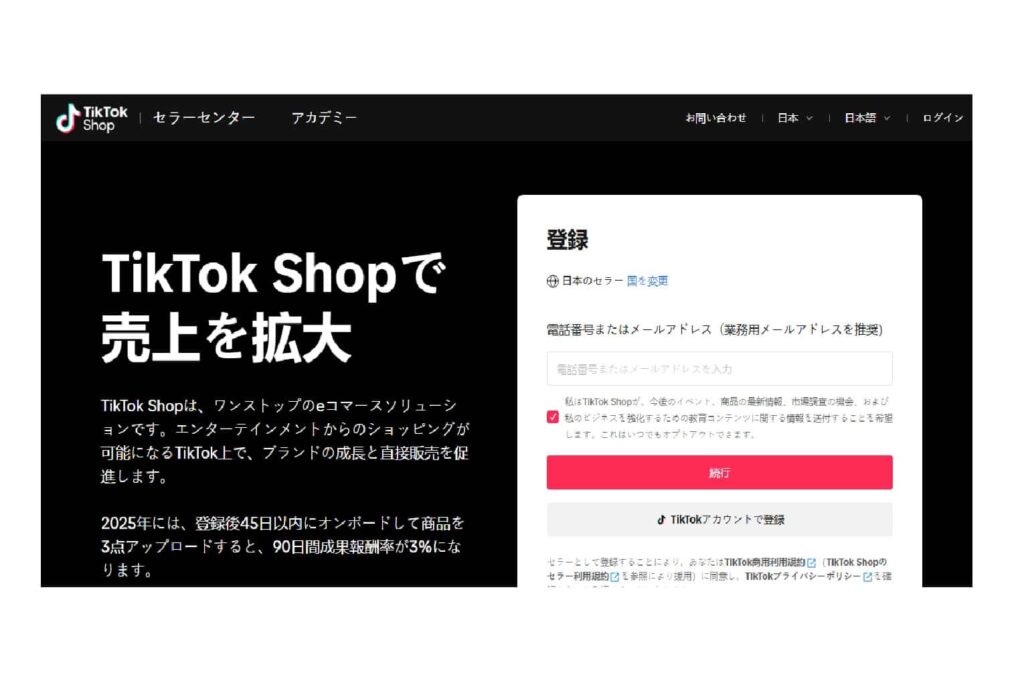
TikTok Shop to Launch E-Commerce Service in Japan

TikTok has been working intensively in recent months to expand its presence in the e-commerce field. TikTok’s shopping feature, TikTok Shop, allows users to shop directly through the social media app. The feature, which has been available since 2021, is used in many countries. The company aims to sell various products during live broadcasts integrated into the platform. In this way, sellers can earn commissions through this service.

It has been reported that TikTok Shop is planning to launch its e-commerce service in Japan within this month. TikTok Shop will compete in the Japanese e-commerce market with strong rivals such as Amazon Japan and Rakuten.

TikTok Shop Expanding Globally!

This move is seen as part of TikTok’s global growth strategy. TikTokShop was also launched in France, Germany, and Italy in March. Japan will be the latest country to be added to the list, following countries like the United States and the Philippines where the platform is already in use. So far this year, the company has also launched TikTok Shop services in countries such as Mexico, Brazil, and France.

TikTok Has Over 33 Million Users in Japan

In the United Kingdom, one of the regions where TikTok Shop was first launched, the number of users who shop through the platform increased by 131% year-on-year by the end of 2024. Revenue also increased by 180% annually. TikTok has more than 33 million monthly users in Japan. The average daily screen time per user is 96 minutes.

The fact that approximately 60% of TikTok users are between the ages of 18 and 34 causes TikTok Shop to have a strong influence especially among the younger demographic. In 2024, TikTok led to estimated spending of over $1.6 billion in Japan. Additionally, it contributed 485.5 billion yen to the country’s nominal gross domestic product.


Rakuten Forms Strategic Partnership with South Australia

China Breaks Record in Cross-Border E-Commerce

According to data from the General Administration of Customs (GAC), the sector’s exports rose by approximately 17% year-on-year in 2024, reaching $278.5 billion (2.15 trillion yuan). The total volume of cross-border trade surpassed 2.70 trillion yuan.

United States Tops China’s Cross-Border E-Commerce Export Markets

Based on GAC’s 2024 figures, the countries with the highest share in China’s total cross-border e-commerce exports were:

  • United States (36.2%)
  • United Kingdom (11.7%)
  • Germany (5.7%)

Regarding imports, products from the United States accounted for 15.8%, followed by Japan with 10.5% and Germany with 9.8%. Meanwhile, consumer goods maintained their dominant role in the sector, comprising 97.5% of China’s total cross-border e-commerce exports.

“A Resilient Structure Despite External Pressures”

Speaking at the China Langfang International Economic and Trade Fair, Cai Junwei of the General Administration of Customs stated: “China’s cross-border e-commerce has rapidly developed in recent years. It has played a positive role in expanding international markets, overcoming traditional trade barriers, and simplifying transaction processes. The sector’s strong performance came at a time when China’s economy is continuing its recovery. Despite external pressures, it has demonstrated a resilient structure in goods trade.”

E-Commerce Forum in Oman

The e-commerce forum was organized in cooperation with the Consumer Protection Authority (CPA) and the Ministry of Commerce, Industry and Investment Promotion (MoCIIP). The event titled “E-commerce: Consumer Rights and Supplier Obligations” was held under the patronage of Omar bin Hamdan Al Ismaili, Chairman of the Telecommunications Regulatory Authority.

The e-commerce forum brought together stakeholders from government institutions, the private sector, and civil society. The event witnessed significant participation from institutional representatives in the public and private sectors, as well as from a distinguished group of experts specialized in e-commerce. Participants emphasized the importance of the forum in establishing a safe and healthy e-commerce culture.

The e-commerce forum addressed the main challenges faced by digital commerce, such as consumer rights, supplier obligations, and the legal frameworks regulating the sector. In addition, it also evaluated the risks of electronic fraud and the role of regulatory bodies in ensuring a safe online shopping environment.

“The Event Supports a Forward-Looking Vision”

Mozna bint Rashid Al Mamari, CPA Director of Communication and Media, said in her speech at the e-commerce forum:

“The forum functions as an open dialogue platform bringing together consumers, suppliers, regulatory bodies, and other stakeholders interested in the digital economy. The goal is to develop Oman’s e-commerce ecosystem by raising awareness and providing a safer digital marketplace. This event supports a forward-looking vision that promotes a strong digital economy and empowers consumers to make informed and safe purchasing decisions.”

“Safe Shopping” Campaign Launched at the E-Commerce Forum

At the e-commerce forum, topics such as the regulation of e-commerce in Oman, safe digital shopping practices, financial consumer protection, digital fraud from the perspective of behavioral economics, postal services, and postal sector policy were discussed.

On the other hand, during the forum’s session breaks, a public awareness campaign was launched under the slogan “Safe Shopping.” The campaign aims to promote safe online shopping habits in alignment with “Oman Vision 2040.”


WORLDEF ISTANBUL 2025 has ended!

Regulations to be Introduced for Livestream E-Commerce in China

The State Administration for Market Regulation (SAMR) is working on the regulations in cooperation with the Cyberspace Administration of China. The regulation aims to strengthen the supervision and administration of livestream e-commerce, protect the legal rights and interests of consumers and operators, and promote the healthy development of the sector. It announced that the regulations had been drafted.

Identity Verification to Be Mandatory in Livestream E-Commerce

The new regulations make it mandatory for livestream platform operators to enhance identity verification and qualification reviews for livestream room operators, livestream marketing service agencies, and livestream marketing personnel. In addition, livestream marketing personnel are required to provide accurate, truthful, and comprehensive information about the products or services they promote, and they must not mislead consumers.

SAMR stated that livestream e-commerce platform operators must cooperate with relevant authorities to take action against those who violate market supervision or internet-related laws and regulations. It also emphasized the legal responsibilities that may arise from failing to fulfill legal obligations.

The content of the regulations will be improved based on feedback from the public and will be implemented as soon as possible.


Problems of Global E-commerce Discussed in the European Union

Problems of Global E-commerce Discussed in the European Union

The European Union is trying to find solutions to the problems that have emerged with the development of cross-border e-commerce. Products delivered directly to online consumers around the world through e-commerce platforms create a large business area. This situation has raised certain questions in many countries.

Differences in volume, content, and variety of products make it difficult to carry out the physical inspections necessary for the detection of harmful or illegal substances. The absence of a traditional distributor responsible for certifying the compliance of products with European Union regulations on environment, climate, and forced labor has also become a source of concern. For this reason, the European Parliament continues to discuss customs reforms, including the removal of exemptions for products under 150 euros.

In 2023, the European Commission submitted a proposal for the reform of the European Union Customs Code (UCC). The Commission’s proposal also includes the establishment of a new system, especially focused on e-commerce, called “trusted and controlled trade.” It is stated that specific persons will be equipped with functions under the authority of customs; for example, they will be able to open boxes and inspect products. However, it is also warned that while this reform will accelerate the process, it will also bring “increased responsibility.”

E-commerce Platforms Outside the European Union Are Causing Problems

Denmark, Norway, and Sweden want this reform to be implemented as soon as possible. The recent move by the Scandinavian governments draws attention as part of this demand. In a statement by Scandinavian authorities, it was noted that e-commerce platforms outside the EU are causing some problems and difficulties. The statement particularly pointed to the problems experienced with products containing dangerous substances.

On the other hand, the inability to supervise global e-commerce platforms based in the Far East, such as Temu, Shein, and Wish, stands out as a major problem. The fact that there is no business in direct contact with consumers in Europe apart from logistics companies, the lack of compliance responsibility of these platforms, and the inability to supervise them are seen as other concerning issues. Additionally, it is stated that the differences in customs practices within the EU can be easily exploited.

Eid al-Adha in MENA: Mobile Commerce Expected to Surge by 45%

Eid al-Adha is considered one of the most significant shopping periods of the year in the Middle East and North Africa (MENA). Traditional practices such as generosity, gift-giving, and holiday preparations are driving higher e-commerce spending during this time.

According to a study conducted by marketing platform Admitad, which analyzed over 150,000 customer orders during the 2024–2025 Eid al-Adha period, there has been a notable increase in demand for seasonal gifts, along with a rise in emotionally driven shopping behaviors. The analysis indicates a growing interest in high-value products and predicts substantial growth in mobile commerce. These trends are anticipated to continue into 2025, with overall orders in the region expected to rise by 10% and mobile sales surpassing 45%.

E-Commerce Orders Set to Rise 10% in the Region

A new report on Eid al-Adha 2025 forecasts a 10% increase in e-commerce orders across the region, with GMV expected to grow by 14% to 15%. Contributing to this growth are rising household incomes and a greater inclination toward digital shopping. Mobile commerce, in particular, is identified as the primary driver. In the UAE, 47% of online orders were placed via mobile devices, while in Saudi Arabia the figure exceeded 50%. Mobile shopping across MENA rose from 38% last year to 41.5% this year, highlighting a clear shift toward mobile-first consumer behavior.

Online Orders Rose 5% During Eid al-Adha 2024

During the five-day Eid holiday in 2024, online orders in the MENA region increased by 5% compared to non-holiday periods, while GMV rose by 14%. The average order value (AOV) climbed from $37 to $40, marking an 8% increase and suggesting a preference for higher-ticket items. Saudi Arabia, the UAE, Kuwait, Qatar, and Jordan emerged as the strongest performing markets. The average order value reached $62 in Saudi Arabia and $61 in the UAE.

Gift Trends Reflect Cultural Nuances in MENA

Consumer gift choices across the MENA region highlight diverse cultural preferences and country-specific buying habits. In Saudi Arabia, electronics topped the list, comprising 25.2% of all orders. Household goods followed at 15.5%, with fashion items accounting for 14.6%. Automotive products, including spare parts and motorcycle gear, were notably popular, making up 12.2% of orders. In the UAE, household goods led at 23.4%, followed by electronics at 21.7%, accessories such as handbags and jewelry at 18.6%, and fashion items at 17.5%.

Online Gift Market Projected to Hit $6.38 Billion by 2030

The increase in order volume, sales, and average transaction value during Eid al-Adha illustrates a broader shift from traditional retail to fast, tech-driven online shopping. In this evolving e-commerce ecosystem, super apps and online marketplaces are racing to meet the growing expectations of digital consumers.

Fueled by deep-rooted gift-giving traditions, a multicultural population, and rising income levels, GCC (Gulf Cooperation Council) countries are positioned as the fastest-growing online gifting market—expected to surge from $1.8 billion in value today to $6.38 billion by 2030.


Dubai’s E-Commerce Market to Reach $13.8 Billion by 2029