WORLDEF Prime Antalya 2026 - Upcoming Event

Register Now

Mandatory “Product Safety Certificate” for Cross-Border E-Commerce Platforms Selling in Türkiye

The Ministry of Trade has put cross-border e-commerce under scrutiny. With the regulation that came into effect in April, the Ministry had introduced an obligation for companies that do not have manufacturers in Türkiye and sell solely through imports to “appoint a representative.” Additionally, a $30 purchase limit, including shipping, was set.

Product Safety Takes Center Stage in Cross-Border E-Commerce!

The Ministry of Trade is requiring cross-border e-commerce platforms and marketplaces that fail to appoint representatives in Türkiye to issue a “product safety certificate” for every product sold in Türkiye!

Accordingly, products without quality certificates will not be allowed to enter Türkiye. These include, foremost, shoes, textiles, apparel, toys, kitchen, and bathroom products. This step is taken to prevent products that may threaten public health or contain carcinogenic or harmful chemicals. Products without a product safety certificate will not be allowed to be sold in Türkiye through cross-border e-commerce.

Temu Could Not Appoint a Representative in Türkiye!

Meanwhile, it is claimed that the regulation targets Temu. Accordingly, the Ministry of Trade published the “Market Surveillance and Inspection Regulation for Products Marketed via Remote Communication Tools” on April 1, 2025, to protect public health and reduce consumption imports. Despite this regulation, Temu could not appoint a representative in Türkiye!

In 2024, Temu sent an average of 50,000 shipments daily to Türkiye. It is stated that the platform reached 200,000 daily shipments in the first five months of 2025. While these developments were unfolding, Temu officials were summoned to the Ministry of Trade on May 16, 2025.
.

According to the regulation, manufacturers who are not in Türkiye and those marketing products through an importer or cross-border e-commerce must “appoint a representative.” Platforms that do not comply with this rule and fail to appoint a representative despite verbal warnings may face access bans.

“They Will Face Problems with Products Not Published on Their Pages Entering Türkiye”

Deputy Minister of Trade Mahmut Gürcan said the following about the issue on a radio program: “When you shop from Temu, products come directly from Chinese workshops to your home without any product safety inspection or examination for carcinogenic or harmful substances. This is actually a very problematic situation.

Now, we want these companies to publish their certificates on their pages. They will face problems with products not published on their pages entering Türkiye. While we have regulated platforms in Türkiye and are applying certain sanctions to them, we do not intend to allow this much free rein from abroad; we are monitoring the situation.”


The Impact of U.S. Tariffs on E-Commerce: From Global Constraints to Local Opportunities

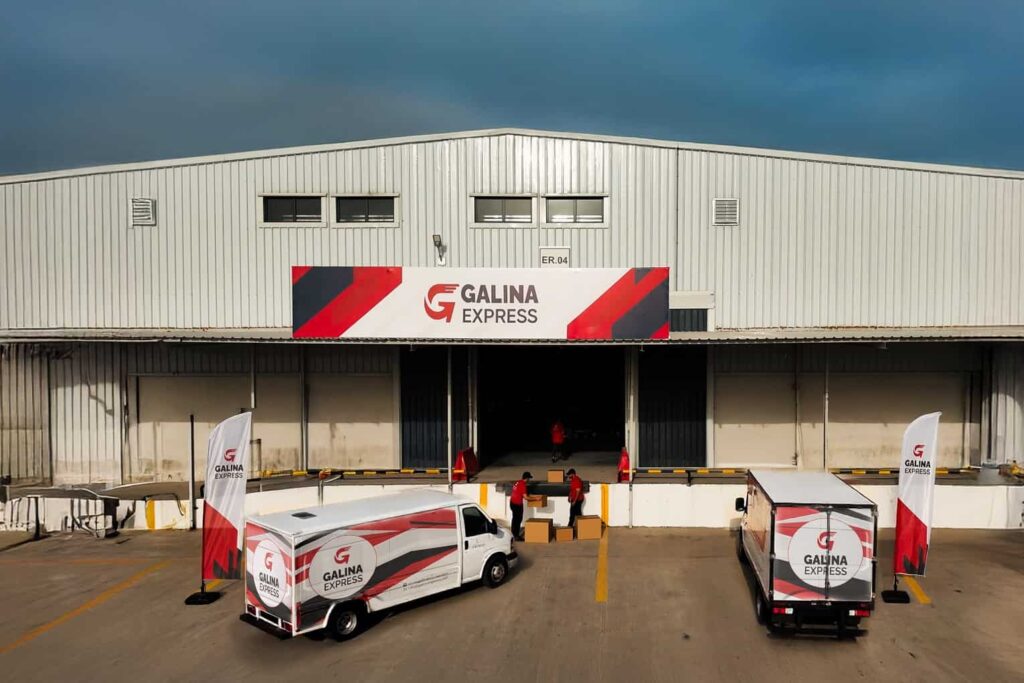
Galina Express: Opening the Gateway to Iraq’s Digital Economy

By Dr. Hallow Talabani | Chairman of the Board and CEO, Galina Express

When we launched Galina Express, we weren’t just building a company, we were solving a national problem. Iraq, a country full of promise and potential, lacked the infrastructure to support standard e-commerce. Parcels were delayed or lost, online payments were limited, and international players saw Iraq as too difficult to access. We saw this not as a roadblock, but as an opportunity. Today, we are proud to say that Galina Express is more than a logistics company. We are a digital ecosystem, a combination of e-logistics, e-commerce, and fintech services — designed to make the Iraqi market accessible, seamless, and scalable for everyone.

Building an Ecosystem, Not Just a Business

At Galina, we operate with three core pillars: Galina Marketplace, Eagle Post, and Galina FinTech.

Galina Marketplace is an all-in-one platform that connects international sellers from Türkiye, China, GCC, and Europe to the Iraqi consumers. Through our platform, buyers can shop in their local language and currency, while sellers receive secure payouts in theirs. We manage everything in between: product localization, inventory, warehousing, money collection, return handling and customer support.

Our logistics arm, powered by EaglePost, is the official postal service for the Kurdish Regional Government, developed in partnership with the Ministry of Transportation and Communications. With 80 warehouses, three major sorting hubs, and 5,510 trained delivery agents, we now complete over 45,000 deliveries per day, 77% of them within 24 hours throughout Iraq.

And through Galina FinTech, we’ve tackled the cash-first culture of Iraq with practical, digital solutions. Our Galina Card allow customers to pay online with ease. Meanwhile, international merchants benefit from weekly or customized payout cycles, currency exchange support, and instant reconciliation, all under one roof.

We’ve always believed that for e-commerce to truly take root in Iraq, it needed local solutions, not imports. That’s exactly what we’ve built.

As Galina Express, We Faced Iraq’s Logistics Challenges Head-On

The challenges we faced weren’t small. Iraq has long suffered from limited infrastructure, inconsistent postal services, and complicated customs processes. When we started, people told us it couldn’t be done — that you couldn’t guarantee delivery in 24 hours, that you couldn’t make cash-on-delivery efficient, and that international companies would never trust the system. We’ve proven otherwise.

To address last-mile delivery, we deployed a national fleet supported by smart route mapping. Today, we handle real-time tracking, returns, and support in every province of Iraq. Our operations are staffed by nearly 1,900 full-time employees, all trained to maintain high delivery and service standards.

For warehousing, we established a vast national network capable of holding over 100,000 items at any time only in one of our warehouse. We stock goods based on local demand forecasts, which allows us to offer same-day or next-day delivery with minimal friction.

We also tackled the most difficult pain point: cash-on-delivery. It’s the most used payment method in Iraq, and we knew we couldn’t just replace it — we had to improve it. So, we built a system where our drivers act as trusted payment processors, collecting, reconciling, and refunding payments in real time. And for customers ready to go digital, our fintech tools provide a secure, contactless alternative.

Cross-border logistics was another major issue. Our Istanbul office functions as a key consolidation and customs coordination point, and our customs clearance partner helps fast-track clearance into Iraq. We’ve streamlined the journey for every merchant who once saw Iraq as “too complicated” to consider.

The result? A complete, reliable ecosystem where global sellers can ship to Iraq, get paid, and offer local-level service — all without setting foot in the country.

Scaling Up, and Looking Forward

Right now, we’re in growth mode. The demand is there: Iraq has a young, digitally connected population, a rapidly expanding mobile base, and an increasing appetite for global products. In the short term, we’re focusing on expanding our warehouse network, doubling our delivery volume, and onboarding hundreds of new sellers to Galina Marketplace.

We’re also evolving Galina Card into more than just a payment solution. We’re developing loyalty programs, cashback rewards, and retail integrations. Our vision is a cashless Iraq — and we’re building the tools to help get us there.

Medium-term, we see Galina becoming a regional logistics leader for e-commerce. Iraq is uniquely positioned between the Gulf, Türkiye, and the Levant. We plan to establish faster cross-border corridors to support not just inbound commerce, but exports as well.

Our expansion will also include stronger partnerships with banks and fintechs, joint ventures with technology providers, and even government-backed initiatives to support national digital transformation. We are also working to expand our London office to better serve European brands eager to tap into Iraq’s market. Whether it’s a clothing brand from Milan or an electronics distributor in Dubai, we want to be their trusted gateway to Iraq — handling everything from customs to cash collection.

Why This Mission Matters

Our mission is not just about business growth. It’s about impact. We’re not just delivering goods — we’re delivering trust. In a country that’s seen years of instability, the ability to track a package, pay securely, and get support in your own language builds confidence. It strengthens the economy. It empowers people to participate in global commerce. E-commerce isn’t just about convenience — it’s about inclusion. And for Iraq to take its place in the global digital economy, companies like ours need to take the lead. That’s why we’ve built what we have. And that’s why we’re just getting started.

The future of Iraqi commerce is fast, digital, and connected. We’re proud to say: we’re already delivering it.

Amazon Signed an AI Content Agreement with The New York Times

Amazon and The New York Times (NYT) signed a licensing agreement to bring the newspaper’s content to Amazon’s AI services and products, including Alexa+. With this agreement, Amazon has gained access to news, recipes, and sports content across its AI platforms, including Alexa and machine learning models. The multi-year deal covers the newspaper’s flagship news operation, as well as content from NYT Cooking and The Athletic.

The Agreement Will Bring New York Times Content to Amazon Customer Experiences

The NYT announced that its editorial content would appear on various platforms, including Amazon’s AI assistant and chatbot, Alexa+. The financial details and duration of the agreement have not been disclosed. A statement from The New York Times noted that “the agreement will bring NYT editorial content to various Amazon customer experiences.” The deal covers not only news articles, but also NYT Cooking (the newspaper’s food and recipe platform) and its sports-focused publication, The Athletic.

NYT CEO Meredith Kopit Levien said, “This agreement aligns with our long-held belief in the value of quality journalism. Whether through commercial partnerships or by enforcing our intellectual property rights, it reflects our deliberate approach to ensuring our work is appropriately valued.”

Alexa’s Capabilities Will Be Further Enhanced

As part of Alexa’s AI transformation, Amazon had promised that the new version would be “a smarter, more conversational, and more capable voice assistant.” With the agreement, Alexa’s capabilities will be further enhanced. Accordingly, the deal allows summaries and excerpts to be displayed in real time on Amazon devices and services. In addition, Amazon is permitted to use the content to train its foundational models.

NYT Files Copyright Lawsuits Against AI Platforms

The New York Times is known for filing a lawsuit against OpenAI over copyright infringement. Noted for its strong stance against AI licensing, the NYT filed a copyright lawsuit against OpenAI and Microsoft in December 2023. It accused both companies of using millions of NYT articles without permission to train AI models. The lawsuit claimed, “OpenAI and Microsoft have built a business worth tens of billions of dollars by using humanity’s work without authorization.”

What Technology Means for Real Estate in Dubai—And Why It’s Personal

Real estate in Dubai isn’t just changing—it’s evolving into something more innovative, connected, and human. And I say that not as a technologist but as a marketer who sees daily how innovation transforms not only what we build but also how people experience it. At QUBE Development, we don’t view technology as a separate layer. It’s embedded in our philosophy. It’s part of how we design, sell, and stay ahead in one of the world’s most competitive property markets. And in Dubai, that edge matters.

In 2024, the city recorded AED 761 billion (USD 207.2 billion) in real estate transactions—a 20% increase year-over-year (Dubai Land Department). But behind those numbers is a deeper story—a shift. What once drove decisions—price, location, finish—is now intersecting with something less tangible: experience, access, data, and trust.

Why PropTech Isn’t a Trend; It’s Infrastructure

Dubai has been intentional about turning PropTech into more than a buzzword. The Dubai Land Department’s blockchain-led initiatives, like Real Estate Tokenisation, create new investment pathways. Suddenly, fractional property ownership isn’t a futuristic concept—it’s a live offering (Kanebridge News). For marketers like me, that changes the conversation. We’re not just talking about property features anymore—we’re talking about financial access, flexibility, and new kinds of ownership models.

We’ve seen it up close at QUBE. Investors are asking more thoughtful questions. End-users are looking for more than floor plans—they want to understand the future value of a space, the tech infrastructure inside, and even the environmental impact.

AI and Data: Redrawing the Map of Demand

Artificial intelligence has reshaped how we identify demand and communicate it. We use AI-powered tools at QUBE to analyse everything from market gaps to buyer behaviour. We can predict where interest is trending before the market catches on. These platforms don’t just analyze trends—they actively shape strategy.

On the customer side, that means better targeting. Fewer cold leads. More relevant, timely engagement. We’ve moved past “lead generation.” Now it’s about connection, clarity, and context.

Even basic CRM systems are evolving. Chatbots now answer inquiries 24/7 with tailored property suggestions. Predictive analytics suggest what a customer wants based on their browsing. This is no longer theoretical—it’s happening now and reshaping how we market and sell real estate in real time (Techloy).

  • “Technology is how we deliver value. But trust is what we’re really selling.”

Immersive Tech and the End of Showrooms

Let me say something you wouldn’t have heard a decade ago: You don’t need to walk into a building to fall in love with it. With VR and AR tools, clients are touring off-plan properties in full 3D before a shovel even hits the ground. They can stand in the kitchen, look out the window, and check the lighting. It’s not a substitute—it’s an accelerant. This has completely shifted how we approach marketing assets at QUBE. We design virtual experiences before printing brochures, storyboard immersive tours before launching landing pages, and the feedback is immediate, measurable, and global—especially among overseas buyers who see Dubai as a gateway market.

Smart Living Is Not a Luxury; it’s the New Standard

Dubai’s real estate sector is heavily investing in IoT-powered homes, and that’s not just a nod to tech—it’s an answer to lifestyle. From remote-controlled climate systems to real-time energy monitoring and biometric security, homes are becoming smarter, safer, and more efficient.

QUBE is already integrating these features across developments. Not because it’s trendy, but because buyers now expect it. And frankly, so do we. It’s how we future-proof our product. At QUBE, digital innovation is filtered through one lens: customer clarity. We design platforms that empower buyers, not overwhelm them. Whether it’s a streamlined reservation journey, instant virtual walkthroughs, or a post-handover digital concierge, our technology starts with empathy. That’s what today’s buyers remember.

What Comes Next: People-First Innovation

In a market as fast-moving as Dubai, technology isn’t the endgame—it’s the enabler. What matters is why we use it. For us at QUBE, that answer is simple: to build trust, deepen relationships, and deliver homes that make sense today and for generations to come.

What We Offer?

At QUBE Development, we deliver more than property—we deliver opportunity. Our curated portfolio includes residential projects in Dubai’s most high-potential locations, selected for their proven rental yields, long-term capital growth, and vibrant livability. Each development is thoughtfully designed with international standards in mind—offering smart layouts, high-quality finishes, lifestyle-focused amenities, and sustainable infrastructure. Whether you’re looking for off-plan opportunities, soon to be ready units, or branded residences, QUBE properties are built in places where demand thrives and value grows.

What We’re Looking For?

At QUBE, we’re building for people who see real estate not just as a purchase—but as a platform for growth, lifestyle, and long-term value. Whether you’re an investor seeking a solid addition to your portfolio or an end-user planning a new chapter in Dubai, we’re creating developments that meet your ambitions. We’re looking to engage with those who appreciate thoughtful design, future-ready infrastructure, and a developer committed to delivery, transparency, and purpose. Our objective is not just to sell—it’s to create lasting value through properties that speak to both aspiration and practicality.

  • About Asmae Boussouf

Asmae is, a seasoned real estate marketing expert known for engaging both B2B and B2C audiences with precision and impact. With experience across commercial and residential sectors, locally and internationally, she builds strategies that connect and deliver results. Before joining QUBE Development, Asmae held senior roles at Aldar Properties, Dubai Commercity (DAFZA), Nakheel, and Al Ghurair Investment. She holds a bachelor’s degree in Engineering and Management Science, and a master’s in Strategic Marketing—reflecting her commitment to excellence and growth.

FJX: Integrated Business and Technology Solutions

FJX is a professional services firm that delivers integrated business and technology solutions. It serves consumer, retail, and tech companies across the MENA region, Europe, and the CIS. FJX’s mission is to bridge the gap between business and technology by combining strategic expertise with advanced technology solutions. The goal is to provide high-impact services that enhance operational efficiency, customer experiences, and business growth. FJX has a strong presence in the MENA region, CIS, and Europe. While the focus is on these regions FJX is always open to new regions and opportunities.

Solutions for E-Commerce Companies

FJX offers a comprehensive set of solutions for e-commerce companies, including:

  • Advisory: Providing strategic diagnostics, development, and implementation support.
  • Technology solutions: Offering tech recruitment, infrastructure management, and customized AI and IT solutions.
  • Marketing & media: Expertise in marketing strategies that resonate with high-demand markets.
  • Distribution: Serving as a bridge between brands and retailers to optimize supply chains and enhance reach.

Key Features that Differentiate FJX from Its Competitors

  • Expertise: A team of former C-level executives and top-tier technology talents.
  • Integrated approach: Combining strategy consulting with product and software development to offer end-to-end solutions.
  • Regional focus: A deep understanding of the MENA, CIS, and European markets, which enables them to provide highly localized solutions.

FJX offers customized AI and IT solutions that are tailored to meet the specific business needs of their clients. These solutions are designed to enhance operational efficiency and help companies address various challenges in their business operations.

Challenges and Solutions

FJX faces challenges such as market volatility, cultural differences, regulatory compliance, technology integration, and operational risks but we address these challenges through:

  • ⁠Continuous market monitoring to stay ahead of market trends.
  • ⁠Cultural sensitivity training to ensure effective communication and business practices across diverse regions.
  • ⁠Establishing legal and compliance teams to manage regulatory standards.

Recommendations for E-Commerce Brands to Achieve Success

  • Strategic market entry: Utilize local expertise to understand and navigate regional market dynamics effectively.
  • Technology integration: Implement advanced AI and IT solutions to improve operational efficiency and customer experience.
  • Compliance management: Ensure adherence to local regulatory standards to mitigate business risks.
  • Distribution partnerships: Collaborate with local distributors to enhance supply chain management and increase market reach.

About Florian Jansen

Florian co-founded Lamoda, a leading fashion e-commerce platform, achieving significant milestones, including a public listing in 2019 and reaching USD 2 billion in NMV by 2022. He is also an angel investor and Venture Partner at Antler, supporting various tech startups, and serves on supervisory and advisory boards in the GCC and CIS regions. Through FJX Group, Florian and his partners provide IT and business solutions to clients in retail, logistics, and technology.

Dubai’s E-Commerce Market to Reach $13.8 Billion by 2029

The “MENA Region E-Commerce Report 2024” was published by EZDubai. According to the report, which is supported by the Dubai Department of Economy and Tourism (DET), Dubai is experiencing a transformative e-commerce boom. According to the report, Dubai’s e-commerce market reached $8.8 billion (AED 32.3 billion) in 2024. By 2029, the market will reach $13.8 billion (AED 50.6 billion).

Dubai’s E-Commerce Market Develops Through Mobile!

Dubai’s e-commerce market is developing under the leadership of mobile commerce. More than 75% of all shopping takes place through smartphones. Consumers frequently use WhatsApp Business, Instagram Shopping, and mobile-friendly websites.

The fintech sector also plays an important role in shaping consumer behaviors. The share of online transactions made with digital wallets increased from 41% in 2020 to 53%. On the other hand, “buy now, pay later” (BNPL) services such as Tabby and Tamara have been widely adopted, especially among Gen Z and Millennials.

70% of consumers in the UAE shop online at least once a month. This increases expectations regarding speed, service, and personalization. Consumers now demand free same-day delivery, easy returns, real-time tracking, and personalized shopping experiences.

MENA E-Commerce Market Reached $34.5 Billion

Dubai also plays a leading role in shaping the regional e-commerce ecosystem. According to the report, the total e-commerce market of the MENA region reached $34.5 billion (AED 126.7 billion) in 2024. The MENA e-commerce market volume is expected to rise to $57.8 billion (AED 212.2 billion) by 2029.

Dubai’s advanced digital infrastructure, regulatory model, and investment momentum are also being exported to neighboring economies such as Saudi Arabia and Egypt. Companies like Amazon, Noon, and DHL Express benefit from the integrated logistics corridor by using EZDubai as a regional fulfillment center.

About EZDubai

EZDubai was established in 2019. It is the first dedicated e-commerce zone in the region. It is located in Dubai South. The zone covers an area of more than 920,000 square meters. It is strategically located between Al Maktoum International Airport and Jebel Ali Port. Thanks to this location, it provides logistical access that enables same-day and next-day delivery, especially to GCC countries. GCC is a regional union consisting of Saudi Arabia, Kuwait, Qatar, the United Arab Emirates, Oman, and Bahrain.


UAE e-commerce market reaches $8.80 billion

Amazon’s Agreement with Stellantis Has Been Suspended

The agreement between Amazon and Stellantis aimed to integrate Alexa-supported infotainment and e-commerce services into Chrysler, Fiat, and Vauxhall vehicles. The three-year SmartCockpit collaboration was mutually suspended. Amazon and Stellantis will continue to cooperate on AWS and Alexa integrations.

The agreement was made as an initiative to transform the car interior into a living space with technologies such as voice-controlled navigation, personalized climate settings, and automatic lighting. However, the agreement ended amid the complexity of merging Silicon Valley software with traditional automotive manufacturing processes.

Stellantis’ SmartCockpit Project Was Based on Amazon’s In-Vehicle Technology

Stellantis’ SmartCockpit project was based on Amazon’s in-vehicle technology and represents an example of the challenges traditional automakers face when cooperating with Silicon Valley to implement more sophisticated software. The integration of SmartCockpit into vehicles was planned between the end of 2024 and early 2025. This system was part of the ABC platform, along with Stellantis’ electric architecture STLA Brain and the Autodrive driving assistance system.

According to the agreement, Stellantis would pay Amazon software access and maintenance fees per vehicle. In return, Amazon would make incentive payments to Stellantis if drivers subscribed to services like music subscriptions from within the car.

According to Reuters, the mutual suspension of the agreement was confirmed by the companies.


Amazon Plans to Show New Tariffs in Prices to Consumers!

Tariffs, Temu, and Türkiye: E-Commerce’s New Power Play

Global e-commerce is at a turning point. Geopolitical shifts—like the U.S. imposing new tariffs on China—are redrawing the map of online retail. Recent U.S. trade policy changes ended the duty-free loophole for low-value Chinese imports, a move that hit ultra-cheap platforms like Shein and Temu. These disruptions are fragmenting supply chains and forcing companies to rethink the old “make in China, sell everywhere” formula. The era of simply chasing the cheapest producer is fading; resilience and regionalization are the new mantra. And in this shake-up, Türkiye stands out as a key beneficiary.

A Perfect Storm Reshaping Global Trade

For years, e-commerce thrived on “cheap and fast” goods from a single giant supply source. But as trade barriers rise, that model is under pressure. Washington’s tariffs have prompted Chinese exporters to seek new strategies (even Beijing has reportedly discouraged some firms from shifting production, adding to the tension).

Shein and Temu, the poster children of low-cost online retail, have had to raise prices and scramble for alternatives. Tellingly, Shein has even begun manufacturing outside of China—opening factories in Brazil and Türkiye—to diversify its risk. In parallel, Western retailers are looking for closer, more reliable suppliers. The result is a more fragmented, regional supply chain emerging in place of one big global pipeline.

Enter Türkiye. Long before “friend-shoring” became a buzzword, Türkiye built itself into a manufacturing hub for textiles, apparel, food products, home goods, and furniture. Its strategic geography bridges Europe and Asia, and it has modern logistics links in all directions. Now, with global brands rethinking sourcing, Türkiye’s advantages are coming to the forefront.

Our country offers a rare blend of agility, quality, and value. We can deliver a fashion collection or a container of home décor to Europe in a matter of days, and even ship to the U.S. in around a week. We’re competitive on cost—if not always the absolute cheapest, certainly a strong price-to-quality balance—and we add a layer of design sophistication that pure low-cost players often lack. In fact, Türkiye hits the sweet spot: close enough to ship quickly, skilled enough to ensure quality, and cost-effective enough to keep prices attractive.

From Niche Markets to Walmart: A First-Hand Perspective

I’ve witnessed Türkiye’s potential first-hand throughout my career. A few years ago, I led the global expansion for one of the world’s leading modest fashion e-commerce brands, based out of Istanbul. We expected the Middle East or Southeast Asia to be our largest markets given the product niche. Instead, the United States became our number one export destination – outselling even many Muslim-majority countries.

This was a revelation. It turned out that a sizable niche audience in the U.S. (style-conscious women seeking modest attire) had far more purchasing power than anyone imagined. E-commerce made it possible to reach that audience directly, and Türkiye’s manufacturers delivered what they wanted. This experience taught me that niche markets in distant countries can surprise you with their demand, and Türkiye is uniquely positioned to serve those niches globally.

More recently, as General Manager of Hepsiburada’s global arm, I worked on bringing Turkish sellers to major U.S. retail platforms. We forged a partnership to list Turkish-made products on Walmart’s online marketplace and were in discussions to do the same with Target. In effect, we built a bridge from Anatolian factories to American households. I remember walking a Walmart buyer through a lineup of Turkish home textile samples—plush towels, organic cotton bedding, beautifully crafted by a family-owned mill in Denizli.

The buyer was impressed by the quality and story, and those products soon found a spot in Walmart’s assortment. It was one small example, but it spoke volumes: “Made in Türkiye” can resonate from Main Street to Silicon Valley. Acting as that bridge between our local producers and global retail giants has been one of the most rewarding parts of my career. It reinforced my belief that Türkiye’s role in the worldwide e-commerce ecosystem is so much bigger than we give ourselves credit for.

And it’s not just established Western retailers beating a path to Türkiye. The new disruptors are here too. Take Temu, the fast-growing online marketplace from China that’s been taking the U.S. by storm. Temu recently started courting Turkish suppliers to broaden its catalog. In April, WORLDEF hosted an exclusive webinar with Temu aimed at “unlocking the potential of Turkish sellers” for the U.S. market.

The response was overwhelming—hundreds of Turkish brands and manufacturers signed up, eager to learn how to get their goods onto Temu’s platform. The enthusiasm was palpable (I was paneling in that session, and the Q&A could have gone on for hours!). This wave of interest from both sides—Turkish suppliers and global platforms—underscores a simple truth: Türkiye is now on the e-commerce center stage. Ten years ago, we were often an afterthought in global strategy meetings. Today, we’re a focal point.

Türkiye’s Edge in a Regional E-Commerce Era

All these trends point to a new regional and resilient model of e-commerce taking hold. Instead of one or two countries churning out products for the whole world, we’re seeing the rise of regional hubs that serve nearby markets faster and more reliably. Türkiye is poised to be one of those hubs for Europe, the Middle East, and beyond. Why are we so well-positioned?

To borrow a framework my colleague Orxan Isayev (Vice President of WORLDEF) has articulated: Türkiye’s strengths lie in its strategic location, quick turnarounds, flexible production, and creative talentfile-hqigksknabs1uvfjmrjxct. We are literally at the crossroads of continents, which cuts transit times. We excel at small-batch and customized orders—our factories can switch gears quickly, unlike the monolithic mega-plants elsewhere. And we bring creativity to the table: from fashion designers to furniture makers, Turkish producers infuse trends and craftsmanship into their goods, not just low-cost labor.

Critically, Türkiye offers a compelling “price-performance” equation. Labor and production costs here are higher than in Bangladesh or Vietnam, yes, but far lower than in Western Europe or the U.S. The quality control and compliance standards are generally strong, thanks in part to our deep integration with European markets. So buyers end up with better value: they might pay a bit more than the absolute rock-bottom price, but they get goods that often meet Western consumer expectations without costly errors or delays. In a world where a delayed shipment or a product recall can wipe out margins, that reliability is gold.

The shifting landscape also aligns with Türkiye’s agility. During the pandemic and the global logistics chaos that followed, Turkish companies proved remarkably adaptable—turning to chartered cargo flights when ports were clogged, or sourcing alternate raw materials when supply dried up. That mindset of agility, born from years of economic ups and downs, is now a competitive advantage.

As global e-commerce players emphasize risk mitigation, they appreciate partners who can think on their feet. Time and again, I’ve seen Turkish teams tweak designs or production schedules at the last minute to hit a trend or meet a deadline. That kind of hustle is harder to come by in more rigid manufacturing centers.

Turning Disruption into Opportunity: Tariffs and Türkiye

Ultimately, what we are witnessing is global disruption turning into Türkiye’s opportunity. The U.S.-China trade rift, which at first looked like a storm on the horizon, is in many ways propelling Türkiye forward. Each tariff or policy change that makes life harder for a China-centric supply chain nudges businesses to look elsewhere—and often, they find what they need in Anatolian heartlands or Istanbul’s workshops.

Even Chinese firms themselves, like Shein, are investing in Türkiye to hedge their bets. Europe, facing its own pressures to secure supply lines, is leaning more on Türkiye for essential goods. And the Middle East and Africa see Türkiye as both an example and a partner in building regional e-commerce ecosystems.

To be sure, the race is on. We’re not the only ones eyeing this prize; countries like Vietnam, India, and Mexico are also stepping up their game as alternative hubs. Türkiye will need to keep investing in its infrastructure, digitization, and trade relationships to solidify its lead.

We must continue to negotiate favorable trade agreements, ensure our customs processes are smooth, and double down on training the workforce for higher-value production. In the e-commerce export arena, initiatives like easier cross-border payments, streamlined returns, and better marketing of Turkish brands abroad will make a difference. It’s also crucial to maintain our reputation for quality; a short-sighted push for volume at the expense of quality could undermine the long-term opportunity. In other words, we have to scale sustainably.

That said, I remain incredibly optimistic. The momentum I’m seeing—on the ground with manufacturers, in boardrooms with partners, and at events like WORLDEF’s forums—feels different from past booms. There’s a deeper alignment of factors now: global retailers want what Türkiye offers at the same time Türkiye is more ready than ever to deliver. It’s taken years of groundwork, but the stars are aligning.

In conversations with fellow executives and policymakers, I often sum it up this way: Türkiye’s agility, capacity, and creativity have met their moment. The world’s supply chains are rewiring, and our country is plugged into the new circuit. As a lifelong e-commerce professional and a proud WORLDEF board member, I can confidently say this isn’t a temporary spike or a lucky break—it’s a lasting role reversal. The once “hidden gem” of global manufacturing is stepping into the spotlight.

In the coming years, don’t be surprised to see more Turkish brands and products in your daily life, whether you’re shopping in Los Angeles, London, or Lagos. This isn’t just wishful patriotism; it’s already happening before our eyes. Global e-commerce is becoming more regional and resilient, and Türkiye is seizing the opportunity to shine. The trade winds have changed, and they are filling Türkiye’s sails. We’re ready to navigate this new course and, dare I say, help steer the future of online retail.


The Impact of U.S. Tariffs on E-Commerce: From Global Constraints to Local Opportunities

Alibaba’s New Portal Exceeded 40 Million Daily Orders!

Alibaba stated that the Taobao Instant Commerce portal, which delivers within 60 minutes, surpassed the threshold of 40 million daily orders within one month after its launch. Taobao Instant Commerce was launched through integration with Alibaba’s food delivery service Ele.me.

The portal brings together Ele.me’s sellers with the main domestic shopping app Taobao, offering a fast-delivery shopping experience on a single platform. The new platform provides users with the opportunity to receive their orders within 60 minutes. It is able to meet the new consumer expectations focused on speed and accessibility.

Integrating Alibaba’s Logistics Power with Digital Commerce

On the new portal, suppliers and local sellers under Ele.me are directly connected to the Taobao app. When users shop, their orders are sourced from the nearest point. They are then delivered to consumers within 30 to 60 minutes via Ele.me’s fast courier network.

The fast delivery model covers many categories, from grocery items and daily needs to food and electronics. The model offers a unique user experience by integrating Alibaba’s logistics power with digital commerce.

Chinese online platforms have invested billions of dollars in “instant retail” solutions in recent months. Companies like JD.com and Meituan are also investing in the instant retail sector. Alibaba launched its new delivery model at the end of April.

“This Market Has a Consumer Size of 500 to 600 Million”

Fan Jiang, CEO of Alibaba’s E-Commerce Segment, said that Alibaba has certain advantages in this field due to years of investment in delivery infrastructure and the Freshippo supermarket chain.

Jiang stated, “What needs to be noted about the instant retail market is that it is a very large market. Because every individual, every consumer in China will need instant commerce. Today, it is said that this market has a consumer size of 500 million to 600 million. In the future, this number could easily reach 1 billion.”

Taobao Expanded Its Free Global Delivery Service to 12 Countries and Regions

On the other hand, Alibaba’s e-commerce platform Taobao announced that it has expanded its free global delivery service to 12 countries and regions. The new coverage area includes Singapore, Malaysia, South Korea, Australia, Japan, Thailand, Cambodia, Kazakhstan, and Mongolia. Kazakhstan and Mongolia were included in this coverage for the first time.

During the June 18 shopping festival, customers in these countries will be able to benefit from major discounts and access easy return options. Taobao aims to accelerate its growth and support its sellers in expanding into international markets.

Taobao has also entered the Kazakhstan market with Russian language support. Local users can now review product details and complete payments in their own currencies. In the first week after the launch, 70% of new users in Kazakhstan placed their first order through the Russian interface. Additionally, the platform’s order conversion rate increased by 47%.

EU Finds That Shein Violated Consumer Legislation!

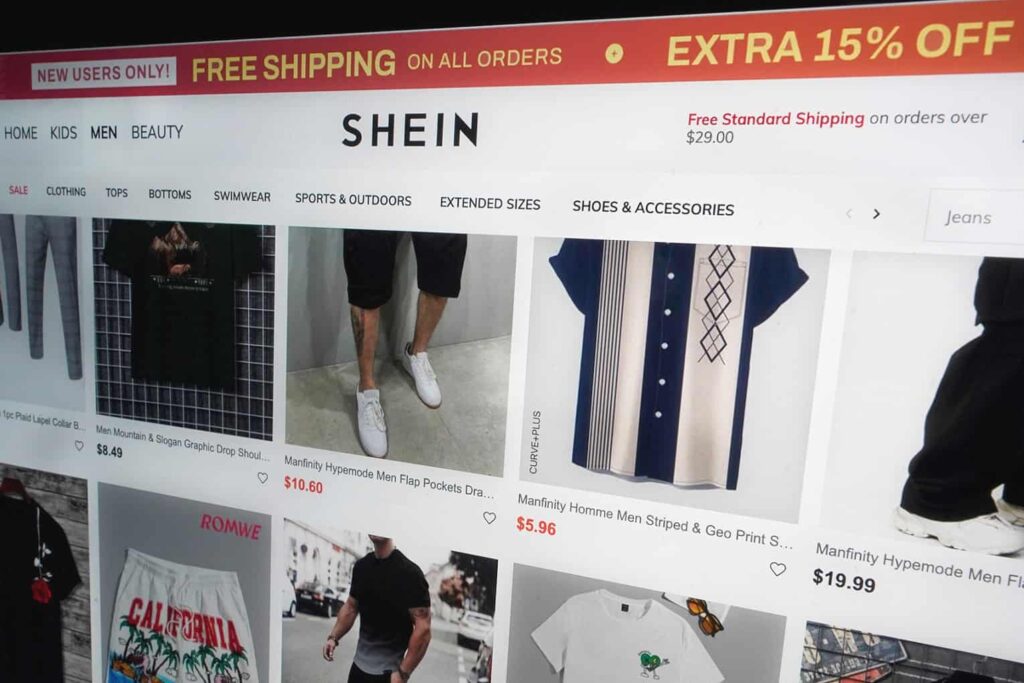
The European Union is taking measures to ensure a safe and transparent digital environment for online consumers living in Europe and to ensure compliance with relevant laws. In this context, China-based e-commerce platforms were scrutinized. The European Commission launched an investigation into Shein within the scope of a joint action plan initiated by national authorities in Belgium, France, Ireland, and the Netherlands and coordinated through the CPC (Consumer Protection Cooperation) network.

As a result of the investigation, various commercial practices of Shein were found to violate European consumer protection legislation. Official notifications were made to the Chinese e-commerce company. Shein was given one month to respond to complaints and offer corrective measures.

What Is Shein Violating?

The investigation covers various aspects of the online shopping experience on the platform. In this context, misleading discounts not based on previous prices and coercive sales techniques such as artificial countdowns that push users to buy quickly were identified. Additionally, it was determined that incomplete or misleading information was provided regarding cancellation and return rights. Furthermore, deceptive product labels that present mandatory product features as special, misleading sustainability claims, and lack of transparency about contact information were among the violations cited.

The CPC requested Shein to provide clarifications regarding transparency in product classifications, reviews and ratings, and the sharing of contractual responsibilities between Shein and third-party sellers. EU legislation requires that consumers must always know who the seller is and what rights apply.

The CPC’s steps are also connected to the investigation conducted by the European Commission under the Digital Services Act (DSA), which imposes increased obligations on large digital platforms. Shein has been classified as a Very Large Online Platform (VLOP) as of April 26, 2024. Within this framework, it is subject to additional responsibilities in managing systemic risks, especially those related to consumer protection.

“We Will Not Hesitate to Hold E-Commerce Platforms Accountable”

Henna Virkkunen, Vice President of the EU Commission responsible for Technological Sovereignty, made the following statement on the issue: “This investigation demonstrates our determination to provide an effective and coordinated response when online platforms and retailers fail to comply with the rules.”

Commissioner for Democracy, Justice, Rule of Law, and Consumer Protection Michael McGrath stated, “All companies targeting consumers in the EU must comply with our rules. EU consumer protection laws are not optional; they must be enforced in every case. We will not hesitate to hold e-commerce platforms accountable, regardless of where they are headquartered.”

The Shein Investigation Continues

The Commission and national consumer protection authorities launched the investigation in February. Among the violations identified within the scope of the investigation are fake discounts, pressure on consumers, incomplete and misleading information, deceptive product labeling, and hidden contact information related to Shein’s customer service.

If Shein does not provide a satisfactory response to the complaints, the national authorities of the member states may impose sanctions, including economic penalties proportional to the company’s turnover in that country.

The Commission and national authorities are also still examining whether Shein’s algorithm is misleading—particularly whether product rankings, reviews, and ratings are being presented inaccurately to consumers. In addition, Shein’s contractual obligations with third-party sellers are also under scrutiny.

Meanwhile, a Shein spokesperson stated that the company “is working constructively with national consumer authorities and the EU Commission” and is “actively engaged in the process to address any concerns.”


TikTok Shop is Expanding in Europe!