WORLDEF Prime Antalya 2026 - Upcoming Event

Register Now

Premium E-Commerce Platform Hushday Secures $550,000 Investment

Founded in 2025 by Jennifer Cohen Solal and Riad Djabri, the Hushday offers consumers access to surplus stock of luxury and premium brands through an invitation-only model. It allows brands to maintain control over their pricing and positioning.

The startup, designed with a focus on the Gulf Cooperation Council (GCC) region, offers a solution that provides exclusivity, experience, and execution for both brands and consumers. The platform is strategically built to allow brands to conduct curated sales and reach valuable new audiences in an environment with high conversion rates.

Launching on May 2!

Hushday, the region’s first premium sales platform, has secured a pre-seed investment of $550,000 (2 million AED) from regional tech investors. The platform will be accessible exclusively via invitation in the UAE starting May 2, 2025. The startup plans to expand to Saudi Arabia, Qatar, and Kuwait by 2026. Additionally, it aims to develop a new channel for the growth of luxury and premium brands in the Middle East.

Jennifer Cohen Solal, Co-Founder and CEO of Hushday, said, “We are not trying to solve the stock problem. Our goal is to open a new and scalable growth path that allows brands to reach a young, price-sensitive, digital-first audience without compromising their identity.”

About Hushday: Exclusivity, Experience, Excellence

Global luxury brands have faced challenges in key markets like China in recent years. Consumer behaviors across the GCC are shifting towards value-driven, digitally-first experiences. In this context, Hushday aims to reshape premium retail for a new generation of shoppers and brands.

The startup draws inspiration from models like Veepee and Gilt in Europe. This GCC-focused, locally designed model offers exclusivity, experience, and excellence for those seeking more. The platform provides members with access to limited-time sales in categories such as fashion, beauty, accessories, electronics, home goods, and entertainment. Each sale is designed to be personalized, mobile-first, and geared towards creating rarity and excitement.

The founding team of Hushday has deep expertise in fashion, e-commerce, technology, and operations. They also have a proven track record of scaling high-growth businesses in Europe and the Middle East.


JAFZA to Strengthen UAE’s Logistics Infrastructure with $24.5 Million Investment

China’s E-Commerce Air Cargo Flights Are Being Canceled!

Following the Lunar New Year, air cargo volume from China to the US experienced a sharp decline. According to data tracking organization WorldACD, a weekly decrease of 20% was recorded at the end of January, followed by an additional 28% drop at the beginning of February. On an annual basis, tonnage decreased by 41%. WorldACD reported that air cargo volumes from China and Hong Kong to the US had declined for four consecutive weeks; during the week ending April 20 (Week 16), volumes fell by 7% compared to the previous week.

“E-Commerce Shipment Volume Dropped by 50%”

WorldACD also shared the following information: “Compared to Week 16 of last year, total traffic from China and Hong Kong to the US has dropped by 16%. In contrast, shipments from the entire Asia-Pacific region to the US only declined by 3%. This was due to strong exports from countries such as Vietnam (up 42%), Taiwan (up 30%), Thailand (up 24%), and Japan (up 12%). These figures do not include increased charter activities.”

Overall, e-commerce shipment volume has fallen by about 50% since mid-April compared to the same period last year. This decline in air cargo coincided with the US government’s suspension of the Section 321 “de minimis” exemption, which allowed low-value goods from China to enter duty-free.

Air Cargo Charter Flights Canceled

In response to the drop in demand, many e-commerce platforms and logistics providers canceled their charter flights. Global logistics company Dimerco reported ongoing cancellations of BSAs (block space agreements) and charters, particularly for shipments to the US, due to excess capacity relative to demand. The Loadstar described the market as “complete chaos” and added that Chinese shippers, due to falling air cargo rates, were looking to move from contracted rates to spot rates.

“Many Companies Avoid Placing New Orders”

Kathy Liu, Vice President of Global Sales and Marketing at Dimerco Express, stated: “Many shippers have entered a wait-and-see mode for shipments to the US. Due to uncertainty surrounding new tariffs between the US and China, many companies are avoiding placing new orders. Interestingly, however, demand out of Southeast Asia and Taiwan has remained relatively stable. We believe this is likely due to the 90-day tariff exemption granted by the US government for shipments from this region. This provides shippers there with a breathing space.”

Shift Toward Southeast Asia

As trade tensions between the US and China escalate, companies are restructuring their supply chains. German container shipping company Hapag-Lloyd announced that 30% of shipments from China to the US have been canceled and that demand is shifting toward Southeast Asian countries such as Vietnam, Cambodia, and Malaysia. This trend reflects businesses’ efforts to diversify production bases and reduce dependence on China.

Fluctuations in Air Cargo Will Continue!

Industry experts predict that fluctuations in the air cargo market will continue.
The combination of declining e-commerce demand, changing trade policies, and restructured supply chains suggests that the current downturn may persist in the short term.

Stakeholders are closely monitoring developments, noting that further disruptions could occur if trade tensions increase or if demand fails to recover. This situation once again highlights the fragility of global supply chains and the need to adapt to changing economic and geopolitical conditions.

“De Minimis” Exemption Expected to End on May 2

The “de minimis” exemption applicable to goods from China and Hong Kong is expected to end on May 2. Meanwhile, the US has implemented customs duty exemptions for smartphones and other technology products imported from China. These products are typically transported via air cargo.


Trump Administration Ends Duty-Free Status for E-Commerce Shipments from China

euShipments stands out with over 800 delivery methods in Europe

euShipments offers premium logistics and cross-border delivery solutions specifically designed for e-commerce businesses. By simplifying cross-border e-commerce, the company supports online merchants in growing within the European markets.

With a vision to become the essential logistics partner for e-commerce in Europe, euShipments strives to deliver efficiency and scalability in every aspect of its services. It aims to offer innovative solutions such as Returns Management, Cash-on-Delivery (COD), Refunds, and logistics operations that enhance the online user experience. We spoke with Vichren Bisset, CCO and Board Member of euShipments, about the brand’s story.

“Our logistics and fulfillment network covers over 27 European countries”

Vichren Bisset shared the following regarding the countries they currently serve and their target markets: “Currently, our fulfillment and logistics network covers over 27 European countries, enabling our clients to penetrate diverse and dynamic markets. We operate with 15 fulfillment centers strategically located across Europe and partner with 60+ last-mile couriers, offering the impressive over 800 delivery methods. In the near future, we aim to further strengthen our presence in Central and Eastern Europe (CEE) while exploring growth opportunities in Western European markets.”

“We aim to support Gulf-based online merchants in establishing their e-commerce presence in Europe”

Bisset also shared the company’s goals regarding the Gulf region: “While our primary focus is Europe, we are open to exploring partnerships and expansion opportunities that align with the needs of our over 1000 clients. Also, we aim to support Gulf-based online merchants in establishing and expanding their eCommerce presence in Europe. Our tailored fulfillment and delivery solutions ensure Gulf eCommerce businesses can meet the expectations and preferences of European online users and grow their market share effectively.”

The services euShipments offers to e-commerce brands

  • Warehousing and inventory management
  • Cross-border deliveries with optimized transit times via 60+ integrated carriers
  • Cash-on-Delivery (COD) solutions with daily payouts in multiple currencies and to diverse bank/fintech accounts
  • Returns management, including automated pickup requests and locker drop-offs
  • Real-time tracking and customer support

Vichren Bisset said, “Our services enable online merchants to expand into new markets, improve their operational efficiency, and enhance the customer experience. By taking care of logistics complexities, we allow merchants to focus on growing their businesses.”

“We have strategically grown by acquiring key e-commerce fulfillment and logistics companies in Europe”

Bisset stated, “Our team at euShipments.com is a dynamic mix of eCommerce logistics experts, IT specialists, and customer service professionals dedicated to delivering tailored eCommerce solutions. We have built a culture of innovation and problem-solving, ensuring that we provide the right logistics services to meet the unique needs of our clients. In recent years, euShipments.com has strategically expanded by acquiring key eCommerce fulfillment and logistics companies across Europe.

The combined experience of euShipments.com and its acquired companies – Croatian Pick&Pack, Romanina Helpship, and Slovak Swiss Point Data, exceeds 40 years in the eCommerce logistics industry. This extensive expertise enables us enhancing our logistics network and service offerings, providing client-centric custom solutions that meet the diverse needs of eCommerce businesses.”

Finally, euShipments CCO and Board Member Vichren Bisset said the following: “Our collaboration with WORLDEF has been extremelly useful in reaching new audiences and fostering connections within the global eCommerce ecosystem. As our dear partner, WORLDEF has provided us with valuable platform to share insights, engage with eCommerce professionals, and showcase our expertise. Together, we are contributing to the growth of eCommerce by promoting innovative logistics solutions and supporting online merchants in achieving their expansion goals. We look forward to strengthening this partnership further.”

Amazon FBA fees are changing

Amazon FBA fees were increased in 2023. In March 2025, Amazon made a change to the fees for consumers in Germany. In order to encourage box-free returns, customers who returned a product with a box were required to pay a fee.

Amazon has announced that it will reduce FBA fees. The fee adjustment to be made for online sellers covers a large portion of products in the clothing, accessories, backpack, and handbag categories. No information was provided on how much sellers will save in these categories or which products will be affected by this change.

“Package size and unit weight will be taken into account in Amazon FBA fees”

Previously, the higher value between unit weight and dimensional weight was used in FBA calculations. In a statement from Amazon, it was noted that shipping and packaging fees will now be calculated using a different method, saying, “As of May 15, 2025, we will calculate Amazon FBA fees for products in these categories based only on package size category and unit weight.”

According to the regulation, along with the existing 16 package size categories, 7 new package sizes will be added for the designated categories. In addition, products with high return rates will be exempt from the previously introduced return processing fee. This will apply to backpack and handbag products. Return processing fees collected for products in these categories since February 1 will now be removed or refunded. The Amazon FBA fee changes will apply in European markets.

ChannelEngine Provides Access to Over 950 Marketplaces Across 195 Countries

ChannelEngine connects brands and retailers with over 950 marketplaces worldwide. It offers a single platform for managing product data, inventory, orders, and pricing across all online channels. With smart automation and seamless integration, it enables businesses to drive more sales, grow faster, and maintain control over their operations. The scalable and reliable platform ensures smooth operations, securing long-term success as businesses grow.

Headquartered in Leiden, Netherlands, with global offices in New York, Dubai, Munich, Paris, and Singapore, ChannelEngine helps leading brands such as Unilever, Sanofi, Philips, and Sonos expand their marketplace presence globally. ChannelEngine’s Vice President of Strategic Development, Niels Floors, shared the company’s story with WORLDEF E-COMMERCE.

Global Marketplace Guidance and Localized Expertise

ChannelEngine operates in 195 countries and provides businesses access to over 950 marketplaces. Its services include product data management, inventory and order synchronization, and pricing automation. The platform offers seamless integrations with ERP, PIM, WMS, and order fulfillment systems, along with AI-powered tools for category matching, packaging, and performance optimization. Additionally, by supporting 1P, 3P, and hybrid sales models, ChannelEngine provides global marketplace guidance and localized expertise to help businesses succeed in diverse regions.

“We Help Our Clients Stay Competitive and Achieve Long-Term Success”

Niels Floors shared the company’s mission and goals: “Our purpose is to empower brands and retailers to thrive in the evolving e-commerce landscape. Our goal is to simplify and optimize marketplace operations, enabling businesses to grow profitably and sustainably while expanding their global reach. By leveraging cutting-edge automation, strategic insights, and our extensive marketplace network, we help clients stay competitive and achieve long-term success.”

“ChannelEngine Offers Comprehensive Solutions to Improve Marketplace Operations”

ChannelEngine VP Niels Floors commented on the competitive landscape of the industry, stating: “The marketplace integrator industry is highly competitive, with a focus on scalability, automation, and innovation. ChannelEngine stands out due to our comprehensive platform, global marketplace network, and customer-centric approach. Our localized insights, advanced tools, and tailored support ensure businesses can thrive in a dynamic and competitive environment.”

Regarding the question, “What do you offer to global e-commerce brands?” Niels Floors responded: “For global e-commerce brands, ChannelEngine provides comprehensive solutions to enhance their marketplace operations. This includes access to over 950 marketplaces worldwide, along with tools designed to simplify VAT compliance, currency conversion, and translations.

The platform ensures real-time synchronization of inventory and orders, enabling seamless operations. With AI-powered insights, businesses can optimize pricing, create product bundles, and analyze competitors effectively. Additionally, ChannelEngine offers personalized guidance for cross-border selling strategies, empowering brands to expand internationally with confidence. To address lost revenue, particularly on Amazon Vendor, the Recovery Management tools help businesses reclaim funds lost to operational discrepancies, boosting overall profitability.”

Niels Floors Shares Insights on Cross-Border E-Commerce in 2025

In forecasting the future of cross-border e-commerce in 2025, Niels Floors stated: “We anticipate significant growth in cross-border e-commerce, driven by consumer demand for international products and advances in logistics. Brands will prioritize localized content, faster delivery times, and streamlined payment solutions. Additionally, automation and AI will play pivotal roles in optimizing operations and driving profitability.”

“Marketplace Integrators Face Constantly Evolving Challenges”

Niels Floors also addressed the most common challenges faced by marketplace integrators, saying: “Marketplace integrators often face challenges such as managing ever-evolving marketplace requirements and regulations, which demand constant updates to stay compliant. Balancing first-party (1P) and third-party (3P) operations effectively is another significant hurdle, as each model requires distinct strategies and resources.

Providing localized solutions for diverse markets adds complexity, as it involves tailoring operations to meet the unique needs of various regions. Scaling operations without compromising efficiency or profitability is a common concern, as rapid growth can strain resources and processes. Lastly, ensuring data security and compliance is critical, as integrators handle sensitive information across multiple platforms.”

What Do E-Commerce Brands Demand?

Niels Floors shared what e-commerce brands seek: “E-commerce brands seek centralized management of multi-channel operations, enabling them to oversee their online presence across various platforms. They also require real-time data synchronization for inventory and pricing to ensure accuracy and efficiency in their operations. Additionally, these brands look for insights to optimize sales and profitability, allowing them to make data-driven decisions.

Automation plays a crucial role in this, streamlining processes and reducing manual effort, which further enhances operational efficiency. Tools that streamline cross-border logistics and compliance are also crucial for ensuring smooth international operations, and personalized support is needed to navigate the complexities of selling on multiple marketplaces.”

Niels Floors also mentioned that the ChannelEngine team, consisting of experts from over 40 different nationalities, provides deep local market knowledge with global expertise: “With offices in key regions worldwide, we provide hands-on support to businesses at every stage of their marketplace journey. Our in-house engineering and product teams continually innovate to ensure our platform meets the evolving needs of our clients.”

Who is Niels Floors?

Niels Floors is the Vice President of Strategic Development at ChannelEngine, a role that sits at the intersection of e-commerce, technology, sales, and strategic partnerships. In recent years, he has been instrumental in setting up and managing ChannelEngine’s global Sales and Partnership team, overseeing operations in EMEA, APAC, and North America. Always with a finger on the pulse of industry trends, Niels travels extensively to connect with experts in various regions.

His insights not only influence ChannelEngine’s direction but are also generously shared with his teams, clients, and the broader market to ensure informed, future-proof decisions. Whether you’re looking to understand emerging market trends or seeking to implement high-impact strategies, Niels brings a wealth of knowledge and experience to the table.

Wildberries Launches Operations in Tajikistan

Wildberries has been made available to online customers in Tajikistan, which has a population of more than 10 million. Tajiks can access the entire range of products available on the marketplace. They can place their orders through the website https://www.wildberries.tj/ or the mobile application. Wildberries’ extensive product range includes more than 8 million SKUs across various categories, including clothing, health and beauty products, household goods, and children’s products.

Tatyana Kim: We See Enormous Potential for the Development of E-Commerce in Tajikistan

Wildberries’ Founder and CEO, Tatyana Kim, said: “We see enormous potential for the development of e-commerce in Tajikistan. The country and its economy are growing rapidly, and e-commerce plays a vital role in this progress. Importantly, our nations have long shared warm and friendly relations. Wildberries is already a familiar name to many people in Tajikistan.”

Kim continued: “Today, together with our local partner DC Market, we are pleased to officially announce our entry into the Tajik market. Our primary goal is to provide high-standard services and give customers access to a wide range of products at affordable prices.”

“Wildberries Has Brought a New Digital Silk Road”

Speaking at the opening ceremony of the first distribution points in Dushanbe, Deputy Mayor of Dushanbe, Abdurakhmon Abdurakhmonzoda, said: “Wild-berries began operations at a time when Dushanbe is celebrating its 101st anniversary. In this way, the company has brought a new Digital Silk Road that symbolizes a new era of trade in the region.”

Average Delivery Time to Be 10-14 Days

In the initial phase, Wild berries will offer delivery services at two pick-up points operated by the partner in the capital Dushanbe, and at one pick-up point in Khujand, Tajikistan’s second-largest city. The average delivery time will be 10–14 days. Wildberries’ pick-up point model enhances customer convenience by allowing them to receive deliveries at a chosen time, try on clothes, inspect other ordered items, and return products on the spot.

About Wildberries

Wild berries was founded in Russia in 2004. The company operates in Armenia, Belarus, Georgia, Kazakhstan, Kyrgyzstan, Russia, Tajikistan, and Uzbekistan. It is also a leading e-commerce platform partnering with sellers in China. Tajikistan has become the fourth country where the company operates in Central Asia and the ninth in its overall footprint.

Wildberries supports its customers and sellers with a state-of-the-art IT infrastructure, as well as an advanced logistics network spanning over 130 facilities and 70,000 pick-up points across its markets. As of 2025, Wildberries serves more than 79 million customers and processes over 20 million orders per day.


Saudia Cargo Focuses on E-Commerce with New Asia-Europe Route

“E-Commerce Will Evolve Significantly in 2025”

Vincenzo Toscano, Founder and CEO of Ecomcy, shared the company’s story with WORLDEF E-COMMERCE. Toscano said, “E-commerce will evolve significantly in 2025,” and shared the trends in e-commerce.

Ecomcy helps brands and businesses succeed in highly competitive marketplaces such as Amazon and Walmart. The company aims to provide innovative, data-driven strategies that optimize sales performance, increase profitability, and build a strong brand presence. Ecomcy strives not only to be a service provider but also to be a trusted partner in its clients’ growth journey.

Vincenzo Toscano stated that the e-commerce consulting industry is highly competitive, with many agencies offering similar services. He explained the areas in which Ecomcy differentiates itself as follows:  “We understand that every brand is unique, so we craft strategies that align with each client’s specific goals. Having worked with clients across the US, Europe, and Asia, we bring a global perspective to local markets. Our focus on measurable results ensures that every strategy delivers tangible growth. We prioritize building relationships that go beyond transactional services, aiming to be trusted advisors for our clients.”

What does Ecomcy offer to Amazon and Walmart sellers?

  • Amazon DSP Management: Advanced programmatic advertising strategies to target high-value audiences and increase brand visibility.
  • PPC Campaign Management: Custom strategies to optimize ad spend, improve ROI, and boost organic ranking.
  • SEO and Listing Optimization: Keyword-rich copywriting, image enhancements, and A+ Content to maximize conversion rates.
  • Product Launch Strategies: Data-driven plans to ensure successful product rollouts, including influencer marketing and promotional tactics.
  • Inventory and Supply Chain Management: Streamlined processes to prevent stockouts and optimize fulfillment costs.
  • Market and Competitor Analysis: Insights into market trends and competitive performance to make informed business decisions.

“E-commerce will evolve significantly in 2025”

Toscano also shared his predictions for the e-commerce ecosystem in 2025. “E-commerce will evolve significantly in 2025,” said Toscano, outlining some key trends as follows: “AI-driven tools will allow sellers to offer hyper-personalized experiences to their customers. Consumers will increasingly demand sustainable products and transparent supply chains.

Brands will need to blend their online and offline strategies seamlessly to capture more market share. Specialized, niche products will gain traction as consumers seek unique solutions tailored to their needs. From customer support to advertising, AI will continue to optimize and streamline processes for sellers.”

Who is Vincenzo Toscano?

Vincenzo Toscano is a seasoned e-commerce expert and entrepreneur with a rich background in helping brands thrive on platforms like Amazon and Walmart. Born in Italy and raised in Venezuela, Vincenzo moved to London, where he honed his skills over eight years, driving success for businesses in the competitive world of online retail.

As the founder of Ecomcy, a UK-based agency specializing in Amazon and Walmart marketing optimization, Vincenzo has built a reputation for delivering tailored strategies that transform businesses. Under his leadership, Ecomcy has become a trusted partner for brands globally, known for its data-driven campaigns, innovative approaches, and client-centric philosophy.

Vincenzo’s journey is marked by his passion for empowering brands to unlock their full potential. Through Ecomcy, he has redefined how businesses approach e-commerce, combining cutting-edge technology, deep market insights, and a personalized touch to help clients achieve sustainable growth.

His efforts have not only boosted sales and visibility for numerous brands but have also enabled them to build stronger connections with their audiences worldwide. Vincenzo’s mission is clear: to revolutionize the e-commerce landscape by offering unparalleled expertise and solutions that drive real impact for brands, no matter their size or industry.

DHL Temporarily Halts Individual Shipments to the U.S. Over $800

Germany-based logistics company DHL has made a significant decision within the scope of new regulations enacted by the U.S. Customs and Border Protection on April 5. Accordingly, formal entry procedures are now mandatory for all shipments with a customs value exceeding $800. This situation directly affects the company’s operations.

DHL: The shipment of B2C deliveries will be temporarily suspended

In a statement regarding the matter, DHL Express noted that multi-day delays were occurring in packages sent to the U.S. due to increased customs procedures and stated that, to ease this burden, high-value shipments directed to individual consumers (B2C) would be temporarily halted.

The company’s statement included the following: “This change has led to an increase in formal customs procedures, which are being carried out by us 24/7. Although we are working intensely to manage this increase, shipments exceeding $800 — regardless of origin — may experience delays lasting several days. In order to manage this situation, as of Monday, April 21, 2025, until further notice, the shipment of goods with a declared value exceeding $800 to individual consumers (B2C) in the U.S. will be temporarily suspended.”

B2B Shipments Will Continue

The decision only covers shipments made to individual recipients. Business-to-business (B2B) shipments will continue. However, it was stated that delays may occur in these shipments as well. Shipments with a declared value under $800 will not be affected by this practice. DHL announced that shipments falling under the scope of the new practice will not be collected as of April 21 and will be temporarily suspended until further notice.

Tension Originating from Hong Kong

On the other hand, recently, Hongkong Post also took a similar step by announcing that it had suspended shipments to the U.S. via sea route. The institution described the U.S. decision to revoke duty-free trade privileges for packages arriving from China and Hong Kong as “bullying.”

DHL, however, stated that shipments originating from Hong Kong will continue to be processed in compliance with U.S. customs regulations and that they will support their customers in adapting to this process. The new regulation is expected to have serious effects on the global e-commerce chain, particularly for small and medium-sized businesses and individual consumers.

As of April 5, 2025, formal entry procedures are now required for all shipments sent to the U.S. with a declared customs value exceeding $800. This threshold was previously set at $2,500. This change was made due to the new U.S. customs regulations.


DHL and Temu Sign Memorandum of Understanding

Marcin Piekarczyk Blends Physical and Digital Retail Experiences!

Marcin Piekarczyk, Founder of MP Consulting and Head of E-Commerce at WAFI Group, has over 16 years of experience managing major retail organizations across three continents. In addition to leading well-established global brands, he has also managed numerous start-ups that have become profitable and market-leading. Marcin Piekarczyk was featured in WORLDEF E-COMMERCE magazine.

“Our B2B Approach Focuses on Collaboration”

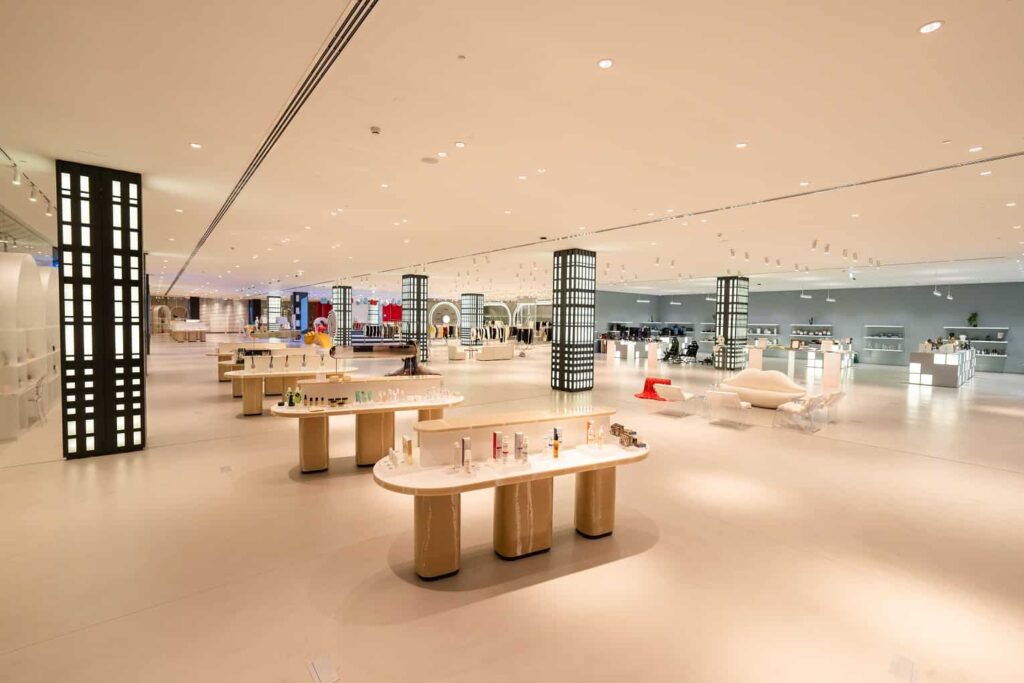
Marcin Piekarczyk shared insights about his latest venture, MP Consulting: “My most recent venture involved the establishment and launch of a 3,500 sq. m. phygital concept store, which blends physical and digital retail experiences in a unique and innovative way. What distinguishes this business is its product differentiation and the exceptional overall retail experience. Rather than competing with brands that are readily available both online and offline, I have deliberately curated a selection of premium to luxury brands from around the world, bringing them to the UAE market. Currently, the store offers a diverse collection of over 200 brands from more than 60 countries.

In alignment with evolving retail trends in the GCC, the in-store experience is fully experiential. We host events within the store, and I, along with my team, made the decision to open a specialty coffee shop to enhance the customer experience. Additionally, store design and visual merchandising are dynamic, ensuring that every visit offers a fresh, surprising, and impressive experience. This, I believe, is the essence of ‘the new retail.’

Furthermore, our B2B approach is centered on collaboration. We work closely with our brand partners, allowing them to merchandise their products with the support of my team, activate and launch new collections, and actively contribute to the success of our business. This creates a mutually beneficial environment for both B2B and B2C stakeholders.”

“In E-Commerce and Retail, Critical Elements Are Customer, Experience, and Data”

When asked about his activities in e-commerce, Marcin Piekarczyk responded: “I approach such questions by going back to the fundamentals. While many organizations focus on creative solutions and trending ideas, it is essential to build a solid foundation first. In the context of e-commerce and retail, the critical pillars are customer, experience, and data—all of which must be integral components of any digital strategy.

  • Customer: Today’s customers are increasingly savvy, less loyal, and more price-sensitive due to the broader competition and easier access to global brands. Despite a modest 4.6% growth in retail within the GCC, consumers are more cautious in their purchasing decisions. Loyalty remains the key to long-term success. Effective CRM campaigns are crucial for maintaining customer loyalty and ensuring a strong, ongoing relationship. Ultimately, the customer is king.
  • Experience: The customer experience is another foundational element. Consumers today expect more than just products—they seek an engaging, memorable experience with brands. This is especially important in the GCC, where shopping malls continue to play a significant role in shaping consumer behavior. To succeed, brands must implement a fully omnichannel strategy that ensures a seamless, experiential retail environment. There is a considerable opportunity here, as e-commerce penetration in the GCC remains relatively low—typically in the single digits—well below global averages.
  • Data: The importance of data cannot be overstated. While much is said about AI and data modeling, many businesses still fail to effectively harness the wealth of data they collect.

In my previous roles, I had the opportunity to work on data consolidation projects, aggregating insights from all retail touchpoints across multiple brands and sales channels. This experience allowed me to educate senior leadership on how to strategically leverage data. When understood and used correctly, data is a goldmine that can provide invaluable insights and drive informed decision-making.”

“Many Companies in Dubai Still Rely on Traditional IVRs and Chatbots”

Discussing the developments in the e-commerce ecosystem in Dubai, Marcin Piekarczyk shared the following information: “The most significant development in the industry today is undoubtedly Artificial Intelligence (AI), which many companies are now striving to incorporate. I believe AI has the potential to be a true game changer, provided it is applied strategically. In Dubai, several companies still rely on outdated systems such as traditional IVRs and chatbots, which are often poorly managed and result in a subpar customer experience. A simple adaptation of AI to create intelligent customer service agents could significantly enhance the customer experience.

I have been collaborating with a company in Asia that has developed a Minimum Viable Product (MVP) for this very purpose. Last week, I had the opportunity to engage with this technology, and I am confident it will revolutionize the industry.
AI will have a wide range of applications, spanning across operations, fulfillment, marketing, and more.

While we are still in the early stages of AI adoption, there is a common misconception that AI is simply an extension of basic algorithms that have been in use for years. In reality, AI offers far more advanced capabilities, enabling companies to automate, personalize, and optimize operations in ways that were previously unimaginable.”

“It is Crucial to View the Retail Experience as an Enjoyable Opportunity”

Marcin Piekarczyk also made the following observations about retail and e-commerce: “To address this question directly, the key to success in retail is ensuring that you offer the right product at the right price, coupled with a seamless and straightforward customer journey that eliminates the potential for errors, confusion, or second-guessing.

Beyond this, it is essential to view the retail experience as an opportunity for enjoyment. Customers today seek more than just a transaction—they want an engaging and enjoyable experience while shopping. Furthermore, the purchase process should not end with the exchange of money and product. It is critical to nurture customer relationships, provide exceptional service, and ensure that customers feel valued, encouraging them to return.

While many may expect me to highlight buzzwords such as AI, VR, or AR, the truth is that these technologies are tools to serve the larger purpose of enhancing customer experience and optimizing organizational profitability. Ultimately, it is the fundamentals that drive success, with technology playing a supporting role in achieving these objectives.”

“It is Fascinating to Witness How E-Commerce Trends Transition Across Markets”

WAFI Group Head of E-Commerce and MP Consulting Founder Marcin Piekarczyk concluded:

“It is essential to build a well-rounded team that, while operating within a stable organization, is able to think with the agility and innovation of a start-up. In my most recent project, I was fortunate to assemble an exceptionally talented team that worked collaboratively to ensure the success of the business.

It is particularly fascinating to observe how e-commerce trends transition between markets. Throughout my career, I have had the privilege of working across three continents, gaining experience in both highly developed markets and emerging economies. My roles have ranged from hands-on positions to strategic leadership, which has shaped my approach to talent acquisition. I seek individuals who possess the ability to execute at a tactical level while also having the foresight to step back and think strategically.

Currently, I am in the process of transitioning my existing business and will soon be available for new projects in the GCC as well as globally. Please feel free to reach out if you are interested in collaborating on retail projects.”

Who is Marcin Piekarczyk?

With over 16 years of experience managing large retail organizations across three continents, Marcin Piekarczyk has developed a proven track record of success. He has led well-established global brands such as Lacoste, The Body Shop, Lego, and Mothercare, as well as numerous start-ups that have grown into profitable, market-leading businesses.

Marcin Piekarczyk is highly skilled in driving digital transformation, with extensive expertise in transitioning businesses from traditional retail models to fully integrated hybrid/omnichannel operations. His deep understanding of the evolving retail landscape enables him to navigate complex challenges and achieve sustainable growth.

As an industry expert, business consultant, and keynote speaker, Marcin Piekarczyk is passionate about fostering innovation and implementing forward-thinking strategies that position businesses as leaders in their respective markets. He is committed to supporting companies in their digital and retail journeys, offering tailored solutions through both full-time engagements and his consulting firm, MP Consulting. Marcin is always open to collaborating with businesses worldwide to drive transformation and long-term success.

Cross-Border E-Commerce in Europe Exceeds 275 Billion Euros

The report “TOP 500 B2C Cross-Border Retail Europe” was published by Cross-Border Commerce Europe. According to the report, the crossborder e-commerce market in Europe is growing every year. In 2023, the cross-border e-commerce market in Europe had reached sales of 237 billion euros. Of this total amount, 107 billion euros were represented by online stores in Europe.

Cross-Border E-Commerce Market in Europe Represents 36% of General E-Commerce

The data for the 2024 crossborder e-commerce market in Europe has also been announced. Accordingly, the B2C cross-border e-commerce market in Europe reached a sales volume of 275.6 billion euros in 2024. This figure represents a 16% increase compared to 2023. The total value of e-commerce in the continent is estimated to be 765.6 billion euros. This figure represents a 2.1% increase compared to the previous year. Accordingly, the cross-border e-commerce market in Europe represents 36% of the general e-commerce market in Europe.

The Largest 500 Brands Achieved 69.5 Billion Euros in Revenue

According to the report examining the 500 largest crossborder e-commerce sellers in Europe, in 2024, the total revenue of these 500 cross-border B2C brands reached 69.5 billion euros. This figure represents a 39% increase compared to the previous year. This increase reveals the strength of the cross-border e-commerce market and the players in the market.