WORLDEF Prime Antalya 2026 - Upcoming Event

Register Now

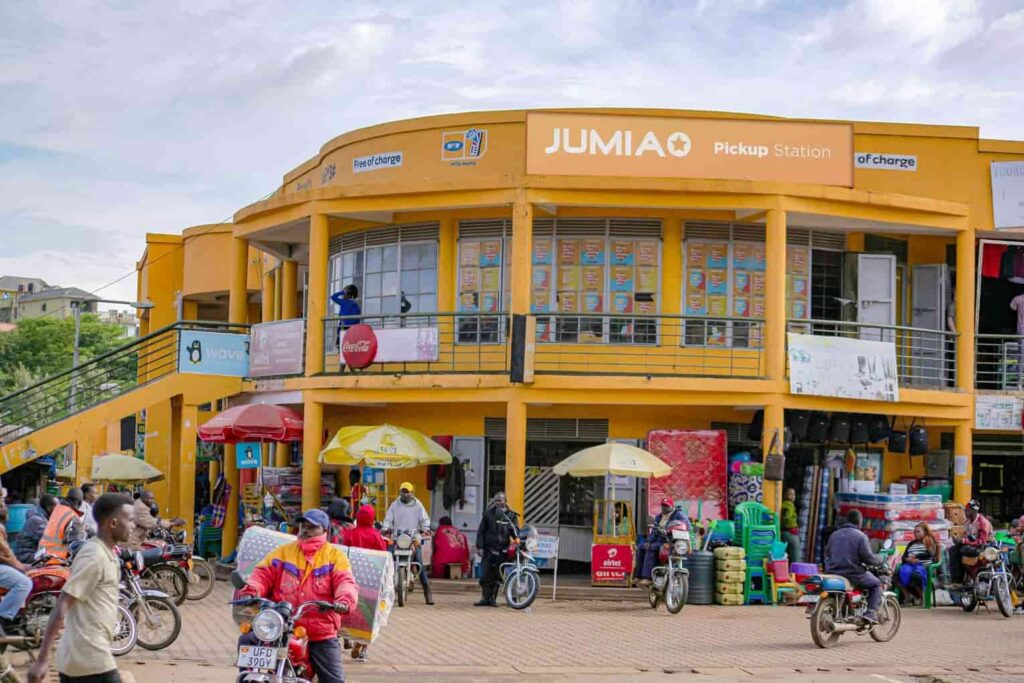
Africa’s Largest Marketplace: Jumia

Africa is drawing global attention with its young population, rapidly growing cities, and increasing disposable income. With developing economies and excellent potential for e-commerce, the continent is home to 54 countries, each at different stages of economic growth. Nigeria, the most populous country in Africa, also boasts the continent’s largest economy. Headquartered in Nigeria, Jumia stands as Africa’s largest online marketplace. With monthly traffic ranging between 20 and 25 million visitors, Jumia is the only true pan-African platform on the list, operating across multiple markets.

Jumia Group CEO Francis Dufay spoke exclusively to WORLDEF E-COMMERCE magazine. In this interview, we discussed Jumia’s future goals, its collaboration with Hepsiburada, and the evolution of e-commerce in Africa. Dufay also shared valuable insights on several other key topics. Here is the full interview—enjoy the read!

Jumia was founded in 2012 in Lagos, Nigeria. The company’s mission is to improve the quality of everyday life in Africa by leveraging technology to provide innovative, convenient, and affordable online services. Its vision is to connect African consumers and entrepreneurs, fostering economic growth and expanding access to goods and services. The platform consists of a marketplace that connects sellers with consumers, a logistics service that facilitates package delivery, and a payment service, JumiaPay, which enables secure transactions. Listed on the New York Stock Exchange (NYSE: JMIA) since 2019, Jumia operates in 9 countries across Africa and also has offices in China, Dubai, New York, Germany, and Portugal.

Jumia Had an Annual Active Customers of 5.4 Million

For the full year of 2024, Jumia reported revenue of $167.5 million, down 10% year-over-year, or up 17% in constant currency. GMV of $720.6 million, down 4% year-over-year, or up 28% in constant currency. Operating loss of $66.0 million compared to $73.3 million in 2023, down 10% year-over-year, or down 15% in constant currency. Adjusted EBITDA loss of $51.3 million compared to $58.2 million in 2023, down 12%  year-over-year, or down 21% in constant currency.

Physical goods Orders, excluding South Africa and Tunisia, increased 18% year-over-year, with even greater acceleration in December. The strong growth was driven by robust customer demand, continued product expansion, and compelling value for our offerings. Total physical goods Orders increased 15% year-over-year. In 2024, Jumia had an annual active customers of 5.4 million. The company is attracting what it believes to be a stickier and higher quality customer base as evidenced by a 375 basis point year-over-year improvement in repurchase rates with reference to the third quarter of 2024.

Francis Dufay shared the following regarding the goals for 2025: “As we look ahead to 2025, the company is optimistic about its future. The business is stronger and more efficient than it was just two years ago, and we believe we have a good opportunity ahead of us. Our priorities for the year are to build on this momentum by driving top-line growth and improving operational efficiencies. We plan to double down on expansion outside the main urban centers, expand our product assortment with competitive pricing, and strengthen relationships with international sellers. To improve our path to profitability, we will continue to enforce cost discipline and enhance operational and marketing efficiency.”

What Sets Jumia Apart from Its Competitors

In response to the question, “What differentiates Jumia from competitors like Amazon and Takealot?”, Francis Dufay stated:Jumia is present in 9 markets in Africa. Takealot is only present  in South Africa, and Amazon is present there and in Egypt. In South Africa, Jumia only offered fashion through Zando and our competitors don’t currently operate in the fashion segment or they sold it. Jumia’s unique value proposition lies in its deep understanding of the African market and its ability to tailor services to the continent’s diverse needs. Unlike global competitors, Jumia has built an extensive logistics network capable of reaching rural and remote areas, ensuring reliable delivery even in regions with limited infrastructure.”

Dufay added; “Our payment solution, JumiaPay, addresses the specific financial ecosystem in Africa, promoting cashless transactions in markets where traditional banking services may be limited. Additionally, Jumia’s commitment to supporting local entrepreneurs and businesses fosters economic growth and provides consumers with a wide array of locally sourced products.”

What does Jumia Promise to E-commerce Sellers?

Jumia Group CEO Francis Dufay responded to the question, *“As a global marketplace, what do you promise e-commerce sellers?”* as follows: “Jumia offers e-commerce sellers a robust platform to reach millions of consumers across multiple African countries. We provide end-to-end logistics support, from warehousing to last-mile delivery, ensuring products reach customers efficiently. Our payment infrastructure, JumiaPay, guarantees secure and timely transactions. Furthermore, sellers benefit from our marketing and advertising services, designed to enhance product visibility and drive sales. We are committed to fostering a supportive environment that enables sellers to scale their businesses and thrive in the African e-commerce landscape.”

“Hepsiburada Has Started Listing Turkish Brands on Jumia Egypt”

Last October, Jumia partnered with Hepsiburada, one of Türkiye’s largest marketplaces. Dufay shared the following information on this collaboration: In October 2024, Jumia entered into a strategic partnership with Hepsiburada to enhance product offerings for consumers in Egypt and North Africa. Through this collaboration, Hepsiburada lists its private label products and selected Turkish brands on the Jumia Egypt marketplace. This initiative aims to provide our customers with a wider selection of authentic, high-quality Turkish products. The partnership is currently operational in Egypt, and we are evaluating the potential to expand this collaboration to other African markets where Jumia has a presence.”

“Jumia is Ceasing Operations in South Africa and Tunisia”

Following Jumia’s announcement of its withdrawal from the South African and Tunisian markets, Dufay shared the latest developments: In October 2024, Jumia made the strategic decision to cease operations in South Africa and Tunisia to focus resources on markets with higher growth potential. These two countries collectively accounted for approximately 2% of orders and 3% of GMV in the first nine months of 2024. The exit process involved employee and lease termination costs, asset liquidation, and other associated expenses. This move allows us to streamline operations and concentrate on strengthening our presence in core markets where we see significant opportunities for growth and profitability.”

In response to the question, “What are your plans regarding the strategy of focusing on consolidation in the nine countries where the company operates?” Dufay stated:  “Our current strategy emphasizes deepening our footprint in the existing nine countries by enhancing the customer value proposition, expanding our logistics capabilities, and enriching our product assortment. We are investing in technology and infrastructure to improve operational efficiency and customer experience. By focusing on these markets, we aim to capture the substantial untapped potential and drive sustainable growth. This approach allows us to allocate resources effectively and build stronger relationships with local consumers and sellers.”

The E-commerce Market in Africa Will Exceed $40 Billion by 2025!

The African e-commerce landscape has been experiencing steady growth, driven by increasing internet penetration, mobile connectivity, and a youthful, tech-savvy population. According to data from Statista, the e-commerce market in Africa is expected to generate $40.49 billion in revenue by 2025. With an anticipated annual growth rate (CAGR 2025-2029) of 8.46%, the market is projected to reach a volume of $56.03 billion by 2029. According to data from TechCabal Insights, Africa’s mobile-first approach is expected to account for over 60% of e-commerce transactions by 2025, with mobile phone adoption projected to reach 623 million unique subscribers by the same year.

Dufay also shared his insights on cross-border e-commerce in Africa: Cross-border e-commerce in Africa is gaining momentum, facilitated by regional trade agreements and improvements in logistics infrastructure. Jumia has been instrumental in this growth by enabling international sellers to reach African consumers and vice versa. Our platform offers a diverse range of products from global vendors, providing consumers access to goods that may not be readily available locally. This expansion of cross-border trade contributes to a more dynamic and competitive marketplace, benefiting both consumers and sellers.”

He added that Nigeria, Egypt, and Kenya are among the countries with the greatest potential for e-commerce, thanks to their large populations, increasing internet penetration, and growing middle class.

Challenges of E-commerce in Africa

In response to the question, “As the largest marketplace in Africa, what are the key challenges for e-commerce in the countries you serve?” Francis Dufay stated: “E-commerce in Africa faces several structural challenges, including logistics infrastructure, digital payment adoption, and internet penetration. Many regions still lack reliable transportation networks, making last-mile delivery a complex and costly process.

Additionally, while digital payments are growing, cash remains dominant in many markets, requiring a hybrid approach to payments. Internet penetration and smartphone adoption are increasing, but data costs can still be prohibitive for some consumers. Regulatory complexities and fragmented markets also pose challenges, as each country has its own rules governing e-commerce, imports, and taxation. Despite these hurdles, Jumia continues to innovate by investing in logistics, expanding JumiaPay, and working closely with local governments to create an enabling environment for digital commerce.”

“E-commerce will become an integral part of daily life”

Jumia Group CEO Francis Dufay envisions a future where e-commerce in Africa becomes an integral part of daily life, driven by technological advancements and increased accessibility. He believes that continued investment in infrastructure, fostering local entrepreneurship, and embracing innovation will propel the industry forward, ultimately contributing to economic growth across the continent.

Jumia’s Artificial Intelligence Strategy

So, how is artificial intelligence transforming e-commerce in Africa? What is Jumia’s AI strategy? Here is the assessment of e-commerce professional Francis Dufay: “Artificial intelligence is revolutionizing e-commerce in Africa by enhancing personalized shopping experiences, optimizing supply chains, and improving customer service through chatbots and virtual assistants.

At Jumia, we are integrating AI to analyze consumer behavior, forecast demand, and streamline operations, ensuring we meet the evolving needs of our customers efficiently. We recently adopted Sprinklr to enhance the user experience for customers, sellers, and employees across 9 African countries and 140+ digital channels, including WhatsApp, TikTok, email and live chat. Sprinklr’s customized, AI-powered platform and self-service capabilities offer Jumia a scalable, omnichannel solution to effectively manage support for its diverse user base.

Jumia’s adoption of Sprinklr consolidates user support operations onto a single platform, providing real-time visibility into agent interactions and performance. This empowers managers to understand key topics and themes that drive contact center traffic and to allocate support resources effectively. With customizable reporting and data-driven insights, the team gains a deeper understanding of support interactions, enabling targeted training programs and enhancing overall service quality.”

Highlighting that Jumia provides employment to thousands of people, Dufay said, “Jumia’s team is a diverse and dynamic group of professionals committed to driving the growth of e-commerce across Africa. With operations in nine countries, Jumia employs thousands of people across various departments, including technology, supply chain, commercial, marketing, customer service, and vendor management.

The company is built on a strong culture of innovation, agility, and collaboration, attracting top talents from Africa and beyond. Jumia also invests in young talents through internships, training programs, and initiatives like JForce, which empowers independent sales consultants. Our leadership team brings together expertise in e-commerce, technology, and financial services, ensuring that we continue to shape the future of online retail on the continent.”

Who is Francis Dufay?

Francis Dufay is currently the CEO of Jumia. Prior, he was EVP Africa for the Jumia Group. Before that, he served as CEO of Jumia Ivory Coast from 2014 until 2022. Before joining Jumia, Francis worked in Brussels (Belgium) for McKinsey & Company (2009-2014) where he managed projects in Europe and Sub-Saharan Africa, focused on eCommerce and retail, as well as Public sector & economic development.  Francis holds an MBA in Marketing from Northwestern University (UK) – Kellogg School of Management; a master’s in management from the Community of European Management Schools (CEMS) Masters in Management and an MSc from HEC Paris Business School (France).

US Tariffs: Temu Halts Direct Product Sales from China to the US!

Chinese e-commerce platform Temu has announced that it will halt the direct sale of products imported from China to customers in the United States via its own platform. This move came with the end of the duty-free exemption rule applied to low-value packages in the US. Platforms like Temu had been benefiting from the “de minimis” exemption for direct sales to the US.

The US’s new customs tariffs started on Friday, May 2, 2025. Accordingly, the tax exemption called “de minimis” applied to small packages has ended. This situation forced e-commerce retailers, especially those based in China, to make some decisions. Some e-retailers are halting direct sales to customers in the US. Temu is leading among them. Temu is giving up on imports from China to the US. The platform aims to sell products to American consumers only from local sellers.

In line with a decision recently made by US President Donald Trump, the “de minimis” exemption applied to e-commerce packages under $800 from China and Hong Kong was lifted on May 2. Under “de minimis,” products were mostly subject to tariffs of up to 145%. This move negatively impacted global e-commerce. China responded with retaliation!

Temu: Sales Will Be Made by Local Sellers

Platforms like China-based Temu and Singapore-based Shein had been benefiting from the “de minimis” customs exemption for direct sale and shipment of low-value products to the US. The cross-border e-commerce platform Temu, based in China, announced that it will stop direct sales from China to US consumers. Accordingly, Temu announced that sales will now be carried out by “local sellers” and that orders will be fulfilled from within the country. The Chinese e-commerce platform is actively working to onboard US-based companies onto the platform.

In a statement from Temu, it was said, “All sales are now made by sellers located in the US, and orders are fulfilled domestically. This step aims to help local sellers reach more customers and grow their businesses.” In February, Temu had asked Chinese factories to send their products in bulk to American warehouses.

Shein, on the other hand, has not yet made a statement on the issue. Last month, Shein and Temu announced that due to “recent changes in global trade rules and customs tariffs,” their operating costs had increased, and that they would make “price adjustments” as of April 25.

What Will Happen in E-Commerce from China?

Packages sent from China and Hong Kong to the US valued up to $800 are now either subject to a 120% tax or a fixed fee. This fee initially started at $100 and will rise to $200 in June.

In February, Temu had asked Chinese factories to send their products in bulk to American warehouses. This system is called the “semi-warehouse model,” and Temu says it only manages the online marketplace under this model. However, as stocks in the US run out and need to be replenished from China, if import tariffs remain at 145%, prices may increase over time. Fast fashion giant Shein also raised its prices in the US; in some products, this increase exceeded 300%.

Packages entering the US under the de minimis exemption were inspected in the same way as other products and checked for illegal substances. According to officials, most synthetic drugs are already entering the country through the Mexican border. Some experts believe that ending this exemption will have little effect on solving the problem of illegal drugs and will not provide a solution to the challenges faced by American manufacturers.

What is De Minimis?

De minimis” is a Latin term that can be roughly translated into English as “something insignificant.” In this context, it refers to a trade rule enacted by the US Congress in 1938 to prevent the collection of import taxes on only small amounts.

After this threshold was increased several times in the 21st century, it allowed retailers to send packages valued under $800 to US customers without paying taxes or customs fees. According to the US Customs and Border Protection (CBP), shipments under this exemption accounted for more than 90% of all cargo entering the country.


China’s E-Commerce Air Cargo Flights Are Being Canceled!

The countdown has begun for WORLDEF ISTANBUL 2025 trade show!

The global e-commerce trade show WORLDEF continues to shape the future of e-commerce and retail technologies. Bringing together global leaders and innovators, the trade show is preparing to host a major gathering in Istanbul. “WORLDEF ISTANBUL 2025” will focus on AI-driven transformation in e-commerce!

Referring to the impact of the recent tariffs of the United States (USA) on e-commerce, WORLDEF CEO Omar Nart stated: “Türkiye can be one of the winning countries in this process with its production capacity, workforce, and digital transformation steps. Strategic actions and collaborations are needed to realize this potential. WORLDEF ISTANBUL 2025 will host these strategic actions and global collaborations.”

WORLDEF ISTANBUL 2025

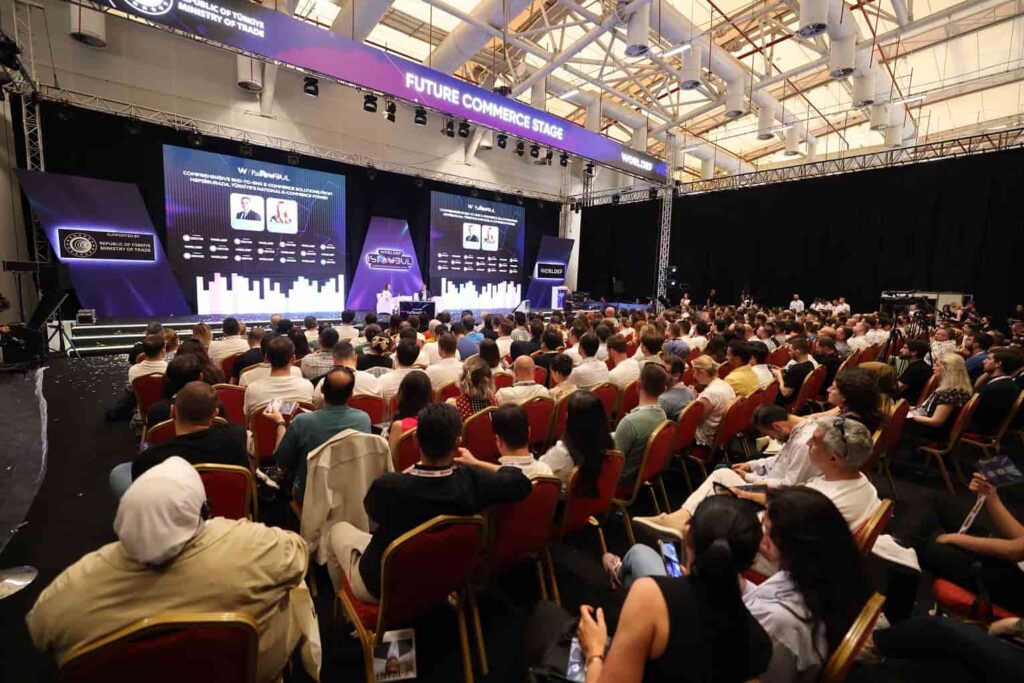
WORLDEF, one of the world’s largest e-commerce fairs, is bringing together the global e-commerce ecosystem in Istanbul. The major e-commerce fair will be held at the Istanbul Yenikapı Event Area on May 15–17, 2025, and is expected to host more than 30,000 attendees from over 80 countries. WORLDEF ISTANBUL 2025 will be a key meeting point for the ecosystem of e-commerce, artificial intelligence, and retail technologies.

As the technological transformation in e-commerce rapidly continues, brands aiming to stand out in the digital commerce space will come together at this prestigious fair. Participating brands will lead the transformation in the modern retail era and explore new opportunities in artificial intelligence.

Artificial Intelligence is Transforming E-Commerce!

E-commerce is undergoing a profound transformation through artificial intelligence (AI) integration. AI-powered systems are enhancing customer satisfaction through personalized shopping experiences. AI-based recommendation systems boost sales by suggesting products tailored to user preferences. Chatbots provide 24/7 customer service. Stock and pricing algorithms can be dynamically adjusted based on demand. Fraud detection technologies increase security in e-commerce and reduce cyber risks.

Visual search and voice assistants make online shopping more practical. AI-driven marketing analytics enable more efficient campaign strategies. These innovations are making e-commerce smarter, faster, and more user-friendly, strengthening businesses’ competitive advantages. WORLDEF ISTANBUL 2025 will offer an opportunity to experience how AI is transforming e-commerce. The event will feature AI-focused brands, expert speakers, and interactive booths.

WORLDEF ISTANBUL to Host E-Commerce-Oriented B2B Collaborations

WORLDEF ISTANBUL offers a “B2B Matching and Networking Application” to facilitate cooperation among participating companies. Companies registered in the unique appointment system can request meetings with firms from different sectors. The application, which ensures that companies meet the right people for B2B collaborations, makes it easy to schedule meetings, connect with new people, and engage with participating brands. Additionally, a “Marketplace B2B Zone” will be set up at the fairground. In this area, participating marketplaces will discuss collaboration opportunities with potential e-commerce sellers.

WORLDEF ISTANBUL 2025

Omer Nart: We Expect More Interaction, Participation, and Networking This Year

WORLDEF CEO Omer Nart expressed great excitement for WORLDEF ISTANBUL 2025. Emphasizing that last year’s event created a strong synergy in the e-commerce ecosystem, Nart said: “WORLDEF ISTANBUL 2025 will be built upon the synergy created last year. In this year’s e-commerce fair, we expect more interaction, more participation, and more networking.

Participating companies and visitors will witness how AI is transforming e-commerce. We have prepared a comprehensive program on e-commerce and artificial intelligence. From logistics to digital marketing, from service providers to marketplaces, hundreds of professionals from dozens of sectors and everyone whose path intersects with e-commerce will be at the region’s largest e-commerce fair!”

“WORLDEF ISTANBUL 2025 Will Host Strategic Steps and Global Collaborations”

Highlighting Istanbul’s strategic importance for global e-commerce, Omer Nart said:
“As the host city, Istanbul offers extraordinary opportunities for global e-commerce brands. Located at the intersection of Europe and Asia, this metropolis attracts international players. Global e-commerce brands view Türkiye as a supply and production hub. In this regard, WORLDEF ISTANBUL will host very important collaborations.”

Nart also addressed the tariffs implemented by the United States (USA) that negatively affect cross-border e-commerce, pointing out that this situation presents opportunities for producer and supplier countries like Türkiye. He continued:

“This recent situation, especially in categories such as textiles, footwear, accessories, and home decoration, offers opportunities for Turkish manufacturers. With its production power, labor force, and digital transformation efforts, Türkiye can become one of the winning countries in this process. To realize this potential, strategic steps and collaborations are necessary. WORLDEF ISTANBUL 2025 will host these strategic steps and global collaborations.”

WORLDEF ISTANBUL 2025

Inspiring Insights from E-Commerce Professionals

WORLDEF ISTANBUL, one of the most prestigious events in the e-commerce world, brings together leading figures in the industry. Senior executives of the e-commerce ecosystem will deliver inspiring speeches on innovative strategies, digital marketing trends, and the future of commerce. Participants will gain valuable insights into expanding into global markets, AI-powered sales techniques, and improving customer experience. Standing out with its networking opportunities, the event will open the door to significant collaborations for entrepreneurs and brands. This organization, which shapes the future of digital commerce, will be an unmissable meeting point for industry professionals.

What Does WORLDEF ISTANBUL 2025 Promise?

  • Star speakers: Prominent founders, government officials, corporate tech leaders, and investors from around the world will share their e-commerce-focused experiences.
  • New perspectives: Three different stages will present brand-new perspectives on the future of e-commerce technologies. Innovations shaping the e-commerce world will be shared on stage.
  • Interactive booth area: Hundreds of brands engaged in e-commerce will showcase their products and services in the exhibition area.
  • Networking: Thanks to the special B2B matching application offered at the fair, participating companies will easily hold collaboration meetings.

Featured Sectors at the Fair

  • Marketplaces
  • E-commerce service providers
  • Logistics and fulfillment
  • Investors
  • Retail Technologies
  • Entrepreneurs

WORLDEF ISTANBUL in Numbers

  • 80+ Countries
  • 30,000+ Visitors
  • 200+ Speakers
  • 500+ Retail Brands
  • 240+ Booths


Mediaposte Hit Mail is focusing on three countries in 2025

The Bulgaria-based marketing and e-commerce agency Mediaposte Hit Mail aims to expand its services across Central and Eastern Europe (CEE). In 2025, it plans to expand to Türkiye, North Macedonia, and Serbia, offering its comprehensive services in these countries. Since its growth in 2005, the company sees great potential, especially in the Western Balkans region. Mediaposte Hit Mail Bulgaria Country Manager Hristo Radichev shared the company’s goals with WORLDEF E-COMMERCE magazine.

Hristo Radichev said, “Our group has two brands in Bulgaria. Mediaposte Hit Mail Bulgaria is a full-service marketing and ecommerce agency based in Sofia, Bulgaria. Metrica is a fulfillment operator and customer service provider. We are part of the French group La Poste.” ifadelerini kullandı.

“We aim to expand our services across Central and Eastern Europe (CEE), including Türkiye.”

He also shared the following information regarding the question, “What are your goals, mission, vision, and objectives in Europe?”; “We have an impressive range of services for ecommerce brands, including digital marketing, email marketing, full serviced cross-border expansion, orders fulfillment, and call center. These services are designed to help businesses get more sales, engage more customers, and achieve much better, measurable results. The mission is to provide clients with fully measurable and improved results for their marketing campaigns, utilizing data-driven strategies and innovative approaches.

The vision focuses on building the most reliable marketing agency team in the region, delivering superior return on investment for clients through effective communication channels and top quality logistics infrastructure. Our objectives include expanding our services across Central and Eastern Europe (CEE), including Türkiye. In short, we help ecommerce merchants jump from their local market to others and reduce time to market with at least 6 months.”

“The transport is quite expensive, the timeframe for delivery is very long, and there are customs involved”

According to the information provided by Mediaposte Hit Mail Bulgaria Country Manager Hristo Radichev, Mediaposte Hit Mail Bulgaria currently serves more than 10 EU countries. Its most active markets are Bulgaria, Romania, Poland, the Czech Republic, and Slovakia. For 2025, the company aims to expand to Türkiye, North Macedonia, and Serbia, offering the same comprehensive services. Regarding this, Radichev shared the following information:

“We see a great potential in the Western Balkans region (Albania, Bosnia and Herzegovina, Kosovo, Montenegro, North Macedonia, and Serbia), where there are plenty of people having issues with online orders from merchants abroad. The transport is quite expensive, the timeframe for delivery is very long, and there are customs involved. Our team has worked hard in the last 3 years to provide a good solution for all these challenges and in 2025 we will start offering all these services to merchants interested in the region.

What does Mediaposte Hit Mail Bulgaria promise to e-commerce companies?

It provides time, resource, and cost savings for companies. They have strong experience in areas such as performance-focused digital marketing, email automation, creative solutions, end-to-end product information management, technical integrations, order fulfillment, last-mile delivery, and customs procedures. Their network of partners for fulfillment and logistics currently covers more than 15 EU countries and continues to grow. The company is well aware of the challenges faced by e-commerce retailers looking to expand abroad, and it has solutions for each of them.

“We are also ready to help Turkish retailers sell directly or via marketplaces to the EU”

Radichev continued as follows; “We are also ready to help Turkish retailers sell directly or via marketplaces to the EU. All this without the hassle of establishing a local company, dealing with shipping companies, customs, or last mile delivery couriers. They don’t have to change their operations in any way. All we need from them is just to give us their well structured and accurate products’ data.

Then we help them spread it across various sales channels, like ecommerce websites and marketplaces. The merchants get all the orders in one place through a convenient platform. Then they just have to prepare the parcels and ship them. We take care of the rest, including payments, customs, last mile delivery, returns management etc.”

Hristo Radichev stated that they currently do not have any goals in the Gulf region due to the long distance that needs to be covered. He also said, “However, we offer an online platform that makes product information management, logistics and customs clearance smooth and much easier. This could be quite interesting for any company in the Gulf region dealing with cross-border sales.

 “The digital team is managing 6-digits monthly budgets across 10+ countries in Europe”

Hristo Radichev said the following about the company’s experienced team: “All of them are remarkable experts in their field. The digital team is managing 6-digits monthly budgets across 10+ countries in Europe. The cross-border team has helped many e-retailers grow big much faster than expected in new countries.

The orders fulfillment team has processed millions of parcels in the last few years. All of them are focused, enthusiastic, and practical people. They are ready to share their know-how to our ecommerce customers in order to help them avoid common mistakes, scale up their sales, and save both time and money during their business expansion.”

“We realized that the WORLDEF team is truly amazing”

Finally, Radichev made the following assessment about the collaboration with WORLDEF: “We collaborate with WORLDEF since 2022, when we visited the event in Istanbul for the first time. The team is really amazing, helping us not only to set up properly our expo stand, but to meet new potential clients and partners from different countries. The growth of the event is truly remarkable in the last few years. I can only encourage WORLDEF to dream even bigger and to keep being a top benchmark for all ecommerce-related forums worldwide.”

About Mediaposte Hit Mail

Mediaposte Hit Mails is a company with a rich history in Bulgaria. It was founded in 2005 under the name “Hit Mail” as a specialized agency for direct marketing. In 2009 the French group La Poste acquired a majority stake and renamed it to “Mediaposte Hit Mail”. Since 2010 a number of new services have been added, mainly in the field of digital marketing: email marketing (sending email broadcast and newsletter), PPC advertising, development and optimization of landing pages, management of promotional campaigns and loyalty programs, etc.

In 2014 the company was already 100% owned by the French group. In 2015 the owner of “Mediaposte Hit Mail” also acquired a majority stake in the firm “Metrica”. The new company in the group specializes in call-center services (telemarketing, customer service, info-lines, etc.) and fulfilment for e-shops. Since 2018 Mediaposte Hit Mail is a member of the Bulgarian-Romanian Chamber of Commerce and Industry (BRCCI).

Dubai CommerCity Strengthens AI Collaborations to Boost E-Commerce Growth

Dubai CommerCity (DCC) is ramping up artificial intelligence adoption within its free zone by forging strategic partnerships with AI-focused tech companies qeen.ai and Portmind. The move aims to accelerate the UAE’s digital commerce ecosystem and promote innovation in cross-border trade.

A joint initiative of the Dubai Integrated Economic Zones Authority (DIEZ) and Wasl Properties, Dubai CommerCity has joined forces with qeen.ai to deliver generative AI solutions tailored for e-commerce businesses. The collaboration was unveiled during Dubai Artificial Intelligence Week, alongside a second agreement with Portmind, whose Sail platform enhances customs and logistics operations with AI automation.

The partnership with qeen.ai seeks to empower SMEs and digital brands by offering smart automation, AI-driven customer experience management, and streamlined digital sales tools. Meanwhile, Portmind’s Sail integration is expected to significantly improve customs efficiency and compliance for DCC tenants.

Strategic Vision for a Smarter Trade Ecosystem

Mitch Bittermann, Senior VP of Commercials at Dubai CommerCity, said the initiatives reflect Dubai’s vision of becoming a global AI and digital economy leader. “By embedding smart and generative AI into our ecosystem, we’re boosting the competitiveness of our businesses and contributing to a thriving, investment-friendly AI economy,” he stated.

qeen.ai Co-Founder Dina Alsamhan added, “This partnership allows us to support the UAE’s next-gen digital commerce infrastructure. While Dubai CommerCity provides vital market access, our AI agents enable SMEs to scale globally by automating and optimizing their operations.”

Reinforcing Dubai as a Global Innovation Hub

DCC’s integration of Portmind’s AI-powered Sail platform aims to provide agile and compliant customs processing, enhancing trade efficiency for all stakeholders. According to Abdulrahman Shaheen, SVP of Operations at DCC, “Our goal is to simplify global trade with intelligent tools that prepare businesses for the future and solidify Dubai’s status as a global innovation center.”

Julien Gurunlian, CEO of Portmind, emphasized, “Our partnership brings seamless AI-driven workflows to international trade, cutting costs, reducing friction, and ensuring compliance across the board.”

E-Commerce Market Set to Hit AED 48.8 Billion

As the UAE’s e-commerce market heads toward a projected AED 48.8 billion valuation by 2028, DCC’s alliances with qeen.ai and Portmind position the free zone at the forefront of this growth. The collaborations align with the UAE’s economic diversification strategy and reflect DCC’s ambition to redefine the future of digital trade through innovation, agility, and smart infrastructure.


Dubai CommerCity: The ideal hub for digital commerce businesses

eCAG is building a strong e-commerce community in Georgia

The eCommerce Association Georgia (eCAG) was established in 2020 with the aim of promoting the growth and development of e-commerce in Georgia. The association’s primary goal is to create a strong digital economy by bringing together businesses, professionals, and stakeholders in the e-commerce ecosystem. Chairman of eCAG, Vladimer Kandelaki, was a guest on WORLDEF E-COMMERCE MAGAZINE.

eCAG’s mission: The goal is to support businesses, advocate for fair regulations, and provide education and resources to help local businesses succeed in the digital space.

eCAG’s vision: Our goal is to make Georgia the leading e-commerce hub in the region, connecting local and global markets, while making innovation, inclusivity, and sustainability the core elements of our efforts. Through initiatives such as the “TrustMark project,” “eCommerce Academy,” and “eCommerce Day,” we are building a stronger and more connected e-commerce community.

“We are focused on establishing strong interaction with Europe”

Chairman of eCAG, Vladimer Kandelaki, outlined the association’s goals in Europe as follows:

“The eCAG has a clear focus on engaging with Europe as part of Georgia’s strategic direction toward EU integration. Our objectives in Europe are rooted in expanding the opportunities for Georgian businesses and fostering international collaboration. In Europe, our key objectives are:

  • Expanding Georgia’s global footprint: We aim to connect Georgian businesses with European markets, enabling them to access new customers and opportunities.
  • Promoting collaboration: We are building partnerships with European associations and companies to share knowledge, exchange best practices, and foster cross-border e-commerce.
  • Advocating for European integration: Georgia is on the path to European Union integration, and we support aligning local e-commerce practices and regulations with EU standards to ensure a smooth transition.
  • Creating exposure for Georgian businesses: Through international events like the E-Commerce Berlin Expo, we help local businesses showcase their products and services to global audiences.

Our work in Europe is about positioning Georgia as a trusted and competitive player in the global e-commerce ecosystem while empowering businesses to scale beyond borders.”

“The e-commerce market in Georgia surpassed 500 million dollars in 2024”

Kandelaki also shared basic information and current statistics about the e-commerce ecosystem in Georgia:

“The e-commerce sector in Georgia is witnessing robust growth, driven by digital transformation and changing consumer behavior. Here’s an overview of the current state of the ecosystem:

  • E-commerce volume (2024): The estimated annual e-commerce market size in Georgia exceeds $500 million USD, driven by increasing online transactions in retail, services, and digital products.
  • E-commerce penetration: Approximately 25% of Georgian consumers actively shop online, with this number steadily rising due to improved internet access and digital literacy.
  • Annual growth rate: The e-commerce sector has grown at an average annual rate of 15-20% over the past five years, with accelerated growth observed during the pandemic.
  • Key drivers: Growing adoption of digital payment methods, increased smartphone penetration, and a surge in cross-border shopping are fueling the sector.
  • Challenges: While e-commerce is expanding, barriers such as logistical infrastructure, trust in online platforms, and alignment with international standards remain areas for improvement.

Georgia’s e-commerce ecosystem is on an upward trajectory, with significant potential to become a regional hub for digital commerce.

“WORLDEF is a leading platform that brings together global e-commerce stakeholders”

Chairman of eCAG, Vladimer Kandelaki, lastly evaluated the collaboration between eCAG and WORLDEF: “Our partnership with WORLDEF has been a cornerstone in fostering Georgia’s integration into the global e-commerce ecosystem. WORLDEF’s reputation as a leading platform for connecting global e-commerce stakeholders has been instrumental in creating opportunities for Georgian businesses to engage with Turkish and international markets. Through our collaboration, WORLDEF has provided invaluable insights into global e-commerce trends, strategies, and best practices, which have been shared with our members to enhance their competitiveness.

WORLDEF’s events have opened doors for Georgian businesses to connect with Turkish and international leaders, investors, and potential partners. These connections are crucial for fostering cross-border collaborations and scaling businesses globally. By working with WORLDEF, we have been able to inspire and empower Georgian businesses to adopt global standards and innovations, further advancing the local e-commerce ecosystem. We deeply value our partnership with WORLDEF, as it aligns with our mission to connect Georgia’s e-commerce community with global opportunities and resources.”

France Calls for Removal of €150 Duty-Free Exemption in Cross-Border E-Commerce

The French government has officially announced its intention to abolish the €150 customs duty exemption for e-commerce platforms during EU negotiations. In the related statement, it was noted that approximately 1.5 billion parcels enter France annually through cross-border e-commerce. A significant portion of these parcels are exempt from customs duties because their value remains below €150. These packages mostly originate from Asia and China.

The EU had also recently announced its plan to end the policy of exempting online purchases under €150 from customs duties. While the implementation of this reform is awaited, France has also brought some interim solutions to the agenda. One of these solutions involves charging a fixed “processing fee” for each parcel.

EU Imported 4.6 Billion Parcels in 2024

EU countries imported 4.6 billion parcels valued under €150 in 2024. It was stated that 91% of these parcels originated from China. According to the European Commission’s report dated February 5, 2025, this figure doubled between 2020 and 2022, and then doubled again between 2022 and 2024.

China-based platforms Temu and Shein ranked among the top ten most visited e-commerce retail sites in France in the last quarter of 2024. Both platforms reached more than 15 million unique visitors per month.

France Takes Measures Against Cross-Border E-Commerce

The French government has also brought forward several measures regarding cross-border e-commerce. These steps include intensifying inspections of foreign e-commerce platforms and tripling the targeted sampling rate for e-commerce parcels. If these measures are implemented, hundreds of thousands of products entering via cross-border e-commerce are expected to be rejected.

Additionally, product reviews on e-commerce sites will comprehensively examine not only compliance with safety standards but also labeling accuracy, environmental claims, and commercial practices.

The French government emphasized that a lasting solution to these issues can only be achieved through joint efforts involving increased inspections and reforms in customs regulations. In this context, France advocates for the collective recognition of the issue and a commitment to addressing it effectively.

U.S. Ends Duty-Free Privileges for Low-Value Shipments from China

On April 2, U.S. President Donald Trump issued a presidential order removing the duty-free transit privilege previously granted to low-value shipments from China and Hong Kong. This move directly targets the “de minimis” provision, which allows goods valued under $800 to enter the U.S. duty-free. The new regulations will take effect as of May 2.


China’s E-Commerce Air Cargo Flights Are Being Canceled!

Professional Solution for Payment Declines in E-Commerce: Bounce

The payment recovery solution Bounce integrates seamlessly with any platform to recover declined payments. By turning failed transactions into successful ones, the platform leverages machine learning technology to address card decline issues. Optimizing payment processes to meet specific needs, Bounce is the only solution that protects revenue flow in real time.

Bounce Co-Founder and CEO Bator Sutton shared insights about the company’s goals, mission, and vision: “Bounce is a payment recovery solution that turns hidden losses into absolute wins. Bounce is the only solution that gets your declined deals through and saves your customers experience and your revenue directly, in real time and without relying on customer action or on complicated sequences. Our AI-powered technology works with any billing or subscription platform of your choice and wins back your deals.

  • Purpose: Solve the problem of failed legitimate payments by turning card declines into successful transactions, ultimately helping businesses recover lost revenue.
  • Mission: Improve payments experience and create a seamless journey with no obstacles through advanced machine learning technology .
  • Vision: Help businesses maximize their payments processes by creating a journey that is optimized to their and their customers needs.

We focus on US, Canada and UK and operate on NA and UK/EU.”

Machine Learning-Powered Transaction Recovery Approach: Absolute

When asked, “What services do you offer to e-commerce brands?”, Sutton stated: “We offer payment recovery for checkout, free trials, and subscription transactions, as well as a payments AI agent for payment cost optimization.”

Bator Sutton explained the challenges faced in e-commerce payments as follows: “Smooth conversions and checkout experience will be a main focus for e-commerce in general. Specifically for payments, Failed transactions and recovery present a critical challenge to the checkout / monetization experience, costing businesses significant revenue and customer loyalty. When transactions fail due to expired cards, insufficient funds, or technical errors, merchants often lack effective recovery mechanisms to salvage these sales.

Traditional recovery workflows are typically manual, delayed, or non-existent, leading to permanent loss of sales opportunities, lower order value and frustrated customers who may never return. These declined transactions don’t just represent lost immediate sales – they can damage customer relationships and result in higher customer acquisition costs as businesses need to find new customers to replace those who abandoned their purchases.”

Sutton added: “Bounce’s Absolute solution tackles this challenge head-on with its real-time ML-powered approach to transaction recovery. The platform can identify and recover up to 20% of lost checkout conversions by analyzing thousands of features in real-time to identify good users who were falsely declined. Another thing that sets Absolute apart is its unique zero-risk business model – there’s no platform fee, and they offer a 100% guarantee on every transaction we approve.

This means merchants can achieve immediate revenue uplift without any upfront investment. The ML solution integrates seamlessly with existing payment gateways and provides a detailed dashboard that tracks recovered deals and revenue uplift, allowing businesses to quantify the impact on their bottom line. Merchants have seen revenue increases of up to 5% through recovered transactions that would otherwise have been declined.”

The only solution that resolves failed payments: Bounce

In response to the question, “What differentiates you from similar platforms/companies?”, she stated: “Bounce is the only solution that solves failed payments within the merchant’s existing processing flow, keeps your customers and transactions seamless experience with no interventions or additional entities. Maintaining high recovery rates, with Bounce Absolute – you have full guarantee over the impact Bounce can generate. We are a team of Data and Eng. executives, ex. PayPal and Wonga, that identified failed payments as a critical issue with no good solutions that are relevant for e-commerce companies.”


Digital Payments Expected to Reach $33 Trillion

Amazon Plans to Show New Tariffs in Prices to Consumers!

It was claimed that Amazon plans to show how much customs duties affect the product cost alongside the final prices of the products sold on its platform. This plan was considered by the Trump camp as “a political provocation.”

White House Press Secretary Karoline Leavitt described Amazon’s plan as “a hostile and political move.” Leavitt asked, “Why didn’t Amazon make this announcement during the Biden era when inflation hit a 40-year high?” On the other hand, it was reported that Donald Trump called Jeff Bezos to express his discomfort with the plan.

Amazon: This was never approved and will not happen!

Amazon, however, stated that there is no such pricing display plan on its main shopping platform. Amazon spokesperson Tim Doyle said, “The team managing our ultra-low-cost Amazon Haul store considered the idea of listing import fees on certain items. This was never approved and will not happen.”

During the Trump administration, a 145% customs tariff was imposed on China. This high rate was of a nature to change the general direction of trade. Additionally, a general 10% tariff was implemented against other countries. Trump said the new tariffs were necessary to balance American competitiveness in the global economy. However, experts stated that this plan would lead to price increases.

About 60% of Amazon’s sales come from small retailers

Amazon is among the major retailers preparing for the impact of the tariffs. Trump’s 145% tariffs on China are expected to harm independent retailers relying on imports. About 60% of Amazon’s sales come from small retailers. It was reported that some sellers backed out of Amazon’s “Prime Day” event this week.


China’s E-Commerce Air Cargo Flights Are Being Canceled!

Premium E-Commerce Platform Hushday Secures $550,000 Investment

Founded in 2025 by Jennifer Cohen Solal and Riad Djabri, the Hushday offers consumers access to surplus stock of luxury and premium brands through an invitation-only model. It allows brands to maintain control over their pricing and positioning.

The startup, designed with a focus on the Gulf Cooperation Council (GCC) region, offers a solution that provides exclusivity, experience, and execution for both brands and consumers. The platform is strategically built to allow brands to conduct curated sales and reach valuable new audiences in an environment with high conversion rates.

Launching on May 2!

Hushday, the region’s first premium sales platform, has secured a pre-seed investment of $550,000 (2 million AED) from regional tech investors. The platform will be accessible exclusively via invitation in the UAE starting May 2, 2025. The startup plans to expand to Saudi Arabia, Qatar, and Kuwait by 2026. Additionally, it aims to develop a new channel for the growth of luxury and premium brands in the Middle East.

Jennifer Cohen Solal, Co-Founder and CEO of Hushday, said, “We are not trying to solve the stock problem. Our goal is to open a new and scalable growth path that allows brands to reach a young, price-sensitive, digital-first audience without compromising their identity.”

About Hushday: Exclusivity, Experience, Excellence

Global luxury brands have faced challenges in key markets like China in recent years. Consumer behaviors across the GCC are shifting towards value-driven, digitally-first experiences. In this context, Hushday aims to reshape premium retail for a new generation of shoppers and brands.

The startup draws inspiration from models like Veepee and Gilt in Europe. This GCC-focused, locally designed model offers exclusivity, experience, and excellence for those seeking more. The platform provides members with access to limited-time sales in categories such as fashion, beauty, accessories, electronics, home goods, and entertainment. Each sale is designed to be personalized, mobile-first, and geared towards creating rarity and excitement.

The founding team of Hushday has deep expertise in fashion, e-commerce, technology, and operations. They also have a proven track record of scaling high-growth businesses in Europe and the Middle East.


JAFZA to Strengthen UAE’s Logistics Infrastructure with $24.5 Million Investment