WORLDEF Istanbul 2026 - Upcoming Event

Register Now

Bol Is Establishing an External Fulfillment Network for Marketplace Sellers

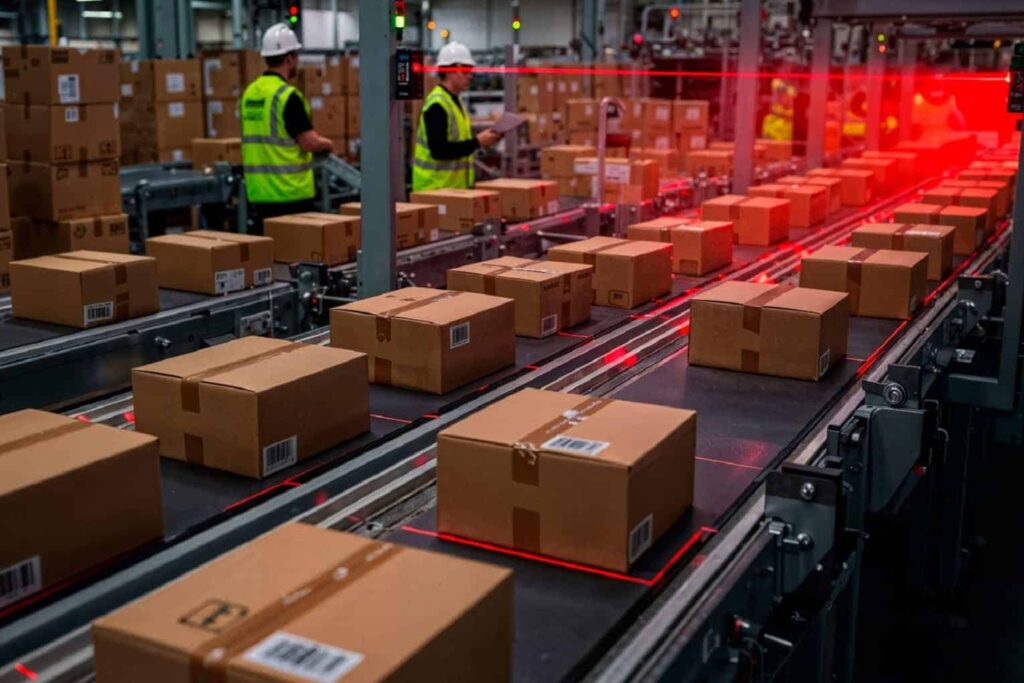
Dutch online marketplace Bol.com has begun preparations to introduce third-party fulfillment services and, for the first time, opened its logistics ecosystem to external providers. This step marked a strategic shift that would allow sellers to outsource warehousing and order processing not only to Bol but also to approved third-party logistics companies.

The plans emerged through a job posting published instead of an official announcement. This situation showed that Bol was actively building infrastructure for a broader fulfillment network. The initiative aimed to expand delivery options for sellers, speed up shipping times, and reduce Bol’s dependence on its own warehouse capacity.

Bol Is Opening Its Ecosystem to Third-Party Logistics Providers

Bol has been providing fulfillment services to its partner sellers for more than a decade under the “Logistics via Bol” program. In this model, sellers send their products to warehouses operated by Bol, and orders are shipped from there. With the new model, Bol planned to connect external fulfillment companies directly to its platform and effectively create a marketplace for logistics services.

Clues to the strategy appeared in the job posting opened for the position of Ecosystem Partnerships Logistics Manager. According to the job description, the primary responsibility of this role would be “launching 3PL partnerships as an additional shipping option for sales partners” and building strategic relationships with third-party fulfillment providers. The position would focus on identifying logistics partners that could increase delivery speed and operational efficiency for both sellers and customers.

The job posting also stated that the partnerships to be established would serve sellers in the Netherlands, Belgium, and international markets. Bol currently offers third-party logistics services to approximately 1,000 international sellers in cooperation with QLS. With the new ecosystem, it is anticipated that this opportunity will be made available to all approximately 45,000 sellers on the platform.

Faster Delivery and Advantages for Sellers

Delivery speed stands out as one of the main motivations behind the expansion. Bol emphasizes that faster shipping directly affects customer satisfaction and seller performance. Sellers using the external fulfillment network are expected to obtain benefits similar to those offered to sellers using Bol’s own logistics services.

Among these advantages is eligibility for the Select program, which offers customers free delivery and the option to choose a delivery time slot at no additional cost. Such delivery options increase product visibility and conversion rates on the platform, providing a competitive advantage for sellers.

Including multiple fulfillment providers in the ecosystem aims to offer sellers greater flexibility in choosing the logistics partner best suited to their cost structures, inventory locations, and target markets.

Fulfillment, Storage Strategy and Last-Mile Logistics

The shift toward an external fulfillment network coincides with a period in which Bol is reassessing its physical infrastructure plans. The company is expected to gradually begin construction of a new warehouse on the land it purchased in Lelystad, the Netherlands, in 2022. However, Bol’s growth has been slower than initially projected, making a flexible logistics model more attractive.

Developing a network of external fulfillment partners could reduce the urgent need for large-scale warehouse investments while meeting rising order volumes and delivery expectations.

Meanwhile, Bol is also continuing its investments in last-mile logistics. The company’s subsidiary Ampère collects parcels from sellers using the “Shipping via Bol” service and operates a steadily expanding network of drop-off points where smaller sellers can deliver their shipments. The collected parcels are transported to the hubs of courier companies such as PostNL or to Ampère’s own logistics centers.

Ampère also aims to gain greater control over the final stage of delivery by making direct deliveries to customers in certain cities in the Netherlands. When the expansion of the external fulfillment network and investments in last-mile services are evaluated together, it is evident that Bol is moving toward a more comprehensive logistics strategy aimed at supporting sellers and meeting rising customer expectations.

Bol.com Remains the Netherlands’ Leading Online Retailer

AI-Powered Search Is Expected to Influence €500 Billion in Retail E-Commerce by 2028

AI-powered search and discovery tools are expected to influence up to €500 billion in retail e-commerce by 2028. These tools have become an integral part of consumers’ product search and purchasing decisions through generative artificial intelligence. A new analysis published by Euromonitor International revealed that AI-based platforms have fundamentally transformed the ways in which brands are discovered, evaluated, and trusted in the online environment.

According to the “Euromonitor International Voice of the Consumer: Lifestyles Survey 2025,” more than half of global consumers use generative AI tools to obtain information and recommendations. This finding points to a structural transformation in digital commerce behavior.

From Search Results to AI-Powered Conversations

Rabia Yasmeen, global insight manager for e-commerce at Euromonitor International, stated that AI-powered search has created a deeper transformation than previous digital trends such as social commerce or livestream shopping. Yasmeen said that artificial intelligence is “reshaping how consumers discover brands, evaluate choices, and make online purchasing decisions.”

In traditional search models, visibility depended on search engine optimization, paid advertising, and retail media investments. However, in AI-generated responses, there is no guaranteed visibility slot, even for market leaders. Yasmeen emphasized that the impact has now shifted from “share of views” to “share of conversations.”

Euromonitor data show that this transformation will have a significant impact on the global e-commerce market and that the market is expected to exceed USD 595 billion by 2028.

Risk to Brand Visibility in AI-Powered Discovery

The analysis also points to significant risks for established brands. Euromonitor examined more than 8,700 brands operating in the US online skin care category and found that as consumer attention increasingly shifts toward AI-generated recommendations, up to half of existing brands could face the risk of a gradual loss of relevance over time.

In traditional digital shopping journeys, strong brands benefited from advantages such as scale, advertising budgets, and category placement. In AI-powered responses, however, visibility changes dynamically depending on the user’s context and query. This situation creates opportunities not only for established brands but also for new and smaller players.

Yasmeen noted that while this shift involves risks, it also makes the emergence of new winners possible. She said that brands offering product relevance, clear positioning, and trustworthy signals could stand out in AI-generated responses.

Faster Decisions, Shorter Shopping Journeys

AI-powered search is also significantly shortening the online shopping journey. Traditionally, consumers went through many stages such as searching, browsing category pages, reading reviews, and comparing alternatives. According to Euromonitor, in AI-mediated interactions these steps often merge into a single conversation.

Consumers now ask questions in natural language instead of browsing product listings and expect short, context-aware answers. While this reduces friction in shopping, it concentrates the decision-making process largely on outputs provided by artificial intelligence.

Euromonitor concluded that retailers and brands need to rethink their digital strategies in order to remain visible in AI-powered environments. According to the report, future competitiveness will depend less on traditional ranking tactics and more on how well brands align with consumer intent, context, and trust signals.

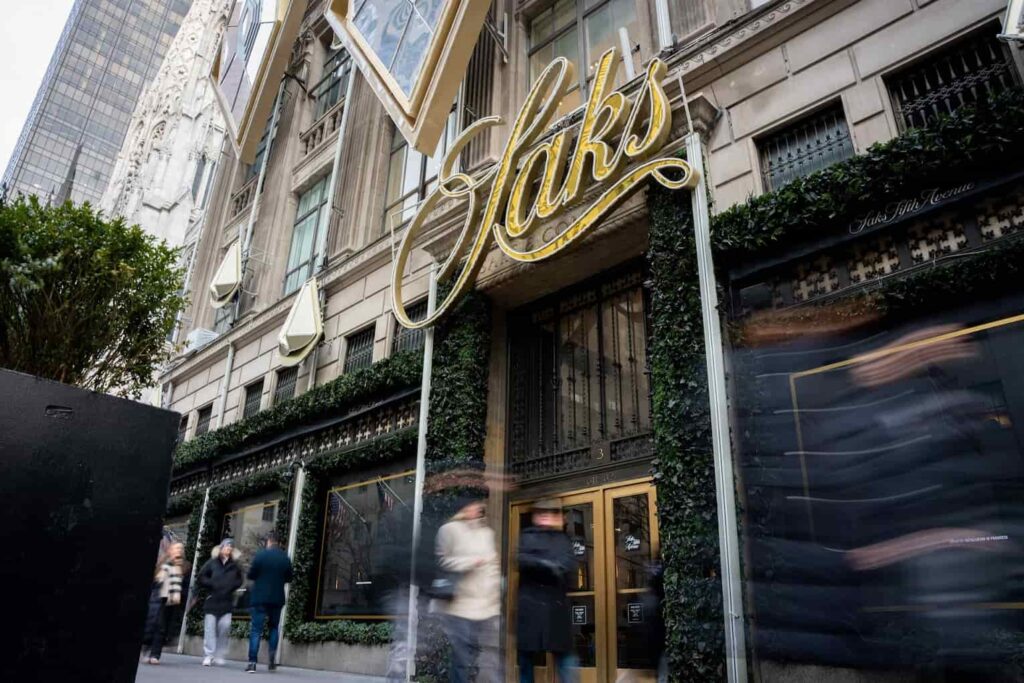
Saks Global Decided to End Its Partnership With Amazon

Saks Global took a step toward closing its luxury store on Amazon, one of the high-profile partnerships aimed at expanding its digital reach.

According to a Reuters report, this decision was taken as part of the comprehensive restructuring process carried out by the US luxury retailer following its Chapter 11 bankruptcy filing at the beginning of January.

While the move was considered a setback for Amazon’s goals of gaining a stronger position in high-end retail, it also brought renewed attention to luxury brands’ concerns about being present on mass-market e-commerce platforms.

Saks Plans to Redirect Traffic to Its Own Platform

According to a source close to the matter who spoke to Reuters, Saks plans to redirect online traffic back to its own website, saks.com, by closing the online store called “Saks on Amazon.” The same source stated that brand participation on the Amazon store remained limited and conveyed that some leading luxury brands expressed concerns that selling on a mass-market-oriented platform could weaken their brand positioning.

While Saks did not make a public statement on the matter, a brief statement from Amazon said that beyond the Saks experience, Amazon’s luxury store continues to offer a broad range of high-end brands and regularly adds new luxury brands.

The partnership between the two companies had already been under pressure after Saks Global filed for bankruptcy on January 14. The company had announced that it was reassessing its operational footprint, but had not made a clear statement on whether it would cancel the Amazon agreement as part of the bankruptcy process. Recent developments, however, revealed a shift in strategic direction.

Bankruptcy Pressure and Withdrawal From Off-Price Sales

The decision to end the Amazon partnership came immediately after other major downsizing steps by Saks. According to a separate Reuters report published a day earlier, the company was preparing to shut down most of its off-price-focused operations. This included the majority of Saks Off 5th stores and the entirety of the Neiman Marcus Last Call brand.

In its bankruptcy filing, Saks stated that the off-price division had become a significant financial burden for the company, noting that Saks Off 5th, including both physical stores and e-commerce operations, was expected to incur a loss of USD 139 million in fiscal year 2025.

Saks Global had been formed about a year earlier through the combination of Saks Fifth Avenue, Bergdorf Goodman, and Neiman Marcus. While attempting to stabilize its financial structure, the company clearly shifted its focus back to full-price luxury sales.

Amazon’s Investment and Legal Objection

Amazon had made an equity investment in Saks Global during the company’s formation in 2024. After the bankruptcy process began, Amazon filed an objection in court, arguing that its investment had become “presumptively worthless.” It also claimed that certain terms of the USD 1.75 billion financing secured by Saks were unfavorable to creditors.

Despite this, Amazon stated that it remains committed to its own luxury retail offerings independent of the Saks store and continues to work with selected brands.

Broader Implications for Luxury Retail

Industry observers noted that Saks’ decision to withdraw from Amazon reflected the structural pressures facing traditional department stores. As consumer traffic increasingly shifts to digital channels, the number of luxury stores is expected to decline, while the resulting vacancies may create new expansion opportunities for off-price and beauty retailers.

For Saks, the move away from Amazon represents a transition to a digital strategy that prioritizes direct customer relationships and brand control. As the company seeks to redefine its position in a rapidly changing retail environment, this step is regarded as a significant strategic shift.

The Biggest Layoff Wave in Recent Years at Amazon: 16,000 People Will Be Affected!

UAE-Based Yozo.ai Raised USD 1.7 Million in Pre-Seed Funding to Develop an AI-Powered E-Commerce Revenue Engine

UAE-based startup Yozo.ai raised USD 1.7 million in pre-seed funding to develop an AI-powered revenue engine for e-commerce sellers. The round was co-led by Access Bridge Ventures and Disruptech Ventures, while a number of regional venture capital funds and angel investors also participated in the round.

Founded in early 2025, Yozo.ai develops an AI agent that autonomously manages email, WhatsApp, and SMS campaigns for online retailers. The company announced that it will use the new investment to support product development and its goals of expanding into markets outside the Middle East.

Investors Supported the AI-Native Approach

The investment round was completed under the co-leadership of Access Bridge Ventures and Disruptech Ventures. Arzan VC, Oraseya Capital, Plus VC, Suhail Ventures, Glint Ventures, and M-Empire Angels also participated in the round.

Issa Aghabi of Access Bridge Ventures stated that the Yozo.ai team demonstrated strong execution capability and stood out with its approach of practically integrating artificial intelligence into daily e-commerce workflows. Aghabi expressed that the company has the potential to build a scalable and meaningful platform in this field.

The strong interest from regional investors revealed growing demand for AI-based commerce solutions developed for sellers operating in digital markets characterized by fragmentation and intense competition.

An Autonomous Growth Agent Is Being Built

Yozo.ai positions itself as an “AI growth agent” rather than a traditional marketing software. After sellers connect their e-commerce accounts to the system, they approve campaigns, and the system autonomously carries out marketing activities across email, WhatsApp, and SMS channels.

The company stated that its technology takes on tasks such as segmentation, timing, experimentation, and performance optimization, which are typically handled by growth and customer retention teams. In this way, it aims to reduce the need for specialized teams that are costly or difficult to find, particularly for small and medium-sized e-commerce businesses.

Yozo.ai founder Hossam Ali said that conversion and retention marketing involves many variables such as data, timing, and continuous optimization, and that most teams struggle to manage this complexity in a sustainable way. Ali emphasized that Yozo.ai was designed to take on this complexity and operate continuously without manual intervention.

Yozo.ai’s Global Growth Targets

With the new investment it has received, the company aims to build an AI-native revenue engine that automates customer retention and revenue growth processes in a scalable manner. Yozo.ai identified global e-commerce markets where growth teams are expensive, overly manual, or difficult to hire as its primary targets.

Initially focusing on the Middle East, Yozo.ai announced that it has international expansion plans to also serve sellers in other regions facing similar operational challenges. The company aims to become the “default revenue engine” for digital sellers by closing the gap between users who show purchase intent but do not complete a transaction and actual buyers.

Yozo.ai argues that this gap leads to a significant amount of revenue remaining uncaptured in the e-commerce sector. By establishing automated customer engagement at the right time and through the right channel, it states that conversion and customer loyalty rates can be increased in a meaningful way.

The pre-seed investment round is considered an important milestone in Yozo.ai’s transition from the product development stage to broader market adoption. While the company did not share details regarding revenue or customer numbers, it stated that the investment will be used primarily for engineering, data infrastructure, and expansion into new markets.

WTO Members Discussed E-Commerce Ahead of MC14 to Be Held in Yaoundé

Members of the World Trade Organization (WTO) exchanged views in Geneva on 28 January on the future of e-commerce as part of preparations for the 14th Ministerial Conference (MC14), which will be held between 26 and 29 March in Yaoundé, Cameroon.

During the discussions, the possibility of a ministerial decision was addressed, including the long-standing moratorium on the non-imposition of customs duties on electronic transmissions and the revitalization of the WTO’s e-commerce work programme. The meeting was held within the framework of the Work Programme on Electronic Commerce, under which members have been conducting negotiations on digital trade issues since 1998.

Draft Proposals by WTO Members and the Search for Convergence

Jamaica’s Ambassador Richard Brown, the facilitator of the Work Programme on Electronic Commerce, recalled that two text-based proposals have been under consideration since November. One of these proposals was submitted by the African, Caribbean and Pacific (ACP) Group, and the other by the United States and its co-sponsors. Brown noted that members were asked in December to reflect on these texts and on the views expressed in previous meetings.

As MC14 approached, Brown drew attention to the importance of intensifying work in Geneva. He stated that the objective was to reach convergence on the core elements of a ministerial decision reflecting members’ shared expectations on how e-commerce should be addressed within the WTO.

Moratorium and the Development Dimension

One of the key items on the agenda of the WTO members’ meeting was the extension of the moratorium on the non-imposition of customs duties on electronic transmissions. This practice had been renewed for fixed periods at previous ministerial conferences. Members also raised the issue of making the Work Programme more effective and more development-oriented.

During the discussions, delegations shared their assessments of the proposals on the table, offered suggestions aimed at bridging different approaches, and expressed their readiness to engage constructively in order to achieve a meaningful outcome at MC14.

Steps to Be Taken Toward MC14

At the close of the WTO meeting, Ambassador Brown recommended that proponents and interested delegations engage in informal consultations to converge on common elements that could be included in a draft ministerial decision. He noted that such contacts could help narrow differences ahead of the ministerial conference.

The next meeting of the Work Programme on Electronic Commerce is planned to take place on 2 March. This timeline points to a limited period for members to make progress before the conference in Cameroon.

Azerbaijan Will Introduce a VAT Registration Obligation for Non-Resident E-Commerce Sellers

Azerbaijan brought onto its agenda plans to implement a new value-added tax (VAT) registration mechanism targeting non-resident individuals who sell to buyers in the country through e-commerce. The proposal discussed in parliament was presented as part of a draft amendment to the Tax Code aimed at strengthening oversight of cross-border digital trade.

The regulation in question was discussed at a meeting of the Economic Policy, Industry, and Entrepreneurship Committee of the Azerbaijani Parliament. The proposal aimed to clarify under which conditions VAT registration would become mandatory for goods and services offered online by foreign individuals to customers in Azerbaijan.

The 10,000 Dollar Turnover Threshold and Registration Obligation

According to the draft amendment, non-resident individuals who conduct e-commerce activities through internet-based information resources and are not registered with the Azerbaijani tax authorities will be required to register for VAT electronically if their annual turnover obtained from sales or services provided to buyers in Azerbaijan exceeds 10,000 U.S. dollars within a calendar year. The period granted for registration following the exceeding of this threshold was determined as 30 days.

For non-resident sellers whose annual turnover remains below 10,000 dollars, VAT registration will not be mandatory. Individuals in this group will be able to choose to register on a voluntary basis. While this structure creates a mandatory framework covering high-volume sellers, it aimed to limit the administrative burden for small-scale activities.

The regulation focused particularly on individuals who are resident outside Azerbaijan and carry out commercial activities directed at the domestic market through online platforms. Linking the registration obligation to turnover sourced from Azerbaijan aimed to more clearly define the tax nexus in cross-border e-commerce.

Certain Digital Services Were Excluded from the Scope of the VAT Regulation

In the draft law, certain types of services that were excluded from the scope of the new VAT registration mechanism were also explicitly specified. These exemptions mainly covered professional and educational services provided in a digital environment.

Accordingly, consulting, legal, financial, accounting, design, and engineering services provided via email or other interactive communication tools were excluded from the registration obligation. Real-time online training and educational services, as well as ticket sales related to scientific, educational, cultural, sports, and entertainment events, were also not included within the scope of the regulation.

With these exemptions, lawmakers aimed to differentiate between general e-commerce activities and professional services provided in a digital environment.

The Administrative Framework and the Continuation of the Process

In the draft amendment, it was stated that the procedures and principles regarding the registration, re-registration, or deregistration of non-resident individuals for VAT, as well as the processes related to the submission of VAT declarations and the payment of the tax, would be determined by the relevant executive authority.

This approach provided flexibility to the tax administration in shaping electronic registration and notification systems by allowing the technical and administrative details related to implementation to be regulated through secondary legislation. The emphasis placed on digital processes presented a structure aligned with the online nature of the activities targeted by the regulation.

The regulation showed parallelism with steps taken by many countries globally toward taxing cross-border e-commerce. The draft amendment remained at the committee review stage and has not yet entered into force. For implementation, the completion of the legislative process in parliament and the publication of regulations regarding its application by the executive authority will be required.

A Sharp Increase in E-Commerce Revenues in Azerbaijan Is Expected by 2027

The Biggest Layoff Wave in Recent Years at Amazon: 16,000 People Will Be Affected!

Amazon plans to layoff approximately 16,000 positions globally, primarily within Amazon Web Services (AWS). The plan came to light after an internal email that informed employees in advance about the upcoming layoffs was mistakenly sent. It was stated that this plan is part of a broader restructuring process aimed at reducing bureaucracy and reshaping the corporate workforce.

The internal email in question was mistakenly sent on Tuesday night. The email message, which was understood to be erroneous, caused confusion among teams before Amazon made its official announcement on Wednesday morning. Amazon did not provide a detailed explanation regarding which teams or countries would be affected by the layoffs. However, it was noted that this step is a continuation of a comprehensive corporate downsizing plan that had been previously signaled.

The Mistakenly Sent Email Created Confusion Within AWS

According to information reviewed by Reuters and the BBC, the confusion began when a draft email signed by “Colleen Aubrey” was mistakenly sent to employees. Aubrey’s message, who is the Senior Vice President responsible for Applied Artificial Intelligence Solutions at AWS, had been embedded in a calendar invitation sent to employees. The title of the invitation was “Send Project Dawn email.” This phrase referred to the internal code name used by Amazon for the layoffs.

The email stated that some employees in the United States, Canada, and Costa Rica had been informed that they had been laid off. However, at that time, no official notification had yet been made to the affected employees. Employees who received the message stated that the related meeting planned for Wednesday was canceled shortly afterward and that the uncertainty increased even further.

The message emphasized that the layoffs were part of ongoing efforts to strengthen the company. It also stated that such changes were difficult but necessary for the future success of Amazon and AWS. Amazon did not initially respond to requests for comment regarding the erroneous sending.

Amazon Enters a Broad Restructuring and Strategic Change

Early on Wednesday, Amazon officially announced that it would carry out layoffs of approximately 16,000 people in order to streamline operations and reduce organizational layers. This announcement came after the elimination of approximately 14,000 corporate positions in October. In addition, the company had also reported that it made additional layoffs this week as part of its plan to close Amazon Fresh and Amazon Go branded stores or convert some of them into Whole Foods stores.

Sources close to the matter who spoke to Reuters stated that some roles within AWS, retail operations, Prime Video, and human resources units would be affected. However, the full scope of the cuts was not shared with the public. Although these layoffs constitute a small portion of Amazon’s global workforce of approximately 1.5 million people, they correspond to about 10 percent of corporate employees.

These steps are considered part of the cost-cutting policies carried out under the leadership of Andy Jassy, who took office after founder Jeff Bezos stepped down from the CEO position four years ago. During this period, Amazon introduced a requirement to work from the office five days a week and began implementing stricter controls over corporate spending.

Beth Galetti Addressed Employees Regarding the Layoffs

Beth Galetti, Amazon’s Senior Vice President of People Experience and Technology, confirmed the scope of the layoffs and explained the company’s rationale in a message she shared with employees on Wednesday. Galetti stated that this step is a continuation of the efforts announced in October to reduce layers within the organization, increase ownership, and eliminate bureaucracy.

Galetti said that the changes would affect approximately 16,000 roles across Amazon and stated that they were working to provide support to affected employees. She noted that the majority of U.S.-based employees would be given 90 days to find a new position within the company, while international processes would vary according to local regulations. She added that employees who are unable to find a new role within Amazon or who choose not to pursue this option would be provided with benefits such as severance pay, career transition support, and, where applicable, health insurance.

Galetti also addressed concerns that the company would carry out broad layoffs every few months, stating that this was not Amazon’s plan. However, she emphasized that teams would continue to evaluate their speed and capacity to innovate for customers. Galetti also added that Amazon would continue hiring and investing in strategically important areas.

The Ongoing Transformation Process

Amazon had previously linked the layoffs to the increased use of artificial intelligence and the improvement of operational efficiency in its earlier statements. In Galetti’s blog post published in October, it was also stated that the company was likely to make additional adjustments in line with changing market conditions and technological transformation.

While the mistakenly sent email revealed disruptions in internal communication during a sensitive period, Amazon’s official statement demonstrated that the company continues to reshape its corporate structure in line with its cost control, innovation, and long-term growth objectives.

Amazon Decided to Close All Amazon Fresh and Go Stores!

Amazon Decided to Close All Amazon Fresh and Go Stores!

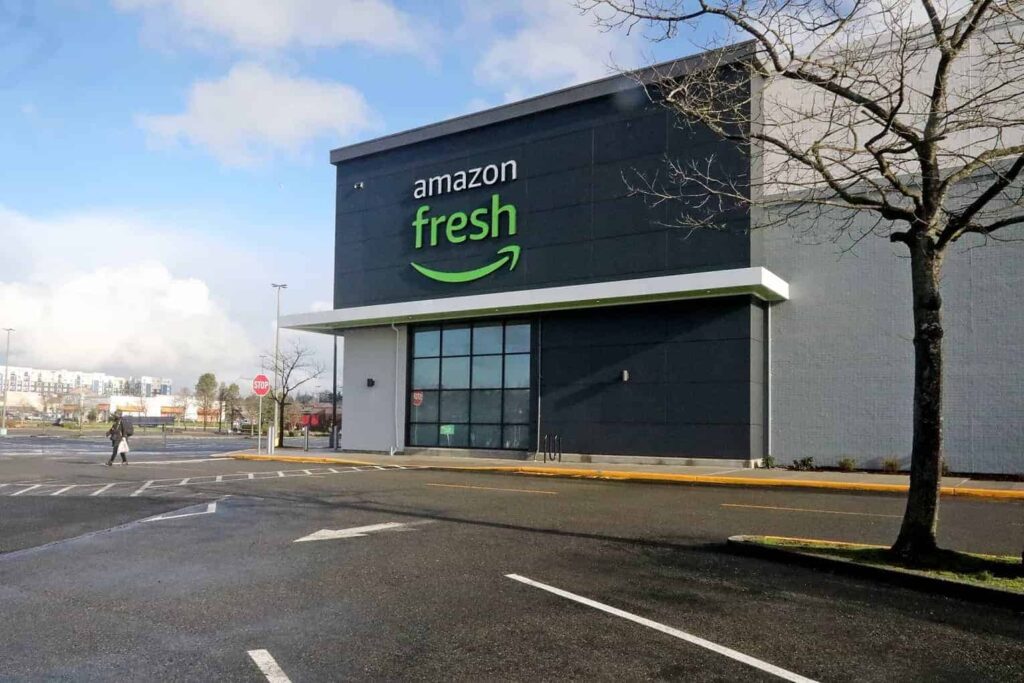
Amazon announced that it would close all Amazon Fresh markets and Amazon Go stores. The company thus took another step back from one of its physical retail models. The decision, covering approximately 70 stores, was taken as the company redirected its physical retail strategy toward the expansion of Whole Foods Market.

Seattle-based e-commerce giant Amazon stated that it had not found a suitable economic model to scale its “Amazon”-branded market concepts. While the company did not share a clear timetable for the closures, it was reported that some stores had already ceased operations.

58 Amazon Fresh and 14 Go Stores Are Closing

Amazon announced that it planned to close approximately 58 Amazon Fresh supermarkets and 14 Amazon Go stores across the United States. The company stated that it had received some positive signals in its Amazon-branded stores but had not been able to offer customers a sufficiently distinctive and strong experience.

Amazon said that some of the closed stores would be converted into Whole Foods Market stores; however, it did not disclose how many locations would fall within this scope. Whole Foods, which Amazon acquired in 2017, stands out as the company’s most successful physical investment in grocery retail.

It Had Announced the Closure of All Amazon Fresh Stores in the UK

Amazon executives have frequently emphasized in their public statements that they are not afraid to try different concepts and take the risk of failure. This decision came after the company’s previous retreats in physical retail. In March 2022, Amazon closed 68 stores belonging to the Amazon Books, Amazon 4-star, and Amazon Pop Up brands in the United States and the United Kingdom. In September of last year, it announced that all Amazon Fresh stores in the United Kingdom would be closed.

More Than 100 Whole Foods Market Stores to Open

Amazon emphasized the performance of Whole Foods Market and announced that it planned to open more than 100 new stores over the next few years. According to information shared by the company, Whole Foods has achieved over 40 percent sales growth since the acquisition and expanded to more than 550 locations. Customer traffic and comparable store sales growth were stated to be above the industry average.

Amazon also announced that it would continue to invest in new physical store concepts. The company confirmed a large-scale 229,000-square-foot store project planned outside Chicago and stated that it was working on a supermarket-like concept that brings together fresh food, household essentials, and general merchandise.

In addition, Amazon plans to expand the small-format Whole Foods Market Daily Shop concept that it launched in 2024. For this format, which currently has five operating stores, the goal is to open five more new stores by the end of the year.

Amazon stated that while closing Amazon Fresh and Go stores, it would continue to test hybrid retail experiences that include Amazon products within Whole Foods stores. The company said that this approach aims to make it easier for customers to access a broad range of grocery products from a single point.

Saudi E-Commerce Startup Juthor Received a USD 500 Thousand Investment

Saudi Arabia–based e-commerce technology startup Juthor received an investment of USD 500 thousand in a pre-seed funding round led by Flat6Labs. The investment, which also included angel investors, was aimed at strengthening the company’s technology platform and supporting its early growth process across regional and global marketplaces.

Founded in 2025, Juthor offers a unified system developed to help retailers manage multi-channel e-commerce operations through a single interface. The company stated that the received investment would be used to improve its core infrastructure and accelerate the product development process for rapidly growing online sellers.

Juthor Focuses on Multi-Channel Retail Operations

Juthor was founded by entrepreneurs Lolwah Binsaedan and Irfan Khan with the aim of solving the operational complexity faced by retailers selling on multiple online marketplaces. The platform enables sellers to manage product listings, inventory levels, orders, and customer data in real time through a single centralized system.

According to information provided by the company, Juthor operates in integration with leading regional and global marketplaces such as Amazon, Salla, Noon, Zid, Jahez, and Trendyol. While the system ensures the synchronization of inventory and orders, it also leverages automation and artificial intelligence to help analyze customer data more effectively.

By offering a single operational layer that brings different marketplaces together, the platform is positioned as a solution for retailers expanding into multiple sales channels, particularly in markets where cross-platform sales are rapidly increasing.

Venture Capital Firm Flat6Labs Led the Funding Round

The pre-seed funding round was led by the venture capital firm Flat6Labs, which is known for its early-stage investments across the Middle East and North Africa. The angel investors participating in the round provided strategic support during the company’s early stage.

Juthor stated that it would use the new investment to strengthen its technological infrastructure and build a more scalable structure capable of supporting a rapidly growing customer base. The company also plans to accelerate the development of new features, including advanced automation and analytics tools, designed to meet the needs of modern multi-channel retailers.

Although Juthor did not disclose specific market expansion targets, it emphasized that its roadmap focuses on retailers operating within regional e-commerce ecosystems and that demand for integrated management tools continues to grow.

Saudi Arabia is emerging as a growing hub in the field of e-commerce and retail technologies alongside increasing digitalization and investment activity. The investment received by Juthor demonstrates that investor interest in platforms that simplify operations in an increasingly fragmented online retail environment continues.

The company announced that following the completion of the pre-seed funding round, it would continue to develop its product and scale its operations while onboarding new retailers to its platform.

124 Million Orders Recorded in Saudi Arabia in Q4 2025