WORLDEF Prime Antalya 2026 - Upcoming Event

Register Now

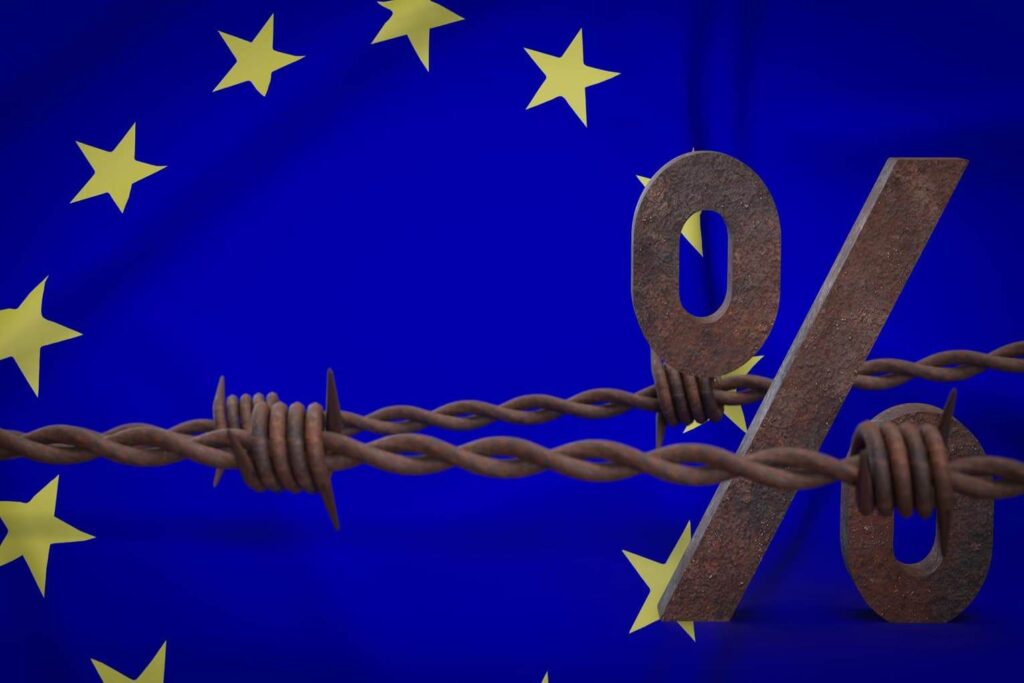
EU Brings Forward Customs Reform; Low-Value E-Commerce Parcels to Be Subject to Taxation

European Union finance ministers have agreed to impose a customs duty of €3 ($3.52) on low-value parcels entering the bloc, as part of measures targeting cheap Chinese-origin e-commerce imports from China-based online platforms such as Shein and Temu.

According to the regulation adopted by EU Member States, this represents a significant departure from the “de minimis” exemption applied to low-value parcels, which has so far allowed such shipments to be exempt from customs duties. EU institutions argue that this exemption has, over time, distorted competition and placed EU-based retailers at a disadvantage, as they are subject to stricter tax, labor, and regulatory obligations.

In a statement made on behalf of the 27 Member States, the EU Council said: “This temporary measure responds to the fact that such parcels currently enter the EU duty free, leading to unfair competition for EU sellers, health and safety risks for consumers, high levels of fraud, and environmental concerns.”

Taxation of Low-Value Parcels Was Planned to Enter Into Force in 2028

According to officials, the new duty is intended as a temporary solution ahead of a comprehensive customs reform for low-value parcels that was planned to enter into force in 2028. As part of this reform, the EU Customs Data Hub will be established to collect new customs data on all goods entering and leaving the Union within a single digital platform. This will enable customs authorities to monitor e-commerce flows more effectively, strengthen the fight against fraud, and increase product safety controls.

The rapid growth of cross-border e-commerce has also increased pressure on the EU to act earlier. While billions of low-value parcels enter Europe every year, this creates a significant administrative burden on customs authorities. At the same time, concerns are increasing regarding counterfeit products, environmental impacts, and consumer safety. EU institutions are of the view that the current system is inadequate in light of the scale and speed of digital trade.

The New Customs Duty Is Separate From the “Handling Fee”

It should also be noted that the €3 customs duty is separate from the EU-wide “handling fee” currently under discussion. While the customs duty aims to level competitive conditions, the handling fee is intended to compensate customs authorities for increasing inspection and processing costs. According to current proposals, this fee is expected to enter into force in the later months of 2026; however, its amount and exact implementation date will be finalized depending on negotiations between the European Parliament and the Council.

A New Customs Regime Will Be Implemented Once the EU Customs Data Hub Becomes Operational

Once the EU Customs Data Hub becomes fully operational, this temporary measure will be replaced by a permanent e-commerce customs regime. EU officials emphasize that, in the long term, this system will strengthen the customs union, protect European businesses and workers, and ensure that the growth of online trade does not come at the expense of fair competition and consumer safety.

For global e-commerce platforms and international sellers, this move is seen as a signal of a more stringent regulatory period in the European market, while for EU retailers it is considered an important step toward the long-demanded goal of “equal competitive conditions” in the digital marketplace.

Background of the New Customs Reform

At present, parcels valued below €150 that are sent directly from a third country to a consumer in the EU are exempt from customs duties. The European Commission proposed the removal of this exemption in May 2023 as part of the customs reform. The initial proposal envisaged the application of the measure from mid-2028. The Council adopted the removal of the exemption on 13 November 2025 and called for the measure to be applied earlier, in 2026.

In addition, in its communication on e-commerce in February 2025, the European Commission introduced the idea of a Union-level handling fee for goods imported directly to consumers. This fee was included in the customs reform proposal under the negotiating mandate adopted by the Council in June 2025. The handling fee is intended to compensate customs authorities for the increasing costs incurred in ensuring the release of those goods for free circulation.

According to the Council’s mandate, the handling fee is expected to enter into force in November 2026. The content of the fee and its exact date of entry into force are currently under discussion between the Council and the European Parliament within the framework of the ongoing customs reform proposal trilogue negotiations.

The Number of Low-Value E-Commerce Parcels Reached 4.6 Billion Last Year

Online platforms such as Shein, Temu, AliExpress, and Amazon Haul send clothing, accessories, and electronic products manufactured in factories in China directly to consumers at extremely low values. Due to the customs exemption, the number of low-value e-commerce parcels entering the Union doubled last year to 4.6 billion, with more than 90% of these parcels originating from China. Import volumes are expected to increase further this year.

Eight European Countries Call for Action Against Chinese E-Commerce Platforms

Dubai CommerCity: A Leading Example of an Advanced Business Ecosystem Driving the Growth of Digital Trade

Dubai CommerCity participated in the first edition of the Global Forum on Digital Trade and Digital Platforms, organized by Ministry of Economy and Tourism in collaboration with the United Nations Commission on International Trade Law (UNCITRAL), as a key national partner shaping the future of digital trade.

Dubai CommerCity’s participation in this event builds on its role in supporting national digital trade legislation, having been adopted as a reference use case during the drafting of the UAE’s law on trading through modern technological means, alongside other national entities.

Dubai CommerCity: A Pioneering Model in Digital Trade

The Kingdom of Spain joined the UAE’s proposal to UNCITRAL to develop a model law for digital trade and platforms, using the UAE’s legislation as a baseline. UNCITRAL has launched the exploratory phase, highlighting Dubai CommerCity as a leading example of an advanced business ecosystem driving the growth of digital trade.

About the Global Summit on Digital Trade and Digital Platforms

The inaugural session of the Global Summit on Digital Trade and Digital Platforms, launched by the Ministry of Economy and Tourism in collaboration with the United Nations Commission on International Trade Law (UNCITRAL), featured six panel discussions and a roundtable meeting. The event witnessed wide participation from ministers, government officials, legal experts, private sector innovators, policymakers, and other stakeholders in digital trade and platforms from over 17 countries.

These sessions established a new roadmap for developing a comprehensive and competitive legislative framework for digital trade and platforms at both regional and global levels, leveraging the UAE’s technology-enabled trade laws and aligning with the rapid transformations of the digital economy.

Dubai CommerCity: The ideal hub for digital commerce businesses

Cross-Border Payment Company YeePay Partners with ADIO

One of the leading fintech companies in cross-border payment solutions, YeePay, announced that it will establish its new regional headquarters and technology hub in Abu Dhabi, which will serve the Middle East and Africa region, within the scope of its strategic partnership with the Abu Dhabi Investment Office (ADIO). This step is considered as an important part of the company’s global expansion plans.

ADIO and YeePay signed a partnership within the scope of Abu Dhabi Finance Week 2025. The two companies stated that they will work together on joint initiatives aimed at increasing the interoperability of digital payment infrastructure between the UAE, China, and other international markets.

A Strategic Contribution to Abu Dhabi’s Fintech Ecosystem

Within the scope of the agreement, YeePay will join the Fintech, Insurance, Digital and Alternative Assets (FIDA) cluster managed by the Abu Dhabi Department of Economic Development (ADDED) and ADIO. This cluster stands out as a strategic initiative aiming to make the emirate a global hub for financial innovations.

Specializing in digital payments, compliant financial infrastructure, and cross-border transaction services, YeePay has a strong presence in Asia and is known for its rapidly growing operations in Europe and the Middle East. The company provides integrated payment solutions, risk management structures, and data-driven financial services that particularly support trade, e-commerce, and investment flows between China and the UAE.

YeePay’s Plan to Develop Next-Generation Payment Infrastructure from Abu Dhabi

YeePay aims to develop and scale innovative and compliant digital payment solutions from its new center in Abu Dhabi. The company plans to create secure, transparent, and efficient cross-border payment and settlement systems by working together with local regulators, financial institutions, and ecosystem partners.

The planned joint initiatives include the following:

  • Strengthening interoperability between local and global payment Networks
  • Developing digital settlement infrastructure for trade and e-commerce
  • Facilitating SMEs’ access to regional and global markets
  • Developing next-generation risk management and compliance solutions

ADIO and YeePay will also evaluate opportunities for knowledge sharing and talent development in fintech, compliance, and innovation, including collaborations with local universities and research institutions. Priority areas include AI-supported fraud prevention, data-driven financing solutions, and advanced analytics.

Leaders Emphasize Abu Dhabi’s Strength as a Global Fintech Hub

ADIO Director General Badr Al Olama stated that this decision shows Abu Dhabi has become an ideal base for global fintech companies: “YeePay’s plan to establish operations in Abu Dhabi reflects the strong and reliable regulatory environment the emirate offers for global expansion. Our collaboration will strengthen the cross-border payment network while creating new opportunities for businesses and investors in priority sectors.”

YeePay Co-Founder Chen Yu, on the other hand, emphasized Abu Dhabi’s strategic importance for regional growth: “Abu Dhabi, with its strategic location, supportive regulatory structure and dynamic digital economy, is an ideal center for YeePay’s growth in the region. Our collaboration with the FIDA cluster will allow us to strengthen our presence in the Middle East and Africa. From here, we aim to develop a secure, transparent, and efficient cross-border payment infrastructure that will facilitate trade, e-commerce and investment flows between China, the UAE and other key markets.”

A New Phase in Global Digital Payment Connections

As cross-border digital trade grows rapidly, YeePay’s expansion into Abu Dhabi is expected to play a critical role in strengthening payment connections between Asia, the Middle East, and Africa. This partnership supports Abu Dhabi’s goal of building one of the world’s most advanced fintech ecosystems, while also demonstrating YeePay’s commitment to shaping the future of secure and seamless international payment systems.

ADIO Launches Concierge Service for UHNWIs and Family Offices

TikTok Shop Increases Seller Commissions Across Europe

TikTok is preparing to further strengthen its global leadership ambition in the field of social commerce by increasing sales commissions in European Union markets. Sellers in Germany, France, Italy, Spain and Ireland will see that, as of 8 January 2026, the TikTok Shop commission rate they pay per transaction has increased from 5% to 9%. Thus, the commission rate in Europe will reach the same level as the United Kingdom, which is TikTok Shop’s most mature market.

TikTok Shop informed sellers of the commission increase this week, describing the change as a critical step in its strategy of building a content-focused “marketplace of the future.” TikTok aims to offer more advanced tools, improved analytics systems, stronger logistics services and support infrastructures for sellers and content creators with the additional revenue to be generated.

While the commission rate in some sub-category products will be reduced to 7%, sellers who join the platform after 8 January will be able to make an advantageous start by paying 4% commission during their first two months.

United Kingdom Performance Shows the Way

The success of TikTok Shop in the United Kingdom has become a fundamental reference point for its European expansion. The process, which started slowly in 2021, has now transformed into one of the country’s fastest-growing e-commerce channels.

According to industry data, the platform’s Black Friday sales increased by more than 50% compared to last year; one of the most important factors enabling this growth was the 85% increase in the number of sellers. In addition, the participation of major brands such as Samsung, Marks & Spencer, Clarks and Sainsbury’s proves that TikTok Shop is also gaining acceptance on the corporate side.

European Growth Accelerates During a Period of Changing Competition

The commission increase comes in the middle of TikTok’s rapid expansion strategy. While Temu and Shein are experiencing slowdown in Europe due to rising regulatory pressure and operational costs, TikTok Shop, on the contrary, is creating a strong growth momentum. The company is preparing to launch integrated fulfillment services similar to Amazon FBA after becoming operational in five countries within just a few months in Europe.

TikTok Shop May Surpass Its Chinese Competitors!

According to projections by market research organizations such as ECDB, TikTok Shop may surpass not only Temu and Shein in global GMV by 2025, but also established international platforms such as AliExpress and eBay. This scenario could make the platform one of the fastest-scaling digital marketplaces in the world.

While the European expansion is still at an early stage, analysts consider it highly likely that TikTok Shop will enter new markets in Europe as well. It is emphasized that the instant shopping experience integrated with short videos offers an advantage that traditional e-commerce platforms cannot easily replicate.

TikTok Revolutionises Shopping Journey in MENA

Meesho Makes a Record Debut on the Stock Exchange; Company Valuation Reaches $8.8 Billion

The India-based e-commerce platform Meesho made one of the strongest stock market debuts in recent years following its public offering in Mumbai. The company both entered among the country’s most valuable technology startups and demonstrated the investment appetite for digital commerce targeting the mass market.

Meesho shares rose between 53% and 60% on the first day of trading; at the end of the day, they reached 170.09 rupees on the BSE and 175 rupees on the NSE. Thus, the share price rose well above the IPO price of 111 rupees. The surge pushed the valuation of the SoftBank- and Peak XV Partners–backed company into the $8.5–$8.8 billion range.

Meesho Collected More Than 79 Times Oversubscription

Investors placed demand amounting to approximately $28 billion for the company’s $603–604 million IPO. This means that more than 79 times subscription was collected. Institutional investors’ strong interest continued despite uncertainty in the anchor investor process.

A Breakthrough Moment for India’s Affordable E-Commerce Segment

Meesho grew with a two-sided marketplace model that connects small manufacturers in India’s tier-two and tier-three cities with consumers seeking affordable prices. With ultra-low-cost products such as dresses starting from four dollars, the company built a large user base. The company carved out a unique position in a market where giants like Amazon and Walmart-owned Flipkart operate.

“Meesho Has Several Levers To İncrease Profitability”

The company’s most important differentiator is that it does not charge commissions from sellers. In addition, advertising revenues are only 2.5% of the total merchandise value, whereas the global average is between 5–10%. This gives Meesho a significant advantage for expanding margins in the future.

“Meesho has several levers to increase profitability,” said Sunny Agrawal, Head of Research at SBICAPS Securities, noting that analysts issued a “buy” recommendation with a target price of 200 rupees and that operating profitability could be possible by March 2027.

However, Meesho reported a loss of 39.4 billion rupees and revenue of 94 billion rupees in the fiscal year ending in March.

Record Ipo Wave Reshaping India’s Capital Markets

Meesho’s stock market debut took place at a time when India is experiencing a strong IPO cycle. More than 300 IPOs in the country have raised over $19 billion by early December this year. India’s annual IPO volume is expected to surpass last year’s record of $20.5 billion in 2025. The country is the world’s fourth-largest IPO market. Successful public offerings by technology-focused companies such as Groww and PhysicsWallah have strengthened investors’ appetite for digital platforms.

However, despite optimism, risks remain: Nearly half of the 333 companies that went public this year are currently trading below their offering price. Sharp fluctuations in major companies like Lenskart Solutions have also fueled debates over whether startup valuations are excessively inflated. Analysts state that Meesho’s strong performance may ease market tension to some extent. HDFC Securities CEO Dhiraj Relli described this as “an important milestone for India’s homegrown e-commerce sector.”

Deeper Penetration Into Smaller Cities Targeted With New Capital

Meesho plans to use part of the proceeds from the IPO to improve its logistics capacity, expand its seller network, and penetrate India’s smaller cities more rapidly. According to experts, this strategy is of critical importance given the country’s rapidly expanding consumer base.

Choice Equity Broking emphasizes that Meesho has “built a strong competitive moat” and that improvements in its unit economics position the company on a clear path toward sustainable profitability.

As India’s technology-focused IPO cycle is expected to continue into 2026 and beyond, Meesho’s successful listing may also pave the way for a new generation of digital startups targeting the growing mass-market segment.

Meesho to Raise $484 Million in Indian IPO

UAE Announces Comprehensive VAT Reforms

The United Arab Emirates has announced new Value Added Tax (VAT) regulations that will come into effect on January 1, 2026. The changes, issued through a federal decree by the Ministry of Finance, aim to simplify compliance for businesses, enhance transparency, and align the country’s tax framework with international best practices.

The Ministry of Finance stated that the reforms form part of the UAE’s long-term strategy to modernize its tax structure and improve regulatory efficiency. “These updates reflect our commitment to building a world-class tax system. The goal is to simplify procedures for taxpayers while strengthening transparency and compliance with international standards,” the Ministry said.

Simpler VAT Filing and Reduced Administrative Burden

One of the most notable changes removes the requirement for businesses to issue self-invoices under the reverse charge mechanism. Under the new rules, companies will only be required to retain standard supporting documents such as invoices, contracts, and related records.

The Ministry emphasized that this measure will reduce administrative burdens for businesses while still ensuring that the Federal Tax Authority (FTA) has access to the documentation necessary for audits.

“The amendments stipulate that taxpayers will no longer need to issue self-invoices under the reverse charge mechanism; instead, they must retain supporting documents as outlined in the Executive Regulation. This enhances administrative efficiency and reduces procedural burdens,” the statement added.

New Five-Year Deadline for VAT Refund Claims

As part of the reforms, businesses will have a fixed five-year deadline to submit VAT refund claims after accounts have been reconciled. Refund requests made after the five-year period will no longer be valid. This measure is intended to prevent the accumulation of outdated claims and provide businesses with greater clarity regarding their tax position.

Stricter Measures Against Tax Evasion

To prevent misuse of the system, the FTA will now have the authority to deny input tax deductions if a transaction is found to be linked to a tax evasion scheme. Businesses must therefore verify the legitimacy of the goods and services they receive before claiming input VAT.

“Taxpayers must verify the legitimacy of supplies before deducting input tax, in accordance with the procedures established by the FTA. This approach strengthens governance across the supply chain and protects public revenue,” the Ministry noted.

Enhancing Transparency and Supporting the Business Environment

The Ministry of Finance stated that the new reforms are designed not only to safeguard public revenue but also to support a fair, predictable, and competitive business environment. Clearer procedures and stronger compliance standards are expected to boost confidence among companies and investors operating in the UAE.

The Ministry added that these updates will contribute to the long-term sustainability of the UAE’s financial system and reinforce the country’s position as a global business hub.

UAE Expands VAT Refund Service to Online Shopping

Amazon to Invest $35 Billion in India by 2030

Amazon has announced a major new plan that will mark a turning point in India’s digital and economic transformation. The company revealed that it will invest more than $35 billion in the country by 2030.

The announcement was made during the sixth edition of the Amazon Smbhav Summit, reaffirming the company’s long-term commitment to strengthening infrastructure, advancing artificial intelligence innovation, and empowering small businesses in India.

Amazon Is India’s Largest Foreign Investor

This new investment builds on the nearly $40 billion Amazon has already deployed in India. According to the Economic Impact Report by Keystone Strategy, Amazon is the largest foreign investor, the largest enabler of e-commerce exports, and one of the top job creators in the country.

To date, Amazon’s investments have helped:

  • Digitize more than 12 million small businesses,
  • Enable $20 billion in e-commerce exports,
  • Support 2.8 million jobs across India in 2024.

For the next five years, Amazon has identified three strategic priorities: AI-driven digitization, export expansion, and job creation.

“We Will Increase E-Commerce Exports to $80 Billion by 2030”

By 2030, the company aims to support 3.8 million direct, indirect, and seasonal jobs in India. This growth will be powered by Amazon’s expanding logistics network, strengthened technology infrastructure, and increasing operational capacity.

Amit Agarwal, Amazon Senior Vice President for Emerging Markets, said: “We are proud to have been part of India’s digital transformation journey over the last 15 years. In the coming years, we will continue enabling growth by bringing AI to millions and increasing e-commerce exports to $80 billion by 2030.”

Major Expansion of Digital and Physical Infrastructure

So far, Amazon has built one of India’s most comprehensive logistics and technology ecosystems, including:

  • Fulfillment and distribution centers
  • Transportation and delivery networks
  • Data centers
  • Digital payments infrastructure
  • Advanced technology and AI solutions

Under its new plan, the company aims to further expand this infrastructure, help small businesses scale faster, and integrate India more deeply into global supply chains.

Making Artificial Intelligence Accessible to Everyone

At the core of Amazon’s strategy is the goal of bringing AI technologies to all segments of society.

By 2030, Amazon plans to:

  • Provide AI tools to 15 million small businesses,
  • Transform the shopping experience for hundreds of millions of consumers through technologies like Lens AI, Rufus, and multilingual interfaces,
  • Deliver AI education to 4 million government school students through curriculum programs, career tours, hands-on AI labs, and teacher training initiatives.

These efforts support India’s national vision of “AI for All.”

A Transformational Decade Ahead for India

The Keystone report highlights that Amazon’s impact extends well beyond its marketplace creating significant employment across packaging, logistics, manufacturing, transportation, and technology sectors. Analysts view Amazon’s 2030 roadmap as a strong vote of confidence in India’s long-term economic outlook.

One expert commented: “Amazon is positioned as a catalyst for India’s digital future. This investment marks the beginning of a transformative decade for the country.”

As India continues to emerge as one of the fastest-growing digital economies in the world, Amazon’s $35 billion investment is expected to accelerate progress in AI capability, exports, entrepreneurship, and digital inclusion.

U.S. Urges India to Ease E-Commerce Inventory Rules

Yango and Noon Launch Autonomous Delivery Service in Dubai

Yango Group, a global leader in technology-driven logistics, and Noon, the region’s leading homegrown e-commerce platform, have teamed up to expand last-mile deliveries across the UAE and, eventually, the entire GCC region. This collaboration begins with Noon Minutes customers in Dubai, transitioning autonomous robot deliveries from a pilot phase to a fully operational service. The scaling of the service will rely on real-time data, performance metrics, and customer feedback.

Autonomous Delivery Option Available on the Noon App

This launch marks a new chapter for both companies, as they introduce innovative solutions to improve urban logistics. Yango Autonomy’s fully electric robots have started fulfilling quick-commerce orders in Dubai’s Sobha Hartland community. Customers can now select the autonomous delivery option directly during checkout on the Noon app, track the robot’s journey in real-time on the map, and unlock the robot’s secure compartment upon arrival using their smartphones.

Expanding Autonomous Delivery Across the GCC

Although the service is initially limited to Dubai, both companies plan to scale the autonomous delivery service across the wider GCC region. The rollout will be based on operational data, customer feedback, and integration with the region’s infrastructure.

Ali Kafil-Hussain, Chief Business Officer at Noon, emphasized the importance of integrating autonomous technologies into the company’s last-mile delivery network. “Partnering with Yango Group allows us to offer a future-ready delivery option to our customers. Autonomous robots not only increase delivery capacity during peak times but also help reduce emissions, alleviate congestion, and provide a modern, contactless solution for consumers accustomed to digital solutions.”

“Our Robots Have Proven Reliable in Dubai’s Streets”

The autonomous robots are fully electric and powered by Yango’s AI-based navigation and routing technology. These robots independently plan their routes, navigate obstacles, and yield to pedestrians. Having already completed over 1,500 kilometers of fully autonomous travel in previous Dubai pilots, these robots have demonstrated their operational efficiency in real-world residential environments.

Nikita Gavrilov, Regional Head of Yango Tech Autonomy, stated, “Our robots have already proven reliable in Dubai’s streets. The next step is to scale this service and ensure it seamlessly integrates into daily operations.”

Dubai’s Commitment to Smart Mobility Solutions

This initiative aligns with Dubai’s vision of becoming a global hub for digital innovation and smart city infrastructure. With approval from the city’s Roads and Transport Authority (RTA), Yango’s autonomous delivery robots are authorized to operate on public walkways and within residential areas, reflecting Dubai’s commitment to piloting and adopting innovative mobility solutions.

Islam Abdul Karim, Regional Head of Yango Group Middle East, views this collaboration as a significant step toward making autonomous deliveries a reliable everyday service. “By combining Yango’s AI-powered delivery experience with Noon’s strong e-commerce presence, we are paving the way for smarter mobility and more sustainable digital cities.”

This partnership offers a glimpse into the future of e-commerce and delivery, where AI-powered solutions and autonomous technologies come together to create a smoother, more sustainable urban experience. As the service expands, it will lay the groundwork for similar innovations across the Middle East, with Dubai continuing to play a leading role in the development of future-oriented city infrastructure.

Noon Prepares to Launch 15 Minute Drone Deliveries Across the UAE

Eight European Countries Call for Action Against Chinese E-Commerce Platforms

European countries are uniting against ultra-fast fashion e-commerce platforms. Eight countries, led by France, have called for a mobilization from Brussels to address the challenges posed by third-country e-commerce platforms, particularly those based in China.

In a joint letter to the European Commission and member states, the eight countries Austria, Belgium, Spain, France, Greece, Italy, Hungary, and Poland urged the Commission to strengthen its collective response to what they perceive as “systemic risks” created by platforms like Shein, Temu, and TikTok Shop. The letter, sent to Brussels, emphasizes the need for the European Commission to take decisive action against unfair competition stemming from third-country e-commerce platforms.

“Additional Sanctions Should Be Imposed on Temu and AliExpress”

The European Commission has sent information requests to Shein, which could lead to an official investigation. This request for an inquiry was made by French Minister of Commerce Serge Papin, the initiator of the letter. During the Competition Council meeting in Brussels, Minister Papin stated that this investigation should be supported by temporary measures to mitigate the uncontrolled systemic risks arising from platforms like Shein. He also called for additional sanctions against Temu and AliExpress, urging further action in the ongoing legal proceedings.

Facing the possibility of failure at the national level, France is now calling on the European Commission to act. Earlier this month, the French government attempted to suspend Shein through an administrative procedure but was unsuccessful. A court ruling on the case is expected to be announced on December 19. Addressing systemic risks posed by large platforms falls within the European Union’s jurisdiction.

Call for a “European Tax” on Low-Value E-Commerce Packages

The signatory countries are also calling for strict enforcement of existing laws, such as the Digital Services Act (DSA), to protect consumers and businesses from risks such as illegal product sales or unfair commercial practices. They argue that coordinated efforts are needed to strengthen controls by customs and consumer protection authorities. Furthermore, they urge the European Commission to play a more active role, review current regulations, and, if necessary, enhance online platforms’ obligations.

Finally, the signatories are calling for the introduction of a “European tax” on low-value packages, a measure particularly planned by France at the national level. It is worth noting that EU finance ministers approved the removal of customs duty exemptions for small import packages in mid-November, with the new measure expected to come into effect in the first quarter of 2026.

France to Open and Inspect Every Parcel from Shein as Crackdown on Chinese E-Commerce Escalates

South Korean Police Raid Coupang Over Major Data Leak

South Korean police raided Coupang’s headquarters in Seoul over a massive data leak that has affected nearly two-thirds of the country’s population. The raid was conducted as part of an ongoing investigation into the details of the data breach.

Coupang, South Korea’s most popular online shopping platform, offers rapid delivery of a wide range of products, from groceries to electronic devices, serving millions of customers. However, the company recently experienced a significant data leak, alerting its customers that their names, email addresses, phone numbers, shipping addresses, and some order histories were exposed. The company clarified that payment information and login credentials were not affected.

33.7 Million Coupang Customers’ Personal Information Leaked

Coupang reported to authorities that the personal information of 33.7 million customers was leaked, which accounts for nearly two-thirds of the country’s population. In response, Seoul police carried out a “search and seizure” operation at Coupang’s South Korean headquarters. The police described the operation as a “necessary measure” in their investigation of the data leak. Seventeen officers from the cybercrime investigation unit participated in the raid, and law enforcement emphasized that a “comprehensive investigation” would be carried out based on the evidence obtained.

Last week, President Lee Jae Myung called for swift punishment for those responsible for the scandal. Seoul authorities stated that the data breach occurred through Coupang’s overseas servers between June 24 and November 8. The company only became aware of the incident last month and reported the alleged culprit — a former employee who is a Chinese national — to the police. The suspect has not been apprehended yet.

Coupang is now facing a class-action lawsuit in the United States, where its global headquarters is located.

“Coupang Must Present Clear Measures on How It Will Take Responsibility”

Seoul’s presidential office stated that Coupang needs to provide a clear explanation on how it will compensate users whose data was stolen. Presidential Chief of Staff Kang Hoon-sik said, “Coupang must present clear measures on how it will take responsibility if damages occur.”

This case follows a major security breach at South Korea’s largest mobile carrier, SK Telecom. In August, a cyberattack exposed the data of approximately 27 million users, and the company was fined 134 billion won (91 million dollars) as a result.

South Korea Frequently Targeted by Cyberattacks!

South Korea, one of the world’s most digitally connected countries, has also been a frequent target of cyberattacks, particularly from North Korea. Last year, according to South Korean police, North Korean hackers infiltrated a South Korean court’s computer network and stole sensitive data, including individuals’ financial records. Last month, according to Yonhap, South Korean authorities suspected a North Korean hacker group was behind the recent cyberattack on the cryptocurrency exchange Upbit, which led to the unauthorized withdrawal of 44.5 billion won worth of digital assets.

Coupang Faces the Largest Data Breach in Its History, Nearly 34 Million Users Affected