WORLDEF Prime Antalya 2026 - Upcoming Event

Register Now

Bleak Outlook for U.S. E-Commerce: High Tariffs Could Trigger a $320 Billion Loss

A Statista analysis warns that tariffs in the United States are not only a trade policy instrument but a force capable of reshaping the country’s e-commerce landscape over the next five years.

If high tariffs remain in place, the U.S. e-commerce market is expected to contract sharply. According to Statista, the tariff policies proposed for 2025 could lead to a $320 billion loss by 2029 compared with a free-trade scenario. The report estimates that U.S. online sales would reach $1.84 trillion by 2029 without tariff changes. Under a high-tariff regime, however, the figure would fall to $1.52 trillion, a decline of nearly 17%.

What Does Trump’s Scenario Mean?

Statista uses a model based on proposals by former President Donald Trump, which involve substantial tariff increases. In some categories, rates would triple, pushing U.S. tariffs to their highest level since 1969. Some countries may receive negotiated reductions China, for example, would see certain tariffs drop from 145% to 55%. Still, the overall tariff framework would significantly raise the cost of goods imported from Asia, Europe, and Latin America.

How Would Tariffs Impact E-Commerce?

The effects extend beyond price hikes. According to Statista:

  • 76% of Amazon sellers and 71% of D2C brands expect higher product costs.
  • More than 60% of surveyed companies plan consumer price increases.
  • 44% of Amazon sellers are considering shifting production out of China.
  • Fashion and home goods could face notable declines in global competitiveness.
  • In fashion, the average tariff would jump from 1.83% to 12.55%.

A Strategic Test for the E-Commerce Sector

Statista’s findings show that tariffs could reshape every part of the value chain from importers and distributors to marketplaces and end consumers. For companies, success will depend on rapid adaptation, supply-chain diversification, and stronger value propositions in a higher-cost and more competitive environment. For consumers, the challenge will be maintaining access to competitive prices without compromising variety or quality.

US Tariff Ruling 2025: What It Means for E-Commerce Sellers?

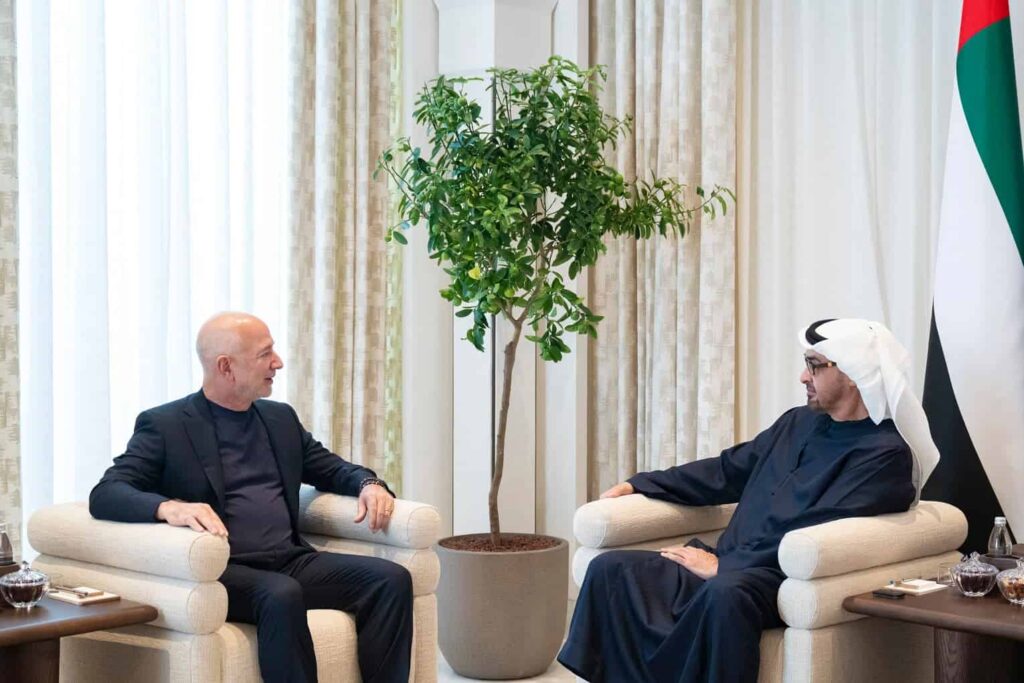
Jeff Bezos Visits UAE President Al Nahyan

UAE President Sheikh Mohamed met with Jeff Bezos, the founder of Amazon, in Abu Dhabi. The UAE leader discussed with Bezos the efforts to advance high-technology partnerships.

The meeting, held at Qasr Al Shati in Abu Dhabi, was attended by Sheikh Tahnoon bin Zayed Al Nahyan, Deputy Ruler of Abu Dhabi and Chairman of the Artificial Intelligence and Advanced Technology Council (AIATC); Khaldoun Khalifa Al Mubarak, Chairman of the Executive Affairs Authority; and several senior officials.

Focus of the Meeting: Artificial Intelligence

The meeting addressed the importance of strengthening cooperation and fostering partnerships in innovation, advanced technology, and artificial intelligence. Discussions particularly focused on applying these tools in vital sectors such as education, healthcare, and the economy.

The stated objective was to advance development, enhance quality of life, and contribute to human progress and prosperity. The two leaders discussed efforts to strengthen partnerships in innovation, artificial intelligence, and other forms of advanced technology. It was emphasized that the purpose of the meeting was to accelerate progress in vital sectors and improve overall quality of life.

Bezos Praises the UAE’s Vision

Bezos praised the UAE’s forward-looking vision and its approach to embracing future technologies in ways that support society and development. Jeff Bezos, the billionaire entrepreneur who founded the technology, streaming, and e-commerce company Amazon in 1994 and remains its executive chairman, commended the UAE’s enterprising approach to adopting future technologies to support societal advancement.

Sheikh Tahnoon Previously Met with Musk and Bezos Together

Meanwhile, Sheikh Tahnoon bin Zayed Al Nahyan, Deputy Ruler of Abu Dhabi and Chairman of the Artificial Intelligence and Advanced Technology Council (AIATC), had previously met with Bezos together with Elon Musk, the founder of Tesla and owner of X. Those meetings focused on “strategies to strengthen collaborative efforts” in artificial intelligence. Sheikh Tahnoon held these discussions as part of Sheikh Mohamed’s official visit to the United States in September.

Jeff Bezos Takes on a New Role in an AI Venture

Four years after stepping down as Amazon’s CEO, Jeff Bezos appointed himself last month as co-CEO of an artificial intelligence startup called “Project Prometheus.” The former Amazon CEO will co-lead Project Prometheus together with technology executive Vik Bajaj.

Jeff Bezos Introduces New Artificial Intelligence Venture Project Prometheus

Takealot Launches “Get It Now” Service for Faster Delivery

South Africa’s leading e-commerce platform Takealot has announced its most ambitious step yet in the rapidly growing “quick commerce” segment: a new instant-delivery pilot service called “Get It Now.”

Takealot launched the “Get It Now” service in partnership with Mr D. This feature aims to deliver daily essentials and popular products within minutes by leveraging Mr D’s extensive driver network. The pilot is currently available in selected areas of Cape Town, Johannesburg, and Pretoria. Take alot positions this initiative as a new speed standard in online shopping, aligned with international examples such as Checkers Sixty60, Instacart, and Doordash.

Products Will Display a “Get It Now” Label

According to Take alot, eligible products on the platform will now feature a “Get It Now” label. When customers choose this option, items will be processed through “TakealotNOW” and delivered within minutes via the Mr D app. In this way, delivery times will drop from hours to just a few minutes.

“We Are Building an E-Commerce Ecosystem That Truly Understands What South Africans Want”

The company notes that e-commerce in South Africa has grown rapidly since the pandemic, and customer expectations around delivery speed have changed significantly. Takealot’s Chief Marketing Officer, Karla Levick, stated: “Take alot is not just South Africa’s number one shopping app. Together with Mr D, we are building an e-commerce ecosystem that truly understands what South Africans want. And nothing makes people happier than getting exactly what they need, exactly at the moment they need it—in just minutes.”

Takealot Is Building a Fully Integrated Digital Ecosystem

The launch of Get It Now follows a series of value-added services Takealot has introduced in recent years. Through its loyalty programme TakealotMORE, introduced in 2024, the company offers customers benefits such as unlimited free delivery on Takealot, Mr D, and TakealotNOW; free grocery delivery from Pick n Pay at in-store prices; and complimentary access to News24. These services are offered for less than 4 rand per day. This approach is part of Take alot’s strategy to integrate e-commerce, food delivery, grocery delivery, and instant retail into one unified ecosystem.

Take alotNOW’s Head, Marnus Engelbrecht, stated: “In 2023, we pioneered instant delivery for general merchandise in South Africa with the launch of TakealotNOW. The feedback we received showed that South Africans want instant service not only for groceries but across all product categories. Get It Now takes this vision a step further.”

More Than 1,000 Products Available for Fast Delivery

According to industry experts, if the pilot proves successful, Get It Now may expand nationwide and set a new standard for instant delivery beyond grocery items. With more than 1,000 products already offered under the fast-delivery option, Take alot demonstrates strong positioning in ultra-fast logistics, micro-fulfilment centers, and real-time inventory management. Customers who wish to try the service can check availability and browse eligible products by downloading or updating the Takealot app on Android or iOS.

Takealot Group Transforms South African Logistics with the Launch of TFS

“MENA E-Commerce Community Promises Entrepreneurs a Lasting Ecosystem!”

The MENA E-Commerce Community held its first meetup on June 21, 2023, in Dubai. This event brought together approximately 60 professionals from across the ecosystem. Participants included D2C brand founders, manufacturers, marketplace sellers, top executives, service providers, and representatives from free zones and government entities. The community’s mission is to help e-commerce entrepreneurs in the Middle East and North Africa connect, learn, and grow. By fostering knowledge sharing and collaboration, it aims to accelerate the growth of this dynamic regional market.

We spoke with Vera Romazanova, President of the MENA E-Commerce Community, about e-commerce in the MENA region and the community’s goals.

“Collaboration, Not Competition”

In response to the question, “What inspired you to establish the e-commerce community?” Vera Romazanova said, “The initial idea came from Leo Dovbenko, the founder of OS MENA, a Business Software Provider and Systems Integrator. He saw the need for stronger industry collaboration in the region. When I joined, we became co-founders of the MENA E-Commerce Community. From day one, our goal was not just to bring people together for events, but to build a lasting ecosystem where entrepreneurs could receive support at every stage of their journey.”

“This spark came after co-hosting the Marketplace and D2C Conference in Dubai in 2023,” Romazanova added. “The strong turnout and feedback showed us that professionals were hungry for a trusted, neutral space to share experiences, tools, and challenges. From there, the community was designed as a hub where entrepreneurs, top executives, and service providers could come together.”

Romazanova also mentioned that they are open to partnerships that bring tangible benefits to their members, such as knowledge-sharing, business opportunities, or innovative services to help entrepreneurs grow faster and more sustainably. She noted, “At the heart of our community is this principle: Collaboration, not competition. For us, success is not about guarding knowledge but sharing it. By sharing insights, entrepreneurs can shorten learning curves, avoid costly mistakes, and collectively elevate the market. Our experience shows that collaboration always creates more value than competition.”

Services Offered by the MENA E-Commerce Community

The MENA E-Commerce Community offers a one-stop ecosystem where entrepreneurs, executives, and partners can access expertise, collaboration, and opportunities:

  • Exclusive offline gatherings (business breakfasts, networking meetups, mastermind sessions)
  • Private community chats (peer-to-peer problem-solving in minutes)
  • Business case analyses, where entrepreneurs share challenges and receive structured feedback from peers and experts
  • Brand promotions and giveaways for visibility and engagement
  • Business missions, field trips, and webinars offering behind-the-scenes access to warehouses, logistics hubs, and leading corporations

“UAE Leads E-Commerce in MENA”

Vera Romazanova assessed the development of e-commerce in MENA with the following words: “The MENA region has firmly positioned itself as one of the fastest-growing digital economies in the world. The total e-commerce value is expected to surpass USD 50 billion by 2025, with the UAE leading the charge. In the UAE alone, market volume has reached USD 4.8 billion, showing an 85% increase since 2019, and it is expected to continue growing at a 20% compound annual growth rate (CAGR) through 2027.”

According to Romazanova, the structural factors driving this momentum are as follows:

  • User penetration is already at 70%, with more than 30% of the population shopping on their smartphones at least once a week, well above the global average;
  • The UAE’s role as a logistics and business hub, combined with a small but wealthy population and a neutral geopolitical stance, makes it an attractive launchpad for regional and international brands;
  • Government initiatives (digital IDs, pro-business regulations);
  • Fintech adoption (BNPL, digital wallets) are reshaping consumer behavior.
  • Categories such as fashion, consumer electronics, food & beverages, and cosmetics are among the fastest-growing, which also aligns with the expertise of our community members.
  • The next frontier is adaptation and innovation: quick commerce, social commerce (projected to be USD 3.7 billion by 2025), and creative approaches to customer engagement.

“The MENA AI Market is Expected to Reach USD 166 Billion by 2030”

Regarding AI and innovation in e-commerce, Romazanova said, “The most transformative force today is artificial intelligence. The MENA AI market was valued at approximately USD 12 billion in 2023 and is expected to grow at over 44% annually, reaching USD 166 billion by 2030. On the consumer side, 53% of shoppers in the UAE, Egypt, and Saudi Arabia have already used AI-powered visual search, and 37% trust such tools in their shopping journey.”

Romazanova also explained how these trends are reflected in business practices within the MENA E-Commerce Community: “Members are using AI chatbots / virtual assistants in customer support, which leads to shorter response times, fewer support tickets, and better customer satisfaction. Brands are using predictive analytics to optimize inventory and demand forecasting, reducing costs and stockouts. Marketing teams are using AI tools to personalize campaigns, generate content ideas, and optimize creatives, saving time, testing more hypotheses, and improving ROI. By facilitating these exchanges, our community ensures that entrepreneurs don’t just follow global trends but implement AI in practical, results-driven ways.”

MENA E-Commerce Community in Numbers

Since 2023, the MENA E-Commerce Community has held 10 offline events. These events featured speakers and participants from Talabat, Toys R Us, Bath & Body Works, WhatsApp, TikTok, OS MENA, Dubai CommerCity, Wondergifts, Platinumlist, Himalaya Wellness, FixPrice, and others.

Some key data on the community’s activities:

  • 20+ countries
  • 250+ members
  • 1,700+ applications
  • 60–100 attendees

Main categories:

  • Food & Beverages (22%)
  • Clothing/Underwear (17%)
  • Home & Kitchen (13%)
  • Electronics (13%)
  • Beauty (12%)

Distribution by platforms:

  • Amazon (24%)
  • Noon (18%)
  • Own websites (17%)
  • Namshi (11%)
  • Talabat (7%)
  • Careem (7%)
  • Momsworld (6%)

“E-Commerce is Lowering Barriers for Women Entrepreneurs”

Romazanova assessed the impact of e-commerce on women entrepreneurs in the MENA region with the following words: “E-commerce has lowered barriers for women entrepreneurs. Unlike traditional retail, which often requires significant upfront capital and physical presence, digital channels allow women to launch and scale businesses with greater flexibility.

In our community, we see women founders building successful brands in categories like cosmetics, dietary supplements, fashion, and kids’ products. Access to professional networks like ours further amplifies their growth by providing visibility, mentorship, and access to potential partners. I believe e-commerce is one of the strongest enablers of female entrepreneurship in MENA today.”

Challenges Faced by E-Commerce Entrepreneurs in MENA

Vera Romazanova, President of the MENA E-Commerce Community, highlighted three main challenges faced by e-commerce entrepreneurs in the region:

  • Market entry and localization – understanding cultural differences and diverse consumer behaviors,
  • Regulatory and compliance complexity – VAT, corporate tax, cross-border regulations, and licensing in free zones,
  • Operational hurdles – reliable logistics, fulfillment, payment solutions, and digital marketing ROI.

Romazanova said, “That’s why our formats like Business Case Analysis are so effective; members can openly share these challenges and immediately receive advice from peers and experts who have already solved similar issues.”

“Success in MENA Requires Testing Multiple Customer Segments”

Vera Romazanova provided the following advice to e-commerce entrepreneurs looking to expand into the MENA region: “First, carefully analyze your product-market fit. What works in Europe or Asia may not resonate here. Second, allocate a sufficient testing budget. Success in MENA often comes from running multiple experiments across different customer segments before finding the right formula.

Third, invest in creativity. The region is multicultural and competitive, so your brand must stand out. Build a team that thinks creatively about marketing, storytelling, and customer engagement. Finally, plug into communities like ours. Peer support and collaboration can save months of trial and error. I strongly believe in collaboration over competition; by sharing knowledge and resources, entrepreneurs can collectively raise the standard of the entire ecosystem.”

About Vera Romazanova

Vera Romazanova began her career in computer vision-based SaaS. She managed business development and digital transformation for neural network-based video analytics solutions. She worked with retailers, telecoms, and banks across EMEA, the USA, and APAC. Additionally, she worked in the B2C space selling cloud-subscription-based security cameras through e-commerce, which gave her first-hand experience in manufacturing, international logistics and fulfillment, payments, and digital marketing.

After moving to Dubai in early 2023, she joined OS MENA, a Business Software Provider and Systems Integrator for retail and e-commerce. There, she was responsible for developing strategic partnerships and building relationships with new clients. This role provided her with a comprehensive view of how the regional e-commerce ecosystem operates and transforms across technology, retail, and logistics, and highlighted how partnerships can accelerate growth. This experience laid the foundation for her work in developing the MENA E-Commerce Community, where these insights could be shared and scaled among entrepreneurs.

The New Issue of WORLDEF E-COMMERCE MAGAZINE is Now Available!

Amazon Launches 30-Minute “Ultra-Fast Delivery” Pilot Program in the United States

Amazon has begun testing a new “ultra-fast” delivery program in Seattle and Philadelphia, aiming to deliver orders within 30 minutes or less as the company seeks to strengthen its position in the fast-growing quick-commerce market. The pilot represents Amazon’s most ambitious move yet into a space historically dominated by platforms like DoorDash, Uber Eats, Instacart, Gopuff, and Jokr.

With this service, customers can order a wide range of essential items such as fresh produce, dairy products, electronics, over-the-counter medicines, pet supplies, snacks, cosmetics, and seasonal goods. Prime members will be able to access this new delivery speed for $3.99, while non-Prime users will pay $13.99. Orders under $15 will also incur a $1.99 small-basket fee, mirroring pricing trends across the instant-delivery market.

Smaller and Smarter Fulfillment Centers

According to Amazon, the service relies on new micro-fulfillment centers designed for hyper-efficient picking and packing. These compact, localized warehouses are strategically positioned in dense urban areas to minimize delivery distances and allow couriers to make deliveries at record speeds.

In a company blog post, Amazon stated: “This model prioritizes the safety of employees picking orders, reduces the distance delivery partners need to travel, and enables faster fulfillment.”

Industry analysts say Amazon has been shifting from traditional large-scale fulfillment centers to a more compact network of facilities under 15,000 square feet. According to research by LogisticsIQ, adoption of micro-fulfillment solutions is expected to grow 30% annually through 2030 as retailers race to meet consumers’ expectations for near-instant delivery.

“Amazon Ultra-Fast” Was Launched in the UAE in October

The 30-minute delivery offering follows Amazon’s launch of the “Amazon Ultra-Fast” service in the United Arab Emirates in October, where some customers received their orders in as little as six minutes. The company is also testing rapid grocery delivery in major European cities such as London, Milan, and Madrid seen as a response to the rise of dark-store models.

Meanwhile, competitors like Walmart and Target are aggressively expanding their own quick-delivery programs. Walmart is scaling its Express Delivery service (under 60 minutes), while Target recently announced a partnership to integrate Shipt’s fastest delivery tier into its Drive Up program.

A Strategic Shift After Prime Now

This new initiative is considered the natural successor to Prime Now, the one-hour delivery service Amazon launched in 2014 and discontinued in 2021. All rapid-delivery features are now being integrated directly into Amazon’s main app a strategy analysts say enhances customer experience and strengthens Amazon’s logistics ecosystem.

In June, the company announced it would invest more than $4 billion to triple the size of its delivery network by 2026. Part of this investment includes automation, expanded last-mile hubs, and electric delivery vehicles to accelerate urban fulfillment.

Customers Can Already Try the Service

Users in Seattle and Philadelphia can check whether 30-minute delivery is available in their area by looking for the “30-Minute Delivery” option in the Amazon app’s navigation bar. After placing an order, customers can track their delivery in real time and tip drivers digitally.

Quick Commerce Becomes the New Battleground

As U.S. consumers increasingly expect same-day or even same-hour delivery, Amazon’s pilot program signals a major shift in the retail landscape. According to McKinsey, nearly 50% of U.S. consumers see “ultra-fast delivery” as a decisive factor when purchasing everyday goods.

If the pilot succeeds, analysts predict Amazon will roll out 30-minute delivery to at least 10 more cities by the end of 2026 positioning the company as one of the strongest players in the rapidly expanding quick-commerce market.

Amazon Launches 15-Minute Delivery in UAE

B2B E-Commerce Platform “E-Tamirt” Launched in Ethiopia

Ethiopia has taken another significant step toward accelerating digitalization in its manufacturing sector. The new B2B e-commerce platform E-Tamirt, developed in collaboration between the Ethiopian Ministry of Industry and Ethio Telecom, aims to enable manufacturers to connect directly with one another, speed up input procurement processes, and increase industrial efficiency.

The E-Tamirt platform not only provides a channel for trade but also seeks to reduce supply chain disruptions that have long hindered the country’s manufacturing sector. Speaking at the launch ceremony, Minister of Industry Melaku Alebel described E-Tamirt as “a critical infrastructure for strengthening Ethiopia’s manufacturing capacity.”

“There Is No Competing Without Modern Marketing and Digital Solutions”

Melaku Alebel emphasized that Ethiopia’s manufacturing industry must be supported with digital tools in order to remain competitive in global markets. He noted that the platform will increase access to cost-effective products in both the local market and intra-African trade, thereby directly enhancing the competitiveness of manufacturers.

The Minister also highlighted the crucial role of e-commerce in Ethiopia’s transition from a consumption-based economic model to a production-based one, stating: “Digitalization will not only accelerate our manufacturing sector; it will strengthen our culture of innovation and enhance Ethiopia’s sustainable competitive advantage.”

Digital Economy Expands Across Africa

According to the African Union’s 2024 Digital Trade Report, the continent’s digital trade volume is growing by an average of 15% annually. Ethiopia aims to become one of East Africa’s most e-commerce-friendly countries by accelerating its infrastructure investments. Experts believe that platforms like E-Tamirt could open new market opportunities for export-oriented manufacturers, especially with the opportunities created by the African Continental Free Trade Area (AfCFTA).

Another independent analysis reveals that 40% of Ethiopian manufacturers face challenges in securing consistent access to raw materials, and that the platform could lower costs by increasing transparency and speed in procurement processes.

Manufacturers Welcome E-Tamirt: A Long-Awaited Step for the Sector

Leading industry associations in the country have welcomed the launch of E-Tamirt. According to industry representatives, the platform will reduce supply chain bottlenecks, lower production costs, and strengthen local manufacturing in competition with imported products. It will also diversify sales channels for small and medium-sized enterprises. SMEs especially emphasize that E-Tamirt will “create equal opportunities by reducing market entry costs.”

Digitalization Supports Ethiopia’s Production-Focused Economic Vision

Under the 2025–2030 Digital Industry Strategy, Ethiopia aims to double the use of digital trade tools in the manufacturing sector. E-Tamirt is seen as the first major step in this transformation. According to experts, if the platform succeeds, the share of e-export could increase rapidly, transparency in product procurement and pricing could improve, and a data-driven decision-making culture could develop within the industrial sector.

With the launch of E-Tamirt, Ethiopia has joined the ranks of countries strengthening their manufacturing industries through digital infrastructure. The platform is expected to both facilitate manufacturers’ operations and reinforce Ethiopia’s position in intra-African trade.

E-Commerce in Kazakhstan Grows Sevenfold in Five Years

Kazakhstan has been experiencing a remarkable transformation in digital commerce in recent years. As both consumer shopping habits and the way companies conduct business rapidly evolve, the country’s e-commerce ecosystem has grown sevenfold since 2020, making it one of the most dynamic markets in the region.

Ansar Orazaliyev, Director of the Department for Domestic Trade Development at the Ministry of Trade and Integration, stated at a press briefing on December 1 that this rapid growth parallels global trends. Orazaliyev noted that nearly one-third of the world’s population now shops online, adding that the momentum in digital commerce is clearly visible in Kazakhstan as well.

Kazakhstan’s Share in the $6.3 Trillion Global Market Is Increasing

According to international research, the global e-commerce market reached $6.3 trillion in 2024. Forecasts for 2025 indicate continued strong growth, with the market moving toward the $7 trillion range. AI-powered personalization, automation, and logistics innovations are reshaping the structure of global trade — a transformation strongly felt in Kazakhstan, too.

Kazakhstan’s Target: 18.5% E-Commerce Share by 2029

In Kazakhstan, e-commerce has now become a significant component of total retail trade. Online shopping reached 3.2 trillion tenge (approximately $6 billion) in 2024, accounting for 14.1% of total retail. The government aims to raise this share to 15% by the end of 2025 and to 18.5% by 2029.

Consumer behavior is also becoming clearer. Electronics, mobile phones, and light industrial goods make up more than 60% of online sales. Food and everyday consumer products, meanwhile, are emerging as a rapidly growing category. Demand for e-grocery services is increasing at double-digit rates, particularly in major cities.

Artificial Intelligence and Digital Platforms Are Transforming Trade

The main driver pushing the sector forward is technological innovation. AI-based recommendation systems offer personalized shopping experiences, while automation and advanced logistics solutions improve delivery speed. Ongoing infrastructure investments by local marketplaces also facilitate the digital transformation of businesses.

Digitization: The New Engine of Retail

Experts state that in the coming years, the strongest growth in Kazakhstan’s retail sector will come from digital channels. Increasing internet access, the young population’s strong interest in online shopping, and the government’s e-commerce-friendly policies continue to support the sector. Kazakhstan is not only witnessing a shift in consumer habits but also ushering in a new digital era in the overall structure of trade. The country is rapidly becoming one of Central Asia’s fastest-growing e-commerce hubs.

MENA M&A Surges: 649 Deals Worth $69.1 Billion

The Middle East and North Africa (MENA) region recorded a strong surge in mergers and acquisitions (M&A) activity in the first nine months of 2025, reaching 649 deals valued at US$69.1 billion, according to the latest EY MENA M&A Insights 9M 2025 report. The GCC accounted for 500 of these transactions, representing US$65.9 billion of total deal value.

Cross-border deals remained the main engine of growth, accounting for 54% of total deal volume and 76% of total value. The period marked the highest level of cross-border activity in the past five years, reflecting increasing appetite for international expansion and portfolio diversification.

UAE consolidates its position as the region’s top investment hub

The UAE remained the preferred destination for both inbound and outbound investors:

Saudi Aramco’s US$3.5 billion acquisition of Primax S.A. added further momentum, underscoring the region’s strength in the energy and petrochemical sectors.

Outbound Activity Shows Strong Momentum

Outbound M&A transactions accounted for the largest share of total deal value, with 189 deals worth US$28.5 billion. Canada attracted the highest value, while the UK remained the preferred destination by volume.

Sovereign Wealth Funds (SWFs) continued to play a central role, executing 22 deals, mainly in technology, consumer products, and professional services.

Technology (US$12.2 billion) and chemicals (US$23.9 billion) were the top contributors to overall deal value. Domestic M&A also gained traction, with 300 deals worth US$16.8 billion, fueled by mid-sized transactions in tech, healthcare, and financial services. The robust deal momentum in 2025 signals strong investor confidence in the region’s economic trajectory. The UAE and KSA’s proactive diversification strategies continue to attract high-growth sectors and strengthen the region’s global competitiveness.

Tech Led M&A Primary Engine in the Region

Beyond headline megadeals, the latest EY report reveals a deeper trend that directly affects the e-commerce and digital economy landscape: technology-led M&A has become one of the primary engines of regional transformation.

This positions technology as the second-largest M&A sector in MENA, outpacing traditional industries and showing investors’ growing confidence in:

  • e-commerce enablement technologies

  • digital logistics

  • AI-driven retail and CX platforms

  • fintech and paytech ecosystems

  • cloud, cybersecurity, and data infrastructure

These categories directly mirror the core pillars shaping the future of digital commerce across the GCC. More than half of total deal activity came from cross-border transactions, indicating that global investors view the region as a scalable digital economy hub. UAE and KSA-based technology firms were particularly active in acquiring strategic capabilities abroad, suggesting a shift toward global digital expansion strategies.

UAE emerges as the digital economy magnet

With 171 inbound deals worth US$29 billion, the UAE continues to attract:

  • digital infrastructure players

  • global e-commerce platforms

  • cloud and data center operators

  • logistics tech companies

  • AI-powered enterprise solution providers

These investments reinforce the UAE’s ambition to become the region’s digital capital. The M&A momentum in technology, logistics, and consumer product sectors signals:

  • Growing demand for regional fulfilment solutions

  • Accelerated adoption of AI, automation, and digital retail tools

  • Expansion of cross-border e-commerce corridors

  • Increasing appetite for scaling GCC-based tech startups

This ecosystem shift aligns directly with the Dubai 2033 vision, which places e-commerce growth, digital trade facilitation, and AI-enabled market development at the core of the regional agenda. The 2025 M&A landscape confirms that the MENA digital economy is transitioning from accelerated growth to structural consolidation. Technology-driven acquisitions are setting the foundation for a more competitive, integrated, and innovation-led e-commerce ecosystem—placing the GCC firmly among the world’s most dynamic digital markets.

Coupang Faces the Largest Data Breach in Its History, Nearly 34 Million Users Affected

South Korea’s largest e-commerce platform Coupang has apologized to the public and its users after a major data breach affecting 33.7 million customer accounts. The fact that the breach occurred despite the country’s strict data protection laws has raised questions about the overall cyber security framework.

Coupang announced that it detected unauthorized access to several accounts on November 18; however, investigations revealed that the breach dated back to June and affected a total of 33.7 million accounts. The leaked information includes user names, phone numbers, email addresses, shipping addresses and certain order histories. The company emphasized that payment information and login credentials remain secure. With this incident, the number of affected users represents more than half of South Korea’s population.

Suspects and Government Investigation Deepen

Local media reported that a former Coupang employee of Chinese nationality is suspected of being behind the breach. The company filed a complaint about the individual and the police investigation is ongoing. The Ministry of Science and ICT is examining whether the company violated data protection laws. The government held an emergency meeting and warned users to remain cautious against fraud and phishing attacks.

The Korea Internet and Security Agency (KISA) issued warnings to millions of users, advising them to be alert to fake celebration messages, delivery notifications and scammers impersonating the company.

What It Means for Coupang and the Industry

Coupang had previously experienced data leaks affecting 460,000 users; however, this incident has been recorded as the largest breach in the company’s history. In addition, recent breaches affecting millions of users at SK Telecom, the country’s largest mobile operator, and Lotte Card have increased concerns about data security in South Korea.

Local newspapers criticized Coupang for causing what they called “the worst personal data leak in history” and highlighted urgent shortcomings in the company’s data protection practices. Experts say such an extensive breach could seriously damage the company’s reputation and user trust.

The massive data breach at Coupang serves as a critical warning not only for the company itself but also for South Korea’s entire e-commerce and technology sector. Strengthening internal security systems, enforcing stricter regulatory oversight and increasing user awareness have now become essential.

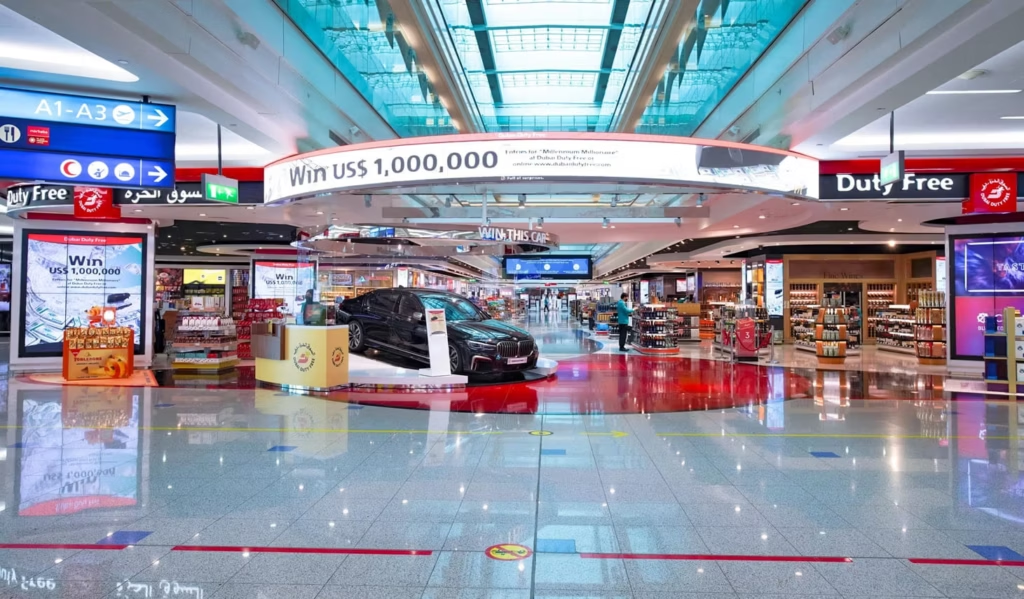
Dubai Duty Free Breaks All-Time Monthly Sales Record

Dubai Duty Free has set a new benchmark in global travel retail, reporting AED 876.56 million (US$240.16 million) in sales for November 2025, its highest monthly performance in 42 years. The figure represents a 16.77% year-on-year increase, surpassing the previous record of AED 821 million set in December 2024.

Crossing the US$2 billion threshold by mid-November, the retailer confirms another record-breaking year, with year-to-date sales reaching AED 7.75 billion (US$2.13 billion), a 9.57% rise compared to the same period last year. This growth notably outpaced passenger traffic by an estimated 10%, underscoring the strength of Dubai Duty Free’s penetration and conversion strategies.

Managing Director Ramesh Cidambi highlighted the strategic effort behind these results, noting that nine months of 2025 have already hit all-time highs. High-value transactions dominated performance: purchases above AED 500 accounted for 75% of total sales in November, growing 20.54% in value.

Dubai Duty Free Category Highlights

  • Perfumes led with AED 160.58 million (+13.29%)

  • Liquor reached AED 103.59 million (+4.55%)

  • Gold posted AED 87.67 million (+16.68%)

  • Tobacco increased to AED 85.99 million (+11.44%)

  • Confectionery achieved its highest result ever at AED 83.29 million (+42.93%)

  • Electronics rose to AED 67.22 million, driven by record iPhone 17 sales

Luxury categories remained a strong growth driver. Luxury Fashion surged 40.32%, supported by new Louis Vuitton and Cartier boutiques in Concourse A.

Dubai Duty Free Regional Performance

All passenger regions posted positive growth.

  • Europe: +23.57%

  • Russia: +27.60%

  • Africa: +16.53%

  • Middle East: +18.09%

  • Far East: +14.28%

Travellers heading to the Americas, Africa, and Russian-speaking countries remained the highest spenders, averaging over AED 800 per shopper.

Operational Excellence

On 30 November, the retailer recorded its highest ever single-day shop-floor replenishment: 1,057 pallets, comprising 12,000 unique items and 650,000 pieces of merchandise, a testament to Dubai Duty Free’s supply chain strength during peak travel demand.