WORLDEF Prime Antalya 2026 - Upcoming Event

Register Now

TikTok Transforms Shopping in MENA

Social media has evolved far beyond its entertainment roots, and among the platforms leading this transformation, TikTok stands out as a powerful driver of consumer behavior. According to a 2025 report by Zawya, TikTok now plays a decisive role throughout the entire shopping journey from product discovery and decision-making to purchase and post-purchase engagement. The study highlights how the platform has reshaped shopping in the Middle East and North Africa (MENA), where creativity and commerce increasingly merge into one seamless experience.

The research reveals that TikTok is responsible for around 15 percent of total product discoveries across different media channels in the MENA region. This data suggests that the app has become more than a place for viral videos it now serves as a discovery engine for trends, reviews, and recommendations. The report emphasizes that TikTok’s algorithmic feed, known as the “For You” page, personalizes user experiences so effectively that it naturally leads to product exposure. Instead of being interrupted by ads, users encounter engaging stories that spark curiosity and influence purchasing intent.

As detailed in the TikTok MENA Insights 2025, 77 percent of regional users discovered new products on the platform during the fourth quarter, traditionally the busiest shopping period of the year. Yet, the same research found that the influence of TikTok extends far beyond big retail events such as Black Friday or Singles’ Day. Nearly 66 percent of users reported making purchases outside these peak moments, often inspired by spontaneous discoveries while scrolling through their feeds. The data also showed that consumer spending during Q4 is spread evenly: 34 percent in October, 39 percent in November, and 27 percent in December. This indicates that the shopping season is no longer a single event it’s a continuous journey driven by daily content.

A similar observation was made by Statista in its 2024 Global Social Commerce Report, which found that impulsive buying triggered by social content now represents 40 percent of online sales among Gen Z and Millennial consumers. For these generations, discovery and entertainment are deeply connected, and TikTok has become the bridge between the two. The app’s bite-sized storytelling format allows users to see products in context being used, reviewed, or styled by real people which makes advertising feel less like promotion and more like personal recommendation.

Another critical insight highlighted by Zawya is that TikTok users in MENA show a significantly higher tolerance for advertising. Roughly 69 percent of surveyed users said they are “more open” to ads on TikTok than on other social media platforms. This is largely due to the way TikTok integrates brand content into its entertainment ecosystem. As Deloitte Insights points out, authenticity has become the most important driver of consumer engagement, and TikTok’s creative, user-generated format perfectly embodies this shift. Instead of polished commercial videos, users prefer relatable, unscripted clips that feel genuine and human.

The report also underscores how TikTok’s influence translates into measurable commercial outcomes. Small and medium-sized businesses across Saudi Arabia, the United Arab Emirates, and Egypt have leveraged the app’s organic reach to compete with global brands. Many have reported major spikes in web traffic and direct sales after their products were featured in viral videos. In one example cited by Zawya, local beauty and fashion retailers saw up to a 30 percent increase in revenue after participating in TikTok’s seasonal campaigns. These figures illustrate the platform’s ability to democratize visibility success is no longer dictated by advertising budgets but by creativity and timing.

TikTok’s reach isn’t limited to online behavior. A 2024 eMarketer survey found that nearly one in three in-store shoppers in the MENA region made a purchase influenced by something they had seen on TikTok. This crossover between digital inspiration and physical retail demonstrates that social commerce now drives real-world foot traffic. Retailers across Dubai, Riyadh, and Cairo have started adapting their in-store layouts and product selections to reflect TikTok trends, a shift that further blurs the boundaries between online and offline shopping.

Experts believe this transformation requires brands to rethink their marketing strategies. Omar Al-Hassan, a regional marketing strategist interviewed by Zawya, explained that “on TikTok, a campaign doesn’t end with a sale it ends when a customer tells your story.” This ongoing storytelling loop where customers become advocates builds stronger emotional connections and long-term loyalty. Data from Kantar supports this, showing that continuous campaigns focused on engagement outperform short-term promotions by up to 35 percent in conversion rates.

TikTok’s influence also reflects a broader trend in digital marketing: the rise of community-driven brands. As noted by Business of Apps, TikTok’s e-commerce expansion and its introduction of in-app purchasing tools in 2025 have transformed it into a hybrid platform part social network, part marketplace. Analysts predict that TikTok-driven sales in the MENA region could double by 2026, fueled by local creators and niche brand collaborations that feel organic rather than transactional.

At its core, TikTok’s power lies in trust. When users see real people sharing genuine experiences, they are far more likely to act than when they see traditional advertisements. This trust-based model has made the app a key player in shaping consumer habits and influencing market trends. As the Zawya report concludes, TikTok is not just a platform for discovery it’s a full-circle ecosystem where entertainment, influence, and commerce intersect.

For brands, this new landscape demands agility and authenticity. Campaigns that embrace local culture, creativity, and collaboration will stand out. As the global economy shifts further toward digital storytelling, TikTok’s MENA evolution offers a glimpse into the future of commerce: one where inspiration leads seamlessly to action, and where every swipe holds the potential to spark the next big purchase.


Most Sellers Active on Six Marketplaces

A growing number of online sellers are distributing their products across multiple marketplaces, with new research showing that the average seller is now active on six different e-commerce platforms. This trend reflects how digital commerce is evolving, with sellers seeking to reach customers wherever they shop. The findings come from ChannelEngine’s Marketplace Seller Trends 2025 report, as summarized by EcommerceNews in October 2025.

The report surveyed 470 sellers across the United Kingdom, France, Germany, the Netherlands, and the United States to provide a comprehensive picture of current marketplace strategies. It reveals that a significant majority 67 percent of sellers operate on four or more marketplaces, highlighting a shift from traditional single-channel sales to more diversified approaches.

This shift is driven by changing consumer habits. Shoppers increasingly browse several platforms before making a purchase, encouraging sellers to maintain a presence across multiple marketplaces to capture their attention. As the report indicates, having a multi-marketplace presence is no longer a luxury but a necessity for growth and survival in the highly competitive online retail space.

However, managing sales on six platforms is far from easy. The study reveals that while 62 percent of sellers use marketplace integrators or software tools to help automate listing and inventory management, more than half of respondents still rely on spreadsheets or internal tools to handle day-to-day operations. This hybrid approach points to a transitional phase where many sellers have yet to fully embrace or implement automation solutions.

Manual tasks still dominate sellers’ weekly routines. The report shows that sellers spend an average of 36 percent of their working hours updating product listings, correcting errors, adjusting prices, and synchronizing stock levels. This significant time investment can hinder sellers’ ability to focus on strategic growth initiatives, customer engagement, or marketing efforts.

When asked about their business priorities, sellers highlighted improving sales performance on existing marketplaces as their top focus, with 32 percent aiming to increase revenues within current channels. Another 31 percent are working on boosting product visibility to stand out in crowded marketplaces, while 27 percent are focused on improving profitability. These figures, derived from ChannelEngine’s report, suggest that sellers are currently prioritizing optimization over rapid expansion.

Nevertheless, expansion remains a goal for many. The report states that 39 percent of sellers plan to add more marketplaces to their sales mix in the near future. However, economic uncertainty and technical complexity act as major obstacles, with 28 percent citing financial risks and 26 percent mentioning integration challenges as reasons to hesitate. These barriers are particularly pronounced for smaller businesses lacking specialized staff or advanced software infrastructure.

Keeping pace with evolving platform requirements also poses a significant challenge. Approximately 27 percent of sellers report difficulties adapting to frequent changes in marketplace rules, policies, and compliance standards. This issue is especially critical for sellers who continue to rely heavily on manual processes; among this group, 40 percent identify changing platform demands as their greatest operational hurdle.

Competition intensifies these challenges. Nearly 30 percent of sellers named maintaining competitive pricing and visibility as their primary struggle. As EcommerceNews reports, this reflects the crowded nature of major marketplaces such as Amazon, bol.com, and eBay, where thousands of sellers offer similar products. Success requires not only listing products but also excelling in areas like advertising, logistics, customer service, and user experience.

Despite these complexities, sellers remain committed to the multi-marketplace model. Marketplaces have become the dominant channels for consumer shopping, especially in Western markets. The report suggests that not being present on these platforms risks missing out on substantial sales opportunities.

To succeed, sellers must invest in operational efficiency. The ChannelEngine report emphasizes that businesses adopting advanced automation tools such as inventory synchronization, dynamic pricing, and error detection software—are better positioned to scale and maintain accuracy across marketplaces. EcommerceNews reinforces this view, noting that sellers who treat backend operations with strategic importance tend to outperform their peers.

Moreover, sellers call on marketplaces to improve their support systems. Many express a need for simpler onboarding processes, clearer documentation, and more intuitive interfaces, particularly when expanding internationally. These improvements could lower barriers for smaller sellers and reduce the complexity of managing multiple sales channels.

Perhaps the most profound insight from the report is a shift in mindset. Marketplaces are no longer secondary sales channels but have become primary business platforms for many sellers. This evolution changes how sellers allocate resources, approach branding, and design customer experiences.

Looking ahead, as sellers increase their presence across multiple marketplaces, competition will only intensify. EcommerceNews predicts that operational speed, logistics efficiency, and customer satisfaction will become key differentiators in an increasingly crowded market.

In summary, the Marketplace Seller Trends 2025 report and related industry coverage highlight a maturing e-commerce environment where multi-marketplace selling is the norm. Sellers who can effectively manage complexity through automation and strategic focus are best positioned for sustainable growth in a fast-changing retail landscape.

U.S. Urges India to Ease E-Commerce Inventory Rules

The United States has been increasing diplomatic pressure on India to revise its e-commerce regulations, particularly aiming to allow foreign players such as Amazon and Walmart-owned Flipkart to hold inventory and sell directly to consumers. This request is part of a broader trade dialogue, and if accepted, could radically alter the business landscape for online retail in India.

According to a recent report by NewsBytes, this U.S. demand is central to ongoing bilateral trade negotiations and reflects growing concerns over what American officials perceive as unfair restrictions on foreign e-commerce firms operating in the Indian market.

Current Regulatory Landscape: Marketplace Only for Foreign Firms

Under current Indian foreign direct investment (FDI) rules, foreign-owned e-commerce platforms are not allowed to follow an inventory-based model. Instead, companies like Amazon and Flipkart must operate as marketplaces, facilitating transactions between third-party sellers and consumers without owning the products themselves.

This restriction does not apply to Indian-owned companies, which are allowed to hold and sell inventory directly to consumers. Firms such as Reliance’s Ajio, Tata’s BigBasket, and beauty retailer Nykaa benefit from this regulatory gap, enabling them to control their supply chains and optimize pricing, logistics, and delivery timelines more efficiently (NewsBytes).

The U.S. argues that this dual policy places American companies at a disadvantage, and has therefore made it a key issue in the negotiations around a potential bilateral trade agreement (BTA).

The U.S. Argument: Seeking a Level Playing Field

The push from Washington comes amid an expanding bilateral economic dialogue, where both sides are exploring ways to enhance cooperation in digital trade, cloud services, logistics, and data privacy. The U.S. believes that allowing foreign e-commerce companies to hold inventory would promote fair competition, streamline operations, and improve consumer satisfaction through faster deliveries and better product availability.

As reported by NewsBytes, American negotiators have highlighted the inconsistencies in India’s FDI policy and have requested changes that would bring parity between foreign and domestic players.

In practical terms, this would mean Amazon and Flipkart could directly manage their stock and sell products without relying entirely on third-party vendors—a move that could reduce logistical inefficiencies and lower operational costs.

India’s Cautious Response: Exploring Export-Based Inventory Models

Although the Indian government has not openly committed to changing its existing rules, internal discussions suggest that it is considering a pilot model under which foreign e-commerce companies could hold inventory—but only for the purpose of exports.

This model would allow firms like Amazon and Flipkart to maintain inventory within India as part of cross-border trade initiatives, using the country as a base for fulfilling international orders. The idea, as mentioned in NewsBytes, is to avoid disrupting the domestic retail sector while simultaneously promoting India as a global logistics and export hub.

Government officials are reportedly working on infrastructure and policy adjustments to support such a model, including streamlined GST (Goods and Services Tax) refunds, improved cross-state logistics, and tighter compliance monitoring mechanisms.

The proposal, however, remains in early stages. Progress has also been temporarily delayed due to the U.S. government shutdown, though both sides expect talks to resume ahead of the formal BTA negotiations, which may conclude by late 2025.

Opposition from Local Traders: Protectionism vs. Open Market

Despite growing pressure from the U.S., several domestic stakeholders in India have voiced concerns over the implications of allowing foreign e-commerce giants to hold inventory. Trade associations like the Confederation of All India Traders (CAIT) have argued that such a policy shift would negatively impact millions of small and medium-sized businesses, especially traditional kirana stores.

According to CAIT, foreign-owned platforms already exert considerable influence through indirect means, such as establishing “preferred seller” networks. Granting them direct inventory control, they argue, would tilt the balance even further, potentially leading to predatory pricing and monopolistic practices. These concerns were echoed in the NewsBytes article, which highlighted how small business groups are urging the government to resist foreign pressure in order to protect the domestic retail ecosystem.

Furthermore, critics argue that such a move would contradict the very principles of India’s current FDI policy, which was designed to safeguard local entrepreneurship and prevent market concentration in favor of large multinational corporations.

Potential Impact of a Policy Shift

If India were to allow foreign e-commerce companies to hold inventory, even under a limited or export-based model, the implications would be far-reaching:

1. Competitive Dynamics Would Shift Dramatically

With inventory control, Amazon and Flipkart could optimize pricing, reduce delivery times, and manage product availability far more effectively. This would place significant pressure on smaller local retailers and third-party sellers who rely on these platforms.

2. Supply Chain and Infrastructure Would See Increased Investment

Inventory-based models require robust warehousing, cold chain logistics, and efficient last-mile delivery. Foreign investment in these sectors could increase, boosting employment and infrastructure development.

3. Complexity in Taxation and Compliance

Allowing inventory ownership introduces new layers of complexity under India’s GST regime. Managing inter-state goods transfers, tax credits, and refunds would require clearer policies and streamlined procedures.

4. Boost to Export Economy

If India allows inventory for export purposes only, this could help Indian manufacturers—especially MSMEs (Micro, Small, and Medium Enterprises)—access global markets through foreign platforms. Amazon, for instance, has already expressed interest in scaling up its global selling program from India.

5. Impact on Future Trade Agreements

A policy shift could set a precedent for future trade negotiations not just with the U.S., but with other nations eyeing access to India’s booming consumer market.

India’s Strategic Crossroads: Growth or Protectionism?

As India seeks to establish itself as a global economic powerhouse, it must walk a fine line between opening its markets to foreign capital and protecting its domestic ecosystem. With its digital economy growing rapidly, especially post-pandemic, decisions made now will likely define the country’s e-commerce trajectory for decades.

The NewsBytes article rightly points out that this is not merely a business or regulatory issue it’s a matter of strategic economic sovereignty. Whether India chooses to revise its policies fully or implement export-only provisions, the impact will ripple across multiple sectors.

As negotiations resume, much depends on how India balances competing pressures: its desire for foreign investment and technological advancement, versus its commitment to local entrepreneurship, data sovereignty, and equitable growth.

Conclusion: A Defining Test for India’s E-Commerce Future

The U.S. demand for inventory rights for Amazon and Flipkart places India at a pivotal moment in its economic evolution. Any decision to relax the current FDI norms will not only reshape India’s online retail market but also serve as a benchmark for how emerging economies navigate globalization in the digital era.

As of now, India seems to be treading cautiously—exploring middle-ground solutions that promote exports while shielding domestic interests. What remains to be seen is whether this compromise will satisfy Washington—or lead to a larger confrontation on trade and digital sovereignty.

Palestine Approves New E-Commerce Law

In a significant move to modernize the Palestinian economy, President Mahmoud Abbas has approved a new e-commerce law that will officially come into effect three months after its publication in the official gazette. The landmark legislation marks a crucial step in regulating the country’s growing online marketplace, setting clear standards for digital transactions, consumer protection, and fair competition between online and traditional businesses. (sadanews.ps)

The Palestinian Authority’s Ministry of National Economy emphasized that the law is designed to strengthen the legislative framework governing e-commerce and digital services in Palestine. It comprises 28 detailed articles that establish the legal basis for conducting business online, covering issues such as registration, taxation, advertising, contract enforcement, and consumer rights. The Ministry described the measure as a “turning point” for digital transformation in the Palestinian economy.

The new legislation comes amid a rapid expansion of online commerce in the Middle East. With more businesses and consumers turning to digital platforms for shopping, payments, and services, Palestinian authorities have faced increasing pressure to provide a clear and secure regulatory environment. Until now, the country lacked a comprehensive legal framework governing digital trade, leaving gaps in areas such as online consumer protection and digital taxation. (sadanews.ps)

Under the new law, all e-commerce businesses both domestic and international will be required to register with the Ministry of National Economy through a newly established electronic registry. This registry will serve as an official database of online businesses operating in Palestine, helping the government monitor compliance and enhance transparency. Companies that fail to register or violate regulations may face fines, suspension, or permanent closure of their online operations.

The law also outlines specific standards for electronic advertising and marketing. Online sellers must now ensure that all advertisements clearly represent the goods or services offered, including pricing and delivery conditions. False or misleading advertising will be subject to penalties. This provision aims to protect consumers and build confidence in online transactions, a crucial factor for the long-term sustainability of the digital economy.

Furthermore, the legislation introduces comprehensive rules for online contracts. E-commerce operators must provide customers with clear terms and conditions before purchase, including information on return policies, product warranties, and payment procedures. In the event of nonconformity between the delivered product or service and its online description, consumers will have the right to request replacement or refund within specified deadlines. These measures align Palestinian digital commerce practices with global consumer protection standards. (sadanews.ps)

The law’s emphasis on tax justice represents another important aspect of the reform. It seeks to ensure a fair competitive balance between traditional brick-and-mortar retailers and online businesses. By subjecting e-commerce activities to taxation within the same framework as physical stores, the Palestinian government aims to prevent revenue losses while encouraging fair market practices. This is particularly relevant as digital sales become a more significant part of the national economy.

Minister of National Economy Muhammad Al-Amour described the new framework as an “essential pillar” of Palestine’s economic modernization. He explained that the Ministry would soon issue executive regulations to operationalize the law, including procedures for business registration, consumer complaint management, and online transaction monitoring. “Our goal is to create a balanced, transparent, and innovation-friendly digital economy that protects both consumers and investors,” Al-Amour said in a statement. (sadanews.ps)

The law is expected to have wide-ranging implications for Palestinian startups and entrepreneurs, many of whom have embraced digital platforms as a cost-effective means to reach regional and global markets. With improved legal certainty, e-commerce companies may now find it easier to attract investment and partnerships. The Palestinian Information and Communications Technology Incubator (PICTI) welcomed the move, stating that the law “sets a foundation for responsible innovation and provides much-needed clarity for digital entrepreneurs.”

Industry experts have also pointed out that the timing of the law coincides with a regional boom in digital transactions. According to a World Bank report, digital trade in the Middle East and North Africa (MENA) region has grown by over 20 percent annually since 2020, driven by increasing mobile penetration and fintech adoption. Palestine, with its young, tech-savvy population, stands to benefit significantly from a structured legal ecosystem that encourages e-commerce growth while ensuring accountability.

In practical terms, the new e-commerce law mandates the establishment of an oversight unit within the Ministry of National Economy to conduct inspections, handle consumer complaints, and coordinate with other government bodies. This will include monitoring cross-border trade activities, preventing fraud, and ensuring that online payment systems meet cybersecurity and data protection standards.

The regulation also encourages public awareness campaigns to educate citizens on their rights and responsibilities as online consumers. The Ministry plans to collaborate with universities, chambers of commerce, and civil society organizations to promote digital literacy and responsible e-commerce practices. This public education component is viewed as vital for building trust and increasing participation in the online economy.

Palestinian business groups have largely welcomed the reform, viewing it as a step toward aligning with international best practices. However, some small online retailers expressed concerns about the potential administrative burden and costs of registration. In response, the Ministry indicated that it would simplify the registration process through a digital portal and offer a grace period to help small enterprises comply.

Beyond its immediate economic impact, the law also carries political and social significance. By modernizing its economic infrastructure, Palestine is signaling its readiness to engage more actively in the global digital economy. Analysts say the move could enhance cross-border investment and facilitate trade with regional partners, particularly within the Arab world and Europe.

Economists argue that establishing clear legal norms for online commerce could also help formalize parts of the informal economy, which currently accounts for a large share of Palestinian online trade. This, in turn, would increase tax revenues, improve data collection, and support policy planning.

As digital transformation continues across the Middle East, Palestine’s new e-commerce law reflects a broader regional trend toward regulatory modernization. Neighboring countries such as Jordan, Egypt, and Saudi Arabia have introduced or updated similar laws in recent years to address issues like digital identity, consumer data protection, and electronic payments. Palestine’s version, while adapted to local conditions, places particular emphasis on ensuring fairness and sustainability in its digital markets.

Observers note that the effectiveness of the law will depend largely on enforcement and institutional capacity. To that end, the Ministry of National Economy has announced plans to create an interagency coordination mechanism, bringing together representatives from the Ministry of Telecommunications, the Palestinian Monetary Authority, and consumer protection bodies.

Over the next few months, as the law moves toward implementation, attention will turn to how quickly businesses can adapt and how efficiently the Ministry can oversee compliance. For now, the passage of this law stands as a milestone for the Palestinian economy signaling a new chapter in the nation’s digital transformation and its commitment to aligning with global standards of commerce and governance.

Blue Ocean Global Moves to E-Commerce in UAE

Facing rapidly changing consumer behavior, Blue Ocean Global Group has initiated a major strategic transformation by pivoting from traditional offline distribution toward e-commerce. The move is driven in part by the UAE’s accelerating growth in digital transaction value, which is projected to exceed US$60.20 billion in 2025.

According to the announcement, the number of retail transactions under the UAE Funds Transfer System (UAEFTS) reached 109.7 million in 2024, totaling AED 7.4 trillion (about US$2 trillion). This figure represents a year-on-year increase of 22.57 percent in transaction volume and 20.63 percent in value relative to 2023 a clear signal of consumers’ shift toward online and digital payments. Zawya

Blue Ocean Global, a Dubai-based distribution conglomerate representing over 25 global and regional brands in consumer electronics, lifestyle products, and FMCG, said that it has already begun reducing investments in offline distribution. Instead, the firm is accelerating its e-commerce initiatives and transforming operations to serve digital retail platforms more efficiently. Zawya

Chairman Shahzad Ahmed stated that the company’s e-commerce distribution business has been growing at 40 percent year-on-year. The firm currently manages inventory across more than 550 stock keeping units (SKUs) and serves numerous e-commerce businesses throughout the Middle East. Zawya

“As the market shifts toward e-commerce and online sales, we have transformed our business to become a fully technology-enabled e-commerce distribution platform by scaling down our offline operations,” Ahmed said in the press release. Zawya

Digital Payments Surge Offers Tailwinds

Analysts attribute part of Blue Ocean’s timing to broader macro trends in the UAE. With smartphone penetration, internet access, and digital banking infrastructure improving, more consumers are purchasing goods online. The pressing need to offer fast, convenient delivery is encouraging distributors and retailers to reconfigure their supply chains.

The company projects that digital payments in the UAE will grow at a compound annual growth rate (CAGR) of 14.40 percent from 2025 to 2030, reaching an estimated US$117.98 billion by the end of the forecast period. Meanwhile, e-commerce user numbers in the UAE are expected to increase to 10.63 million consumers. Zawya

In response, Blue Ocean Global is scaling its logistics infrastructure, automation, and integration with digital platforms to remain competitive in the evolving market. The firm believes early adoption of e-commerce distribution models will yield sustainable advantage over those slow to adjust.

Strategic Shifts and Operational Execution

To support its transformation, Blue Ocean Global is adjusting multiple parts of its business:

  • Inventory and SKU management: Maintaining readiness across SKUs that perform well in digital channels, while scaling back less-demanded offline lines.

  • Last-mile partnerships: Collaborating with logistics firms and e-commerce platforms to ensure faster and more reliable delivery across urban and suburban areas.

  • Technology and data analytics: Leveraging AI, robotics, and predictive analytics to forecast demand, optimize routing, and reduce waste.

  • Distribution footprint redesign: Reducing dependency on brick-and-mortar channels and reallocating resources toward digital order fulfillment centers.

CEO Rohit Savara emphasized that embracing the “Fourth Industrial Revolution” which includes AI, robotics, and machine learning—is vital to staying relevant in a market where digital consumption is no longer optional. Zawya

The company also expects to maintain some level of physical retail support in suburban and neighborhood stores, particularly for everyday groceries and consumer essentials, but sees the bulk of growth in e-commerce channels. Zawya

Implications for the UAE Market

Blue Ocean’s transformation is not occurring in isolation. Many distribution, logistics, and retail conglomerates in the UAE are revisiting their business models as digital adoption accelerates. The shift reflects a broader transition in the Middle East toward a hybrid retail ecosystem where digital channels dominate but offline presence remains important in certain contexts.

From a competitive perspective, Blue Ocean’s move increases its alignment with direct-to-consumer (D2C) platforms, international online marketplaces, and omnichannel retailers. By reducing costs and streamlining its operations, the company hopes to offer better margins to partners and faster delivery to end consumers.

For consumers, the evolution could translate to lower costs, more selection, and greater convenience. On the other hand, stakeholders in traditional retail may face pressure to adapt or risk being marginalized.

Challenges and Outlook

While the shift to e-commerce offers many opportunities, it also presents challenges. Maintaining inventory accuracy, handling returns, logistics complexities, and customer expectations for fast shipping are known pain points in digital retail. Blue Ocean must ensure its infrastructure and service quality scale appropriately as volumes grow.

Another risk is overreliance on external e-commerce platforms if partner platforms restrict fees or adjust algorithms, distributors may find margins squeezed. To counter this, Blue Ocean is investing in closer partnerships, proprietary portals, and value-added services like fulfillment and platform integration.

Moreover, regulatory changes around cross-border trade, digital taxation, data privacy, and consumer protection may play a role in shaping how distribution companies position themselves.

Looking forward, Blue Ocean Global’s transformation may serve as a case study for regional distributors in emerging markets. If its execution proves successful, it could inspire comparable shifts across the Middle East, Africa, and South Asia.

Shein Opens Stores in France Amid Backlash

Chinese fast-fashion giant Shein has announced plans to expand its footprint in Europe by opening several physical stores in France a move that has sparked a heated public debate across the country’s fashion industry and political circles. The decision comes as Shein, best known for its ultra-low prices and fast production cycles, seeks to transform its image and strengthen its presence in one of Europe’s most competitive retail markets.

According to a report by RTS, Shein’s entry into France’s brick-and-mortar retail landscape will begin with pop-up stores in major cities including Paris, Lyon, and Marseille, followed by permanent outlets in select locations. The company, which has built its global success on e-commerce and social media marketing, aims to connect more directly with consumers and showcase a more sustainable image in response to growing criticism from environmental and labor rights groups.

The announcement comes at a sensitive time for the global fast-fashion sector. Shein’s rise to dominance has been marked by controversies surrounding its supply chain transparency, working conditions, and environmental impact. Critics argue that the brand’s production model which churns out thousands of new designs daily promotes overconsumption and waste. Environmental activists in France, including organizations such as Les Amis de la Terre, have condemned Shein’s business model as fundamentally incompatible with sustainability goals outlined in France’s national environmental policy.

French lawmakers have also voiced their concerns. In recent years, the French government has taken a tougher stance against the fast-fashion industry. A proposed law in early 2025 sought to impose a “fast fashion tax,” targeting companies whose low-cost, high-volume production practices generate significant environmental waste. While the legislation has not yet been enacted, Shein’s expansion has reignited public debate about whether such measures should be accelerated. French Member of Parliament Anne-Sophie Pelletier stated that allowing brands like Shein to grow locally without stricter regulation “sends the wrong signal to consumers and undermines the progress France has made toward sustainable consumption.”

However, Shein insists that its new physical presence in France is part of a broader effort to become more transparent and community-focused. A company spokesperson told Reuters that Shein is “committed to evolving its business model to meet the expectations of both regulators and consumers,” adding that the company has launched initiatives to improve supplier conditions and reduce carbon emissions. The company has also introduced a “Resale” platform in Europe, enabling customers to buy and sell pre-owned Shein items a move designed to address circular economy principles and promote clothing reuse.

The expansion also signals a shift in Shein’s global strategy as it faces increasing regulatory scrutiny in both the European Union and the United States. Earlier this year, the European Commission opened a review into the company’s tax practices and supply chain compliance under the EU’s Digital Services Act. Meanwhile, U.S. lawmakers have questioned the company’s data privacy standards and sourcing methods, particularly regarding allegations of forced labor in parts of its supplier network. These issues have pushed Shein to diversify its retail strategy and emphasize local engagement to regain public trust.

From a business perspective, analysts view Shein’s decision as a calculated move to compete directly with Western fast-fashion giants like Zara and H&M, both of which have successfully integrated physical retail with online commerce. “Shein’s entry into the French retail space is about legitimacy as much as visibility,” said fashion analyst Clara Moreau in an interview with Fashion Network. “By opening stores, Shein is trying to show that it’s not just a digital disruptor but a serious player in the traditional retail market.”

Yet the public reaction has been mixed. While younger consumers continue to embrace Shein for its affordability and wide variety, a growing number of French shoppers are expressing ethical concerns. Social media platforms have been flooded with posts calling for boycotts, with hashtags like #StopShein trending across France. Many critics argue that Shein’s sustainability claims are merely a form of “greenwashing,” intended to soften the brand’s image without making meaningful structural changes to its production practices.

Despite the backlash, Shein’s economic influence in Europe continues to grow. The company was recently valued at over $66 billion and has become one of the largest online fashion retailers globally, surpassing major Western competitors in mobile downloads and market reach. In France alone, Shein commands an estimated 12% share of the online fashion market, according to data from Statista. This dominance has led local retailers and designers to call for a level playing field, with some arguing that Shein’s low prices are only possible due to regulatory loopholes that exempt the company from import duties and sustainability requirements.

The French Fashion Federation (Fédération Française de la Couture) has urged the government to enforce stricter oversight of foreign fast-fashion brands, particularly those operating through digital platforms. “The entry of Shein into the French high street poses both an opportunity and a challenge,” said a spokesperson. “While it may create jobs and increase retail activity, it also risks undermining the progress we have made toward responsible fashion.”

As Shein prepares to launch its first permanent store in Paris, local officials are closely monitoring the brand’s compliance with labor and environmental regulations. Some municipalities have hinted that they may impose local conditions or environmental audits before granting full operating licenses. Meanwhile, industry observers say the real test will come from consumer behavior — whether French shoppers continue to prioritize affordability over ethics.

Looking ahead, Shein’s French expansion could serve as a test case for its global retail ambitions. The company is reportedly exploring similar moves in Germany, Italy, and the UK as part of its plan to blend digital commerce with physical retail spaces. By doing so, Shein hopes to bridge the gap between online convenience and in-store experience a strategy that could redefine the next phase of fast fashion worldwide.

However, the question remains whether Shein can balance its commercial ambitions with growing demands for environmental and social responsibility. As France positions itself as a leader in sustainable fashion and green regulation, Shein’s arrival could either accelerate reform in the industry or reignite the very debates it seeks to leave behind.

Africa Shapes AI Governance with Local Values

Africa is rapidly positioning itself not just as a user of artificial intelligence (AI), but as a key shaper of its rules, ethics, and governance. In an op-ed by Tiffany A. Archer on iAfrica titled “Shaping AI Governance with African Values for Global Impact”, the argument is made that as global AI adoption accelerates, it is essential that African nations develop governance frameworks that are deeply informed by their diverse languages, cultures, traditions, and societal norms. iafrica.com

Archer points out that many AI governance models currently applied in Africa are imported from other continents. These frameworks often fail to account for linguistic diversity, regional cultural practices, and variations in governance traditions. When that happens, biases are embedded, trust is weakened among communities, and the benefits of AI are unevenly distributed. iafrica.com

Challenges Around One-Size-Fits-All Models

The article references the African Union’s Continental AI Strategy, which acknowledges that Africa cannot simply adopt external norms without adaptation to its realities. Countries such as Ghana and Rwanda are highlighted for their efforts Ghana through its roadmap led by the Ministry of Communication and Digitalization, and Rwanda through ICT pilots that focus on inclusion, digital literacy, and regulatory experimentation. iafrica.com

One major concern is algorithmic isolation where AI systems narrow users into echo chambers that continuously reinforce existing views rather than exposing them to diverse perspectives. This is particularly problematic in Africa’s multilingual, multiethnic societies, where digital representation and fairness must reflect a broad range of experiences. iafrica.com

Building Governance Based on African Values

Archer emphasizes the importance of incorporating local traditions such as communal accountability Ubuntu being one example and promoting governance that is participatory, transparent, and rights-respecting. Experts in South Africa and Kenya are cited as having called for the inclusion of cultural practitioners, linguists, and grassroots community leaders in policy design to ensure that regulation is trusted and effective. iafrica.com

Concretely, the piece lays out a blueprint for ethical AI governance in Africa:

  • Engaging many voices through plural consultation for policy design, not only urban elites.

  • Ensuring AI models are trained on data that reflects local languages and values.

  • Tailoring regulatory frameworks to adapt to new risks and evolving use cases.

  • Investing in digital literacy across both rural and urban areas to enable oversight and participation.

  • Ensuring sovereignty over local data and institutional capacity so that Africa is not just following, but helping lead global norms. iafrica.com

Why This Matters for Global AI Discourse

Archer argues that when Africa embraces AI governance built on its own values and social realities, the effect goes beyond regional benefit it helps reshape global norms. Instruments like the AU’s strategy provide a foundation, but success depends on ground-up work in each country. Otherwise, there is risk that AI becomes yet another vector of inequality rather than a tool for inclusive progress. iafrica.com

Africa’s population of 1.4 billion people, speaking hundreds of languages and embedded in rich cultural traditions, is presented as a potential source of model frameworks that others might follow. Ensuring that global AI governance includes these perspectives may prevent harms like algorithmic bias, marginalization, and loss of trust. iafrica.com

Actions Already Underway

  • Ghana has carried out a multistakeholder process for developing its strategy, prioritizing areas like agriculture, education, and health based on community feedback.

  • Rwanda’s pilots focus on digital inclusion and reducing language-based barriers.

  • Regulators such as Nigeria’s NITDA and Kenya’s ODPC are pushing policy adaptation to reflect local conditions. iafrica.com

Looking Forward

The call to action in Archer’s work is clear: Africa must not delay in embedding ethical, culturally informed, and human rights-centered AI governance. The next steps involve not just drafting policies, but implementing them in ways that are visible to communities, that respect local beliefs and priorities, and that ensure digital transformation benefits many, not just a few. iafrica.com

Klay Group Appoints Gupta as Family Office Director

Dubai-based Klay Group has announced the appointment of Srajan Gupta as the new Director of its Multi-Family Office division, a strategic move that underscores the firm’s commitment to expanding its presence in global wealth management and family office services. The appointment reflects Klay Group’s ambition to cater to the growing demand for personalized financial solutions among ultra-high-net-worth individuals (UHNWIs) in the Middle East and beyond.

With extensive experience in private banking, wealth management, and strategic advisory, Gupta is expected to lead the company’s expansion into new markets, develop customized investment frameworks, and strengthen relationships with affluent families seeking sophisticated asset management and succession planning solutions.

In a statement published by INTLBM, the company emphasized that Gupta’s appointment comes at a time when the demand for professionalized family office structures is rapidly increasing. This trend is driven by the region’s expanding pool of high-net-worth individuals and the growing complexity of global asset portfolios.

Gupta’s new role involves overseeing client engagement, investment strategy, and governance structures, while also collaborating closely with Klay Group’s investment and compliance teams to ensure that clients receive transparent, risk-adjusted returns. He is also tasked with integrating advanced digital tools into client service delivery, enhancing reporting capabilities, and ensuring seamless multi-jurisdictional asset management.

Commenting on his new position, Gupta said he aims to “drive a forward-thinking approach to family wealth management,” combining traditional investment principles with innovative digital solutions. His vision aligns with Klay Group’s broader mission to become a leading independent advisor and partner to global family offices seeking sustainable, long-term growth.

According to Wealth Briefing, the Middle East has seen a steady rise in family office establishments, with Dubai emerging as a regional hub due to its favorable regulatory environment, tax incentives, and access to global financial markets. This environment has encouraged firms like Klay Group to expand their capabilities in wealth advisory, estate planning, and philanthropy management.

Industry analysts note that the appointment also signals the firm’s confidence in bridging traditional wealth management practices with technology-driven insights. Many family offices are now adopting AI and data analytics to manage portfolios, assess risk exposure, and identify new investment opportunities, particularly in private equity and sustainable finance.

By bringing on a leader with Gupta’s background, Klay Group is positioning itself to navigate this digital transformation while maintaining the trust-based relationships that define private wealth management. The firm’s focus on transparency, governance, and client empowerment is likely to reinforce its reputation as a key player in the region’s evolving financial ecosystem.

As part of its broader strategy, Klay Group is also expected to explore partnerships with fintech firms and institutional investors to diversify its product offerings and strengthen its operational infrastructure. This aligns with global trends where family offices are increasingly behaving like institutional investors, seeking greater control, flexibility, and direct access to emerging opportunities.

The appointment of Gupta represents more than just a personnel change it signals a long-term vision to build a more resilient, innovation-driven family office structure capable of supporting the next generation of global wealth holders.

Red Markets, Digital Frontiers: Clicking Under Communism

Red Markets, Digital Frontiers: Clicking Under Communism

Ideology and innovation now coexist in the global economy’s most paradoxical corners. The communist world, once defined by planned economies and collective ownership, has become one of the most dynamic laboratories of digital trade. From China’s trillion-dollar online retail markets to Vietnam’s thriving startup ecosystems and even the cautious experiments of Cuba and Laos, these states demonstrate that political orthodoxy does not preclude technological ambition. As I continue to examine how e-commerce reshapes nations and narratives, this essay explores an unexpected truth: The world’s last communist countries have become some of its most adaptive digital players.

Communism, as articulated by Marx and Engels, envisions a classless society where the means of production belong to the collective and profit is replaced by social equity. In practice, most communist regimes evolved into one-party states with centralized control, justified by the claim that the ruling party represents the “vanguard of the working class.”

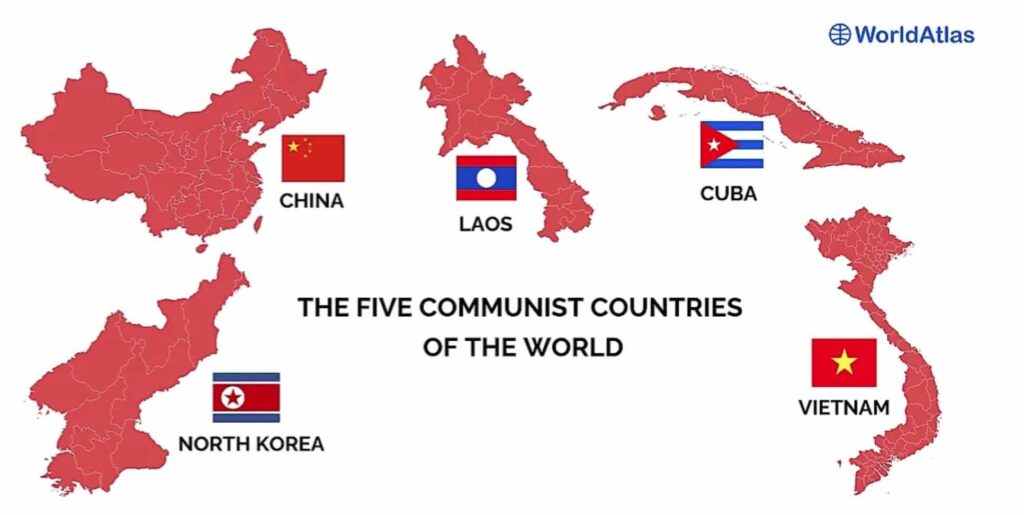
Today, only China, Vietnam, Laos, Cuba, and North Korea still define themselves as socialist or communist. Each maintains a single party, respectively, the Chinese Communist Party, the Communist Party of Vietnam, the Lao People’s Revolutionary Party, the Communist Party of Cuba, and the Workers’ Party of Korea, that monopolizes political power. Yet, paradoxically, all except North Korea have embraced some form of market reform, allowing limited capitalism under the supervision of socialist ideology. This hybrid model has enabled the unexpected rise of e-commerce across much of the communist world.

China: The Command Economy That Out-Innovated Silicon Valley

No nation embodies this paradox more vividly than China. Once a rigidly planned economy, it is now the world’s largest digital marketplace, with online retail sales surpassing $2 trillion in 2024. Alibaba, JD.com, Pinduoduo, and the short-video juggernaut TikTok (Douyin in China) have redefined consumption, logistics, and digital payments.

The state retains ideological oversight; censorship, data localization, and party committees in tech firms, but it also provides infrastructure, fintech inclusion, and logistics capacity unmatched elsewhere. In essence, Beijing’s “state-capitalist” communism allows innovation within tightly policed borders. The result is a system where consumer behaviour is freer than speech, yet commercially explosive.

Beyond its vast domestic market, China has turned cross-border e-commerce (CBEC) into an export engine; factory-to-app models (AliExpress, Temu, Shein) ship millions of small parcels daily from bonded zones and special CBEC pilot areas, stitched together by Cainiao and JD Logistics and settled through Alipay/WeChat Pay ecosystems. The result is a tightly integrated pipeline from design and sourcing to retail media and last-mile projects, connecting Chinese supply chains directly into foreign consumer markets.

Vietnam: Socialist in Name, Start-Up in Spirit

Following China’s playbook, Vietnam launched its Doi Moi reforms in 1986. Four decades later, it is Southeast Asia’s fastest-growing digital economy, exceeding $25 billion in e-commerce GMV in 2024. Marketplaces such as Shopee, Lazada, and TikTok Shop dominate, but thousands of local SMEs, from coffee producers to fashion start-ups, participate.

Vietnam’s success illustrates how a socialist framework can coexist with private digital enterprise when the state prioritizes export growth and technological modernity. The Communist Party maintains control of politics, yet entrepreneurship flourishes in the marketplace, a quiet revolution of pragmatism over dogma.

Vietnam’s e-commerce is no longer just a domestic scale-up; it is steadily becoming an ASEAN-wide export play. SMEs ride Shopee/Lazada/TikTok Shop to sell into Thailand, Malaysia, the Philippines, and Singapore. At the same time, Amazon Global Selling opens lanes to the U.S. and EU for select categories (coffee, home goods, apparel). The policy is pragmatic, and customs digitisation and supportive SME programs allow sellers to run multi-store, multi-market operations with localised pricing and returns. In effect, Vietnam exports not just goods but shoppertainment formats, converting cultural proximity in ASEAN into cross-border GMV while keeping political control firmly centralized.

Laos: The Digital Experiment of a Landlocked State

Laos, long one of Asia’s most isolated economies, adopted its first e-commerce decree only in 2021. Its online trade remains modest, often conducted through Facebook or TikTok Live rather than local platforms. Nonetheless, government initiatives such as “Made in Laos” marketplaces and electronic tax systems reveal a policy intent to modernize without political liberalization.

The Lao People’s Revolutionary Party views digital commerce not as a threat but as an administrative tool that can broaden state revenues while fostering small-scale entrepreneurship. It is communism tempered by connectivity.

For Laos, cross-border e-commerce is policy-ready but scale-constrained. The 2021 e-commerce decree and subsequent tax digitization created a legal doorway for foreign platforms. Yet, most real activities still piggyback on social commerceLaotian sellers use Facebook/TikTok to reach neighbouring Thailand, Vietnam, and China with small parcel shipments. In short, the state has set the rules; now, the ecosystem must grow into them.

Cuba: Commerce Through the Firewall

In Cuba, the socialist state controls nearly all formal retail. The leading e-commerce portals, Tu Envio and EnZona, are government-run, allowing Cubans to order goods from state stores or receive remittances from abroad. Chronic bandwidth shortages, dual currencies, and international sanctions have slowed progress, yet a digital middle class is emerging.

Cuba’s e-commerce story is a necessity rather than an ideology, a means to ration goods more efficiently and enable diaspora remittances. Each transaction remains politically supervised, but even within those constraints, small entrepreneurs are learning to operate online, often selling art, crafts, or private lodging via semi-legal channels.

Cuba’s CBEC is fundamentally diaspora-mediated rather than market-led. Relatives abroad purchase on state-linked rails for basket deliveries, EnZona/Transfermóvil for payments, and a patchwork of licensed operators that bundle catalogue goods, remittances, and prepaid utilities. Practically, cross-border participation is viable only via licensed partners and state distributors, with business models optimised for diaspora demand, catalogue stability, and high tolerance for service disruptions, commerce that flows through the firewall, not around it.

North Korea: An Intranet of Isolation

Finally, North Korea presents the purest form of ideological control. Its Kwangmyong intranet hosts domestic shopping sites and a state-approved e-payment system, but citizens cannot access the global internet. There are no cross-border platforms, no competition, and virtually no consumer choice. What exists is an imitation of e-commerce designed for surveillance and propaganda, not trade. Consequently, no formal cross-border e-commerce channels exist. There are no internationally accessible marketplaces, payment gateways, or parcel networks serving consumers. Given sanctions, currency controls, and near-total network isolation, North Korea should be treated as out of scope for conventional cross-border e-commerce under current conditions.

The Paradox of Red Capitalism

Communism, by definition, seeks to abolish private profit; e-commerce thrives on it. Yet the endurance of these five systems demonstrates that ideology bends under the weight of economic pragmatism. In China and Vietnam, online commerce has become not merely tolerated but celebrated as a pillar of national growth and international influence. These countries have discovered that digital markets can be centrally managed yet globally competitive, provided the state maintains regulatory command and digital sovereignty. The paradox is profound: authoritarian governments using free-market mechanics to preserve political power. Laos and Cuba sit midway on this spectrum, experimenting with modernisation without surrendering control, while North Korea remains the ideological relic, untouched by globalisation’s algorithms.

E-commerce in the communist world tells us that capitalism is no longer an ideology but a technology, a mechanism for distribution, logistics, and social aspiration. Even the most doctrinaire regimes now depend on digital trade to maintain legitimacy and deliver material comfort. The internet may have failed to democratise these societies, but it has quietly commodified communism, transforming the planned economy into a managed marketplace. The revolution, it seems, is being livestreamed from Beijing to Havana one online purchase at a time. Red Markets

Red Markets Red Markets Red Markets Red Markets Red Markets

Tony James Launches Biotech Fund

Tony James, the former President of Blackstone and a longtime figure in private equity, has announced plans to launch a new healthcare and biotech investment fund under his family office, named Jefferson Life Sciences. This marks his pivot toward life sciences investments, leveraging decades of experience in finance to back innovations in medicine, biotech, and healthcare. (Facilities Management Now) facilitiesmanagement-now.com

Background: From Blackstone to Biotech

James served as President of Blackstone for more than a decade and played a significant role in its growth in private markets. With deep networks in finance, operations, and strategy, he now turns to healthcare and biotech sectors he sees as ripe for innovation, especially with developments in genetic engineering, personalized medicine, and diagnostics. Bloomberg+2familywealthreport.com+2

His family office has been active in alternative investments historically. Reports indicate that the new fund is intended to operate from this established platform, allowing more agility and focus in biotech deals that often require longer time horizons. Earlier spinouts from his office have raised substantial capital, suggesting strong investor confidence in his vision. familywealthreport.com+2fa-mag.com+2

Strategy and Focus Areas

Jefferson Life Sciences aims to target early to mid-stage biotech companies, diagnostics, gene therapy, and platforms enabling medical innovation. The fund is expected to invest in companies developing novel therapeutics, precision medicine, and tools for disease detection and monitoring.

James has indicated that the fund may act as a lead or anchor investor in rounds that align with its risk-return profile, providing both capital and strategic guidance. The structure within a family office framework gives it flexibility in investment horizon and governance compared to traditional venture funds.

Capital, Structure, and Investor Base

While precise financial terms have not been disclosed, reports suggest that the fund is backed by James’ personal capital and commitments from prominent private investors. Previous reports have linked his family office to anchor investments of tens of millions of dollars in private equity ventures. craincurrency.com+2familywealthreport.com+2

The governance model is expected to be lean, with leadership from the family office and possibly external investment professionals with life science expertise. The fund intends to operate with a patient capital approach, understanding the long development cycles common in biotech.

Market Timing and Opportunities

Biotech and life sciences have attracted renewed investor interest in recent years, driven by breakthroughs in gene editing, mRNA technologies, AI-driven drug discovery, and diagnostics. However, these sectors are also among the highest risk, requiring domain knowledge, clinical trial insight, and regulatory navigation.

James believes the fund is entering at an opportune moment: many biotech firms are raising capital now, valuations are softening in certain segments, and scientific tools are more accessible. His network and experience may help the fund source deal flow, conduct due diligence, and support portfolio companies beyond capital.

Risks and Challenges

Operating in biotech is capital-intensive, lengthy, and regulatory-heavy. Key challenges include high failure rates in drug development, regulatory uncertainty, and long time to return on investment. Ensuring scientific rigor, selecting the right management teams, and maintaining liquidity will be crucial.

Competition is also fierce: large pharmaceutical companies, specialized VC firms, and institutional life science funds are active in this space. Jefferson Life Sciences will need to differentiate via domain focus, strategic support, and careful deal selection.

Implications and Industry Impact

The entry of a veteran finance executive into biotech can signal confidence in the sector’s future and may encourage other private equity or alternative investors to explore life sciences. It also exemplifies how private capital is branching into more specialized, high-risk, high-reward domains.

If successful, Jefferson Life Sciences can plant a bridge between traditional financial markets and biotech innovation offering capital, networks, and operational insights to emerging healthcare enterprises.

Outlook

Over the next years, attention will center on the fund’s initial investments, its ability to support portfolio companies through the translational and clinical stages, and whether it can deliver returns in a challenging environment.

For now, Tony James’ move underscores the evolving role of family offices and private investors in shaping future industries beyond traditional asset classes.