WORLDEF Prime Antalya 2026 - Upcoming Event

Register Now

Temu Warehouse Under Watch in South Africa

Chinese e-commerce giant Temu is facing growing scrutiny from South African regulators as the National Consumer Commission (NCC) investigates the company’s “local warehouse” operations. Although no formal consumer complaints have yet been lodged, the NCC confirmed that it is closely monitoring Temu’s activities and their possible impact on local retailers.
(mybroadband.co.za)

The investigation follows growing concerns from local businesses and members of Parliament about Temu’s business model, which has disrupted online retail markets globally with ultra-low prices and fast shipping. South Africa’s Minister of Trade, Industry and Competition, Parks Tau, stated that authorities are “watching the situation carefully” to ensure compliance with national consumer protection laws.

Government and NCC Response

According to Minister Tau, the NCC has been instructed to keep Temu’s operations under review and to evaluate whether the company’s practices are in line with the Consumer Protection Act. While Temu only launched in South Africa in early 2025, the platform’s rapid growth has already caught the attention of regulators.

In response to a parliamentary question from EFF MP Sinawo Thambo, the minister acknowledged that Temu’s “local warehouse” model and promotional tactics could create confusion for consumers, especially if shoppers believe that the company directly owns or manages its warehouse facilities.
(mybroadband.co.za)

Tau confirmed that although the NCC had not yet received specific complaints, it was already examining how global e-commerce firms are positioning themselves in the South African market. He added that an in-depth study of the e-commerce landscape for the 2025/26 period will be undertaken to assess potential risks and regulatory gaps.

How Temu’s “Local Warehouse” Model Works

Temu introduced its local warehouse program in South Africa in July 2025. The system allows certain sellers on the platform to label their listings as “Local” or “Ships from Local Warehouse,” with a promise of delivery within two days.

However, the company clarified that it does not own or directly operate any warehouse in South Africa. Instead, Temu partners with third-party logistics providers that store goods locally on behalf of merchants. When a customer orders a product labeled “local,” the item is shipped from these partner facilities, not from overseas.

This model enables faster delivery and avoids import duties, making it an attractive option for buyers. Still, it raises questions about transparency and accountability, especially if problems arise regarding refunds, warranties, or product quality.

Delivery, Duties, and Costs

Products listed as “local” do not attract import taxes, unlike international shipments that typically pass through customs. Temu currently charges a delivery fee of R75 for orders under R650 per seller, while larger orders are eligible for free shipping.

Analysts note that while this approach benefits consumers with faster and cheaper delivery, it also puts pressure on South African retailers who must compete with a multinational marketplace that can leverage offshore pricing and low operational costs.

Regulatory Concerns and Fair Competition

The NCC’s attention comes amid growing global debates about the role of ultra-low-cost e-commerce platforms in local markets. Critics argue that Temu’s business model—importing large quantities of low-cost goods, often through duty exemptions for small parcels—creates unfair competition for local producers and retailers.

In some markets, such as the European Union and the United States, Temu and its sister company Shein have faced scrutiny for their supply chain transparency, data collection practices, and environmental impact. South African lawmakers now appear to be taking a similar stance by examining whether the platform aligns with fair trading laws.

The Role of the Consumer Protection Act

The NCC operates under the Consumer Protection Act, which mandates that all goods and services sold in South Africa must meet specific safety, labeling, and quality standards. The Act also ensures that foreign businesses selling to South Africans are subject to the same legal responsibilities as local firms.

Minister Tau emphasized that any company operating in the South African digital marketplace must comply with these rules. Should violations occur, the NCC has the authority to impose penalties, order refunds, or suspend operations.
(mybroadband.co.za)

Local Industry Reaction

Retail industry experts warn that while Temu’s arrival expands consumer choice, it could also threaten local businesses unable to match its pricing and logistics efficiency. Domestic retailers such as Takealot and Makro are watching developments closely, with some urging the government to create a level playing field.

Logistics and warehouse providers in South Africa have also shown interest in working with international e-commerce companies, seeing an opportunity to expand local fulfillment capacity. However, analysts caution that without clear regulation, these partnerships could blur lines between local and foreign trade operations.

Potential Policy Changes

The government is reportedly considering updates to both the Consumer Protection Act and the Competition Act to ensure that e-commerce platforms do not exploit legal loopholes. The goal is to strengthen oversight of digital marketplaces, clarify the legal definitions of “local” operations, and protect small and medium enterprises from unfair competition.
(mybroadband.co.za)

The NCC’s upcoming market study for 2025/26 will likely form the basis for these policy updates. It is expected to assess not only Temu but also other foreign players operating in South Africa’s online retail sector.

Broader Context

Temu’s expansion into South Africa comes as the country experiences a surge in cross-border e-commerce. With internet penetration increasing and digital payment systems becoming more accessible, consumers have embraced international shopping platforms in record numbers.

However, this growth has also exposed weaknesses in customs enforcement and consumer protection frameworks. Regulators are now seeking to adapt existing laws to the new realities of global digital trade.

What Comes Next

As of now, the NCC has not announced any direct enforcement actions against Temu. But monitoring efforts are ongoing, and the results of the upcoming e-commerce review will determine whether further steps are taken.

Observers say that South Africa’s handling of Temu could serve as a precedent for how developing economies manage the balance between innovation, global trade, and consumer rights.


HSBC Launches Digital Merchant Services in India

HSBC has launched a new service in India called Digital Merchant Services, aiming to simplify digital transactions for e-commerce businesses across the country. The initiative is part of the bank’s digital expansion strategy in Asia and is designed to provide merchants with a single, integrated platform to manage all their payment needs.

Through the new system, merchants will be able to process multiple payment methods including Mastercard, Visa, and RuPay under a single contract and interface. HSBC said that the platform will later expand to include India’s Unified Payments Interface (UPI), internet banking, and other local digital payment options, reducing the complexity of dealing with multiple third-party providers.

According to Ajay Sharma, Head of Commercial Banking at HSBC India, the launch marks an important milestone for businesses navigating the country’s fast-growing digital economy. Sharma said the bank’s goal is to create “a resilient, secure, and customer-focused payment infrastructure” that allows merchants to manage their collections and settlements in one place.

Simplifying Payment Operations

In India’s e-commerce ecosystem, many merchants rely on several payment partners, leading to complicated settlements and inconsistent reporting. HSBC’s Digital Merchant Services aims to address these challenges by combining multiple payment channels under a unified interface. The bank says this structure will make reconciliation easier, reduce downtime, and help businesses maintain greater transparency across all transactions (indianews.com.au).

The platform also allows faster fund settlement and offers analytics to help merchants understand payment trends and customer preferences. By automating much of the reconciliation process, it is expected to reduce operational costs for online retailers and small businesses.

A Boost for India’s E-Commerce Market

India is one of the fastest-growing e-commerce markets in Asia. According to industry data, the country’s online retail sector is projected to reach around 550 billion US dollars by 2035, driven by a combination of smartphone usage, affordable data, and rising consumer confidence in digital platforms (indianews.com.au).

The surge in online shopping has increased demand for secure and efficient payment systems. As competition intensifies among global and domestic payment providers, HSBC’s entry into India’s merchant services sector signals growing interest from international financial institutions in the country’s digital economy.

Early Adoption and Industry Feedback

One of the first companies to adopt HSBC’s new platform is Mahanagar Gas Limited, a leading Indian energy provider. The firm plans to integrate Digital Merchant Services into its online billing process, making payments easier for its customers while improving transaction visibility on the back end (indianews.com.au).

Manasi Pandey, Head of Global Payments Solutions at HSBC India, said that the new service will help merchants deliver a smoother customer experience while offering more insights into how their businesses perform. “Digital Merchant Services will enable merchants to offer diverse payment options, understand transaction flows better, and improve their operational efficiency,” she noted (indianews.com.au).

Aligning with India’s Digital Transformation

The launch of this service also supports the Indian government’s “Digital India” vision, which promotes financial inclusion and the expansion of cashless transactions. HSBC’s decision to integrate domestic networks like RuPay and UPI demonstrates its alignment with India’s local payment ecosystem and its intention to merge international banking expertise with national innovation frameworks.

By offering merchants a single-window solution, the bank expects to streamline digital commerce operations for both small enterprises and large organizations. The platform’s security protocols are built upon HSBC’s global compliance standards, ensuring safe and transparent transactions for every payment processed.

Competing in a Crowded Market

The Indian payment services industry has seen rapid innovation, with fintech firms such as Razorpay, PayU, and Paytm expanding aggressively in recent years. HSBC’s entry introduces a new level of global banking expertise and may lead to stronger competition in merchant services. Analysts suggest that traditional banks integrating fintech-style agility could redefine the way digital payments are managed in India.

The bank also plans to add new features in the coming months, including recurring billing, API integrations, and multi-currency support for exporters. These tools aim to make the platform more appealing to e-commerce firms operating in cross-border trade.

Supporting Small and Medium Enterprises

For small and medium-sized enterprises (SMEs), managing digital payments across multiple platforms often leads to higher costs and operational delays. HSBC’s system is designed to simplify these processes, allowing SMEs to focus more on growth and less on technical integration or manual reconciliation.

By offering detailed reporting and customer behavior analytics, HSBC aims to help smaller businesses make data-driven decisions and build sustainable digital models.

Looking Ahead

HSBC’s Digital Merchant Services launch in India represents more than just a new banking product it highlights the ongoing convergence between finance and technology. As online commerce continues to reshape retail, logistics, and payments, platforms that offer unified and secure infrastructure are becoming essential.

Industry observers believe that this move positions HSBC to play a leading role in India’s expanding digital payments sector. It also shows that global financial institutions are increasingly viewing India not just as a growth market but as a key innovation hub for financial technology.

Conclusion

HSBC’s Digital Merchant Services will likely set a new benchmark for integrated, reliable, and data-driven payment solutions in India. By merging global banking experience with local payment innovation, the bank aims to create an ecosystem that supports both merchants and consumers in the country’s fast-evolving e-commerce landscape.

E-Com Top Voices 2026: Global Stage for E-Commerce Innovators

A new gateway is opening for professionals shaping the future of digital commerce, artificial intelligence, and retail: WORLDEF’s “E-Com Top Voices” program. This initiative brings together creators, entrepreneurs, industry leaders, and innovators from the MENA region and Türkiye, offering them the chance to share their ideas on a global stage.

Those selected will take the stage at WORLDEF Dubai 2026, which will be held at Dubai CommerCity on February 10–12, 2026. The event is considered one of the most influential gatherings in global e-commerce, offering visibility, knowledge sharing, and valuable networking opportunities.

Purpose and Participation

E-Com Top Voices aims to highlight groundbreaking ideas and real-world insights in e-commerce, digital marketing, logistics, and AI-driven retail. Instead of sales-oriented presentations, participants are encouraged to share authentic experiences, success stories, trend analyses, and innovative approaches.

The program welcomes a broad range of participants professionals in e-commerce and technology, entrepreneurs, analysts, marketing experts, and content creators are all eligible to apply. Applicants can submit projects focused on artificial intelligence, new sales strategies, supply chain optimization, digital transformation, or customer experience enhancement.

Application and Selection Process

Applications are open from October 14 to November 21, 2025. The process is transparent and designed to reward creativity and impact.

First, applicants will submit a short case study or video presentation introducing their idea. Public voting will take place between November 24 and December 12, allowing the community to support their favorite entries. The most voted projects will move to the final round.

Between December 13 and 20, an expert jury will evaluate the shortlisted projects based on originality, innovation, feasibility, and presentation quality.

The final results will be announced on January 2, 2026. The top 18 speakers selected by the jury will be invited to present live at WORLDEF Dubai 2026, in front of an international audience of e-commerce professionals and investors.

Opportunities for Participants

E-Com Top Voices is not just a speaking opportunity it’s a platform for career growth, brand visibility, and international collaboration.

Participants will gain global exposure, connect with investors, and share the stage with major industry leaders. The event also provides a chance for startups and professionals to expand into global markets through valuable networking opportunities.

Previous WORLDEF events have hosted representatives from global giants such as Amazon, DHL, Microsoft, TikTok, Trendyol, and Aramex. Similar international participation is expected this year as well.

Strategic Significance

E-commerce and artificial intelligence are among the fastest-growing sectors in today’s global economy. E-Com Top Voices aims to bring the professionals leading this transformation into the spotlight.

Türkiye and the MENA region, with their young populations, digital adaptability, and rapidly expanding entrepreneurship ecosystem, are becoming major players in global digital trade.

This initiative strengthens regional visibility on the global stage, fosters collaboration, and accelerates digital transformation. It also serves as a bridge for Türkiye’s growing e-commerce and technology sectors to gain more recognition internationally.

Key Details and Requirements

Each participant may submit only one case study. The hashtag “WORLDEF 2026” must be included in the submission; applications without it will not be considered.

Presentations are limited to three minutes, and participants are expected to deliver clear, concise, and insightful talks within that timeframe.

Participation in the program is free of charge, but selected speakers are responsible for their own travel and accommodation expenses.

Tips for Applicants from Türkiye

For Turkish entrepreneurs and professionals, E-Com Top Voices presents a strategic opportunity to showcase their projects to a global audience. To stand out, applicants are encouraged to:

  • Include real data and measurable results in their case studies

  • Use simple, clear, and impactful storytelling

  • Build community support through social media promotion

  • Focus on trending areas such as AI, logistics, and payment technologies

  • Follow the application timeline precisely to avoid missing deadlines

These steps can significantly improve visibility both in public voting and jury evaluation.

E-Com Top Voices 2026: Time to Be Heard

E-Com Top Voices is more than a competition it’s a platform for sharing knowledge, experience, and inspiration. Each participant has the chance to contribute to the growth of the e-commerce ecosystem with their own story.

In a rapidly changing digital landscape, this program offers professionals the opportunity to make their voices heard on an international stage. For participants from Türkiye, it’s a gateway to building global connections and showcasing their innovations to the world.

The application period runs from October 14 to November 21, 2025. Public voting will take place between November 24 and December 12, and winners will be announced on January 2, 2026. The live sessions will be held at Dubai CommerCity on February 10–12, 2026.

For full details and participation guidelines, visit:
https://worldef.com/e-com-top-voices/

JD.com Teams Up with CATL and GAC for New EV Launch

JD.com, often called “China’s Amazon,” is stepping firmly into the electric vehicle (EV) space through a high-profile partnership with battery giant CATL and automaker GAC. This collaborative effort brings together JD’s consumer reach and e-commerce infrastructure with cutting-edge battery and manufacturing technology setting the stage for a new vehicle that will debut during China’s Double 11 shopping festival. According to Gasgoo via Metal News, the project is already gaining attention. (https://news.metal.com/newscontent/103568573/JDcom-CATL-GAC-team-up-to-launch-new-vehicle-model-during-Double-11-shopping-festival)

Strategic Partnership Built on Complementary Strengths

The forthcoming car dubbed the “National Good Car” by the companies combines CATL’s Choco-Swap battery technology with GAC’s intelligent manufacturing capabilities and JD.com’s consumer insights and retail distribution. As described in media reports, the collaboration aims to span the entire automotive value chain: from development and assembly to sales and after-sales service.

CATL’s battery swap system is expected to enable faster energy swapping and reduce charging downtime, a feature that has already drawn attention in China’s EV circles. GAC, on its part, brings global R&D, safety systems, and vehicle manufacturing know-how to the table. JD.com will contribute by integrating this EV into its omnichannel retail network, offering exclusive sales through its platform.

A JD.com spokesperson clarified that the company would not act as the manufacturer but would focus on platform, retail, and consumer-facing roles. The vehicle will be sold through JD’s own channels, giving it a unique distribution advantage.

Timing, Launch & Market Positioning

The car’s official introduction is slated for the Double 11 shopping festival China’s biggest online sales day when JD.com typically draws massive consumer traffic. Test drives reportedly begin in late October, with full market release expected around November 9, per JD’s statements on social media.

By launching during Double 11, the partners aim to ride the wave of consumer attention and behavioral momentum. JD’s platform reach can help ensure high visibility and quick uptake. Early media materials suggest the target will be a balanced combination of affordability, driving range, safety, and design.

Market & Consumer Context

China’s EV market is among the most competitive globally, with incumbents like BYD, Nio, XPeng, and Tesla all vying for consumer attention. To stand out, new entrants must deliver unique propositions such as battery swapping, smart features, and retail integration.

In recent years, CATL has pushed its battery swap ecosystem aggressively, aiming to install “swap stations” across cities to allow quick battery replacement rather than traditional charging. GAC has also invested in smart vehicle architectures and has partnerships with Huawei and other tech firms. In a broader industry move, Chinese automakers increasingly emphasize modular platforms, shared architectures, and partnerships.

JD.com’s role as a well-established retail and logistics platform gives the new car project a potentially formidable edge. Consumers will be able to view, order, and service the car via a platform they already trust. The integration of retail, logistics, and vehicle services is part of a broader trend in China’s auto-tech space.

Challenges & Risks

Despite the strengths, the new venture faces notable hurdles. Automakers often grapple with regulatory approval, safety certification, and supply chain complexity. JD, CATL, and GAC will need to manage coordination across automotive, consumer tech, and energy infrastructure domains.

Battery swap technology requires a widespread, reliable network of swap stations, which involves substantial capital investment and regulatory negotiation. Ensuring that swap stations cover cities and urban districts densely enough for consumer confidence is a significant execution task.

From a brand perspective, consumers may hesitate to buy a car from a retail or e-commerce platform without tested automotive credentials. JD and partners will need to establish trust through warranties, after-sales service, and long-term reliability.

Margins in EV production tend to be thin during early volumes. Achieving economies of scale and optimizing cost structures will be critical if the vehicle is to remain affordable while turning a sustainable business.

Forecast & Strategic Implications

If successful, this collaboration could reshape how EVs are marketed and sold in China—and perhaps beyond. Retail platforms like JD could become vehicle launchers, not just product sellers. The model of combining battery technology, manufacturing, and retail into a single consumer ecosystem might emerge as a blueprint for future mobility ventures.

Some analysts believe that within a few years, China’s top e-commerce platforms may dominate EV distribution, especially for mid-tier models that appeal to mass urban markets.

For CATL and GAC, this venture allows them to extend their influence beyond component sales and manufacturing into the retail experience. For JD.com, it aligns with its ambition to diversify beyond pure retail into new verticals in tech, mobility, and consumer electronics.

In the near term, all eyes will be on how well the first vehicles replicate on-paper promises, how users react, and how the partnership scales its infrastructure. Performance under real-world conditions—battery longevity, swap system reliability, service networks will make or break the venture.

Conclusion

The JD-CATL-GAC joint EV initiative is a bold bet on the integration of mobility tech, retail infrastructure, and energy innovation. Launching during Double 11 gives the project a high-profile debut, but sustained success will depend on execution across hardware, software, and services. If it works, it might usher in a new paradigm where auto sales are not just led by brands or dealerships but overlaid on top of consumer retail platforms. This could be China’s next frontier in mobility innovation.

Zalando Launches in Portugal, Expands Beauty in Spain

European fashion platform Zalando has officially launched in Portugal, marking a major step in its Southern European growth strategy. At the same time, the German e-commerce leader is introducing its Beauty category to the Spanish market, extending its offering beyond fashion into cosmetics and personal care. The move demonstrates Zalando’s renewed focus on diversification and market expansion after a two-year pause in new market launches, according to Ecommerce News Europe.
(https://ecommercenews.eu/zalando-launches-in-portugal-and-introduces-beauty-in-spain/)

Entering Portugal: A Promising Market

The launch of Zalando.pt marks the company’s 26th active market across Europe. Zalando had not opened operations in a new country since 2022, when it entered Slovakia and Romania. With Portugal now onboard, the company said it plans to reach 28 European markets by the end of 2025, with Greece and Bulgaria next on the roadmap.

The Portuguese e-commerce market represents significant untapped potential. Research from Statista shows that online retail sales in Portugal reached €4.1 billion in 2024 and are expected to surpass €6.6 billion by 2029, driven by young, tech-savvy consumers and an increasing preference for cross-border online shopping.

Zalando’s entry comes as Portuguese consumers demand faster deliveries, broader product ranges, and more localized payment options. Ecommerce News Europe notes that Zalando’s new platform will offer more than 200,000 products from 2,000 brands, including fashion, shoes, accessories, and sportswear.
(https://ecommercenews.eu/zalando-launches-in-portugal-and-introduces-beauty-in-spain/)

Localization and Customer Experience

As part of its strategy, Zalando will tailor its offerings to local preferences. The company plans to implement local payment methods, such as Multibanco and MB WAY, while ensuring next-day delivery in most urban areas. Customers will also have access to Zalando Plus, the brand’s loyalty program, which includes faster shipping, early access to sales, and exclusive deals.

In a statement reported by Reuters, Zalando co-CEO Robert Gentz said the Portuguese launch reflects “the company’s confidence in Southern Europe as one of the fastest-growing digital commerce regions in the EU.”

The company’s logistics operations in Portugal will initially rely on its existing distribution hubs in Spain and France, with potential plans to establish a local warehouse if sales volumes meet expectations.

Spain Welcomes Zalando Beauty

Simultaneously, Zalando is expanding its Beauty segment into Spain, offering customers a curated range of skincare, makeup, and fragrances from both international and local brands. Spain becomes the 14th country to receive Zalando’s Beauty range, a segment first launched in Germany in 2018.

According to FashionUnited, Zalando’s Spanish Beauty platform will feature top brands like L’Oréal, The Ordinary, MAC, and Rituals, alongside local Spanish labels. The company said it aims to make the beauty shopping experience “as convenient and inspiring as fashion.”

Spain’s beauty and personal care e-commerce market was worth €2.7 billion in 2024, growing at an annual rate of over 10 percent, according to Euromonitor International. Zalando’s entry is expected to intensify competition against existing players such as Sephora, Douglas, and niche local e-shops that have flourished since the pandemic.

A Step Toward Integrated Lifestyle Retail

Zalando’s southern expansion is part of a broader plan to position itself as a one-stop destination for lifestyle shopping, combining fashion, beauty, and home categories. Industry observers told Ecommerce News Europe that the company is diversifying to attract a wider audience and increase average order values, especially in markets where fashion margins are tightening.

Zalando’s Head of Southern Europe, Giulia Giorgi, said in an interview with El País that the move “brings us closer to the Mediterranean consumer, who values inspiration, brand diversity, and sustainability.”

The company is also expected to leverage its Zalando Fulfillment Solutions (ZFS) network in the Iberian Peninsula to help partner brands offer faster deliveries and easier returns, a strategy that proved successful in France and Italy.

Sustainability and Brand Collaboration

Sustainability remains a central pillar of Zalando’s expansion strategy. The company said its Portuguese launch will include pre-owned fashion, allowing customers to trade in gently used items for store credit. This aligns with Zalando’s “do.MORE” initiative, which targets net-zero emissions across all operations by 2040.

The retailer will also collaborate with local designers and small brands in Portugal to promote regional craftsmanship and circular fashion models. As reported by Vogue Business, Zalando is increasingly investing in localized storytelling and influencer partnerships to enhance its cultural relevance in each market.

Competitive Landscape

Zalando’s entry into Portugal will place it in direct competition with both global and local players. Amazon, Shein, and H&M already have strong presences in Portugal’s digital retail scene, while homegrown platforms such as Salsa Jeans and Parfois have cultivated loyal followings through omnichannel strategies.

Analysts at McKinsey & Company suggest that European consumers are becoming “brand-agnostic but experience-driven,” meaning customer service, delivery speed, and seamless returns often outweigh brand loyalty. Zalando’s investment in logistics automation and AI-driven personalization could therefore become a key differentiator.

Outlook and Expansion Strategy

Looking ahead, Zalando plans to continue growing across Southern and Eastern Europe. Greece and Bulgaria are next in line, with potential openings expected in early 2026. Beyond market launches, the company is refining its marketplace model to allow third-party sellers more autonomy, while expanding into lifestyle categories like home décor and wellness.

Zalando’s co-CEO David Schneider said during the company’s Q2 earnings call that “2025 and 2026 will be pivotal years for accelerating European reach and deepening local relevance.” He added that the company expects southern markets to contribute up to 15 percent of total gross merchandise volume by 2027.

In both Portugal and Spain, the focus remains clear: expanding access, elevating experience, and integrating beauty and fashion into a cohesive shopping ecosystem.

As Zalando moves deeper into Southern Europe, its expansion marks not only a geographic milestone but also a symbolic one a transition from being just a fashion retailer to becoming a comprehensive lifestyle platform for European consumers.

AI and Digital Payments Power Saudi E-Commerce

Saudi Arabia’s e-commerce sector is entering a new growth phase, powered by accelerating adoption of artificial intelligence (AI), digital payment systems, and a youthful, digitally native population. According to a recent market report from IMARC, the kingdom’s online retail market is expected to nearly triple in value by 2033, reaching around USD 708.7 billion, with a compound annual growth rate (CAGR) of 15 percent. (https://coingeek.com/ai-digital-payments-drive-saudi-arabia-e-commerce-growth/)

AI and Payment Innovation: The Twin Engines

The IMARC report highlights how AI and digital payments are acting as twin catalysts for the e-commerce shift. AI is increasingly used by Saudi marketplaces to customize product recommendations, optimize supply chains, forecast demand, and reduce customer churn. (https://coingeek.com/ai-digital-payments-drive-saudi-arabia-e-commerce-growth/)

On the payments front, digital options are progressively replacing the legacy cash-on-delivery preference. Nearly 99 percent of Saudi Arabia’s population enjoys internet connectivity, and smartphone penetration is among the highest globally, making digital payment adoption more feasible. (https://coingeek.com/ai-digital-payments-drive-saudi-arabia-e-commerce-growth/)

Yet challenges remain—high transaction fees imposed by certain providers and security concerns continue to be roadblocks for wider digital payment uptake. (https://coingeek.com/ai-digital-payments-drive-saudi-arabia-e-commerce-growth/) In response, the Saudi government is reportedly considering a USD 40 billion AI investment fund to diversify its oil-based economy and support broader digitization efforts. (https://coingeek.com/ai-digital-payments-drive-saudi-arabia-e-commerce-growth/)

Demographics and Consumer Behavior

One defining advantage Saudi Arabia holds is its demographic structure. Over half the population is under 30 years old, making Gen Z and Gen Alpha significant drivers of digital consumption. The young, tech-savvy cohort favors online shopping, faster delivery, and personalized experiences conditions fertile for e-commerce growth. (https://coingeek.com/ai-digital-payments-drive-saudi-arabia-e-commerce-growth/)

Trendyol Gulf’s CEO, Mohamed El-Ansari, is quoted in the report saying that Saudi Arabia “has one of the youngest and most connected populations in the world,” and that this demographic is increasingly shifting its shopping behavior online. (https://coingeek.com/ai-digital-payments-drive-saudi-arabia-e-commerce-growth/)

While electronics such as smartphones and laptops remain dominant in Saudi online purchases, the IMARC analysis predicts that segments such as groceries, fashion, and health products will drive future expansion. (https://coingeek.com/ai-digital-payments-drive-saudi-arabia-e-commerce-growth/)

Strategic Implications for Marketplaces & Merchants

For online retailers and platforms operating in Saudi Arabia, the report suggests several strategic imperatives:

  • Integrate AI capabilities early those that offer better predictive analytics, dynamic pricing, and personalization will gain competitive edges.

  • Optimize payment flows by offering multiple digital options and minimizing friction in the checkout process.

  • Explore partnerships with fintech providers or digital wallets to reduce dependency on high-fee payment gateways.

  • Prepare to scale logistics and fulfillment operations, especially if demand expands beyond major urban hubs.

Many existing marketplaces have already begun deploying AI tools. Some are testing chatbots for customer service, while others use machine learning to forecast inventory demand and dynamically adjust pricing in response to real-time market signals. (https://coingeek.com/ai-digital-payments-drive-saudi-arabia-e-commerce-growth/)

At the same time, merchants must balance innovation with customer trust. Overemphasis on algorithmic nudging or hyper-personalization can backfire if users feel manipulated or see their privacy compromised.

Macro & Policy Factors

Saudi Arabia is pushing digital transformation in parallel with its economic diversification goals under Vision 2030. The government is increasingly supporting fintech, AI, and e-commerce ecosystems as part of a broader strategy to reduce reliance on hydrocarbons. (https://coingeek.com/ai-digital-payments-drive-saudi-arabia-e-commerce-growth/)

Bilateral agreements with allies, investment in infrastructure, and regulatory reforms are part of the toolkit to accelerate digital adoption. (https://coingeek.com/ai-digital-payments-drive-saudi-arabia-e-commerce-growth/)

Yet, issues like interoperability among payment systems, cross-border regulation, data privacy, and digital inclusion outside urban centers remain as structural challenges.

Risks & Caveats

Despite the optimistic outlook, several risks could slow the trajectory:

  • High transaction or gateway charges may deter merchants and consumers from fully switching to digital payments.

  • Cybersecurity incidents or data breaches could erode consumer trust and stall growth.

  • Infrastructure gaps or logistics bottlenecks—particularly in rural or remote areas could limit service quality and delivery reach.

  • Competition from well-established regional platforms may intensify, raising customer acquisition costs.

Still, Saudi Arabia’s unique combination of demographic advantages, rising digital literacy, and government backing makes it among the most promising e-commerce growth markets in the region.

Looking Ahead

In the next horizon (2025–2030), success stories are likely to emerge from players that master the intersection of AI, payments, and logistics. Startups and established platforms that adopt a holistic approach integrating technology, trust, user experience, and fulfillment will stand out.

As IMARC suggests, the e-commerce market in Saudi Arabia is not simply expanding it is evolving into a new ecosystem where AI-driven commerce, efficient digital payments, and consumer-centric business models converge. (https://coingeek.com/ai-digital-payments-drive-saudi-arabia-e-commerce-growth/)

Brands and investors eyeing Saudi Arabia should treat the kingdom not as another Middle East market, but as a regional lab for digital economy transformation where scale, speed, and intelligence define success.

Dubai Taxi & Keeta Team Up for Last-Mile Delivery

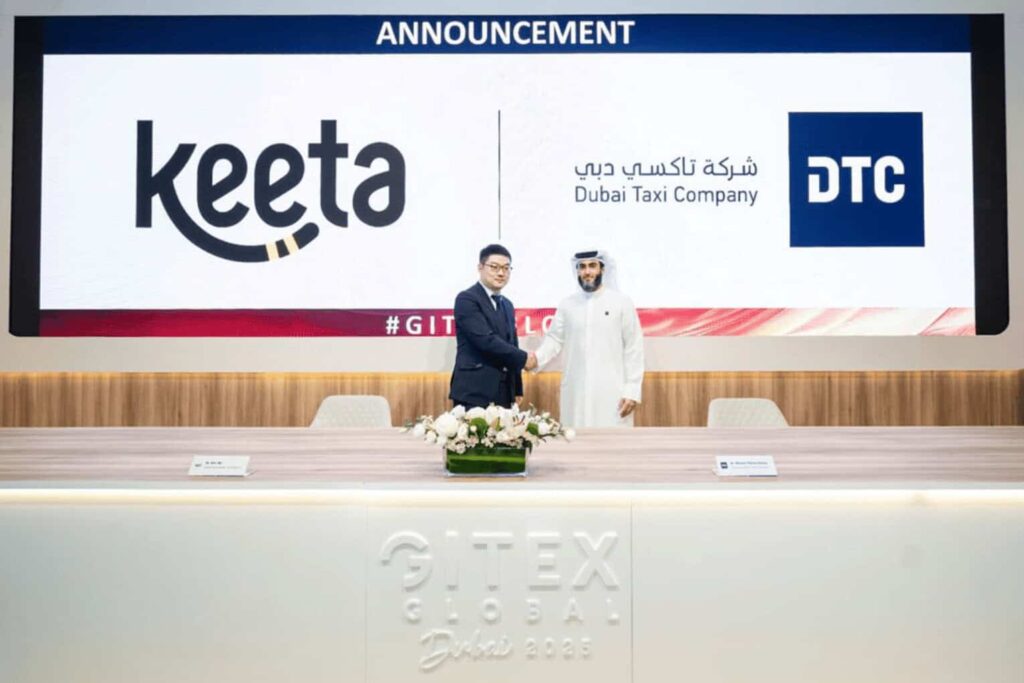
Dubai’s logistics and mobility sector is entering a new phase as the Dubai Taxi Company (DTC) signs a strategic agreement with Keeta, the newly launched delivery platform backed by Chinese tech giant Meituan. The partnership, announced during GITEX 2025, will see DTC provide large-scale last-mile delivery support to Keeta’s operations in Dubai, combining traditional delivery fleets with digital logistics technology. According to Arabian Business, the collaboration begins with a fleet of 150 motorbikes dedicated to Keeta’s network, with plans to increase that number to 500 by the end of the year. (https://www.arabianbusiness.com/industries/transport/dtc-to-provide-last-mile-solutions-to-keeta-dubais-new-delivery-company)

The deal underscores Dubai’s ambition to position itself as a leading regional hub for next-generation logistics. Keeta, which launched in Dubai earlier this year, marks Meituan’s first expansion into the Middle East. The Chinese company, one of the world’s largest food and service delivery platforms, is bringing its technology-driven logistics expertise to a market that is already growing at double-digit rates. Gulf News reports that the partnership will help Keeta scale its delivery operations rapidly, with DTC acting as a logistics enabler capable of providing fleet management, driver training, and regulatory compliance across Dubai. (https://gulfnews.com/business/markets/dubai-taxi-company-keeta-to-launch-smarter-faster-delivery-service-in-dubai-1.500305504)

For DTC, traditionally recognized for its passenger and ride-hailing services, this move represents a strategic diversification. The company has already invested heavily in digital systems and electric vehicles, aligning with Dubai’s vision of sustainable, smart mobility. Arabian Business notes that DTC’s delivery segment grew by more than 102 percent in the second quarter of 2025 compared to the previous year, generating AED 18.2 million in revenue. Analysts expect the new partnership with Keeta to bring in an additional AED 10 million within the next 12 months. (https://www.arabianbusiness.com/industries/transport/dtc-to-provide-last-mile-solutions-to-keeta-dubais-new-delivery-company)

As reported by Gulf Business, the collaboration is not limited to motorbike deliveries. It also includes plans to explore drone-based delivery systems, electric mobility, and autonomous vehicle deployment. These technologies could be gradually integrated into Dubai’s logistics ecosystem under the supervision of the Roads and Transport Authority (RTA). (https://gulfbusiness.com/dubai-taxi-company-chinas-keeta-partner/) Such developments are consistent with Dubai’s D33 economic strategy, which prioritizes advanced logistics, innovation, and sustainability as key drivers of growth.

In the initial phase, DTC will provide Keeta with operational support, dispatch technology, and maintenance services through its existing infrastructure. The long-term plan envisions a hybrid delivery system that blends conventional couriers with future-oriented solutions. According to Khaleej Times, this initiative could create more than 500 delivery jobs across Dubai by the end of 2025, a significant contribution to the city’s expanding gig economy. (https://www.khaleejtimes.com/uae/gitex-2025-bikes-dubai-taxi-deal)

Meituan’s decision to enter Dubai through Keeta is part of a wider global push to replicate its domestic success in international markets. In China, Meituan dominates local delivery with hundreds of millions of users and millions of daily deliveries. By launching in Dubai, Keeta aims to adapt its data-driven logistics model to a city known for efficiency, infrastructure, and consumer tech adoption. Truck & Fleet ME reports that the collaboration gives Keeta access to DTC’s regulated delivery system and a local network of trained riders, ensuring compliance with Dubai’s transport and safety standards. (https://truckandfleetme.com/news/dtc-as-a-deliverer-taxi-fleet-scaling-up-to-take-part-in-last-mile-logistics-race/)

From a policy perspective, Dubai’s government has been actively promoting private-public partnerships to enhance mobility services. TradeArabia highlights that the DTC-Keeta alliance fits neatly into Dubai’s strategy to modernize delivery systems through collaboration between established public entities and private-sector innovators. (https://www.tradearabia.com/News/329190/Dubai-Taxi-Company%2C-Keeta-partner-for-last-mile-delivery-solutions/MTR) This model allows both companies to benefit from regulatory clarity while pushing the limits of operational efficiency.

The UAE’s last-mile delivery market has grown rapidly over the past three years, fueled by booming e-commerce, grocery delivery, and quick-commerce startups. RedSeer’s 2025 report forecasts a 25 percent annual increase in UAE delivery volumes over the next five years, with the market expected to exceed USD 6 billion by 2029. (https://redseer.com/insights/uae-ecommerce-logistics-2025-report) This rapid expansion has intensified competition among players such as Talabat, Deliveroo, Noon Minutes, and Careem Express. Keeta’s arrival, supported by DTC, adds a new dimension to this race.

Gulf News reported earlier that Keeta plans to establish its regional headquarters in Dubai, creating around 350 jobs and integrating local SMEs into its logistics network. (https://gulfnews.com/business/markets/delivery-portal-keeta-to-set-up-uae-headquarters-creating-350-jobs-1.500288559) The company is already testing Meituan’s AI-powered dispatch and route optimization systems in the UAE to cut delivery times and reduce carbon emissions. This technology could make deliveries up to 20 percent faster, according to early trials cited by Arabian Business. (https://www.arabianbusiness.com/industries/transport/dtc-to-provide-last-mile-solutions-to-keeta-dubais-new-delivery-company)

DTC, meanwhile, is betting that its partnership with Keeta will strengthen its role in the rapidly evolving logistics chain. The company already manages more than 2,000 delivery motorbikes, and integrating these assets with Keeta’s technology could boost overall delivery capacity by nearly 25 percent. Truck & Fleet ME wrote that DTC’s leadership views this move as a turning point, positioning the firm as a full-spectrum mobility and logistics provider. (https://truckandfleetme.com/news/dtc-as-a-deliverer-taxi-fleet-scaling-up-to-take-part-in-last-mile-logistics-race/)

However, there are challenges ahead. Expanding the fleet to 500 motorbikes requires large-scale recruitment, consistent driver training, and robust maintenance operations. Regulatory issues around drone and autonomous deliveries also remain unresolved. Industry experts told Gulf Business that ensuring operational safety and compliance with Dubai’s traffic laws will be essential to sustaining the partnership’s growth. (https://gulfbusiness.com/dubai-taxi-company-chinas-keeta-partner/)

The partnership also aligns with Dubai’s sustainability goals. Both companies have confirmed that future phases of the project will include electric motorcycles and hybrid vehicles to reduce emissions. Dubai’s broader target is to have 30 percent of its transportation powered by clean energy by 2030. Arabian Business noted that DTC is already exploring partnerships with EV manufacturers to support this transition. (https://www.arabianbusiness.com/industries/transport/dtc-to-provide-last-mile-solutions-to-keeta-dubais-new-delivery-company)

Keeta’s collaboration with DTC represents more than just a business arrangement—it reflects Dubai’s emergence as a regional logistics and technology hub. The city’s blend of advanced infrastructure, supportive regulation, and tech-driven consumer behavior has made it a fertile ground for innovation. TradeArabia observed that partnerships like this one create a blueprint for how public and private entities can work together to modernize logistics in the Gulf. (https://www.tradearabia.com/News/329190/Dubai-Taxi-Company%2C-Keeta-partner-for-last-mile-delivery-solutions/MTR)

In the coming months, DTC and Keeta will focus on operational scaling, technology integration, and service quality. Analysts expect both firms to use this collaboration as a pilot for regional expansion into neighboring Gulf countries such as Saudi Arabia, Bahrain, and Oman. Gulf News suggested that Dubai’s leadership in transport innovation makes it the ideal launching pad for future Meituan-backed delivery ventures in the region. (https://gulfnews.com/business/markets/dubai-taxi-company-keeta-to-launch-smarter-faster-delivery-service-in-dubai-1.500305504)

As last-mile logistics becomes increasingly central to e-commerce success, Dubai’s example may soon set the tone for how global cities integrate smart mobility and delivery networks. The DTC-Keeta alliance is a microcosm of that shift—where technology, sustainability, and public-private synergy converge to define the next era of urban logistics.

Alibaba Cloud Opens Second Region

Alibaba Cloud, the digital technology and intelligence backbone of Alibaba Group, has announced the opening of its second overseas region, marking a major step in the company’s long-term strategy to expand its global cloud infrastructure. The new region aims to strengthen service resilience, improve latency, and support the growing demand for data localization and AI-driven services across international markets. (Yahoo News)

According to Alibaba’s statement, this second region will enable enterprises to deploy their workloads closer to end-users, particularly in markets that require compliance with local data regulations. The region will include a full range of cloud products from computing and storage to AI, database management, and security designed to help organizations accelerate digital transformation. The launch builds on Alibaba’s previous regional investments and signals a stronger commitment to compete in the global cloud arena, alongside industry leaders such as Amazon Web Services, Microsoft Azure, and Google Cloud.

In recent years, Alibaba Cloud has focused heavily on international diversification to balance slowing growth in its domestic Chinese market. The company already operates multiple availability zones across Asia, Europe, and the Middle East, offering scalable solutions to enterprises, developers, and startups. By adding another region, Alibaba reinforces its promise to provide global redundancy and higher uptime for mission-critical workloads.

Industry experts interpret this move as part of Alibaba’s broader attempt to re-establish its dominance in global cloud services following a challenging 2024. The firm has been restructuring internally, with renewed focus on profitability, AI integration, and cross-border partnerships. Analysts note that expanding infrastructure capacity could position Alibaba Cloud to capitalize on the rapidly growing demand for generative AI, real-time analytics, and IoT data management all of which depend on low-latency cloud infrastructure.

The newly launched region will also address regulatory and geopolitical challenges faced by multinational corporations. Many countries now enforce stricter data residency laws, requiring data generated within their borders to remain local. Alibaba’s distributed infrastructure offers flexibility for compliance while still connecting to its global backbone. This dual approach is becoming increasingly valuable as digital sovereignty concerns rise worldwide.

Alibaba Cloud representatives stated that the company will continue to focus on sustainable operations across its new facilities. The new data centers will incorporate advanced cooling systems and renewable energy sources where possible. Sustainability has become a key metric for competitiveness in the cloud sector, and Alibaba aims to reach carbon neutrality in its global operations by 2030.

In addition to hardware investments, Alibaba plans to expand its software and AI services within the new region. The company’s product suite including the Tongyi Qianwen large language model and MaxCompute big data engine will now be locally available, offering improved performance for regional customers. This localized infrastructure will also enable developers to build applications compliant with domestic AI ethics and data policies.

From a strategic perspective, Alibaba’s decision to open a second region demonstrates confidence in international growth opportunities despite regulatory headwinds. The company’s leadership has emphasized that foreign markets remain a top priority, particularly in Southeast Asia, the Middle East, and parts of Europe, where demand for enterprise cloud solutions continues to surge. The expansion also comes at a time when Chinese tech companies are increasingly seeking to diversify their revenue streams and reduce dependence on the domestic market.

Experts believe that Alibaba Cloud’s expanding presence could attract more partnerships with governments and private enterprises seeking scalable, AI-ready infrastructure. In addition, regional availability zones may foster local innovation ecosystems, encouraging startups to leverage Alibaba’s infrastructure for AI training, fintech applications, and smart city projects.

While Alibaba has not disclosed the financial details or location of its second region, reports suggest that it will serve as a central hub connecting multiple nearby markets. This design mirrors the company’s multi-region network approach, allowing customers to distribute workloads efficiently across geographies.

The move also highlights how competition in the global cloud market continues to intensify. AWS, Microsoft, and Google have all announced aggressive regional expansions in recent months. By launching a second overseas region, Alibaba is sending a message that it intends to remain a key player in this race not only as a service provider, but also as a technology innovator capable of building scalable, AI-optimized infrastructure.

Overall, the launch of Alibaba Cloud’s second region represents more than just a physical expansion. It reflects the company’s evolving strategy to align with global digital transformation trends, meet stricter data compliance demands, and contribute to a more distributed, resilient, and sustainable cloud ecosystem.

Germany Probes Temu Over Price Fixing

Germany’s Federal Cartel Office (Bundeskartellamt) has launched a formal inquiry into Temu, the Chinese-founded e-commerce platform, on suspicions that it may be illegally influencing merchants’ pricing strategies. The move raises questions about market fairness, competition, and how online marketplaces assert control over seller operations. Reuters

The Allegations: Controlling Merchant Prices

The Bundeskartellamt says it is investigating whether Temu has been imposing unfair or inadmissible requirements on third-party merchants’ pricing practices in Germany. According to authorities, these kinds of constraints could restrict competition and have knock-on effects on prices across other sales channels. Reuters President Andreas Mundt remarked that if the platform’s rules “conceivably impose inadmissible demands on merchants’ pricing,” such rules might constitute a serious distortion of market competition. Reuters+1

The inquiry is specifically targeted at Temu’s operator in Europe, Whaleco Technology Limited, which is headquartered in Dublin and runs Temu’s platform for merchants in Germany. Reuters+1 By opening proceedings, regulators aim to determine whether Temu’s commercial practices infringe on German and EU competition laws. Reuters

If found guilty, the controls imposed by Temu could be deemed anticompetitive, resulting in penalties and regulatory reforms. Officials warn that behavior that constrains merchant autonomy can lead to price inflation across rival platforms too, since sellers lose flexibility to set competitive pricing elsewhere. The Business of Fashion+1

Temu’s Response & Platform Scale

In response to the investigation, Temu issued a statement asserting its commitment to legal compliance in all markets where it operates. The company expressed confidence that any issues raised can be resolved through cooperation with authorities. Reuters+1

Temu’s presence in the German market is relatively recent. The platform has been open to German merchants for about a year, and currently has approximately 19.3 million active users in Germany alone. Across Europe, the platform reports more than 100 million monthly users. Reuters+1 Analysts see Temu as one of the fastest-growing discount e-commerce players in the region, posing serious competition to established online marketplaces. The Business of Fashion+1

The Broader Implications for Marketplaces

This investigation is part of a broader regulatory spotlight on how large e-commerce platforms exert influence over their sellers. Europe has increasingly scrutinized marketplace practices from algorithmic rules to fee structures and pricing mandates. The Guardian+1 The EU has already launched separate inquiries into Temu regarding consumer product safety and illegal listings, citing concerns that the platform might violate the Digital Services Act (DSA). The Guardian

In Germany, the Handelsverband Deutschland (HDE), a major trade association, has welcomed the cartel office’s action. The HDE had earlier filed a complaint alleging that Temu constrained merchants by setting maximum price ceilings at 85% of prices on competing platforms effectively limiting sellers’ pricing freedom. DIE WELT+1 The HDE argues that such constraints undermine free competition and harm both sellers and consumers. DIE WELT

If Temu is found to be violating competition law, the consequences could include fines, mandatory changes in marketplace policies, and stricter oversight from regulators. It may also prompt other jurisdictions to launch similar probes, especially in the EU’s increasingly assertive regulatory environment. The Guardian+1

Risks, Challenges, and What to Watch

One key challenge for investigators will be proving that Temu’s rules qualify as “inadmissible demands” under competition law. Differentiating between permissible marketplace policies and illegal price controls requires careful legal and economic analysis.

Another complexity lies in cross-border operations: Whaleco’s location in Dublin adds jurisdictional layers, especially given EU law coordination and digital single market regulations. Regulators will need to map out how German law, EU competition rules, and Temu’s internal rules interact.

Observers will also watch how decisive the Bundeskartellamt is in terms of interim measures. Will they demand Temu to halt certain practices while the investigation continues? Will they require updates to merchant contracts? Such moves could shape the broader operating model for large digital marketplaces.

Moreover, the reputational cost for Temu is nontrivial. A finding of anti-competitive behavior could undermine trust among merchants and users alike, slowing adoption in key markets. On the other hand, if Temu cooperates and revises its practices, it might emerge with a more sustainable, regulation-compliant model.

Context: Rising Scrutiny on E-Commerce Platforms

Over recent years, consumer protection and digital market regulation have become central to European policy. The Digital Markets Act (DMA), Digital Services Act (DSA), and increased national oversight have made regulators more aggressive in policing platform power. The Guardian+2Українські Національні Новини (УНН)+2 Platforms are under pressure to ensure transparency, fairness, and consumer safety.

Temu is not alone under scrutiny. Other global marketplaces have faced probing over their pricing, algorithmic biases, and obligations toward third-party sellers. The Temu case may serve as a precedent for further investigations into how marketplaces balance control with fairness.

Conclusion

Germany’s decision to probe Temu signals heightened regulatory vigilance over how e-commerce platforms manage their internal rules and relationships with sellers. If the Bundeskartellamt finds that Temu’s practices violate competition law, it could force major changes not only in Temu’s business model but across the industry. Regardless of the outcome, this case stands as a landmark in the evolving landscape of digital trade oversight.

Quivo and GWC Partner for Gulf E-Commerce Expansion

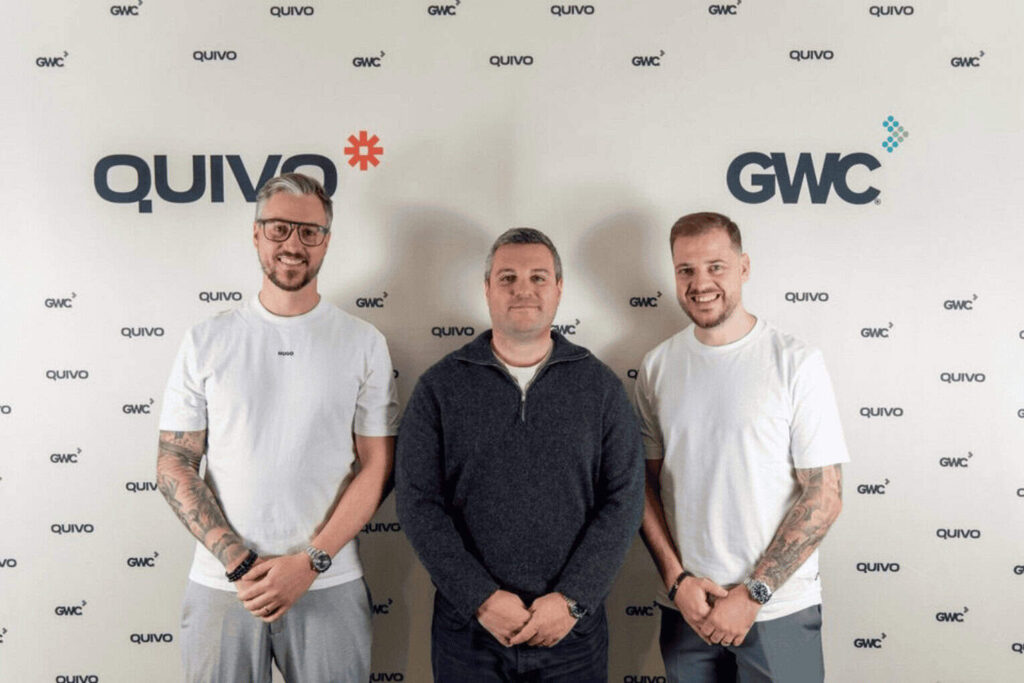
In a move signaling the intensifying integration of technology and logistics in the Gulf region, European scale-up Quivo has joined forces with MENA logistics leader GWC to deliver state-of-the-art e-commerce fulfillment services across the Gulf States. The strategic alliance, backed by an investment of EUR 5.2 million from GWC, aims to support cross-border and intra-GCC commerce across Qatar, the United Arab Emirates, and Saudi Arabia. (Source press release via Kommunikasjon NTB / news aktuell)

A Strategic Investment for Regional Reach

The new partnership is not just symbolic: the investment from GWC equips Quivo to deploy its fulfillment stack in warehouses across the Gulf, leveraging GWC’s established infrastructure and market presence. The first facility in Qatar is already running Quivo’s software, and additional hubs in Dubai and Saudi Arabia are set to follow soon.

Georg Weiß, Co-Founder & CEO of Quivo, remarked that the collaboration gives Quivo an ideal gateway into one of the fastest-growing markets in the world. His co-founder Christoph Glatzl added that together they will enable brands to expand within the GCC in a seamless way, reaching millions of digitally savvy consumers for the first time.

By aligning Quivo’s fulfillment technology with GWC’s regional logistics know-how, the deal promises to simplify operations for global and regional brands seeking presence in the Gulf.

Gulf E-Commerce Market: Poised for Explosive Growth

The timing of this partnership is telling. The Gulf Cooperation Council (GCC) region’s e-commerce market is projected to nearly double by 2029, reaching an estimated USD 47 billion.

Within that projection:

  • In Saudi Arabia, forecasts suggest growth from USD 10 billion in 2022 to USD 23 billion by 2027

  • In the UAE, from USD 12.3 billion upward to USD 17.2 billion

  • In Qatar, from USD 1.8 billion to USD 3.5 billion

These forecasts, coupled with near-universal internet penetration (over 99%) and a youthful, digitally engaged population, make the Gulf region uniquely attractive for e-commerce expansion.

GWC’s Acting Group CEO, Matthew Kearns, underscored that by bringing Quivo onboard, the firm can now offer customers a full fulfillment solution that includes storage, processing, and last-mile delivery.

What Each Partner Brings to the Table

Quivo comes equipped with a proven software and process backbone. It already operates a network of six warehouses across Austria, Germany, France, the UK, and the USA, and has experience scaling international brands across continents.

GWC, as a logistics market leader in Qatar with deep regional insights and infrastructure, complements Quivo’s technological edge with physical reach and local know-how. This gives the alliance a powerful blend of tech + ground capabilities.

Together, they aim to reduce friction in cross-border trade. For example, European brands could leverage Quivo’s logistics systems to enter the Gulf market with minimal overhead, while GWC customers can access European and U.S. fulfillment capabilities more readily.

The Broader Impacts and Industry Trends

This partnership is emblematic of a broader shift in global logistics: the merging of technology, regional knowledge, and commerce. In recent years, tech-enabled logistics scaleups have reshaped how brands scale internationally. The Quivo GWC deal takes this trend and localizes it to the Gulf, where fast growth and digital adoption are fueling demand for sophisticated fulfillment services.

From a competitive standpoint, it puts pressure on other regional logistics providers to upgrade their tech stacks or partner with tech innovators. Brands that lack an agile fulfillment strategy may find themselves at a disadvantage in navigating cross-border regulations, customs, and delivery expectations in the Gulf.

Further, the partnership helps democratize access to leading fulfillment infrastructure. Smaller brands (especially startups and SMEs) often lack capital to build global warehouses. By plugging into Quivo+GWC, such firms might scale more swiftly across the GCC and beyond, bridging Europe and the Gulf more seamlessly.

Challenges and Considerations

While the opportunity is substantial, the path is not without obstacles. Regulatory complexity, customs processes, and cross-border taxation frameworks remain major hurdles in the region. Also, competition is increasing: regional logistics giants and global players alike are eyeing the same prize.

Ensuring data security, integration between disparate systems, and smooth cross-border operations will test both Quivo and GWC. They must also tailor offerings to local consumer expectations—fast delivery, returns management, and real-time tracking are becoming table stakes in e-commerce.

What to Watch Next

In the coming months, observers will be watching the rollout of Quivo’s software in Dubai and Saudi Arabia, and whether new warehouse partnerships emerge under this alliance. It will also be telling to see how many inbound and intra-GCC clients sign up for end-to-end logistic offerings.

Another metric to watch is how quickly Quivo and GWC can streamline customs, duties, and last-mile delivery in each target country. Their success in these areas will indicate whether this model can scale further across other MENA markets.

Lastly, as in many recent tech-logistics partnerships, success will likely hinge on managing the human side: training teams across different geographies, maintaining quality control, and adapting operations based on feedback.

If the Quivo–GWC alliance can execute on its plans, it has the potential not only to accelerate e-commerce across the Gulf but to set a blueprint for tech-driven fulfillment in emerging markets globally.