WORLDEF Prime Antalya 2026 - Upcoming Event

Register Now

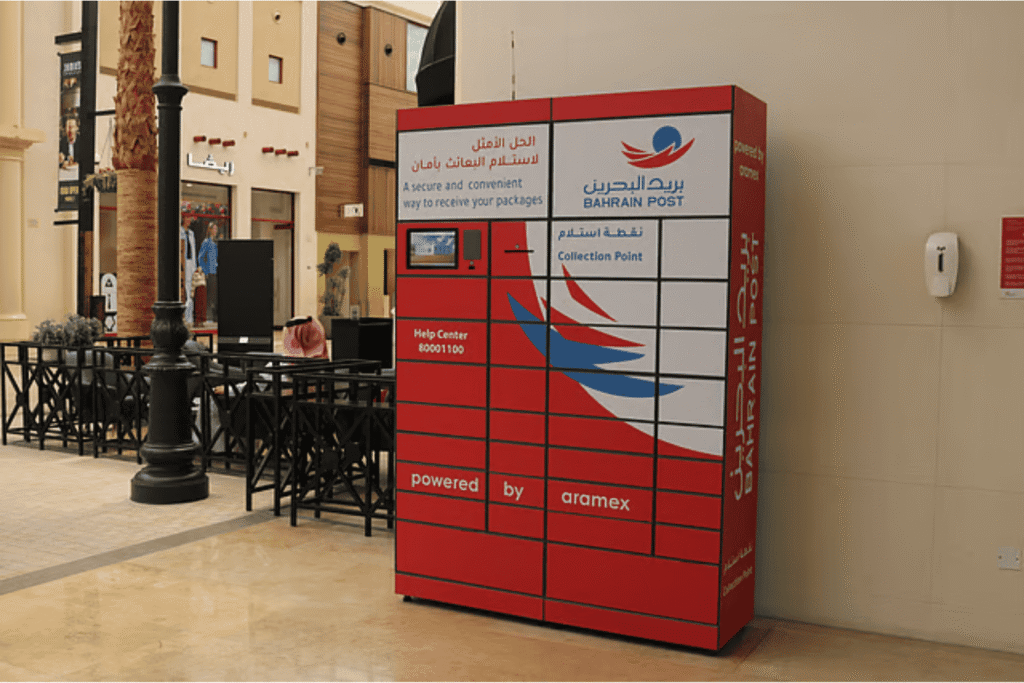
Aramex and Bahrain Post Launch Smart Parcel Boxes

Aramex and Bahrain Post have jointly launched the Kingdom’s first national network of smart electronic parcel boxes, signaling a major step forward in Bahrain’s logistics infrastructure and last-mile delivery innovation. The initiative aims to make parcel collection faster, more secure, and more convenient for consumers and businesses across the country.
(gulfnews.com)

The smart parcel boxes, owned and managed by Bahrain Post and powered by Aramex’s delivery technology, are being deployed at strategic locations such as shopping centers, residential communities, and transport hubs. The system allows users to collect parcels 24 hours a day by entering a digital access code received via SMS or mobile app notification once their shipment is ready.

This collaboration between a national postal authority and a global logistics company is part of Bahrain’s broader effort to modernize postal and e-commerce infrastructure in line with its Vision 2030 digital transformation agenda. The project reflects growing regional momentum toward contactless and tech-driven logistics services.

Improving the Last-Mile Delivery Experience

According to Aramex, the new smart box system will significantly improve last-mile efficiency a critical challenge for courier companies and online retailers. Instead of relying solely on home deliveries, customers can now choose to have packages dropped off at their preferred collection point.

Once a parcel is placed in a locker, the recipient receives a notification with a unique PIN or QR code. They can then pick up their order at any time, avoiding missed delivery attempts and reducing dependency on manual scheduling.

Bahrain Post said this feature will help reduce delivery delays and operational costs. It also aims to support the country’s growing e-commerce ecosystem, where fast and flexible delivery options are increasingly seen as a competitive advantage.

Quotes from Project Leaders

Yanal Anz, General Manager of Aramex Bahrain, described the initiative as “a milestone in Bahrain’s logistics landscape.” He noted that combining Aramex’s regional expertise with Bahrain Post’s national network will create a more advanced, customer-centric delivery system.

“This partnership is about bringing the best of both worlds global logistics technology and national postal reach. It will allow customers to enjoy reliable, self-service parcel collection with real-time visibility and full security,” Anz said.

Officials from Bahrain Post emphasized that this collaboration demonstrates the organization’s commitment to digitizing its operations and expanding services beyond traditional mail handling. “We’re creating an environment where digital logistics solutions empower businesses, retailers, and citizens alike,” a spokesperson said.

Smart Technology Integration

Each electronic box unit features climate-resistant construction, camera surveillance, and digital locking mechanisms to ensure security. The software powering the lockers is fully integrated with Aramex’s delivery management system, providing real-time status updates to both senders and recipients.

The system is also designed to handle multiple parcel sizes, supporting deliveries ranging from small envelopes to large boxes. Future updates may include dedicated compartments for temperature-sensitive goods such as pharmaceuticals and groceries an innovation that could benefit Bahrain’s healthcare and food retail industries.

Customers can access locker locations through the Aramex mobile app or Bahrain Post’s website. The platform provides navigation assistance, locker availability, and pickup time scheduling to improve the user experience.

Economic and Environmental Impact

The introduction of smart parcel lockers is also expected to bring economic and environmental benefits. By reducing the number of repeated delivery attempts, Aramex and Bahrain Post aim to cut fuel consumption and lower carbon emissions associated with urban logistics.

Industry analysts estimate that automated last-mile systems like these can reduce delivery costs by up to 30 percent while improving service reliability. For Bahrain, this innovation aligns with its sustainability goals and digital economy initiatives.

As e-commerce continues to expand across the Gulf region, efficient last-mile infrastructure has become essential. The Gulf Cooperation Council (GCC) countries have seen online retail sales grow by more than 20 percent annually in recent years, with Bahrain emerging as one of the most connected markets per capita.

The smart parcel initiative is expected to strengthen Bahrain’s position as a regional logistics hub, offering local businesses a competitive edge through improved delivery convenience and customer satisfaction.

Regional Context

Across the Middle East, demand for automated delivery solutions is rapidly increasing. The COVID-19 pandemic accelerated digital adoption and highlighted the need for contactless logistics options. Countries like the United Arab Emirates, Saudi Arabia, and Qatar have already begun implementing similar systems, often in partnership with international logistics providers.

Aramex, headquartered in Dubai, has been a key driver of innovation in this space. The company operates advanced digital fulfillment systems across multiple markets and continues to invest in technologies that enhance speed, transparency, and sustainability.

In Bahrain, this collaboration represents the next step in the company’s regional growth strategy, reinforcing its commitment to public-private partnerships that promote logistics modernization.

Consumer Benefits and Future Plans

For consumers, the benefits of the smart parcel box system go beyond convenience. It also enhances privacy and reliability, ensuring that parcels remain secure until collected. Shoppers no longer need to wait at home for couriers or worry about failed delivery attempts a common frustration in dense urban areas.

Businesses, especially small and medium-sized e-commerce merchants, stand to gain from reduced delivery turnaround times and greater customer satisfaction. Retailers can offer same-day or next-day delivery options using locker-based distribution, improving competitiveness against international platforms.

Aramex and Bahrain Post have indicated that the initial rollout will cover key areas in Manama and Muharraq before expanding to other cities. The long-term goal is to establish a fully connected smart logistics ecosystem linking retail partners, delivery fleets, and end consumers.

The companies are also exploring the integration of renewable energy solutions into the locker network, such as solar-powered units, to reduce environmental impact.

A Model for Regional Postal Innovation

Industry observers say the Bahrain project could serve as a model for other postal organizations in the Middle East seeking to modernize their services. By leveraging private-sector technology and data-driven management systems, postal authorities can reinvent themselves as competitive players in the e-commerce logistics chain.

The introduction of smart parcel lockers is part of a global trend where postal services evolve into full-service logistics providers capable of competing with private couriers. It also reflects growing consumer demand for flexible, tech-enabled delivery options that fit modern lifestyles.

As Bahrain continues to position itself as a regional logistics and fintech hub, initiatives like this underscore its forward-looking approach to public-sector innovation.

Conclusion

The launch of Bahrain’s first nationwide smart parcel locker system represents a turning point in how packages are delivered and received in the Kingdom. Through its partnership with Aramex, Bahrain Post is introducing a digital, self-service solution that combines security, efficiency, and sustainability.

As e-commerce volumes grow and customer expectations evolve, smart infrastructure projects like this will play a crucial role in shaping the logistics of the future. The initiative not only strengthens Bahrain’s delivery network but also sets a new regional standard for postal modernization and public-private collaboration.
E-Commerce Firms Shift to Postal Routes

Global e-commerce companies are restructuring their logistics networks after the United States removed its long-standing “de minimis” tariff exemption for low-value imports. The policy change, introduced in mid-2025, is already reshaping cross-border shipping behavior, with many online retailers now turning to postal systems as an alternative to commercial express carriers.
(indexbox.io)

For years, the de minimis rule allowed small consumer shipments valued at under $800 to enter the U.S. without customs duties or extensive paperwork. The system became a cornerstone of global e-commerce, enabling foreign sellers to ship goods directly to U.S. buyers efficiently and cheaply. However, the U.S. government’s decision to eliminate this exemption has introduced new complexity into import procedures for millions of low-value parcels.

The result has been swift: express logistics networks such as UPS, FedEx, and DHL now face additional tariff reporting obligations, higher administrative costs, and potential delays for shipments that once moved freely through customs. In contrast, postal networks which operate under separate international agreements have remained exempt from several of the new reporting requirements. As a result, they have become a preferred alternative for many cross-border merchants.

Shift in Logistics Strategy

Following the regulatory change, e-commerce exporters in China, Europe, and Southeast Asia have increasingly rerouted small parcels through national postal operators. Postal networks, which historically handled lower-value shipments, are once again becoming vital conduits for international trade.

According to IndexBox, this trend is especially pronounced among businesses selling fashion, electronics accessories, beauty products, and small household goods. These categories rely heavily on low-margin, high-volume shipments the exact segment most affected by the loss of de minimis privileges.

“Postal services are now serving as a regulatory safety valve,” said Ryan Tanner, director of compliance at logistics firm Flexport. “While they may not always be faster or cheaper, they offer a simpler legal pathway for small packages under $2,500.”
(indexbox.io)

Tanner added that express carriers must now process every low-value parcel as a formal customs entry, adding significant time and cost. Postal deliveries, by contrast, benefit from simplified declarations under international postal treaties, allowing smoother passage through customs channels.

Market Impact Since the August 2025 Change

Since the new rules came into effect in August 2025, logistics providers have reported disruptions across major express hubs. UPS and FedEx terminals in Kentucky, California, and New Jersey have seen backlogs of parcels awaiting new classification and tariff processing. The sudden administrative burden has slowed throughput and forced many retailers to look for alternate shipping paths.

Some large online marketplaces have already begun adjusting their logistics playbooks. Sellers on platforms like AliExpress, Temu, and Shein have reportedly experimented with hybrid shipping models — combining postal entry for smaller items with express freight for larger or high-value shipments. The result is a fragmented logistics environment, where retailers must constantly balance cost, speed, and compliance.

Analysts from IndexBox suggest that while postal networks may temporarily absorb a surge in volume, capacity limits could emerge as a new challenge. “If millions of parcels shift toward postal systems, it may create bottlenecks similar to those seen during the pandemic,” the report warned. “However, the overall regulatory relief provided by postal channels continues to make them an attractive short-term solution.”

Policy and Regulatory Background

The U.S. de minimis exemption was originally intended to streamline trade by exempting small shipments from duty and customs clearance. But as e-commerce exploded, the system came under political pressure. Lawmakers and domestic manufacturers argued that foreign sellers, particularly from China, were exploiting the loophole to undercut U.S. competitors and flood the market with untaxed goods.

By removing the exemption, U.S. authorities aimed to level the playing field and ensure that all imports regardless of value are properly documented and taxed. The new framework requires that all commercial shipments entering the country include full tariff classification, origin certification, and importer data.

This policy overhaul has significant implications for international trade flows. Express carriers, who previously benefited from automated clearance for small parcels, must now handle them under the same regime as larger freight. In contrast, international postal shipments are still governed by the Universal Postal Union (UPU) framework, which allows a lighter customs process.

As a result, companies shipping through postal networks can still move goods with fewer administrative hurdles, as long as they comply with basic data requirements for origin and value.

Economic and Operational Implications

The shift toward postal networks is altering the economics of global e-commerce logistics. While postal rates have historically been higher for international parcels, they now represent a lower overall cost when factoring in customs management and clearance fees.

For small and medium-sized online retailers, this makes postal shipping an appealing stopgap solution. Many of these businesses lack the infrastructure or compliance expertise to navigate the full customs reporting requirements imposed on express carriers.

At the same time, logistics experts caution that postal routes are not without risks. Delivery times can be slower, tracking less detailed, and compensation for lost packages limited. Nonetheless, for high-volume merchants dealing in inexpensive goods, the trade-off often makes sense.

IndexBox noted that some national postal operators including those in Singapore, the Netherlands, and South Korea have begun expanding their partnerships with e-commerce companies to handle increased demand. In some cases, they are launching dedicated e-commerce divisions focused on cross-border shipping to the United States.

International Reactions and Adjustments

The change in U.S. customs policy has reverberated globally. Several foreign postal services initially suspended shipments to the U.S. market, citing uncertainty over the new compliance requirements. According to IndexBox, roughly 90 postal operators curtailed or delayed shipments during the initial transition period.

However, as regulatory guidance became clearer, many have resumed operations under revised protocols. Postal agencies are now working closely with customs authorities to ensure that parcel data is transmitted electronically in advance — a measure that helps maintain efficiency despite the more stringent trade environment.

The move has also reignited debate over the role of postal treaties in the global economy. Some U.S. lawmakers argue that maintaining laxer customs rules for postal shipments could perpetuate an uneven playing field, while others contend that postal routes are essential for small business competitiveness and consumer choice.

Future Outlook

Experts predict that postal networks will continue to attract a larger share of e-commerce parcels in the coming year, especially as companies adapt to the end of de minimis privileges. However, over-reliance on postal channels could strain infrastructure and expose retailers to longer delivery times during peak seasons.

Industry analysts expect logistics providers to develop hybrid models that combine postal entry for low-value goods with express channels for premium deliveries. Some may even partner with national postal agencies to create private-label postal services that blend the best features of both systems.

For policymakers, the challenge lies in balancing fair trade enforcement with the practical realities of global digital commerce. As IndexBox concluded, the ongoing evolution of postal logistics is a sign that global supply chains are far more flexible and far more reactive than previously thought.

Conclusion

The elimination of the U.S. de minimis exemption has forced e-commerce firms to rethink how they ship products into one of the world’s largest consumer markets. By pivoting to postal networks, many retailers are seeking a regulatory safe harbor that maintains cross-border efficiency without inviting excessive cost or risk.

Whether this adaptation becomes a long-term fixture or a temporary workaround will depend on how the U.S. and its trading partners refine customs cooperation in the coming months. For now, the postal route stands as the most pragmatic if imperfect solution in an increasingly complex e-commerce landscape.

Instacart Expands Retail Tools

Instacart has announced the launch of a major update to its white-label e-commerce platform, introducing new business-focused features designed to support retailers and their corporate customers. The enhancements will allow retailers using Instacart’s Storefront and Storefront Pro solutions to offer advanced business ordering options directly on their own branded websites and apps.
(prnewswire.com)

With this rollout, Instacart aims to bridge the gap between consumer-focused online shopping and business procurement needs, giving retailers access to tools that make bulk purchasing and organizational management more efficient. The expansion extends the capabilities of Instacart Business, which was previously available only through the company’s own app.

Bringing Business Shopping to Retailers’ Platforms

Instacart’s new features are specifically designed for businesses such as offices, restaurants, schools, and hospitality operators that rely on recurring large-volume orders. These organizations will now be able to order directly from participating retailers’ e-commerce sites without needing to use a separate Instacart interface.

The integration enables business customers to create accounts for multiple users, assign roles and permissions, track spending, and manage approvals all within a single digital platform. This marks a significant shift for retailers that want to capture more B2B demand through their existing online presence.

Among the key functions included in this release are:

  • Bulk and case-level purchasing options for recurring orders

  • Multi-user account setup with defined roles (admin, buyer, approver)

  • Custom dashboards showing order history and spending patterns

  • Budget management and approval workflows

  • Automatic receipt tracking and export for accounting

  • Easy reorder guides based on frequently purchased items

In addition, business customers using Instacart+ can share their subscription benefits with team members, including free delivery on qualifying orders and 2 percent cashback on purchases over $250.

Empowering Retailers to Capture B2B Growth

According to Instacart, more than one million business customers have already used its marketplace to place bulk orders in the past year. The new rollout will allow retailers to tap directly into that demand, turning their own digital storefronts into multi-segment platforms that serve both households and enterprises.

Ryan Hamburger, Vice President of Retail Partnerships at Instacart, said the company’s mission is to help retailers expand their customer base by adding enterprise-grade capabilities. “These features bring the power of Instacart Business to retailers’ own websites, opening new revenue opportunities while deepening customer loyalty,” he said.

Hamburger added that many small and mid-sized businesses prefer to buy directly from retailers they already know and trust, but they often need purchasing tools that go beyond standard consumer options. “We’re enabling our retail partners to meet that demand by providing advanced tools within their existing branded experience.”
(prnewswire.com)

How It Works

Instacart’s Storefront and Storefront Pro products serve as turnkey e-commerce solutions that power the digital operations of hundreds of grocery chains, convenience stores, and specialty retailers. These tools allow companies to run their own online shops using Instacart’s backend technology including inventory integration, logistics, and fulfillment while maintaining full control over their brand identity.

The new business features will appear as part of these systems, allowing retailers to decide how to customize them. Business customers can sign in through a retailer’s website, select products in bulk, set spending limits, and use company payment methods. The platform also integrates with accounting systems for simplified expense management.

By embedding these capabilities into the retailer’s own e-commerce interface, Instacart enables businesses to order supplies directly from trusted stores like Woodman’s Markets, which is among the first to deploy the new functionality.

A Shift Toward B2B E-Commerce

This development comes at a time when the boundaries between consumer and business shopping are blurring. The pandemic accelerated digital adoption among companies that previously relied on offline wholesale distributors, and many are now seeking flexible online solutions.

Instacart’s initiative reflects a growing recognition that retailers can serve two key audiences at once everyday consumers and organizational buyers. By incorporating features like role-based access and approval workflows, Instacart allows these retailers to attract businesses looking for convenience and control over procurement.

Industry analysts have noted that this strategy positions Instacart as a hybrid player straddling both B2C and B2B markets. The platform already handles millions of grocery and retail deliveries each week; adding B2B functionality could substantially increase transaction volumes and merchant engagement.

Benefits for Retail Partners

For retailers, the new offering means access to enterprise-level features without the need for costly in-house development. It also provides an avenue to strengthen customer retention by catering to a broader base of clients.

Businesses that order from retailers through Instacart-powered platforms gain access to transparency tools including detailed invoices, cost summaries, and budget monitoring making it easier to manage corporate spending. Retailers, in turn, benefit from better data visibility on their high-value customers and can tailor promotions or loyalty programs accordingly.

The Storefront Pro version gives retailers further customization options, allowing them to embed these features into both web and mobile applications under their own branding.

Early Adopters and Rollout Plans

Several Instacart retail partners have already begun activating the new tools. Woodman’s Markets, a Wisconsin-based supermarket chain, is among the first to implement the system. Early feedback has been positive, particularly regarding ease of setup and integration with existing ordering workflows.

Instacart says the features will become available to all Storefront and Storefront Pro users over the coming months, and retailers can choose to activate them gradually or all at once. The company is also offering onboarding support and analytics tools to help partners understand how business shoppers use their platforms.

Instacart’s Broader Strategy

The update is part of Instacart’s wider plan to evolve beyond a pure delivery service into a full-stack technology partner for retailers. Over the past few years, the company has invested in white-label solutions, data analytics, and in-store technology to diversify its revenue streams.

By empowering retailers to run both consumer and business e-commerce operations from a single interface, Instacart strengthens its value proposition as a platform provider rather than just a delivery intermediary.

The company believes that expanding into business ordering could unlock substantial growth potential, especially as small businesses increasingly prefer online sourcing for convenience and cost control.

Future Outlook

Instacart’s new business feature set represents a broader shift in retail technology toward more flexible and scalable digital infrastructure. Analysts expect the move to encourage more retailers to integrate Instacart’s systems as they adapt to changing market dynamics.

With corporate customers prioritizing efficiency, data accuracy, and ease of use, these tools provide a new level of sophistication to the traditional grocery and retail experience. The combination of logistics automation, spend management, and user-level customization positions Instacart’s white-label platform as one of the most advanced in the sector.

The company plans to continue refining the system with additional features like automated replenishment, integration with enterprise resource planning (ERP) systems, and AI-powered demand forecasting.

Conclusion

Instacart’s launch of new business-focused tools for retailer e-commerce platforms underscores the company’s transformation into a comprehensive technology partner for the retail industry. By bringing enterprise features such as bulk purchasing, team permissions, and spend control to local and national retailers, Instacart enables them to capture a fast-growing segment of digital commerce.

The move expands the company’s reach beyond consumers and into the heart of business procurement helping retailers modernize their operations and compete more effectively in an increasingly digital marketplace.

Simple Energy Joins Amazon and Flipkart

Indian electric vehicle manufacturer Simple Energy has officially entered the e-commerce space through new partnerships with Amazon India and Flipkart. The company announced that customers across the country can now browse, book, and purchase its flagship electric scooters entirely online, marking a major step toward a more accessible and digitally driven retail model.
(maritimegateway.com)

This move signals a significant shift in the way electric two-wheelers are sold in India. By collaborating with leading online marketplaces, Simple Energy aims to reach customers in regions where traditional dealerships are limited or absent. The strategy aligns with the company’s broader vision of making sustainable mobility solutions widely available while simplifying the buying process through trusted digital platforms.

Launch and Festive Offers

The company chose to launch its e-commerce initiative during India’s festive season, a period known for increased consumer spending and major retail promotions. To celebrate the partnership, Simple Energy introduced exclusive online offers across both Amazon and Flipkart, encouraging first-time electric vehicle buyers to take advantage of limited-time discounts.

On Amazon India, customers can avail themselves of discounts of up to 14,500 rupees when paying with HDFC Bank credit cards, 8,750 rupees with other major credit cards, and 16,434 rupees with Amazon Pay ICICI Bank cards. These offers are valid until October 20, 2025.

On Flipkart, the company announced price reductions of 7,500 rupees on the Simple One model and 5,000 rupees on the Simple OneS. Additional savings are available for SBI cardholders and Flipkart Axis Bank credit card users, alongside 12-month no-cost EMI plans. The Flipkart promotional campaign will continue until October 24, 2025.

These incentives are designed to make electric mobility more affordable for a wider audience, particularly younger and tech-savvy consumers who are comfortable shopping online.

A New Step in Digital Retail

Simple Energy’s founder and chief executive officer, Suhas Rajkumar, said the decision to move into e-commerce is part of the company’s long-term plan to modernize the customer experience. According to Rajkumar, the brand’s mission is to “bring electric mobility to every doorstep in India” by blending digital convenience with sustainable technology.

He explained that while Simple Energy has been expanding its physical retail footprint, online sales will play a complementary role in reaching Tier-2 and Tier-3 cities. “We recognize that many customers in smaller towns want access to premium electric vehicles but may not have a showroom nearby. Through Amazon and Flipkart, we can offer them a seamless, tech-first purchasing journey from discovery to doorstep delivery,” he said.

Rajkumar added that the partnership symbolizes a new era for Indian electric vehicle retailing. “The festive season represents progress and optimism. By entering e-commerce at this moment, we want to celebrate innovation and make EV ownership more accessible than ever.”

Flagship Products on Offer

Simple Energy’s online storefronts feature two key models: the Simple One Gen 1.5 and the Simple OneS. Both are built to deliver long range, efficient performance, and cutting-edge features at competitive prices.

The Simple One Gen 1.5 is positioned as the company’s premium scooter, offering a claimed range of up to 248 kilometers per charge (IDC) and acceleration from 0 to 40 kilometers per hour in just 2.77 seconds. It includes a 5-kilowatt motor, a high-capacity battery system, and intelligent performance management software.

The scooter also comes equipped with modern features such as 30 liters of under-seat storage, regenerative braking, TPMS, USB charging ports, smartphone app integration, and over-the-air software updates. The ex-showroom price in Bengaluru starts at approximately 1,71,944 rupees, excluding the charger.

The Simple OneS model offers slightly lower specifications at a more accessible price point, making it suitable for city commuters looking for sustainable and economical transport. Both scooters are available for home delivery through Amazon and Flipkart, with the same warranties and service coverage provided at Simple Energy’s authorized centers.

Streamlining Distribution Through Digital Channels

Traditionally, electric vehicle manufacturers in India have relied heavily on physical dealerships for sales and after-sales support. However, this approach often limits market penetration in smaller towns and rural regions. By launching through two of India’s largest e-commerce platforms, Simple Energy aims to bypass these constraints.

This new digital retail model allows customers to complete the purchase online, including booking, payment, and delivery scheduling. Vehicles purchased through Amazon or Flipkart will be delivered directly from the company’s network of logistics partners, ensuring faster fulfillment and wider geographic coverage.

Industry analysts note that this strategy gives Simple Energy an edge in scaling quickly without the high fixed costs associated with dealership expansion. It also aligns with consumer trends toward online vehicle discovery and digital financing options.

Expanding Reach Across India

Simple Energy’s e-commerce entry complements its ongoing retail and service expansion plans. The company currently operates showrooms and service hubs in major cities including Bengaluru, Chennai, Hyderabad, and Pune, with additional locations under development. Through Amazon and Flipkart, the brand will now be accessible to customers in dozens of smaller cities where physical infrastructure is still being built.

The manufacturer also plans to establish a nationwide delivery network that integrates both online and offline channels. Customers purchasing online will be able to choose between home delivery or pickup from local partner centers once operations expand further.

Rajkumar said this hybrid approach allows Simple Energy to balance scale and personalization: “E-commerce will help us reach more customers faster, but we remain committed to maintaining the personal touch of post-sale support through our service network.”

Broader Industry Context

Simple Energy’s move reflects a broader shift in India’s electric vehicle market, where manufacturers are increasingly turning to online platforms to reach a growing base of digital-first consumers.

E-commerce integration not only reduces entry barriers for potential EV buyers but also provides real-time data on customer behavior and demand patterns. Companies like Ola Electric and Ather Energy have already experimented with direct online sales, while Simple Energy’s dual partnership with both Amazon and Flipkart positions it to leverage India’s largest digital retail ecosystems simultaneously.

The Indian electric two-wheeler market is projected to grow at a compound annual rate of over 25 percent through 2030, driven by government incentives, falling battery costs, and increased environmental awareness. By expanding into online channels, Simple Energy hopes to capture a significant share of that growth, especially in the mid-range and premium scooter segments.

Outlook and Future Plans

The company’s leadership confirmed that this e-commerce entry is part of a larger expansion roadmap. Over the next 12 months, Simple Energy aims to strengthen its supply chain capacity, scale up production at its Hosur manufacturing facility, and introduce additional financing and subscription options for online buyers.

Rajkumar said the brand’s focus will remain on innovation, affordability, and accessibility. “Our goal is to make electric mobility mainstream, not niche. Whether you live in Bengaluru, Patna, or Jaipur, we want the experience of buying an EV to be as simple as ordering any other product online.”

He added that digital partnerships will continue to play a critical role in the company’s strategy as India’s e-commerce ecosystem evolves and consumer expectations rise.

Conclusion

Simple Energy’s collaboration with Amazon India and Flipkart marks a milestone in India’s EV retail evolution. By embracing online sales channels, the company is not only expanding its reach but also redefining how consumers interact with the electric mobility sector.

The new e-commerce model blends convenience, technology, and sustainability offering buyers across the country a faster, easier, and more transparent way to switch to electric. As India continues to push toward cleaner transportation, Simple Energy’s digital-first approach positions it as one of the most forward-thinking players in the market.

French E-Commerce Grows Steadily in Early 2025

French e-commerce market continued its steady upward trend in the first half of 2025, expanding by nearly 8 percent compared to the same period in 2024. According to data from Fevad, the Federation of E-Commerce and Distance Selling, the sector’s resilience reflects strong consumer adaptation to online shopping and the ongoing integration of digital commerce into everyday French life.
(interiordaily.com)

Despite a cooling economy and lower inflation, French consumers continued to shop online in record numbers. The total value of online transactions grew by 7.9 percent, while the overall number of purchases jumped by 11.3 percent signaling that more people are turning to e-commerce for convenience and affordability.

Product and Service Breakdown

Fevad’s report shows a clear distinction between product and service performance. Product sales grew by about 4 percent year-on-year, while online services such as travel bookings, ticketing, and digital subscriptions surged by 10 percent.

This divergence reflects the recovery of the tourism and entertainment sectors, which were slower to rebound after the pandemic. The return of travel and leisure spending played a central role in boosting the service segment’s momentum.

In total, French consumers completed hundreds of millions of online transactions during the first six months of 2025, confirming the maturity of the market. However, the average basket value fell to around €67, marking a decline of 3 percent for goods and 5 percent for services compared to the previous year.

According to Fevad, the drop in basket size is linked to stabilizing prices after years of inflation, a rise in smaller, frequent purchases, and a growing interest in second-hand and discount platforms. Consumers are prioritizing value for money and promotions, leading to higher transaction volumes but smaller individual spends.

Insights from the Fevad iCE 100 Index

The data is based on Fevad’s “iCE 100” index — a panel of over 100 leading e-commerce websites operating in France. The report revealed that B2C (business-to-consumer) sales rose by 5.3 percent, driven primarily by performance in key retail categories.

The most dynamic sectors in the first half of 2025 were:

  • Sports equipment (+5.8%)

  • Consumer electronics and home appliances (+4.5%)

  • Furniture and home décor (+2.2%)

Meanwhile, fashion and beauty segments experienced limited growth. Clothing sales increased only 0.1 percent, while beauty and cosmetics rose 0.6 percent. Analysts attribute this stagnation to market saturation and ongoing price competition from discount retailers and fast-fashion platforms.

In contrast, the service sector posted 9 percent growth, boosted by strong demand for travel and hospitality. The rebound in tourism, both domestic and international, helped offset slower growth in retail categories.

Professional Sales and Market Adjustments

While consumer activity remains robust, sales to professional buyers (B2B) declined by approximately 2.6 percent in the same period. Fevad noted that business investment has slowed amid cautious economic sentiment, particularly in manufacturing and construction sectors.

However, analysts believe this decline is temporary and reflects broader cyclical patterns rather than a structural weakness in the digital marketplace. The long-term outlook for B2B e-commerce in France remains positive, with continued digitalization of procurement systems expected to drive recovery later in the year.

Changing Consumer Behavior

French consumers are becoming increasingly strategic in their online spending. Many are leveraging price comparison tools, loyalty programs, and seasonal promotions to manage their budgets more effectively. The rising popularity of second-hand goods, refurbished electronics, and peer-to-peer resale platforms such as Vinted and LeBonCoin has also reshaped the landscape of digital commerce.

This shift toward sustainable consumption aligns with broader European trends. Shoppers are seeking affordable options without compromising on quality or environmental responsibility. As a result, hybrid marketplaces that combine new and pre-owned goods have gained significant traction.

Fevad’s secretary general, Marc Lolivier, commented that “French e-commerce is stabilizing at a high level of maturity it’s no longer about explosive growth but consistent, structural integration into everyday life.” He added that despite smaller baskets, the total number of transactions continues to set new records, confirming consumer trust in digital retail channels.

Sectoral Trends and Regional Performance

Geographically, growth remains strongest in large metropolitan areas such as Paris, Lyon, and Marseille, but smaller cities and rural regions are catching up thanks to better logistics networks and faster delivery options. The continued expansion of click-and-collect services and next-day shipping has made online shopping more accessible beyond urban centers.

In terms of sectors, sports and electronics continue to lead due to innovation cycles and consumer upgrades in connected devices, smart home products, and fitness equipment. Furniture and décor also saw moderate increases as home improvement spending remains stable.

Luxury and high-end beauty categories have plateaued, reflecting cautious discretionary spending among middle-income households. However, niche premium brands are performing better online than in physical stores, suggesting that digital platforms are becoming the preferred channel for brand discovery.

Broader Economic Context

Fevad’s analysis situates e-commerce growth within the broader French economy, which has been shaped by slower GDP expansion and easing inflation. After several years of rising prices, households have regained some purchasing power, but many continue to prioritize savings and seek discounts.

E-commerce’s steady growth, despite these pressures, underscores its resilience. The combination of convenience, variety, and transparency continues to attract consumers even in uncertain economic conditions.

According to Fevad, online retail now accounts for approximately 14 percent of France’s total retail spending a proportion expected to rise as digital infrastructure improves and omnichannel strategies evolve.

Sustainability and Digital Innovation

Sustainability has also emerged as a competitive differentiator in the French market. Retailers are adopting greener packaging, carbon-neutral delivery options, and recycling programs to appeal to environmentally conscious consumers.

At the same time, digital innovation continues to shape customer experiences. The use of artificial intelligence for personalized recommendations, faster checkout processes, and improved logistics tracking has made e-commerce smoother and more efficient.

French retailers, both large and small, are investing in automation and data analytics to optimize inventory management and reduce costs. These improvements are expected to help stabilize prices and support profitability even as competition intensifies.

Outlook for the Second Half of 2025

Looking ahead, Fevad projects that the French e-commerce market will maintain moderate but steady growth throughout the rest of the year. The upcoming holiday season and major shopping events such as Black Friday are expected to lift sales volumes further.

Retailers are focusing on loyalty retention and enhancing mobile experiences, as smartphone-driven shopping continues to rise. Mobile transactions now account for over half of all online purchases in France, a milestone achieved earlier this year.

Despite potential headwinds, industry experts remain optimistic. They argue that France’s e-commerce ecosystem supported by logistics infrastructure, trusted payment systems, and strong consumer confidence is positioned for sustainable long-term expansion.

Conclusion

The first half of 2025 confirms that France’s e-commerce industry has entered a phase of maturity defined by stability, innovation, and evolving consumer habits. With transaction volumes climbing, service sectors booming, and sustainability shaping new business models, the market shows no sign of slowing down.

While spending patterns may shift toward value-conscious behavior, the underlying digital transformation of retail in France remains irreversible marking e-commerce as one of the most dynamic pillars of the national economy.

Ulta Beauty Launches UB Marketplace to Expand Digital Reach

Ulta Beauty has launched a new online retail platform called UB Marketplace, expanding its e-commerce ecosystem with a curated selection of independent and emerging beauty and wellness brands. The move represents a major step in Ulta’s “Beauty Unleashed” digital strategy, aiming to increase product variety and reach a broader customer base while maintaining the quality and experience associated with the Ulta brand.
(retail-insight-network.com)

The new UB Marketplace is now live on both Ulta’s website and mobile app, giving customers access to over 100 new third-party brands that complement the retailer’s existing inventory. The marketplace model allows Ulta to expand its product offering without holding stock directly, enabling faster onboarding of new brands and categories.

According to Ulta Beauty, the marketplace was designed to “bring more choice, innovation, and discovery” to its customers while staying true to its reputation as a trusted beauty destination. With this addition, shoppers can now browse and purchase products from an extended range of skincare, fragrance, haircare, grooming, and wellness brands all through a single Ulta checkout experience.

A New Phase for Ulta’s Digital Strategy

UB Marketplace integrates seamlessly into the existing Ulta platform, meaning that users can shop both Ulta-owned and partner-supplied products with one search, one cart, and one checkout. Purchases from UB Marketplace are also eligible for Ulta’s rewards program, giving members loyalty points for marketplace orders just as they would for standard items.

The retailer stated that the marketplace will initially feature around 100 carefully selected brands, each invited to join based on quality, relevance, and alignment with Ulta’s values. Unlike open marketplaces such as Amazon, UB Marketplace is a closed, curated system only brands approved by Ulta can participate. This approach ensures consistent product quality and protects the integrity of the customer experience.

Customers who purchase marketplace items can return them either by mail or at any of Ulta’s more than 1,400 stores across the U.S., reinforcing Ulta’s omnichannel convenience.

Powered by Mirakl Technology

UB Marketplace is powered by Mirakl, a French e-commerce technology company that provides marketplace infrastructure for major global retailers. Mirakl’s platform allows Ulta to manage vendor onboarding, inventory data, and fulfillment logistics without disrupting its existing systems. The technology enables a flexible supply chain where partner brands handle shipping directly to customers while Ulta oversees the overall transaction and customer support.

This collaboration with Mirakl also reflects a growing industry trend among large retailers seeking to combine curated product expansion with minimal inventory risk. By using a marketplace model, Ulta can rapidly introduce new product lines in categories like wellness, eco-beauty, and emerging global brands, testing consumer demand before committing to large-scale wholesale purchases.

A Curated Brand Lineup

At launch, UB Marketplace features several brands that were not previously available through Ulta’s main channels. Early participants include Manucurist, Apotheke, Oars + Alps, Nuxe, Saturday Skin, A313, Babe Lash, and Ogee. These brands cover a diverse range of categories, from luxury skincare and fragrances to clean beauty, men’s grooming, and lifestyle wellness products.

The marketplace will continue to expand its selection in phases over the coming year, adding more international and indie beauty labels. Ulta executives said that this evolving assortment is designed to meet the growing consumer appetite for authenticity and variety, particularly among younger shoppers who value discovery and brand storytelling.

Strategic Importance for Ulta

Ulta Beauty’s marketplace launch comes at a time when digital transformation is reshaping the retail sector. With the global beauty market increasingly driven by online sales and influencer-led brand discovery, Ulta’s leadership aims to position the company as not just a retailer but a full digital ecosystem for beauty and self-care.

The company’s CEO, Dave Kimbell, recently highlighted that UB Marketplace is part of Ulta’s larger strategy to integrate technology with human connection. “We’re expanding choice and access without compromising on curation or customer trust,” he said. “This platform will allow Ulta Beauty to stay ahead of emerging trends while continuing to celebrate the diversity of beauty in all forms.”

The move also helps Ulta compete more directly with digital-native marketplaces such as Amazon Beauty and Sephora’s growing online network, both of which have aggressively expanded into third-party brand collaborations. However, Ulta’s advantage lies in its hybrid approach combining online expansion with its nationwide physical store footprint and loyalty ecosystem of more than 45 million active members.

Benefits for Brands and Consumers

For partner brands, UB Marketplace offers immediate exposure to Ulta’s massive customer base, robust digital marketing channels, and analytics capabilities. Emerging brands can reach new audiences without having to negotiate full retail distribution deals or manage large-scale inventory commitments.

For consumers, the platform enhances convenience and discovery. Shoppers can now access niche and global brands alongside Ulta’s established offerings, earning rewards and returning products seamlessly through the same system.

Industry analysts see Ulta’s marketplace as a smart move in balancing innovation with control. Unlike open marketplaces that risk quality inconsistency, Ulta’s model keeps the focus on curated selection, authenticity, and trusted partnerships key factors in beauty retail success.

The Competitive Landscape

The global online beauty market is expected to exceed $180 billion by 2030, with marketplaces playing an increasingly dominant role. Ulta’s move positions it within a select group of established retailers transitioning into platform-based models to remain competitive in a digital-first economy.

In the United States, marketplace-driven retail has already transformed sectors like fashion and home goods. Ulta’s foray into this space mirrors what Walmart, Target, and Nordstrom have done by creating their own curated online ecosystems that extend beyond their traditional inventory.

Retail experts note that the UB Marketplace also allows Ulta to respond more nimbly to emerging trends from Korean skincare to wellness supplements without the logistical constraints of stocking physical shelves.

Looking Ahead

Ulta Beauty has confirmed that UB Marketplace is only the beginning of a broader digital expansion roadmap. Over the next 18 months, the retailer plans to increase the number of partner brands, enhance personalization through AI-powered recommendations, and potentially expand the platform internationally.

Executives said that future updates will include improved filtering options to help shoppers distinguish marketplace listings from Ulta’s core assortment, addressing early feedback from users.

Ultimately, UB Marketplace reflects Ulta’s evolution into a modern retail ecosystem where discovery, convenience, and digital innovation converge. As consumers continue to demand broader access to diverse beauty products online, the platform is poised to become a major growth driver for the brand.

Conclusion

By launching UB Marketplace, Ulta Beauty is reshaping how consumers interact with beauty retail. The curated marketplace blends Ulta’s trusted in-store experience with the flexibility and speed of digital commerce, giving shoppers more choice than ever before.

The initiative positions Ulta at the forefront of the beauty industry’s digital transformation, offering a blueprint for how established retailers can embrace platform models without sacrificing brand integrity.

Amazon Keeps 250,000 Holiday Jobs Amid Retail Slowdown

Amazon has announced it will stick to its plan to hire 250,000 seasonal and permanent workers in the United States for the 2025 holiday season, defying the broader retail slowdown that has prompted competitors to cut back on temporary labor. The move signals Amazon’s continued confidence in consumer demand and its logistics infrastructure heading into the busiest shopping months of the year.
(inkl.com)

While many retailers have reduced hiring expectations in response to inflation, higher interest rates, and shifting shopping patterns, Amazon is maintaining its aggressive recruitment pace from previous years. The company says the new hires will include warehouse associates, delivery drivers, customer support agents, and sorting staff to handle surging online orders from October through December.

Hiring Scope and Pay Rates

According to Amazon, seasonal workers will be offered an average starting wage of around $19 per hour, with permanent positions starting at roughly $23 per hour. In addition to base pay, seasonal staff may also receive bonuses depending on performance and hours worked.
(inkl.com)

The company emphasized that these jobs are distributed across the U.S. from fulfillment centers in Texas and Ohio to last-mile delivery stations in California, Florida, and New York. Amazon has said it expects to convert thousands of seasonal hires into full-time roles once the holiday season concludes, continuing its long-term trend of using peak periods as a recruitment funnel for permanent staff.

John Felton, Amazon’s senior vice president of Worldwide Operations, said in a statement that the company’s logistics network continues to expand, creating year-round opportunities for job seekers. “We know the holidays are an especially important time for our customers, and we’re proud to invest in our people to deliver the fast, reliable service they expect,” Felton said.

Standing Out in a Slower Market

Amazon’s hiring announcement contrasts sharply with the broader retail sector, where many companies have scaled back. According to U.S. labor market data, temporary hiring in retail has declined for the third consecutive year. Chains such as Macy’s, Target, and Kohl’s have all reduced seasonal employment compared to pre-pandemic years.
(inkl.com)

The company’s decision to hold steady at 250,000 hires mirrors last year’s approach, despite concerns about a weaker economic outlook. Analysts say this move underscores Amazon’s optimism about continued e-commerce growth and its confidence in consumer spending during the upcoming peak shopping season, especially around Black Friday and Cyber Monday.

Industry observers note that while traditional retailers rely heavily on in-store shopping, Amazon’s flexible fulfillment system allows it to adapt quickly to demand surges. The company operates over 1,000 fulfillment centers, sortation hubs, and delivery stations across North America, supported by an expanding fleet of independent delivery service partners.

Automation and Logistics Investments

Beyond human labor, Amazon has continued to invest heavily in automation and robotics to improve efficiency during the holiday season. The company has introduced new warehouse technologies such as robotic arms, automated packaging systems, and AI-powered forecasting tools that predict product demand weeks in advance.

These innovations have reduced order processing times and helped Amazon maintain its reputation for quick delivery even during the busiest months. However, executives have repeatedly stressed that technology is designed to “assist, not replace” workers a message the company continues to emphasize amid public debates about automation’s impact on employment.
(inkl.com)

Worker Experience and Criticism

Despite the scale of hiring, Amazon continues to face scrutiny from labor advocates who claim the company’s pace expectations and workplace conditions can be challenging. Worker groups have called for higher wages, improved safety protocols, and limits on mandatory overtime during the holiday rush.

Amazon responded that it provides competitive pay, health coverage, parental leave, and advancement opportunities. The company also noted that more than 70 percent of its seasonal hires from the 2024 holiday period transitioned to full-time employment within six months — a figure it describes as evidence of long-term stability in its workforce.

The company’s public commitment to maintaining job levels despite macroeconomic headwinds is seen by analysts as an attempt to reinforce its image as a stable employer, particularly at a time when tech firms and retailers alike have announced large-scale layoffs.

Retail Context and Consumer Demand

Retail sales across the U.S. have shown signs of deceleration as inflation affects household spending. Major chains like Walmart and Best Buy have warned of cautious consumer behavior heading into the holidays, particularly in non-essential categories.

However, e-commerce continues to show resilience. Online spending in the U.S. is projected to rise by around 6–8 percent this holiday season, according to Adobe Analytics, with shoppers favoring convenience and fast delivery over in-store browsing. Amazon, with its vast logistics network and Prime membership base, is well-positioned to capture much of that growth.
(inkl.com)

The company’s hiring campaign is part of a broader strategy to ensure consistent delivery performance during the busiest months. Logistics experts say the 250,000 seasonal hires will play a key role in supporting Amazon’s same-day and next-day delivery commitments, especially in high-density regions like California, Texas, and the Northeast corridor.

Economic and Social Impact

Economists have noted that Amazon’s seasonal hiring contributes significantly to short-term employment gains across the U.S., particularly in logistics and transportation. The scale of its recruitment also influences local labor markets, sometimes pushing competing retailers to raise wages or adjust schedules to retain staff.

At the same time, the company’s decision to maintain hiring volumes rather than cutting back signals confidence in the long-term strength of e-commerce. It also reflects Amazon’s strategy to balance automation with human staffing, ensuring that customer service and last-mile delivery retain a personal touch.

Some analysts argue that Amazon’s consistency amid a retail slowdown may help stabilize seasonal employment trends nationwide. “When a company the size of Amazon continues hiring at this scale, it sets a floor for seasonal jobs across the logistics and retail industries,” said retail economist Deborah Weir in an interview with U.S. media outlets.

Looking Ahead to the Holidays

Amazon’s preparation for the holiday season typically begins months in advance, involving complex coordination between suppliers, delivery partners, and fulfillment centers. The company has expanded warehouse capacity in several key regions this year and optimized its transportation routes to reduce delivery bottlenecks.

Executives said they expect record order volumes once again during the Black Friday and Cyber Monday shopping weeks. In 2024, Amazon shipped more than 1 billion items globally during that period alone a figure it expects to surpass this year thanks to an expanded workforce and upgraded logistics technology.

For customers, the company promises “the fastest, most reliable holiday shopping experience yet.” For workers, it remains both an opportunity for income and a potential gateway to long-term employment within one of the world’s largest companies.

Conclusion

By keeping its holiday hiring plan intact at 250,000 jobs, Amazon is signaling confidence not only in consumer demand but in its operational model. The decision contrasts sharply with industry caution and positions the company to dominate another record-breaking season for online retail.

While challenges around workplace conditions and labor relations persist, Amazon’s move underscores its unique ability to scale quickly and sustain growth even as competitors tighten their belts. For many workers, the holiday season will once again begin and perhaps end with a job at Amazon.

Amazon–Monoprix Expand Partnership Across France

French retail chain Monoprix and global e-commerce giant Amazon have announced a major expansion of their retail partnership, extending their grocery delivery collaboration to 22 new towns across France. The move marks a significant step forward in Amazon’s efforts to deepen its footprint in the French retail market while helping Monoprix reach millions of online customers nationwide.

The partnership, originally launched in 2018, has until now been limited to Paris and a handful of major urban centers. With the new expansion, the service will now cover 30 French cities, including Marseille, Toulouse, Rennes, Dijon, Reims, Le Havre, Cannes, Toulon, and Nancy. This wider rollout reflects both companies’ commitment to bridging traditional retail with the speed and convenience of online commerce.

A Hybrid Retail Model

Under the agreement, Amazon customers can order Monoprix products directly through Amazon.fr and have them delivered to their doorstep, often within two hours. The service features a broad range of Monoprix’s signature products, from fresh fruits, vegetables, and bakery items to frozen foods, cleaning supplies, and personal care goods.

In Paris, the assortment has expanded to more than 15,000 items making it one of the most comprehensive online grocery selections available through Amazon in Europe. Deliveries are prepared from local Monoprix stores and fulfilled by Amazon’s logistics partners, ensuring freshness and reliability while supporting neighborhood-level retail employment.

The “Amazon x Monoprix” model has been seen as a template for how brick-and-mortar retailers can stay competitive in the digital age. Rather than viewing e-commerce as a rival, Monoprix has opted for collaboration, integrating its premium grocery offering with Amazon’s technology and logistics infrastructure.

Cities and Coverage

Among the 22 new cities joining the program are Aix-en-Provence, Angers, Antibes, Besançon, Cannes, Compiègne, Dijon, Le Havre, Mandelieu, Marseille, Nancy, Nîmes, Oullins, Reims, Rennes, Rouen, Saint-Raphaël, Sète, Toulon, Toulouse, Tours, and Vannes. Residents in these areas will now be able to access Monoprix’s product catalog directly from Amazon.fr.

Deliveries are handled locally, and Monoprix has confirmed that the expansion involves the participation of more than 100 additional stores across France. The company said that the rollout will continue in waves throughout 2025, bringing the service to even more towns.

Statements from Monoprix

Sandie Deix, deputy director of Monoprix’s e-commerce food division, said the expansion reflects the company’s long-term strategy to merge digital convenience with Monoprix’s well-known physical presence.

“Our collaboration with Amazon allows us to reach customers wherever they are at home, at work, or on the go while preserving the essence of what makes Monoprix special: quality, proximity, and service,” Deix said. She added that the retailer is determined to strengthen its position as the preferred urban grocery brand for French households.

The company also emphasized that the service remains aligned with Monoprix’s sustainability commitments. Deliveries are optimized to reduce carbon emissions, and the company continues to prioritize locally sourced products and reusable packaging options.

Amazon’s Strategy in France

For Amazon, the partnership is part of a broader plan to expand its grocery segment in Europe. France, where consumers have strong loyalty to established supermarket chains, represents both an opportunity and a challenge. By partnering with Monoprix a trusted name owned by the Casino Group Amazon gains direct access to France’s middle and upper-income urban consumers without having to build its own grocery supply chain from scratch.

This strategy allows Amazon to leverage its e-commerce infrastructure while benefiting from Monoprix’s deep retail expertise and supplier relationships. It’s a model the company has tested in other markets, including the UK (with Morrisons) and the US (through Whole Foods Market).

Industry analysts say the expansion demonstrates that Amazon is adopting a more collaborative approach to market penetration in France, which has stricter labor and retail regulations compared to some other countries.

Customer Benefits and Market Impact

French consumers are increasingly adopting hybrid shopping habits, blending traditional grocery visits with online orders for convenience. By integrating Monoprix’s assortment into Amazon’s marketplace, customers gain access to thousands of familiar products through an interface they already use for other purchases.

Delivery options remain flexible. Amazon Prime members in eligible zones can benefit from free or discounted shipping, while non-members pay a small fee. Orders can be scheduled throughout the day, with evening delivery available in several major cities.

According to retail experts, the partnership also helps Monoprix compete with Carrefour, Intermarché, and Auchan, all of which have expanded their own digital services in recent years. Monoprix’s advantage lies in its premium branding and strong presence in city centers something that fits naturally with Amazon’s home delivery logistics.

Retail Landscape in Transition

France’s grocery market is in the midst of transformation, driven by shifts in consumer behavior, inflation, and demand for time-saving solutions. The pandemic years accelerated e-commerce adoption, and even as in-store traffic rebounds, digital grocery services have remained popular.

Amazon’s collaboration with Monoprix allows both players to capitalize on these new habits while avoiding direct competition. Instead of building its own local supply network, Amazon benefits from Monoprix’s infrastructure; Monoprix, in turn, gains visibility among Amazon’s tens of millions of active users in France.

Sandie Deix said this partnership is “a model of complementarity,” combining retail heritage with digital innovation. “We are not replacing the store; we are extending it into the homes of our customers,” she explained.

(freshplaza.com)

Competitive Pressure and Consumer Choice

Analysts say the expansion puts new pressure on France’s other grocery chains to upgrade their online experience. Amazon’s platform brings unmatched reach and data capabilities, while Monoprix offers a curated, high-quality selection that appeals to urban professionals.

For consumers, this means more choice, faster delivery, and simplified access to premium grocery items whether it’s artisanal bread, organic produce, or specialty French goods. The service also allows customers to mix daily essentials with non-food items from Amazon’s broader catalog, creating a one-stop digital marketplace.

Future Outlook

Both companies plan to continue expanding the partnership through 2025 and beyond, adding more regional towns and integrating additional product categories. They are also exploring the inclusion of Monoprix private-label products and ready-to-eat meals designed for fast delivery.

Industry observers expect the Amazon-Monoprix model to become a case study in hybrid retail, demonstrating how traditional supermarkets can thrive by partnering with digital platforms rather than competing against them.

As the French e-commerce market continues to grow forecast to exceed 150 billion euros in annual turnover by 2027 the two companies’ cooperation is likely to shape the future of online grocery delivery in Europe.

Conclusion

The expansion of the Amazon and Monoprix partnership marks a pivotal moment for French retail. It blends physical presence with digital power, enhances customer convenience, and showcases how collaboration between global tech and local retail brands can redefine shopping in the digital era.

Uganda to Host 2026 Digital Government Africa Summit

Uganda has officially been selected to host the 2026 Digital Government Africa (DGA) Summit, positioning the country at the heart of the continent’s growing digital transformation agenda. The announcement was made during the closing session of the 2025 DGA Summit in Lusaka, Zambia, where more than 30 African governments, technology companies, and policy leaders gathered to shape Africa’s digital governance roadmap.
(monitor.co.ug)

The DGA Summit is one of the continent’s leading platforms dedicated to accelerating the use of technology in public administration, service delivery, and innovation. Each year, it brings together ministers, regulators, and tech innovators to discuss solutions for e-government systems, cybersecurity, interoperability, and digital inclusion.

Uganda’s Selection and What It Means

Uganda’s appointment as host was confirmed by the DGA Secretariat following a formal review of proposals submitted by several African countries. The decision was based on Uganda’s progress in building an inclusive digital ecosystem, notably through its investment in digital identity systems, online public services, and ICT infrastructure.

Chris Baryomunsi, Uganda’s Minister of ICT and National Guidance, welcomed the announcement, calling it a “milestone for Uganda’s digital future.” Speaking from Lusaka, he said the event would offer a valuable opportunity to showcase Uganda’s achievements and reinforce cooperation with other African nations pursuing digital governance reforms.

“This is an opportunity for us to demonstrate how Uganda is building citizen-centric digital services and using technology to improve transparency, efficiency, and inclusion,” Baryomunsi said. “Hosting the summit is also a chance to attract investment and innovation to support our journey toward a smarter government.”
(monitor.co.ug)

Uganda’s Digital Transformation Path

Uganda has been steadily advancing its digital infrastructure over the past decade. The government’s National ICT Policy, managed by the National Information Technology Authority (NITA-U), emphasizes connectivity, interoperability, and open data access.

Under NITA-U’s leadership, Uganda has developed a national backbone fiber network linking major districts, established the National Data Center, and introduced electronic systems for revenue collection, e-licensing, and procurement. The country’s National Identification and Registration Authority (NIRA) has also been instrumental in rolling out digital IDs, which now underpin several public and private services.

These initiatives made Uganda a strong candidate to host DGA 2026. According to the DGA Secretariat, Uganda’s progress in linking government databases, promoting cybersecurity awareness, and expanding access to rural areas reflects “a model for scalable digital transformation in Sub-Saharan Africa.”

The Role of the DGA Summit

The Digital Government Africa Summit, first launched in 2022, is a high-level event that focuses on practical outcomes rather than ceremonial speeches. It emphasizes implementation, featuring government-to-government meetings, multilateral project agreements, and private-sector participation.

By hosting the 2026 edition, Uganda joins previous hosts such as Kenya, Ghana, and Zambia all of which used the platform to announce major digital initiatives and partnerships. For Uganda, it represents not only recognition of its digital maturity but also a chance to strengthen its leadership role in regional ICT cooperation.

The 2026 summit is expected to attract over 1,000 delegates, including heads of state, ministers, regulators, international donors, and private-sector leaders in telecom, fintech, and e-government solutions. The event will likely take place in Kampala’s new Convention Center, currently under development near Kololo Independence Grounds.
(monitor.co.ug)

Key Themes for the 2026 Edition

According to preliminary plans, the next summit will focus on five core themes that reflect Africa’s evolving digital priorities:

  1. Artificial Intelligence in public administration and service delivery.

  2. Interoperability between government systems and private platforms.

  3. Digital identity, cybersecurity, and citizen data protection.

  4. E-payments and fintech integration for inclusive economies.

  5. Youth and innovation in Africa’s digital public sector.

The program will include ministerial roundtables, start-up showcases, and policy workshops designed to encourage collaboration between governments and technology providers.

Regional Reactions and Partnerships

Uganda’s selection has been widely welcomed across the East African Community (EAC). Regional leaders see it as an opportunity to accelerate digital harmonization among member states and boost cross-border ICT investments.

NITA-U Executive Director Dr. Hatwib Mugasa noted that Uganda’s hosting of DGA 2026 will “send a strong signal to global partners that East Africa is ready for a new era of digital public service collaboration.”

The event is also expected to draw support from international organizations such as the African Union, Smart Africa Alliance, and the United Nations Development Programme (UNDP), all of which have worked closely with Uganda on digital inclusion and data governance projects.

Economic and Strategic Impact

Hosting the Digital Government Africa Summit is likely to have broad economic benefits. The conference is expected to generate demand in hospitality, logistics, and media sectors, while attracting technology investors seeking new opportunities in East Africa.

Moreover, it positions Uganda as a continental leader in digital transformation a status that can influence foreign policy, trade relations, and development funding. ICT analysts note that countries hosting events like DGA often experience sustained growth in foreign direct investment in tech infrastructure and innovation hubs.

The summit will also provide a platform for Ugandan startups and universities to showcase homegrown solutions in e-governance, cyber resilience, and data-driven public management.

Building Toward a Connected Africa

Across the continent, governments are racing to digitize services to improve efficiency and transparency. From Kenya’s eCitizen platform to Rwanda’s Irembo and Nigeria’s digital ID rollout, Africa’s digital transformation has gained momentum.

Uganda’s selection to host DGA 2026 underscores how digital governance is now viewed as a key enabler of sustainable development and citizen empowerment. By providing an environment for policymakers, entrepreneurs, and development partners to collaborate, the summit could accelerate Africa’s collective move toward a fully connected society.

Looking Ahead

Preparations for the summit are expected to begin early in 2025, led by Uganda’s Ministry of ICT in collaboration with NITA-U and the DGA Secretariat. The government has pledged to work with both regional and global stakeholders to ensure a successful and inclusive event.

Minister Baryomunsi said Uganda’s goal is to make the 2026 edition “the most action-oriented DGA Summit to date,” with measurable commitments toward digital governance reforms.

As Africa’s digital economy continues to expand, the DGA Summit 2026 in Kampala is poised to become a defining moment a gathering where policy meets innovation, and where governments chart the next decade of Africa’s digital transformation journey.

EFT Corporation Partners with Happy Pay to Expand E-Commerce Offering

South Africa’s fintech sector continues to evolve as EFT Corporation announces a strategic partnership with Happy Pay, introducing a Buy Now, Pay Later (BNPL) option for e-commerce merchants and consumers. The collaboration aims to expand payment flexibility, boost conversion rates, and modernize online shopping experiences across the region.

The integration allows existing EFT merchants to activate Happy Pay directly within their checkout systems no additional coding or platform changes required. Customers shopping online will now see “Happy Pay” as a new payment method, enabling them to split purchases into two equal, interest-free installments aligned with their salary cycles.

How the Partnership Works

Under the agreement, EFT Corporation provides the digital infrastructure and payment gateway, while Happy Pay manages consumer credit risk, affordability assessments, and repayment processing. Merchants using the integration receive the full transaction amount upfront, meaning they don’t assume any financial exposure if a buyer defaults.

Catherine Korsten, Chief Commercial Officer at EFT Corporation, said the goal was to make flexible payments accessible to both merchants and customers without adding operational complexity. “Our partnership with Happy Pay gives businesses a competitive edge while keeping integration effortless. We’re enabling growth by giving consumers the flexibility they want,” she said.
(bizcommunity.com)

The Rise of BNPL in South Africa

Globally, Buy Now, Pay Later services have surged in popularity, reshaping how consumers finance online purchases. In South Africa, the trend is growing fast as shoppers seek alternatives to credit cards amid tighter lending conditions and high interest rates.

Happy Pay’s model has been tailored for South African consumers who often plan purchases around monthly paydays. The platform splits each payment into two automatic deductions one at checkout and one on the next salary date without charging interest or fees. Approvals are processed in real time using an AI-powered affordability engine.

This setup appeals to both consumers and retailers. For shoppers, it provides flexibility and financial control. For businesses, it increases sales volumes and reduces abandoned carts, a persistent issue in online retail.

Measurable Merchant Benefits

EFT Corporation reports that early adopters of Happy Pay have already seen major improvements in their transaction metrics. According to data shared by the partners, merchants that introduced the BNPL option experienced a 190 percent increase in average basket size. Conversion rates rose significantly as consumers found it easier to complete larger purchases without upfront financial strain.

Unlike traditional credit systems, Happy Pay does not charge interest or late fees. This makes it particularly attractive for first-time online shoppers and younger demographics who are cautious about long-term debt. It also aligns with South Africa’s growing emphasis on financial inclusion ensuring that individuals without credit cards can still participate in digital commerce.

Executive Insights

Happy Pay CEO Wesley Billett described the partnership as a step forward for both consumer empowerment and merchant innovation. “We are not just providing another payment button,” Billett explained. “We’re providing a financial tool that’s transparent, inclusive, and built for local realities. Using real-time affordability data, we can help consumers shop smarter and enable merchants to grow responsibly.”
(bizcommunity.com)

He added that the collaboration with EFT Corporation ensures that merchants can easily integrate the service through existing EFT systems, avoiding costly or time-consuming upgrades.

Growing Collaboration Between Fintechs

This partnership highlights the broader trend of collaboration between fintechs and payment infrastructure providers in South Africa. With the rapid digitalization of retail, businesses are seeking turnkey solutions that combine secure payment gateways with flexible financing models.

EFT Corporation, which already serves major banks and enterprises across Africa, views partnerships like this as essential to remaining competitive in a digital-first economy. The firm continues to build out its product ecosystem, integrating technologies that support merchants in both online and in-store environments.
(bizcommunity.com)

Consumer Protection and Compliance

Both companies emphasized that their systems are fully compliant with South African financial regulations, including the National Credit Act. Happy Pay’s approval model uses affordability data rather than credit scoring, ensuring responsible lending while expanding access to those previously underserved by traditional credit systems.

The BNPL service also prioritizes transparency there are no hidden charges, interest rates, or late penalties. This approach is expected to build consumer trust and strengthen long-term relationships between merchants and customers.

Expanding Access Across the Continent

EFT Corporation’s influence extends beyond South Africa, with operations in more than 30 African countries. The company plans to introduce similar flexible payment integrations across key markets, supporting the continent’s growing e-commerce ecosystem.

As internet access expands and smartphone adoption rises, demand for modern payment options is increasing rapidly. The partnership with Happy Pay positions both companies to capitalize on this opportunity, delivering accessible, affordable, and technology-driven solutions for African consumers.

The Bigger Picture

Industry analysts note that fintech collaborations like this are critical for driving economic inclusion. With South Africa’s online retail sector expected to exceed USD 20 billion by 2030, the integration of alternative payment methods will be a major growth catalyst.

By combining EFT’s digital transaction expertise with Happy Pay’s adaptive lending model, the partnership exemplifies how local innovation can meet global fintech standards. As consumer behavior evolves, the companies believe that flexible payment systems will become a core part of the online shopping experience in South Africa and beyond.

Conclusion

The alliance between EFT Corporation and Happy Pay represents more than a product integration it’s a sign of how digital finance is transforming retail. The model promises to make online shopping more inclusive, accessible, and sustainable, both for merchants and consumers.

Industry experts expect this collaboration to accelerate BNPL adoption and spark similar partnerships across Africa’s fintech ecosystem.