WORLDEF Istanbul 2026 - Upcoming Event

Register Now

UAE-Based RSA XB Raises $1.5 Million Seed Round to Expand Cross-Border Logistics

UAE-Based RSA XB Raises $1.5 Million Seed Round to Expand Cross-Border Logistics

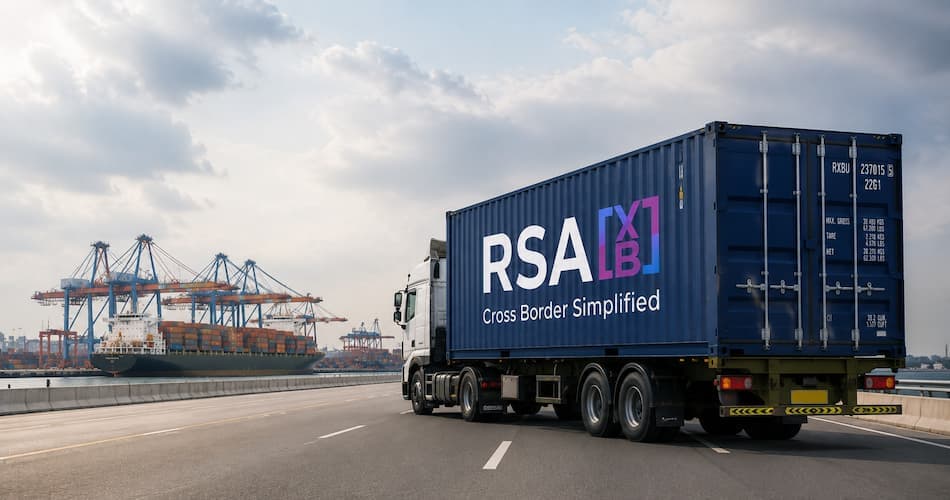
Dubai-based logistics startup RSA XB has secured $1.5 million in a Seed funding round led by 21 Ventures, marking its official spin-off from RSA Global as the company accelerates development of AI-powered cross-border shipping solutions for e-commerce businesses.

The company is focused on simplifying international logistics operations for small and medium-sized enterprises by offering a modular shipping platform that combines air freight, customs clearance, and last-mile delivery services under one flexible infrastructure. Unlike traditional logistics models that require heavy operational investments, RSA XB enables businesses to customize international shipping services under their own brand without building extensive logistics networks.

AI and Flexible Logistics at the Core

RSA XB’s platform operates through a “service modules” system, allowing logistics functions to be combined or separated depending on route requirements and operational needs. The company also integrates an artificial intelligence layer designed to automate operational workflows and improve coordination between freight operators, customs brokers, and last-mile delivery providers.

By consolidating shipments for smaller businesses, RSA XB aims to reduce shipping costs while improving delivery efficiency across international trade corridors. The company believes this model can help SMEs compete more effectively in the rapidly growing global e-commerce market.

Expansion Plans Across Key Trade Routes

In its first expansion phase, RSA XB plans to strengthen operations across major trade corridors connecting India, the Gulf region, the United Kingdom, and Europe. The strategy comes as Indian businesses increasingly look toward international expansion and cross-border commerce opportunities.

Operating from Dubai with additional activities in India, RSA XB intends to use the fresh capital to enhance its technology infrastructure, improve data management capabilities, and launch new shipping routes over the next 18 months. The startup is also preparing for additional fundraising efforts by the end of 2026 as it scales operations globally.

Source

China Expands Cross-Border E-Commerce Strategy Amid Global Trade Shifts

China Expands Cross-Border E-Commerce Strategy Amid Global Trade Shifts

China is accelerating its efforts to strengthen the country’s e-commerce ecosystem, with a growing focus on artificial intelligence, cross-border trade, and global digital commerce expansion. The move comes as international competition and regulatory pressure around global e-commerce continue to intensify.

China Prioritizes AI and Cross-Border E-Commerce

Several Chinese government departments, including the Ministry of Commerce and the Ministry of Industry and Information Technology, recently released new guidance aimed at supporting the high-quality development of the country’s e-commerce sector. The policy highlights “AI-powered e-commerce” and the expansion of cross-border e-commerce as major strategic priorities.

China has remained the world’s largest online retail market for 13 consecutive years, and authorities are now focusing on integrating digital commerce more deeply with the real economy. The guidance encourages platform innovation, international market expansion, overseas procurement networks, and improved global supply-chain infrastructure.

The new framework also supports Chinese companies in establishing overseas warehouses and procurement centers while creating faster import channels for international products entering China. Analysts say the strategy reflects Beijing’s long-term ambition to strengthen its role in global digital trade and cross-border commerce.

Global Digital Trade Faces New Challenges

China’s latest e-commerce push arrives during a period of increasing global debate around digital trade regulation, customs duties, platform responsibility, and product safety standards. European regulators have recently raised concerns over low-value imports and marketplace accountability, especially related to Chinese e-commerce platforms.

At the same time, discussions at the World Trade Organization (WTO) regarding e-commerce duties have created uncertainty across the global digital economy. Several countries, including the United States, Japan, and South Korea, recently agreed on a separate pact to maintain duty-free digital trade after WTO negotiations failed to reach a broader consensus.

Industry experts believe the future of cross-border e-commerce will increasingly depend on regulatory alignment, platform compliance, data governance, and international cooperation rather than pure growth alone.

Cross-Border E-Commerce Market Continues Rapid Growth

Despite growing geopolitical and regulatory complexity, China’s cross-border e-commerce market is expected to maintain strong momentum over the coming years. Market forecasts project the sector could exceed $300 billion by 2034, driven by AI integration, social commerce, digital payment adoption, and expanding global logistics infrastructure.

Experts say the latest policy direction signals that China aims not only to expand its global e-commerce footprint but also to play a more active role in shaping the future rules of international digital trade.

Source

ASEAN Leaders Back Positive AI and Digital Economy Push at 2026 Summit

ASEAN Leaders Back Positive AI and Digital Economy Push at 2026 Summit

ASEAN leaders have officially backed stronger regional cooperation on artificial intelligence (AI) and the digital economy during the 48th ASEAN Summit in Cebu, Philippines, highlighting the bloc’s growing focus on technology-driven growth and regional resilience.

What Happened?

During the summit, ASEAN leaders emphasized the importance of accelerating digital transformation across Southeast Asia, including the wider adoption of AI technologies and digital infrastructure. The discussions formed part of broader regional efforts to strengthen economic resilience amid global uncertainty and geopolitical tensions.

Philippine President Ferdinand Marcos Jr. stated that ASEAN members recognize the increasing role of AI and digital technologies in improving sectors such as energy forecasting, food-system monitoring, and social-protection delivery. Leaders also stressed that AI development should remain aligned with human oversight, accountability, and international standards.

Why Is This Important?

ASEAN is one of the world’s fastest-growing digital economies, with a combined population of nearly 700 million people and rapidly expanding internet adoption across the region.

By strengthening cooperation on AI and digital initiatives, ASEAN aims to:

  • Accelerate regional digital transformation
  • Improve economic competitiveness
  • Enhance regional connectivity
  • Support innovation and startup ecosystems
  • Strengthen digital trade and cross-border collaboration
  • Improve resilience in energy, food security, and public services

The summit discussions also align with ASEAN’s long-term Vision 2045 strategy, which focuses on creating a more connected, innovative, and sustainable regional economy.

ASEAN Pushes for Stronger AI Governance

Alongside supporting AI adoption, ASEAN leaders and business groups are also discussing the development of regional AI governance frameworks.

According to discussions involving the US-ASEAN Business Council and ASEAN Business Advisory Council Philippines, policymakers are pushing for interoperable and risk-based AI regulations, secure cross-border data flows, and stronger cybersecurity coordination across Southeast Asia.

Officials also highlighted the importance of workforce development and inclusive AI adoption to ensure long-term economic growth across the region.

What This Means for Southeast Asia’s Digital Economy

The summit signals ASEAN’s intention to position itself as a major global digital economy hub over the coming years.

As governments increase investment in AI readiness, digital infrastructure, and regional connectivity, Southeast Asia could become one of the world’s most important markets for digital commerce, fintech, AI innovation, and cross-border digital trade.

The growing regional alignment on AI and digital economy policies may also encourage stronger collaboration between governments, startups, technology companies, and investors across ASEAN markets.

Source

Cross-Border E-Commerce Under Increasing Pressure in 2026 as Returns Surge

Cross-border e-commerce logistics network showing global shipment routes as international returns rise in 2026

Cross-border e-commerce is entering a new phase of complexity as international returns continue to rise, creating operational and financial challenges for online retailers worldwide.

According to recent industry insights, global logistics providers are expanding their return management capabilities in response to a sharp increase in cross-border product returns. Companies such as ePost Global and ShipWise are strengthening their international return solutions to help merchants better manage reverse logistics.

Rising Costs and Operational Challenges

As international sales grow, so does the volume of returned goods. Unlike domestic returns, cross-border returns involve higher shipping costs, longer transit times, and more complex customs procedures. These factors are significantly increasing operational pressure on e-commerce businesses.

Industry experts note that inefficient return processes can quickly erode profit margins, particularly for small and mid-sized merchants. Managing international returns requires coordination across multiple logistics partners, customs authorities, and regional regulations—making it one of the most challenging aspects of global e-commerce expansion.

Logistics Providers Expand Return Solutions

To address these challenges, logistics companies are investing in new infrastructure and services designed to streamline international returns. Enhanced tracking systems, localized return hubs, and consolidated shipping solutions are becoming increasingly important.

These improvements aim to reduce costs and improve the customer experience, as consumers expect seamless return processes regardless of where a product is shipped from. Faster and more transparent return handling is now seen as a competitive advantage in cross-border e-commerce.

Customer Expectations Continue to Rise

Consumer expectations around returns are also evolving. Shoppers increasingly demand flexible return policies, faster refunds, and simplified processes—even for international purchases.

This shift is pushing retailers to rethink their return strategies. Offering easy returns is no longer optional; it has become a critical factor in customer satisfaction and brand loyalty. However, balancing customer expectations with rising logistics costs remains a key challenge.

A Turning Point for Cross-Border E-Commerce

The surge in international returns highlights a broader transformation in global e-commerce. As cross-border trade continues to grow, reverse logistics is becoming a central focus for both retailers and logistics providers.

Industry players emphasize that businesses that invest in efficient return management systems will be better positioned to compete in the evolving global market. Those that fail to adapt may struggle to maintain profitability as return volumes continue to increase.

Source: Yahoo Finance