WORLDEF Istanbul 2026 - Upcoming Event

Register Now

Air Cargo Shifts: 5 Ways E-Commerce Growth Is Reshaping Global Logistics

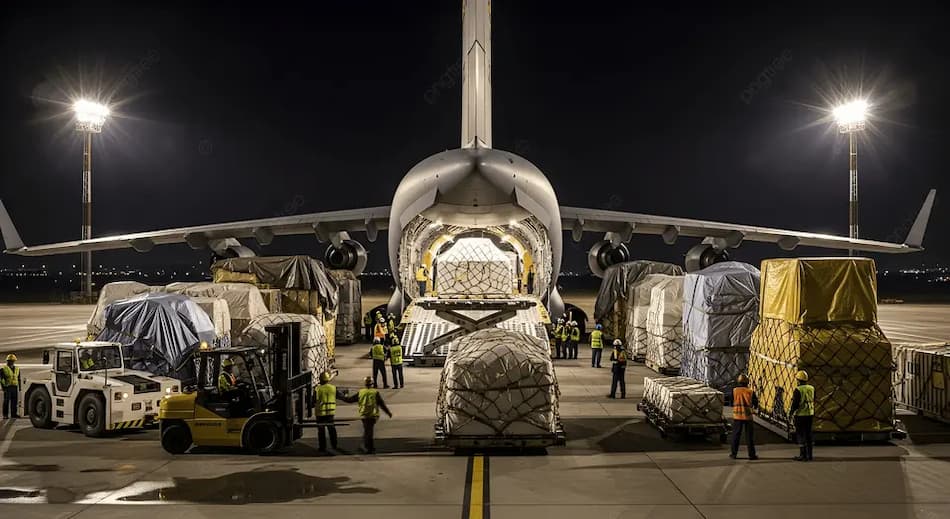
Air cargo aircraft loading freight at an international airport logistics hub

Global air cargo networks are undergoing significant changes as geopolitical tensions and the rapid growth of e-commerce reshape the movement of goods across international markets.

Airlines, logistics companies and cargo operators are increasingly adjusting their routes and supply chain strategies to respond to shifting trade patterns, regulatory pressures and disruptions in key aviation corridors. At the same time, the continued expansion of cross-border online shopping is driving strong demand for faster and more reliable air freight services.

Industry analysts say the intersection of geopolitical developments and digital commerce is accelerating structural changes across the global air freight sector.

E-Commerce Demand Continues to Drive Air Freight Growth

The rapid expansion of e-commerce has become one of the most important forces shaping global air cargo demand. Online marketplaces and international retailers rely heavily on air freight to transport high-value and time-sensitive goods quickly between production centers and consumer markets.

As consumers increasingly expect faster delivery times, logistics providers are expanding their air freight capacity and improving operational efficiency to support global e-commerce supply chains.

Air freight offers a major advantage for online retail shipments because of its speed and reliability compared with other transportation methods. This makes it a critical component of cross-border e-commerce logistics, particularly for electronics, fashion products and other high-demand consumer goods.

Industry data suggests that e-commerce shipments now represent a growing share of global air cargo volumes, reflecting the increasing role of digital commerce in international trade.

Geopolitical Developments Affect Global Cargo Routes

Recent geopolitical tensions have also created new challenges for the air freight industry. Disruptions affecting certain regions, particularly in parts of the Middle East, have forced airlines to adjust flight paths and rethink their logistics strategies.

Air cargo carriers that previously relied on established aviation corridors must now consider alternative routes, which can increase operating costs and extend transit times.

These developments highlight how geopolitical uncertainty can quickly influence global logistics networks. However, air cargo operators have demonstrated flexibility by adapting their routes and maintaining supply chain continuity despite changing conditions.

Trade Policies and Regulations Add Complexity

In addition to geopolitical risks, shifting trade policies and regulatory changes are also influencing global cargo flows.

Tariffs, export controls and evolving trade regulations can alter the economics of cross-border shipping, forcing logistics companies and online retailers to reconsider traditional supply chain routes.

As a result, many global companies are diversifying their logistics strategies and investing in more resilient supply chain infrastructure to reduce exposure to policy changes.

This approach allows businesses to maintain stable international delivery operations even as the regulatory environment continues to evolve.

Air Cargo Industry Adapts to a Changing Market

Despite these challenges, the long-term outlook for the air cargo industry remains closely tied to the continued growth of e-commerce.

Airlines and logistics providers are investing in digital technologies, automation and improved tracking systems to increase efficiency and support the rising volume of online retail shipments.

New cargo hubs and logistics infrastructure are also being developed in several regions as companies seek to strengthen supply chain resilience and improve global connectivity.

As geopolitical dynamics and global trade patterns continue to shift, air freight will remain a critical backbone of international e-commerce logistics, ensuring that goods move quickly and efficiently across borders.

The evolving relationship between geopolitics and digital commerce is likely to continue reshaping global air cargo networks in the years ahead.

Source: Aviation Week

JD.com Launches Joybuy Across 6 European Countries in Bold Expansion

JD.com launches Joybuy e-commerce platform in Europe to compete with Amazon

Chinese e-commerce giant JD.com has launched its new online retail platform Joybuy across six European countries, marking one of the company’s most significant international expansion moves to date. The rollout signals JD.com’s ambition to challenge established players such as Amazon in one of the world’s most competitive digital retail markets.

The platform debuted in the United Kingdom, Germany, France, the Netherlands, Belgium and Luxembourg, offering a broad assortment of products ranging from consumer electronics and home appliances to beauty items and groceries. At launch, the marketplace includes more than 100,000 products from global brands including Apple and Samsung.

JD.com Accelerates Global Expansion

The European launch comes as JD.com looks beyond its domestic market for growth. Competition in China’s e-commerce sector has intensified in recent years, pushing major platforms to explore new international opportunities.

By introducing Joybuy in Europe, JD.com is positioning itself as a direct competitor to Amazon while also expanding the global reach of both Chinese and international brands through its marketplace infrastructure.

Founded by billionaire entrepreneur Liu Qiangdong, JD.com has grown into one of the world’s largest online retailers. The company generated more than $150 billion in annual revenue and has built a reputation for its integrated logistics network and fast delivery capabilities.

Fast Delivery at the Core of the Strategy

A key feature of Joybuy’s European rollout is its focus on rapid delivery. JD.com plans to leverage its logistics infrastructure to provide same-day and next-day delivery services in major cities. Orders placed earlier in the day may arrive within hours, giving the platform a competitive advantage in markets where delivery speed is increasingly critical to consumer choice.

The company has invested heavily in logistics infrastructure across Europe, including dozens of warehouses and distribution centers that support its proprietary delivery network. This integrated supply chain approach has long been a defining feature of JD.com’s operations in China and is expected to play a central role in its European strategy.

Competing in Europe’s Crowded E-Commerce Market

Europe represents one of the most developed and competitive e-commerce markets globally. Amazon currently dominates much of the region’s online retail sector, while Chinese platforms such as Temu and Shein have also been expanding aggressively across Western markets.

JD.com hopes its combination of competitive pricing, global brands and fast delivery will help the company attract European consumers looking for alternatives to existing platforms.

Industry analysts note that the move could intensify competition in the region, particularly as global e-commerce companies continue to expand logistics networks and cross-border marketplaces.

A Long-Term Bet on Overseas Growth

The Joybuy launch represents JD.com’s largest overseas expansion initiative so far and highlights the company’s long-term strategy to reduce reliance on China’s domestic market.

If successful, the platform could become a major new channel for international brands while also giving Chinese merchants broader access to European consumers.

Source: Business Standard

EU E-Commerce: 35% of Consumers Face Problems When Shopping Online

Digital e-commerce shopping interface

E-commerce across the European Union continues to expand, but a growing number of consumers are encountering problems while shopping online. According to new data released by Eurostat, more than a third of online shoppers in the European Union reported encountering problems when buying products or services through websites or mobile apps.

The findings highlight ongoing challenges in the digital retail experience even as e-commerce adoption across the region continues to rise.

Online Shopping Issues Affect Over One-Third of EU Consumers

Eurostat’s latest survey on the use of information and communication technologies shows that 35.4% of online shoppers in the EU experienced at least one problem when purchasing online in 2025.

The study analyzed consumer experiences across member states and revealed considerable variation between countries. The highest shares of shoppers reporting issues were recorded in Malta, where 64% of consumers encountered problems while shopping online. The Netherlands followed with 57.9%, while Luxembourg reported 51.4%.

In contrast, several EU countries showed far lower rates of customer difficulties. Portugal recorded the lowest share, with only 4.5% of online buyers reporting problems. Greece and Latvia also saw relatively low levels of consumer complaints at 10.6% and 13.3%, respectively.

The wide differences suggest that infrastructure, logistics performance, platform quality and consumer protection mechanisms may vary significantly across national e-commerce ecosystems.

Delivery Delays Remain the Most Common Complaint

Among the various problems identified in the survey, late delivery was the most frequently reported issue. Nearly one in five EU online shoppers (19.9%) said their orders arrived later than expected.

Logistics delays can occur for several reasons, including cross-border shipping complexities, warehouse processing times and disruptions in supply chains. As e-commerce volumes increase, delivery performance has become one of the most critical factors influencing customer satisfaction.

The second most common issue was related to website usability. Around 11.5% of shoppers reported that websites or apps were difficult to use or did not function properly during the purchasing process.

Meanwhile, 10.4% of consumers reported receiving incorrect or damaged goods or services after completing their orders.

These findings highlight the importance of not only reliable logistics networks but also well-designed digital shopping interfaces.

E-Commerce Continues to Grow Across Europe

Despite these challenges, online shopping remains a dominant retail channel in Europe. Eurostat data shows that 78% of EU internet users purchased goods or services online in 2025, reflecting the continued expansion of digital commerce across the region.

The highest participation rates are typically seen among younger age groups, particularly consumers aged 25–34 and 35–44, who represent the largest share of online buyers in the EU.

Industry analysts note that while consumer adoption is strong, improving the overall reliability of delivery services and platform performance will be key to sustaining growth in Europe’s e-commerce market.

For retailers and marketplaces operating in the region, addressing logistics efficiency, improving user experience and strengthening product quality controls could play a crucial role in reducing customer complaints and building long-term consumer trust.

Source: Eurostat

Amazon Tests New Shopping Feature Showing Products From Brand Websites

User browsing products on the Amazon Shopping mobile app

Amazon is experimenting with a new feature that allows shoppers to discover products from external brand websites directly within the Amazon Shopping app.

In a blog post published on February 11, 2025, the company announced it is testing a beta program that displays selected products from other brands’ websites in search results for a limited group of U.S. customers.

Amazon Expands Shopping Experience Beyond Its Marketplace

Under the new feature, users searching in the Amazon app may see products that are not sold directly through Amazon’s marketplace. When a customer taps on one of these items, they receive a notification informing them that they are leaving Amazon and will be redirected to the brand’s official website to review pricing, shipping options and complete the purchase.

Amazon said the experiment is designed to improve product discovery and give customers access to a broader selection beyond the products currently available on its platform.

Amazon Marketplace Already Offers Hundreds of Millions of Products

The company already offers hundreds of millions of items on its marketplace, including more than 300 million products eligible for fast and free Prime delivery across over 35 product categories.

This large product catalog has helped Amazon remain one of the most dominant global ecommerce marketplaces.

Buy with Prime Still Offers Benefits for Members

In cases where brands support Buy with Prime, Amazon Prime members may still benefit from familiar services such as fast delivery, simple returns and 24/7 customer support when purchasing directly from the brand’s website.

This allows customers to enjoy many of the same advantages they receive when buying products directly from Amazon.

Amazon Plans to Expand the Beta Program

Rajiv Mehta, Amazon’s Vice President of Search and Conversational Shopping, said the company continues to explore new ways to improve convenience and expand product selection for shoppers.

The beta test is currently available to a subset of U.S. users on both iOS and Android, and Amazon said it plans to expand the feature to more customers and brands based on feedback from the trial.

The move reflects Amazon’s broader strategy to make its app a more comprehensive shopping discovery platform, even when purchases ultimately take place on external brand websites.

Source:
Amazon

For more insights on global ecommerce trends and digital commerce innovation, explore more stories on the WORLDEF.