
Shein Loses UK Copyright Lawsuit Against Temu
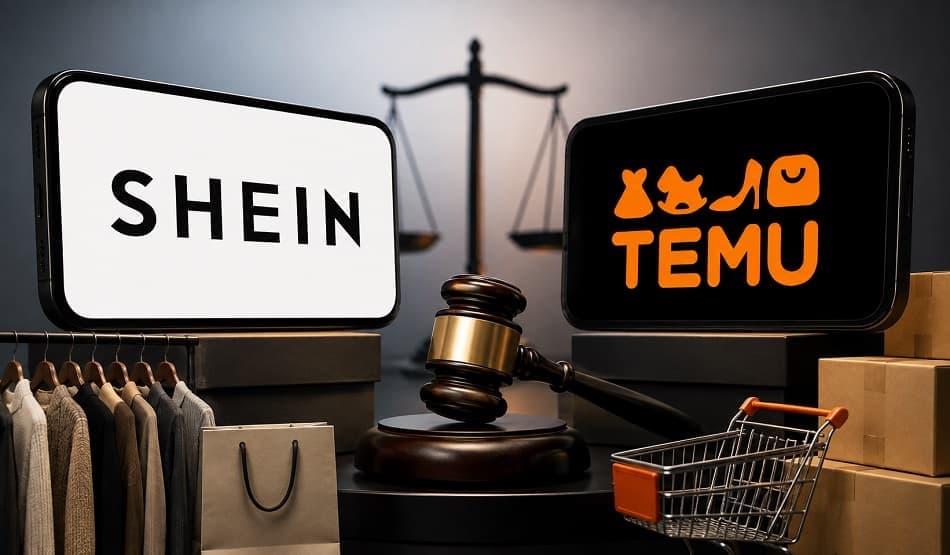
A new ruling has emerged in the legal battle between Shein and Temu, two major players in the global e-commerce and retail industry. Shein lost the copyright lawsuit it filed in the UK against its rival Temu. A London court ruled that Temu could not be held directly liable for content uploaded by third-party sellers. The decision has become a notable example regarding the responsibility of online marketplaces within the digital retail ecosystem, where AI-powered product listings and content generation are becoming increasingly widespread.
Shein’s Claim of Copyright Infringement on an “Industrial Scale” Rejected
Shein argued that Temu, owned by PDD Holdings, had used thousands of photographs of its own branded clothing and had benefited from the content of a more established rival. The company claimed that its copyrights had been infringed on an “industrial scale.” However, Judge Kelyn Bacon rejected Shein’s copyright infringement claims and stated that even if infringement had occurred, Temu could not be held liable for it.
The court ruling also emphasized that because Temu’s servers are located outside the UK, the reproduction of the photographs took place outside the borders of the United Kingdom. A Shein spokesperson, meanwhile, stated that it was undisputed that thousands of the photographs at issue belonged to the company and that these images appeared on Temu’s website. The spokesperson said that despite this, Temu had escaped liability in the UK. Temu did not immediately comment on the matter.
Temu Considered an “Intermediary Platform”
The court noted that Temu prohibited sellers from uploading content that infringed copyright and that the platform did not have the necessary knowledge of the infringements. For this reason, it was stated that Temu could be regarded solely as an “intermediary” and could benefit from legal protections applicable to hosting services. The court also accepted Temu’s claim for compensation over certain product listings it had been forced to remove because of images for which Shein did not own the copyright.
Legal Battle in E-Commerce to Continue in 2027
The case forms part of a broader legal battle between two e-commerce companies that have rapidly expanded in global markets with low-priced fashion, accessories and various retail products. Temu’s counterclaim alleging that Shein violated competition law by forcing suppliers into exclusive agreements is expected to be heard in 2027. The ruling came at a time when Shein is planning an initial public offering in Hong Kong at a valuation of more than $30 billion.
As AI-powered content systems, automated product listings and large-scale digital catalogs become increasingly widespread across e-commerce platforms, copyright and platform liability continue to remain among the key legal issues facing the retail sector.
Read more on
Related
Temu Rises to the Top in Four Countries in European E-Commerce

Temu Joins the Cross-Border Commerce Europe

Temu Accused by the EU of Obstructing an Investigation: Fine of Up to 1% of Annual Turnover on the Agenda
Shein Reports a $99 Million Loss Following the U.S. Customs Regulation

The week in commerce, before your competitors.
1,458 stories since January 2025, distilled into three newsletters. Pick the ones you want.