
ASEAN Digital Economy Framework Agreement Could Reshape Regional E-commerce
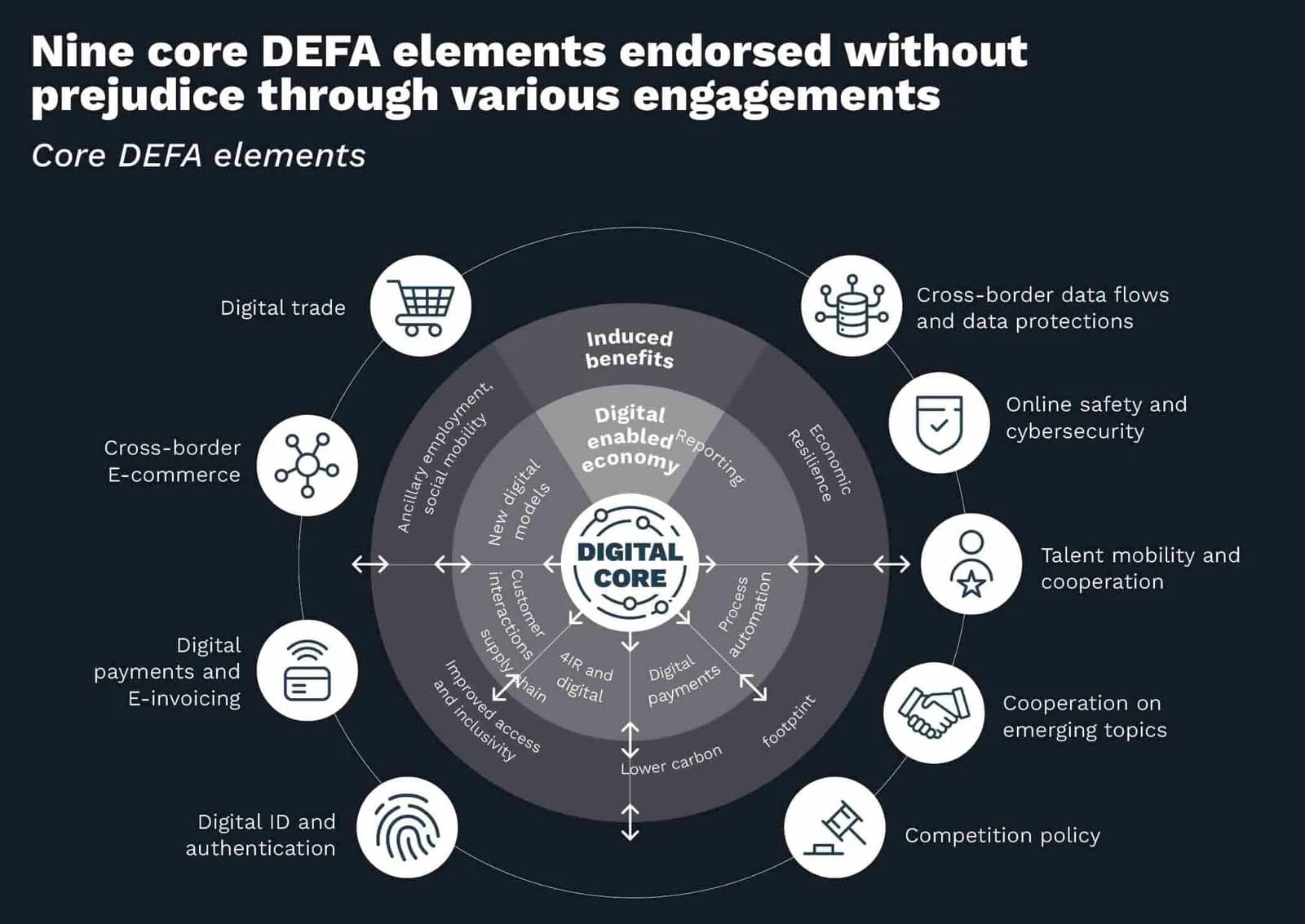
ASEAN Digital Economy Framework Agreement -DEFA- aims to harmonize digital trade, E-commerce, payments, data governance, cybersecurity, and AI rules across 11 Southeast Asian markets.
ASEAN Digital Economy Framework Agreement could become one of the most important regional digital trade initiatives in the world, with the potential to reduce regulatory fragmentation across Southeast Asia and create a more integrated market for E-commerce businesses.
Negotiations on the agreement, known as DEFA, concluded in May 2026 after several years of discussions among ASEAN member states.
The framework covers a broad range of digital economy issues, including cross-border E-commerce, digital trade, data governance, digital identity, electronic payments, cybersecurity, online safety, and the movement of digital talent.
If signed, ratified, and implemented effectively, DEFA could help transform ASEAN from a collection of separate national digital markets into a more connected regional E-commerce ecosystem.
ASEAN Digital Economy Framework Targets a More Unified Digital Market
ASEAN’s digital economy has expanded rapidly, but businesses still operate across highly fragmented regulatory environments.
Companies selling across Southeast Asia must navigate different rules for payments, customs, data, consumer protection, digital identity and online transactions.
DEFA is intended to reduce some of these barriers by establishing a more consistent regional framework.
For E-commerce companies, greater regulatory alignment could lower compliance costs and make it easier to expand into additional ASEAN markets.
The agreement could also improve businesses’ ability to scale regionally without building entirely separate operational systems for each country.
ASEAN Digital Economy Could Reach $2 Trillion
The economic potential is significant.
ASEAN has a population of more than 680 million consumers, and studies project that its digital economy could reach around $2 trillion by 2030 under stronger regional integration.
At the same time, Southeast Asia’s digital economy has already become one of the world’s fastest-growing digital markets.
E-commerce, digital payments, online services, and technology platforms have expanded rapidly across countries including Indonesia, Vietnam, Thailand, Malaysia, Singapore, and the Philippines.
However, this growth has largely taken place within national markets.
ASEAN Digital Economy Framework seeks to create a stronger regional layer atop these domestic ecosystems.
E-commerce Could Benefit From Lower Cross-Border Friction
One of the most important benefits of DEFA could be easier cross-border E-commerce.
Today, smaller exporters in ASEAN frequently face different invoicing rules, customs processes, payment standards and regulatory requirements when entering a new market.
A more harmonized framework could reduce these barriers.
For example, common approaches to electronic invoicing, digital identity and customs procedures could make it easier for a small business in Indonesia to sell products to customers in Thailand, Malaysia or Vietnam.
This is particularly significant for micro, small and medium-sized enterprises.
MSMEs account for approximately 97% of businesses across ASEAN and around 85% of regional employment.
For these companies, the true value of the ASEAN Digital Economy Framework may not simply be reflected in total trade volumes.
It may instead be measured by how much cheaper and easier it becomes to enter a second, third or fourth regional market.
Intra-ASEAN Trade Could Rise by Up to 20%
The potential impact could extend beyond digital services.
According to an OECD analysis, stronger digital trade integration under the ASEAN Digital Economy Framework Agreement could increase intra-ASEAN trade by up to 20%.
Such an increase would depend heavily on implementation.
Each participating government will still need to translate regional commitments into national laws, regulations and administrative systems.
Implementation is also unlikely to progress at the pace of all markets.
Digitally advanced economies such as Singapore may be able to adopt certain elements relatively quickly, while other ASEAN members may require additional time, technical support or regulatory capacity.
A Flexible Model for 11 Different Economies
One of DEFA’s most significant features is the diversity of the countries participating in the agreement.
ASEAN includes advanced digital economies as well as developing markets with very different regulatory structures, infrastructure levels and institutional capacities.
This makes the agreement a notable test of whether countries at different stages of digital development can operate under a common regional framework.
ASEAN has traditionally relied heavily on consensus-based decision-making.
It also has mechanisms that allow some members to move ahead while others require additional time to implement particular commitments.
This flexibility could become important during the implementation phase of the ASEAN Digital Economy Framework Agreement.
Rather than requiring every country to move at exactly the same speed, the framework may allow integration to progress while providing additional support to markets with lower levels of digital readiness.
Small Businesses Were Included in Negotiations
The agreement was also developed with significant stakeholder participation.
Since negotiations began in 2023has , ASEAN held multiple negotiating rounds and consulted technology companies, business organ,izations and thousands of small businesses.
This is important because smaller companies could be among the main beneficiaries of digital regulatory harmonization.
Large multinational companies often have the financial and legal resources needed to manage regulatory differences between countries.
Small businesses generally do not.
Reducing those differences could therefore make cross-border digital trade more accessible to smaller sellers.
ASEAN Secretary-General Kao Kim Hourn has previously highlighted the potential of DEFA to create new opportunities for women entrepreneurs, rural innovators and youth-led start-ups.
AI Added to the Digital Rulebook
The ASEAN Digital Economy Framework Agreement is not limited to conventional E-commerce regulation.
Negotiators also incorporated emerging technologies, including artificial intelligence, into the framework.
This makes the agreement particularly significant at a time when governments around the world are still developing approaches to AI governance.
ASEAN could therefore become an important testing ground for regional cooperation on cross-border AI and data rules.
A common approach could help companies deploy AI-powered services across ASEAN markets while establishing shared expectations around governance and responsible technology use.
For E-commerce companies, AI is already becoming increasingly relevant in areas such as personalization, fraud prevention, demand forecasting, logistics, customer service and digital advertising.
How these technologies are regulated across borders will therefore have direct commercial implications.
Digital Identity and Cybersecurity Are Key Pillars
Cybersecurity and online trust are another important part of the agreement.
Digital commerce cannot expand sustainably if consumers and businesses do not trust online platforms, payments and digital identities.
The scale of online fraud across the wider Asia-Pacific region has made this issue increasingly urgent.
Combined losses from scam-offensesoffences across East Asia, Southeast Asia, Australia and New Zealand were estimated at between $88.3 billion and $114.1 billion in 2025.
Regional cooperation around cybersecurity, digital identity and consumer protection could therefore become essential to sustaining E-commerce growth.
The ASEAN Digital Economy Framework Agreement could provide a framework for ASEAN governments to coordinate more closely in these areas.
Payments and Digital Identity Could Improve Regional Commerce
Greater interoperability between digital payment and identity systems could also have major commercial benefits.
ASEAN countries have already made progress in connecting some regional payment systems.
The ASEAN Digital Economy Framework Agreement could reinforce this trend by creating common principles for digital transactions and authentication.
For consumers, this could make cross-border purchases easier.
For businesses, it could reduce transaction friction and simplify payment acceptance across markets.
Digital identity systems could also improve areas such as customer verification, onboarding, fraud detection and access to financial services.
Implementation Will Determine DEFA’s Success
The conclusion of negotiations does not mean the regional digital market will change immediately.
The agreement must still move through signing, ratification and national implementation.
ASEAN is expected to continue the formal process toward adoption following the conclusion of negotiations.
The most important test will therefore be whether governments convert the regional framework into functioning national systems.
Transparent monitoring could become important.
Tracking indicators such as cross-border SME sales, digital trade volumes, regulatory compliance costs and E-commerce market entry could help governments understand whether DEFA is producing practical results.
Technical support may also be necessary to help less digitally advanced members implement the framework effectively.
From 11 Markets to One Scalable Opportunity
The long-term significance of the ASEAN Digital Economy Framework Agreement will depend on whether businesses eventually begin to see Southeast Asia less as 11 separate digital markets and more as one scalable commercial opportunity.
That would represent a major change for regional E-commerce.
A company entering ASEAN currently needs to consider different regulations, payment environments, consumer expectations and digital systems across multiple countries.
A more integrated framework would not eliminate these differences, but it could reduce the regulatory barriers that make regional expansion expensive and complex.
For global E-commerce platforms, retailers and technology providers, that could make Southeast Asia significantly more attractive as a unified growth market.
DEFA therefore represents more than another trade agreement.
It is a test of whether digital multilateralism can work across countries with very different economic systems, regulatory environments and levels of technological development.
If ASEAN succeeds in implementing a common digital rulebook, the framework could become an important reference point for other regions seeking to combine E-commerce growth, AI governance and cross-border digital integration.
Read more on
About the author
WORLDEF Editors
916 stories on WORLDEF since January 2025.
More from WORLDEF Editors →Related
ASEAN Digital Economy Set for Breakthrough: 1 Regional Pact Could Unlock $2 Trillion Growth

ASEAN Concludes Digital Economy Framework Agreement Talks

Türkiye Plans $200B Energy Investment by 2035 to Expand Renewables and Modernize Grid

Latin American E-Commerce Market Projected to Reach $215 Billion in 2026

The week in commerce, before your competitors.
1,452 stories since January 2025, distilled into three newsletters. Pick the ones you want.