WORLDEF Prime Antalya 2026 — Early Bird Discounts

Register Now

ASEAN Digital Economy Framework Agreement Could Reshape Regional E-commerce

ASEAN Digital Economy Framework Agreement

ASEAN Digital Economy Framework Agreement -DEFA- aims to harmonize digital trade, E-commerce, payments, data governance, cybersecurity, and AI rules across 11 Southeast Asian markets.

ASEAN Digital Economy Framework Agreement could become one of the most important regional digital trade initiatives in the world, with the potential to reduce regulatory fragmentation across Southeast Asia and create a more integrated market for E-commerce businesses.

Negotiations on the agreement, known as DEFA, concluded in May 2026 after several years of discussions among ASEAN member states.

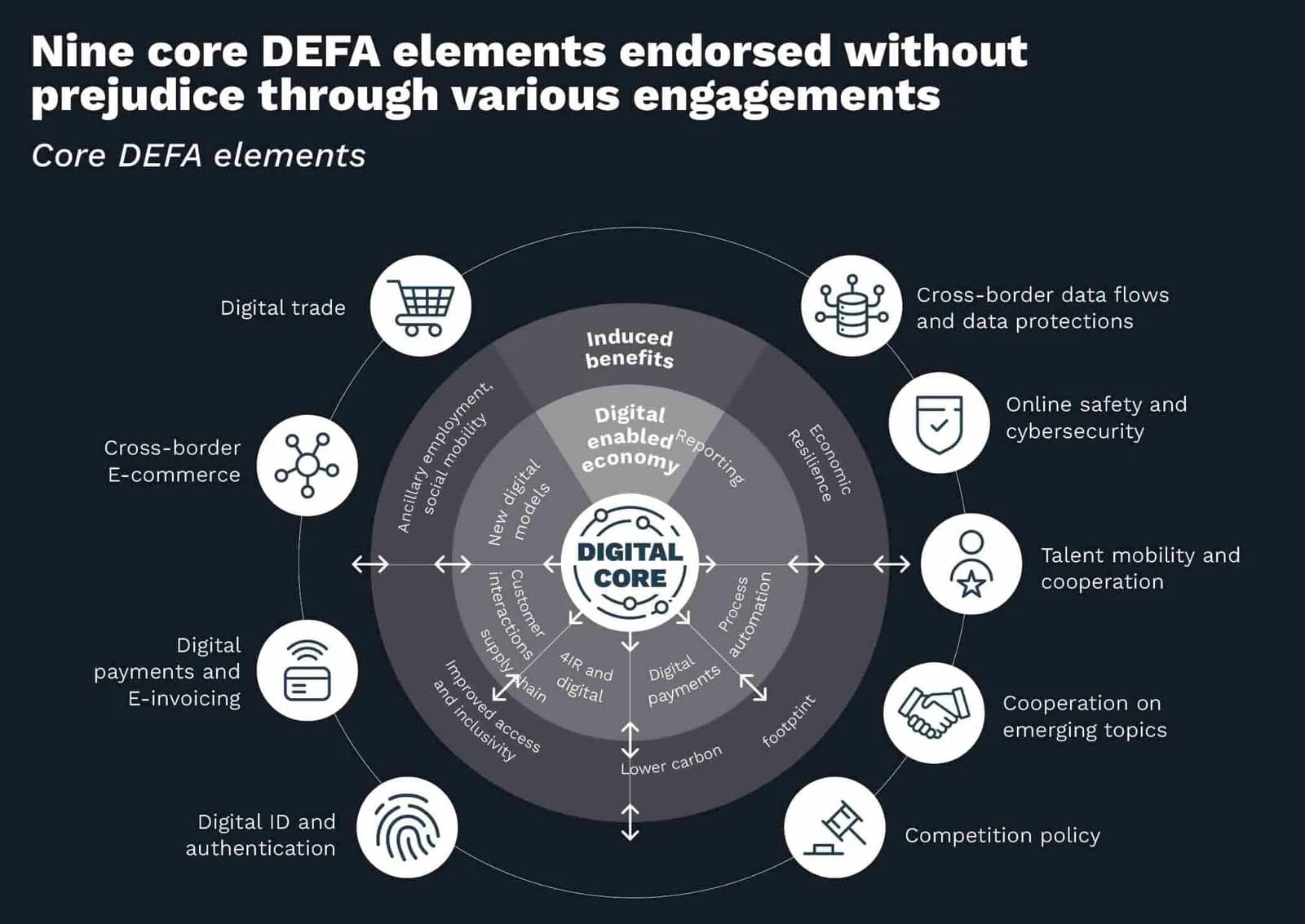
The framework covers a broad range of digital economy issues, including cross-border E-commerce, digital trade, data governance, digital identity, electronic payments, cybersecurity, online safety, and the movement of digital talent.

If signed, ratified, and implemented effectively, DEFA could help transform ASEAN from a collection of separate national digital markets into a more connected regional E-commerce ecosystem.

ASEAN Digital Economy Framework Targets a More Unified Digital Market

ASEAN’s digital economy has expanded rapidly, but businesses still operate across highly fragmented regulatory environments.

Companies selling across Southeast Asia must navigate different rules for payments, customs, data, consumer protection, digital identity and online transactions.

DEFA is intended to reduce some of these barriers by establishing a more consistent regional framework.

For E-commerce companies, greater regulatory alignment could lower compliance costs and make it easier to expand into additional ASEAN markets.

The agreement could also improve businesses’ ability to scale regionally without building entirely separate operational systems for each country.

ASEAN Digital Economy Could Reach $2 Trillion

The economic potential is significant.

ASEAN has a population of more than 680 million consumers, and studies project that its digital economy could reach around $2 trillion by 2030 under stronger regional integration.

At the same time, Southeast Asia’s digital economy has already become one of the world’s fastest-growing digital markets.

E-commerce, digital payments, online services, and technology platforms have expanded rapidly across countries including Indonesia, Vietnam, Thailand, Malaysia, Singapore, and the Philippines.

However, this growth has largely taken place within national markets.

ASEAN Digital Economy Framework seeks to create a stronger regional layer atop these domestic ecosystems.

E-commerce Could Benefit From Lower Cross-Border Friction

One of the most important benefits of DEFA could be easier cross-border E-commerce.

Today, smaller exporters in ASEAN frequently face different invoicing rules, customs processes, payment standards and regulatory requirements when entering a new market.

A more harmonized framework could reduce these barriers.

For example, common approaches to electronic invoicing, digital identity and customs procedures could make it easier for a small business in Indonesia to sell products to customers in Thailand, Malaysia or Vietnam.

This is particularly significant for micro, small and medium-sized enterprises.

MSMEs account for approximately 97% of businesses across ASEAN and around 85% of regional employment.

For these companies, the true value of the ASEAN Digital Economy Framework may not simply be reflected in total trade volumes.

It may instead be measured by how much cheaper and easier it becomes to enter a second, third or fourth regional market.

Intra-ASEAN Trade Could Rise by Up to 20%

The potential impact could extend beyond digital services.

According to an OECD analysis, stronger digital trade integration under the ASEAN Digital Economy Framework Agreement could increase intra-ASEAN trade by up to 20%.

Such an increase would depend heavily on implementation.

Each participating government will still need to translate regional commitments into national laws, regulations and administrative systems.

Implementation is also unlikely to progress at the pace of all markets.

Digitally advanced economies such as Singapore may be able to adopt certain elements relatively quickly, while other ASEAN members may require additional time, technical support or regulatory capacity.

A Flexible Model for 11 Different Economies

One of DEFA’s most significant features is the diversity of the countries participating in the agreement.

ASEAN includes advanced digital economies as well as developing markets with very different regulatory structures, infrastructure levels and institutional capacities.

This makes the agreement a notable test of whether countries at different stages of digital development can operate under a common regional framework.

ASEAN has traditionally relied heavily on consensus-based decision-making.

It also has mechanisms that allow some members to move ahead while others require additional time to implement particular commitments.

This flexibility could become important during the implementation phase of the ASEAN Digital Economy Framework Agreement.

Rather than requiring every country to move at exactly the same speed, the framework may allow integration to progress while providing additional support to markets with lower levels of digital readiness.

Small Businesses Were Included in Negotiations

The agreement was also developed with significant stakeholder participation.

Since negotiations began in 2023has , ASEAN held multiple negotiating rounds and consulted technology companies, business organ,izations and thousands of small businesses.

This is important because smaller companies could be among the main beneficiaries of digital regulatory harmonization.

Large multinational companies often have the financial and legal resources needed to manage regulatory differences between countries.

Small businesses generally do not.

Reducing those differences could therefore make cross-border digital trade more accessible to smaller sellers.

ASEAN Secretary-General Kao Kim Hourn has previously highlighted the potential of DEFA to create new opportunities for women entrepreneurs, rural innovators and youth-led start-ups.

AI Added to the Digital Rulebook

The ASEAN Digital Economy Framework Agreement is not limited to conventional E-commerce regulation.

Negotiators also incorporated emerging technologies, including artificial intelligence, into the framework.

This makes the agreement particularly significant at a time when governments around the world are still developing approaches to AI governance.

ASEAN could therefore become an important testing ground for regional cooperation on cross-border AI and data rules.

A common approach could help companies deploy AI-powered services across ASEAN markets while establishing shared expectations around governance and responsible technology use.

For E-commerce companies, AI is already becoming increasingly relevant in areas such as personalization, fraud prevention, demand forecasting, logistics, customer service and digital advertising.

How these technologies are regulated across borders will therefore have direct commercial implications.

Digital Identity and Cybersecurity Are Key Pillars

Cybersecurity and online trust are another important part of the agreement.

Digital commerce cannot expand sustainably if consumers and businesses do not trust online platforms, payments and digital identities.

The scale of online fraud across the wider Asia-Pacific region has made this issue increasingly urgent.

Combined losses from scam-offensesoffences across East Asia, Southeast Asia, Australia and New Zealand were estimated at between $88.3 billion and $114.1 billion in 2025.

Regional cooperation around cybersecurity, digital identity and consumer protection could therefore become essential to sustaining E-commerce growth.

The ASEAN Digital Economy Framework Agreement could provide a framework for ASEAN governments to coordinate more closely in these areas.

Payments and Digital Identity Could Improve Regional Commerce

Greater interoperability between digital payment and identity systems could also have major commercial benefits.

ASEAN countries have already made progress in connecting some regional payment systems.

The ASEAN Digital Economy Framework Agreement could reinforce this trend by creating common principles for digital transactions and authentication.

For consumers, this could make cross-border purchases easier.

For businesses, it could reduce transaction friction and simplify payment acceptance across markets.

Digital identity systems could also improve areas such as customer verification, onboarding, fraud detection and access to financial services.

Implementation Will Determine DEFA’s Success

The conclusion of negotiations does not mean the regional digital market will change immediately.

The agreement must still move through signing, ratification and national implementation.

ASEAN is expected to continue the formal process toward adoption following the conclusion of negotiations.

The most important test will therefore be whether governments convert the regional framework into functioning national systems.

Transparent monitoring could become important.

Tracking indicators such as cross-border SME sales, digital trade volumes, regulatory compliance costs and E-commerce market entry could help governments understand whether DEFA is producing practical results.

Technical support may also be necessary to help less digitally advanced members implement the framework effectively.

From 11 Markets to One Scalable Opportunity

The long-term significance of the ASEAN Digital Economy Framework Agreement will depend on whether businesses eventually begin to see Southeast Asia less as 11 separate digital markets and more as one scalable commercial opportunity.

That would represent a major change for regional E-commerce.

A company entering ASEAN currently needs to consider different regulations, payment environments, consumer expectations and digital systems across multiple countries.

A more integrated framework would not eliminate these differences, but it could reduce the regulatory barriers that make regional expansion expensive and complex.

For global E-commerce platforms, retailers and technology providers, that could make Southeast Asia significantly more attractive as a unified growth market.

DEFA therefore represents more than another trade agreement.

It is a test of whether digital multilateralism can work across countries with very different economic systems, regulatory environments and levels of technological development.

If ASEAN succeeds in implementing a common digital rulebook, the framework could become an important reference point for other regions seeking to combine E-commerce growth, AI governance and cross-border digital integration.

ASEAN Concludes Digital Economy Framework Agreement Talks

ASEAN Digital Economy Framework Agreement

ASEAN Concludes Digital Economy Framework Agreement Talks to Advance Regional Digital Economy

The digital economy agreement is expected to be signed at the ASEAN Summit in November 2026, as member states seek to build a more connected, secure, and interoperable regional market.

ASEAN has concluded negotiations on the Digital Economy Framework Agreement (DEFA), marking a significant step toward deeper regional integration in digital trade, e-commerce, data governance, cybersecurity, and emerging technologies. Thailand announced the conclusion of the talks after chairing the DEFA Negotiating Committee, with the agreement now expected to move toward legal review before its planned signing at the ASEAN Summit in November 2026.

The negotiations were completed during the 57th ASEAN Senior Economic Officials’ Meeting, 2nd session, held in Manila, the Philippines, from May 27 to 29, 2026. The conclusion of the talks was also confirmed by regional trade officials, who described DEFA as ASEAN’s first region-wide digital economy agreement.

Thailand’s Deputy Prime Minister and Commerce Minister, Suphajee Suthumpun, said the conclusion of negotiations represented an important step toward laying the foundation for ASEAN’s digital economy. Thailand chaired the DEFA Negotiating Committee and helped coordinate member-state positions during discussions on a wide range of complex digital policy issues.

ASEAN Digital Economy Framework Agreement

DEFA is designed to create a common framework for the digital economy across ASEAN. The agreement aims to facilitate cross-border digital trade and investment by improving regulatory coordination, reducing operational barriers, and supporting interoperability among digital systems across member states. For businesses, this could mean smoother digital transactions, more efficient market access, and clearer regional rules.

The agreement is particularly relevant for e-commerce because Southeast Asia’s online trade ecosystem continues to expand rapidly. Cross-border payments, digital contracts, online consumer protection, cybersecurity standards, data flows, and digital identity are increasingly important for companies operating across multiple ASEAN markets. A more harmonized digital economy framework could reduce friction for businesses trying to scale regionally.

However, the impact of DEFA will depend on how the agreement is implemented after it is signed. Regional digital economy agreements often set strategic direction, but their practical value depends on national-level regulation, enforcement capacity, technical infrastructure, and the ability of member states to align domestic rules. ASEAN’s diversity is both an opportunity and a challenge: the region includes highly advanced digital markets as well as economies still developing key digital infrastructure.

According to Thai officials, DEFA is intended to support cross-border trade and investment by linking digital systems among member states so they can operate more effectively together. This focus on interoperability is important because fragmented systems can increase costs for companies, especially micro, small, and medium-sized enterprises. MSMEs often face greater barriers to expanding across borders, including compliance costs, payment limitations, logistical challenges, and uneven digital standards.

If implemented effectively, DEFA could help smaller businesses participate more actively in the regional digital economy. A more predictable digital trade environment may give MSMEs greater access to new customers, technologies, platforms, and innovation networks. This could be one of the agreement’s most important outcomes, provided that smaller firms are given the tools and support needed to benefit from the framework.

The agreement also includes areas linked to digital trust. ASEAN officials have highlighted cooperation on cybersecurity, consumer protection, anti-online fraud measures, and readiness for future technologies such as artificial intelligence. These areas are becoming central to the digital economy as online transactions grow and digital risks become more sophisticated.

The reference to artificial intelligence is also notable. AI is increasingly shaping e-commerce, customer service, logistics, payments, marketing, and fraud detection. By including future technology readiness within the broader digital economy agenda, ASEAN is signaling that DEFA is not only about today’s online trade rules, but also about preparing the region for the next stage of digital transformation.

Studies cited by officials suggest that DEFA could help ASEAN’s digital economy reach US$2 trillion by 2030. This figure reflects the scale of the opportunity, but it should be treated as a long-term potential rather than an automatic outcome. Reaching that level will require investment in digital infrastructure, trusted data systems, skills development, cross-border regulatory alignment, and stronger participation by businesses of different sizes.

For ASEAN, DEFA represents an effort to position the region as a more competitive hub for digital economies. The agreement could strengthen the bloc’s role in global digital trade at a time when economies worldwide are competing to set rules governing data, platforms, AI, e-commerce, and digital services.

The conclusion of negotiations does not mean the work is finished. The next stage will be legal scrubbing, followed by the planned signing at the ASEAN Summit in November 2026. After that, the real test will be implementation. If ASEAN can translate DEFA’s rules into practical market improvements, the agreement could become a major framework for regional digital commerce and long-term economic competitiveness.

ASEAN Digital Economy Set for Breakthrough: 1 Regional Pact Could Unlock $2 Trillion Growth

ASEAN Digital Economy Set for Breakthrough: 1 Regional Pact Could Unlock $2 Trillion Growth

Southeast Asia is moving closer to a landmark agreement that could redefine the future of e-commerce and digital trade across the region.

As the Philippines leads ASEAN in 2026, negotiations are accelerating around the ASEAN Digital Economy Framework Agreement (DEFA) – a comprehensive regional pact designed to harmonize digital trade rules, reduce barriers, and strengthen cross-border e-commerce.

A Unified Digital Market in the Making

The proposed agreement aims to create a more integrated digital economy by aligning regulations across ASEAN member states. Currently, differences in data governance, cybersecurity, and consumer protection frameworks create challenges for businesses operating across borders.

DEFA seeks to address these gaps by introducing:

  • interoperable digital systems
  • smoother cross-border data flows
  • stronger cybersecurity standards
  • more efficient digital payments and paperless trade

By simplifying these processes, the agreement is expected to make it significantly easier for businesses – especially SMEs – to expand regionally.

Boosting E-Commerce and SME Growth

One of the key goals of the pact is to unlock new opportunities for micro, small, and medium-sized enterprises (MSMEs), which form the backbone of ASEAN economies.

By reducing operational friction, the agreement could:

  • lower costs through digitalization
  • enable faster and safer transactions
  • expand market access across Southeast Asia

Over time, this is expected to drive job creation, improve digital skills, and support more inclusive economic participation.

A Rapidly Expanding Digital Economy

The urgency behind the agreement is clear. ASEAN’s digital economy is projected to grow rapidly, with estimates suggesting it could reach $2 trillion by 2030.

In the Philippines alone, the digital economy is expected to nearly double in value – highlighting the region’s strong growth trajectory and the increasing importance of digital trade frameworks.

Strategic Priorities: Integration, Trust, and Skills

Beyond trade facilitation, the agreement also focuses on building a future-ready digital ecosystem.

Key priorities include:

  • establishing trusted and interoperable digital infrastructure
  • ensuring secure and transparent data exchanges
  • strengthening workforce skills for digital transformation

These elements are seen as essential to supporting sustainable growth and enabling businesses to scale in an increasingly digital-first economy.

What Comes Next?

ASEAN aims to finalize negotiations and sign the agreement later this year, potentially during the ASEAN Summit in November.

If implemented, DEFA would become the world’s first region-wide digital economy agreement, positioning ASEAN as a global leader in digital trade governance.

Source: Philippine News Agency, Inquirer Opinion