WORLDEF ISTANBUL 2026 - Early Bird Registration Ends Soon

Register Now

MercadoLibre Revenue Jumps 49% as E-Commerce Demand Accelerates Across Latin America

MercadoLibre Revenue Jumps 49% as E-Commerce Demand Accelerates Across Latin America

Latin American e-commerce and fintech giant MercadoLibre reported stronger-than-expected first-quarter revenue results, driven by rising online shopping activity and continued growth in its digital payments ecosystem. The company posted its fastest revenue expansion in nearly four years, reinforcing its position as one of the region’s most influential digital commerce platforms.

MercadoLibre generated $8.8 billion in revenue during the first quarter of 2026, marking a 49% year-over-year increase and surpassing analysts’ expectations of approximately $8.3 billion. The company’s performance was fueled by strong consumer demand across its marketplace operations as well as sustained momentum from Mercado Pago, its fintech and digital payments division.

Despite the strong top-line growth, profitability came under pressure as the company increased investments in logistics infrastructure, free shipping initiatives, and credit expansion strategies. Net profit declined 15.6% year-over-year to $417 million, falling below market expectations for the fourth consecutive quarter. Following the earnings release, MercadoLibre shares experienced a slight decline as investors reacted to margin pressures despite the revenue beat.

MercadoLibre Expands Its Regional E-Commerce Dominance

MercadoLibre continues to strengthen its leadership across Latin America, particularly in Brazil, Mexico, and Argentina — its three largest markets. The company has been aggressively investing in fulfillment centers, delivery capabilities, and financial services to deepen customer engagement and compete more effectively against both regional and global rivals.The company’s integrated ecosystem has become a key competitive advantage. By combining e-commerce, logistics, digital payments, and credit services under one platform, MercadoLibre has managed to create a highly interconnected commerce environment for consumers and merchants alike. Analysts increasingly view this strategy as critical to sustaining long-term growth in the region’s evolving digital economy.

Mercado Pago also remains one of the company’s strongest growth engines. The fintech division continues to expand its user base by offering digital wallets, payment processing, consumer credit, and merchant financing solutions in markets where traditional banking penetration remains relatively low. This positions MercadoLibre at the center of Latin America’s accelerating transition toward digital finance.

While short-term profitability pressures persist due to aggressive reinvestment, many investors continue to focus on MercadoLibre’s long-term expansion potential. The company’s ongoing investments in logistics efficiency, customer acquisition, and financial services are widely viewed as strategic moves designed to strengthen market share and support future scalability.MercadoLibre’s latest results also highlight the broader resilience of the Latin American e-commerce sector, where rising internet penetration, mobile commerce adoption, and digital payment usage continue to reshape consumer behavior across the region.

Source

Khwarizmi Ventures Achieves Powerful $70M First Close for GCC Tech Startups

Khwarizmi Ventures Achieves Powerful $70M First Close for GCC Tech Startups

Saudi Arabia-based venture capital firm Khwarizmi Ventures has announced the first close of its second investment fund, securing more than $70 million in commitments to support early-stage technology startups across the GCC. The move reflects growing investor confidence in the Gulf’s expanding startup ecosystem, particularly in Saudi Arabia, which continues to strengthen its position as a regional venture capital hub.

Strong First Close Signals Investor Confidence

Khwarizmi Ventures confirmed that the first close of Fund II exceeded SAR 270 million ($70 million+), backed by institutional investors and major Saudi family offices. The fund will focus primarily on Seed and Series A startups developing scalable technology-driven businesses across GCC markets.

The VC firm stated that Fund II is designed to support ambitious founders building companies with regional and global expansion potential. The investment strategy will continue targeting sectors experiencing rapid digital transformation, including fintech, e-commerce, logistics, artificial intelligence, SaaS, and enterprise technology.

The announcement also highlights the increasing maturity of the GCC startup landscape, where venture funding activity has accelerated over the past few years due to economic diversification efforts and rising private-sector participation.

Saudi Arabia Continues Expanding Its Startup Ecosystem

Saudi Arabia has become one of the Middle East’s fastest-growing startup ecosystems, supported by initiatives aligned with Vision 2030. Government-backed programs, sovereign investment activity, and growing interest from institutional investors have significantly boosted the Kingdom’s technology sector.

Venture capital activity in Saudi Arabia has steadily increased as more startups secure regional and international funding rounds. The country’s push toward digital transformation, fintech innovation, and entrepreneurship development has created favorable conditions for investors seeking long-term growth opportunities in the region.

Khwarizmi Ventures’ latest fund launch comes amid rising demand for early-stage capital across the Gulf, where startups are increasingly targeting cross-border expansion from day one.

Building on the Success of Fund I

Founded in 2018, Khwarizmi Ventures has established itself as one of Saudi Arabia’s active early-stage investment firms. Its first fund, launched in 2021 with approximately $70 million in capital, invested in more than 30 startups across the MENA region.

The firm’s portfolio includes several fast-growing regional technology companies such as Calo, Eyewa, Tamara, and HALA. Khwarizmi Ventures has also recorded multiple successful exits from Fund I, strengthening its reputation within the regional investment ecosystem.

The company said the second fund aims to build on these results by identifying high-potential startups earlier and supporting them throughout their growth journey.

Focus on Long-Term Founder Support

Khwarizmi Ventures plans to write initial investment checks ranging between $1 million and $5 million while reserving additional capital for follow-on rounds in top-performing portfolio companies.

This strategy reflects a broader shift among GCC venture capital firms toward long-term founder support and sustainable scaling rather than short-term capital deployment. Investors across the region are increasingly prioritizing startups with strong fundamentals, scalable business models, and regional expansion capabilities.

Managing Partner Abdulaziz Al-Turki previously described the regional startup environment as a “golden opportunity” for early-stage investment, citing the growing number of technology unicorns and the increasing sophistication of founders emerging from the MENA ecosystem.

GCC Startup Market Attracts Global Attention

The Gulf startup ecosystem has continued attracting both regional and international investors as governments accelerate investments in digital infrastructure, AI, financial technology, and entrepreneurship programs.

Saudi Arabia, the UAE, and other GCC markets are witnessing stronger collaboration between private investors, sovereign wealth funds, accelerators, and venture capital firms. This momentum has helped position the region as one of the fastest-growing innovation markets globally.

Industry analysts expect Khwarizmi Ventures’ Fund II to play an important role in financing the next generation of GCC startups, particularly companies using Saudi Arabia as a launchpad for regional and international growth.

Source

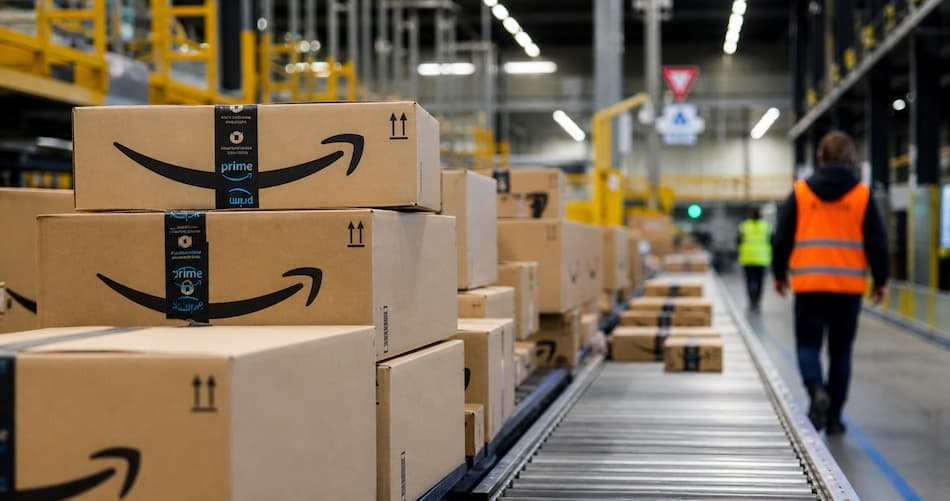
Marketplaces: EU SMEs Reach €17 Billion Amazon Export Milestone with Strong Growth

Marketplaces: EU SMEs Reach €17 Billion Amazon Export Milestone with Strong Growth

European small and medium-sized enterprises (SMEs) are accelerating their global reach, with exports through Amazon hitting a significant milestone. In 2025, EU-based SMEs generated €17 billion in cross-border sales, marking a €2 billion increase compared to the previous year.

This growth reflects the increasing role of digital marketplaces in enabling SMEs to expand beyond domestic markets and tap into international demand.

Cross-border trade drives SME expansion

More than 100,000 EU SMEs are now actively selling on Amazon, collectively surpassing €40 billion in total sales for the first time. These businesses sold over 1.3 billion products in 2025, highlighting the scale and efficiency of marketplace-driven commerce.

Cross-border trade is at the core of this growth. Around 85% of European SME sellers export internationally, with cross-border sales accounting for over 40% of their total Amazon revenue.

Notably, the majority of exports remain within Europe. Intra-EU sales reached €13.5 billion, up from €12 billion in 2024, while €3.5 billion came from markets outside the EU.

Marketplace ecosystems become export engines

Amazon continues positioning itself as a key enabler for SME internationalization. By offering logistics infrastructure, compliance tools, and access to multiple markets, the platform reduces traditional barriers associated with cross-border trade.

For SMEs, especially those in smaller or less developed markets, this model acts as a “springboard” to global customers, allowing businesses to scale without heavy upfront investment in distribution networks.

However, the impact varies across Europe. While Amazon dominates major markets such as Germany, the UK, France, Italy, and Spain, in smaller markets it plays a more strategic role in helping local sellers reach external customers.

Rising importance of digital export channels

The data highlights a broader shift: digital platforms are becoming essential export channels for SMEs. Compared to traditional trade, e-commerce enables faster market entry, lower operational costs, and broader customer reach.

As cross-border e-commerce continues to grow, SMEs are increasingly leveraging marketplaces not just as sales channels, but as core drivers of international expansion and revenue growth.

Source

3 Dubai Unicorn Leaders Signal a Strong Innovation Future for the Digital Economy

3 Dubai Unicorn Leaders Signal a Strong Innovation Future for the Digital Economy

Dubai is strengthening its position as one of the world’s most ambitious innovation hubs, with leaders from several Dubai-based unicorn companies praising the city’s regulatory environment, digital infrastructure, and long-term vision for technology-led growth. Their comments reflect growing confidence in Dubai’s ability to support not just startup formation, but global scale-up in the digital economy.

According to statements published by the Government of Dubai Media Office on April 19, 2026, executives from Kitopi, Property Finder, and XPANCEO highlighted the emirate’s ability to combine business-friendly regulation, access to talent, and strong public-private alignment. Together, these factors are helping position Dubai as more than a regional commercial center. Instead, it is increasingly seen as a launchpad for digital companies with international ambitions.

A major theme across the executives’ comments was innovation at scale. Mohamad Ballout, CEO and Co-founder of Kitopi, said Dubai’s ecosystem has helped the company build, test, and scale quickly thanks to forward-looking regulation, strong infrastructure, and connectivity to regional and global markets. This combination, he suggested, has made Dubai a practical base for companies aiming to grow beyond the UAE.

Dubai builds innovation with policy and infrastructure

Property Finder’s Chief Product and Technology Officer, Fernando Fanton, also pointed to Dubai’s broader policy direction, including the Dubai Economic Agenda D33, digital-first governance, and paperless government progress. He noted that these frameworks help companies innovate with greater confidence while giving investors, regulators, and businesses a clearer path to scale. He also referenced AI-driven tools and digital real estate initiatives as examples of how the city is enabling next-generation business models.

XPANCEO Founder Roman Axelrod emphasized another dimension of Dubai’s innovation appeal: its support for deep tech, science, and AI. He described the city as a place where business, government, and academia work in close coordination, helping complex technology ventures grow faster. He also linked Dubai’s momentum to broader UAE efforts such as advanced AI infrastructure and long-term investment in future-focused sectors.

Taken together, the remarks underline a clear message: Dubai is no longer competing only as a business destination. It is increasingly competing as a global innovation platform designed to attract unicorns, high-growth startups, and technology pioneers looking for scale, stability, and strategic reach. That makes the emirate a market to watch closely as the digital economy evolves.

Source

Record Membership Surge at Dubai Chamber of Commerce as 2,709 New Members Joined in March

Dubai

Despite regional and global challenges, Dubai continues to serve as a base of operations for a large number of companies. Dubai Chamber of Commerce, one of the three chambers operating under the umbrella of Dubai Chambers, announced that 2,709 new companies joined the chamber in March 2026.

According to data from Dubai Chamber of Commerce, the real estate, renting, and business services sector accounted for 41.2 percent of new member companies, followed by the trading and services sector with 29.5 percent. The construction sector ranked third with 15 percent of the total. The social and personal services sectors ranked fourth with 9.3 percent. The increase in membership reflects Dubai’s appeal to investors under all market conditions.

Lootah Says Dubai’s Investment Momentum Remains Strong

H.E. Mohammad Ali Rashed Lootah, President and CEO of Dubai Chambers, said: “Dubai’s economic model is built on a strong foundation that combines resilience, proactive planning, effective public-private collaboration, and deep ties with global markets. This strengthens the emirate’s ability to adapt to global shifts and continue creating new, high-quality opportunities across a wide range of sectors.”

Lootah continued: “The increase in the number of companies joining the chamber in March is a clear indication that Dubai’s investment momentum remains strong and that the emirate continues to inspire confidence among the global business community. This underlines the strength of its dynamic business environment, which is supported by advanced infrastructure, a sophisticated regulatory framework, and agile economic policies that respond to market developments to support growth at every stage.”

The President and CEO of Dubai Chambers also noted: “We remain committed to supporting the establishment and growth of new businesses in Dubai, while also enabling companies across the emirate to adapt quickly to change, sustain growth, and enhance their competitiveness in local and international markets. This contributes to reinforcing Dubai’s position as a global capital for trade and investment.”

All Services Come Together on DC Connect

Dubai Chambers uses DC Connect, an advanced digital platform that consolidates all chamber services into a single, user-friendly portal. The platform represents a significant step in enhancing the member experience and facilitating easier access to services through an integrated interface supported by smart, data-enabled solutions. DC Connect provides access to a comprehensive suite of digital services, including Dubai Chamber of Commerce membership services, information services, ATA carnets, mediation, document attestation, certificates of origin, and services related to Business Groups and Business Councils.

World Data Organization Officially Established; A New Era Begins for Global Digital Trade and the Data Economy

The World Data Organization (WDO) was officially established with its first general assembly meeting held in Beijing.

An important step has been taken for data governance, one of the most critical elements of the global digital economy. The World Data Organization (WDO) was officially established with its first general assembly meeting held in Beijing. The organization, which includes more than 200 members and covers more than 40 countries, aims to strengthen data-focused global cooperation by bringing together companies, universities, think tanks, and financial institutions.

The World Data Organization has become the world’s first professional international body dedicated to advancing data development and governance practices worldwide. Yang Jie, former Chairman of China Mobile, has been appointed Secretary-General of the World Data Organization.

“The Current Wave of Artificial Intelligence Is Driven by Data”

Tan Tieniu, Chairman of the World Data Organization, said that the digital economy is growing rapidly at a time when the global economic recovery continues to remain sluggish and the returns of traditional growth drivers are declining.

Tieniu said the following: “The current wave of artificial intelligence is driven by data. How we can fully unlock the potential of data and accelerate digital economic growth is a common challenge facing humanity and requires a globally recognized platform.”

It Has More Than 200 Members from More Than 40 Countries

The WDO has already brought together more than 200 members from more than 40 countries. Its diverse membership structure includes companies, universities, think tanks, international organizations, and financial institutions covering 14 sectors such as manufacturing, finance, healthcare, e-commerce, transportation, energy, and agriculture.

One of the main goals of the World Data Organization is to reduce incompatibilities arising from differing data policies among countries and to create global standards. In this context, the organization plans to develop common frameworks in data sharing, cross-border flows, and regulatory processes.

The World Data Organization Also Focuses on E-Commerce

Especially in terms of e-commerce and digital services, data now stands at the center of trade. While digital services account for more than 60% of total service exports in advanced economies, this rate remains at the level of 15% in developing countries. This difference shows that global competition is being shaped through data.

The World Data Organization will not be limited to producing policy only; it will also develop concrete projects by implementing data applications in areas such as healthcare, education, energy, and e-commerce. At the same time, it aims to reduce the digital divide by supporting talent development, especially in developing countries.

The fact that data has become a strategic resource in the age of artificial intelligence increases the importance of such initiatives. According to experts, making data flows more secure and standardized may accelerate the scaling of cross-border e-commerce.

What Will the WDO Do?

The World Data Organization will focus on two main areas:

Breaking barriers: Addressing inconsistent data policies among countries, promoting industry consensus, standard recommendations, and best practices in order to support governments and research institutions; while also helping multinational companies reduce their compliance costs.

Building ecosystems: Implementing data applications in real sectors such as healthcare, education, e-commerce, and energy in order to promote project implementation and industrial innovation; while also strengthening talent development, especially in developing countries, in order to close the digital divide.

The New Rules of Digital Trade Are Being Written

The establishment of the WDO is considered a strong indication that global trade is evolving from physical products toward data and digital services. The organization, which is expected to become an influential platform in global data governance by 2030, is opening the doors to a new field of competition for both companies and countries. This development clearly reveals that a period has begun in which the rules in the digital economy are being rewritten.

India Removed Courier Limits; Return Processes Accelerated

courier

As of April 1, 2026, India has put into effect a comprehensive reform package to accelerate e-commerce exports. With the new regulations, the 10 lakh rupee value limit applied to commercial exports made via courier has been completely removed. Thus, SMEs, artisans, start-ups, and cross-border e-commerce sellers in particular will now be able to export high-value shipments more flexibly through the courier channel without having to route them to sea or air cargo.

The 10 Lakh Rupee Value Limit for Courier Shipments Has Been Removed

At the center of the regulations implemented by the CBIC under India’s Ministry of Finance is the removal of the value ceiling in courier exports. The government expects this step to increase e-commerce-focused exports, reduce transaction costs, and lower logistics inefficiencies. It is stated that the reforms are part of the export- and SME-focused goals announced in the 2026–27 Union Budget.

A New Model for Returns and Rejected Shipments

The second important pillar of the package is formed by returned and rejected products. With the new system, the “Return to Origin” mechanism has been given a legal basis. In addition, the way has been opened for courier imports that remain in customs for more than 15 days to be sent back through a simpler process. In order to facilitate the process in cross-border e-commerce operations where high return rates are seen, CBIC has also created a risk-based re-import framework and a special return module.

The Goal Is Faster, Lower-Cost E-Exports

According to official statements, the aim of the reforms is not only to increase exports, but also to reduce waiting times, transaction complexity, and logistics costs. Especially for small businesses, the courier model offers a lower barrier to entering international markets. For this reason, the new package may contribute to India positioning itself more strongly in global e-commerce supply chains.

SMEs and Cross-Border Sellers Will Come to the Fore

The Indian government is clearly positioning the reforms as an “ease of doing business” move for SMEs, artisans, and start-ups. Budget documents had also emphasized the goal of supporting small businesses exporting through e-commerce in accessing global markets. With this latest step, India aims not only to increase volume in e-commerce exports, but also to establish a more systematic and return-friendly infrastructure.

1 Shift Is Strengthening Bol’s Checkout Strategy

Bol Expands Checkout in 2026 as Customers Shop Beyond Its Platform

Dutch e-commerce platform Bol is extending its reach beyond its own marketplace by allowing customers to complete purchases on external online stores using their Bol accounts.

Following a pilot phase, the new service, bol.checkout, is already active across more than 300 online stores. The move signals a strategic shift as the company begins positioning its technology not just as a marketplace tool, but as a broader e-commerce infrastructure solution.

From Marketplace to E-Commerce Infrastructure

The expansion reflects Bol’s ambition to go beyond its own ecosystem. By enabling checkout on third-party websites, the platform is effectively embedding itself deeper into the online shopping journey.

According to the company, allowing customers to pay through a familiar environment reduces friction and improves conversion rates. Consumers can use trusted payment methods such as iDEAL or “pay later” options, creating a smoother and more consistent checkout experience.

Initially rolled out to existing sales partners, the service is expected to expand further to online stores that are not currently part of the Bol marketplace.

A Shift Toward Platform-Led Commerce

The move aligns with a broader trend in global e-commerce, where leading platforms are transforming into infrastructure providers rather than remaining closed ecosystems.

By opening its checkout technology, Bol is following a model similar to major global players that monetize not only transactions, but also the tools and systems behind them. Integrations with platforms such as WooCommerce and Magento are already available, making adoption easier for merchants.

This approach allows Bol to scale beyond its traditional marketplace limits while strengthening its role in the wider digital commerce landscape.

What This Means for E-Commerce

For merchants, the introduction of bol.checkout offers access to a trusted payment and checkout system already familiar to millions of users. This can improve trust, reduce cart abandonment, and simplify integration processes.

For consumers, it creates a more unified shopping experience across different online stores, removing friction at one of the most critical points in the purchase journey.

As previously highlighted in WORLDEF’s coverage of evolving marketplace models, the future of e-commerce is increasingly shaped by platforms that extend their capabilities beyond their own environments.

Bol’s latest move reinforces this direction. Checkout is no longer just a final step in the transaction. It is becoming a strategic layer where platforms compete for control of the customer experience.

Source: RetailDetail

3 Signals Show China’s Trade Momentum Strengthening as Global Markets Shift

3 Signals Show China’s Trade Momentum Strengthening as Global Markets Shift

China is reinforcing its position in global trade as officials highlight steady progress in foreign trade performance and continued efforts to strengthen economic resilience.

At a recent briefing by the State Council Information Office (SCIO), authorities emphasized that China’s trade activity remains stable, supported by strong industrial capacity and ongoing policy measures aimed at improving trade quality and structure.

The update reflects a broader strategy focused not only on maintaining trade volumes but also on enhancing value creation and long-term sustainability.

Trade Structure Shifts Toward Higher Value

China is increasingly prioritizing the quality of its trade over sheer volume. Officials highlighted improvements in the composition of exports, with a growing share of high-value and technology-driven products.

This transition signals a move toward more advanced manufacturing and innovation-led trade. At the same time, efforts are underway to promote more balanced import and export dynamics while strengthening global supply chain stability.

Cross-Border E-Commerce Remains a Key Driver

Cross-border e-commerce continues to play a central role in China’s trade strategy. Digital platforms and streamlined logistics systems are enabling businesses to access global markets more efficiently.

Authorities have emphasized ongoing improvements in trade facilitation, including customs processes and digital infrastructure, to support faster and more reliable international transactions.

As global demand for online commerce grows, China is further integrating digital trade into its broader economic framework.

What This Means for Global Markets

China’s latest signals point to a more structured and resilient global trade environment. While geopolitical and economic pressures remain, the country’s focus on innovation, diversification and digitalization is shaping the next phase of international commerce.

As previously highlighted in WORLDEF’s coverage of global trade trends, the future of cross-border trade is increasingly defined by efficiency, data-driven systems and strategic expansion.

China’s direction reflects this shift. Trade is no longer driven by scale alone, but by the ability to adapt to a more complex and competitive global landscape.

Source: SCIO

Lille in 2026 Selected to Host New EU Customs Authority as Trade Pressures Rise

Lille in 2026 Selected to Host New EU Customs Authority as Trade Pressures Rise

The European Union has selected the French city of Lille as the headquarters of its new Customs Authority, marking a major step in the bloc’s efforts to modernise its trade and customs systems.

The decision follows a competitive bidding process involving several European cities, including Rome, Warsaw, The Hague and Bucharest. In the final round, Lille secured the position, reinforcing France’s central role in shaping the future of EU customs operations.

The new authority is expected to be established in 2026 and could become fully operational by 2028, although timelines remain subject to final negotiations.

A Central Hub for EU Customs Reform

The creation of the EU Customs Authority is part of a broader overhaul of the EU customs framework. The reform aims to address growing challenges linked to rising trade volumes, fragmented national systems and the rapid expansion of e-commerce.

In particular, the surge in low-value shipments and cross-border online trade has placed increasing pressure on existing customs infrastructure. The new authority is expected to play a key role in improving coordination, strengthening enforcement and supporting a more unified approach across member states.

Beyond enforcement, the authority will also contribute to the development of a more digital and data-driven customs system, aligning with the EU’s wider strategy to modernise trade operations.

Why Lille Was Selected

Lille’s selection reflects both strategic and operational advantages. Located at a key crossroads of European trade routes, the city offers strong logistics connectivity and proximity to major markets, including the UK and Northern Europe.

France also highlighted its experience in managing large trade flows and its established customs infrastructure as part of its bid. The country remains one of the EU’s primary entry points for goods, handling a significant share of incoming parcels.

In addition, Lille presented a ready-to-use infrastructure plan and committed to supporting operational costs, strengthening its position in the final decision process.

What This Means for E-Commerce and Trade

The establishment of the EU Customs Authority comes at a time when global trade is becoming increasingly complex. Geopolitical tensions, shifting tariffs and the continued rise of e-commerce are forcing governments to rethink how goods are monitored and regulated.

For e-commerce businesses, the move signals a shift toward more structured and centralised customs processes. Combined with upcoming regulatory changes such as the removal of de minimis thresholds, the EU is moving toward tighter control over cross-border flows.

As previously highlighted in WORLDEF’s coverage of customs and e-commerce trends, the future of cross-border trade will be defined less by speed alone and more by compliance, data accuracy and operational resilience.

The decision to base the authority in Lille underlines the EU’s intention to build a more integrated and technologically advanced customs system. For businesses operating across borders, this marks another step toward a more regulated, but also more predictable, trade environment.

Source: Euronews