
WORLDEF Prime Antalya 2026 — Super Early Bird Discounts

Register Now

Cross-Border Payment Company YeePay Partners with ADIO

One of the leading fintech companies in cross-border payment solutions, YeePay, announced that it will establish its new regional headquarters and technology hub in Abu Dhabi, which will serve the Middle East and Africa region, within the scope of its strategic partnership with the Abu Dhabi Investment Office (ADIO). This step is considered as an important part of the company’s global expansion plans.

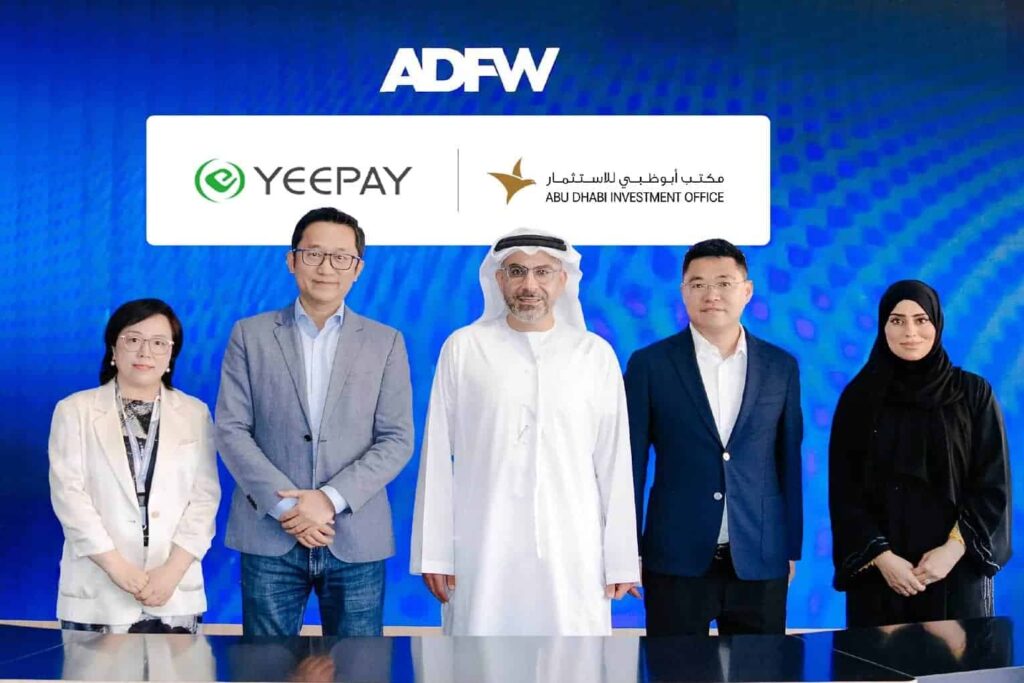
ADIO and YeePay signed a partnership within the scope of Abu Dhabi Finance Week 2025. The two companies stated that they will work together on joint initiatives aimed at increasing the interoperability of digital payment infrastructure between the UAE, China, and other international markets.

A Strategic Contribution to Abu Dhabi’s Fintech Ecosystem

Within the scope of the agreement, YeePay will join the Fintech, Insurance, Digital and Alternative Assets (FIDA) cluster managed by the Abu Dhabi Department of Economic Development (ADDED) and ADIO. This cluster stands out as a strategic initiative aiming to make the emirate a global hub for financial innovations.

Specializing in digital payments, compliant financial infrastructure, and cross-border transaction services, YeePay has a strong presence in Asia and is known for its rapidly growing operations in Europe and the Middle East. The company provides integrated payment solutions, risk management structures, and data-driven financial services that particularly support trade, e-commerce, and investment flows between China and the UAE.

YeePay’s Plan to Develop Next-Generation Payment Infrastructure from Abu Dhabi

YeePay aims to develop and scale innovative and compliant digital payment solutions from its new center in Abu Dhabi. The company plans to create secure, transparent, and efficient cross-border payment and settlement systems by working together with local regulators, financial institutions, and ecosystem partners.

The planned joint initiatives include the following:

  • Strengthening interoperability between local and global payment Networks
  • Developing digital settlement infrastructure for trade and e-commerce
  • Facilitating SMEs’ access to regional and global markets
  • Developing next-generation risk management and compliance solutions

ADIO and YeePay will also evaluate opportunities for knowledge sharing and talent development in fintech, compliance, and innovation, including collaborations with local universities and research institutions. Priority areas include AI-supported fraud prevention, data-driven financing solutions, and advanced analytics.

Leaders Emphasize Abu Dhabi’s Strength as a Global Fintech Hub

ADIO Director General Badr Al Olama stated that this decision shows Abu Dhabi has become an ideal base for global fintech companies: “YeePay’s plan to establish operations in Abu Dhabi reflects the strong and reliable regulatory environment the emirate offers for global expansion. Our collaboration will strengthen the cross-border payment network while creating new opportunities for businesses and investors in priority sectors.”

YeePay Co-Founder Chen Yu, on the other hand, emphasized Abu Dhabi’s strategic importance for regional growth: “Abu Dhabi, with its strategic location, supportive regulatory structure and dynamic digital economy, is an ideal center for YeePay’s growth in the region. Our collaboration with the FIDA cluster will allow us to strengthen our presence in the Middle East and Africa. From here, we aim to develop a secure, transparent, and efficient cross-border payment infrastructure that will facilitate trade, e-commerce and investment flows between China, the UAE and other key markets.”

A New Phase in Global Digital Payment Connections

As cross-border digital trade grows rapidly, YeePay’s expansion into Abu Dhabi is expected to play a critical role in strengthening payment connections between Asia, the Middle East, and Africa. This partnership supports Abu Dhabi’s goal of building one of the world’s most advanced fintech ecosystems, while also demonstrating YeePay’s commitment to shaping the future of secure and seamless international payment systems.

ADIO Launches Concierge Service for UHNWIs and Family Offices

Paribu Acquires CoinMENA at a USD 240 Million Valuation

Paribu, which develops blockchain-based innovative products and services, has acquired CoinMENA through a deal valued at up to USD 240 million. With this transaction, Paribu has executed the largest fintech acquisition in Türkiye’s merger and acquisition history and completed the country’s first international acquisition in the crypto vertical.

CoinMENA Operates in Bahrain and Dubai

CoinMENA was founded in 2020 in Bahrain by Talal Tabbaa and Dina Sam’an. The company operates as a licensed crypto asset service provider under the entity “CoinMENA B.S.C.” CoinMENA FZE, located in Dubai, operates with a Virtual Asset Service Provider (VASP) license granted by the Dubai Virtual Assets Regulatory Authority (VARA).

To date, CoinMENA has raised nearly USD 20 million in investments from funds including BECO, Arab Bank Switzerland, Circle, and Bunat Ventures. The platform serves more than 1.5 million users across over 45 countries. Offering trading in more than 50 crypto assets with eight local currencies including the Bahraini Dinar, UAE Dirham, and Saudi Riyal CoinMENA also positions itself as one of the MENA region’s leading crypto asset platforms through its institutional services such as OTC (over-the-counter) infrastructure.

Yasin Oral: “We Are Proud to Sign Türkiye’s First International Agreement in the Crypto Vertical”

Paribu Founder and CEO Yasin Oral stated: “This agreement represents a milestone not only for Paribu but also for the crypto asset and financial ecosystems of Türkiye and the MENA region. As Paribu, we are proud to have executed Türkiye’s largest financial technology transaction and its first international agreement in the crypto vertical. CoinMENA, one of the leading crypto asset platforms in the MENA region, is a strategic choice for Paribu’s regional expansion goals.

This acquisition, which brings together Paribu’s technology infrastructure and CoinMENA’s regional insights, will set a new standard for the region’s digital asset and financial ecosystem by providing millions of users across MENA with regulated, fast, and secure financial services.”

“We Are Bringing Crypto Sector Consolidation to MENA”

Emphasizing that this acquisition positions Paribu as a licensed operator in the MENA region one of the markets with the highest levels of crypto adoption Yasin Oral continued: “As of 2025, we have completed our operational licensing applications for both our platform and our custody institution. With our ColdShield® technology developed by Paribu engineers, we have set new standards for digital asset custody in Türkiye and globally.

We have received our establishment license for Paribu Yatırım Menkul Değerler A.Ş., our fully authorized brokerage firm. Today, as regulatory frameworks become clearer and crypto sector consolidation becomes a global trend, we are extending this consolidation to the MENA region. From now on, a new chapter begins in Paribu’s growth journey.”

Talal Tabbaa: Regional Expertise Will Merge with Paribu’s Technological Capability

In a joint statement emphasizing the continuous growth and maturation of the MENA crypto asset market, CoinMENA Co-Founder Talal Tabbaa said: “Joining forces with Pari bu will help accelerate this momentum even further. By combining CoinMENA’s regional expertise with Paribu’s technological capability, we are preparing to build a comprehensive financial product ecosystem that will empower users in Türkiye and across the MENA region.”

Co-Founder Dina Sam’an added: “This acquisition represents the most significant milestone in CoinMENA’s history. The agreement validates the strength of the structure we have built so far. Together, we will set new standards for access and innovation in the region’s financial landscape.”

UAE Reinforces Its Status as a Global Hub for Corporate Headquarters in 2025

noon payments and NEOPAY Introduce the First AANI Instant Payment System

In a significant development for digital payments in the UAE, noon payments, in collaboration with NEOPAY, has launched the AANI Instant Payment System. This revolutionary solution simplifies, accelerates, and secures payment processes for merchants across the country. AANI, the first of its kind in the UAE, is seen as a crucial step in the country’s transformation in the digital payment sector.

AANI Instant Payment has been developed in alignment with the UAE’s broader financial modernization goals, particularly in parallel with the UAE Central Bank’s Financial Infrastructure Transformation (FIT) program, and supports the national Al Etihad Payments initiative. This collaboration aims to drive financial innovation and create a more efficient and secure digital economy.

AANI Ensures Instant Payment Collection

The AANI platform allows merchants to collect instant payments from their customers via mobile numbers, email addresses, or QR codes. This system provides a seamless and effortless payment experience for both businesses and consumers. Customers authorize payments directly through their banking apps or the AANI app, ensuring fast, secure, and reliable transactions.

AANI Utilizes NEOPAY’s AI-Powered Solutions

The new system offers merchants the ability to receive instant payments, improving cash flow and significantly reducing delays in payment processing. Using NEOPAY’s expertise in artificial intelligence (AI)-powered solutions, AA NI helps businesses achieve better cash flow management while lowering transaction costs compared to traditional payment methods.

Gadia: noon payments Empowers Businesses with Digital Payment Solutions

Mosam Gadia from noon payments stated, “At noon payments, we are committed to empowering small and medium-sized enterprises (SMEs) with smarter, faster, and more cost-effective digital payment solutions. AANI Instant Payments supports businesses in the UAE, while also aligning with the Central Bank’s vision for financial innovation.”

Pradhan: We’ve Enabled AANI in E-Commerce

Abhijit Pradhan from NEOPAY highlighted AANI’s role in the evolution of digital payments in the UAE: “Our collaboration with noon payments and Al Etihad Payments represents a significant milestone in the UAE’s digital economy. By enabling AA NI in e-commerce, we are offering businesses real-time, secure payment solutions while also supporting the country’s vision for a cashless future.”

Andrea Cianchetti from Al Etihad Payments added that the new system simplifies the process for both customers and merchants: “AANI makes paying and receiving payments incredibly simple. Customers no longer need to share card details; they can complete payments instantly using just a mobile number or QR code. For merchants, this means smoother transactions, faster access to funds, and an overall better customer experience.”

Supporting E-Commerce in the UAE

AA NI Instant Payments promises to revolutionize e-commerce in the UAE by offering merchants a faster and more efficient alternative. With its AI-powered features and commitment to secure transactions, AANI is shaping the future of digital payments. This development increases financial accessibility and supports economic growth in the region.

The collaboration with leading partners like noon payments and NEOPAY represents a significant step towards establishing the UAE as a global hub for digital commerce and innovation.

noon and Jahez Join Forces in Saudi Quick-Commerce Push

DP World, PayPal Sign MoU for Digital Payment Platform

DP World has entered into a Memorandum of Understanding (MoU) with global payments giant PayPal to jointly develop a cross-border digital payments platform. The goal: to drastically shorten settlement times and bring more transparency to international trade transactions.

Under the agreement, merchants, marketplaces, shippers, exporters, and importers will gain access to a system that promises to reduce payment processing from days (or even a week) to mere minutes.

DP World CEO: Speed and Transparency Matter

Sultan Ahmed bin Sulayem, Group Chairman & CEO of DP World, stated that logistics hinges on efficiency and trust. He emphasized that payments must match those values: “Payments linked to logistics are no different our collaboration with PayPal aims to provide our customers with options that are faster and more transparent than traditional systems without compromising security.”

PayPal President & CEO Alex Chriss added that global trade thrives when payments are instantaneous, transparent, and secure: “This partnership sets a new standard. For too long, global businesses have been underserved by traditional cross-border payment systems.”

Integrating Supply Chain and Payments Expertise

The collaboration will combine DP World’s broad logistics and supply chain network with PayPal’s mature payments infrastructure. The aim is to reduce “friction” in cross-border trade and make global business operations more seamless.

This initiative is part of DP World’s broader Digital Payments programme, which also includes plans to incorporate distributed ledger technologies and stablecoin-based settlement solutions via licensed payment partners.

Stablecoin Innovation for Global Trade

As part of the initiative, DP World is designing a multi-currency stablecoin solution to support settlement of cross-border trade transactions. This mechanism is intended to cut settlement costs, speed up processing, and enhance transparency in international payments.

Especially in emerging regions (Asia, Africa, Latin America), long settlement times and limited access to banking infrastructure have impeded trade. DP World’s stablecoin system targets these pain points.

DP World has clarified that it does not plan to launch its own sovereign stablecoin but will partner with existing payment and technology providers.

Implications & Outlook

  • Faster Settlements: In theory, payments that once required days or weeks could clear in minutes or hours.
  • Lower Costs & Barriers: By bypassing multiple intermediaries and correspondent banking fees, cross-border transactions may become more economical—especially for small and medium enterprises.
  • Regulatory Complexity: Deploying stablecoins and digital payment rails across jurisdictions will require compliance with AML/KYC rules and collaboration with authorities.
  • Ecosystem Effect: If successful, the model could drive more “multi-rail” payment architectures, where traditional banking rails coexist with blockchain and stablecoin solutions.

As DP World and PayPal proceed from MoU to implementation, global trade watchers will closely monitor whether this experiment will become a blueprint for seamless, secure digital cross-border payments in the years ahead.

Maktoum Meets PayPal CEO

HSBC to Open Wealth Centre for Affluent Clients in Dubai

Dinesh Sharma, HSBC’s head of international wealth and premier banking for the Middle East, North Africa and Türkiye, told The National that the bank remains fully committed to the region, particularly the UAE, which ranks among its top five global markets.

“As part of our Middle East wealth strategy, we recognise the importance of the UAE,” Sharma said. “Over the next three to four years, we are making the largest investment we’ve undertaken in two decades, focusing on four pillars: infrastructure, people, talent and marketing. We see the UAE positioning itself as a global wealth hub, and our investments are aligned with that vision.” Sharma did not disclose the size of the planned investment.

Wealth Surpasses $700 Billion in the UAE

The new wealth centre will be based at HSBC’s flagship Jumeirah branch. Sharma described the initiative as a natural step given the “historic influx of millionaires into the market.” He noted that personal financial assets in the UAE have surged more than 20 per cent over the past three years, now exceeding $700 billion.

According to Sharma, India has been the largest source of new millionaires in the UAE over the past decade, accounting for about 31 per cent, followed by other Middle Eastern markets at 20 per cent, Russia and the CIS at 14 per cent, and the UK and Europe at 12 per cent. “We are also seeing a growing wave of Chinese investors,” he added, pointing out that China was the fourth-largest real estate investor in the UAE last year, responsible for 9 per cent of transactions.

Number of Millionaires Tops 130,000

Overall wealth growth has pushed the number of millionaires in the UAE to more than 130,000. The new centre will provide HSBC’s premier and high-net-worth clients with a dedicated space to meet and consult with relationship managers. International wealth management and premier banking services remain at the core of HSBC’s UAE strategy, in a market that is the Arab world’s second-largest economy.

HSBC joins a roster of global banks and asset managers that have expanded operations in the UAE in recent years, turning the country into a magnet for international wealth migration. Investor-friendly reforms and the UAE’s role as a gateway to the Middle East, Africa and South Asia have helped attract major family offices, private banks and global financial institutions.

A report by Henley & Partners and New World Wealth projects that the UAE will draw a record 9,800 relocating millionaires in 2025, building on the estimated 81,200 millionaires and 20 billionaires already residing in Dubai as of 2024.

Scrutiny Over Client Base

HSBC has recently faced reports that it dropped more than 1,000 wealthy clients in the region as regulators increased scrutiny of high-risk accounts. Bloomberg and the Financial Times reported that the bank cut ties with individuals from markets such as Lebanon, Egypt and Qatar, some with assets exceeding $100 million.

Despite the move, Barry O’Byrne, HSBC’s chief executive for international wealth and premier banking, stressed that the bank remains “absolutely committed” to both its Middle East and Swiss wealth businesses and is pursuing significant growth in the region.

Sharma added that the Middle East, North Africa and Türkiye account for a vital share of the group’s overall revenues, generating 37 per cent of HSBC Middle East’s total revenue in 2024 and 13 per cent of its global wealth and premier banking revenue.

Looking ahead, Sharma said HSBC intends to expand further by opening additional wealth centres in the region, with Abu Dhabi under consideration as a potential location.

Middle East Can Lead the Next Decade of Digital Commerce

HALA Secures $157 Million Investment

The fintech company HALA, which provides embedded financial services to SMEs, raised $157 million in one of the region’s biggest Series B rounds. The funding was led by The Rise Fund, TPG’s multi-sector global impact investing strategy, and Sanabil Investments, a Public Investment Fund (PIF) company. This marks The Rise Funds’ first investment in Saudi Arabia and the wider Middle East. The round represents one of the largest fintech Series B financings in the region.

Other participants included QED, Raed Ventures, Impact 46, Middle East Venture Partners (MEVP), Isometry Capital, Arzan VC, BNVT Capital, Kaltaire Investments, Endeavor Catalyst, Nour Nouf Ventures, Khwarizmi Ventures, and Wamda Capital.

Strengthening HALA’s Position in Saudi Arabia

The funds will be used to strengthen HALA’s position in the Saudi market, expand embedded financial services and lending products designed to support SMEs and freelancers, and drive the company’s regional expansion. The investment highlights the strength of company business model, favorable demographics, and potential to create large-scale social impact. The fundraising follows HA LA’s impressive year-on-year growth, validating the robustness and scalability of its operating model. The model is designed for sustainable growth while also supporting Saudi Vision 2030’s goal of significantly increasing SMEs’ contribution to GDP.

“A Turning Point for HALA”

Esam Alnahdi, Co-founder and Chairman of HALA, said: “This landmark investment is a turning point for HALA, reflecting our relentless pursuit of innovation and excellence in serving small businesses. We are honored that our new investors recognize the potential of our vision and the impact we aim to make in the SME ecosystem. Our journey is just beginning, and this support fuels our drive to create meaningful change.”

About HALA

HALA Payments was founded by Esam Alnahdi (Chairman) and Maher Loubieh (CEO). Based in Saudi Arabia, it is a leading fintech company focused on empowering SMEs with innovative financial services. HA LA offers a comprehensive suite of embedded financial solutions, including business accounts, card issuance, payment and transfer services, POS solutions, financing, and corporate cards. The company currently serves more than 140,000 businesses and processes over $8 billion in annual transactions.

Saudi Arabia’s Outward Remittances Rise Over 15% in July 2025

Saudi Arabia witnessed a significant increase in outward remittances in July 2025, with the total amount sent abroad rising by 15.4% year-on-year to reach approximately 14.91 billion Saudi Riyals (around $3.95 billion).This surge highlights ongoing economic activity within the Kingdom and the growing financial engagement of both Saudi citizens and expatriate workers with international markets. The data, released by the Saudi Arabian Monetary Authority (SAMA) in their latest report, reflects broader trends in remittance flows and provides insight into economic dynamics affecting the Kingdom (Arab News).

Detailed Breakdown of Remittance Growth

Outward remittances encompass the funds transferred by both expatriate workers living and working in Saudi Arabia and Saudi nationals sending money abroad for various reasons, such as family support, investment, education, and business activities. According to the latest figures from SAMA, the remittances sent by Saudi citizens themselves increased by 13.8% in July, totaling 6.61 billion Saudi Riyals (about $1.76 billion). This rise signals growing disposable incomes and increased financial interactions with the global economy by Saudi individuals (Saudi Arabian Monetary Authority).

Expatriate workers, who constitute a significant portion of Saudi Arabia’s labor force, have also increased their remittances substantially. During the first seven months of 2025, foreign workers transferred a total of 98.6 billion Saudi Riyals ($26.3 billion), marking a 22.26% rise compared to the same period in the previous year. These figures underscore the Kingdom’s role as a major regional economic hub and a vital source of remittance flows for neighboring countries and global markets (World Bank Remittance Data).

Economic Factors Driving Remittance Growth

Several economic factors have contributed to the increase in remittance volumes from Saudi Arabia. Firstly, the Kingdom’s ongoing economic diversification efforts under Vision 2030 have resulted in higher employment rates and wage growth across various sectors, especially outside the oil industry. As more individuals gain stable income sources, both locals and expatriates are better positioned to send money abroad (Arab News).

Secondly, improvements in the financial infrastructure and payment technologies have made cross-border transactions more efficient, secure, and accessible. Digital banking services, mobile payment platforms, and remittance-focused fintech companies have all contributed to reducing transaction costs and enhancing the speed of money transfers. These innovations encourage higher remittance volumes by simplifying the process for senders.

Thirdly, global inflationary pressures and rising costs of living in both Saudi Arabia and recipients’ home countries have also influenced remittance patterns. As families abroad face increased financial needs, expatriates often remit larger sums to support relatives, education expenses, healthcare, and day-to-day costs (World Bank).

Regional and Global Implications

Saudi Arabia’s remittance outflows hold considerable importance for many recipient countries, particularly in the Middle East, South Asia, and Africa. Countries such as India, Pakistan, the Philippines, and Egypt benefit significantly from remittances sent by expatriate workers in Saudi Arabia. These funds provide critical support for household incomes, contribute to poverty alleviation, and fuel local economic activities.

The rise in outward remittances can thus be seen as a reflection of Saudi Arabia’s economic position as a financial and labor hub in the region. For recipient countries, continued remittance inflows support economic stability and development efforts. As such, these flows play a crucial role in strengthening bilateral economic ties between Saudi Arabia and the wider international community (Arab News).

Policy and Regulatory Environment

The Saudi Arabian Monetary Authority (SAMA) plays a key role in overseeing remittance activities and ensuring regulatory compliance. Its policies are designed to protect consumers, prevent money laundering, and promote transparency in cross-border financial transactions. By maintaining a robust regulatory framework, SAMA helps build trust in the financial system and supports the Kingdom’s reputation as a secure environment for international money transfers.

Moreover, the government’s push for financial inclusion and digital transformation aligns with efforts to increase remittance accessibility. Initiatives to integrate more users into the formal financial system aim to reduce reliance on informal channels, which are often costlier and less secure.

Future Outlook for Remittances

Looking ahead, remittance flows from Saudi Arabia are expected to continue growing, driven by demographic trends, economic diversification, and technological advancements. The expatriate workforce is projected to remain sizable, while Saudi citizens are increasingly engaging in international financial activities, including investments and overseas education payments.

Furthermore, the Kingdom’s Vision 2030 goals emphasize enhancing the digital economy and financial services sectors. This focus will likely spur further innovations in cross-border payment solutions, fostering more efficient remittance channels and encouraging higher transaction volumes.

However, potential challenges such as geopolitical tensions, global economic uncertainties, and changes in labor migration patterns could impact future remittance trends. Continuous monitoring and adaptive policy measures will be essential to maintain steady growth and mitigate risks (World Bank Remittance Data).

Conclusion

Saudi Arabia’s outward remittance growth in July 2025, exceeding $4 billion and rising by over 15%, reflects a dynamic economic environment and deepening international financial connections. This trend not only benefits the Kingdom’s expatriate community and Saudi citizens but also provides vital economic support to many countries reliant on remittance inflows.

As the Kingdom advances its Vision 2030 objectives and strengthens its financial infrastructure, remittance flows will remain a key indicator of economic health and global integration. Policymakers, financial institutions, and market participants will need to collaborate to sustain growth, enhance service quality, and ensure that remittance channels remain secure, affordable, and accessible for all users.

Gmail Adds Purchases Tab for Online Orders

Google is adding a new feature to Gmail that will make tracking online purchases easier and more organized. The company is introducing a dedicated “Purchases” tab that will group order confirmation emails and shipping updates in one place. This tab will allow users to quickly access relevant purchase information without having to search their inbox manually. According to The Verge, the feature is rolling out in the coming weeks and will be available on both mobile and desktop versions of Gmail.

The new tab is an evolution of Gmail’s existing package tracking features, which already allow users to monitor shipping information pulled directly from order confirmation emails. Previously, users had to rely on individual shipping update cards or dig through their Promotions or Primary tabs to find important purchase details. Now, with this new Purchases tab, all of that information will be gathered and presented in a single, easy-to-navigate section of the inbox.

This update comes at a time when online shopping is at an all-time high. Consumers are placing more orders than ever, across various platforms including Amazon, Etsy, eBay, and independent online stores. Google’s move is a response to a growing need for inbox tools that can manage and organize a flood of transactional emails. As TechCrunch noted in a related product update earlier this year, users increasingly expect intelligent inbox management features that offer personalized, automated organization.

How the Purchases Tab Works

The Purchases tab will automatically identify and sort purchase-related emails, including order confirmations, shipping notices, delivery estimates, and digital receipts. The feature uses Gmail’s machine learning models to parse email content and extract relevant data such as tracking numbers, expected delivery dates, item names, and seller information.

Once detected, these emails will be removed from the Promotions or Primary tabs (depending on the user’s settings) and relocated into the Purchases tab. Users can click on any order card to see detailed information, such as the original order date, expected delivery window, item summary, and even links to track the shipment or contact the seller.

In addition to organizing purchase-related content, the new tab will also help reduce inbox clutter. Many users report that their inboxes are overrun with order-related emails, especially during peak shopping seasons. The Purchases tab promises to reduce this chaos by keeping such messages in one streamlined section.

Google has confirmed that the feature is opt-in, and users will be able to disable it if they prefer their emails to remain in existing tabs like Primary or Promotions. For those who do enable it, the tab will appear in the sidebar alongside other categories like Social, Updates, and Promotions.

Integration with Existing Gmail Features

The Purchases tab will integrate seamlessly with Gmail’s existing order-tracking cards, which were introduced in late 2022. These cards pull data from email content and display a clean, visual summary of the delivery status, similar to package tracking in Google Search. Users will still see these tracking cards in the inbox, but now they’ll also be grouped inside the Purchases tab for quick reference.

In addition, Gmail’s notification system will remain unchanged. Users will continue to receive alerts for major shipping events such as “Your item has shipped” or “Out for delivery” on their phones and other devices. However, the tab will now serve as a central hub for viewing the complete history of a transaction, from the initial order to the final delivery.

A Smarter Promotions Tab

Alongside the Purchases tab, Google is also revamping the Promotions tab in Gmail. This update will introduce a smarter sorting system that prioritizes active deals and personalized promotions. According to The Verge, Gmail will now show highlighted deals from brands that users engage with most frequently. These promotions will be surfaced at the top of the Promotions tab and will include limited-time offers, coupon codes, and seasonal discounts.

Users will have the option to toggle between “Most Relevant” and “Most Recent” views, allowing them to prioritize either current offers or the latest promotional emails. Google says this system is powered by user interaction history, email open rates, and other engagement signals to deliver better-targeted deals.

This move reflects a broader trend among email providers to offer more intelligent, context-aware features that align with user behavior. Services like Microsoft Outlook and Apple Mail have also introduced features in recent years that prioritize emails based on relevance or sender reputation.

Privacy and Control

As with any Gmail feature, privacy remains a major concern for users. Google has emphasized that the Purchases tab does not represent a change in how user data is handled. The feature is powered by automated processing of emails already stored in the user’s inbox and does not involve sharing data with third parties.

Users will retain full control over the feature and can opt out of the Purchases tab at any time. Emails will remain intact and can be viewed in their original categories. Google also reassures users that no data from this feature will be used for ad targeting purposes.

This is in line with Google’s ongoing efforts to maintain transparency in how Gmail processes and categorizes email content. The company has faced scrutiny in the past over how it analyzes user inboxes for features like Smart Compose and auto-replies, but recent updates have put more control in the hands of users.

Competitive Landscape and Industry Implications

Google’s update comes as other email platforms also race to offer better ways to manage transactional emails. Amazon, for example, sends detailed delivery notifications through its app and via text, while third-party services like Slice and Parcel attempt to centralize tracking across multiple retailers. However, Google’s approach is unique in that it integrates this functionality directly into the email client itself, removing the need for external apps or browser extensions.

This native integration could give Gmail a competitive edge, particularly among users who shop frequently online. As noted by 9to5Google, Gmail’s ability to combine intelligent email sorting with real-time delivery updates may position it as the most user-friendly option for managing online orders within an inbox.

Furthermore, this update may influence how retailers structure their transactional emails. With Gmail now highlighting and categorizing purchase-related content more aggressively, brands may start optimizing their confirmation emails for better compatibility with Gmail’s new tab structure. This could lead to cleaner, more informative email formats that benefit both senders and recipients.

Rollout Timeline and Availability

Google has stated that the Purchases tab will roll out to all personal Gmail users over the coming weeks. It will be available globally and will not require a separate download or app update, though users may need to enable the tab manually within Gmail’s settings.

Workspace users (formerly G Suite) and enterprise customers will not receive the update immediately. Google has not confirmed whether the feature will expand to corporate Gmail accounts in the future.

As the update rolls out, users should keep an eye on their Gmail interface, especially in the left-hand sidebar, where the new Purchases tab will appear.

A New E-Commerce Payment System Developed in Saudi Arabia

SAMA’s new e-commerce payment interface will take Saudi Arabia one step further in the field of digital payment systems. Additionally, it will ensure that the e-commerce ecosystem becomes more secure, efficient, and integrated. The new system allows e-commerce service providers to integrate with the local “Mada” payment network. It also enables them to connect to global payment networks. In this way, consumers can be offered broader, safer, and faster payment options.

The New Payment System Aims to Adapt to the Needs of E-Commerce

The new e-commerce payment interface offers simplified and unified technical specifications for users. At the same time, it makes online payment processes more efficient. This innovation will also provide a centralized registry service for banks and financial institutions, supporting them in offering innovative financing solutions to e-commerce businesses.

This strategic step by SAMA aims to increase the efficiency of the national payment infrastructure and to adapt to the rapidly growing needs of e-commerce. Furthermore, thanks to advanced security technologies such as payment card tokenization, electronic payment transactions will become much more secure.

The new system will help e-commerce businesses grow. At the same time, it will contribute to the goals of Saudi Arabia’s fintech strategy. It will also lead to an increase in digital payment indicators. This move will position Saudi Arabia more strongly in the global payment industry. It will also facilitate the integrated operation of local and international payment gateways.


Record Surge in Saudi Arabia’s E-Commerce Sales

E-Commerce Sales via Mada Cards Rise by 57% in Saudi Arabia

Online transactions through Mada cards in Saudi Arabia surpassed 132 million. Meanwhile, the total value of POS spending in physical stores declined. These figures are based on data published by the Saudi Central Bank (SAMA). According to the data, online transactions made via Mada cards exceeded 132 million in April 2025, representing a year-on-year increase of 40.75 percent.

These figures indicate a significant rise in the number of Saudi consumers shopping through websites and mobile applications. The data includes online purchases made using linked debit cards and digital wallets. However, credit card transactions processed through international networks such as Visa are not included in the statistics.

Mada is known as the “Saudi Payment Network.” As the Kingdom’s national electronic payment system, Mada connects all ATMs and point-of-sale (POS) terminals to a central payment network. The system enables millions of Saudi citizens to make payments directly from their bank accounts when shopping both in physical stores and online. It provides both debit card and prepaid card services.

The Rise of Mada Reflects Growing Trust in E-Commerce

Mada transactions utilize near-field communication (NFC) technology, which enables secure, contactless payments. Consumers can make instant payments simply by tapping their card or smartphone at payment terminals. The Mada system has become a cornerstone of Saudi Arabia’s strategy to transition toward a cashless economy.

The system ensures fast and secure transactions across physical and digital platforms. The rapid adoption of Mada-enabled digital payments reflects increased consumer confidence in online shopping and highlights the success of the country’s efforts to modernize its payments infrastructure.

POS Spending Declines

According to SAMA’s data, the total value of POS transactions at physical retail locations dropped by 1.38 percent year-on-year, reaching SR52.22 billion. Despite this slight decline in sales, the number of POS transactions rose by approximately 11.6 percent during the same period, totaling 891.5 million.

There are now over 2 million POS terminals across the country. This represents a 16.37 percent increase compared to the previous year and aligns with the goal of expanding electronic payment acceptance nationwide.

SAMA data also shows that the food & beverages and dining categories ranked first and second in POS spending for April, each with expenditures of approximately SR7.7 billion. However, the absence of the Ramadan effect in April this year — which fell toward the end of the month last year — may have limited growth in these categories.

Fintech Innovations Supporting Growth

In April, SAMA signed an agreement with Google. According to the agreement, Google Pay will be launched in Saudi Arabia using the Mada payment infrastructure. Expected to go live later in 2025, this integration will allow users to add their Mada-linked debit cards to Google Wallet for both contactless phone payments and online shopping.

These innovations not only enhance user convenience but also contribute to normalizing cashless spending across all age groups, reinforcing the establishment of a digital payment culture.