
WORLDEF ISTANBUL 2026 - Upcoming Event

Register Now

JAFZA to Strengthen UAE’s Logistics Infrastructure with $24.5 Million Investment

Jebel Ali Free Zone (JAFZA) is investing $24.5 million (AED 90 million) in the second phase of its Logistics Park to meet the rising demand for high-quality logistics and warehousing solutions.

In a strategic move aligned with national growth goals, increasing market demand, and global supply chain trends, JAFZA is set to invest $24.5 million in the second phase of its Logistics Park. This expansion will increase the park’s total area to over 922,000 square feet. The expansion will also include 360,000 square feet of Grade-A infrastructure, including customizable units, temperature-controlled warehouses, and advanced office spaces.

$235.8 Billion Target for the Transportation and Logistics Market

The transportation and logistics market in the Middle East and Africa is expected to reach $235.8 billion by 2031. This expansion not only aims to provide value-added services such as labeling and packaging but will also support the UAE’s goal to increase its logistics sector to $200 billion annually within the next seven years.

Abdulla Al Hashmi, Chief Operating Officer of Parks and Zones at DP World GCC, said: “The expansion of JAFZA Logistics Park reflects our commitment to helping businesses compete globally while simultaneously attracting foreign investment into Dubai.” Al Hashmi further explained, “Phase 1 was fully leased before its completion, demonstrating the strong demand for high-quality logistics and warehousing. Phase 2 takes this a step further by offering flexible, high-quality solutions to support growth across multiple sectors.”

How the Expansion Will Meet the Rising Demand for Supply Chain Infrastructure

JAFZA serves as a key hub for global trade and is a central driver of economic growth in the UAE. Currently, it supports over 160,000 jobs, hosts 10,890 companies from 150 countries, and generates AED 620 billion ($168.8 billion) in trade annually. The first phase of the Logistics Park was completed in November 2023, featuring temperature-controlled warehouses, pharmaceutical storage units, and office spaces, spanning 562,507 square feet.

The expansion of JAFZA Logistics Park will offer advanced capabilities and increased capacity to meet the growing demand for supply chain infrastructure. With the significant expansion of the park to more than 922,000 square feet, JAFZA will be able to accommodate more businesses across industries such as electronics, food, automotive, pharmaceuticals, and fashion.

New infrastructure, including modern office spaces, dry and pharmaceutical-grade storage units, and enhanced energy capacity, will allow businesses to tailor their logistics setups according to supply chain requirements, increasing flexibility and operational efficiency.

The expansion of JAFZA Logistics Park will directly support the UAE’s plans to grow its logistics sector to AED 200 billion ($54.5 billion) annually within the next seven years.

What is JAFZA?

JAFZA (Jebel Ali Free Zone Authority) is the governing body of the Jebel Ali Free Zone in Dubai, UAE. JAFZA offers businesses opportunities such as tax advantages, duty-free trade, and modern infrastructure in a region that serves as a global trade hub. The zone is a strategic platform that encourages international companies to invest in the UAE. As an important logistics and trade center contributing to global commerce, JAFZA also provides a favorable investment environment for businesses across various sectors.


UAE Warehouse Rents Expected to Rise by Up to 10%

End-to-end trade facilitation in cross-border e-commerce: Stelcore

Stelcore enables brands to engage in global trade with full transparency and ownership by partnering with them. Currently operating in over 16 countries, Stelcore provides comprehensive end-to-end trade facilitation services. These services include listing brands on destination marketplaces and/or setting up their own D2C (Direct-to-Consumer) websites. Brands are relieved from the complexities of registration, regulatory compliance, and other operational challenges in target markets, as Stelcore manages these processes seamlessly. This allows brands to focus solely on scaling their business and increasing sales.

Speaking to WORLDEF E-COMMERCE, Stelcore Partner Viswanath S emphasized that the company differentiates itself by offering a comprehensive trade facilitation ecosystem across 16+ countries. He stated, “While competitors often provide fragmented solutions, Stelcore offers an integrated approach that enables brands to expand into global markets without complexity.”

Why Stelcore Stands Out?

  • Transparency and ownership: Unlike other players, Stelcore partners with brands to provide complete transparency and control over operations, allowing businesses to scale confidently.
  • End-to-end services: From being an Importer or Seller on Record to managing compliance, 3PL logistics, warehousing, D2C website management, and payment reconciliation, Stelcore ensures a smooth, hassle-free expansion process.
  • Strategic focus on D2C growth: In addition to marketplace listings, Stelcore empowers brands to build their D2C presence, an often-neglected yet critical growth driver.
  • Local expertise with global reach: Stelcore combines its deep understanding of local regulations, customer behavior, and operational nuances with a global footprint, giving brands a competitive edge.

Stelcore Provides end-to-end Support to Brands Globally

Viswanath S shared the following insights regarding the services they offer to global e-commerce brands: “Stelcore, with its long-standing expertise in the industry, has been providing a complete suite of comprehensive cross border and local trade enabling services, helping numerous brands and sellers succeed in the global markets.

Stelcore leverages years of experience to offer end-to-end brand support, including Importer on Record, Seller/Merchant on Record, Customer Relationship Management, 3PL Logistics, Warehousing, custom platforms, and payment reconciliation. These services enable brands to reach customers in 14+ global markets, driving sustainable growth. D2C (Direct to Consumers) serves as an additional sales channel that complements a brand’s existing sales strategies, offering an extra layer of support to enhance long-term, sustainable brand growth.”

Who is Viswanath S?

Viswanath S described his career with the following words: “I have extensive experience in the Middle East’s Retail and e-commerce sectors ~ 15 years, where I’ve had the opportunity to lead transformative initiatives. I am ex Noon / Namshi  (the biggest ecommerce player in the Middle east) & M H ALshaya  (the largest retail franchise) wherein cumulatively I have spent the rich part of my career.

My work has focused on building cross-border marketplace, growth and strategy, scaling private label businesses, product development, retail operations, developing streamlined operational frameworks for major platforms in the region to name a few.  I’m a Chartered Accountant and Certified Internal Auditor, and I’ve also been deeply involved in mentoring and investing in startups across various industries, fueling my passion for growth and innovation.”


Thomas Kipp: Access to Real-Time Data Will Be Crucial in the Coming Years

Rabbit Launches Operations in Saudi Arabia

The company has established a regional headquarters in Riyadh and operates through a network of strategically located dark stores across key neighborhoods. With a commercial license granted by the Saudi Ministry of Investment in 2022, Rabbit is prioritizing Saudi Arabia as a key market within its broader Gulf Cooperation Council (GCC) expansion plan. The company’s vision closely aligns with the goals outlined in Saudi Arabia’s Vision 2030.

E-Market Opportunity in Saudi Arabia Exceeds $2 Billion

Saudi Arabia presents an ideal market for Rabbit’s fast, convenient, and reliable service model. Online grocery shopping penetration currently stands at just 1.3%, compared to 5.3% in the UAE and 4.8% in the US—highlighting a significant growth opportunity. With a total grocery and food market worth $60 billion, even a 4% online penetration would equate to an addressable market exceeding $2 billion.

20-Minute Delivery Powered by AI and Efficiency

Rabbit’s business model integrates AI-driven product recommendations with ultra-fast delivery—fulfilling customer orders in as little as 20 minutes. Backed by high operational efficiency, the company addresses one of the most complex challenges in the quick commerce space. Success in this fast-evolving sector hinges on optimizing logistics, customer satisfaction, and sustainable unit economics—areas where Rabbit continues to innovate and improve.

Over 40 Million Deliveries to 1.4 Million Users

Rabbit’s entry into Saudi Arabia follows sustained, profitable growth in Egypt. Over the past three and a half years, the platform has served 1.4 million users and completed more than 40 million product deliveries. Revenue has grown 8.5x in the last two years. The company focuses on stocking top household essentials while prioritizing local customer preferences. More than 60% of Rabbit’s suppliers are local, supporting the company’s commitment to promote Saudi brands as it scales nationwide.

“We’re Building Rabbit Saudi Arabia for Saudis, by Saudis”

Co-founder and CEO Ahmad Yousry stated: “We’re proud to announce Rabbit’s expansion into Saudi Arabia. As a hyperlocal company, we’re bringing our advanced technology and operational expertise to transform grocery shopping for Saudi households—especially through the 20-minute delivery of local favorites. We’re building Rabbit Saudi Arabia for Saudis, by Saudis.”


DHL eCommerce enters Saudi Arabian market

Thomas Kipp: Access to Real-Time Data Will Be Crucial in the Coming Years

Thomas Kipp, Senior Advisor for Transportation, Travel, and Logistics at Roland Berger, emphasized that data will be the most significant trend in technology in the future. Speaking at the WORLDEF DUBAI event, Kipp stated, “The point of sale can be either retail or online, but all these processes must work together. From a data perspective, access to real-time or near real-time data will be extremely important over the next 5-6 years.”

A Seasoned Expert in Digital, E-Commerce and Logistics Sectors

Having held C-level roles in leading Logistics companies like DHL Group, Aramex and Naqel Express for the past 20+ years, Kipp has developed extensive expertise across digital, e-commerce as well as related Logistics sectors. He is currently a Senior Advisor at Roland Berger, a leading global consulting firm, where he focuses on logistics, transportation, and supply chain issues, particularly in the Middle East, while also working on international projects.

“Access to Real-Time Data Will Be Crucial in the Next 5-6 Years”

Kipp reiterated that data will be the key technological trend of the future, explaining, “Why do I say this? Because what you truly need to understand is how to conduct business with your end-to-end supply chain and how to connect suppliers, logistics providers, and points of sale. Whether the point of sale is retail or online, all these processes must operate in harmony. In terms of data, access to real-time or near real-time data will be of paramount importance over the next 5-6 years.”

“Retail Essentially Functions as a Warehouse”

Kipp further elaborated: “How do you optimally balance service levels at the point of sale with inventory levels and products in transit? Suppliers must also grasp this concept because they are responsible for ensuring that manufactured products are available for sale. I believe this is the future of supply chains and data. Looking ahead, real-time data access will be essential for supply chain management, as it plays a crucial role in warehouse operations.”

He continued: “Today, you can sell products online while simultaneously operating brick-and-mortar stores. Essentially, your retail store functions as a warehouse. This raises an important question: How does this impact inventory management? When a product is taken from the store for shipment, it results in a reduction in inventory. If you do not recognize this within a couple of hours, inventory balance, replenishment, and calculations may be inaccurate. This is why access to near real-time data will be critical. Many companies are already excelling in this area.”

Challenges in Cross-Border E-Commerce

Kipp also discussed challenges in cross-border e-commerce, stating, “The primary challenge is how to create a reliable shopping experience. For instance, if you and I want to purchase something from the U.S., it may seem simple because targeting that market is crucial. However, how can we ensure a trustworthy experience? What about my personal data? Can I pay using the same payment method I use domestically? Can I shop with the same confidence as I do locally?”

He added: “When considering cross-border e-commerce, it is essential to clearly identify the target consumer. Is the consumer in the target market the same as one in my home country? Take China as an example: If I were living in China, I would use eBay, WeChat, and expect customer service in Chinese. If you aim to sell to China, are you prepared to invest in organizing this experience to gain consumer trust in your product, service, and overall shopping experience? These are key considerations for businesses embarking on this journey.”

Understanding and Managing Returns

Another major issue, according to Kipp, is managing returns efficiently on a global scale. “Although there are regional solution providers, return processes remain complex and challenging. Some companies are developing scoring models to predict return probabilities based on factors such as product profiles, consumer behavior, and country trends. While this is helpful, businesses must still understand how to manage returns effectively.”

Touching on return-related technologies, Kipp highlighted that “Dubai Customs utilizes blockchain technology, which can facilitate seamless and verified transactions. Solutions like these are essential. In Dubai’s customs and logistics sector, there are examples of how such technology simplifies processes for everyday consumers.”

“For Me, the Key Word Is Resilience”

Kipp also addressed human logistics, emphasizing the importance of resilience in supply chain management. “When I think about supply chains and their future, the key word that comes to mind is ‘resilience.’ Resilience is about how well a supply chain responds to and recovers from disruptions. One of the best examples is COVID-19. Since the pandemic, I feel like the industry has been in a constant state of crisis, driven by various factors. COVID-19 was an unexpected crisis, but in recent years, we’ve witnessed increasing geopolitical tensions and trade issues. Take the Red Sea situation, for example—these are real challenges impacting our sector. The critical question is: How can we respond effectively?”

Kipp elaborated: “Many e-commerce companies assume they are exempt from these challenges because they are accustomed to dealing with shipping disruptions, particularly to the U.S. However, if trade issues persist, can e-commerce sellers still ensure a reliable and predictable supply of products? Or should they rethink their approach?”

Expanding Supply Base and Strategic Partnerships

Kipp suggested that businesses should consider diversifying their supply base. “Another question is how to collaborate with different partners for domestic delivery and logistics. Strategic partnerships play a crucial role when establishing an e-commerce infrastructure or ecosystem. Additionally, predicting consumer demand is essential for financial planning. For instance, in this region, we know that certain food products like sweet potatoes are highly demanded during Ramadan. How do you forecast this demand accurately? How can you improve your predictions and adapt your business model accordingly? How do you manage inventory to avoid excessive stockpiling?”

Proactive Crisis Management Is Essential

Kipp cited Sheehan as an example, explaining, “Sheehan can launch a new product within seven days—imagine that. But how long will that product remain in demand? How do you predict that? And how do you manage a supply chain capable of launching 5,000 to 8,000 new products daily? This requires data-driven decision-making and a robust supply chain management strategy.”

Concluding his remarks, Kipp emphasized the importance of forward-thinking leadership in crisis management. “Very few companies have taken the time post-COVID to reflect on and prepare their organizations for future disruptions. Responding to a crisis often requires a complete reevaluation of organizational models and decision-making processes. Decision-making must be delegated to those closest to the disruption. Whether the issue arises at a port, an airport, or in transit, no one will wait for instructions. This is why businesses must proactively engage in crisis management to be well-prepared for future challenges.”

Who is Thomas Kipp?

Thomas Kipp works as a Senior Advisor for the Transportation, Travel, and Logistics practice at Roland Berger, a leading international consulting firm. He is based in Dubai. With more than 25 years of experience in the logistics, transportation, postal, and e-commerce sectors, Thomas has held various C-level positions and global operational responsibilities. He moved to the GCC region in 2020. Thomas previously served as the CEO of Naqel Express and Group COO of Aramex PJSC. Prior to this, he was a Divisional Board Member at DHL Group for 14 years, where he held various global roles within the Postal and Parcel/E-commerce division.

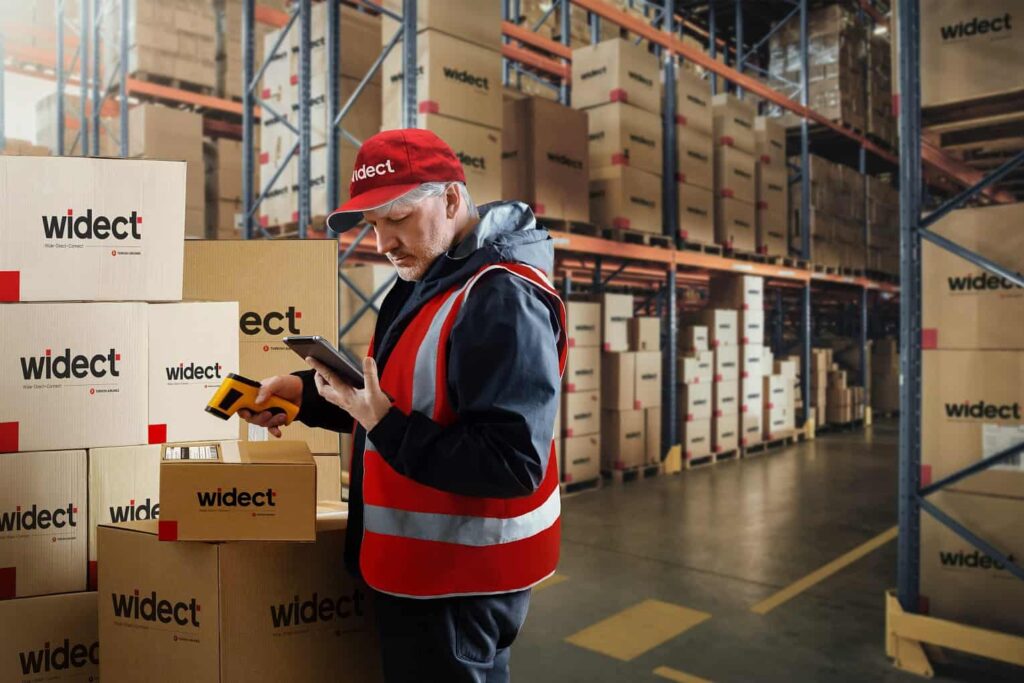
Widect: The new global address for e-commerce

DHL and Temu Sign Memorandum of Understanding

DHL Group, one of the world’s leading logistics companies, is providing its logistics expertise to the Chinese e-commerce marketplace Temu, including multimodal transportation solutions. DHL positions itself as an ideal business partner to support Temu’s growth in both existing and new markets. In this context, DHL and Temu have signed a Memorandum of Understanding (MoU).

The new MoU aims to support local small and medium-sized enterprises (SMEs) in growth-potential markets such as Eastern Europe and the Middle East, as well as in established markets. According to the agreement, DHL will support Temu’s “local-to-local” initiative, which is expected to constitute 80% of the company’s sales in Europe.

“We Are Excited to Take Our Cooperation with Temu to the Next Level”

Katja Busch, Chief Commercial Officer and Head of DHL Customer Solutions & Innovation, made the following statement regarding the agreement: “Through different divisions of DHL, we offer a wide range of logistics solutions, including air freight and last-mile delivery services. We are thrilled to take our cooperation with Temu to the next level. By combining our logistics capabilities with Temu’s innovative platform, we can create more efficient, compliant, and practical solutions for both consumers and local businesses in the markets we serve.”

Qin Sun, Co-Founder of Temu, said: “This letter of intent marks a significant step in our collaboration with DHL Group. Its broad network and logistics capacity will support our mission to improve access to affordable products for consumers and expand growth opportunities for sellers.”

DHL to Support Temu’s Operations in Europe

As part of the MoU, DHL will leverage its logistics expertise to support Temu’s operations in Europe, particularly the “local-to-local” model. This model enables local suppliers to sell on the Temu platform and allows local orders to be fulfilled from local sources.

Temu expects 80% of its total sales in Europe to come from this model. Additionally, the e-commerce platform will also enable Europe-based sellers to reach global markets in the future. This situation especially allows SMEs to scale and expand their businesses. DHL will also support Temu in increasing its presence in e-commerce markets, including in the Europe, Middle East, and Africa (EMEA) region.

About DHL Group

DHL Group is one of the world’s leading logistics companies. Connecting people and markets, DHL is a facilitator of global trade. The company aims to be the first choice worldwide for customers, employees, investors, and in the field of sustainable logistics.
To this end, DHL Group focuses on accelerating sustainable growth through profitable core logistics businesses and group growth initiatives. The Group contributes to the world through sustainable business practices, corporate citizenship, and environmental activities.

DHL Group is home to two strong brands:

  • DHL offers a wide range of services including parcel, express, freight transportation, and supply chain management, as well as e-commerce logistics solutions.
  • Deutsche Post is the largest postal service provider in Europe and the market leader in Germany’s postal sector.

DHL Group employs approximately 602,000 people in more than 220 countries and territories worldwide. The Group generated around €84.2 billion in revenue in 2024. It aims to achieve net-zero emission logistics by 2050.

About Temu

Temu is a global e-commerce platform that connects consumers with millions of manufacturers, brands, and partners. Operating in more than 90 markets worldwide, Temu is committed to offering affordable and quality products to deliver a better life to its customers. Founded in 2022, Temu’s mission is to create an inclusive environment where consumers and businesses can thrive together.


DHL eCommerce enters Saudi Arabian market

Rakuten Develops Autonomous Robot Deliveries

According to Statista, Japan‘s food delivery market reached a value of $5.41 billion in 2024. Demand increased during the pandemic and remains at a high level. Based on this data, Rakuten Group is advancing autonomous delivery services in Japan with Avride’s advanced U.S.-based robots to improve last-mile logistics.

Features of Rakuten’s New Robots

The latest delivery robots are equipped with LiDAR (Light Detection and Ranging) sensors, similar to those used in autonomous vehicles, along with Avride’s specialized autonomous driving algorithm. The new robots feature a 54-liter compartment, more than double the previous capacity, allowing them to carry larger orders while making fewer trips on sidewalks. Additionally, although the robots can carry multiple orders simultaneously, they deliver only one order per trip.

Rakuten’s new autonomous robots can make nighttime deliveries thanks to LiDAR and ultrasonic sensors. They are also capable of operating in rainy conditions with up to 20 millimeters of precipitation per hour. However, operations are halted for safety reasons in cases of heavy rain, snow, or strong winds. Each robot can run for up to 12 hours on a single charge, with a charging time of approximately 3.5 hours.

“We Aim to Position Robots as Part of the Infrastructure”

Fukutaro Yamashita, senior manager of Rakuten’s Unmanned Solutions Department, stated, “Robots can operate independently without assistance, but according to Japanese regulations, remote operators are required. However, the operator does not need to be physically present next to the robot. Additionally, Japan limits the speed of robots to 6 kilometers per hour, making them compatible with other autonomous delivery models.”

Yamashita added, “Integrating different robot models was a significant challenge because each has unique unlocking mechanisms for deliveries. We have streamlined the process for customers and provided clear, property-specific unlocking instructions.” He further stated, “Our primary goal is to expand the service in Japan. Afterward, we plan to develop a growth strategy for further expansion.”

Yamashita also emphasized, “Rakuten envisions delivery robots being used not only in the food and retail sectors but also for business-to-business shipments and pharmaceutical deliveries. We aim to position robots as part of the infrastructure.”

Five Robots Serve 90 Delivery Points

Rakuten’s autonomous delivery service currently operates with five robots. These robots make deliveries in the Harumi, Tsukishima, and Kachidoki areas, located east of Tokyo, serving more than 90 delivery points. The service was initially launched with deliveries from Starbucks Coffee Harumi Triton Square, Supermarket Bunkado Tsukishima, and Yoshinoya Harumi Triton Square. It was later expanded to include Patisserie Hat and FamilyMart Harumi Center Building.

Rakuten’s autonomous delivery service was introduced in November 2024. Since its launch, usage has increased, though it still accounts for a small portion of total deliveries. Rakuten is focusing on expanding in Harumi, Tsukishima, and Kachidoki, targeting 24,000 households in the area. The company also plans to expand its Avride robot fleet to ten and upgrade the delivery management system to optimize robot allocation. The system has been successfully tested with a ten-robot setup.

Unicommerce Acquires Shipway!

The e-commerce SaaS platform Unicommerce has acquired full ownership of the logistics solutions provider Shipway, following a previous equity purchase. The company, part of Ace Vector, had acquired a 42.7% stake in Shipway in November last year.

Unicommerce will issue 6,033,189 shares to acquire the remaining 7,610 shares of Shipway through a SEBI-approved stock swap. This transaction will make Shipway a wholly owned subsidiary of Unicommerce.

Unicommerce Strengthens Its Presence in the Middle East and Southeast Asia

Founded in 2015 by Gaurav Gupta and Vikas Garg, Shipway specializes in post-purchase automation solutions for D2C brands. In 2021, the company secured a strategic investment by acquiring a 26% stake from IndiaMART InterMESH.

With this acquisition, Unicommerce aims to expand its e-commerce solutions portfolio, offering seamless order management and logistics automation. As it moves beyond India, Unicommerce continues to strengthen its presence in the Middle East and Southeast Asia, further solidifying its position as a leading SaaS provider in the e-commerce sector.

Four Subsidiaries of Getir Transferred to Mubadala

Four Subsidiaries of Getir Transferred to Mubadala

The Turkish rapid delivery company Getir is transferring a significant portion of its subsidiaries to Mubadala, with which it previously faced some issues. The Turkish Competition Authority has approved the acquisition of Getir’s subsidiaries “Getir Araç,” “Getirİş,” “Getgo Teknoloji,” and “Getir Teknolojik Hizmetler” by the UAE state fund Mubadala.

Regarding the decision taken by the Competition Board within the Turkish Competition Authority, the following statement was made: “The transaction for the indirect acquisition of sole control of Getir Araç Dijital Ulaşım Çözümleri Ticaret AŞ, Getir Teknolojik Hizmetler AŞ, Getiriş Danışmanlık ve Ticaret AŞ, and Getgo Teknoloji AŞ by Mubadala Investment Company PJSC has been approved.”

Getir and Mubadala Had Clashed!

Getir Founder Nazım Salur claimed in a statement last January that “Mubadala unlawfully disregarded the signed agreement concerning Getir’s ownership.” In response, Mubadala issued a statement asserting that “Getir executives failed to complete the agreement to split the company into two; and the independent members of Getir’s board of directors started supporting an alternative transaction plan prepared by Mubadala.”

UAE Warehouse Rents Expected to Rise by Up to 10%

DHL eCommerce enters Saudi Arabian market

Logistics is a key growth pillar of Saudi Arabia‘s Vision 2030, with rapid expansion anticipated. DHL eCommerce and AJEX partner to capitalize on the anticipated double-digit growth rate in Saudi Arabia’s parcel market.

DHL eCommerce, the e-commerce logistics specialist of DHL Group, and AJEX Logistics Services, have entered into an agreement in which DHL will acquire a minority stake in the Saudi Arabian parcel logistics company.

For DHL eCommerce, whose core business is domestic parcel transport in selected European countries, the United States, and certain key Asian countries, this agreement represents an expansion into the rapidly growing Saudi Arabian e-commerce parcel market. Although AJEX only began its operations in 2021, it has already established itself as a leading parcel service provider in the rapidly evolving domestic market, with robust growth and an extensive distribution network.

The agreement was signed during a ceremony attended by Pablo Ciano, CEO of DHL eCommerce, Yin Zou, Executive Vice President Corporate Development at DHL Group, Mohammed Bin Abdulaziz Al Ajlan, Deputy Chairman of Ajlan & Bros Holding, and Ajlan Bin Mohammed Al Ajlan, Group Managing Director of Ajlan & Bros Holding.

“As a key component of our corporate Strategy 2030 ‘Accelerate Sustainable Growth’ we are focusing on markets like Saudi Arabia that exhibit significant growth dynamics and strong economic development. We are confident that AJEX, with its commitment to quality and strong customer focus, supported by a highly motivated team and backed by Ajlan & Bros Holding, is the perfect partner to help us expand our e-commerce-focused parcel business into this booming market. Together, leveraging our international expertise in parcel operations, we will deliver reliable, affordable, and sustainable delivery solutions,” states Pablo Ciano, CEO of DHL eCommerce.

“We will be in a strong position with DHL eCommerce”

“Saudi Arabia is dedicated to fostering economic growth and diversifying its industries under Vision 2030 with logistics serving as one of the key pillars. In this context, we are also witnessing strong growth in e-commerce, which in turn is driving expansion in the domestic parcel sector. The demand for a parcel service provider with local expertise and a global network is steadily rising. By partnering with DHL eCommerce, a globally trusted e-commerce specialist, we will be well-positioned to meet this demand in the future,” states Ajlan Bin Mohammed Al Ajlan, Group Managing Director of Ajlan & Bros Holding.

With 1,500 team members, AJEX provides domestic parcel processing and delivery through an extensive network that includes over 50 facilities and a fleet of more than 900 vehicles. Moving forward, AJEX will continue to lead the business in partnership with DHL eCommerce, which will not only contribute its expertise in the international parcel sector but also have representation on the management board. Additionally, DHL eCommerce has secured the option to increase its interest to a majority stake.

With DHL eCommerce, all four international divisions of DHL Group will be represented and actively engaged in the market. DHL first established its presence in Saudi Arabia in the 1970s with its DHL Express business unit. The other divisions have also been operating in the country for several years, providing specialized services such as contract logistics and freight forwarding solutions.

The deal and the outlined partnership are contingent upon regulatory approvals. The transaction will only be implemented after obtaining clearance under the relevant merger control legal requirements.

About DHL

DHL is the leading global brand in the logistics industry. Our DHL divisions offer an unrivalled portfolio of logistics services ranging from national and international parcel delivery, e-commerce shipping and fulfillment solutions, international express, road, air and ocean transport to industrial supply chain management. With about 395,000 employees in more than 220 countries and territories worldwide, DHL connects people and businesses securely and reliably, enabling global sustainable trade flows.

With specialized solutions for growth markets and industries including technology, life sciences and healthcare, engineering, manufacturing & energy, auto-mobility and retail, DHL is decisively positioned as “The logistics company for the world”.

DHL is part of DHL Group. The Group generated revenues of more than 81.8 billion euros in 2023. With sustainable business practices and a commitment to society and the environment, the Group makes a positive contribution to the world. DHL Group aims to achieve net-zero emissions logistics by 2050.

About AJEX

AJEX Logistics Services is the GCC logistics & transportation expert, operating in the region since 2021. Inspired by Saudi Vision 2030, AJEX strives to become the premier provider of cutting-edge logistics solutions, bridging the Middle East with the global stage.

Specializing in Middle East E-commerce distribution and industrial solutions, AJEX is established in Saudi Arabia, UAE, Bahrain, US, UK, Turkey, South Africa, and China. The company’s extensive network comprises over 50 facilities, 900 vehicles, and a dedicated team of 1,500 professionals.

AJEX offers a comprehensive range of customer-centric solutions tailored to meet our customers’ needs. From express distribution, e-commerce services, and road freight to ocean and airfreight, AJEX offerings extend to warehousing, cold chain logistics, and healthcare solutions.

AJEX Logistics Services is backed by Ajlan & Bros Holding, a leading private investment conglomerate in Saudi Arabia, employing over 20,000 people in more than 25 countries and across 75 companies.

About Ajlan & Bros Holding

Ajlan & Bros Holding is one of the leading business conglomerates in the MENA region, which is shaping the economic landscape while enhancing the quality of life of its citizens. The group serves diverse industries, such as water, energy, facilities management, logistics, industrial manufacturing, real estate, textiles, technology, mining and minerals, FMCG, events and entertainment, gaming, and financial services. This places Ajlan & Bros Holding as one of the key players in MENA’s economic and social development.

Ajlan & Bros Holding has a significant presence in over 25 countries and 75 companies, with more than 20,000 staff contributing to the Kingdom’s ambitious Vision 2030.

Through strategic investments and innovative projects, the Holding drives growth and aligns with Vision 2030’s broader goals. Ajlan & Bros Holding has collaborated with major government entities and private partners to drive economic diversification, boost local manufacturing, and improve infrastructure.

Through its diverse portfolio of strategic investments and groundbreaking projects, the company is contributing to the nation’s economic transformation, social development, and environmental sustainability. With its clear vision and commitment to excellence, Ajlan & Bros Holding is paving the way for a prosperous future for the MENA region.

UAE Warehouse Rents Expected to Rise by Up to 10%

Warehouse rents in the United Arab Emirates (UAE) are projected to increase by up to 10% in 2025, driven by rising demand from e-commerce and multinational corporations, low vacancy rates, and a shortage of industrial land. Notably, Dubai’s industrial and logistics sectors are experiencing significant rent hikes.

E-Commerce and Multinational Corporations Drive Logistics Demand

Kunal Lahori, Director of Manrre REIT Logistics Fund—an institution specializing in logistics and industrial assets across the UAE and the Gulf Cooperation Council (GCC)—highlighted the market’s growth dynamics.

“Warehouse rents increased by 25-30% last year, and we anticipate a further 5-10% rise this year,” Lahori told industry sources.

The UAE market is witnessing heightened interest from local and international logistics firms, manufacturing companies, and e-commerce giants. The country’s e-commerce sector, growing at an annual rate of 20%, continues to outpace global trends.

Lahori emphasized that demand for warehouse space remains strong, but supply shortages persist due to a lack of industrial land. “We are experiencing shortages across all industrial zones. The demand for Grade A assets is particularly high, with vacancy rates as low as 3%,” he noted.

“Jebel Ali, in particular, holds vast growth potential, as there is a requirement for 40 million square feet of warehouse space,” Lahori added.

Significant Rent Increases in Dubai’s Industrial and Logistics Sectors

A 2024 report by Knight Frank underscored the shortage of high-quality industrial and logistics warehouse space in the UAE, particularly in Dubai. The report highlighted notable rent increases across key industrial zones:

  • Al Quoz (Grade A): Rents surged by 45% to AED 72-100 per sq. ft.
  • Dubai Investments Park (DIP): Rents rose by 48% to AED 50-70 per sq. ft.
  • Dubai Industrial City and Dubai South: Growth of 38% and 26%, respectively.

Lahori anticipates some relief in supply over the next 12 to 18 months. However, given the continued demand for premium assets and the expansion of e-commerce, warehouse rents are still expected to rise by approximately 10%.

Growing Interest from International Investors

According to Knight Frank, international investors from the U.S., China, and Europe are increasingly drawn to Dubai’s industrial sector, attracted by returns of approximately 8.25%.

Lahori identified Jebel Ali Free Zone (JAFZA), Dubai Investments Park (DIP), and the National Industries Park as key locations for future warehouse investments, reflecting strong market confidence in the sector’s continued expansion.