WORLDEF ISTANBUL 2026 - Early Bird Registration Ends Soon

Register Now

London Is Losing Millionaires but Holding on to Their Billions

London, long regarded as a global hub for the wealthy, is experiencing a decline in its millionaire population. Despite this, the city continues to serve as a major financial center where billionaires manage and grow their wealth. Recent data from With Intelligence indicates that although ultra-rich families are relocating their residences, London remains one of the most important hubs for family offices worldwide (Business Insider).

Tax Changes and Wealth Migration

The UK government introduced tax reforms in April that impose a 40 percent inheritance tax on worldwide assets held by residents living abroad (UK Government Tax Guidelines). This reform has encouraged many billionaires to move to lower-tax jurisdictions such as Monaco, Switzerland, and the United Arab Emirates. High-profile figures like Lakshmi Mittal and Richard and Ian Livingstone have relocated to take advantage of these benefits.

While relocating may reduce tax liabilities for some individuals, many billionaires continue to maintain their financial operations and investments in London. Analysts point out that moving personal residence is significantly easier than relocating complex financial networks that involve multiple banks, investment portfolios, and legal structures.

Family Offices Remaining in London

Despite the migration of some wealthy residents, London remains a central hub for family offices. With Intelligence reports that roughly one-third of the 259 single-family offices registered in the UK continue to operate in London. These offices, including LK Advisers, London & Regional Group Properties, and Seatankers Management, continue to manage vast portfolios and oversee day-to-day financial operations for ultra-wealthy families.

Alastair Graham, director of family offices at With Intelligence, explains, “Private capital gravitates toward centers with the strongest support ecosystems. London remains Europe’s largest asset management hub.” He notes that London continues to outpace other European financial centers including France, Germany, and Switzerland due to its deep professional networks, legal expertise, and investment infrastructure.

Record Levels of Millionaire Migration

The Henley Private Wealth Migration Report 2025 highlights that the UK is expected to lose 16,500 millionaires this year. This is the highest number of millionaires leaving any country, more than double the losses reported in China. Analysts attribute this trend to a combination of higher taxes, post-Brexit regulatory uncertainty, and stricter rules for investor migrants.

The report also shows that many of the departing millionaires are not necessarily selling off assets but shifting their personal residences to optimize tax planning. This subtle but significant shift reflects a broader trend in wealth management: maintaining financial operations in established centers while optimizing personal fiscal exposure abroad.

London’s Enduring Financial Advantages

London’s appeal is not solely tax-driven. The city hosts a dense network of investment professionals, over 180 banks, and leading private client law firms (City of London Corporation Report 2025). This network allows billionaires to manage their assets securely and efficiently. Graham notes that many ultra-wealthy individuals may relocate their residences, but they continue to manage their financial affairs in London.

Furthermore, London offers access to global financial markets, a large pool of experienced professionals, and advanced infrastructure for complex wealth management needs. Approximately 50 family offices in the UK manage around $81 billion in assets on behalf of non-resident clients. Graham adds, “Among London’s family offices, 52 percent of total assets—or $179 billion—come from offices serving clients living abroad,” underscoring London’s role in global wealth management.

Long-Term Implications for the UK Economy

The migration of millionaires may have broader implications for the UK economy. While London retains its ultra-wealthy clients through family offices, the departure of millionaires can affect local economies, consumer spending, and real estate markets. Economists warn that without policy adjustments, the UK may see a growing wealth gap and pressure on certain service sectors that rely on the spending power of affluent residents.

At the same time, the stability of family offices and London’s position as a financial hub may offset these effects. By maintaining sophisticated wealth management networks, the city ensures that a significant portion of global wealth continues to flow through London-based institutions.

Future Considerations

Looking ahead, tax reforms and proposed wealth taxes could further influence migration trends. Policymakers face the challenge of balancing revenue generation with retaining high-net-worth individuals who contribute to the UK’s financial ecosystem. Graham warns that overly aggressive tax policies may prompt more ultra-wealthy families to relocate entirely, potentially diminishing London’s role as a premier wealth management center.

Conclusion

Even as London loses some of its millionaire residents, it remains a key global financial hub. The continued presence of family offices, banks, and professional services ensures the city’s role in wealth management remains strong. The relocation of wealthy individuals alongside the stability of family offices highlights London’s strategic position in the international financial landscape (Business Insider.

Google Fined €325 Million by France Over Gmail Ads and Cookie Violations

France’s data protection watchdog CNIL has imposed a €325 million fine on Google for violating European privacy laws by displaying advertising content in Gmail without valid user consent and by failing to comply with cookie consent regulations. The decision, announced in early September 2025, highlights the growing scrutiny faced by major tech platforms over how they handle personal data in the European Union.

This is one of CNIL’s largest fines to date and underscores the regulator’s ongoing efforts to enforce the ePrivacy Directive and the General Data Protection Regulation (GDPR) against even the most powerful digital companies.

Gmail Ads Without Consent

The CNIL investigation centered around Gmail’s “Promotions” and “Social” tabs, where Google displayed promotional content designed to resemble ordinary emails. According to CNIL, these advertising messages were not only unsolicited but also formatted to appear indistinguishable from user-generated emails. This lack of transparency created confusion and undermined users’ control over their inboxes.

More importantly, these ads were delivered without users giving prior, informed consent a fundamental requirement under EU privacy law. CNIL concluded that Google had failed to obtain valid legal basis to process user data for targeted advertising within Gmail, particularly for newly created accounts. An estimated 50 to 60 million users were affected by the practice (Euractiv).

Cookie Policy Violations

In addition to the issue with Gmail ads, CNIL found that Google’s cookie banner and data collection practices did not meet EU standards. During the account registration process, users were presented with options that nudged them toward accepting personalized ad tracking. While there was a theoretical option to refuse consent, CNIL said that the user interface was designed in a way that made refusal difficult or unclear, thus invalidating any supposed consent (Reuters).

Moreover, cookies related to personalized advertising were allegedly placed on users’ devices before meaningful consent had been obtained. This practice directly contradicts the ePrivacy Directive, which requires explicit opt-in consent for non-essential cookies.

Breakdown of the Penalty

The €325 million fine has been split across two Google entities: €200 million was levied against Google LLC, the U.S.-based parent company, and €125 million against Google Ireland Limited, which handles most of Google’s European operations. This structure reflects how Google operates across borders and the scope of responsibility for each legal entity.

In addition to the fine, CNIL has issued a legally binding order that mandates Google to bring its Gmail advertising practices into full compliance within six months. If the company fails to meet this deadline, it will be subject to a further fine of €100,000 for each day of non-compliance (Wall Street Journal).

CNIL’s Statement and Legal Basis

In its official statement, CNIL emphasized that unsolicited advertising via email, particularly when disguised to look like ordinary emails, constitutes a form of spam. According to European privacy law, such communication requires prior, freely given, and informed consent.

The authority also clarified that its action is based not only on GDPR but also on the ePrivacy Directive, which governs electronic communications and sets strict rules on marketing via email, messaging platforms, and cookies.

“Users must be able to clearly distinguish between private correspondence and advertising. Companies cannot bypass consent requirements by embedding ads in a service that resembles personal communication,” CNIL stated in its press release.

Google’s Response

Google responded to the fine by expressing disappointment and defending its advertising practices. A spokesperson for the company stated:

“We provide users with clear information and simple controls for ad personalization, and we’ve made improvements over time to increase transparency and choice. We will review the CNIL’s decision carefully and continue working constructively with regulators across Europe.”

Google also reiterated that its Gmail ads are not based on the content of individual users’ emails and that the platform offers settings that allow users to opt out of personalized ads. However, CNIL argued that the way those settings are presented does not meet the criteria for freely given and informed consent under GDPR.

Role of Privacy Advocates

This case was triggered by a complaint filed by NOYB (None of Your Business), the Austrian-based privacy rights organization founded by activist and lawyer Max Schrems. NOYB has been at the forefront of several high-profile privacy cases across Europe and has filed numerous complaints against Google, Meta, Amazon, and other major digital platforms.

In a statement following the CNIL ruling, NOYB said the decision was a significant win for users and a step toward eliminating “email spam disguised as legitimate content.” The organization noted that Google’s Gmail promotions had become “a new form of commercial intrusion that users never agreed to” (NOYB).

Broader Regulatory Context

This is not the first time Google has faced legal action over privacy issues in Europe. In previous years, the company has received several fines from EU data protection authorities related to advertising personalization, location tracking, and cookie consent. The latest fine adds to growing pressure on Google to overhaul its consent mechanisms and data processing policies in line with EU standards.

CNIL has also issued major fines to other companies in recent months, including a €176 million fine to fast fashion retailer Shein for similar cookie consent violations (Reuters).

Legal experts suggest that CNIL’s ruling against Google may set a precedent for how data protection authorities across the EU handle similar cases in the future, particularly as the European Commission continues pushing for stronger enforcement of digital regulations under the upcoming Digital Services Act (DSA) and Digital Markets Act (DMA).

Why This Matters

The case raises essential questions about the boundaries of user consent in digital services. As online platforms increasingly rely on behavioral data for monetization, regulators are drawing clearer lines around what constitutes informed, voluntary agreement and what counts as manipulation.

Google’s Gmail, a service used by over 1.5 billion people globally, functions as a core communication tool. When advertising begins to blur with personal communication, the stakes for privacy and transparency grow significantly.

This ruling from CNIL demonstrates that regulatory bodies are not only willing to go after data breaches or cyberattacks, but also increasingly focused on the subtle ways companies may exploit user attention and consent for profit.

Peak Rock Raises $3 Billion for New Private Equity and Credit Funds

Peak Rock Capital, a middle-market-focused private equity firm based in Austin, Texas, has successfully raised over 3 billion dollars in capital across its newest flagship investment vehicles. This includes 2.5 billion dollars for its fourth private equity fund and 500 million dollars for its third credit fund and affiliated strategies.

This achievement comes amid a more difficult fundraising climate for private market investors. According to the Wall Street Journal, Peak Rock exceeded its original fundraising targets, a notable feat as many private equity firms in the U.S. continue to face fundraising headwinds due to constrained liquidity from limited partners and increased scrutiny of fund performance (WSJ).

The new capital commitments came from a global and diversified investor base, including large public pension funds such as CalSTRS, the Virginia Retirement System, and the Florida State Board of Administration, along with sovereign wealth funds, endowments, foundations, family offices, insurance companies, and consultants. This broad support reflects the firm’s consistent track record of delivering strong returns through operational value creation, according to a press release.

Peak Rock’s investment strategy is rooted in control-oriented investments in middle-market companies. It targets founder- or family-owned businesses and non-core divisions of larger corporates. Its industry focus spans industrial manufacturing, food and beverage, healthcare services, consumer products, and select business service sectors. The firm typically invests between 30 million and 500 million dollars in equity deals. Its credit platform provides flexible, bespoke capital structures in the range of 10 million to 100 million dollars per transaction.

With rising interest rates and ongoing volatility in global markets, investors have increasingly turned to private credit as an alternative to traditional fixed-income instruments. According to a Financial Times report, investors poured nearly 48 billion dollars into private credit funds in the first half of 2025 alone, underlining growing interest in the asset class (FT).

Peak Rock’s credit strategy aims to capitalize on that shift, providing tailored financing to middle-market borrowers often overlooked by traditional banks. These include sponsor-backed deals, growth financing, refinancings, and transitional capital for businesses undergoing change.

Beyond financial capital, Peak Rock provides deep operational support to its portfolio companies. The firm employs a team of experienced executives and industry specialists to help drive post-acquisition value through initiatives like cost optimization, digital transformation, strategic sourcing, and talent acquisition. This operational approach has been a key differentiator, especially in the current market where returns are harder to generate through financial engineering alone.

Investors cite the firm’s performance history as a major reason for backing the new funds. Previous Peak Rock funds have delivered internal rates of return in the mid-to-high 20% range, according to people familiar with the matter. In recent years, the firm completed successful exits including the sale of Amtech Software to Vista Equity Partners and several other industrial and technology platform exits.

Despite broader market challenges, the successful fundraise aligns with a growing trend: capital consolidation among outperforming private equity managers. As noted in recent data from PitchBook, top-tier managers are increasingly able to raise larger funds, even as smaller and newer firms struggle to secure commitments due to LP concentration and a slower deal environment.

The fundraising success places Peak Rock in a strong position to deploy capital amid shifting deal dynamics. With many companies facing balance sheet stress, succession issues, or strategic realignments, Peak Rock plans to focus on opportunities that involve operational transformation or carve-outs from larger corporate entities.

The firm is also expanding its geographic reach. While traditionally focused on North America, Peak Rock has begun exploring select cross-border investments in Europe, particularly in industrial and food-related sectors where it sees opportunity for platform expansion.

Looking ahead, Peak Rock’s leadership expects a moderate rebound in private equity deal activity in late 2025 and into 2026, particularly in sectors where valuations have corrected and seller expectations have begun to realign with market realities.

With over 3 billion dollars in fresh capital, Peak Rock is among the relatively few firms positioned to actively pursue deals in both equity and credit markets, potentially giving it a competitive edge in sourcing and executing differentiated investments in a fragmented and evolving landscape.

MUFG Launches $680 Million Japan Real Estate Fund to Target Distressed Assets

Mitsubishi UFJ Financial Group (MUFG), Japan’s largest bank by assets, has announced the launch of a new real estate investment fund worth 100 billion yen (approximately $680 million). The fund will focus on acquiring and revitalizing underperforming properties in Japan’s key metropolitan areas, including Tokyo, Osaka, and Nagoya.

The initiative, reported by Reuters (source), is expected to strengthen MUFG’s asset management arm and reflect growing demand for alternative investment opportunities in Japan’s property sector.

Fund Structure and Objectives

According to MUFG officials, the new fund will be structured as a closed-end vehicle and will raise around 30 billion yen in equity contributions from institutional investors. The remaining capital will be financed through bank loans and other forms of debt. By leveraging this model, the bank aims to maximize returns while keeping the entry point accessible for mid- to large-scale investors.

The fund represents MUFG’s second-largest real estate investment project to date. The company’s asset management unit already oversees around 500 billion yen in property-related assets, and it has set a target to expand this figure to 1 trillion yen by March 2030.

Market Timing and Interest Rate Expectations

The launch comes amid rising expectations that Japan’s long period of ultra-low interest rates may soon shift. Market observers have noted that higher interest rates could put pressure on owners of underperforming assets, creating new opportunities for buyers with strong liquidity.

Reuters emphasized (source) that MUFG’s strategy is designed to take advantage of this environment by purchasing “distressed” mid-sized offices, residential buildings, and hotels, which may be struggling due to post-pandemic market shifts and evolving tenant demand.

Focus on Key Cities

Tokyo, Osaka, and Nagoya remain Japan’s largest and most dynamic real estate markets. Tokyo in particular has seen rising international investor interest due to its role as a global financial hub and its reputation for stability.

MUFG’s fund will target mid-tier properties in these cities, where market inefficiencies often exist. The goal is to refurbish, reposition, or repurpose buildings to meet modern sustainability standards and changing tenant expectations. This strategy aligns with Japan’s broader push to upgrade its building stock and reduce carbon emissions.

Growth Ambitions and Resource Expansion

In preparation for the fund’s launch, MUFG’s asset management division has doubled its staff over the past two years. The unit is expected to continue hiring as it expands its portfolio and services for institutional clients.

The group’s ambition to double its assets under management in real estate within the next five years underscores MUFG’s confidence in the sector. Executives have signaled that the new fund will not only generate returns but also strengthen the company’s expertise in property-based investment strategies.

Broader Industry Trends

The move by MUFG reflects a wider trend among Japanese financial institutions. Asset managers and banks are increasingly turning to real estate and private markets to diversify their offerings and respond to investor demand for stable, inflation-protected returns.

Global private equity and infrastructure funds have also shown strong interest in Japanese real estate, attracted by the relatively low cost of capital and opportunities in urban redevelopment. MUFG’s entry into this space at scale suggests a growing appetite to compete directly with international players.

Japan’s Real Estate Landscape

Japan’s property sector has undergone significant changes in recent years. The COVID-19 pandemic altered demand for office space, with hybrid work models leading to reduced occupancy rates in some central districts. At the same time, the hospitality sector has faced challenges due to fluctuating tourism demand, although recovery is now underway.

Residential markets, particularly in Tokyo, have remained resilient, supported by low mortgage rates and steady urban population inflows. By targeting mid-sized assets across different property categories, MUFG’s fund aims to capture opportunities across these shifting dynamics.

Long-Term Strategy

MUFG executives have highlighted that the fund aligns with the bank’s long-term growth strategy in alternative investments. The institution has been seeking to expand beyond traditional banking services, with asset management and sustainable finance identified as key growth pillars.

In line with global sustainability trends, MUFG is expected to integrate ESG (Environmental, Social, and Governance) considerations into its property investments. Renovating aging buildings to meet higher environmental standards could not only increase asset values but also support Japan’s national carbon reduction targets.

Investor Base and Demand

The fund will initially attract domestic institutional investors, such as pension funds and insurance companies. However, MUFG has also indicated that international investors may be included in later stages, given the rising global appetite for Japanese real estate.

Market analysts suggest that investors are particularly interested in Japan’s mid-market segment, where competition is lower compared to large-scale trophy assets. This segment also provides greater flexibility for repositioning and redevelopment strategies.

Conclusion

MUFG’s launch of a 100 billion yen real estate fund marks a significant step in the bank’s evolution as an asset manager. By targeting distressed assets in Japan’s largest metropolitan areas, the institution is positioning itself to benefit from changing market conditions, rising interest rates, and growing investor demand for alternative asset classes.

The fund highlights both the challenges and opportunities in Japan’s real estate market. While structural shifts continue to reshape demand for office, residential, and hotel properties, MUFG’s strategy aims to capitalize on these trends with a long-term, sustainable approach. With ambitions to double its real estate portfolio by 2030, MUFG is set to play a central role in shaping the future of Japan’s property investment landscape.

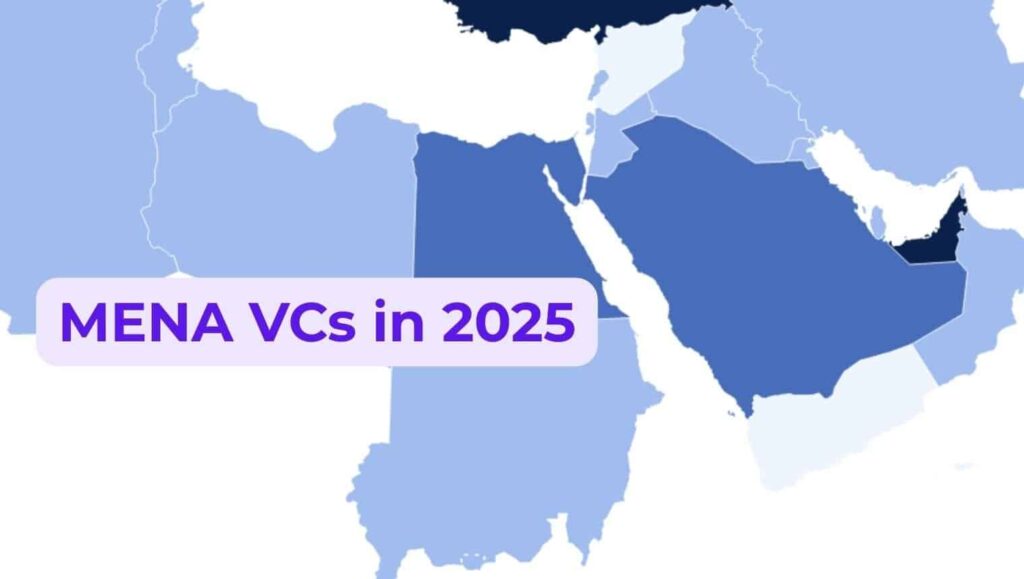
MENA Venture Capitals in 2025: Fintech Dominates, Sectors Diversify

After a turbulent 2024, MENA Venture Capitals show clear signs of revival. Investment flows, which slowed last year amid global rate pressures and a cautious investor mood, are gaining new momentum as sovereign funds, global managers, and local investors all re-enter the market with renewed appetite. The surge in July, when startups raised $783 million in a single month, marked the region’s most substantial showing in 2025 and a sharp reversal from June’s trough.

MENA Venture Capitals: Diverging Data, One Clear Trend

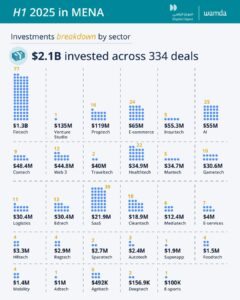
Two of the region’s most trusted trackers, Wamda and MAGNiTT, recorded the rebound with different numbers. Wamda tallied $2.1 billion in funding across 334 deals during the first half of 2025, representing a 134% year-on-year jump. MAGNiTT, using a stricter equity-only methodology, reported $1.5 billion across roughly 310 deals, the best half-year since 2022.

The discrepancy lies in accounting. Wamda includes venture debt, which has become an increasingly important part of MENA startup financing. Roughly $930 million, or 44% of H1’s total, came from debt instruments, reflecting how founders blend equity and credit to manage working capital while controlling dilution. The rise of venture debt signals a more sophisticated capital market but introduces new risks if not handled carefully.

Sector Breakdown: Fintech Dominates, Sectors Diversify

Fintech overwhelmingly leads MENA venture allocation in H1-2025, attracting ~$1.3B across 77 deals, roughly three-fifths of all capital, while the rest of the market fragments across smaller, earlier-stage categories. A single venture-studio vehicle accounts for $135M, underscoring how programmatic builders can move the needle with one announcement. Proptech ($119M; 16 deals) and E-commerce ($65M; 24 deals) remain steady mid-pack performers, whereas AI ($55M; 25 deals) and Healthtech ($34.9M; 22 deals) show breadth of activity but smaller check sizes. SaaS posts the highest deal count (39) yet a modest $21.9M, a classic sign of seed-heavy momentum. Long-tail verticals, from Contech ($48.4M) and Web3 ($44.8M) to Cleantech ($18.9M), signal experimentation rather than capital concentration.

This mix suggests two practical moves for founders: (1) if you’re outside fintech, optimize for proof of revenue and efficiency to win bigger tickets; (2) consider studio or corporate-venture partnerships where category checks are thin but strategic demand is strong. For WORLDEF readers, the takeaway is clear: fintech may dominate the headlines, but the real story is in the rising breadth of sectors, where today’s small checks could seed tomorrow’s regional champions.

Saudi Arabia’s Scale-Up Moment

If 2024 marked a regional slowdown, 2025 will be Saudi Arabia’s breakout year. According to MAGNiTT, Saudi startups raised around $860 million in H1, a 116% increase compared to last year. Wamda’s methodology puts the figure even higher, at $1.34 billion. Either way, the Kingdom captured the lion’s share of capital, powered by sovereign co-investment vehicles and an expanding mid-stage pipeline.

Programs run by Saudi Venture Capital Company (SVC), Sanabil Investments, and major private funds such as STV and RAED Ventures are playing an outsized role. Their strategy is clear: close the long-standing gap in Series A and B funding, while encouraging later-stage growth rounds that can keep companies rooted in the Kingdom rather than forcing early exits.

Dubai Anchors Its Fund-of-Funds

Meanwhile, Dubai is strengthening its role as a hub for general partners (GPs) and international capital. The Dubai Future District Fund (DFDF) recently confirmed $1.65 billion in capital commitments, supporting more than 190 startups through direct investments and fund-of-fund allocations. The program is directly linked to the emirate’s D33 economic strategy, which seeks to double the size of Dubai’s economy over the next decade. MENA Venture Capitals

By backing both startups and the funds that invest in them, DFDF is building a flywheel that attracts specialist managers in fintech, proptech, and logistics. For founders, this means greater co-investment opportunities and faster access to regional syndicates.

Qatar Steps Into the Arena

Not to be outdone, the Qatar Investment Authority (QIA) is using its $1 billion fund-of-funds to turn Doha into a serious venture capital magnet. Half of the capital has already been deployed, and the sovereign wealth fund is evaluating eight new VC firms for additional commitments. Importantly, QIA is nudging these firms to establish a physical presence in Doha, creating a new triangular activity corridor linking Doha, Riyadh, and Dubai. MENA Venture Capitals

For startups, this could translate into more options for regional headquarters and a more substantial base for talent recruitment, as Qatar aligns its venture push with its broader diversification agenda. MENA Venture Capitals

Infrastructure: Powering the AI Wave

Beyond startup rounds, capital also moves into the complex infrastructure needed to sustain the region’s digital economy. In partnership with Energy Capital Partners, Abu Dhabi’s ADQ announced a $25 billion+ program to finance data-centre-oriented power projects. With AI and compute-intensive models dominating new business plans, reliable power and data-center capacity are emerging as critical enablers of the ecosystem.

This infrastructure build-out provides a strong signal for VCs and founders alike: the Gulf is preparing to fund and host startups at scale. MENA Venture Capitals

Why This Matters?

For entrepreneurs, the message is clear:

  • Raise locally, syndicate regionally. The combination of Saudi sovereigns, Dubai’s DFDF, and Qatar’s QIA creates a powerful regional capital triangle.
  • Expect blended instruments. Venture debt is no longer exotic; it is now mainstream.
  • AI readiness is non-negotiable. The region’s most extensive checks are increasingly tied to compute-intensive business models, making infrastructure and efficiency a competitive advantage. MENA Venture Capitals

The outlook for investors is equally compelling. The capital plumbing looks stronger than in years, sovereigns are more coordinated, and local GPs are maturing. While global macro risks persist, MENA’s venture market is no longer a sideshow; it is positioning itself as a serious growth engine in the global startup economy. MENA Venture Capitals

UAE Women Inspire the World

From pilots to astronauts, from Olympic athletes to entrepreneurs, Emirati women stand as powerful representatives of the UAE’s modernization and development journey. With groundbreaking achievements, the country continues to be recognized as a global role model for women’s empowerment.

On August 28, the UAE celebrated Emirati Women’s Day 2025, marking more than five decades of women’s accomplishments. This year’s theme emphasizes the spirit of participation and social unity, highlighting women’s central role in national progress.

Inspiring the World: Female Pilots, Astronauts, and Olympians

The success stories of Emirati women are no longer confined within national borders. Female pilots, the first Emirati woman astronaut, and Olympic equestrian Latifa Bin Maktoum proudly represent the UAE on the global stage. Latifa Bin Maktoum, in particular, has become a symbol of women’s strength and determination through her Olympic equestrian achievements (Khaleej Times).

Women’s advancement in STEM fields is equally remarkable. Nearly 46 percent of STEM graduates in the UAE are women, while half of the workforce in the space sector is also female. These numbers reflect the UAE’s strong vision of science, technology, and innovation, where women play a vital role.

Global Initiatives Inspired by Sheikha Fatima

Known as the “Mother of the Nation,” Sheikha Fatima bint Mubarak has been the driving force behind the women’s movement in the UAE since the 1970s. By founding the General Women’s Union (GWU), she set a long-term vision for women’s empowerment.

Today, her legacy continues through global initiatives such as the Sheikha Fatima bint Mubarak Women, Peace and Security initiative, the Arab Women’s Economic Empowerment Observatory, and rural women’s empowerment projects in Africa (GWU). These efforts extend the impact of Emirati women beyond the region, reaching communities across Africa and Asia.

Leading in Gender Equality Rankings

The UAE has become a global leader in gender equality. In the 2025 UNDP Gender Equality Index, the country ranked 13th worldwide and first regionally, outperforming many Western nations (UNDP report).

Key milestones on this journey include the 2018 equal pay legislation, the 2021 labor law mandating equal pay in the private sector, and the launch of the National Strategy for Women Empowerment 2023–2031.

Today, women hold 50 percent of the seats in the Federal National Council, making the UAE one of the top countries worldwide for gender-balanced parliamentary representation. In the Cabinet, women occupy 26 percent of ministerial positions, leading critical portfolios such as education, climate change, community development, and family affairs.

Women Entrepreneurs Driving Economic Growth

Emirati women are not only leaders in politics but also a strong force in business. More than 25,000 Emirati businesswomen own over 50,000 commercial licenses, with total investments exceeding AED 60 billion.

This highlights the UAE’s supportive ecosystem for women entrepreneurs. Their contributions not only strengthen economic diversification but also inspire younger generations.

Notable figures include Reem Al Marzouqi, a Dubai-based innovator in technology, as well as collaborations with leading regional businesswomen such as Lubna Olayan. In emerging sectors like fintech, e-commerce, and artificial intelligence, Emirati women are making their mark in the global economy.

Female Diplomats and Global Representation

Women’s influence extends to diplomacy and international relations. The UAE has appointed female ambassadors to more than 13 countries. Among them, Lana Nusseibeh stands out as the UAE’s Permanent Representative to the United Nations, where she actively promotes the country’s vision on peace, security, and sustainability.

Beyond diplomacy, female ambassadors play key roles in economic cooperation, cultural diplomacy, and humanitarian initiatives, proving that Emirati women are shaping global decision-making platforms.

Women in Education, Technology, and Space

Education remains the cornerstone of women’s empowerment in the UAE. Women represent the majority of university graduates and are playing a pivotal role in research, technology, and space exploration.

Female engineers and scientists have been instrumental in national projects such as the Hope Mars Mission. Their presence ensures that women are at the heart of the UAE’s ambitions in the space economy and digital transformation.

Emirati Women’s Day: From Legacy to the Future

According to Noura Khalifa Al Suwaidi, Secretary-General of the GWU, Emirati Women’s Day is a cherished national occasion to honor women’s achievements over the past fifty years. She emphasized that Emirati women not only contribute to national development but also play significant roles in peace, security, and sustainable growth.

By securing women’s rights through constitutional protections, federal laws, and national strategies, the UAE has established a comprehensive framework for gender equality. Today, Emirati women’s achievements stand as a source of inspiration not only for their nation but for women worldwide.

Klarna Plans US IPO Amid Market Rebound, Targets $14 Billion Valuation

Swedish fintech giant Klarna is making a fresh push toward going public, with plans to launch its long-anticipated U.S. initial public offering (IPO) as early as next month. After delaying earlier this year due to turbulent market conditions, Klarna is now targeting a valuation between $13 billion and $14 billion—significantly lower than its once-lofty $45 billion mark in 2021, but seen as a strategic move aligned with current market conditions (Reuters).

IPO Timing and Strategic Context

Klarna’s IPO revival coincides with a broader rebound in tech and fintech listings. Industry peers such as Figma and Circle have recently seen successful public debuts, boosting confidence in the investment climate. Klarna paused its earlier IPO attempt in April 2025 due to geopolitical tensions and inflation-driven volatility that had shaken investor sentiment globally.

The current plan is to list on a U.S. exchange most likely the Nasdaq before the end of Q3 2025. The offering is expected to raise around $1 billion, with share pricing tentatively set in the $34 to $36 range. According to people familiar with the matter, the move is being closely monitored by global investors interested in fintech’s performance during a maturing phase of digital finance adoption.

Financial Performance and Growth Indicators

Klarna’s updated financials provide a stronger case for public listing than in previous quarters. In Q2 2025, Klarna reported a 20% year-over-year increase in revenue, reaching $823 million. It also posted an operating profit of $29 million—the latest sign that the company has successfully shifted from growth at all costs to a more sustainable business model. Active users have also increased to 111 million globally, marking a 31% rise compared to the same period last year (Reuters).

The company, known for its “Buy Now, Pay Later” (BNPL) services, has diversified its offerings in recent years, adding open banking tools, personal finance insights, and a growing presence in the U.S. Klarna now earns revenue through a combination of merchant fees, consumer interest on financing products, and partnerships with major retailers.

Revised Valuation Strategy

Klarna’s expected valuation of $13–14 billion reflects a recalibrated market perspective. While well below the company’s 2021 peak valuation—once one of Europe’s most valuable startups—the new target is seen as realistic and more aligned with investor expectations in a post-ZIRP (zero interest rate policy) economy. In today’s landscape, public market investors are favoring profitability, clarity in monetization, and disciplined growth.

Sources suggest Klarna’s executives see the IPO as not just a capital-raising event, but a credibility milestone. A successful public listing would enable the company to pursue expansion in North America and Southeast Asia, where demand for flexible credit remains high and fintech penetration is accelerating.

Industry Outlook and Competitive Landscape

The broader fintech sector has experienced significant consolidation and a slowdown in venture funding over the past 18 months. However, as interest rates stabilize and consumer spending patterns normalize, the IPO window is cautiously reopening. Klarna’s re-entry into the IPO race is being viewed as a litmus test for the sector’s resilience.

In the BNPL space, competition remains strong from rivals like Afterpay (owned by Block), Affirm, and PayPal, all of which are also adjusting to regulatory scrutiny and economic tightening. Klarna’s edge may lie in its diversification strategy and early investments in AI-driven credit scoring and personalized user journeys.

Risks and Considerations

Despite renewed optimism, several risks remain. Regulatory pressure on BNPL products continues to intensify across both the U.S. and Europe. Klarna has been proactive in working with authorities, but potential rule changes around consumer protection and credit disclosures could impact profitability.

Market volatility, inflation surprises, or unexpected global events could also derail listing timelines. Analysts note that while investor sentiment has improved, caution still governs many portfolio decisions—especially around tech and fintech IPOs.

Conclusion

Klarna’s upcoming IPO represents a significant milestone for the European fintech sector and the BNPL industry globally. With a more grounded valuation, stronger financials, and clearer strategic direction, Klarna is positioning itself for long-term success in public markets. If successful, the listing could restore momentum for other fintech unicorns waiting on the sidelines.

By choosing a valuation that reflects both opportunity and discipline, Klarna is signaling maturity not just in its numbers, but in how it communicates its future to the market. The IPO will be closely watched not just as a company milestone, but as a signal for the broader fintech sector’s next chapter.

NBK Automobiles Launches Interactive Mercedes-Benz Online Configurator

Nasser Bin Khaled Automobiles (NBK), the authorized general distributor of Mercedes-Benz in Qatar, has introduced a powerful digital tool designed to enhance the customer experience—an interactive online car configurator that allows users to customize their own Mercedes-Benz models from the comfort of their home.

A Personalized Digital Journey for Car Enthusiasts

The “Configure Your Own Car” feature enables prospective buyers to explore a wide range of Mercedes-Benz models—including sedans, SUVs, sports coupes, and luxury variants—while tailoring every detail to match their preferences. From selecting exterior paint colors and interior materials to choosing wheel designs and add-on technology packages, users are empowered to build a car that fits both their style and lifestyle.

Unlike traditional configurators, NBK’s platform offers a real-time, 3D visualization of the selected vehicle, complete with instant pricing updates as customizations are made. Customers can save their configurations, share them, or even request a test drive or more information directly from NBK through the portal.

This digital launch marks another milestone in NBK Automobiles’ commitment to innovation and premium customer service. By merging digital convenience with luxury automotive branding, the company is redefining how vehicles are researched, configured, and ultimately purchased in Qatar.

NBK Automobiles has been representing Mercedes-Benz in the Qatari market since 1957, and continues to evolve in line with changing consumer expectations. Offering access to prestigious marques such as Mercedes-Maybach, Mercedes-Benz, and Mercedes-AMG, the new configurator underscores NBK’s mission to deliver personalized, cutting-edge experiences to its growing customer base.

With this tool, NBK not only enhances engagement but also positions itself at the forefront of Qatar’s automotive digital transformation—where innovation, customer empowerment, and luxury converge.

Tunisia Ushers in a New Era: Africa’s First 100% Digital Hospital Poised to Transform Healthcare

Tunisia is on the brink of a groundbreaking leap in healthcare innovation with the announcement of what will become Africa’s first fully digital hospital. Revealed by Aymen Chekhari, responsible for Artificial Intelligence and digital systems at Tunisia’s Ministry of Health, the initiative was unveiled on August 14, 2025, and marks a historic milestone for the nation and continent.

This proposed digital hospital will serve as the central hub within the Ministry of Health, coordinating a nationwide network of medical professionals through advanced telemedicine infrastructure. Leveraging a platform of interconnected public health facilities, the system will facilitate remote consultations, enabling patients across Tunisia—regardless of geographical constraints—to access specialized care efficiently and effectively.

Embedding AI and Telemedicine to Democratize Specialized Care Nationwide

At the heart of Tunisia’s vision lies the powerful combination of artificial intelligence and a digitally integrated healthcare system. By anchoring operations within the Ministry of Health, the new hospital model ensures centralized oversight while enabling distributed service delivery. Medical professionals, located remotely, will be able to consult, diagnose, and assist patients in regions where access to specialized services has traditionally been limited.

This move not only represents a triumph of technological modernization in healthcare but also a profound step toward democratizing access to healthcare across Tunisia. Patients in rural or underserved regions stand to benefit significantly, as the digital hospital bypasses traditional physical barriers and opens access to expert diagnoses, second opinions, and efficient referrals without the need for travel.

Tunisia’s endeavor positions it as a trailblazer in Africa’s digital health landscape, setting an example for the entire region. The project aligns with broader digital transformation strategies, leveraging AI-driven tools to enhance healthcare quality, improve patient outcomes, and support the evolving architecture of modern medical systems.

As this ambitious plan moves into implementation, it holds the promise of reshaping healthcare delivery—not just for Tunisia, but serving as a replicable model across nations seeking innovative, scalable, and equitable medical solutions.

Tanzanian Digital Auction Platform Eyes East and West Africa Expansion

Tanzania’s fast‑growing digital commerce scene just welcomed a bold new contender: Piku, a unique platform blending e-commerce with gamified auctions. After nearly two decades of development, the platform is now setting its sights on expanding across East and West Africa within the next three years—aiming to become a continental digital commerce powerhouse.

Transforming Online Shopping Through Auctions and Social Impact

What makes Piku stand out is its distinctive auction model, which allows users to bid on products—ranging from electronics to overseas travel packages—for as little as Sh1,000. The gamified format attracts engagement and excitement, while also offering value to price-conscious consumers. In the months ahead, Piku plans to expand into full direct sales, allowing vendors—such as cosmetics shop owners—to create their own storefronts, auction their listings, and reach a broader audience.

Founded on patience and persistence, Piku has been incubating its platform for nearly 20 years—waiting for the digital ecosystem in Tanzania to mature. Investments in internet usage, improved digital payment systems, and mobile connectivity finally made it viable. So far, the company has poured approximately Sh800 million into the platform. With expansion underway, an additional Sh120 million is earmarked for prizes and marketing within the next three months, with potential growth in that budget depending on market response.

Piku’s ambitions extend beyond commercial performance. Nearly 35 percent of its revenue is committed to social responsibility initiatives via a newly planned Piku Foundation. The foundation intends to support key institutions such as Muhimbili Hospital and fund the education of talented students from underserved communities—an initiative that reflects the company’s commitment to leveraging tech for social good.

Looking ahead, Piku expects to hire a team of data analysts, software developers, and production staff—establishing formal office spaces to enable growth and operational scaling. As consumer behavior shifts increasingly online, platforms like Piku offer significant opportunities—not just for urban users, but even farmers and rural entrepreneurs can utilize such tech-driven solutions to connect with buyers and services across the region.

As Tanzania’s digital landscape evolves, platforms like Piku are emblematic of the creative, inclusive models rising from the region—not just meeting market needs, but also making sure benefits are shared across society.