WORLDEF Istanbul 2026 - Upcoming Event

Register Now

Tension in the Middle East Has Left the Gulf’s Artificial Intelligence Vision Facing Geopolitical Risks

Gulf

The goal of Gulf countries such as the United Arab Emirates, Saudi Arabia and Qatar to become a global artificial intelligence hub has faced a new test due to rising geopolitical tensions in the Middle East. The risk of conflict and security concerns in the region are raising questions about the sustainability of billions of dollars in technology investments.

In recent years, Gulf countries that have accelerated investments in artificial intelligence, data centers and digital infrastructure had aimed to turn the region into one of the important centers of the global AI ecosystem by establishing strategic partnerships with U.S. technology giants. However, according to experts, increasing regional tensions are putting pressure on investor confidence and long-term technology plans.

Gulf Countries Are Allocating Billions of Dollars to Artificial Intelligence

In particular, the United Arab Emirates and Saudi Arabia have been pursuing aggressive investment strategies in artificial intelligence over the past two years. Funds worth billions of dollars have been created for data centers, GPU infrastructures, chip investments and artificial intelligence ventures.

UAE-based technology companies such as G42 and MGX are developing close collaborations with OpenAI, Microsoft, Nvidia and other global technology companies. Saudi Arabia, meanwhile, places digital transformation and artificial intelligence at the center of its economic diversification strategy under Vision 2030.

The countries in the region aim to become centers that develop artificial intelligence, process data and manage regional digital infrastructure, rather than being only technology consumers.

Geopolitical Risks Are Making Investors Uneasy

According to experts, the possibility of conflict in the Middle East directly affects the long-term planning of technology investments. The fact that investments such as data centers and high-cost AI infrastructures require stability, energy security and international connectivity makes political risks in the region more visible.

Industry representatives state that global technology companies are not expected to completely stop their investments in the region, but they may act more cautiously in new investment decisions. Analysts note that investors will focus more on issues such as cybersecurity, energy continuity and data security.

Technology Partnerships with the U.S. Play a Critical Role

Technology partnerships developed with the U.S. play a major role in the artificial intelligence strategy of Gulf countries. Access to Nvidia chips, cloud infrastructures and advanced AI models forms the foundation of the region’s digital transformation plans. However, the U.S.’s export controls and security policies regarding advanced artificial intelligence technologies are also considered among the critical risk factors for technology projects in the region. In particular, relations with China and data security policies cause Gulf countries to remain in a sensitive position within global technology balances.

Data Center Investments Are Not Slowing Down

Despite all geopolitical risks, data center investments are said to be continuing in Gulf countries. The region maintains its advantage of being a digital bridge between Europe, Asia and Africa thanks to low energy costs, strong financial resources and its strategic geographical location. According to experts, especially the UAE and Saudi Arabia do not plan to step back from their long-term strategic goals for artificial intelligence infrastructure. It is stated that next-generation data centers, cloud technologies and AI research centers will remain at the center of the investment agenda in the region in the coming years.

The “Artificial Intelligence Race” Is Increasing Global Competition

With the acceleration of the artificial intelligence race on a global scale, Gulf countries are trying to speed up the transition process from an energy economy to a digital economy. Artificial intelligence investments create new economic opportunities not only in the field of technology, but also in many sectors from logistics to fintech, from e-commerce to health technologies. However, experts emphasize that capital investments alone will not be sufficient for the region to become a global AI hub; political stability, international trust and sustainable technology policies are also critically important.


Colombia’s E-Commerce Market Broke a Record; The Number of Digital Transactions Reached 186 Million

Colombia E-Commerce

Colombia’s e-commerce sector reached one of the highest performances in its history in the first quarter of 2026.

According to data announced by the Colombian Chamber of Electronic Commerce (CCCE), the country’s online commerce volume reached 39.7 trillion Colombian pesos in the first three months of the year. This figure corresponds to approximately $10.8 billion at the current exchange rate.

According to the announced data, while e-commerce sales in Colombia grew by 14.5% compared to the same period last year, the total number of digital transactions reached 186.4 million. Thus, the country recorded its highest e-commerce transaction volume to date in a three-month period.

The Number of Digital Transactions in Colombia Is Growing Faster Than Sales

One of the most striking data points in the report was that growth in the number of transactions outpaced growth in sales volume. While total sales value increased by 14.5%, growth in the number of online transactions reached 22.2%. In particular, the digitalization of daily consumption categories such as grocery shopping, transportation services, bill payments and pharmacy products is cited among the main reasons for the rapid increase in the number of transactions.

Digital Payment Systems Are Transforming the Market

The increase in digital financial inclusion is shown as one of the most important factors behind the growth in Colom bia. According to Banca de las Oportunidades data, the share of adults in the country who have at least one formal financial product or digital account reached 92% as of 2024.

Thus, for the first time in Colombia’s history, the majority of the adult population gained access to the financial infrastructure needed to make online payments. CCCE analysts expect Colombia’s e-commerce sector to show a compound annual average growth of 11% until 2029.

Chinese JD.com Is Evaluating the Acquisition of Britain’s The Very Group

JD.com

It has been claimed that China-based e-commerce giant JD.com is evaluating the possibility of acquiring The Very Group, one of the United Kingdom’s leading online retail companies. According to industry sources, the company is interested in the UK-based digital retail group in order to strengthen its growth strategy in Europe.

Although no official offer has yet been announced, possible acquisition talks are considered among the notable developments in the global e-commerce sector. According to experts, this move could be an important part of JD.com’s goal to expand its operations in the European market.

JD.com Wants to Increase Its Influence in Europe

JD.com, one of China’s largest e-commerce platforms, has accelerated its investments in logistics, fulfillment and cross-border e-commerce in recent years. The company is especially trying to gain a stronger position in Europe through warehouse networks, delivery infrastructure and local partnerships.

The UK-based The Very Group is known as a major online retail platform operating in the fashion, electronics, home living and beauty categories. It is stated that the company has millions of active customers.

Analysts state that if JD.com acquires The Very Group, it could significantly increase its customer reach in the United Kingdom and Europe.

The Very Group Faces Financial Pressures

According to industry sources, The Very Group has recently been evaluating strategic options due to its increasing debt burden and financing costs. For this reason, possible investment or acquisition talks are said to have come onto the agenda. While it is stated that the Barclay family, which owns the company, is working on different financial alternatives, JD.com’s interest has attracted attention in this process.

Competition Is Heating Up in the European E-Commerce Market

JD.com’s possible move is considered one of the latest examples of Chinese technology and e-commerce companies’ strategy to increase their influence in Europe. In recent years, the rapid growth of China-based platforms such as Temu, Shein, Alibaba and TikTok Shop in the European market has significantly increased competition in the region.

In particular, price advantage, strong logistics infrastructures and data-driven operational models are accelerating the growth of Chinese companies in Europe. JD.com, unlike its other Chinese competitors, is said to stand out especially with its logistics technologies and fulfillment infrastructure.

If the Acquisition Takes Place, It Could Create a Major Impact

According to analysts, a possible acquisition could have significant consequences not only for the UK market but also for the digital trade balance in Europe. If JD.com’s advanced logistics technologies and The Very Group’s local customer network come together, it is considered that the company’s competitive power in Europe could increase significantly. It is also stated that this move shows that Chinese e-commerce giants are accelerating their growth strategy in Europe through direct acquisitions, going beyond organic growth.

$100 Million Support for Africa’s Digital Economy

Africa

Africa Finance Corporation (AFC), one of Africa’s leading development finance institutions, announced that it will invest up to $100 million in Africa-focused technology funds to grow the continent’s digital economy. The new investment program aims to support technology startups, digital infrastructure and Africa-based fund managers.

In the statement made by AFC, it was stated that the investment was designed to accelerate the digital transformation process in Africa and increase the share of local capital in the technology ecosystem.

The Digital Economy Is Expected to Reach $700 Billion in 2050

According to the institution, Africa’s digital economy is expected to contribute more than $700 billion to the continent’s economy by 2050. The rapid increase in the young population, growth in mobile internet usage and rising demand for digital services are cited as determining factors in the investment decision.

AFC President and CEO Samaila Zubairu stated that the young population in Africa is becoming a direct part of this transformation instead of waiting for digital transformation, and made the following statement: “Young Africans are not waiting for the digital economy to arrive. By adopting technology, they are creating new markets and producing solutions to real economic problems. This gives a strong investment signal.” Zubairu also emphasized that digital infrastructure has now become as critical as roads, ports, energy and railways.

First Investments in Lightrock Africa and Future Africa Funds

In the first phase of the $100 million investment program, AFC invested as an “anchor investor” in Lightrock Africa Fund II and Future Africa Fund III. Thus, it was announced that the institution would support funds investing at different levels, from early-stage ventures to growth-stage technology companies. The company announced that it will continue to evaluate new Africa-focused technology funds with different strategies in the coming period.

Africa’s Startup Ecosystem Is Gaining Strength

According to AFC data, the startup ecosystem in Africa has gained significant momentum in recent years. While 9 unicorn ventures have emerged across the continent to date, some Africa-based fund managers have achieved returns of up to 128 times on their investments. It was also stated that African startups received a total of $3.8 billion in investment in 2025 alone.

Despite this, it is stated that a large portion of venture capital investments still comes from international investors. AFC’s new investment program aims to increase local capital participation and enable Africa-based investors to play a stronger role in the technology ecosystem. The institution’s investment strategy includes not only venture financing, but also AI-focused talent development, digital infrastructure investments, data centers, connectivity technologies and device financing. In particular, it is aimed to include more people in the digital economy by increasing access to phones, computers and connectivity infrastructure.

German Fashion Giant Breuninger Opens Online Stores in Denmark, Sweden and Romania

Breuninger

Germany-based premium fashion retail brand Breuninger continues to expand its cross-border e-commerce operations in Europe. The company announced that it has launched its online store in Denmark, Sweden and Romania. With the new launches, the number of European markets in which Breuninger operates has increased to 13.

Founded in Stuttgart in 1881 and regarded as one of Germany’s long-established retail brands, Breuninger aims to expand its premium position in fashion, beauty, footwear and lifestyle products across Europe.

Local Language and Regional Logistics Strategy

The company will offer consumers in Denmark, Sweden and Romania a fully localized online shopping experience. Users will be able to use the platform in their own languages. It was announced that PostNord and DHL will be collaborated with for delivery operations.

Breuninger CEO Holger Blecker stated in his statement on LinkedIn that the company wants to take the premium fashion experience beyond physical stores and reach a wider customer base. Blecker used the following statements in his statement: “Our online store launch in Denmark, Sweden and Romania is an important milestone in Breuninger’s growth journey in Europe. Thus, we now operate in 13 European countries.”

Breuninger’s First Major Expansion Since 2022

Breuninger first started its online growth process in Europe with Austria. The company then expanded into Switzerland and became active across the entire DACH region. The brand, which later entered the Polish market, launched operations in the Netherlands, Belgium, Luxembourg, Spain and Italy in 2022. Shortly afterward, Czechia also joined the company’s active markets.

The Denmark, Sweden and Romania move became the company’s first major European expansion in nearly four years. In the new markets, consumers will be offered online sales in clothing, footwear, cosmetics and home living categories.

Romania and Sweden Stand Out in E-Commerce

The company management describes the three newly added countries as “attractive markets with high potential.” In particular, the increasing interest in premium and luxury fashion products played a decisive role in Breuninger’s growth strategy. Industry data also supports this strategy. While Romania has been one of the countries where the number of consumers shopping online in Europe has increased the fastest over the last 10 years, Sweden’s e-commerce market recorded double-digit growth last year.

The Marketplace Model Is Expanding

Breuninger continues to expand its marketplace model by moving beyond a structure that sells only its own products. The marketplace system, which enables external brands and sellers to sell through the platform, has long been actively used in Germany. As of 2026, this model has also been launched in Austria and the Netherlands. It is stated that the company plans to expand its marketplace infrastructure to other European countries in the coming period.

Egypt’s Carpet Giant Oriental Weavers Launches Unified E-Commerce Platform

Oriental Weavers

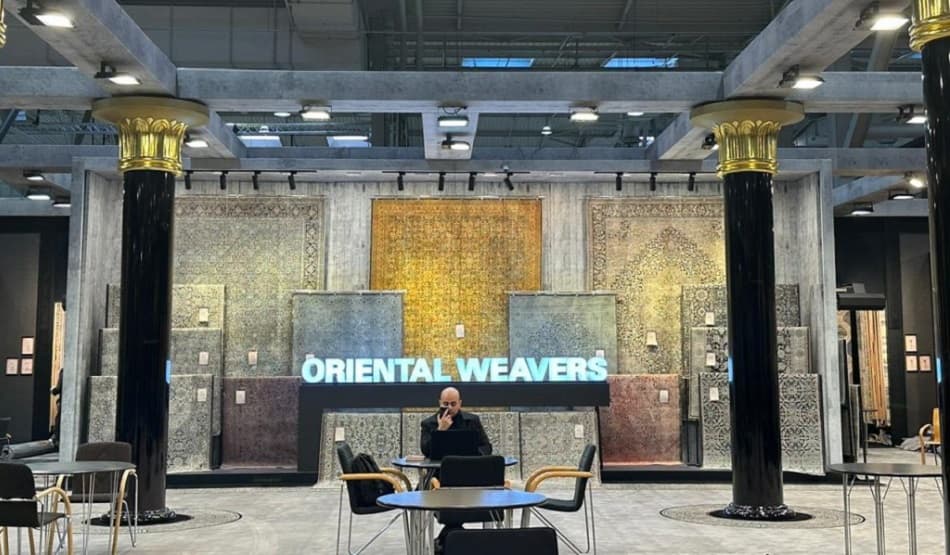
Oriental Weavers, one of the world’s leading carpet and flooring solutions manufacturers based in Egypt, has launched its new unified e-commerce platform to strengthen its digital trade strategy. The company aims to improve the online customer experience by bringing its different brands and product categories together in a single digital infrastructure.

Thanks to the new platform, users will be able to access carpets, home decoration and different living space products from a single center. The company management states that this step is critically important for its digital growth targets in both local and international markets.

All of Oriental Weavers’ Digital Operations Have Been Gathered on a Single Platform

In the statement made by Oriental Weavers, it was stated that online sales operations previously managed in different systems will now be carried out through a single e-commerce infrastructure. The company’s new platform will have an infrastructure capable of centrally managing product management, order processes, customer experience, digital marketing and logistics operations. Officials emphasized that the unified system will provide significant advantages especially in operational efficiency, stock management and delivery processes.

Online Customer Experience Will Be Strengthened

It was announced that significant investments were also made in user experience with the new platform. Oriental Weavers has launched new digital features so that customers can discover products more easily, filter them and shop faster from mobile devices. The company also aims to increase conversion rates with personalized recommendation systems and an advanced user interface.

In the statement, it was stated that the digital platform is positioned not only as a sales channel, but also as a strategic customer interaction area that strengthens the brand experience.

The Share of E-Commerce Is Increasing

Oriental Weavers management drew attention to the rapid shift of consumer habits to digital and stated that online sales channels are playing an increasingly larger role in the company’s growth. While it was stated that online demand for home decoration and living space products increased significantly especially in the post-pandemic period, it was noted that the company aims to grow its e-commerce revenues with its new platform investment.

It is stated that Oriental Weavers’ new platform move is not limited only to the Egyptian market. The company aims to reach international customers faster and grow its cross-border e-commerce operations thanks to its digital infrastructure.

While it is known that the company exports to more than 150 countries worldwide, it is stated that the new system will provide stronger integration in global customer management and multi-market operations.

Sweden’s PlayReplay Secures $12 Million to Accelerate MENA Expansion

Sweden’s PlayReplay Secures $12 Million to Accelerate MENA Expansion

Swedish sports technology startup PlayReplay has secured $12 million in fresh investment as the company intensifies its expansion strategy across the Middle East and North Africa (MENA) region. The funding round was led by Nordic investment firm Alfvén & Didrikson, supporting the company’s ambitions to strengthen its AI-powered sports video and analytics platform globally.

Founded in Sweden, PlayReplay develops advanced sports technology solutions that allow clubs, leagues, and broadcasters to automate match recording, video analysis, highlights creation, and performance tracking using artificial intelligence. The company has increasingly positioned itself as part of the growing SportsTech ecosystem connecting Europe and the Middle East.

The latest investment comes at a time when MENA’s sports and digital entertainment industries are experiencing rapid transformation. Governments and private investors across the Gulf region are pouring billions into sports infrastructure, esports, football development, and digital fan engagement platforms as part of broader economic diversification strategies.

Rising SportsTech Investment Momentum in MENA

PlayReplay sees this momentum as a major opportunity. The company aims to expand partnerships with sports organizations, academies, and media platforms throughout the region while enhancing localized solutions tailored for MENA markets.

The funding is also expected to support product development, AI capabilities, and international hiring efforts. As sports organizations increasingly demand real-time analytics and automated broadcasting tools, SportsTech startups are attracting growing investor attention worldwide.

Industry analysts note that MENA has become one of the fastest-growing regions for sports innovation, driven by large-scale investments in football, smart stadiums, esports, and media rights. Countries such as the UAE and Saudi Arabia continue to emerge as global hubs for sports business and technology-driven entertainment initiatives.

AI-Powered Sports Analytics Market Continues to Expand

For European startups like PlayReplay, the region offers both commercial scale and long-term strategic partnerships. The company’s expansion plans align with a broader trend of international technology firms establishing stronger operations in the Middle East to capture new audiences and enterprise clients.

The investment also reflects investor confidence in AI-driven sports solutions, a segment expected to grow significantly as clubs and broadcasters seek more efficient content production and performance analysis systems.

With fresh capital and rising demand for digital sports infrastructure, PlayReplay is positioning itself to become a stronger player in the global SportsTech market while deepening its footprint across MENA.

Source

Dubai CommerCity Unites E-Commerce Logistics and Customs Processes in a Single Ecosystem

Dubai CommerCity

Dubai has signed a new collaboration that will strengthen its cross-border digital trade infrastructure in line with its goal of becoming one of the global e-commerce hubs. Dubai CommerCity, the region’s first free zone focused exclusively on digital commerce, announced that it has established a strategic partnership with Dubai Customs, Dubai Municipality and logistics company NAQEL Express.

Under the new collaboration, it is aimed to accelerate customs processes, optimize logistics operations and create a more integrated digital trade infrastructure for companies engaged in international e-commerce.

Customs and Logistics Processes Are Becoming Digital

Together with the partnership model, it is aimed to process products entering and leaving the United Arab Emirates more quickly, reduce operational bottlenecks and accelerate delivery processes. Digital integration systems will be implemented especially to reduce delays experienced in cross-border e-commerce operations.

Abdulrahman Shahin, Senior Vice President of Operations at Dubai CommerCity, stated that the collaboration would strengthen connectivity within the digital trade ecosystem and used the following statements: “This integration is an important step that will enable seamless operations between free zones, regulatory authorities and logistics providers. We are creating an integrated digital structure that supports companies in scaling faster.” Shahin also emphasized that the project was designed in line with the UAE’s “Zero Government Bureaucracy Programme” vision.

Dubai Customs Will Accelerate Processes

Under the agreement, Dubai Customs will make processes more efficient through advanced digital customs systems. It was stated that the authority will focus especially on reducing paperwork, shortening product transit times and increasing processing speed in international shipments. Officials aim to minimize the operational difficulties faced by online sellers when shipping products to different markets through this system.

Emphasis on Product Safety and Regulation

Dubai Municipality will be responsible for product safety, quality standards and inspection processes. While the authority checks whether imported and exported products comply with health and quality criteria, it will also ensure that processing times proceed quickly. Dr. Naseem Mohammed Rafee, Acting CEO of the Environment, Health and Safety Agency at Dubai Municipality, stated that public and private sector coordination is critically important in regulatory processes. The new model is expected to create a more transparent structure for sellers trying to manage regulatory processes in different countries.

NAQEL Express Will Strengthen Last-Mile Deliveries

NAQEL Express, one of the region’s important logistics companies, will also provide end-to-end transportation and fulfillment services in the project. The company aims to increase delivery reliability with its regional distribution network and last-mile delivery infrastructure.

Dr. Adnan Ibrahim Al Marzooa, Deputy CEO of NAQEL Express, stated that a significant transformation had taken place in the operational model thanks to the integration and made the following statement: “Thanks to this structure, which reduces processing times and automates customs and delivery processes, supply chain efficiency and service quality have increased significantly.”

Cross-Border E-Commerce Is Growing Rapidly in the Gulf Region

According to industry experts, the collaboration is seen as an important part of the Gulf countries’ strategy to gain a larger share from the rapidly growing digital trade market. In the Middle East, cross-border e-commerce has recorded significant growth in recent years with the increase in smartphone use, the spread of digital payment systems and the rise in demand for international brands.

The fact that companies operating under Dubai CommerCity will be able to receive warehousing, customs support, logistics and regulatory consultancy within a single ecosystem is considered an important advantage that could accelerate especially SMEs’ regional growth processes.

Dubai Aims to Become a Regional Digital Trade Hub

The new initiative is expected to make Dubai more attractive for international brands and SMEs seeking to enter the Middle East market. With the simplification of operational processes and the strengthening of delivery infrastructure, it is stated that Dubai aims to become a competitive hub for digital trade companies. Experts agree that integrated digital solutions, fast logistics networks and public-private sector collaborations will play a critical role for success in the e-commerce sector in the future.

Vatican and Anthropic Open New Debate on the Future of AI Ethics

Vatican and Anthropic Open New Debate on the Future of AI Ethics

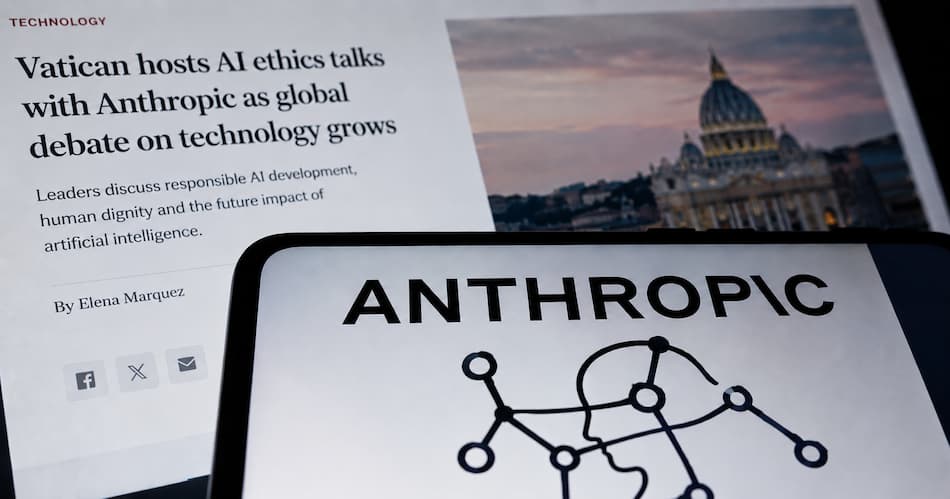
Artificial intelligence is rapidly becoming one of the most influential technologies shaping the global economy, society, and policymaking. In a significant move that reflects the growing importance of ethical discussions around AI, the Vatican recently welcomed representatives from Anthropic for high-level conversations focused on the future impact of artificial intelligence.

Vatican Expands AI Ethics Discussion Beyond Silicon Valley

The meeting highlights how discussions surrounding AI are expanding far beyond the technology sector. Governments, universities, international organizations, and now religious institutions are increasingly participating in debates about how artificial intelligence should be developed, regulated, and integrated into society.

According to reports, Vatican officials and Anthropic representatives discussed the ethical responsibilities associated with advanced AI systems, including concerns around misinformation, human decision-making, labor transformation, and social inequality. The dialogue reportedly focused on ensuring that AI technologies remain aligned with human values as adoption accelerates worldwide.

Anthropic has emerged as one of the leading companies in the global generative AI race, competing alongside major technology firms developing large language models and advanced AI assistants. The company has gained attention for its emphasis on AI safety, transparency, and responsible innovation.

Global Institutions Increase Focus on Responsible AI

The Vatican’s involvement demonstrates how artificial intelligence is increasingly viewed not only as a technological development but also as a societal and philosophical issue. Institutions traditionally focused on ethics, culture, and human welfare are beginning to examine how AI could influence education, employment, communication, privacy, and everyday life.

Industry experts say the discussions reflect growing pressure on AI companies to engage with broader ethical and public-interest concerns. As governments worldwide move toward implementing new AI regulations and governance frameworks, conversations are shifting beyond technical performance toward accountability and long-term societal impact.

The meeting also comes amid accelerating global investment in AI technologies across industries including e-commerce, healthcare, finance, logistics, and digital media. Businesses are rapidly integrating AI-powered tools to improve operations and customer experiences, while regulators attempt to balance innovation with responsible oversight.

Analysts believe collaborations between technology companies and global institutions could play a key role in shaping future international AI standards. As artificial intelligence continues to evolve, ethical governance and public trust are expected to become central priorities for both policymakers and industry leaders.

The Vatican-Anthropic dialogue reflects a broader reality emerging across the global AI ecosystem: the future of artificial intelligence is no longer only a technology conversation, it is increasingly becoming a conversation about humanity, responsibility, and the future direction of society itself.

Source

UAE-Based RSA XB Raises $1.5 Million Seed Round to Expand Cross-Border Logistics

UAE-Based RSA XB Raises $1.5 Million Seed Round to Expand Cross-Border Logistics

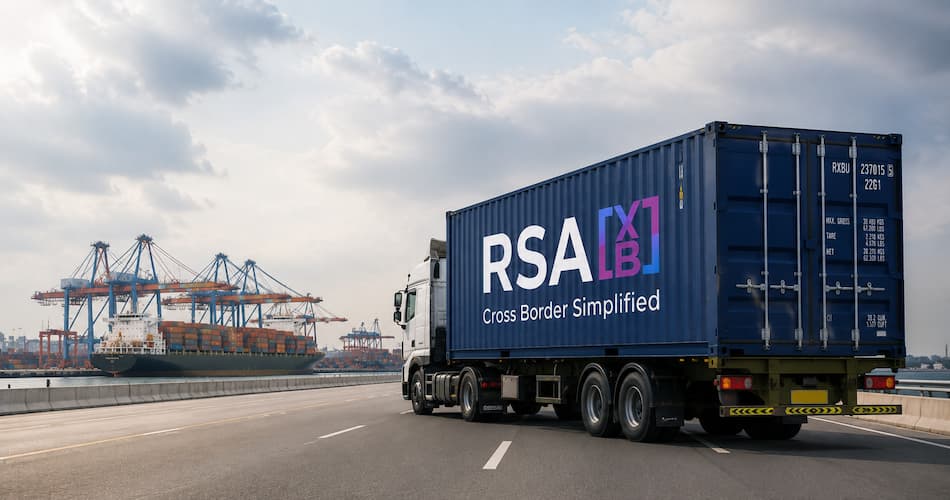
Dubai-based logistics startup RSA XB has secured $1.5 million in a Seed funding round led by 21 Ventures, marking its official spin-off from RSA Global as the company accelerates development of AI-powered cross-border shipping solutions for e-commerce businesses.

The company is focused on simplifying international logistics operations for small and medium-sized enterprises by offering a modular shipping platform that combines air freight, customs clearance, and last-mile delivery services under one flexible infrastructure. Unlike traditional logistics models that require heavy operational investments, RSA XB enables businesses to customize international shipping services under their own brand without building extensive logistics networks.

AI and Flexible Logistics at the Core

RSA XB’s platform operates through a “service modules” system, allowing logistics functions to be combined or separated depending on route requirements and operational needs. The company also integrates an artificial intelligence layer designed to automate operational workflows and improve coordination between freight operators, customs brokers, and last-mile delivery providers.

By consolidating shipments for smaller businesses, RSA XB aims to reduce shipping costs while improving delivery efficiency across international trade corridors. The company believes this model can help SMEs compete more effectively in the rapidly growing global e-commerce market.

Expansion Plans Across Key Trade Routes

In its first expansion phase, RSA XB plans to strengthen operations across major trade corridors connecting India, the Gulf region, the United Kingdom, and Europe. The strategy comes as Indian businesses increasingly look toward international expansion and cross-border commerce opportunities.

Operating from Dubai with additional activities in India, RSA XB intends to use the fresh capital to enhance its technology infrastructure, improve data management capabilities, and launch new shipping routes over the next 18 months. The startup is also preparing for additional fundraising efforts by the end of 2026 as it scales operations globally.

Source