
WORLDEF Istanbul 2026 - Upcoming Event

Register Now

AI Operations Platform for E-Commerce: Kopa.ai Raises €2 Million

AI Operations

AI operations startup Kopa.ai has secured €2 million in early-stage funding as e-commerce companies look for practical tools to automate marketing, workflow management, and day-to-day commercial tasks.

Kopa.ai has raised €2 million in pre-seed funding to develop its AI operations platform for e-commerce businesses. The round provides the startup with additional capital to build technology to help online retailers manage marketing and operational workflows more efficiently.

The funding round included support from XTX Ventures, Practica Capital, Inovia Capital, and Lost Astronaut. The investment comes at a time when artificial intelligence is becoming increasingly visible in e-commerce, particularly in areas such as advertising, content production, campaign management, customer acquisition, and operational decision-making.

Kopa.ai is developing tools that apply AI operations to the daily work of e-commerce teams. Rather than focusing on a single narrow function, the company is building a broader platform to support multiple tasks across marketing and operations. These may include creating advertising content, publishing product-related material, optimizing campaigns, and helping teams make faster decisions based on available data.

The company was founded by CEO and co-founder Donatas Benaitis and his team. Over the past year, Kopa.ai has been building its platform and shaping its product direction in a market where many online businesses are under pressure to do more with smaller teams and tighter marketing budgets. For smaller and mid-sized e-commerce companies, this pressure is often especially strong because they may not have the resources to maintain large in-house marketing, analytics, and operations departments.

Benaitis described the funding as an important milestone for the company, while also noting that it represents only the beginning of a longer development process. His statement suggests that Kopa.ai is still in an early phase, with the funding expected to support product development, team expansion, and further testing of its platform in real business environments.

The rise of AI operations in e-commerce

The rise of AI operations in e-commerce reflects a broader shift in how online retailers approach technology. For many years, e-commerce companies added separate tools for advertising, customer relationship management, content, analytics, inventory, and support. While these tools helped businesses grow, they also created complexity. Teams often need to move between multiple dashboards, manually transfer information, and coordinate decisions across disconnected systems.

AI operations platforms are emerging as a possible response to this problem. The basic idea is to use artificial intelligence not only to generate text or answer questions, but also to support execution. In e-commerce, this could mean helping teams prepare campaigns, identify performance gaps, automate repetitive tasks, or suggest actions based on customer and product data.

However, the sector is still developing, and the practical impact of these tools will depend on execution. Many AI startups promise efficiency, automation, and growth, but e-commerce companies will likely judge platforms such as Kopa.ai by measurable outcomes. These may include lower customer acquisition costs, faster content production, better campaign performance, reduced manual workload, or improved conversion rates.

The investment also highlights venture capital firms’ continued interest in AI applications with clear commercial use cases. After the first wave of generative AI adoption, investors are increasingly looking at startups that apply AI to specific industries and workflows. E-commerce is one of the more active areas because it combines large volumes of product data, marketing spend, customer behavior, and repetitive operational tasks.

For online retailers, the appeal of AI operations is understandable. Digital commerce has become more competitive, advertising costs remain a concern, and customer expectations continue to rise. Businesses need to test campaigns faster, personalize communication, manage content across channels, and respond to market changes with greater speed. AI tools may help with some of these pressures, although they are unlikely to replace the need for strategic judgment, brand understanding, and human oversight.

Kopa.ai’s next stage will be important in showing whether its platform can move beyond general AI productivity and deliver specific value for e-commerce teams. The company will need to prove that its technology can integrate into existing workflows, handle real operational complexity, and produce consistent results for different types of online businesses.

The €2 million funding gives Kopa.ai more room to develop its AI operations platform, but it also places the company in a competitive market. Many startups are now working on AI tools for marketing, sales, customer experience, and e-commerce automation. To stand out, Kopa.ai will need to demonstrate not only strong technology, but also a clear understanding of how e-commerce teams actually work.

For the wider market, the funding is another sign that AI operations are becoming a serious category within digital commerce. The next phase will likely be defined not by broad promises about artificial intelligence, but by whether these platforms can help retailers improve efficiency, reduce complexity, and make better commercial decisions.

Saudi Retail Revenues Rise 7.3% in Q1 as E-Commerce Growth Accelerates

Saudi Retail

Saudi retail activity continued to strengthen in the first quarter of 2026, with GASTAT data showing higher trade revenues, rising employee compensation, and faster e-commerce growth across the Kingdom.

Saudi retail and wholesale trade revenues recorded solid growth in the first quarter of 2026, underscoring continued expansion in consumer activity and private-sector momentum in the Kingdom. According to preliminary data released by the General Authority for Statistics, the wholesale and retail trade revenue index increased by 7.3 percent year on year in Q1 2026.

The Latest Saudi Retail Figures

The latest Saudi retail figures point to a market that remains resilient despite changing global economic conditions. The general operating revenue index for wholesale and retail trade also rose by 0.5 percent compared with the previous quarter, reaching 124.8 points. This quarterly improvement suggests that commercial activity in the Kingdom continued to expand steadily after the end of 2025.

GASTAT said the operating revenues index for retail trade, excluding motor vehicles and motorcycles, rose by 9.6 percent year on year. Wholesale trade, excluding motor vehicles and motorcycles, increased by 5.5 percent over the same period. Meanwhile, the sale and repair of motor vehicles and motorcycles grew by 5.4 percent compared with the first quarter of 2025.

The performance of Saudi retail is closely linked to the Kingdom’s broader economic transformation agenda. Under Vision 2030, Saudi Arabia has been working to diversify its economy, increase private-sector contribution, and expand non-oil commercial activity. Wholesale and retail trade is one of the sectors that directly reflects consumer confidence, business activity, and the development of modern distribution channels.

On a quarterly basis, retail trade excluding motor vehicles and motorcycles increased by 1.3 percent, while wholesale trade rose by 1.8 percent. However, revenue from the sale and repair of motor vehicles and motorcycles declined by 3.1 percent compared with the previous quarter. This mixed quarterly performance indicates that while general trade activity remained positive, some segments faced softer short-term demand.

Labor-related indicators also showed strong growth. The Employees Compensation Index increased by 10.1 percent year on year in the first quarter. Retail trade excluding motor vehicles recorded the highest rise in employee compensation, with growth of 11.4 percent. This was followed by motor vehicles and motorcycles at 8.2 percent and wholesale trade excluding motor vehicles at 8.1 percent.

The rise in labor compensation is significant for the Saudi retail sector because it may reflect higher employment, wage growth, or stronger business activity across trade segments. Compared with the previous quarter, employee compensation in retail trade rose by 1.8 percent, wholesale trade increased by 2.2 percent, and the sale and repair of motor vehicles and motorcycles advanced by 0.5 percent.

E-commerce remained one of the strongest areas of growth. The E-commerce Sales Index climbed by 13.6 percent year on year in Q1 2026, outpacing the broader wholesale and retail trade market. This confirms that digital commerce continues to gain importance within Saudi retail, supported by changing consumer behavior, improved payment infrastructure, and stronger online marketplace activity.

Retail trade excluding motor vehicles led e-commerce growth with an 18.4 percent increase. Wholesale trade excluding motor vehicles followed with a 10 percent rise, while online sales linked to the sale and repair of motor vehicles and motorcycles grew by 3.2 percent. On a quarterly basis, e-commerce gains were more moderate, with retail rising 1.1 percent, wholesale trade increasing 0.7 percent, and motor vehicle-related online sales advancing 0.2 percent.

The Automobile Sales Index rose by 3.4 percent year on year in the first quarter of 2026, although it declined by 2.9 percent compared with the previous quarter. This suggests that vehicle sales remained stronger than a year earlier but experienced a slowdown from late 2025 levels.

Overall, the data shows that Saudi retail is benefiting from both traditional trade expansion and rapid digital transformation. The continued rise in operating revenues, employee compensation, and e-commerce sales highlights the sector’s growing role in Saudi Arabia’s non-oil economy.

For businesses, investors, and e-commerce players, the Q1 results send a clear signal: Saudi retail remains one of the most dynamic markets in the region. As digital channels expand and consumer demand continues to evolve, the Kingdom’s wholesale and retail trade sector is expected to remain a key driver of commercial growth in the years ahead.

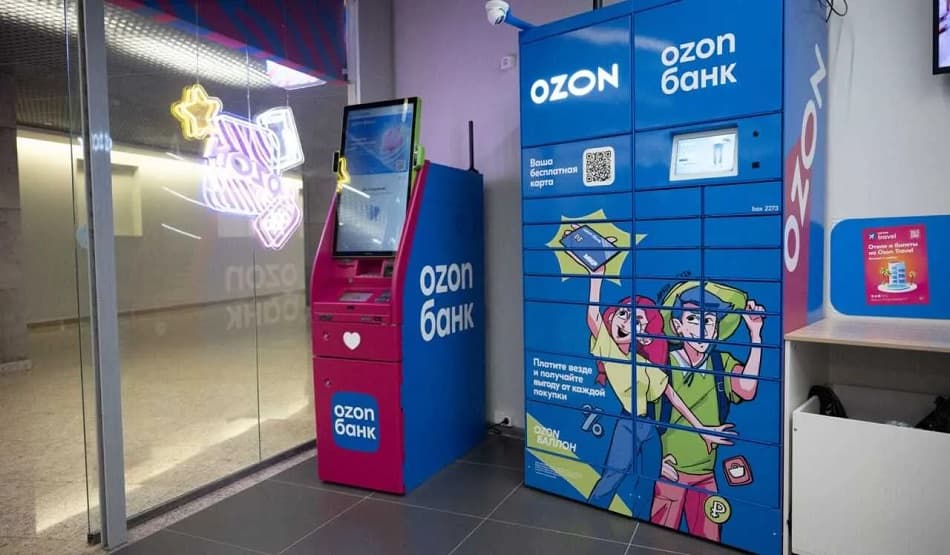
Russian E-Commerce and Banking Are Converging: Sberbank at the Table for Ozon

Ozon

It has been claimed that Sberbank, Russia’s largest state-owned bank, is holding talks to acquire a significant stake in Ozon, one of the country’s leading e-commerce platforms. The claim has taken the integration between Russia’s e-commerce and finance sectors to a new level. According to market sources, the potential deal size could exceed $4 billion.

Recently, the interest of state-backed financial institutions in e-commerce companies has been drawing attention in Russia. Following the recently announced cooperation between VTB and Wildberries, it is now suggested that Sberbank is holding talks to acquire a stake in Ozon.

The move in question is seen not only as an investment, but also as a reshaping of the competition between the banking sector and the rapidly growing fintech activities of e-commerce platforms. In recent years, Ozon and Wildberries had approached the traditional areas of activity of banks by making significant investments in payment systems, digital wallets, and consumer finance.

Ozon’s Gross Merchandise Value Rose to 1.14 Trillion Rubles

Ozon continues to grow in Russia, Türkiye, Kazakhstan, Azerbaijan, Georgia, and other regional markets where it operates. In the first quarter of 2026, the company increased its gross merchandise value by 36 percent year-on-year to 1.14 trillion rubles. In the same period, the number of orders rose by 83 percent to 807.7 million, while the number of active customers reached 67.3 million. The company also reached an important milestone in profitability by generating a net profit of 4.5 billion rubles in the first quarter.

Debt Pressure Could Accelerate the Sale

Markets believe that AFK Sistema’s possible sale of its stake in Ozon may be driven by the holding company’s financial obligations. The company’s latest financial statements had drawn attention with its high debt level and significant net loss. According to experts, the sale of Ozon shares could help the holding company strengthen its financial structure and reduce its debt burden.

A New Era in Russia’s Internet Economy

Analysts note that state-linked investors and financial institutions are becoming increasingly influential in Russia’s digital economy companies. Ownership changes in strategic digital platforms such as VK, Yandex, and Ozon in recent years indicate that the internet economy is moving toward a more centralized structure. If the potential Sberbank-Ozon deal takes place, e-commerce, fintech, and banking in Russia are expected to become more integrated, and the boundaries between sectors are expected to become even more blurred.

AI Commerce: Rep AI Raises $6.2 Million to Build Operating System

Ai Commerce

AI commerce platform Rep AI has secured $6.2 million in new funding to expand its unified operating system for e-commerce brands, online retailers, and customer experience teams.

Rep AI, an AI commerce platform built for e-commerce brands and online retailers, has raised $6.2 million in new funding as demand grows for unified AI systems across digital retail. The round was led by Silicon Road Ventures, with participation from Osage Venture Partners, Flashpoint Venture Capital, and Zendesk.

The new investment builds on Rep AI’s $8.2 million Series A round, which was announced in August 2024. With the latest funding, the company aims to accelerate product innovation, expand its market reach, and support enterprise growth as more online retailers look for scalable AI commerce infrastructure.

Rep AI is positioning itself as AI commerce

Rep AI is positioning itself as more than a chatbot provider. The company describes its platform as an AI operating system for e-commerce, designed to help brands manage customer journeys from first interaction to long-term loyalty. This includes shopper intent detection, product discovery, personalized recommendations, conversion support, customer service, and post-purchase engagement.

According to Rep AI, many e-commerce brands are struggling with disconnected technology stacks. These fragmented systems often separate marketing, customer support, analytics, product data, and sales engagement into different tools. As a result, brands may face operational silos, weaker customer insights, and missed revenue opportunities. Rep AI says its AI commerce platform is designed to bring these functions into a more connected system.

“E-commerce brands are increasingly overwhelmed by disconnected technology stacks that create operational silos and missed revenue opportunities,” said Yoav Oz, Co-founder and CEO at Rep AI. He added that the new funding validates the company’s vision of building a unified AI operating system for e-commerce that helps brands better understand shopper behavior, improve conversion, and deliver stronger customer experiences.

The funding round also reflects a wider shift in the AI commerce market. Retailers are moving beyond isolated AI tools and looking for systems that can influence the entire customer journey. Instead of deploying separate tools for chat, support, recommendations, and analytics, brands are increasingly seeking integrated platforms that can work across multiple touchpoints.

Shauli Mizrahi, Co-founder and Chief Technology Officer at Rep AI, said the industry is moving toward integrated systems that can influence the full customer journey across e-commerce. He noted that the company’s focus is on building infrastructure that delivers measurable business outcomes while simplifying how brands deploy and scale AI.

This is particularly important as online retailers face higher customer expectations. Shoppers now expect fast answers, personalized product guidance, smooth returns, and consistent support across channels. In this environment, AI commerce is becoming a strategic priority for brands that want to improve both customer experience and revenue performance.

Silicon Road Ventures said the market is increasingly looking for agentic AI infrastructure rather than point solutions. Sid Mookerji, Managing Partner at Silicon Road Ventures, said brands are seeking scalable, revenue-driving AI systems that can replace fragmented tools with a more cohesive and intelligent platform.

Zendesk’s participation in the round is also notable for highlighting the growing connection between customer experience technology and commerce operations. Customer support is no longer viewed only as a cost center. For many online retailers, support interactions are now part of the sales journey, retention strategy, and brand experience.

Adrian McDermott, CTO at Zendesk, said a strong retail experience should feel like a knowledgeable sales concierge that understands customer needs, knows the products, and can help from discovery to returns. He added that true AI integration in retail requires more than a chatbot, as it depends on a deep understanding of shopper behavior and product data.

Rep AI’s approach reflects a broader trend in digital retail: the rise of behavioral AI. By analyzing customer signals and product information, AI commerce platforms can help brands identify intent, guide shoppers more effectively, and reduce friction before checkout. This can be especially valuable for retailers with large product catalogs, high customer service volumes, or complex customer journeys.

The company’s latest funding comes as e-commerce brands continue to invest in automation, personalization, and customer experience tools. However, the next phase of AI commerce may not be defined by single-purpose applications. Instead, the market appears to be shifting toward unified operating systems that combine sales, support, data, and personalization in one layer.

For e-commerce brands and retailers, Rep AI’s funding signals that investors are paying close attention to platforms that can turn AI into measurable commercial outcomes. As competition intensifies in online retail, AI commerce solutions that simplify operations and improve conversion could become a core part of the digital commerce stack.

The $6.2 million funding round provides Rep AI with additional resources to scale its platform at a time when retailers are actively seeking more intelligent, connected, and revenue-focused AI systems. If the company succeeds, its model could help shape the development of AI commerce across the global e-commerce industry.

DHL and USPS Sign $10 Billion Deal to Reshape U.S. E-Commerce Deliveries

DHL and USPS Sign $10 Billion Deal to Reshape U.S. E-Commerce Deliveries

The logistics industry witnessed one of its largest partnership agreements in recent years as DHL eCommerce and the United States Postal Service (USPS) announced a long-term exclusive contract valued at more than $10 billion. The agreement strengthens a relationship that has existed for over 25 years and signals a new phase in the evolution of last-mile delivery across the United States.

Under the agreement, DHL eCommerce will continue to manage parcel pickup, sorting, and transportation through its nationwide network of 19 automated hubs, while USPS will remain the exclusive provider responsible for final-mile delivery. The partnership gives DHL access to USPS’s extensive delivery infrastructure, which serves more than 170 million addresses across over 41,000 ZIP Codes six days a week.

A Strategic Move for U.S. E-Commerce Growth

The deal arrives at a time when global e-commerce volumes continue to rise and logistics providers are under increasing pressure to improve delivery speed, efficiency, and cost management. Rather than investing heavily in building a dedicated residential delivery network in the United States, DHL has chosen to deepen its collaboration with USPS, allowing the company to scale operations while leveraging an already established nationwide infrastructure.

According to DHL eCommerce Americas CEO Scott Ashbaugh, the agreement creates a more stable platform for customers and supports the company’s long-term expansion plans in the U.S. market. Industry analysts also view the partnership as a practical response to the growing complexity of parcel delivery, where final-mile logistics remain one of the most expensive and operationally demanding stages of the fulfillment process.

USPS Strengthens Its Commercial Logistics Position

For USPS, the agreement represents a major commercial win as the organization continues efforts to diversify revenue streams and strengthen its financial position. The Postal Service has increasingly positioned itself as a critical logistics infrastructure partner for major parcel carriers, offering nationwide reach that would be difficult and costly for private operators to replicate independently.

The contract is expected to generate more than $10 billion in revenue over its duration, making it one of the most significant agreements in USPS’s parcel delivery business. The partnership also reinforces a broader industry trend where logistics providers focus on specialized segments of the delivery chain while relying on strategic partnerships for nationwide residential coverage.

As competition intensifies across the global e-commerce logistics sector, the DHL-USPS agreement highlights how collaboration, infrastructure sharing, and operational efficiency are becoming central to long-term growth strategies. With parcel volumes projected to continue rising throughout the decade, both organizations are positioning themselves to capture a larger share of the expanding U.S. e-commerce market.

Source

EU Fines Temu Over Unsafe Products

Temu EU Fine

TEMU EU Fine

The European Union has fined Chinese online retailer Temu €200 million, or around $232 million, after finding that the platform failed to properly protect consumers from illegal and unsafe products. The decision marks one of the most important enforcement actions under the EU’s Digital Services Act and sends a clear message to global online marketplaces: rapid growth will not excuse weak product safety controls.

The European Commission said Temu failed to diligently identify, analyse and assess systemic risks associated with illegal products offered on its platform. The case focused on products such as hazardous toys, baby items and unsafe electronics that did not comply with EU consumer safety rules.

Temu EU fine puts marketplace safety and ecommerce compliance under the spotlight

The fine follows earlier EU findings that Temu users faced a high risk of being exposed to non-compliant goods. According to reports, the investigation included mystery-shopping exercises that found unsafe items available to consumers, including baby toys containing dangerous chemicals and faulty electronic chargers. Regulators argued that Temu’s internal risk assessment was not sufficient for the scale and nature of its marketplace operations.

Temu, owned by PDD Holdings, has disputed the penalty, calling it disproportionate. The company has said it has improved its compliance systems and has continued to cooperate with regulators. However, the Commission has also required Temu to submit an action plan explaining how it will address the violations. If the response is considered insufficient, further penalties may follow.

For the ecommerce industry, the case is significant because it shows how the Digital Services Act is moving from theory to enforcement. The DSA requires very large online platforms to assess and reduce systemic risks, including the sale of illegal goods, consumer harm, manipulative platform design, and risks associated with recommender systems. In practice, this means marketplaces must do more than remove problematic listings after complaints. They are expected to build stronger preventive systems.

This is especially relevant for fast-growing cross-border ecommerce platforms. Temu’s business model is built on low prices, a wide product range and direct access to global consumers. That model can drive strong commercial growth, but it also increases the operational challenge of monitoring sellers, product quality, safety documentation, and compliance with local regulations.

The EU’s decision also reflects a wider regulatory shift in online retail. Authorities are increasingly treating marketplaces not only as technology platforms, but as key actors in consumer protection. This changes the compliance burden for platforms that connect third-party sellers with consumers. Product safety, seller verification, data transparency and algorithmic accountability are becoming part of the same regulatory conversation.

For retailers and brands, the Temu EU fine may also reshape competition. European sellers have long argued that they face stricter regulatory and product-safety requirements than some low-cost cross-border platforms. Stronger enforcement could create a more balanced market if all platforms are required to meet the same safety and compliance standards.

At the same time, the decision may push marketplaces to invest more heavily in product screening, seller onboarding, AI-based risk detection, supply chain documentation and local compliance teams. These investments could raise operating costs, but they may also become essential for long-term trust.

The Temu EU fine is therefore more than a penalty against one company. It is a signal that ecommerce regulation is entering a tougher phase. In Europe, marketplace growth will increasingly depend not only on price, traffic and conversion, but also on safety, transparency and regulatory discipline.

The decision also signals that global ecommerce platforms must strengthen product safety, seller verification and compliance systems to maintain consumer trust in Europe’s increasingly regulated digital retail market.

Alibaba Partners with UEFA Men’s Club Competitions and UEFA EURO 2028

UEFA

Alibaba has become UEFA’s official and exclusive partner for artificial intelligence, cloud computing services, and e-commerce. The partnership will enable the use of Alibaba Cloud and Qwen Artificial Intelligence to deliver smart operations and personalized digital experiences for fans.

Alibaba Group announced a multi-year partnership with the Union of European Football Associations (UEFA) and UC3, the joint venture between UEFA and European Football Clubs (EFC) that controls and manages the strategic marketing, sales, and implementation of commercial rights for UEFA club competitions. Alibaba Group has become the official and exclusive AI, Cloud Computing Services, and E-commerce partner of the UEFA Champions League, UEFA Europa League, UEFA Conference League, and UEFA EURO 2028 from 2027/2028 to 2032/2033.

Alibaba Will Power Fan and Content Experiences Across UEFA’s Flagship Competitions

As part of the partnership, Alibaba’s advanced artificial intelligence capabilities will be used to support fan engagement as well as media and content management through the Qwen Large Language Model (LLM). Together with its cloud computing infrastructure and global e-commerce platform, Alibaba will power immersive fan and content experiences worldwide across UEFA’s flagship competitions.

“Alibaba Will Support UEFA’s Goal of Enhancing the Experience of Fans Around the World”

UEFA President Aleksander Čeferin said: “We are delighted to welcome Alibaba as a global partner for UEFA EURO 2028 and as a future partner of our men’s club competitions. Their expertise in artificial intelligence, cloud computing technology, and e-commerce will support UEFA’s commitment to thoughtful innovation and its goal of enhancing the experience of supporters around the world. Together, we can bring fans closer to the game in new and meaningful ways, making our competitions feel even more captivating, engaging, and accessible, while preserving the traditions, emotions, and spirit that define European football.”

“We Believe That the Unifying Power of Football Is the Mission That Brings Alibaba and UEFA Together”

Alibaba Group Chairman Joe Tsai said: “We believe that football is a shared language around the world and that the unifying power of the game at all levels for all fans is the mission that brings Alibaba and UEFA together. I am excited to work with UEFA to realize the vision of this multi-year partnership. We will commit our cloud computing, full-stack artificial intelligence, and global e-commerce capabilities to support UEFA and UC3 in delivering these iconic competitions to fans around the world.”

Qwen LLM Will Support UEFA in Building Its Own Next-Generation AI Capabilities

Alibaba’s cloud infrastructure and Qwen LLM will support UEFA in building its own next-generation artificial intelligence capabilities. Fans will benefit from personalized, AI-powered experiences that deepen their engagement with the sport. Through Alibaba’s global e-commerce network, fans around the world will soon be able to enjoy seamless access to a wide range of official merchandise from the UEFA men’s club competitions and UEFA EURO 2028™ starting from 2027/2028.

This partnership sets a new global benchmark in sports innovation. By combining UEFA’s unique sporting heritage and global fan base with Alibaba’s expertise in artificial intelligence, cloud computing, and e-commerce, it creates a scalable model for sports federations, leagues, and teams to engage with fans worldwide.

The development and execution of the partnership between UEFA, UC3, and Alibaba was facilitated by Relevent, the world’s leading commercial rights partner dedicated to international football. The UE FA EURO 2028 partnership will be managed by CAA11.

Eurasian Economic Union Ecommerce Market Hits $110 Billion

Eurasian Economic Union

Eurasian Economic Union Ecommerce Market

The Eurasian Economic Union (EAEU) e-commerce market reached around $110 billion by the end of 2024, accounting for more than 17% of total retail trade within the EAEU. The figure marks a major milestone for digital commerce across Armenia, Belarus, Kazakhstan, Kyrgyzstan and Russia, showing how online retail is becoming a structural part of the region’s internal trade.

The latest data was highlighted by Daniyar Imanaliev, Board Member and Minister in charge of Integration and Macroeconomics at the Eurasian Economic Commission, during discussions connected to the Eurasian Economic Forum. According to the Commission, the number of consumers in EAEU member states buying goods online has reached around 90 million, equal to nearly half of the bloc’s total population.

Eurasian Economic Union ecommerce market growth shows the rising role of digital retail across Eurasia

The growth is also strongly connected to small and medium-sized businesses. The Eurasian Economic Commission states that SMEs account for up to 80% of sellers in the Union’s ecommerce sector. This makes digital commerce not only a retail growth story, but also an important channel for regional entrepreneurship, marketplace participation and cross-border trade.

The speed of expansion is significant. In 2021, ecommerce accounted for around 7% of retail turnover in the EAEU. By 2024, that share had more than doubled, exceeding 17%. Officials now expect ecommerce to continue gaining ground, with projections suggesting that its share in retail could rise to 30% by 2030.

This trend reflects a wider transformation in Eurasian retail. Marketplaces, digital payments, online logistics and cross-border trade platforms are increasingly shaping consumer behaviour. For retailers, online channels are no longer secondary sales tools; they are becoming essential infrastructure for market access, customer acquisition and regional expansion.

At the same time, the rise of ecommerce is creating new regulatory priorities. The EAEU has been working on a common framework for electronic trade, aiming to reduce barriers between member states and create more predictable rules for sellers, platforms and consumers. The Commission has also focused on customs procedures, digital administration, electronic documentation and mechanisms to support the movement of ecommerce goods.

One of the key goals is to build a more unified digital trade environment across the Union. This includes work on customs regulation, transit systems, navigation seals and broader digitalization of trade processes. Such measures are important because ecommerce depends heavily on speed, transparency and reliable fulfilment. Without common rules, cross-border online trade can face delays, inconsistent requirements and higher operational costs.

The EAEU’s ecommerce growth also carries wider implications for international retailers and marketplace operators. A $110 billion market with tens of millions of online shoppers creates opportunities for brands looking at Eurasia as a connected digital trade space. However, success will depend on localization, logistics capability, regulatory understanding and the ability to work with regional marketplace ecosystems.

For the global ecommerce industry, the EAEU case illustrates how regional blocs are increasingly active in shaping digital trade rules. Ecommerce is no longer developing only through private platforms and consumer demand. It is increasingly being supported, structured and regulated through regional economic policy.

As ecommerce moves toward a larger share of retail trade in the EAEU, the region is likely to become more relevant for digital sellers, logistics providers, payment companies and cross-border trade platforms. The $110 billion milestone is therefore more than a market statistic. It signals a new phase in Eurasian retail, where digital commerce is becoming central to economic integration and future growth.

The EAEU e-commerce market reached around $110 billion in 2024, exceeding 17% of total retail trade as online shopping, SMEs and digital trade regulation reshape retail across Eurasia.

Eurasian Economic Union Eurasian Economic Union Eurasian Economic Union Eurasian Economic Union Eurasian Economic Union Eurasian Economic Union Eurasian Economic Union Eurasian Economic Union Eurasian Economic Union

TikTok Shop Reshapes Spain E-commerce Market

TikTok Shop

TikTok Shop is rapidly becoming one of the most closely watched forces in Spain’s ecommerce market. According to research cited by TikTok from NielsenIQ, 18.7% of Spanish ecommerce businesses now use TikTok Shop, while the platform has already become the sixteenth-largest online retailer in Spain by sales volume. For a market long shaped by established marketplaces, search-led shopping and traditional retail brands, this marks a significant shift in how online commerce is being built.

Between November 2025 and April 2026, TikTok counted 21,000 local sellers active on TikTok Shop in Spain. The figure is particularly striking when compared with Amazon’s own statement from July 2024 that more than 15,000 Spanish SMEs sell through Amazon. Amazon.es launched in 2011 and welcomed third-party sellers from the beginning, while TikTok Shop has reached this scale in Spain in a much shorter period.

The comparison does not mean TikTok Shop has replaced Amazon in Spain. Amazon remains a dominant ecommerce infrastructure player, especially in logistics, trust, product selection and cross-border selling. However, the speed of TikTok Shop’s seller adoption shows that Spanish merchants are increasingly willing to test social commerce as a serious sales channel rather than treating it only as a marketing platform.

TikTok Shop Spain ecommerce growth highlights the rise of social commerce in European retail

The core difference lies in the shopping journey. Traditional e-commerce is often search-based: consumers enter a marketplace with a specific product in mind. TikTok Shop, by contrast, is built around discovery commerce. Consumers encounter products through short videos, creator recommendations, livestreams and algorithm-driven content. The purchase is not always planned; it can emerge naturally from entertainment, trust and real-time interaction.

This model is especially powerful in categories where visual demonstration, creator credibility and impulse buying matter. Beauty is one of the clearest examples. NIQ has described TikTok Shop as a strategic risk for brands that ignore it, noting that the platform brings discovery, validation and purchase into a single native environment. In Spain, TikTok Shop is reportedly already the seventh-largest online player in the beauty category by trade volume.

The platform’s demographic reach is also notable. While TikTok is often associated with Gen Z, adoption in Spain appears broader. The reported figures show that 23% of Gen Z consumers have purchased through TikTok Shop, compared with 30% of millennials and 40% of Generation X. This suggests that social commerce is no longer limited to younger consumers; it is becoming part of mainstream digital retail behavior.

TikTok has also strengthened its retail infrastructure in Europe. Spain was the first country in continental Europe where TikTok Shop launched, in December 2024. The company has also developed fulfillment capacity through Fulfilled by TikTok, allowing sellers to use TikTok’s services for storage, picking, packing, shipping and returns. This logistics layer is important because it helps transform TikTok Shop from a content-led sales feature into a more complete marketplace ecosystem.

For retailers and brands, Spain is becoming a test case for the future of European ecommerce. The lesson is clear: visibility, conversion and fulfillment are moving closer together. Content is no longer only a tool for awareness; it is becoming the storefront, sales assistant and checkout trigger at the same time.

For marketplaces, this creates a new competitive reality. For brands, it raises a strategic question: should TikTok Shop be managed as a social media channel, a retail channel, or both? The Spanish example suggests that the answer is increasingly both. Social commerce is not replacing ecommerce, but it is changing the rules of customer acquisition, product discovery and online retail growth.

When the Pope Meets Anthropic: AI’s New Ethical Line

Pope Meets Anthropic

The Pope Meets Anthropic

We spend a lot of time in the tech and digital commerce sectors analysing white papers from Silicon Valley, regulatory updates from Brussels, and corporate roadmaps from the likes of OpenAI and Google. But yesterday, the most consequential and hard-hitting AI policy document of 2026 didn’t come from a tech hub. It came from the Vatican.

On May 25, Pope Leo XIV released his first papal encyclical, a massive, 245-paragraph, 42,000-word document titled Magnifica Humanitas (“Magnificent Humanity”), which is dedicated entirely to artificial intelligence. Pope Meets Anthropic

If anyone thought this would be a vague, surface-level commentary on technology, they were mistaken. Standing alongside the Pope at the Vatican’s Synod Hall was Christopher Olah, the co-founder of Anthropic. When one of the world’s leading minds in frontier AI safety aligns with one of the world’s oldest institutions, the global community needs to stop and listen.

The Four Pillars of the Vatican’s Manifesto

Look, I’ll be completely honest with you: at 42,000 words, I haven’t had the time to sit down and read this entire text cover-to-cover yet. My desk is currently piled high with upcoming magazine deadlines. But based on the official briefings and the earliest press sources from Rome, the Vatican is laying down some incredibly heavy, non-negotiable ethical boundaries.

From what we can gather, the document essentially hinges on four core pillars that directly challenge how the current AI ecosystem is being built:

  • Data belongs to everyone: The encyclical argues that the massive datasets used to train foundational models shouldn’t just be the private property or proprietary balance sheets of a few tech conglomerates. Instead, it should be classified as a common good.
  • We need to hit the brakes: Pope Leo XIV is calling for active government intervention to robustly regulate and deliberately slow down development, writing, “What is needed is a more active political involvement that is capable of slowing things down when everything is accelerating.”
  • Zero algorithms in warfare: The document draws a definitive moral boundary on automated defence systems, stating flatly that “no algorithm can make war morally acceptable.”
  • Protecting people’s livelihoods: The text pulls no punches on automation-driven layoffs, demanding strict protections for workers to prevent mass job displacement.

A Call for a Unified, Cross-Faith Response

This intervention highlights a broader geopolitical reality: the ethical boundaries of the digital age cannot be dictated by Silicon Valley or a single Western institution alone. The disruptions under discussion, mass labour displacement, the weaponisation of automated defence, and the centralisation of human data, are global challenges that transcend borders and individual belief systems.

As a Muslim, I see an immediate, vital opportunity here for Islamic authorities, scholars, and institutions like Al-Azhar, the Muslim World League, and regional digital ethics boards to weigh in with clarity.

In Islamic tradition, technological and economic advancements must always serve the preservation of human life, intellect, and societal well-being (Maqasid al-Shariah). When automation threatens mass human displacement for the sake of corporate margins, or when algorithms are given the autonomy to make life-and-death decisions in warfare, it violates the core tenets of stewardship and justice.

It is time for major Islamic institutions to publish their own AI frameworks. We need a unified, cross-faith alliance on technology ethics, one in which Riyadh, Cairo, Istanbul, and Jakarta speak with the same moral clarity as the Vatican to ensure that Silicon Valley respects human dignity.

Why This Matters for Global Commerce

At WORLDEF, we closely track how #AI is rewriting the rules of global infrastructure from automated supply chains and dynamic pricing to cross-border logistics and digital marketplace operations. But as Christopher Olah noted during the press conference, the questions AI raises are ultimately bigger than the technology itself. They belong to philosophy, society, and the humanities.

For those of us leading and operating within digital ecosystems, Magnifica Humanitas is a stark reminder that the “move fast and break things” era is facing an inevitable reckoning. When data ownership is challenged as a human rights issue and labour displacement is framed as a societal failure, it signals that the compliance and regulatory pressures heading our way will be much harsher than simple algorithmic transparency.

Whether you look at this through an economic, philosophical, or strictly business lens, one thing is clear: the human element must remain the true anchor of global commerce. If we build an ecosystem where efficiency completely hollows out human agency, we aren’t innovating; rather, we’re just automating our own decline.

It’s time for tech leaders to realize that the call for guardrails is no longer just a bureaucratic hurdle from government regulators. It is hardening into a global, cross-faith mandate. The world’s major spiritual and cultural traditions are drawing a line in the sand, demanding that human dignity be protected before the algorithms outpace our shared values.