
Saudi Retail Revenues Rise 7.3% in Q1 as E-Commerce Growth Accelerates
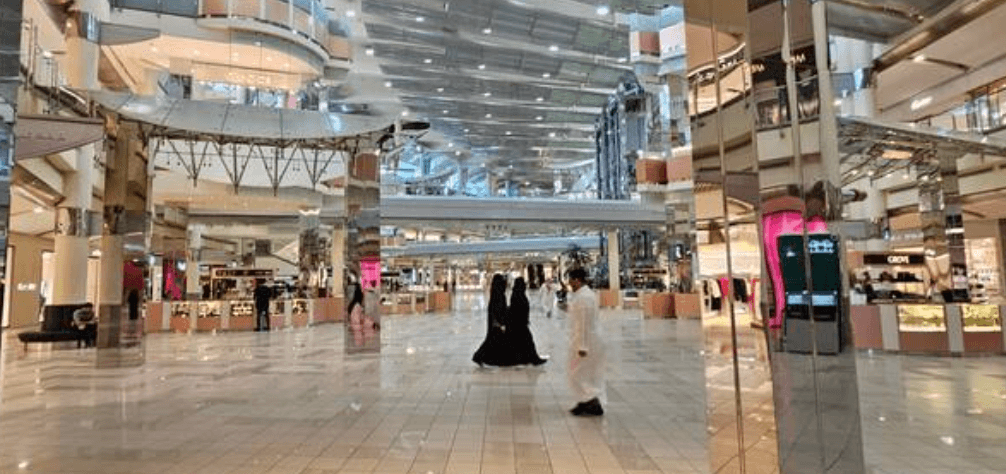
Saudi retail activity continued to strengthen in the first quarter of 2026, with GASTAT data showing higher trade revenues, rising employee compensation, and faster e-commerce growth across the Kingdom.
Saudi retail and wholesale trade revenues recorded solid growth in the first quarter of 2026, underscoring continued expansion in consumer activity and private-sector momentum in the Kingdom. According to preliminary data released by the General Authority for Statistics, the wholesale and retail trade revenue index increased by 7.3 percent year on year in Q1 2026.
The Latest Saudi Retail Figures
The latest Saudi retail figures point to a market that remains resilient despite changing global economic conditions. The general operating revenue index for wholesale and retail trade also rose by 0.5 percent compared with the previous quarter, reaching 124.8 points. This quarterly improvement suggests that commercial activity in the Kingdom continued to expand steadily after the end of 2025.
GASTAT said the operating revenues index for retail trade, excluding motor vehicles and motorcycles, rose by 9.6 percent year on year. Wholesale trade, excluding motor vehicles and motorcycles, increased by 5.5 percent over the same period. Meanwhile, the sale and repair of motor vehicles and motorcycles grew by 5.4 percent compared with the first quarter of 2025.
The performance of Saudi retail is closely linked to the Kingdom’s broader economic transformation agenda. Under Vision 2030, Saudi Arabia has been working to diversify its economy, increase private-sector contribution, and expand non-oil commercial activity. Wholesale and retail trade is one of the sectors that directly reflects consumer confidence, business activity, and the development of modern distribution channels.
On a quarterly basis, retail trade excluding motor vehicles and motorcycles increased by 1.3 percent, while wholesale trade rose by 1.8 percent. However, revenue from the sale and repair of motor vehicles and motorcycles declined by 3.1 percent compared with the previous quarter. This mixed quarterly performance indicates that while general trade activity remained positive, some segments faced softer short-term demand.
Labor-related indicators also showed strong growth. The Employees Compensation Index increased by 10.1 percent year on year in the first quarter. Retail trade excluding motor vehicles recorded the highest rise in employee compensation, with growth of 11.4 percent. This was followed by motor vehicles and motorcycles at 8.2 percent and wholesale trade excluding motor vehicles at 8.1 percent.
The rise in labor compensation is significant for the Saudi retail sector because it may reflect higher employment, wage growth, or stronger business activity across trade segments. Compared with the previous quarter, employee compensation in retail trade rose by 1.8 percent, wholesale trade increased by 2.2 percent, and the sale and repair of motor vehicles and motorcycles advanced by 0.5 percent.
E-commerce remained one of the strongest areas of growth. The E-commerce Sales Index climbed by 13.6 percent year on year in Q1 2026, outpacing the broader wholesale and retail trade market. This confirms that digital commerce continues to gain importance within Saudi retail, supported by changing consumer behavior, improved payment infrastructure, and stronger online marketplace activity.
Retail trade excluding motor vehicles led e-commerce growth with an 18.4 percent increase. Wholesale trade excluding motor vehicles followed with a 10 percent rise, while online sales linked to the sale and repair of motor vehicles and motorcycles grew by 3.2 percent. On a quarterly basis, e-commerce gains were more moderate, with retail rising 1.1 percent, wholesale trade increasing 0.7 percent, and motor vehicle-related online sales advancing 0.2 percent.
The Automobile Sales Index rose by 3.4 percent year on year in the first quarter of 2026, although it declined by 2.9 percent compared with the previous quarter. This suggests that vehicle sales remained stronger than a year earlier but experienced a slowdown from late 2025 levels.
Overall, the data shows that Saudi retail is benefiting from both traditional trade expansion and rapid digital transformation. The continued rise in operating revenues, employee compensation, and e-commerce sales highlights the sector’s growing role in Saudi Arabia’s non-oil economy.
For businesses, investors, and e-commerce players, the Q1 results send a clear signal: Saudi retail remains one of the most dynamic markets in the region. As digital channels expand and consumer demand continues to evolve, the Kingdom’s wholesale and retail trade sector is expected to remain a key driver of commercial growth in the years ahead.
Read more on
About the author
Leila Gadirli Pirgulieva
253 stories on WORLDEF since March 2026.
More from Leila Gadirli Pirgulieva →Related
Bombay High Court Orders Amazon to Hand Over Expired Goods for Disposal

Saudi Arabia’s Q1 Consumer Spending Growth Boosts Retail Real Estate Demand
Hepsiburada Reports 13.4% Order Growth in Q2 2026 as GMV Reaches TRY 56.7 Billion

Jay3lle Launches Global E-Commerce Platform, Expanding International Reach

The week in commerce, before your competitors.
1,441 stories since January 2025, distilled into three newsletters. Pick the ones you want.