WORLDEF Prime Antalya 2026 - Upcoming Event

Register Now

Adobe Predicts 520% Growth in AI Holiday Shopping

Adobe Analytics, Adobe’s data and e-commerce division, has released new projections for the 2025 U.S. holiday shopping season, highlighting a massive surge in AI-assisted online shopping. According to Adobe’s report, AI-driven shopping traffic is expected to increase by 520% year-over-year, marking a substantial acceleration in consumer reliance on artificial intelligence for product research, recommendations, and personalized shopping experiences. This growth follows a remarkable 1,300% increase in AI-related traffic observed during the 2024 holiday season. (TechCrunch)

The U.S. holiday shopping period, spanning Thanksgiving, Black Friday, and Cyber Monday, is projected to generate $253.4 billion in online sales, representing a 5.3% increase compared to the previous year. Cyber Monday is expected to remain the peak online shopping day, with sales forecasted at $14.2 billion, up 6.3% year-over-year. Black Friday is projected to generate $11.7 billion in online sales, an 8.3% increase from 2024, while Thanksgiving Day sales are estimated at $6.4 billion, up 4.9%. The report attributes this growth to increased consumer spending, mobile device shopping, and the integration of AI-powered tools in e-commerce platforms. (TechCrunch)

Adobe’s research also indicates that discounts will play a significant role in driving holiday sales. On average, products are expected to be 28% off listed prices, encouraging consumers to engage in AI-assisted comparison shopping. The rise of AI tools allows shoppers to quickly analyze deals, receive personalized recommendations, and discover products that match their preferences and budgets. Buy now, pay later (BNPL) services are also expected to contribute to higher conversion rates by offering flexible payment options for online shoppers.

The company conducted a survey of 5,000 U.S. consumers to better understand AI usage in holiday shopping. The results show that 53% of respondents are likely to use AI services for researching products prior to making a purchase. Additionally, 40% plan to use AI to receive recommendations, 36% for deal-finding, and 30% for gift inspiration. AI is projected to be most widely used for shopping in categories such as toys, electronics, jewelry, and personal care. These findings suggest that AI is becoming an essential component of consumer decision-making, enabling more efficient and satisfying shopping experiences. (TechCrunch)

Experts note that the rise of AI-assisted shopping reflects a broader shift in e-commerce towards automation and personalization. Retailers are increasingly adopting machine learning algorithms to track consumer behavior, predict purchasing patterns, and deliver customized product recommendations. AI-powered chatbots, recommendation engines, and search optimization tools are now common on leading e-commerce platforms, allowing businesses to engage customers more effectively and increase sales.

Adobe emphasizes that mobile devices will play a central role in holiday shopping this year. The convenience of shopping on smartphones and tablets, combined with AI-enhanced apps, enables consumers to compare prices, read reviews, and complete transactions anytime, anywhere. Mobile shopping growth also aligns with trends in social commerce, where AI-driven product suggestions are integrated into social media platforms to influence buying decisions.

Supply chain readiness and logistics are also highlighted as critical factors for the 2025 holiday season. Retailers leveraging AI are better equipped to manage inventory, predict demand, and optimize delivery routes, ensuring that consumers receive their products on time. The integration of AI into inventory management systems reduces the risk of stockouts and improves overall customer satisfaction.

Adobe’s report concludes that AI-assisted shopping is not just a temporary trend but a fundamental shift in consumer behavior. As AI technology continues to evolve, online shopping experiences are expected to become increasingly personalized, efficient, and intelligent. Retailers that adopt AI tools effectively will likely gain a competitive advantage, driving higher sales and fostering stronger customer loyalty.

Rezolve Ai Acquires Smartpay for Global Digital Payments

Rezolve Ai, an AI-powered commerce solutions provider, has announced the acquisition of Smartpay, a leading digital asset payment platform, to enhance its global payment infrastructure. The acquisition aims to accelerate the adoption of digital assets, including USDT, BTC, and ETH, for both merchants and consumers worldwide. This strategic move positions Rezolve Ai at the forefront of AI-driven commerce and digital payments. (GlobeNewswire)

Smartpay has processed over 19 million transactions totaling more than 1 billion dollars over the past year, demonstrating its robust infrastructure and growing market presence. Its operations span multiple countries in Latin America, including Brazil, Argentina, Colombia, and Angola. This provides Rezolve Ai with a strong foundation to expand its payment network to North America, Asia, and Europe. The platform supports seamless transactions for merchants while enabling consumers to make instant payments using digital assets. By leveraging Smartpay’s proven infrastructure, Rezolve Ai can offer faster, more secure, and scalable payment solutions to a global audience. (GlobeNewswire)

The acquisition is part of Rezolve Ai’s Multi-Asset Payment Initiative, developed in collaboration with Tether. This initiative allows merchants to accept multiple digital assets while providing consumers with real-time fiat settlement options. By integrating Smartpay’s infrastructure, Rezolve Ai enhances its ability to offer scalable, secure, and AI-driven payment solutions across the global commerce ecosystem. Analysts suggest that this acquisition could significantly accelerate the adoption of digital currencies in everyday transactions, particularly in emerging markets where mobile payments and digital wallets are increasingly popular. (Finextra)

In addition to strengthening digital payment capabilities, the acquisition supports Rezolve Ai’s Agentic Commerce vision, where AI agents autonomously assist consumers and businesses in discovering, comparing, negotiating, and executing transactions using digital assets. Smartpay’s advanced payment network provides the essential infrastructure for these AI-powered interactions, enabling faster, secure, and efficient commerce. This integration allows Rezolve Ai to develop a seamless ecosystem where consumers can pay in digital assets and merchants can receive settlement in fiat or other preferred currencies instantly.

Rocelo Lopes, founder of Smartpay, will lead Rezolve Ai’s Digital Currency Initiative and oversee the company’s global expansion strategy. Lopes has extensive experience in digital asset adoption and has collaborated with Tether on integrating stablecoins into commercial transactions. Under his leadership, Smartpay grew rapidly in Latin America and established strategic partnerships with leading financial institutions to support digital currency payments.

Rezolve Ai has previously partnered with major global players such as Microsoft, Google, and Tether to develop AI-driven commerce solutions, aiming to capture opportunities within the 30 trillion dollar global retail market. With the acquisition of Smartpay, Rezolve Ai strengthens its position as a leader in AI-enabled commerce and digital payment innovation, offering businesses and consumers new ways to interact and transact in a digital-first economy.

The acquisition also aligns with broader industry trends, as digital assets continue to gain traction in global payments. Businesses are increasingly adopting blockchain-based solutions to reduce transaction costs, improve transparency, and offer customers faster and more flexible payment options. Rezolve Ai’s move to acquire Smartpay reflects the growing importance of AI-driven platforms in managing complex payment networks and integrating multiple asset types into a seamless user experience.

Market analysts predict that Rezolve Ai’s expanded platform could significantly influence digital asset adoption in Latin America and other emerging markets. The integration of Smartpay’s network will allow more merchants to accept stablecoins and cryptocurrencies, while AI agents facilitate faster, smarter, and more personalized payment experiences. This could encourage more consumers to explore digital currencies as a viable alternative to traditional payment methods.

Looking ahead, Rezolve Ai plans to continue expanding Smartpay’s infrastructure into additional regions, including Asia-Pacific and Europe. The company will also invest in enhancing AI capabilities to optimize payment routing, fraud detection, and cross-border transactions. By combining advanced AI tools with Smartpay’s established network, Rezolve Ai aims to provide a fully automated and efficient payment ecosystem capable of supporting millions of transactions daily.

Blackstone & Lunate Launch $5B Gulf Logistics Platform

Blackstone and Abu Dhabi-based Lunate have announced a strategic partnership to launch a $5 billion logistics platform aimed at transforming infrastructure across the Gulf Cooperation Council (GCC) region. The initiative, named GLIDE Gulf Logistics Infrastructure Development Enterprise is designed to develop, acquire, and manage high-quality logistics assets across GCC countries, including the United Arab Emirates, Saudi Arabia, Qatar, Kuwait, Oman, and Bahrain. This collaboration combines Blackstone’s global investment expertise with Lunate’s deep regional knowledge, creating a platform capable of addressing the growing logistics and supply chain demands in the Gulf. (Reuters)

The partnership comes at a time when the GCC region is experiencing significant economic diversification and industrial expansion. Countries in the region are implementing policies to reduce dependency on oil revenues and encourage investment in sectors such as manufacturing, e-commerce, and logistics. The rise of online commerce has increased the demand for modern warehousing and distribution centers capable of supporting faster delivery and efficient supply chains. According to Gulf News, logistics infrastructure in the GCC has struggled to keep pace with the rapid growth of trade and e-commerce, creating a substantial opportunity for investors like Blackstone and Lunate. (Gulf News)

GLIDE’s investment strategy is multi-pronged. It includes greenfield developments, where new logistics facilities are constructed in strategic locations; selective acquisitions of existing high-quality warehouses and distribution centers; and sale-and-leaseback arrangements, allowing regional companies to free up capital while GLIDE manages their logistics operations. By employing this strategy, the platform aims to create a comprehensive network of logistics assets that can support the region’s growing industrial and e-commerce activities.

Blackstone brings extensive global experience to the partnership, as it manages over 1.2 billion square feet of logistics and industrial real estate worldwide. Lunate, on the other hand, contributes its in-depth knowledge of the GCC market, strong local connections, and experience navigating regulatory frameworks in the region. The combination of these strengths allows GLIDE to operate efficiently, identify high-potential investments, and develop facilities that meet international standards while addressing local market needs. (Blackstone)

The GCC region’s logistics sector is expected to grow substantially in the coming years, with estimates suggesting that the market could exceed $110 billion by 2030, up from around $81 billion in 2025. This growth is fueled by rising e-commerce penetration, the expansion of industrial zones, and increased consumer demand for faster and more reliable delivery services. GLIDE’s platform is expected to play a key role in meeting this demand, providing modern and efficient logistics infrastructure to support businesses across the region. (Reuters)

Economic diversification programs such as Saudi Arabia’s Vision 2030 and the UAE’s Industrial Strategy 2030 underscore the importance of logistics and supply chain development as critical enablers of broader economic goals. These initiatives aim to enhance industrial output, attract foreign investment, and improve trade efficiency. By investing in high-quality logistics assets, GLIDE aligns with these national strategies and positions itself as a facilitator of regional economic growth.

GLIDE also emphasizes sustainability and modern operational standards. The platform plans to integrate environmentally friendly practices, including energy-efficient warehouses, sustainable building materials, and optimized transportation networks. These efforts are intended to reduce the environmental impact of logistics operations while supporting the GCC’s broader sustainability targets.

The collaboration is expected to create significant economic benefits for the region. In addition to improving supply chain efficiency, GLIDE’s investments will generate employment opportunities and foster technological innovation within the logistics sector. By enhancing the quality and reach of logistics infrastructure, businesses across the GCC will be better positioned to serve both local and international markets, increasing competitiveness and economic resilience.

Jon Gray, President and COO of Blackstone, highlighted that the combination of pro-growth policies, industrial expansion, and demographic trends in the GCC is creating a unique environment for logistics investments. Khalifa Al Suwaidi, Managing Partner at Lunate, emphasized that combining global investment experience with regional expertise would unlock the potential of the Gulf logistics market, providing both investors and local economies with tangible benefits.

While GLIDE presents significant opportunities, it will also need to navigate challenges such as regulatory approvals, competition from existing logistics providers, and infrastructure constraints. Success will depend on careful project planning, effective partnerships with local authorities, and ongoing monitoring of market demand and operational efficiency.

The launch of GLIDE represents a broader trend of increased foreign investment in GCC infrastructure. As the region continues to diversify its economy and expand industrial and e-commerce activities, partnerships like GLIDE are expected to play a critical role in shaping the future of logistics and supply chain management.

Dubai Founders HQ to Empower Startups and SMEs in the Region

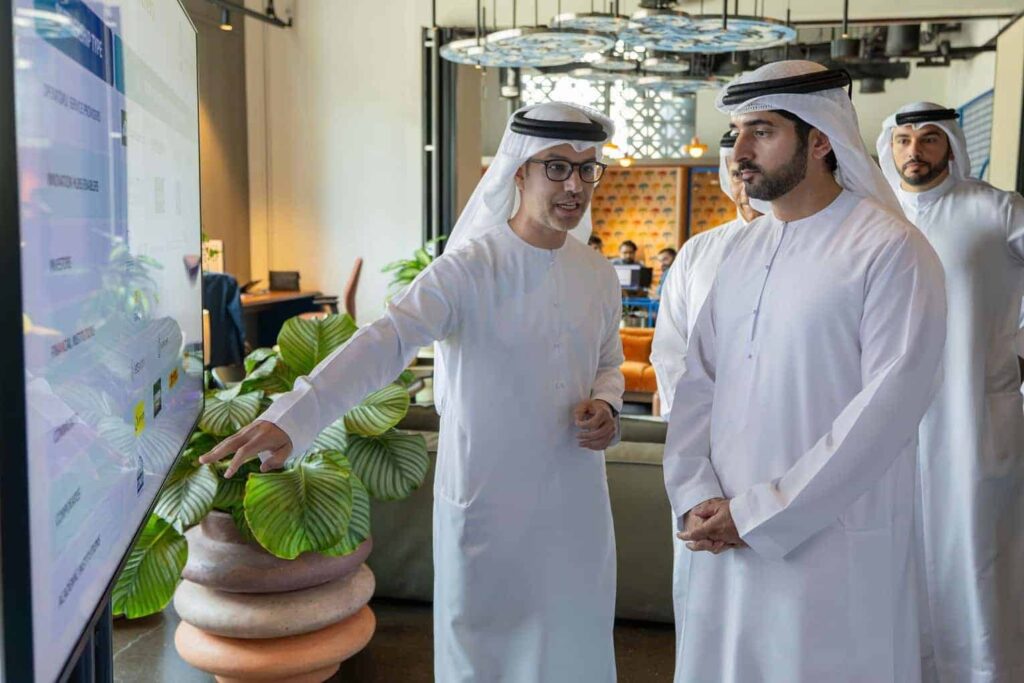
In a bid to strengthen Dubai’s position as a global center for innovation, His Highness Sheikh Hamdan bin Mohammed bin Rashid Al Maktoum, Crown Prince of Dubai, has launched the Dubai Founders HQ. This groundbreaking initiative, developed by the Dubai Department of Economy and Tourism (DET) and the Dubai Chamber of Digital Economy, is designed to consolidate and amplify the startup and small and medium enterprise (SME) ecosystem in Dubai.

Dubai Founders HQ stands as the first-ever ‘phygital’ platform, blending a dynamic physical campus with an expansive digital ecosystem. This initiative brings together entrepreneurs, investors, corporations, and enablers, providing them with a collaborative environment that fosters creativity, business growth, and innovation. The platform already boasts over 25 leading public and private sector partners, spanning venture capital, telecommunications, financial services, government entities, and innovation hubs.

Dubai Founders HQ, The Heart Of Dubai’s Entrepreneurial Ecosystem

Located at the 25Hours Hotel in the One Central area of Dubai World Trade Centre, the Dubai Founders HQ campus serves as the heart of Dubai’s entrepreneurial ecosystem. His Highness Sheikh Hamdan emphasized the importance of cooperation between the public and private sectors in empowering entrepreneurs and innovators to succeed, highlighting Dubai’s commitment to fostering creativity and transforming new ideas into impactful success stories.

“We are committed to fostering an environment that embraces creativity, encourages new ideas, and transforms them into success stories that enhance Dubai’s position as a global center for innovation and creativity,” said Sheikh Hamdan. He also stressed that supporting entrepreneurs is not only an investment in human potential but also in the future prosperity of society.

A Game-Changer for Dubai’s Startups

The Dubai Founders HQ aligns with the goals of Dubai’s Economic Agenda D33, which seeks to scale 30 unicorns and support the growth of 400 SMEs by 2033. This visionary initiative empowers founders with unparalleled resources to launch, scale, and thrive. By bringing together leading local and global ecosystem players, Dubai Founders HQ aims to accelerate the development of Dubai’s entrepreneurial landscape across key strategic sectors.

With a hub-and-spoke model, the platform connects Dubai’s innovation ecosystem, including free zones, accelerators, and incubators, creating a seamless entry point for entrepreneurs at every stage of their growth. The comprehensive services provided include sector-specific acceleration programs, expert mentorship, investor access, and networking opportunities—all delivered through a vibrant community campus and a robust digital platform.

Key Features and Benefits

  • Collaborative Environment for Growth: The physical campus features state-of-the-art co-working spaces, meeting rooms, and event facilities that encourage collaboration and networking. It also celebrates local talent by showcasing homegrown artists, enhancing the creative atmosphere.
  • World-Class Mentorship and Acceleration Programs: Through strategic partnerships with renowned organizations such as Endeavor and Plug and Play, Dubai Founders HQ offers tailored programs for startups across various sectors. These programs provide access to corporate leaders, mentorship, and actionable insights to help entrepreneurs succeed.
  • Seamless Market Access: The platform provides a one-stop hub for business setup, growth resources, and licensing support. It also serves as a gateway for international startups, offering comprehensive guidance for entering the Dubai market.
  • Learning and Upskilling Opportunities: Dubai Founders HQ offers a comprehensive digital platform with a curated library of resources designed to help entrepreneurs acquire the knowledge and skills necessary to thrive in the competitive market.

Building a Collaborative Ecosystem

The launch of Dubai Founders HQ marks a significant milestone in the city’s journey to become a global hub for digital entrepreneurship. His Excellency Omar Sultan Al Olama, Minister of State for Artificial Intelligence, Digital Economy, and Remote Work Applications, emphasized the importance of Dubai Founders HQ in accelerating innovation and attracting international talent.

“The launch of Dubai Founders HQ reflects our commitment to creating an integrated, founder-focused ecosystem that empowers startups to scale beyond borders,” Al Olama said. “By uniting stakeholders across sectors, this initiative will serve as a vital engine for growth and innovation.”

As the platform continues to grow, Dubai Founders HQ will remain a key player in the city’s vision to become the ultimate destination for entrepreneurs, startups, and innovators worldwide.

Dark Stores Revolutionize e-Commerce Fulfillment in MENA Region

The Middle East and North Africa (MENA) region is experiencing a rapid transformation in its e-commerce sector, driven by rising consumer demand for speed, convenience, and reliability. The growth of digital retail is now being supported by an innovative solution: dark stores.

These fulfillment hubs, along with micro-fulfillment centers (MFCs), are emerging as crucial components in the next phase of e-commerce in the region, enabling businesses to meet the increasing expectations for ultra-fast delivery and operational efficiency.

Meeting the Demand for Ultra-Fast Delivery

In urban centers like Dubai, Riyadh, and Cairo, the need for near-instant delivery is growing rapidly. Consumers expect everything from groceries and personal care products to ready meals delivered to their doorsteps in under 30 minutes. However, fulfilling these demands from centralized warehouses is neither cost-effective nor feasible.

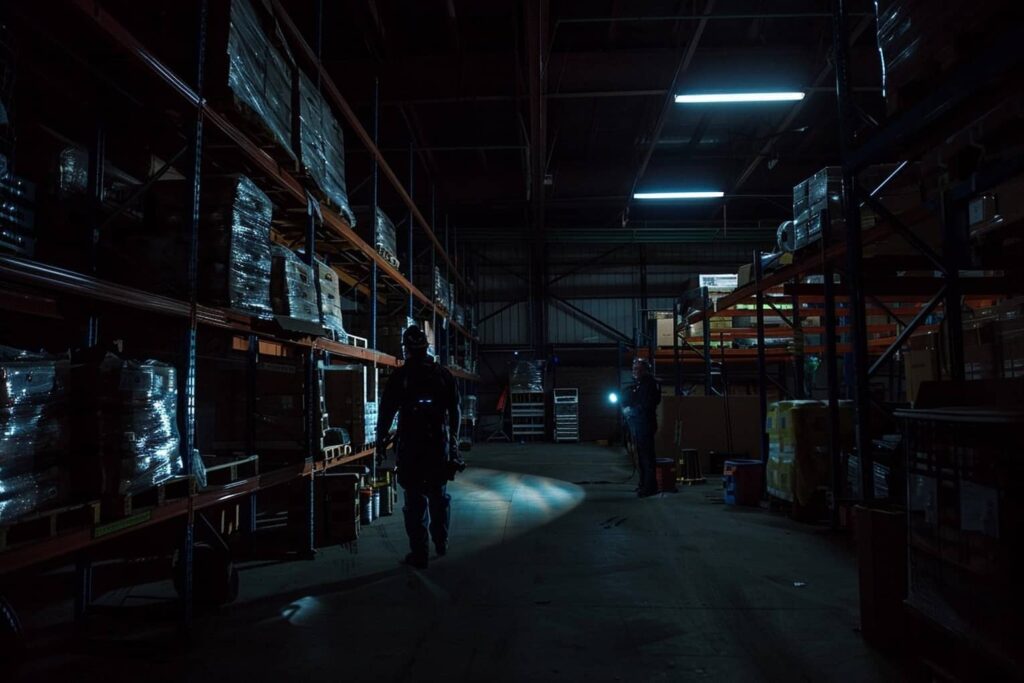
This is where dark stores come into play. Dark stores are small, fulfillment-only facilities located within or near residential areas, bridging the gap between consumers and retailers. These facilities are dedicated to fulfilling online orders, drastically reducing delivery times. Micro-fulfillment centers enhance this process by utilizing automation, robotics, and optimized inventory systems, making picking and packing more efficient.

UAE and Saudi Arabia Embrace the Dark Store Model

In the UAE, logistics company EMX has launched a new dark store network to support the region’s growing e-commerce industry. By utilizing these distribution centers, e-commerce businesses can enhance delivery speeds and offer additional services like “click-and-collect,” which allows customers to pick up their orders at designated locations.

In Saudi Arabia, SAL, a leading logistics provider, launched its Fulfillment Business Unit to further streamline operations in the Kingdom. By leveraging its expansive logistics network, SAL is able to offer integrated fulfillment services that cater to the growing demand for efficient e-commerce solutions in the region.

Boosting Cost Efficiency and Operational Scalability

Dark stores and MFCs are not only critical for speed but also play a vital role in improving the cost-effectiveness of last-mile delivery. By positioning fulfillment hubs in high-demand urban areas, retailers can reduce transportation distances, lowering fuel and labor costs. Automation technologies within these centers further enhance efficiency, reducing labor costs and minimizing error rates in the order fulfillment process.

As labor costs rise in the region, automation provides a stable foundation for scaling operations, ensuring that businesses can handle increased demand without significantly increasing operational expenses.

The Rapid Growth of MENA’s E-Commerce Market

The e-commerce sector in MENA is experiencing exponential growth, particularly in the quick commerce segment, which includes products like food, groceries, and ready meals. This segment is expected to expand at a compound annual growth rate (CAGR) of over 20% in the coming years. According to research by Grand View Research, the global dark store market is projected to grow at a CAGR of 36% to reach $129 billion by 2030. The MENA region is expected to see a similar growth trajectory, with the dark store market estimated to reach $12.1 billion by 2030.

Overcoming Operational Challenges

Despite their potential, dark stores and MFCs come with challenges. Real estate in urban centers is expensive, and setting up these facilities with the required technology and staffing involves significant upfront costs. Moreover, ensuring consistent demand density, managing fragmented inventory, and coordinating supply replenishment across multiple nodes adds complexity to operations.

Competition in the region is also fierce, with traditional supermarkets, e-commerce platforms, and quick commerce businesses all vying for a share of the market. Consumer expectations around free or low-cost delivery continue to put pressure on profit margins.

Strategic Imperatives for MENA Retailers

For e-commerce businesses in MENA to thrive, dark stores and MFCs are no longer optional; they are essential. Key strategies include:

  • Network Planning: Utilize data to strategically locate dark stores where demand is concentrated, ensuring high throughput per node.
  • Hybrid Models: Combine dark stores with regional hubs and mobile fleets to balance cost, coverage, and speed.
  • Technology Integration: Implement AI-driven solutions for inventory management, demand forecasting, and automation of sorting and picking processes.
  • Outsourcing: Smaller retailers can partner with third-party fulfillment providers to access dark store capabilities without large capital expenditures.

As the MENA region continues to urbanize and consumer expectations evolve, dark stores and micro-fulfillment centers are positioning themselves as foundational elements of the future e-commerce landscape. Businesses that fail to invest in this infrastructure risk falling behind in an increasingly competitive market.


Abu Dhabi Unveils Its First Licensed Driverless Delivery Pods in Masdar City

Germany’s E-Commerce Continues to Grow Powered by the Top 10 Retailers

Germany’s e-commerce sector is witnessing impressive growth, largely driven by the country’s leading online retailers. According to the latest rankings from EHI and ECDB, Amazon remains the largest online retailer in Germany, followed by local giants Otto and Zalando.

The total revenue of the top 1,000 online stores in Germany reached €80.4 billion in 2024, reflecting a 3.8% increase compared to the previous year. Growth is particularly concentrated among the top 10 retailers, which saw an 8% increase in their revenue, while the remaining 990 stores grew by only 1%. This trend demonstrates the strengthening market share of the major players, with Amazon maintaining a clear lead in the marketplace.

Market Share and Growth Expectations for Germany’s E-Commerce

The top 10 retailers now account for 38.8% of the total revenue generated by Germany’s top 1,000 online stores. This figure has increased compared to previous years. The growing dominance of large e-commerce platforms is highlighted by ECDB CEO Friedrich Schwandt, who stated: “Large providers are growing faster and capturing an ever-greater market share.” In total, the top 100 stores generate 70.7% of the sector’s total revenue.

For 2025, the e-commerce outlook in Germany remains optimistic. EHI predicts a 5.3% increase in the total revenue of the top 1,000 stores, while the German Retail Association (HDE) anticipates a 4% growth in overall e-commerce. After a period of contraction, the e-commerce market in Germany is now set for further expansion in the coming years.

The Rise of Marketplaces

In addition to first-party sales, the rankings also emphasize the performance of the largest online marketplaces in Germany. Amazon continues to lead in this space, followed by eBay, Otto, Zalando, and Temu. Amazon’s position is further strengthened by its significant advertising revenue in Germany.

On the other hand, the Chinese platform Temu saw an extraordinary rise, nearly quadrupling its transaction volume in Germany, reaching €3.4 billion in 2024. Temu’s rapid growth reflects the increasingly competitive landscape of the e-commerce sector in Germany, as international players continue to make significant strides.

Germany’s E-Commerce Sector Prepares for Another Strong Growth Year

The latest data confirms that Germany’s e-commerce sector is rapidly evolving, with major players consolidating their market share. As the top 10 retailers continue to grow, the overall market is expected to follow, albeit at a slower pace. The continued dominance of platforms like Amazon and the rise of new competitors like Temu indicate that Germany’s e-commerce market is dynamic and highly competitive. With positive revenue projections for 2025, the sector is set for another year of robust growth.

DIEZ and German–Emirati Council Forge Strategic Pact to Accelerate German Investment in Dubai

Jeff Bezos Predicts Huge Societal Gains from AI Amid Growing Investment Bubble

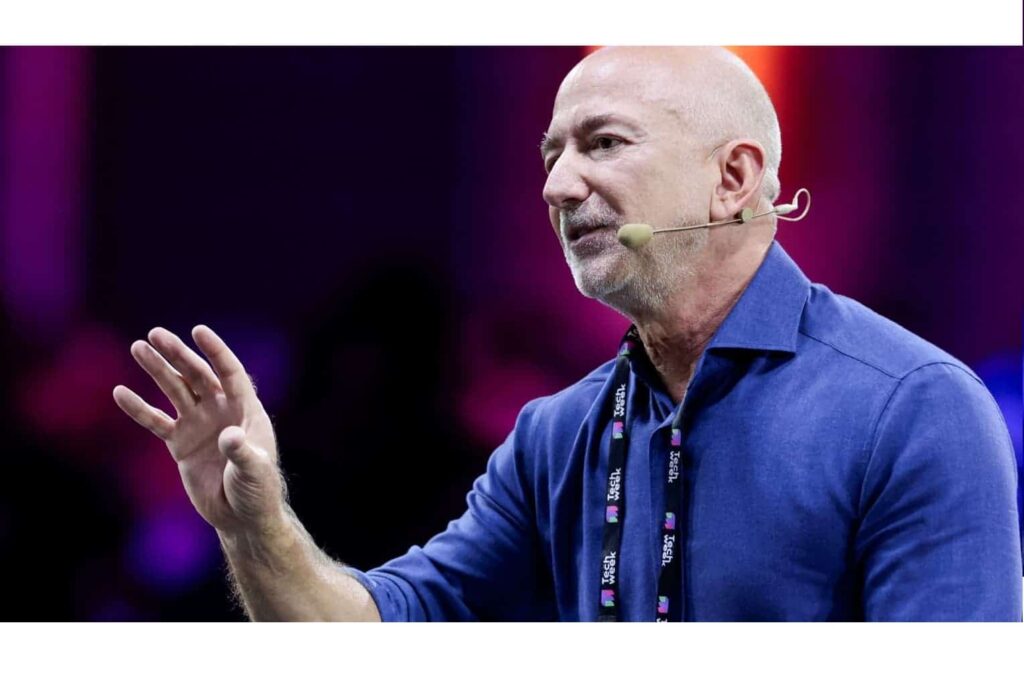
Jeff Bezos, the Amazon founder, addressed the booming investment in artificial intelligence (AI) at the Italian Tech Week, calling it an “industrial bubble” but emphasizing that AI’s impact on society will be monumental in the long run.

Speaking with John Elkann, the billionaire chairman of Stellantis and Ferrari, Jeff Bezos drew a clear distinction between destructive financial bubbles and industrial bubbles, the latter of which result in enduring innovations and valuable infrastructure. According to Bezos, AI’s rise mirrors past industrial bubbles like the dotcom era, which, despite an eventual market crash, left behind vital developments such as fiber-optic networks and life-saving medicines born from the 1990s biotech crash.

Jeff Bezos: Artificial Intelligence Investments Are an Industrial Bubble

“This is an industrial bubble as opposed to financial bubbles,” Jeff Bezos explained, reassuring investors that despite current market excitement and inflated stock prices, AI technology is genuine and poised to reshape industries across the globe. He likened the current investment frenzy to the dotcom era, where every idea received funding, regardless of its viability.

Bezos, who now serves as Amazon’s executive chairman, shared a personal anecdote from the early 2000s when Amazon’s stock dropped dramatically. He recalled how the panic of the time was not reflected in the company’s solid operations, illustrating that even during periods of financial uncertainty, real value can emerge.

Despite concerns raised by other business leaders, such as Goldman Sachs CEO David Solomon, who warned of potential market drawdowns, Bezos remained confident about AI’s transformative power. “The benefits to society from AI are going to be gigantic,” he stated, noting that the full extent of AI’s impact is still unfolding.

As AI continues to capture global attention and investments flow into the sector, Bezos reaffirmed his optimism, comparing the potential societal benefits to previous industrial shifts. “This is real, and it’s going to change every industry,” he concluded, echoing his unwavering belief in AI’s future.

In contrast, Solomon echoed caution, suggesting that some of the capital currently invested in AI may not deliver returns, warning of a market correction within the next 12-24 months. Nonetheless, both Jeff Bezos and Solomon agree that AI’s influence will be profound, though the path forward remains uncertain.


Amazon Plans to Show New Tariffs in Prices to Consumers!

V Perfumes Named Top Online Perfume Retailer of the Year at Big Box Global Retail & E-Commerce Summit

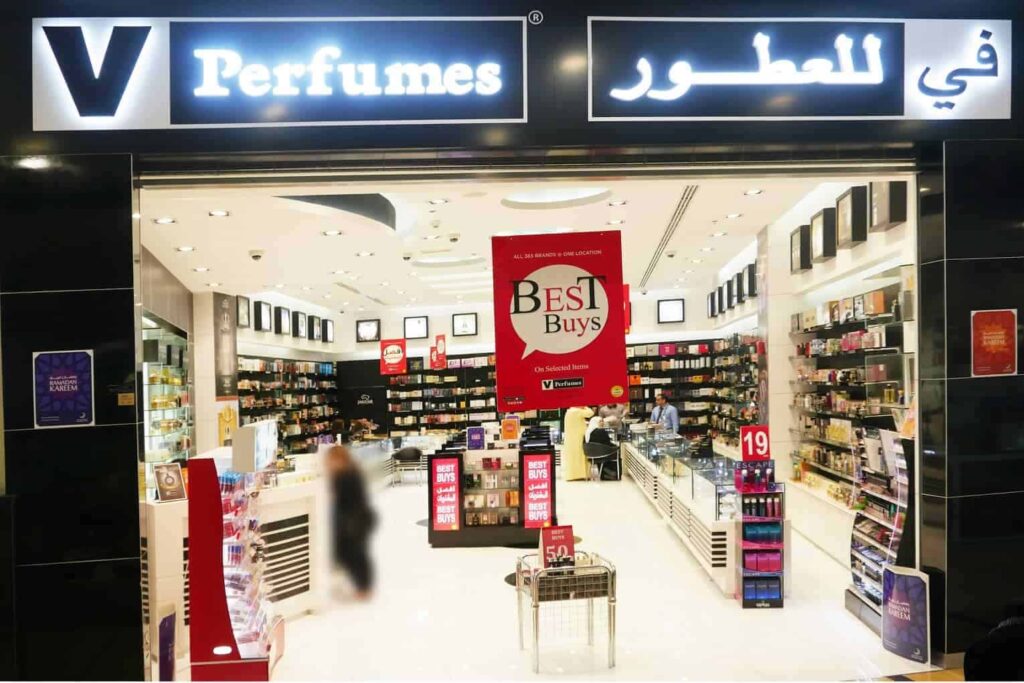
V Perfumes, a leading name in the fragrance industry, has been honored with the Big Box Award for #1 Online Perfume Retailer of the Year at the prestigious Big Box Global Retail & E-Commerce Summit, held at the Millennium Plaza Downtown Hotel. This accolade marks a significant achievement in the company’s journey, which began in 2010 and has since grown to include over 50 stores across the GCC region.

The Big Box Awards, organized by Scribe Minds & Media under the leadership of founders Pradish Gireesan and Jordan Abraham, celebrated innovation and excellence in retail and e-commerce. The summit, renowned for its focus on both traditional and online commerce, provided a platform for global industry leaders to share insights, foster collaborations, and inspire the next wave of retail evolution. The event’s unique format honors businesses that excel in blending the best of both worlds—brick-and-mortar retail and e-commerce.

This year’s event attracted attention from leading retail professionals across the globe, with past awards spanning regions such as Australia, India, Indonesia, and Malaysia. After a successful UAE chapter, the Big Box Awards will extend to the Philippines, Saudi Arabia, and South Africa, continuing its mission to honor outstanding retail achievements.

V Perfumes’ E-Commerce Team Received The Award

At the ceremony, V Perfumes’ e-commerce team was presented with the coveted award by Navin Joshua, Co-Founder & Director of GreenHonchos, a leading D2C enabler. This win follows their 2024 SMB Award in the Retail category and marks a continued commitment to enhancing both in-store and online customer experiences.

“We are deeply honored to receive this recognition,” said Mr. Faizal CP, Co-Founder of V Perfumes. “This award is a testament to our team’s hard work and dedication to improving the e-commerce experience. We are inspired to continue innovating in the digital space, creating value for both our customers and the broader fragrance community.”

V Perfumes began its journey in 2010 and entered the online retail space in 2016. The brand has since grown rapidly, expanding to over 50 physical stores across the UAE, Qatar, Oman, and Saudi Arabia. Their seamless online shopping experience, complemented by diverse product offerings, seasonal promotions, and personalized customer engagement, has made them a leader in the GCC fragrance market.

In addition to their impressive retail footprint, V Perfumes continues to captivate customers through unique online offerings, such as their highly anticipated Autumn Sale, allowing customers to stay ahead of seasonal fragrance trends.

This award reflects V Perfumes’ ongoing success in combining innovation, consumer-centric strategies, and a passion for fragrances, securing its position as a dominant force in the region’s e-commerce landscape.

UAE and Saudi Lead Digital Trends 2025

Highsnobiety Ends E-Commerce Operations to Refocus on Culture and Publishing

Highsnobiety, owned by German fashion e-commerce giant Zalando, has announced that it will shut down its e-commerce division by the end of 2025, marking a strategic pivot back to its publishing and creative agency roots.

The decision is part of a company-wide restructuring plan, which will affect approximately 50 positions across retail and operations. According to a company spokesperson, Highsnobiety is working “closely with all impacted employees” to ensure a smooth transition and offer career support during the process.

Berlin Flagship Store to Become a Cultural Hub

The brand’s flagship store on Unter den Linden Boulevard in Berlin, which opened in 2023, will be transformed into a dynamic space for pop-ups, collaborations, and cultural activations. Instead of functioning as a retail location, the venue will serve as a creative platform for brands and communities to connect through limited events and experimental showcases.

This shift reflects a growing trend among lifestyle media brands—such as Hypebeast and Complex—to blur the lines between content, culture, and experience rather than maintaining traditional retail operations.

Highsnobiety Goes Back to Basics: Storytelling and Impact

Founded in 2005 by David Fischer as a digital magazine exploring streetwear, sneakers, and youth culture, Highsnobiety evolved into a multifaceted business combining editorial media, e-commerce, and a creative agency. Its online shop, launched in 2019, featured curated fashion and lifestyle products, including exclusive collaborations with major brands like Adidas, Stone Island, and Prada.

In a statement, Fischer emphasized that the company’s long-term strength lies in its cultural influence rather than retail execution.

“Highsnobiety has always been about helping our community understand what’s new and next, and helping brands earn credibility with the audiences that matter most,” he said.
“Over the past five years, we’ve proven our ability to create cultural moments that resonate far beyond traditional publishing. As we look ahead, our energy belongs squarely there.”

A Shift in Strategy for Zalando-Owned Media

Since Zalando acquired a majority stake in Highsnobiety in 2022, the publication has played a key role in connecting the e-commerce group with Gen Z and millennial audiences. However, with tightening retail margins and shifting consumer habits, Zalando has increasingly leaned on media-driven storytelling and brand partnerships as key growth areas.

Industry analysts note that Highsnobiety’s move could signal a larger shift in the fashion media landscape, where cultural capital and storytelling have become as valuable as direct retail sales.

With this transition, Highsnobiety is positioning itself as a creative powerhouse—one that shapes trends, drives conversations, and bridges the gap between brands and the culture that defines them.

Zalando Reports Strong Growth in 2024

DP World, PayPal Sign MoU for Digital Payment Platform

DP World has entered into a Memorandum of Understanding (MoU) with global payments giant PayPal to jointly develop a cross-border digital payments platform. The goal: to drastically shorten settlement times and bring more transparency to international trade transactions.

Under the agreement, merchants, marketplaces, shippers, exporters, and importers will gain access to a system that promises to reduce payment processing from days (or even a week) to mere minutes.

DP World CEO: Speed and Transparency Matter

Sultan Ahmed bin Sulayem, Group Chairman & CEO of DP World, stated that logistics hinges on efficiency and trust. He emphasized that payments must match those values: “Payments linked to logistics are no different our collaboration with PayPal aims to provide our customers with options that are faster and more transparent than traditional systems without compromising security.”

PayPal President & CEO Alex Chriss added that global trade thrives when payments are instantaneous, transparent, and secure: “This partnership sets a new standard. For too long, global businesses have been underserved by traditional cross-border payment systems.”

Integrating Supply Chain and Payments Expertise

The collaboration will combine DP World’s broad logistics and supply chain network with PayPal’s mature payments infrastructure. The aim is to reduce “friction” in cross-border trade and make global business operations more seamless.

This initiative is part of DP World’s broader Digital Payments programme, which also includes plans to incorporate distributed ledger technologies and stablecoin-based settlement solutions via licensed payment partners.

Stablecoin Innovation for Global Trade

As part of the initiative, DP World is designing a multi-currency stablecoin solution to support settlement of cross-border trade transactions. This mechanism is intended to cut settlement costs, speed up processing, and enhance transparency in international payments.

Especially in emerging regions (Asia, Africa, Latin America), long settlement times and limited access to banking infrastructure have impeded trade. DP World’s stablecoin system targets these pain points.

DP World has clarified that it does not plan to launch its own sovereign stablecoin but will partner with existing payment and technology providers.

Implications & Outlook

  • Faster Settlements: In theory, payments that once required days or weeks could clear in minutes or hours.
  • Lower Costs & Barriers: By bypassing multiple intermediaries and correspondent banking fees, cross-border transactions may become more economical—especially for small and medium enterprises.
  • Regulatory Complexity: Deploying stablecoins and digital payment rails across jurisdictions will require compliance with AML/KYC rules and collaboration with authorities.
  • Ecosystem Effect: If successful, the model could drive more “multi-rail” payment architectures, where traditional banking rails coexist with blockchain and stablecoin solutions.

As DP World and PayPal proceed from MoU to implementation, global trade watchers will closely monitor whether this experiment will become a blueprint for seamless, secure digital cross-border payments in the years ahead.

Maktoum Meets PayPal CEO