WORLDEF Istanbul 2026 - Upcoming Event

Register Now

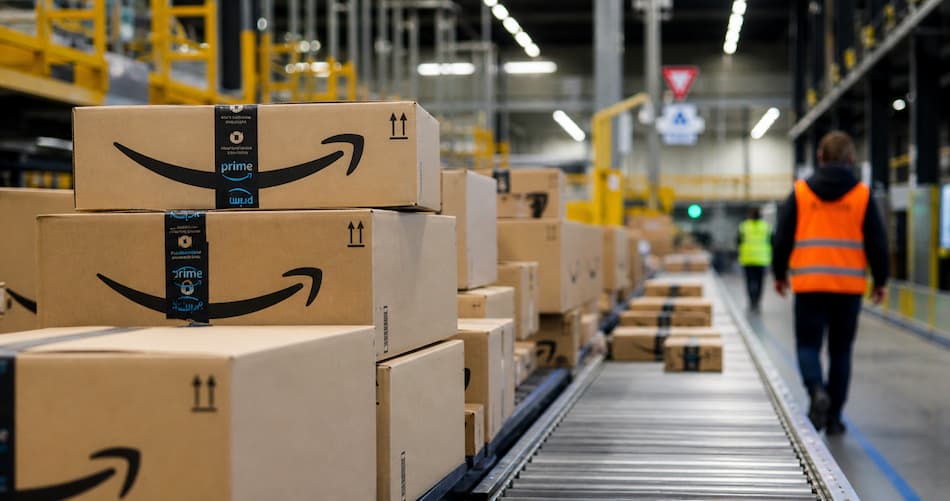
Amazon Invests €15 Billion in France to Expand Logistics and AI Operations

Amazon Invests €15 Billion in France to Expand Logistics and AI Operations

Amazon has announced plans to invest more than €15 billion in France between 2026 and 2028, marking the company’s largest-ever investment in the country. The move is expected to strengthen Amazon’s logistics network, expand its cloud and artificial intelligence infrastructure, and create over 7,000 permanent jobs across France.

The investment will cover both infrastructure development and operational spending. Amazon confirmed that the funds will support the construction of new logistics centers, upgrades to its existing fulfillment network, and the expansion of AWS cloud and AI capabilities in France. The company says the initiative aims to deliver faster shipping, broader product selection, and improved operational efficiency while also reducing environmental impact through a more localized logistics model.

New Logistics Centers to Drive Job Creation

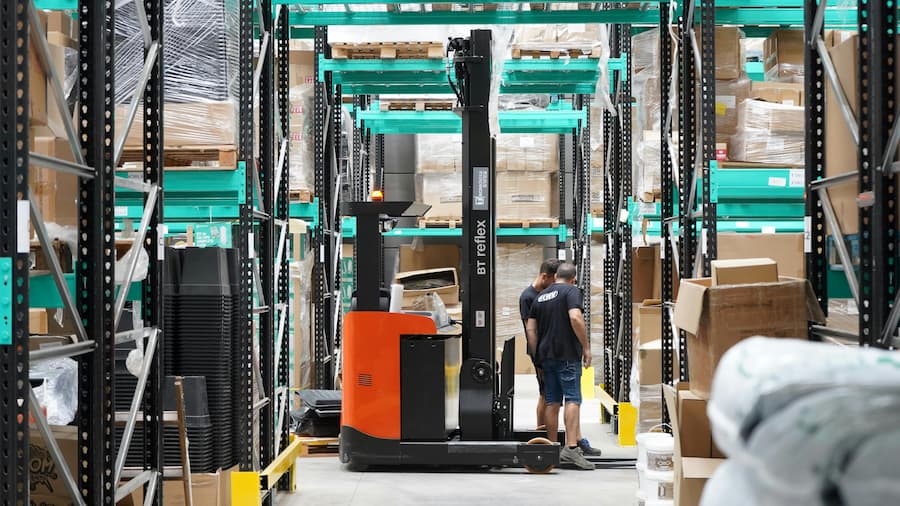
Amazon revealed that several new distribution facilities will begin operations starting in 2026. Planned sites include Illiers-Combray, Beauvais, Colombier-Saugnieu, and Ensisheim. Together, these facilities are expected to generate more than 7,000 permanent jobs over the next few years. �
Amazon News +2
The expansion reflects Amazon’s growing focus on strengthening European logistics capabilities amid rising e-commerce demand and increasing competition from Asian retail platforms. France continues to be one of Amazon’s key strategic markets in Europe, supported by a growing digital economy and strong consumer demand for fast delivery services.

France Strengthens Its Position as an AI and Cloud Hub

A significant portion of the investment will also be directed toward Amazon Web Services and artificial intelligence infrastructure. France has recently emerged as a major European hub for AI development, attracting investments from global technology companies including Amazon and Microsoft.


Amazon stated that expanding its cloud infrastructure in France will help businesses, startups, and enterprises accelerate AI adoption and digital transformation initiatives. The company previously invested over €1.2 billion in France in 2024 to strengthen logistics and AWS infrastructure, making this latest commitment a substantial escalation of its long-term strategy in the country.

France Continues to Attract Global Tech Investments

The announcement also reinforces France’s ambition to position itself as a leading European destination for international technology investments. The country has increasingly attracted large-scale commitments tied to AI, cloud computing, logistics, and advanced digital infrastructure.

As competition intensifies across Europe’s e-commerce and AI sectors, Amazon’s latest investment signals growing confidence in France’s long-term role within the global digital economy.

Source

MercadoLibre Revenue Jumps 49% as E-Commerce Demand Accelerates Across Latin America

MercadoLibre Revenue Jumps 49% as E-Commerce Demand Accelerates Across Latin America

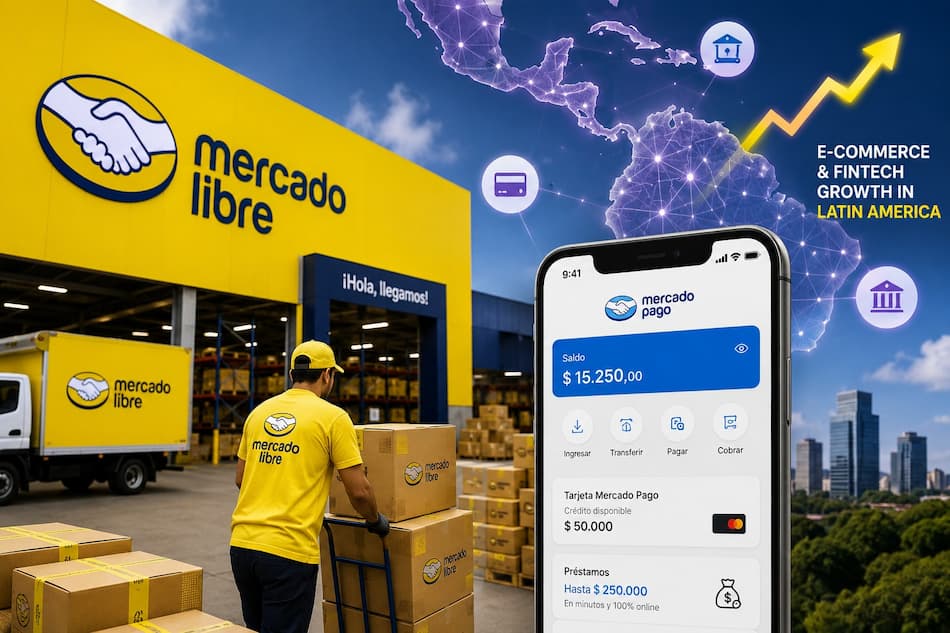
Latin American e-commerce and fintech giant MercadoLibre reported stronger-than-expected first-quarter revenue results, driven by rising online shopping activity and continued growth in its digital payments ecosystem. The company posted its fastest revenue expansion in nearly four years, reinforcing its position as one of the region’s most influential digital commerce platforms.

MercadoLibre generated $8.8 billion in revenue during the first quarter of 2026, marking a 49% year-over-year increase and surpassing analysts’ expectations of approximately $8.3 billion. The company’s performance was fueled by strong consumer demand across its marketplace operations as well as sustained momentum from Mercado Pago, its fintech and digital payments division.

Despite the strong top-line growth, profitability came under pressure as the company increased investments in logistics infrastructure, free shipping initiatives, and credit expansion strategies. Net profit declined 15.6% year-over-year to $417 million, falling below market expectations for the fourth consecutive quarter. Following the earnings release, MercadoLibre shares experienced a slight decline as investors reacted to margin pressures despite the revenue beat.

MercadoLibre Expands Its Regional E-Commerce Dominance

MercadoLibre continues to strengthen its leadership across Latin America, particularly in Brazil, Mexico, and Argentina — its three largest markets. The company has been aggressively investing in fulfillment centers, delivery capabilities, and financial services to deepen customer engagement and compete more effectively against both regional and global rivals.The company’s integrated ecosystem has become a key competitive advantage. By combining e-commerce, logistics, digital payments, and credit services under one platform, MercadoLibre has managed to create a highly interconnected commerce environment for consumers and merchants alike. Analysts increasingly view this strategy as critical to sustaining long-term growth in the region’s evolving digital economy.

Mercado Pago also remains one of the company’s strongest growth engines. The fintech division continues to expand its user base by offering digital wallets, payment processing, consumer credit, and merchant financing solutions in markets where traditional banking penetration remains relatively low. This positions MercadoLibre at the center of Latin America’s accelerating transition toward digital finance.

While short-term profitability pressures persist due to aggressive reinvestment, many investors continue to focus on MercadoLibre’s long-term expansion potential. The company’s ongoing investments in logistics efficiency, customer acquisition, and financial services are widely viewed as strategic moves designed to strengthen market share and support future scalability.MercadoLibre’s latest results also highlight the broader resilience of the Latin American e-commerce sector, where rising internet penetration, mobile commerce adoption, and digital payment usage continue to reshape consumer behavior across the region.

Source

Khwarizmi Ventures Achieves Powerful $70M First Close for GCC Tech Startups

Khwarizmi Ventures Achieves Powerful $70M First Close for GCC Tech Startups

Saudi Arabia-based venture capital firm Khwarizmi Ventures has announced the first close of its second investment fund, securing more than $70 million in commitments to support early-stage technology startups across the GCC. The move reflects growing investor confidence in the Gulf’s expanding startup ecosystem, particularly in Saudi Arabia, which continues to strengthen its position as a regional venture capital hub.

Strong First Close Signals Investor Confidence

Khwarizmi Ventures confirmed that the first close of Fund II exceeded SAR 270 million ($70 million+), backed by institutional investors and major Saudi family offices. The fund will focus primarily on Seed and Series A startups developing scalable technology-driven businesses across GCC markets.

The VC firm stated that Fund II is designed to support ambitious founders building companies with regional and global expansion potential. The investment strategy will continue targeting sectors experiencing rapid digital transformation, including fintech, e-commerce, logistics, artificial intelligence, SaaS, and enterprise technology.

The announcement also highlights the increasing maturity of the GCC startup landscape, where venture funding activity has accelerated over the past few years due to economic diversification efforts and rising private-sector participation.

Saudi Arabia Continues Expanding Its Startup Ecosystem

Saudi Arabia has become one of the Middle East’s fastest-growing startup ecosystems, supported by initiatives aligned with Vision 2030. Government-backed programs, sovereign investment activity, and growing interest from institutional investors have significantly boosted the Kingdom’s technology sector.

Venture capital activity in Saudi Arabia has steadily increased as more startups secure regional and international funding rounds. The country’s push toward digital transformation, fintech innovation, and entrepreneurship development has created favorable conditions for investors seeking long-term growth opportunities in the region.

Khwarizmi Ventures’ latest fund launch comes amid rising demand for early-stage capital across the Gulf, where startups are increasingly targeting cross-border expansion from day one.

Building on the Success of Fund I

Founded in 2018, Khwarizmi Ventures has established itself as one of Saudi Arabia’s active early-stage investment firms. Its first fund, launched in 2021 with approximately $70 million in capital, invested in more than 30 startups across the MENA region.

The firm’s portfolio includes several fast-growing regional technology companies such as Calo, Eyewa, Tamara, and HALA. Khwarizmi Ventures has also recorded multiple successful exits from Fund I, strengthening its reputation within the regional investment ecosystem.

The company said the second fund aims to build on these results by identifying high-potential startups earlier and supporting them throughout their growth journey.

Focus on Long-Term Founder Support

Khwarizmi Ventures plans to write initial investment checks ranging between $1 million and $5 million while reserving additional capital for follow-on rounds in top-performing portfolio companies.

This strategy reflects a broader shift among GCC venture capital firms toward long-term founder support and sustainable scaling rather than short-term capital deployment. Investors across the region are increasingly prioritizing startups with strong fundamentals, scalable business models, and regional expansion capabilities.

Managing Partner Abdulaziz Al-Turki previously described the regional startup environment as a “golden opportunity” for early-stage investment, citing the growing number of technology unicorns and the increasing sophistication of founders emerging from the MENA ecosystem.

GCC Startup Market Attracts Global Attention

The Gulf startup ecosystem has continued attracting both regional and international investors as governments accelerate investments in digital infrastructure, AI, financial technology, and entrepreneurship programs.

Saudi Arabia, the UAE, and other GCC markets are witnessing stronger collaboration between private investors, sovereign wealth funds, accelerators, and venture capital firms. This momentum has helped position the region as one of the fastest-growing innovation markets globally.

Industry analysts expect Khwarizmi Ventures’ Fund II to play an important role in financing the next generation of GCC startups, particularly companies using Saudi Arabia as a launchpad for regional and international growth.

Source

Indonesia May Introduce E-Commerce Ban for Under-16s

Indonesia

The Indonesian government is considering an e-commerce ban for users under the age of 16. The country had already introduced a comprehensive social media ban for teenagers.

Indone sia’s Minister of Communication and Digital Affairs, Meutya Hafid, told AFP: “E-commerce platforms are next, because we found that children became victims of scams through e-commerce.”

“App Addiction” at Record Levels in Indonesia

The Southeast Asian archipelago, with a population of more than 284 million, has one of the highest concentrations of social media users in the world.

In March, the country began enforcing a social media ban for under-16s. The ban aims to protect around 70 million children from the threats of online pornography, cyberbullying, and internet addiction.

The country initially targeted platforms considered “high risk” for children: YouTube, TikTok, Facebook, Instagram, Threads, X, Bigo Live, and Roblox.

It is stated that this ban will apply to all digital platforms, including e-commerce sites.

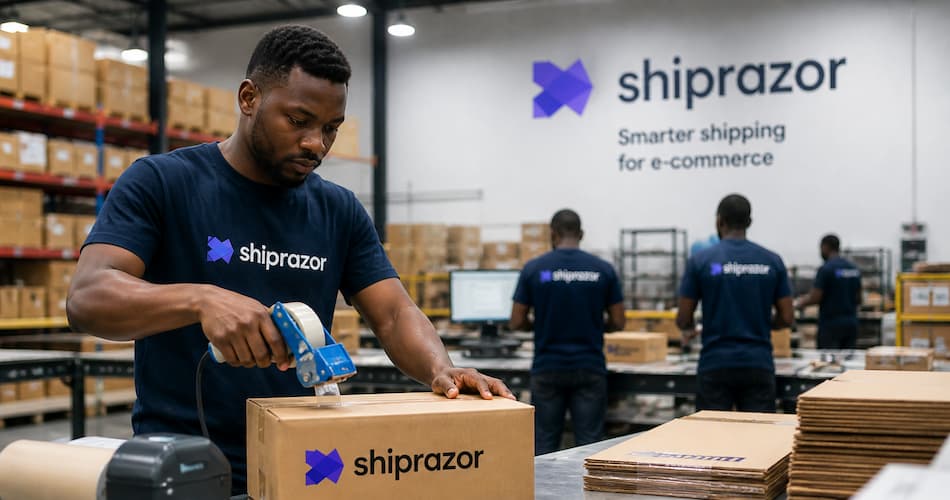
Shiprazor Raises $2.65M to Strengthen E-Commerce Logistics in South Africa

Shiprazor Raises $2.65M to Strengthen E-Commerce Logistics in South Africa

Shiprazor, a Cape Town-based e-commerce logistics startup, has raised $2.65 million in seed funding to expand its fulfilment platform and address fragmented delivery infrastructure across South Africa.

The funding round was led by Norrsken22, with participation from AAIC, E4E, Tremis Capital, and several angel investors, including senior Google executives. The latest investment brings Shiprazor’s total funding to $3.3 million.

Founded in 2023 by CEO Sahil Affriya, Shiprazor provides a software layer that connects online merchants with more than 20 courier partners through a single integration. The platform works with e-commerce systems such as Shopify and WooCommerce, helping merchants manage deliveries without relying on multiple disconnected logistics tools.

Shiprazor Targets Africa’s E-Commerce Logistics Fragmentation

Rather than operating as a traditional shipping aggregator, Shiprazor uses dynamic routing to select delivery options based on cost, speed, and courier performance. This model is designed to reduce fulfilment complexity for merchants and improve delivery reliability.

Logistics remains one of the biggest barriers to e-commerce growth in Africa. High transport costs, fragmented courier networks, and inconsistent service quality continue to make fulfilment difficult for online sellers.

Since its launch, Shiprazor has processed more than 1.5 million deliveries across South Africa. The company plans to use the new capital to expand its courier network, increase regional coverage, and lower shipping costs through stronger volume aggregation.

Shiprazor is also developing AI-powered tools, including an address verification product aimed at reducing failed deliveries caused by incorrect or incomplete address data. Looking ahead, the company is working on agentic AI solutions that could help buyers and merchants coordinate orders and resolve delivery issues with less manual intervention.

The investment reflects growing demand for infrastructure solutions that can support Africa’s expanding digital commerce market. For online merchants, more efficient logistics could become a critical factor in improving customer experience, reducing costs, and scaling operations.

Source

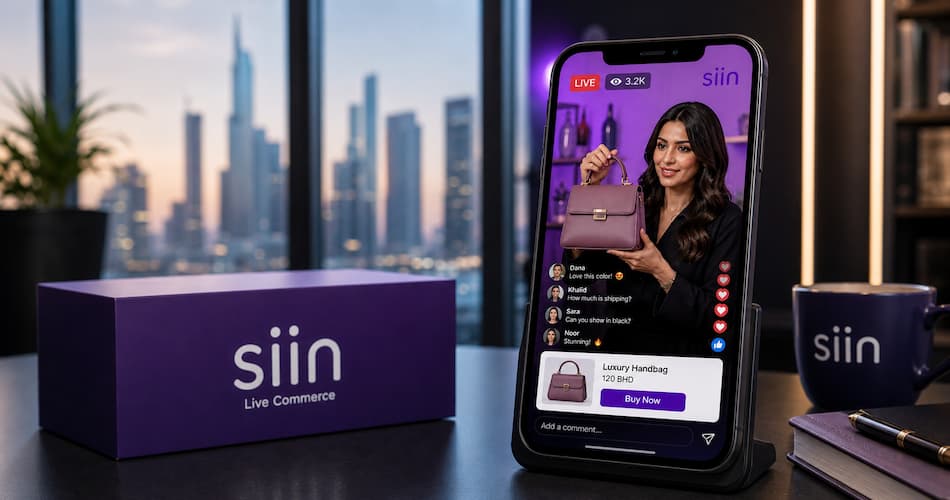
Live Commerce MENA Gains Momentum as Siin Secures $3 Million in Strategic Funding

Live Commerce MENA Gains Momentum as Siin Secures $3 Million in Strategic Funding

Bahrain-based live commerce platform Siin has raised a total of $3 million in funding, reinforcing investor confidence in the emerging live shopping segment across the Middle East and North Africa (MENA).

The round was led by VentureSouq and Shift Group, with participation from Plus VC, Oqal, and a group of regional backers.

Founded in 2024, Siin operates at the convergence of e-commerce and real-time digital engagement, enabling users to buy and sell products through interactive livestreams. The platform reflects a broader shift toward experience-driven commerce, where purchasing decisions are increasingly shaped by trust, immediacy, and social interaction.

From Transactional to Interactive Commerce

Live commerce, already well established in Asian markets, is gaining traction in MENA, albeit from a relatively early-stage base. Siin’s model adapts this format to regional consumer behavior by replicating the dynamics of traditional marketplaces in a digital environment.

Rather than relying on static product listings, the platform allows sellers to engage directly with audiences in real time, combining entertainment, community interaction, and instant purchasing. This approach aligns closely with the region’s culturally embedded preference for relationship-driven commerce.

The company has already expanded across key Gulf markets, including Saudi Arabia, the UAE, Kuwait, Bahrain, Qatar, and Oman, signaling early operational scalability.

Early Traction Signals Category Potential

Within a short period, Siin has facilitated hundreds of thousands of product transactions while generating tens of thousands of hours of live-streamed content, pointing to strong user engagement and repeat activity.

For investors, this traction highlights the platform’s potential to evolve beyond a conventional marketplace into a behavioral commerce layer, one that integrates content, community, and transaction into a unified ecosystem.

The opportunity is particularly notable given that live commerce remains underpenetrated in MENA compared to more mature digital markets, leaving room for category leaders to emerge.

Strategic Focus: Expansion and Infrastructure

The newly secured capital will support Siin’s next phase of growth, with a focus on:

  • Geographic expansion across additional MENA markets
  • Strengthening its seller and creator ecosystem
  • Enhancing platform infrastructure and user experience

The startup is also backed by regional innovation platforms such as Hub71 and telecom-led accelerator InspireU, providing further institutional support as it scales.

Positioning Within the Future of Commerce

As global e-commerce continues to shift toward more immersive and interactive formats, live commerce is increasingly viewed as a key growth frontier. Siin’s localized approach, anchored in regional consumer behavior, positions it to capture this transition within MENA.

While the segment is still developing, early indicators suggest that platforms combining content, trust, and real-time engagement may play a defining role in the next phase of digital commerce evolution across the region.

Source

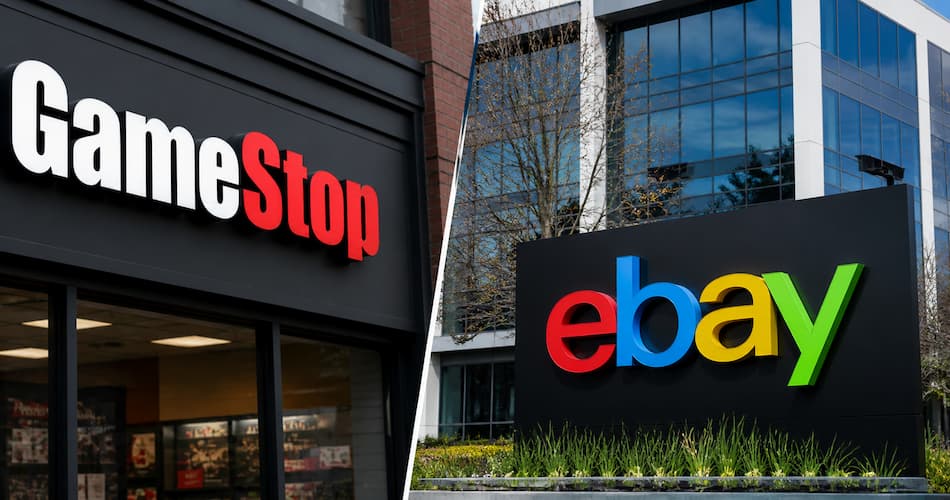
GameStop’s Bold $55.5B eBay Bid Signals a Major E-Commerce Shake-Up

GameStop’s Bold $55.5B eBay Bid Signals a Major E-Commerce Shake-Up

GameStop has made a surprise $55.5 billion unsolicited offer to acquire eBay, marking one of the most unexpected takeover moves in the global e-commerce and retail sectors this year.

The offer values eBay at $125 per share in a cash-and-stock proposal. GameStop said the deal would combine its retail footprint and turnaround strategy with eBay’s global marketplace scale. The company has also disclosed a 5% economic stake in eBay and said the proposal represents a significant premium to its recent trading price.

GameStop’s Move Could Reshape Global Marketplaces

eBay confirmed that it received the non-binding proposal and said its board will carefully review it with financial and legal advisors. The company also noted that shareholders do not need to take any action at this stage.

The proposed acquisition comes as eBay faces stronger competition from major players like Amazon, as well as niche resale platforms and social commerce channels. At the same time, GameStop has been working to redefine its identity beyond traditional retail, led by CEO Ryan Cohen.

GameStop believes the combined entity could unlock significant efficiencies, targeting major cost reductions within the first year after closing. However, the scale of the deal raises questions around execution, financing, and integration risks.

If successful, the acquisition could reshape the online marketplace landscape by merging a legacy digital platform with a retailer known for its unconventional transformation story.

For the broader e-commerce ecosystem, the bid underscores a key trend: consolidation and strategic repositioning are accelerating as competition intensifies across global digital commerce.

Source

Marketplaces: EU SMEs Reach €17 Billion Amazon Export Milestone with Strong Growth

Marketplaces: EU SMEs Reach €17 Billion Amazon Export Milestone with Strong Growth

European small and medium-sized enterprises (SMEs) are accelerating their global reach, with exports through Amazon hitting a significant milestone. In 2025, EU-based SMEs generated €17 billion in cross-border sales, marking a €2 billion increase compared to the previous year.

This growth reflects the increasing role of digital marketplaces in enabling SMEs to expand beyond domestic markets and tap into international demand.

Cross-border trade drives SME expansion

More than 100,000 EU SMEs are now actively selling on Amazon, collectively surpassing €40 billion in total sales for the first time. These businesses sold over 1.3 billion products in 2025, highlighting the scale and efficiency of marketplace-driven commerce.

Cross-border trade is at the core of this growth. Around 85% of European SME sellers export internationally, with cross-border sales accounting for over 40% of their total Amazon revenue.

Notably, the majority of exports remain within Europe. Intra-EU sales reached €13.5 billion, up from €12 billion in 2024, while €3.5 billion came from markets outside the EU.

Marketplace ecosystems become export engines

Amazon continues positioning itself as a key enabler for SME internationalization. By offering logistics infrastructure, compliance tools, and access to multiple markets, the platform reduces traditional barriers associated with cross-border trade.

For SMEs, especially those in smaller or less developed markets, this model acts as a “springboard” to global customers, allowing businesses to scale without heavy upfront investment in distribution networks.

However, the impact varies across Europe. While Amazon dominates major markets such as Germany, the UK, France, Italy, and Spain, in smaller markets it plays a more strategic role in helping local sellers reach external customers.

Rising importance of digital export channels

The data highlights a broader shift: digital platforms are becoming essential export channels for SMEs. Compared to traditional trade, e-commerce enables faster market entry, lower operational costs, and broader customer reach.

As cross-border e-commerce continues to grow, SMEs are increasingly leveraging marketplaces not just as sales channels, but as core drivers of international expansion and revenue growth.

Source

Italian E-Commerce Records Strong 6.1% Growth, Reaching €90.6 Billion in 2025

Italian E-Commerce Records Strong 6.1% Growth, Reaching €90.6 Billion in 2025

Italian e-commerce continued its upward trajectory in 2025, reaching an estimated value of €90.6 billion, according to the latest annual report by Casaleggio Associati. The figure marks a 6.1% increase compared to 2024, when online turnover in Italy was estimated at €85.4 billion.

Travel and Tourism remained the country’s largest online sector, generating more than €22 billion in sales. Marketplaces followed with €17.1 billion, while Leisure ranked third with €13.4 billion, showing the continued strength of experience-driven and platform-based digital spending.

Italian E-Commerce Growth Reflects a More Mature Digital Market

The report also highlights Italy’s broad digital adoption. The country counted 53.1 million internet users, equal to an internet penetration rate of 89.9%. On average, 44.1 million people used the internet monthly, while 37 million were online on a typical day.

Italian online businesses are now focusing more heavily on improving website performance, technology, and customer experience. These priorities were followed closely by AI adoption and marketing investment, indicating that companies are shifting from basic digital presence toward more advanced optimization strategies.

Cross-border activity is also concentrated mainly in Europe. Germany leads as the top foreign market for Italian online stores, followed by France and Spain. Outside Europe, the United States remains the most notable destination for Italian e-commerce operators.

Source: Ecommerce News Europe

Retail Sees Powerful 5-Point Shift as E-Shopping Moves to TikTok and AI

Retail Sees Powerful 5-Point Shift as E-Shopping Moves to TikTok and AI

At the World Retail Congress 2026 in Berlin, one message stood out above all: e-shopping is no longer driven by intent, it is driven by influence. The industry is shifting away from search-led transactions toward a model built on content, creators, and continuous discovery.

For decades, e-commerce was defined by a simple journey, consumers searched for a product, compared options, and completed a purchase. That model is now being rapidly replaced. Platforms such as TikTok are reshaping the path to purchase, turning passive scrolling into active buying, and transforming entertainment into commerce.

From Search to Discovery

The rise of TikTok Shop signals a structural change in how products are found and sold. Consumers are no longer entering platforms with a fixed intention to buy; instead, they are discovering products through content, often without prior demand. In this environment, creators function as storefronts, and algorithms act as the new shop windows.

Traditional players are already feeling the impact. Companies like QVC, once synonymous with television retail, are now finding new audiences through TikTok, reporting significant customer acquisition driven by short-form video and live commerce formats. The shift is not incremental, it is foundational.

E-Shopping Becomes Content-Led Commerce

What is emerging is a new form of e-shopping where content is not a layer on top of commerce, it is the core of it. The entire funnel, from awareness to conversion, is collapsing into a single experience.

Consumers watch, engage, and purchase within the same interface. The boundaries between media, marketing, and retail are dissolving, creating a unified environment where inspiration directly leads to transaction. In this model, the speed of decision-making increases, and the role of brand storytelling becomes more critical than ever.

AI Enables Scale, But Not Differentiation

Artificial intelligence is accelerating this transition, particularly in areas such as content generation, personalization, and inventory optimization. Retailers are increasingly able to produce visuals, tailor recommendations, and respond to demand in real time.

Yet, the tone in Berlin was measured. AI may enhance efficiency, but it does not replace creativity or human connection. The brands that stand out will not be those that automate the most, but those that combine technology with compelling narratives.

Retail Repositions Around Experience

While e-shopping evolves, physical retail is undergoing its own transformation. Stores are no longer expected to compete with digital channels on convenience or price. Instead, they are being repositioned as spaces for experience, community, and brand immersion.

Retailers are investing in environments that encourage interaction, spaces where consumers can spend time, connect with others, and engage with products beyond the transactional moment. The store, in this context, becomes a complement to digital discovery rather than a competitor.

A New Retail Equation

The discussions in Berlin point to a broader redefinition of the industry. Retail is no longer a channel-based system divided between online and offline. It is becoming an integrated ecosystem shaped by content, technology, and human engagement.

The future of e-shopping will not be won through logistics alone, nor through platforms alone. It will belong to those who understand how to capture attention, build relevance, and convert inspiration into action, often within seconds.

In that sense, the evolution of retail is not just about where consumers shop, but how and why they decide to buy at all.

Source