WORLDEF Istanbul 2026 - Upcoming Event

Register Now

MENA Startups Raise $150 Million in April as Investor Activity Recovers Despite Ongoing Caution

MENA Startups Raise $150 Million in April as Investor Activity Recovers Despite Ongoing Caution

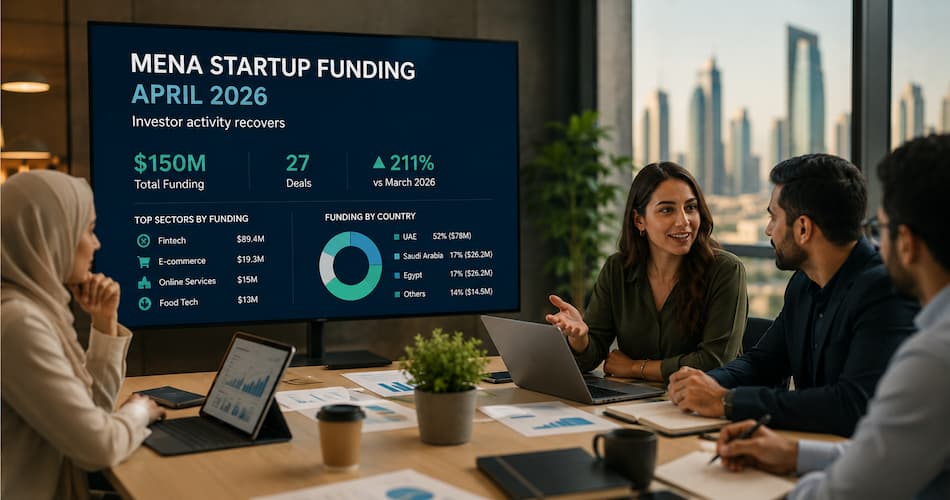
Startup investment activity across the Middle East and North Africa (MENA) rebounded strongly in April 2026, with regional startups raising $150 million across 27 deals, signaling renewed investor confidence after a difficult March. However, despite the recovery, venture capital activity across the region remains cautious as investors continue prioritizing structured financing and lower-risk business models.

According to Wamda’s latest investment report, April’s funding volume marked a 211% increase compared to March, when geopolitical tensions and economic uncertainty significantly slowed dealmaking. Yet, overall funding levels still remained 42% lower than April 2025, reflecting the broader pressure facing the global startup ecosystem.

A major trend shaping April’s investment landscape was the growing dominance of debt financing. Nearly half of the total capital raised during the month came through debt-based transactions, accounting for approximately $80 million across only two deals. The report noted that investors are increasingly favoring capital-efficient structures and downside protection strategies instead of traditional equity-heavy investments.

Fintech Continues to Lead MENA Startup Investments

Financial technology remained the strongest-performing sector for the fourth consecutive month, attracting $89.4 million across seven deals. Investors continued backing fintech companies focused on financial infrastructure, enterprise services, and scalable digital payment solutions, sectors considered more resilient during volatile market conditions.

Business-to-business startups also maintained strong momentum, securing $95.8 million across 11 transactions. Investors increasingly prioritized companies with predictable revenue models, enterprise clients, and long-term monetization strategies, reflecting a broader shift toward sustainable and defensible business operations.

Meanwhile, e-commerce startups regained momentum after slowing in March, raising $19.3 million across four deals. Online services startups collected $15 million, while food technology companies secured $13 million through two transactions.

UAE Maintains Leadership as Saudi Arabia and Egypt Follow Closely

The UAE once again led regional startup funding activity, attracting $78 million across eight deals and accounting for more than half of the total capital raised during April. Saudi Arabia ranked second with $26.2 million raised across seven startups, while Egypt maintained its position as one of the region’s most active startup ecosystems with a similar funding total spread across five deals.

Smaller Gulf markets including Oman, Bahrain, and Qatar also experienced increased startup activity, collectively securing $14.5 million through five transactions, indicating broader regional participation in venture funding.

Siin Expands Live Commerce Presence Across the Gulf

Among the notable deals announced during April was Bahrain-born e-commerce startup Siin, which secured fresh investment, bringing its total funding to $3 million. The round was led by VentureSouq and Shift Group, with participation from Plus VC, Oqal, and several regional investors.

Founded in 2024 by Ahmed Al-Lawi, Hesham Al-Saati, and Khaled Al-Balooshi, Siin operates an interactive live-commerce platform that allows users to buy and sell products through livestream shopping experiences. The company currently operates across Saudi Arabia, the UAE, Kuwait, Bahrain, Qatar, and Oman.

The startup plans to use the new funding to expand across the region, strengthen its seller ecosystem, and further scale its platform infrastructure. The rise of live-commerce platforms reflects growing demand for video-driven shopping experiences as retailers and creators increasingly seek more interactive ways to engage digital consumers.

Female-Led Startups Return to the Funding Landscape

April also marked the return of female-led startups to the regional investment ecosystem after two months without recorded funding activity. Female-founded startups raised $1.5 million across five deals, while startups led by male founders secured $138.8 million across 19 transactions. Mixed-gender founding teams raised an additional $10 million through three deals.

Despite the funding rebound, Wamda’s report concluded that investors remain highly selective, favoring startups aligned with institutional demand, financial infrastructure, and AI-driven technologies. While market activity has resumed, capital deployment continues to prioritize risk management, sustainable growth, and operational resilience over aggressive expansion strategies.

Source

Positive Mother’s Day Shopping Boom to Generate $9 Billion in Türkiye’s E-Commerce Market

Positive Mother’s Day Shopping Boom to Generate $9 Billion in Türkiye’s E-Commerce Market

Türkiye’s e-commerce sector is expected to generate nearly $9 billion in transaction volume this May as online shopping activity accelerates ahead of Mother’s Day, according to industry representatives. The surge highlights the growing importance of special occasions in driving digital commerce across the country.

What Happened?

The Electronic Commerce Operators Association (ETİD) estimates that Türkiye’s total e-commerce volume could reach around 400 billion Turkish Liras (approximately $9 billion) during May, fueled largely by Mother’s Day shopping demand.

According to ETİD Chairman Hakan Çevikoğlu, online demand has significantly increased across several gift-oriented categories, including:

  • Jewelry
  • Fashion and footwear
  • Cosmetics
  • Home textiles
  • Baby products
  • Accessories and handbags

Çevikoğlu stated that Mother’s Day has become Türkiye’s second-largest gift shopping period after New Year celebrations, with online purchasing activity beginning in late April and continuing throughout May.

Jewelry and Fashion Lead the Growth

The strongest increase in demand has been recorded in the jewelry category, particularly gold products, where order volumes reportedly climbed by as much as 70 percent ahead of the holiday.

Average basket sizes have also increased in several product categories. Spending per order rose by around 20 percent in home textile and baby product segments, while fashion-related purchases such as sunglasses, accessories, handbags, and clothing also recorded higher average spending levels.

Industry representatives attribute much of the momentum to aggressive promotional campaigns launched by online marketplaces and retailers before the holiday period.

Digital Shopping Habits Continue to Grow

The latest figures reflect Türkiye’s broader shift toward digital commerce and mobile shopping habits. Consumers are increasingly turning to online platforms for seasonal and emotionally driven purchases, including flowers, chocolates, and curated gift boxes.

Çevikoğlu noted that the growing digitalization of consumer behavior continues to strengthen the role of e-commerce during special shopping occasions and seasonal campaigns.

Consumers Warned About Online Fraud Risks

Alongside the expected growth, industry representatives also warned consumers to remain cautious while shopping online during high-demand periods.

ETİD advised shoppers to verify whether e-commerce websites carry Türkiye’s official “Trust Stamp” certification and to carefully check website domain names to avoid fraudulent or imitation platforms.

What This Means for Türkiye’s E-Commerce Sector

The projected Mother’s Day shopping boom highlights the continued expansion of Türkiye’s digital retail ecosystem despite economic pressures and changing consumer spending patterns.

As promotional campaigns, mobile commerce adoption, and digital payment usage continue to grow, seasonal shopping periods are becoming increasingly important revenue drivers for marketplaces, retailers, and logistics providers across the country.

Source

ASEAN Leaders Back Positive AI and Digital Economy Push at 2026 Summit

ASEAN Leaders Back Positive AI and Digital Economy Push at 2026 Summit

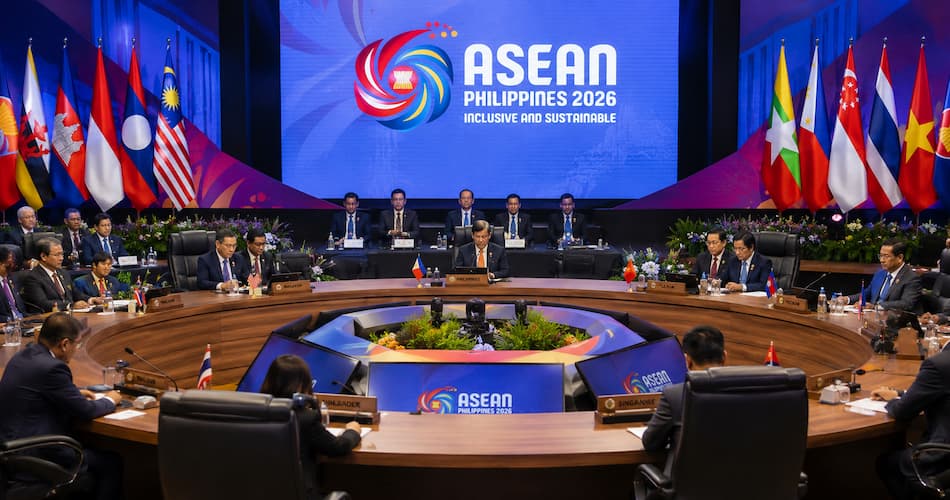
ASEAN leaders have officially backed stronger regional cooperation on artificial intelligence (AI) and the digital economy during the 48th ASEAN Summit in Cebu, Philippines, highlighting the bloc’s growing focus on technology-driven growth and regional resilience.

What Happened?

During the summit, ASEAN leaders emphasized the importance of accelerating digital transformation across Southeast Asia, including the wider adoption of AI technologies and digital infrastructure. The discussions formed part of broader regional efforts to strengthen economic resilience amid global uncertainty and geopolitical tensions.

Philippine President Ferdinand Marcos Jr. stated that ASEAN members recognize the increasing role of AI and digital technologies in improving sectors such as energy forecasting, food-system monitoring, and social-protection delivery. Leaders also stressed that AI development should remain aligned with human oversight, accountability, and international standards.

Why Is This Important?

ASEAN is one of the world’s fastest-growing digital economies, with a combined population of nearly 700 million people and rapidly expanding internet adoption across the region.

By strengthening cooperation on AI and digital initiatives, ASEAN aims to:

  • Accelerate regional digital transformation
  • Improve economic competitiveness
  • Enhance regional connectivity
  • Support innovation and startup ecosystems
  • Strengthen digital trade and cross-border collaboration
  • Improve resilience in energy, food security, and public services

The summit discussions also align with ASEAN’s long-term Vision 2045 strategy, which focuses on creating a more connected, innovative, and sustainable regional economy.

ASEAN Pushes for Stronger AI Governance

Alongside supporting AI adoption, ASEAN leaders and business groups are also discussing the development of regional AI governance frameworks.

According to discussions involving the US-ASEAN Business Council and ASEAN Business Advisory Council Philippines, policymakers are pushing for interoperable and risk-based AI regulations, secure cross-border data flows, and stronger cybersecurity coordination across Southeast Asia.

Officials also highlighted the importance of workforce development and inclusive AI adoption to ensure long-term economic growth across the region.

What This Means for Southeast Asia’s Digital Economy

The summit signals ASEAN’s intention to position itself as a major global digital economy hub over the coming years.

As governments increase investment in AI readiness, digital infrastructure, and regional connectivity, Southeast Asia could become one of the world’s most important markets for digital commerce, fintech, AI innovation, and cross-border digital trade.

The growing regional alignment on AI and digital economy policies may also encourage stronger collaboration between governments, startups, technology companies, and investors across ASEAN markets.

Source

Indonesia Plans New E-Commerce Rules After Seller Complaints

Indonesia Plans New E-Commerce Rules After Seller Complaints

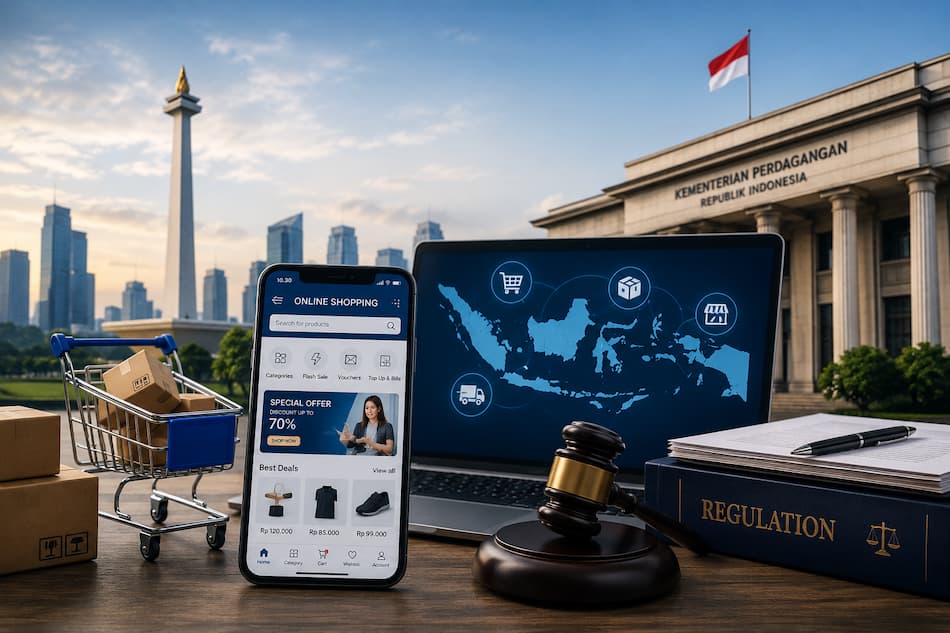
Indonesia is preparing to revise its e-commerce regulations following growing complaints from online sellers about rising platform fees and operational costs. The move reflects the government’s broader effort to create a fairer and more sustainable digital commerce ecosystem while strengthening protections for local businesses and consumers.

What Happened?

Indonesia’s Trade Ministry announced plans to revise Minister of Trade Regulation Number 31 of 2023, which currently governs e-commerce activities in the country. Trade Minister Budi Santoso stated that the revision comes after many sellers, especially small businesses, raised concerns over high administrative and logistics fees charged by online marketplaces.

While the government has not yet shared the full details of the revised regulation, officials confirmed that discussions with industry stakeholders are ongoing and that the new rules will focus on improving fairness across the sector.

Why Is Indonesia Revising the Rules?

Indonesia is one of Southeast Asia’s largest and fastest-growing e-commerce markets. However, increasing competition among platforms has also led to concerns from sellers regarding profitability and sustainability.

According to the Trade Ministry, the revised regulation aims to:

  • Protect local products and MSMEs (Micro, Small, and Medium Enterprises)
  • Improve consumer protection
  • Encourage marketplaces to prioritize domestic products
  • Build a healthier and more sustainable e-commerce ecosystem
  • Strengthen collaboration between platforms, sellers, and regulators

Government officials emphasized that consultations with businesses and digital economy stakeholders are still continuing before the regulation is finalized.

Indonesia Increases Oversight of Digital Platforms

The planned revision comes as Indonesia continues tightening oversight across its digital economy. Earlier this month, authorities also introduced stricter child protection requirements for e-commerce platforms under new electronic system governance rules.

The measures require platforms to implement age verification systems, parental consent mechanisms for minors, and stronger privacy protections for children’s data.

These developments highlight Indonesia’s growing focus on building a more regulated, locally supportive, and consumer-focused digital marketplace environment.

What This Means for the Industry

If implemented, the revised rules could significantly impact how major e-commerce platforms operate in Indonesia. Marketplaces may face stricter obligations related to fee structures, seller protections, and domestic product prioritization.

The changes could particularly benefit local MSMEs, which play a major role in Indonesia’s economy but often struggle with rising costs on digital platforms.

For international and regional e-commerce companies, the upcoming regulation may also indicate stronger localization requirements and increased government involvement in marketplace operations.

Source

Landmark Group Recognised Among the Best Workplaces in the UAE and Saudi Arabia

Landmark Group

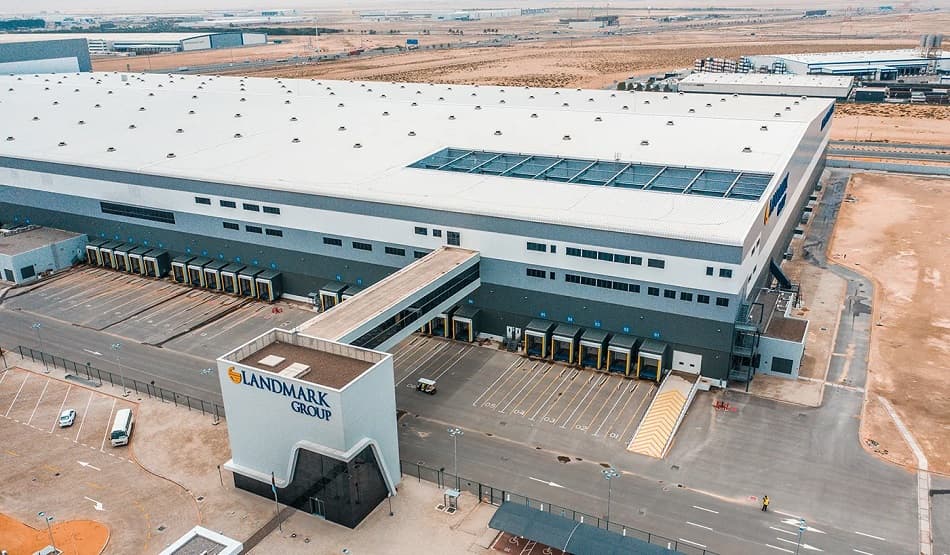
Landmark Group, one of the Middle East’s leading retail and hospitality groups, achieved significant regional success with its investments in employee experience and corporate culture. Landmark Retail and Landmark Arabia, both part of the group, were recognised among the best workplaces in the 2026 lists published by Great Place to Work Middle East.

Landmark Retail, which operates in the United Arab Emirates, ranked 8th in the “Best Workplaces in the UAE 2026” list in the Large Organisations category. The company also became the highest-ranked retail brand on the list. Landmark Arabia, which continues its operations in Saudi Arabia, rose to 6th place in the large organisations category in the “Best Workplaces in Saudi Arabia 2026” list.

Employee Experience and Corporate Culture Came to the Fore at Landmark

It was stated that the achievements were the result of the company’s long-standing investments in employee engagement, leadership development, inclusion and career development.

Landmark Group Director Nisha Jagtiani made the following remarks on the issue: “This recognition is a proud moment for Landmark Group, and above all, for our people. This achievement reflects the commitment of our leaders and our teams keeping our culture alive every day.” Jagtiani also emphasized that the company would continue to create a working environment where employees feel valued and empowered.

“The Culture of Our Teams Is Behind the Success”

Landmark Retail CEO Kabir Lumba stated that the company’s achievement was directly linked to its employee culture. Lumba said in his statement, “Landmark Retail’s ranking among the UAE’s top 10 workplaces is an important milestone for us. This achievement shows the strong culture that our teams have built together across our stores, offices, digital platforms and all our operations.”

Emphasis on the Saudi Arabian Market

Landmark Arabia Country Head Vedapuri Thachampattu also drew attention to the strategic importance of Saudi Arabia for the group. Thachampattu said, “Saudi Arabia remains one of Landmark Group’s most important markets. This achievement reflects the commitment and passion of our teams across the kingdom.”

Strong Performance in the Field of Women Employees

Landmark Group also drew attention with its performance in employee diversity and an inclusive work environment. The group ranked 7th in the GCC region within the scope of its practices for women employees.

It was stated that employees’ contribution to customer experience, team solidarity and operational success was decisive in this result. It was also stated that the company particularly invests in the development of Saudi talent and focuses on creating long-term career opportunities for employees.

It was reported that Landmark Group, which has more than 53,000 employees, has regularly received Great Place to Work certification since 2017 and continues its employee satisfaction-focused strategies.

A New Era in Türkiye-Algeria Relations: Regional Power Balances Are Changing

Algeria

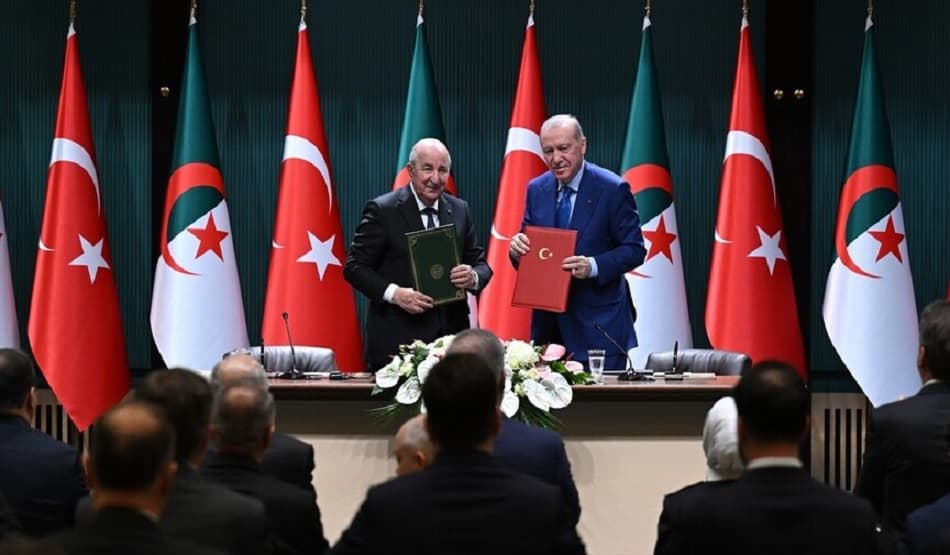
Relations between Türkiye and Algeria are being carried to a new strategic dimension through increasing diplomatic contacts and economic cooperation in recent years. Algerian President Abdelmadjid Tebboune’s third state visit to Türkiye is considered an indication that relations between the two countries have reached a historic level.

According to experts, within the new geopolitical balances taking shape in the Middle East and North Africa region, the possibility of Algeria joining the new power axis formed by Türkiye, Saudi Arabia, Pakistan and Egypt is growing stronger.

Energy Diplomacy Comes to the Fore

Algeria’s strong position, especially in natural gas reserves and energy exports, is increasing the country’s regional influence. As one of Africa and Europe’s important gas suppliers, Algeria uses energy diplomacy as one of the main elements of its foreign policy.

Türkiye, meanwhile, aims to increase the amount of liquefied natural gas it imports from Algeria in order to meet its growing energy needs. Cooperation between the two countries in the energy field is planned to be further strengthened through long-term agreements.

In addition, new energy corridors for transporting Algerian natural gas to the Balkans and Southeast Europe through Türkiye are also on the agenda.

Türkiye-Algeria: Trade Volume Moves Toward $10 Billion Target

Economic relations between Türkiye and Algeria are also growing significantly. While the trade volume between the two countries has recently reached $5.3 billion, the parties aim to increase this figure to $10 billion by 2030.

Approximately 1,400 Turkish companies operating in Algeria make Türkiye one of the country’s largest investors in non-hydrocarbon sectors. Iron and steel, textiles, agriculture and banking are among the main areas where cooperation is concentrated.

The large-scale steel investments carried out by Turkish company Tosyalı Holding in Algeria are seen among Africa’s most important industrial projects.

Common Position on Regional Issues

Türkiye and Algeria have recently displayed similar diplomatic positions on many issues, including the Gaza war, the Sudan crisis, security problems in Africa’s Sahel region and Iran-centered tensions.

Both countries draw attention with their policies that support a multipolar world order and emphasize non-Western diplomatic approaches. The Ankara and Algiers administrations also share similar views on United Nations reform and the restructuring of the global governance system.

Discussions on a New Regional Alliance Gain Strength

Analysts state that the developing strategic rapprochement between Türkiye, Saudi Arabia, Egypt and Pakistan could reshape regional power balances. In this process, Algeria could assume a critical role due to its energy strength, diplomatic influence and position in Africa. According to experts, the rapprochement between Ankara and Algiers may produce significant results not only in terms of bilateral relations but also in terms of new diplomatic and economic balances in the Middle East, North Africa and the African continent.

Non-Oil Foreign Trade Between Türkiye and the UAE Exceeded $45.2 Billion in 2025

Türkiye and the UAE

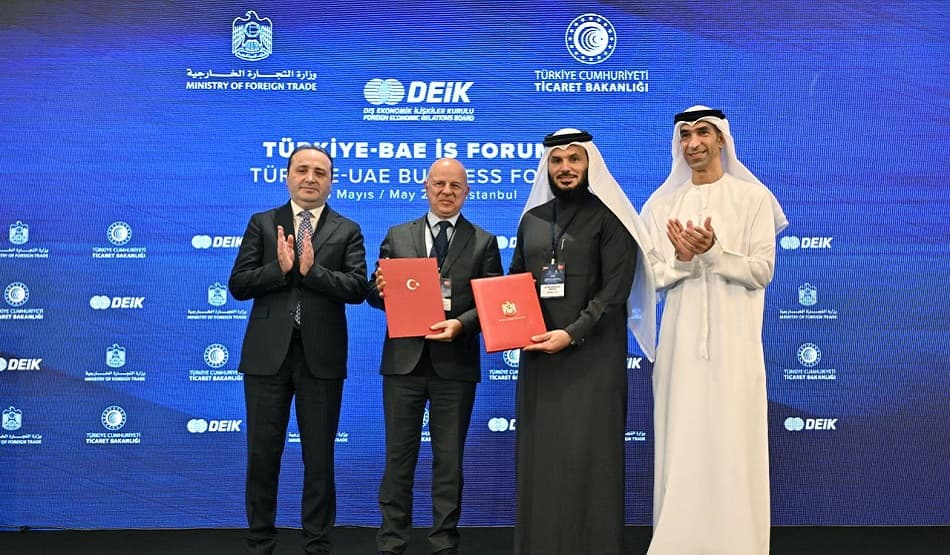
Türkiye and the UAE continue to develop their trade and investment relations under the Comprehensive Economic Partnership Agreement (CEPA), which came into force in September 2023.

United Arab Emirates (UAE) Minister of State for Foreign Trade Dr. Thani Al Zeyoudi held some official contacts in Türkiye. The UAE delegation included representatives from sectors such as logistics, renewable energy, technology, artificial intelligence, food security, aviation, financial services and healthcare. Zeyoudi made some statements during his contacts.

Trade Between Türkiye and the UAE Tripled

Al Zeyoudi stated that Türkiye and the UAE have built a “strong and growing relationship” based on shared objectives and mutual respect, saying, “The results of the Comprehensive Economic Partnership Agreement between the two friendly countries clearly reflect this; non-oil trade between the two countries nearly tripled compared to 2022, before the agreement was signed and entered into force in 2023.”

Al Zeyoudi added that both countries are working to create broader opportunities for partnerships between their business communities, with the aim of supporting sustainable growth and long-term economic cooperation.

Al Zeyoudi described the Türkiye-UAE Business Council as “evidence of the growing strategic trade and investment partnership between the two countries.” He also added: “The UAE is committed to ensuring that the next chapter of our strategic partnership with Türkiye is more ambitious and innovative.”

Non-Oil Foreign Trade Grew by 15.5%

According to the announced data, non-oil foreign trade between Türkiye and the UAE exceeded $45.2 billion in 2025, recording annual growth of 15.5% compared with 2024. The Türkiye-UAE CEPA was among the first agreements signed under the UAE’s broader strategy to expand foreign trade, strengthen supply chains and create new opportunities for the private sector.

E-Commerce Opens Employment Opportunities for Women; 27% of Tradespeople in Istanbul Are Women

e-commerce

The number of women tradespeople among registered tradespeople in Istanbul, Türkiye’s metropolitan city, is gradually increasing. The share of women among tradespeople in the city has risen to 27% over the past five years. E-commerce has also played a role in this increase.

According to data from the Istanbul Union of Chambers of Tradespeople and Artisans, there are approximately 280,000 tradespeople registered with tradespeople chambers in Istanbul. Women account for 27% of this figure. This rate was 22% five years ago.

“Many People Sell Products Through Digital Platforms”

According to the announced data, this increase was associated with technological change, lighter workloads in some sectors, digital sales, and the expansion of e-commerce. The statement from the chamber included the following remarks: “Economic conditions are causing this number to rise. Although one might think the opposite, because of the impact of global problems on economies, we may witness some closures, but new fields created by technology can lead people to other professions. Many people now work from home. They sell the products they produce or source through digital platforms.”

Women Show Interest in Beauty Services Linked to E-Commerce

According to chamber data, the increase in women tradespeople has become more visible since the pandemic period. However, it has accelerated more recently as women seek a stronger role in economic life. Women are now directly involved in trade. Women tradespeople in Istanbul are especially active in handmade goods, textiles, beads, decorative objects, and jewelry design. In addition, women show interest in beauty services linked to e-commerce and training programs offered by the chambers.

The statement from the chamber included the following remarks: “E-commerce has enabled women to create space for themselves in the business world and at the same time contribute to household income. In addition, women have become more confident in presenting their skills, craft, and artistic work to customers. Women are now taking part in different areas of Istanbul’s commercial life, including neighborhood markets, taxi driving, and bus driving. State institutions also provide support that helps increase the number of women entrepreneurs. Young people are particularly interested in digital commerce because they use digital environments more easily and comfortably.”

“E-Commerce Has Changed Traditional Trade”

The statement noted the following: “E-commerce has changed traditional trade by allowing people to sell the products they produce, source, or stock through online platforms. The spread of e-commerce and the increase in trade in this field have carried traditional trade into another dimension. Physical shops will continue to exist alongside e-commerce rather than disappear. Although people turn to digital environments for trade, sometimes citizens want to go outside, breathe fresh air, and shop in person. People want to shop by walking around, talking, dealing with tradespeople, and bargaining.”

19 WTO Members Agree on Customs Duties in E-Commerce

e-commerce

Nineteen member countries of the World Trade Organization (WTO) agreed among themselves not to impose customs duties on e-commerce. The agreement came into effect on Friday, May 8. While Brazil maintained its four-year veto against the extension of the e-commerce moratorium, Türkiye reportedly withdrew its objection, having previously opposed the extension of the e-commerce moratorium. Experts emphasize that “the new agreement cannot replace the expired global e- commerce moratorium.”

At a high-level WTO meeting held last March in Yaounde, Cameroon, the long-standing e-commerce moratorium on customs duties for cross-border streaming and downloads could not be renewed. At the WTO talks in Geneva on Thursday, May 7, an important step was taken regarding global e-commerce customs duties.

Brazil Did Not Step Back; Türkiye Withdrew Its Objection

At the talks in Geneva, 19 WTO countries launched an agreement among themselves on Thursday not to impose customs duties on e-commerce after no agreement could be reached to end the deadlock with Brazil. Brazil maintained its opposition to extending the global agreement for four years. A WTO member stated that Türkiye had withdrawn its previous objection. The 19 countries that reached the agreement include the U.S., Japan, South Korea, Singapore, Australia, Norway and Argentina.

What Is the E-Commerce Moratorium?

The moratorium, adopted in 1998 and regularly renewed since then, prevents the imposition of customs duties on cross-border electronic transmissions such as music or film streaming and software downloads. WTO members with large digital economies, such as the U.S., the European Union, Canada and Japan, argue that it provides predictability for global digital trade and want it to be made permanent.

The Agreement of 19 Countries Came Into Effect on May 8

At the talks in Geneva, 19 WTO countries announced that they had agreed among themselves not to impose customs duties on electronic transmissions for an unspecified period. The final text came into effect on May 8. The document stated: “Nonetheless, this group of Members remains committed to doing what we can to provide businesses and consumers with a measure of predictability and certainty in the absence of the multilateral E-Commerce Moratorium.”

At MC13 in March 2024, WTO members adopted the most recent ministerial decision on the issue, extending the practice of not imposing customs duties on electronic transmissions until the 14th Ministerial Conference or March 31, 2026, whichever came earlier.

What Does the New Agreement Mean?

The lapse of the WTO e-commerce moratorium weakens one of the longest-standing global understandings underpinning e-commerce. A 19-member agreement may preserve duty-free treatment among participating economies, but it also points to a more fragmented environment in which rules for electronic transmissions could increasingly depend on partial arrangements rather than WTO-wide consensus.

Meta Fights $11,600 Penalty in India Over Facebook Marketplace Classification

Meta Fights $11,600 Penalty in India Over Facebook Marketplace Classification

Meta Platforms has approached India’s top consumer court to challenge the classification of Facebook Marketplace as an “e-commerce platform” under the country’s consumer protection regulations. The legal dispute could have major implications for how social media platforms are regulated in India’s growing digital commerce ecosystem.


The case stems from a January 2026 order issued by India’s Central Consumer Protection Authority (CCPA), which investigated the alleged sale of unauthorized walkie-talkies on Facebook Marketplace. The regulator imposed a ₹10 lakh penalty on Meta and argued that Facebook Marketplace falls under the definition of an e-commerce entity.


Meta, however, argues that Facebook Marketplace functions only as a digital notice board where users can post listings, rather than a transaction-enabled marketplace like Amazon or Flipkart. According to the company, it neither processes payments nor earns commissions from transactions conducted through the platform.


The National Consumer Disputes Redressal Commission (NCDRC) has admitted it’s appeal and temporarily restrained the CCPA from taking coercive action against the company. The next hearing is scheduled for October 2026.


Why Meta’s India Case Matters for E-commerce Regulation


The outcome could reshape how governments regulate social commerce platforms and peer-to-peer marketplaces. If Facebook Marketplace is officially categorized as an e-commerce platform, Meta may face stricter compliance obligations related to consumer protection, product liability, and seller accountability in India.


The case also highlights the growing global scrutiny facing major tech platforms, especially around marketplace accountability, consumer safety, and platform governance.

Source