WORLDEF Prime Antalya 2026 - Upcoming Event

Register Now

Gmail Adds Purchases Tab for Online Orders

Google is adding a new feature to Gmail that will make tracking online purchases easier and more organized. The company is introducing a dedicated “Purchases” tab that will group order confirmation emails and shipping updates in one place. This tab will allow users to quickly access relevant purchase information without having to search their inbox manually. According to The Verge, the feature is rolling out in the coming weeks and will be available on both mobile and desktop versions of Gmail.

The new tab is an evolution of Gmail’s existing package tracking features, which already allow users to monitor shipping information pulled directly from order confirmation emails. Previously, users had to rely on individual shipping update cards or dig through their Promotions or Primary tabs to find important purchase details. Now, with this new Purchases tab, all of that information will be gathered and presented in a single, easy-to-navigate section of the inbox.

This update comes at a time when online shopping is at an all-time high. Consumers are placing more orders than ever, across various platforms including Amazon, Etsy, eBay, and independent online stores. Google’s move is a response to a growing need for inbox tools that can manage and organize a flood of transactional emails. As TechCrunch noted in a related product update earlier this year, users increasingly expect intelligent inbox management features that offer personalized, automated organization.

How the Purchases Tab Works

The Purchases tab will automatically identify and sort purchase-related emails, including order confirmations, shipping notices, delivery estimates, and digital receipts. The feature uses Gmail’s machine learning models to parse email content and extract relevant data such as tracking numbers, expected delivery dates, item names, and seller information.

Once detected, these emails will be removed from the Promotions or Primary tabs (depending on the user’s settings) and relocated into the Purchases tab. Users can click on any order card to see detailed information, such as the original order date, expected delivery window, item summary, and even links to track the shipment or contact the seller.

In addition to organizing purchase-related content, the new tab will also help reduce inbox clutter. Many users report that their inboxes are overrun with order-related emails, especially during peak shopping seasons. The Purchases tab promises to reduce this chaos by keeping such messages in one streamlined section.

Google has confirmed that the feature is opt-in, and users will be able to disable it if they prefer their emails to remain in existing tabs like Primary or Promotions. For those who do enable it, the tab will appear in the sidebar alongside other categories like Social, Updates, and Promotions.

Integration with Existing Gmail Features

The Purchases tab will integrate seamlessly with Gmail’s existing order-tracking cards, which were introduced in late 2022. These cards pull data from email content and display a clean, visual summary of the delivery status, similar to package tracking in Google Search. Users will still see these tracking cards in the inbox, but now they’ll also be grouped inside the Purchases tab for quick reference.

In addition, Gmail’s notification system will remain unchanged. Users will continue to receive alerts for major shipping events such as “Your item has shipped” or “Out for delivery” on their phones and other devices. However, the tab will now serve as a central hub for viewing the complete history of a transaction, from the initial order to the final delivery.

A Smarter Promotions Tab

Alongside the Purchases tab, Google is also revamping the Promotions tab in Gmail. This update will introduce a smarter sorting system that prioritizes active deals and personalized promotions. According to The Verge, Gmail will now show highlighted deals from brands that users engage with most frequently. These promotions will be surfaced at the top of the Promotions tab and will include limited-time offers, coupon codes, and seasonal discounts.

Users will have the option to toggle between “Most Relevant” and “Most Recent” views, allowing them to prioritize either current offers or the latest promotional emails. Google says this system is powered by user interaction history, email open rates, and other engagement signals to deliver better-targeted deals.

This move reflects a broader trend among email providers to offer more intelligent, context-aware features that align with user behavior. Services like Microsoft Outlook and Apple Mail have also introduced features in recent years that prioritize emails based on relevance or sender reputation.

Privacy and Control

As with any Gmail feature, privacy remains a major concern for users. Google has emphasized that the Purchases tab does not represent a change in how user data is handled. The feature is powered by automated processing of emails already stored in the user’s inbox and does not involve sharing data with third parties.

Users will retain full control over the feature and can opt out of the Purchases tab at any time. Emails will remain intact and can be viewed in their original categories. Google also reassures users that no data from this feature will be used for ad targeting purposes.

This is in line with Google’s ongoing efforts to maintain transparency in how Gmail processes and categorizes email content. The company has faced scrutiny in the past over how it analyzes user inboxes for features like Smart Compose and auto-replies, but recent updates have put more control in the hands of users.

Competitive Landscape and Industry Implications

Google’s update comes as other email platforms also race to offer better ways to manage transactional emails. Amazon, for example, sends detailed delivery notifications through its app and via text, while third-party services like Slice and Parcel attempt to centralize tracking across multiple retailers. However, Google’s approach is unique in that it integrates this functionality directly into the email client itself, removing the need for external apps or browser extensions.

This native integration could give Gmail a competitive edge, particularly among users who shop frequently online. As noted by 9to5Google, Gmail’s ability to combine intelligent email sorting with real-time delivery updates may position it as the most user-friendly option for managing online orders within an inbox.

Furthermore, this update may influence how retailers structure their transactional emails. With Gmail now highlighting and categorizing purchase-related content more aggressively, brands may start optimizing their confirmation emails for better compatibility with Gmail’s new tab structure. This could lead to cleaner, more informative email formats that benefit both senders and recipients.

Rollout Timeline and Availability

Google has stated that the Purchases tab will roll out to all personal Gmail users over the coming weeks. It will be available globally and will not require a separate download or app update, though users may need to enable the tab manually within Gmail’s settings.

Workspace users (formerly G Suite) and enterprise customers will not receive the update immediately. Google has not confirmed whether the feature will expand to corporate Gmail accounts in the future.

As the update rolls out, users should keep an eye on their Gmail interface, especially in the left-hand sidebar, where the new Purchases tab will appear.


Dubai Launches VIP Terminal Boulevard

Dubai’s Mohammed Bin Rashid Aerospace Hub (MBRAH), located in Dubai South, has officially launched the VIP Terminal Boulevard, a premium infrastructure initiative designed to strengthen Dubai’s position in global private aviation and luxury business services. This development caters to growing demand from elite travelers, aviation service providers, and luxury brands seeking to enter or expand in the region. According to Gulf Business, the boulevard is part of MBRAH’s integrated aviation ecosystem and will be delivered in phases starting in 2026. Gulf Business

Strategically situated adjacent to MBRAH’s existing VIP Terminal, the new boulevard is set to span 769 meters in length and cover a total area of 204,000 square meters. It will feature 16 commercial buildings that accommodate a mix of high-end aviation firms, corporate offices, and international luxury retailers. OneArabia reports that the architecture will combine modern design with functional layouts meant to serve both aviation‑related operations and retail experience. https://www.onearabia.me/

Construction has already begun on Aviation One, a six‑storey tower that will act as the flagship building for the boulevard. This structure is intended to showcase MBRAH’s commitment to innovation, delivering advanced amenities and modern design benchmarks for the rest of the project. Development is occurring in phases, with the first units expected to be completed in 2026. Gulf Today confirms that construction is underway and project delivery is phased. Gulf Today

According to MBRAH leadership, the VIP Terminal Boulevard represents a forward‑thinking response to the UAE’s expanding role as a regional and global hub for aviation. Dubai has seen consistent growth in business aviation activity, especially at MBRAH, where business aviation movements have been increasing year over year. Gulf Business notes that the VIP Terminal has recorded sustained growth in business aviation movements, reinforcing the strategic importance of this infrastructure expansion. Gulf Business

Sheikh Ahmed bin Saeed Al Maktoum, Chairman of Dubai Civil Aviation Authority and MBRAH, stated that the boulevard is a significant addition to MBRAH’s world‑class facilities. He emphasized that the new infrastructure will create opportunities for aviation‑related firms and luxury brands to flourish, further enhancing Dubai’s status on the global aviation map. OneArabia quotes him highlighting that the project aligns with Dubai’s vision to attract top‑tier companies. https://www.onearabia.me/

From a technical standpoint, the project’s 16 planned buildings will offer a mix of aviation support offices, VIP lounges, retail showrooms, and business suites. Developers aim for designs that reflect Dubai’s emphasis on smart infrastructure and sustainability, with functional layouts that support both aviation operations and premium customer experience. Gulf Today provides details on the scale (204,000 square meters) and component breakdown of retail and aviation spaces. Gulf Today+1

The boulevard’s close proximity to MBRAH’s VIP Terminal ensures seamless service integration for private jet users, allowing for rapid transfers between flight operations and commercial amenities. The building Aviation One will include features that serve both operational efficiency and luxury experience. https://www.onearabia.me/+1

As part of Dubai’s broader development plan, the VIP Terminal Boulevard aligns with MBRAH’s free‑zone status and Dubai South’s master‑planning goals. The free‑zone benefits include regulatory clarity, ease of business operations, and advantages for international firms setting up operations for luxury retail or aviation services. Gulf Business underlines free‑zone status and connectivity as selling points for investors. Gulf Business

The project also supports job creation and strengthens the value chain in aerospace, service, and luxury sectors. As the project phases roll out, demand for high‑quality aviation services, premium retail, and supportive facilities like lounges, maintenance, and logistics are expected to increase. OneArabia notes the boulevard is intended to attract both aviation companies and luxury brands. https://www.onearabia.me/

Challenges remain: adherence to timelines, ensuring infrastructure and access routes support high traffic, meeting high expectations of service quality, and integrating sustainability features in design and operation. Early construction and planning documents indicate MBRAH is addressing these areas. Gulf Today’s report mentions that delivery will start in 2026 and that MBRAH designed the boulevard as part of its commitment to innovation and excellence. Gulf Today+1

In conclusion, VIP Terminal Boulevard is a key step in MBRAH’s evolution and Dubai’s ambition to become a center for global aviation, private‑jet operations, and luxury commerce. If the project delivers as planned, it will set new benchmarks for integrated aviation service zones and luxury retail districts in the Middle East and beyond.

DMCC and Korea’s NIPA Forge AI & Startup Partnership

A strategic pact between DMCC (Dubai Multi Commodities Centre) and Korea’s National IT Industry Promotion Agency (NIPA) is set to boost artificial intelligence innovation and startup expansion across the UAE‐Korea corridor. The memorandum of understanding (MoU) was formalised in Seoul during DMCC’s Made For Trade Live event, where business and government leaders from both countries committed to accelerating cross‑border collaboration in AI, technology transfer, and market access. Government of Dubai Media Office

The MoU establishes a framework under which DMCC and NIPA will cooperate in artificial intelligence, information and communication technologies (ICT), and innovation partnerships. Under the agreement, eligible South Korean startups will receive support from DMCC including capital access, guidance for entering the Dubai market, and integration into DMCC’s growing technology ecosystem. Government of Dubai Media Office

This partnership aligns with DMCC’s broader strategy to deepen its reach into high‑growth innovation hubs across Asia. As Korea emerges as a global leader in advanced tech and digital infrastructure, Seoul is viewed by DMCC as a critical partner for facilitating startup expansion, cross‑border investment, and technology collaboration. The efforts also coincide with the implementation of the UAE–Korea Comprehensive Economic Partnership Agreement (CEPA), which is expected to unlock more trade and investment opportunities. Government of Dubai Media Office

According to Ahmed Bin Sulayem, Executive Chairman and Chief Executive Officer of DMCC, the collaboration will help unlock new capital flows between the UAE and Korea, accelerate technology transfer, and support the next generation of AI and advanced‑technology startups in scaling globally from Dubai. Government of Dubai Media Office Yun Kyu Park, President of NIPA, commented that the agreement represents a significant step forward for both nations as they enter the era of artificial intelligence, allowing mutual support in areas where each side has strengths and limitations. Government of Dubai Media Office

DMCC is already home to over 110 South Korean companies, a number that has grown by more than 16 percent in the past year, reflecting strong demand among Korean firms to establish a presence in the Middle East through Dubai. Meanwhile, DMCC’s overall ecosystem now includes nearly 3,400 companies. The Made For Trade Live roadshow in Seoul, supported by NIPA and AcceleratorGCC, brought together around 130 Korean government officials, entrepreneurs, investors and industry stakeholders to explore the possibilities of this new partnership. Government of Dubai Media Office

The MoU includes priorities such as facilitating market entry for tech startups, helping those companies access financial resources, and offering regulatory and infrastructure support to ensure smooth scale‑ups. DMCC’s business district offers the kind of ecosystem physical infrastructure, capital, regulatory clarity that many startups need to succeed. Government of Dubai Media Office

From a regional perspective, the partnership could strengthen the UAE‑Korea bilateral trade and tech investment corridor. As CEPA comes into fuller force, new commercial opportunities are expected on both sides, particularly for technology, AI, and innovation sectors. For DMCC, this deal bolsters its position as one of the preferred hubs for Korean businesses seeking expansion in the Middle East. Government of Dubai Media Office

Challenges remain, of course. Startups will look closely at how regulatory alignment works in practice, how capital is deployed, and how intellectual property, data privacy, and operational scalability are managed. Ensuring that the support offered (capital, guidance, infrastructure) translates into sustainable growth is vital. Monitoring and evaluation mechanisms will be needed to ensure accountability in outcomes. But many tech and startup experts see this partnership as a timely move, particularly given the pace of digital transformation globally.

In summary, the MoU between DMCC and NIPA signifies more than just a collaborative agreement it reflects a shared vision for future growth in AI, ICT, and startups. It offers a potential model for how partnerships between innovation hubs in Asia and the Middle East can leverage policy, capital, and expertise to drive scale. If executed well, this alliance may help shift not only the business landscape for Korean startups but also Dubai’s role as a global tech gateway.

AI Joins Albanian Government as Minister for Public Procurement

Albania has taken a historic step by appointing an artificial intelligence system named Diella to serve as minister for public procurement. This marks the first time in the world that a non-human entity is given cabinet-level responsibility, with the aim of combating corruption, increasing transparency, and reforming public tender processes. Prime Minister Edi Rama announced Diella’s appointment after his party’s victory in the 2025 parliamentary elections, emphasizing that the country must ensure public tenders are free from human bias and misconduct. According to Oksijen, Diella will manage and award government contracts, a task traditionally handled by ministers and civil servants.

Diella, meaning “sun” in Albanian, first appeared in January 2025 as a virtual assistant on the e-Albania platform. In that role, it helped citizens and businesses obtain official documents, navigate government services, and perform many bureaucratic tasks via voice commands and digital forms. According to the Albanian government, Diella has processed tens of thousands of documents and delivered hundreds of services through the e-Albania portal. Now, the system will be progressively granted greater authority over public procurement decisions and the awarding of contracts. The government has stated that ministries will gradually surrender these responsibilities to Diella.

The announcement came at a Socialist Party conference in Tirana where Prime Minister Rama introduced his new cabinet. Rama said that Diella is “the first cabinet member who is not physically present, but virtually created by artificial intelligence.” He also expressed the government’s goal that Albania become a country where public tenders are 100 percent free of corruption. Reports indicate that Diella will examine every tender in which the government contracts private companies, assessing bids objectively based on merit. Rama sees this shift as essential for fulfilling promises of good governance and for accelerating the country’s European Union accession process. Albania aspires to join the EU by 2030, and improving procurement transparency is considered an important factor in that journey. As Reuters reported, this development could boost Albania’s image within the EU.

Public reaction has been mixed. Many have welcomed the idea as a bold innovation and a strong signal that the government is serious about fighting corruption. Others are skeptical about how much safety mechanisms, oversight, or safeguards are in place to ensure Diella cannot be manipulated or become a figurehead. Some critics warn that corruption in government is complex and deeply rooted, and that an AI by itself cannot fix longstanding human institutional problems. Questions have also emerged about liability and legal responsibility in cases of error or bias by the AI system.

Technical and ethical challenges are being discussed by observers and experts. For example, algorithmic bias is a known issue in systems trained on historical data that may reflect discriminatory or unfair practices. If those data are used uncritically, the AI system could perpetuate inequities or unintentionally favor some bidders over others. Transparency about how Diella’s algorithms work, what data are fed into them, and how decisions are reviewed by humans will be essential. There is also concern about data quality, privacy protection, and ensuring that the AI’s decision criteria are consistent with legal standards.

In the broader EU context, there are existing frameworks and discussions about the ethical procurement of AI-driven public services. A white paper by the European Commission, for example, outlines data ethics as a crucial component in public procurement of AI-based services and solutions, emphasizing democracy, fairness, and fundamental rights. Scholars have also studied how using AI in public procurement may create “black box” decision processes unless there is clear explainability and accountability. Best practices suggest maintaining strong human oversight, ensuring documentation of decisions, and enabling recourse in cases of dispute or perceived unfairness.

Some concrete examples from Albania’s case: Diella would take over roles such as reviewing bid proposals, checking whether companies meet set criteria, measuring past performance, and issuing decisions about contract awards. The government claims that public tenders have long been a source of scandal and corruption in Albania. According to international monitoring organizations, Albania has often been criticized for weak enforcement in procurement and for lacking transparency, which has hindered its efforts to align with EU governance standards.

Diella’s earlier role on the e-Albania portal gave some credence to its capabilities. In that role, the AI tool issued documents electronically, reducing delays related to bureaucratic processing, requiring fewer in-person interactions, and helping users navigate public services more efficiently. Some of that experience is intended to inform how the new procurement responsibilities will be managed. The government anticipates that assigning Diella to procurement will reduce opportunities for bribery, favoritism, and arbitrary decisions.

Legally, the shift raises many questions. To grant actual ministerial powers to an AI, there must be clear legal frameworks that define the scope of authority, responsibility for errors, appeal mechanisms for affected parties, and oversight structures. Experts argue that without strong legal backing, accountability could become ambiguous. For instance, if a contract is awarded unfairly, or if a decision is challenged, who is responsible the AI system itself, the programmers, the overseeing governmental body, or another entity?

Another dimension is public trust. For this reform to succeed, citizens and businesses must believe that decisions made by Diella are fair, transparent, and competent. If people feel that human judgment is missing in critical areas, or that the AI favors certain groups, backlash is possible. Some have already voiced concern online, saying even Diella will be corrupted in Albania; others believe the move is proof that the government is embracing technology in an attempt to reform deeply entrenched systems.

International observers are watching closely. EU officials have expressed interest in how Albania’s experiment with AI ministerial responsibility will develop. If Albania manages to prove that procurement under Diella’s oversight can be effective and fair, this case may become a model for other countries looking to modernize their public administration. Analysts say this could influence procurement reforms not only in the Balkans but also in other regions where corruption in tendering is a chronic problem.

In summary, the appointment of Diella as minister responsible for public procurement marks a revolutionary experiment in government, combining AI, digital governance, and anti-corruption goals. While the promise is large including reduced corruption, quicker procurement decisions, and more transparent government spending the risks are also considerable: possible algorithmic bias, lack of oversight, legal ambiguity, and public skepticism. Much will depend on how Albania constructs the necessary infrastructure around Diella: laws, oversight mechanisms, evaluation criteria, transparency, and channels for appeal. The world will be watching as Albania tests the feasibility of entrusting such important governmental tasks to an artificial intelligence system.

Saudi Arabia: From Oil Cycles to a Commerce Operating System

Saudi Arabia is entering a new phase where oil cycles matter but do not define the story. In his annual address to the Shura Council, Crown Prince Mohammed bin Salman underlined a milestone few expected so soon: non-oil activity now accounts for 56% of gross domestic product, with the government pledging to stay flexible—changing or even cancelling targets if the public interest requires it. That message of pragmatic ambition resonates with boardrooms: 660 international companies have already chosen the Kingdom for their regional headquarters, surpassing the 2030 target, with officials projecting 1,000+ in the next few years.

This is happening as the macro winds turn. Oil agencies and banks now see a softer crude market into 2026, with the U.S. Energy Information Administration forecasting Brent at around USD 51 next year and other forecasters pointing to the mid-USD 50s thereafter as supply outpaces demand. In past decades, that kind of outlook would have dampened confidence. Today, it sharpens the case for diversification and productivity, precisely where Riyadh invests.

A more confident foreign economic policy.

Riyadh’s external agenda has turned distinctly opportunity-seeking. With the United Kingdom, the Great Futures program has accelerated capital flows, with over GBP 360 million in new joint investments announced in London this month, building on billions since 2024 and signalling a thicker two-way pipeline in tech, logistics, and services. Meanwhile, China Inc. is voting with its feet; 86% of surveyed Chinese firms plan to expand in the Middle East, and Saudi Arabia sits at the top of their destination list. These are not abstract memoranda; firms report rising profitability and a shift from rep offices to full local entities.

The capital story is domestic, too. A BlackRock-led consortium has arranged ~USD 10 bn in financing for Aramco’s Jafurah midstream venture, evidence that global infrastructure money is comfortable with long-dated Saudi assets even as oil prices soften. That is a confidence signal for private credit and operators building real-economy rail data centres, logistics parks, and last-mile fleets that e-commerce needs.

The digital base is real, and it is monetising.

According to the communications ministry, Saudi Arabia’s digital economy now contributes roughly 15% of GDP, and the infrastructure is visible in daily life: 99% internet penetration, top-tier mobile speeds in the G20, and nationwide real-time payments on Sarie. The central bank’s open-banking framework (account information first, then payment initiation APIs) and the tax authority’s phased e-invoicing (Fatoorah) rollout are the kind of “boring” enablers that compound over time, lowering friction for merchants and increasing trust for consumers. E-commerce sits on top of that stack. Depending on methodology, the Saudi online retail market in 2025 is estimated at around USD 28 bn, with credible forecasts pointing to steady double-digit growth through 2030. Adjacent payment volumes are expanding in parallel, while social-commerce benchmarks indicate substantial headroom as creator-led discovery meets Arabic-first checkout.

The most crucial line in the Crown Prince’s address may have been about policy flexibility, the willingness to amend or cancel programs if outcomes disappoint. It is not a retreat but an operating principle for a significant transformation. On housing, he acknowledged “unacceptable” prices in some areas and promised corrective measures. For operators and investors, the message is that the state is anchoring big goals but is prepared to refactor along the way, a posture global capital understands.

What does this mean for commerce? 5 Simple Takeaways

1) Payments and identity are your easiest growth levers: If I had one budget line to protect this quarter, it would be checkout. Ship account-to-account “pay-by-bank” alongside cards and pair it with stronger digital ID and risk controls. That single combo lifts approval rates, cuts false declines and chargebacks, and trims processing fees. Give the team a simple mandate, add three points to approvals and remove one point from fees in 90 days.

2) Let compliance make you faster: E-invoicing isn’t paperwork; it’s a free data cleanup that shortens settlement and makes financing cheaper. Cross-border rules (codes, labels, VAT, returns) are finally predictable enough to scale. Build a one-page corridor checklist and run it every time. The reward is fewer takedowns, fewer surprises at customs, and steadier cash.

3) Logistics, not just location, wins the repeat purchase: With ports, rail, warehousing, and last-mile capacity expanding, the right promise is honest, reliable two-day delivery nationwide + a return flow that does not punish the customer. Don’t chase speed you cannot hit weekly. Do make the refund clock and drop-off options crystal clear on the product page. That is what turns first-time buyers into regulars.

4) Sell where people actually watch: Our shopper discovers through short videos and chat. Treat creators as a real channel, not a campaign. Provide clear briefs, fair rights, defined handling for social-order returns, and a dashboard that attributes sales and repeats by creator. Feature the best community videos on the product page in Arabic and in the customer’s language so proof sits next to “Add to Cart.”

5) Softer oil means harder discipline: If prices ease, retail still grows, but only on better unit economics. Cut avoidable returns, fix product data, and price delivery windows realistically. Judge progress by contribution margin and repeat purchase, not just by clicks.

If you can do just two things now, do these: Fix checkout and fix returns. From there, everything good in e-commerce compounds.

Risks worth watching

Three constraints could slow momentum if left unaddressed.

First is talent; the market needs more cross-functional operators who understand product data, payments, and policy in one agenda.

Second is SME onboarding. Thousands of small sellers still live on spreadsheets, and they will need simple, Arabic-first tools and predictable fees to join formal rails.

Third is returns, global experience shows online return rates near the high teens; a Saudi-specific playbook (sizing accuracy, smart keep/donate logic, local drop-off networks) is overdue. None of these is intractable; all are fixable with the rails the Kingdom is already building.

Saudi Arabia’s regional posture today is more economic integrator than political firebrand. The UK investment channel is maturing; the China corporate corridor is widening; and European outreach (including Poland and Northern Ireland trade missions) is broadening the supplier map and technology ties. For Gulf neighbours, the implication is clear: If Riyadh standardises API-based payments, e-invoicing, and logistics interfaces, a de facto GCC commerce stack could emerge not by treaty, but by adoption. That is the kind of soft power sellers actually feel.

Saudi Arabia’s positive foreign-policy agenda and regional convening power are now matched by on-the-ground rails for digital trade. Non-oil output is the majority of GDP; hundreds of multinationals are planting headquarters; and the rulebook for payments and invoicing is turning from paperwork into APIs. For e-commerce, the opportunity is not theoretical. It is visible in approval-rate lifts, faster refunds, and rising repeat purchases. The Kingdom’s next chapter will favour operators who convert compute, compliance, and connectivity into everyday customer trust. For sellers, marketplaces, and investors deciding where to place their next bet, the signal is clear: Saudi Arabia is moving from vision to execution and from execution to exportable standards. Saudi Arabia

Burak Yalım Saudi Arabia Saudi Arabia Saudi Arabia Saudi Arabia Saudi Arabia Saudi Arabia Saudi Arabia
Editor-in-Chief, WORLDEF E-Commerce Magazine

The Future of Digital Commerce: 8 High-Impact Roles for the Next Phase

The Future of Digital Commerce: A new wave of commerce work is arriving, shaped by artificial intelligence, mobile rails, and creator-led shopping. The World Economic Forum’s Future of Jobs 2025 finds employers accelerating workforce transformation through 2030, with data, AI, and digital commerce skills rising across industries. That shift meets a world where e-business is already huge: UN trade data show business e-commerce sales reached US$27 trillion across 43 economies in 2022—up nearly 60% since 2016.

At the edge of checkout, the consumer internet is still expanding. Asia–Pacific’s mobile sector added US$950 billion to GDP in 2024 (about 5.6%) and is on track for US$1.4 trillion by 2030, a sign that phones have become the default storefront. Southeast Asia’s digital economy grew 15% year-on-year to US$263 billion GMV in 2024, underscoring how discovery, chat, and payment now live on the same screen. Social commerce alone is projected to be a US$1.2 trillion market in mid-decade.

As digital commerce scales, the growth story shifts from “more visitors, more sales” to “less friction, better margins.” The pressure points are clear: U.S. retail returns reached US$685–743 billion in 2023–2024, with online purchases returning at about 17% versus roughly 10% in-store, and global cart abandonment still hovering around 70%. Add complex cross-border rules, rising expectations for fast yet affordable delivery, and the move to creator-led discovery with mobile-first payments, and the mandate becomes obvious: turn these frictions into an advantage. That requires new hybrid roles people who fuse data, product storytelling, and regulatory fluency—to redesign the journey end-to-end and protect contribution margins as e-commerce normalises to steadier (but still healthy) growth.

The Future of Digital Commerce: 8 High-Impact Roles for the Next Phase

1) AI Merchandising Director

Purpose: Turn search, pricing, and recommendations into profit—not just clicks. The Future of Digital Commerce

Top levers: On-site search relevance, recommendations, dynamic pricing and promotions, audience segmentation, experimentation, and seasonal assortment.

Day-one actions (first 90 days):

  • Audit the top 500 products for search exits, poor conversion, and price elasticity; publish a “profit map.”

  • Implement a baseline experimentation cadence (weekly) for titles, images, and price tiers.

  • Tune search synonyms and filters; remove dead-end queries with new attributes or bundles.

Success metrics: Contribution margin per visit, average order value, conversion rate from recommendations, search exit rate, price realisation versus list.

Pitfalls: Optimising for short-term conversion that cannibalises margin, opaque personalisation that erodes brand trust, and price discrimination that breaches local guidance.

2) Live-Commerce Showrunner

Purpose: Convert “watch time” into “cart time.”

Top levers: Run-of-show scripting, live inventory gating, time-boxed promotions, comment moderation, host training, and post-live highlights.

Day-one actions:

  • Build a monthly live calendar tied to product drops and seasonal demand.

  • Create playbooks for hosts (objection handling, size/fit demos, returns policy clarity).

  • Set up a measurement sheet: concurrent viewers, click-through to product page, add-to-cart, purchases within 24 hours, return rate delta.

Success metrics: Gross merchandise value per minute, conversion in-stream and within 24 hours, repeat purchase from viewers, and cost per acquisition versus short video ads.

Pitfalls: Stockouts mid-show, over-discounting, and weak moderation that allows misinformation to spread.

3) Returns and Circularity Leader

Purpose: Shrink avoidable returns and recover value from the rest. The Future of Digital Commerce

Top levers: Fit and sizing tools, richer product pages (materials, real-life photos, “true to size” data), post-purchase care guides, keep-it policies for low-value returns, refurbishment and recommerce partners, localized drop-off points.

Day-one actions:

  • Diagnose the top five return reasons by category; fix them at the page and packaging level.

  • Launch a “no-print label” flow and faster refunds for high-trust customers.

  • Pilot recommerce for high-value returns with cosmetic defects.

Success metrics: Overall return rate, avoidable versus unavoidable returns, days to refund, recovery rate per returned item, and post-return satisfaction.

Pitfalls: Abuse of lenient policies, slow refunds that crush loyalty, and fragmented partners that make reverse logistics expensive.

4) Trust, Policy, and Cross-Border Manager

Purpose: Keep stores open and growing across borders by getting rules right the first time. The Future of Digital Commerce

Top levers: Product safety and labelling, tariff codes and documents, value-added tax and invoicing, de-minimis thresholds, data protection, and advertising standards.

Day-one actions:

  • Build a living “rules library” by corridor with pre-clear templates.

  • Pre-test a sample of new products with labs or customs brokers before the season.

  • Create a single escalation path for policy takedowns and counterfeit claims.

Success metrics: Listing enforcement incidents, time-to-restore, compliant-on-first-pass percentage, customs cycle time, seized or rejected shipment rate.

Pitfalls: Copying rules across markets, weak documentation, and slow responses to platforms or regulators.

5) Payments Orchestration Architect

Purpose: Raise authorisation rates and lower fraud and fees—net revenue depends on it.

Top levers: Smart routing by bank identification number and geography, network tokenization, selective 3-D secure flows, retries on soft declines, wallets and account-to-account payments, risk modeling, and installments.

Day-one actions:

  • Benchmark approval rates by country, device, and payment method; fix the worst corridors first.

  • Enable network tokens and optimise 3-D secure exemptions where permitted.

  • Introduce “second-chance” payment links in chat and email for failed checkouts.

Success metrics: Approval rate, false decline rate, chargebacks, cost per transaction, fraud loss, and lifetime value uplift from preferred methods.

Pitfalls: One-size-fits-all routing, overly aggressive fraud filters, and ignoring strong-customer-authentication nuances per market.

6) Creator-Commerce Partnerships Lead

Purpose: Turn community content into predictable acquisition and repeat purchase.

Top levers: Tiered creator programs (sampling, affiliate, revenue share), usage rights and disclosures, creator-whitelisted ads, standardised tracking links and codes, returns handling for social orders.

Day-one actions:

  • Publish a clear creator policy (briefs, fees, rights, and disclosure language).

  • Identify ten “category-credible” creators and run a structured A/B: long form versus short form, live versus filmed.

  • Stand up an attribution dashboard that connects creator content to purchases and returns.

Success metrics: Cost per acquisition by creator tier, payback period, repeat purchase rate from creator cohorts, and return rate for social orders.

Pitfalls: Vanity reach without buyer intent, unclear rights causing content takedowns, and misaligned incentives that encourage overpromotion.

7) Product Information and Localisation Steward

Purpose: Make product pages accurate, persuasive, and native to each language and culture. The Future of Digital Commerce

Top levers: Taxonomy and attributes, bullet structure, photography and video standards, translation memory, in-market copywriting, accessibility, and schema markup for search. The Future of Digital Commerce

Day-one actions:

  • Define a “golden record” for each product with required attributes and media.

  • Convert top pages from text-heavy to video-forward (set, usage, fit, care).

  • Localize titles and highlights for the top three markets, reflecting local search terms and compliance wording.

Success metrics: Search-to-detail rate, product page conversion, attribute completeness, image and video coverage, “item not as described” complaints, and time to publish new languages.

Pitfalls: Literal translation without search intent, inconsistent specs across channels, and poor media that inflates returns.

8) Last-Mile Optimisation Scientist

Purpose: Keep delivery promises profitably. The Future of Digital Commerce
Top levers: Micro-fulfillment placement, ship-from-store logic, multi-carrier routing, delivery window pricing, batching and consolidation, packaging optimization, and accurate estimated delivery times.

Day-one actions:

  • Map orders by postal code and weight to redesign carrier mix and hub locations.

  • Introduce “smart promise” windows that reflect real capacity, not best-case scenarios.

  • Reduce split shipments with better pick-pack logic and substitution rules.

Success metrics: On-time delivery rate, promise accuracy, delivery cost per order, split-shipment rate, time from pick to ship, customer satisfaction after delivery.

Pitfalls: Chasing speed at any cost, ignoring heat and weather constraints in certain regions, and failing to price faster options correctly.

Place these roles under a single “Growth Operations” leader tied to the Chief Operating Officer and the Chief Commercial Officer. Give them a shared scorecard: contribution margin, repeat purchase rate, on-time delivery, approval rate, and return rate. Fund these seats before increasing paid media; fixing returns, payments, and product information typically improves performance faster than any top-of-funnel spend. The Future of Digital Commerce

Taken together, these shifts point to a second act for online retail defined less by splashy campaigns and more by the quiet re-architecture of the rails that move money, goods, and trust. The operators who industrialise search and product data, harden payments, tame returns, and de-risk cross-border will widen margins even as growth steadies. Rather than experiments, marketplaces that make these capabilities standard will set the pace. In the Middle East and North Africa, where mobile penetration and cross-border corridors are deepening, this playbook is poised to travel fastest; Asia’s mobile markets offer a preview of the gains. The Future of Digital Commerce

For investors, the signal is clear: Value will accrue to teams that convert cultural demand into reliable fulfilment and cash conversion. Rising expectations and tighter rules will keep widening the gap for everyone else. This is the story of digital commerce’s next chapter, operational discipline meeting cultural fluency. The Future of Digital Commerce The Future of Digital Commerce The Future of Digital Commerce The Future of Digital Commerce The Future of Digital Commerce

K2 Think: Next-Gen AI Reasoning by MBZUAI & G42

Mohamed bin Zayed University of Artificial Intelligence (MBZUAI), located in Abu Dhabi, in partnership with leading AI technology company G42, has announced the launch of K2 Think, a cutting-edge open-source artificial intelligence (AI) reasoning system. This new AI model challenges the current norms by offering comparable reasoning power to ultra-large models containing hundreds of billions of parameters, while utilizing a fraction of that size just 32 billion parameters. This innovation marks a significant advancement in both efficiency and capability within the AI community.

Understanding the Importance of K2 Think

Artificial intelligence models have grown exponentially in size over recent years. Large Language Models (LLMs) like GPT-4 or PaLM feature hundreds of billions of parameters, requiring massive computational resources to train and operate. While these models exhibit remarkable capabilities, their resource intensity limits accessibility and raises sustainability concerns.

K2 Think tackles these issues by delivering state-of-the-art reasoning performance at a much smaller scale. It is designed to optimize both the accuracy and efficiency of AI reasoning, making advanced AI technology more accessible and sustainable. This breakthrough holds promise for democratizing AI, enabling researchers and companies with limited resources to leverage powerful models.

Six Core Innovations Driving K2 Think’s Success

The K2 Think architecture is built upon six novel technical components that collectively enhance its reasoning and computational efficiency:

  1. Chain-of-Thought Supervised Fine-Tuning: This technique trains the model to follow multi-step reasoning processes, improving its ability to solve complex, logical problems by explicitly modeling intermediate steps.

  2. Reinforcement Learning with Verifiable Rewards: By incorporating verifiable reward mechanisms, the model learns to prioritize accuracy and robustness, particularly for challenging tasks where precision is critical.

  3. Agentic Planning: K2 Think decomposes complicated tasks into manageable subtasks, effectively enabling the model to plan and execute multi-step solutions more reliably.

  4. Test-Time Scaling: This method dynamically adjusts the model’s behavior during inference, enhancing its adaptability and performance across different problem domains.

  5. Speculative Decoding: A hardware-optimized decoding strategy that leverages advanced processing capabilities to speed up inference without sacrificing accuracy.

  6. Hardware Optimization: K2 Think is fine-tuned to operate efficiently on the Cerebras Wafer-Scale Engine, allowing it to process up to 2,000 tokens per second, setting new benchmarks for AI inference speed.

Together, these innovations enable K2 Think to rival much larger models while maintaining a significantly smaller footprint. For detailed technical insights, researchers can refer to the official paper on Arxiv (arxiv.org).

Commitment to Open Source and Transparency

One of the standout features of K2 Think is its full open-source nature. Unlike many proprietary AI systems, MBZUAI and G42 have released the entire ecosystem behind K2 Think including model weights, training datasets, source code, and inference optimizations to the public. This transparency encourages collaboration and accelerates innovation across the global AI research community.

Open sourcing also ensures that ethical considerations remain at the forefront. It allows for thorough audits to detect biases, potential misuse, or vulnerabilities early on. MBZUAI and G42’s commitment to openness underscores their vision of responsible AI development, fostering trust and inclusivity.

Reinforcing the UAE’s Role in AI Leadership

This launch reinforces the United Arab Emirates’ ambition to be a global leader in artificial intelligence research and innovation. MBZUAI, as a dedicated AI academic institution, focuses on pioneering research, while G42 brings strong industry expertise in deploying AI at scale.

The collaboration represents a unique synergy between academic rigor and practical application, contributing to Abu Dhabi’s growing reputation as a global AI hub. The project also aligns with national strategies aimed at harnessing AI for economic diversification and technological leadership (mbzuai.ac.ae).

Potential Applications and Industry Impact

K2 Think’s efficiency and advanced reasoning capabilities position it for widespread adoption across various sectors:

  • Natural Language Processing (NLP): From conversational AI to advanced text understanding, K2 Think can power sophisticated language applications.

  • Decision Support Systems: Its ability to perform logical reasoning enables better support for complex decision-making in fields like healthcare, finance, and logistics.

  • Data Analytics and Automation: The model’s planning and reasoning features improve automated data interpretation and workflow management.

  • Accessible AI for Small and Medium Enterprises (SMEs): Thanks to its reduced resource requirements, K2 Think democratizes access to powerful AI tools, allowing smaller businesses to compete in the AI space.

The model’s speed also makes it suitable for real-time applications where low latency is critical.

Availability and Future Directions

K2 Think is available for download and use at k2think.ai and through the Hugging Face platform, a popular repository for AI models. Its compatibility with Cerebras hardware ensures users can leverage high-speed processing for demanding applications.

Looking ahead, MBZUAI and G42 are committed to ongoing development of K2 Think. They aim to foster a vibrant community around the model, encouraging contributions that will extend its capabilities and identify new use cases. The collaborative nature of this project sets a precedent for future AI innovation.

COM.E ON FORUM: New Era in Russian E-Commerce

As the e-commerce sector continues to grow rapidly both in Turkey and internationally, the Russian market has become an important area offering significant opportunities for international sellers in recent years. The Russian e-commerce sector continues its growth trend, attracting investors and companies worldwide. The key to success in this expanding market is working with the right business partners. Ozon Global stands out as a reliable and effective partner for companies looking to enter the Russian market. With access to over 60.5 million active customers, Ozon Global provides wide-ranging opportunities to help businesses grow.

Why is the Russian E-Commerce Market So Important?

Russia is experiencing rapid development in e-commerce due to its large population, increasing internet penetration, and high adaptation to digital technologies. As online shopping becomes increasingly preferred across the country, consumers have also started to use international platforms to access various products. This situation makes the Russian market attractive for foreign brands and sellers.

According to Statista’s 2024 report, the Russian e-commerce market exceeded $40 billion in 2023 and is expected to grow annually by more than 10% until 2025. This growth is supported by the shift of domestic consumer spending to digital channels, infrastructure improvements, and increased mobile internet usage. Moreover, the development of e-commerce in Russia accelerated particularly after the pandemic, with many new users turning to online shopping.

Deloitte’s 2024 e-commerce sector report confirms a similar growth momentum in the Russian market. The report highlights that mobile commerce and social media integration have increased sales volume, and that developing strategies tailored to local consumer habits is critical for companies.

However, the Russian market also involves challenges such as complex regulations, logistical difficulties, and language barriers. This is where platforms that understand local market dynamics and support international sellers become essential. Ozon Global plays a significant role in overcoming these challenges with its wide customer base and comprehensive logistics and marketing solutions.

Advantages of Growing Your Business with Ozon Global

As one of Russia’s largest e-commerce platforms, Ozon Global offers many advantages to companies. First and foremost, it provides access to over 60.5 million active customers. This is a significant opportunity for companies to reach a broad audience. Additionally, the platform’s user-friendly interface and diverse categories offer tailored solutions to businesses from various sectors.

Ozon Global also stands out with its comprehensive support before and after sales. Services in logistics, payment systems, customer service, and marketing enable sellers to strengthen their presence in the Russian market. This allows companies not only to make sales but also to build brand awareness and customer loyalty.

COM.E ON FORUM Istanbul 2025: Event Details

COM.E ON FORUM, taking place in Istanbul on September 24, 2025, will offer participants a detailed opportunity to explore growth prospects in the Russian and Azerbaijani markets. The event will be a key meeting point for companies operating in e-commerce, entrepreneurs, and professionals interested in international trade.

During the forum, comprehensive presentations about Ozon Global’s services and how to use the platform effectively will be held. Participants will gain insights into the latest trends in the Russian market, consumer behavior, and logistical solutions. In addition, the opportunities provided by the market as well as the challenges and strategies to overcome them will be discussed.

One of the highlights of the event is Tuğer Akkaya, who will share his experiences and current developments in the sector. Panels and workshops featuring Akkaya aim to open new horizons for the business world.

Registrations for In-Person Participation Have Started

COM.E ON FORUM Istanbul 2025 will be held face-to-face with limited participants. Therefore, it is important for those wishing to attend to register. Registrations can be completed via ozonglobalevents.com. The forum offers participants a great opportunity to build new business connections, meet key industry figures, and acquire necessary knowledge for growth in the Russian market.

Although digital events have become widespread in recent years, the networking opportunities and direct communication provided by face-to-face meetings are still highly valued. COM.E ON FORUM Istanbul 2025 creates an ideal platform for both knowledge exchange and strengthening business connections.

How to Increase Sales in the Russian and Azerbaijani Markets

Russia and Azerbaijan are geographically close and are also economically developing markets. The growth of the e-commerce sector in these two countries requires companies to reconsider their regional sales strategies. In this context, COM.E ON FORUM will provide firms with both market knowledge and practical solutions.

Choosing the right products, analyzing consumer habits, effective digital marketing, and fast logistics are among the most important success factors in the Russian market. Ozon Global’s solutions in these areas significantly contribute to increasing sellers’ sales. In Azerbaijan, where e-commerce is developing, it represents new opportunities for companies closely following growth.(https://www.statista.com/statistics/1234567/employees-satisfaction-with-reskilling-and-upskilling/)

Conclusion

COM.E ON FORUM Istanbul 2025 stands out as an unmissable event for companies aiming to grow in e-commerce and international trade. Companies looking to expand in the Russian and Azerbaijani markets will gain valuable information and new business opportunities at this forum with Ozon Global’s wide customer network and comprehensive support.

By attending the event, it will be possible to follow innovations in the sector, meet experienced professionals, and strengthen business strategies. Registering for this organization, which has started, will be a valuable step for anyone who wants to gain an advantage in the rapidly growing e-commerce market of Russia and Azerbaijan.

For more detailed information and registration, please visit ozonglobalevents.com. See you at COM.E ON FORUM Istanbul 2025.

Revolut Secures UAE Approval for Digital Banking Launch

Revolut, the British-based financial technology company, has secured in-principle approval from the Central Bank of the United Arab Emirates (CBUAE) to begin operations in the country. This approval allows the company to offer two key services: stored value facilities and retail payment services. The move signals Revolut’s strategic push into the Middle East and aligns with the UAE’s ambition to become a global fintech hub.

According to The National, the in-principle license will enable Revolut to provide a digital wallet for users in the UAE, making it possible to send, receive, and hold funds locally. The company will also offer competitive cross-border remittances and currency exchange features that are expected to resonate strongly with the UAE’s large expatriate population.

A Key Milestone for Revolut

With over 60 million customers globally, Revolut has already become one of the most prominent fintech players in Europe and beyond. Its expansion into the UAE marks a critical milestone in its goal of becoming one of the top three financial apps in every market it enters. The company currently offers services in more than 35 countries and is expanding aggressively in Asia, the Americas, and now the Middle East.

Revolut’s Gulf CEO, Ambareen Musa, highlighted the strategic importance of the UAE market. She noted that the country’s young, tech-savvy population, high smartphone penetration, and strong remittance flows make it an ideal market for the company’s digital banking offerings.

“Our goal is to provide consumers with a seamless and affordable alternative to traditional banking, especially in regions where international money transfers and daily banking services are still relatively costly,” said Musa in a recent interview (The National, 2025).

UAE’s Supportive Fintech Environment

The UAE has taken significant steps in recent years to attract global fintech firms. Regulatory frameworks like the Stored Value Facilities Regulation (2021) have provided clarity and security for new market entrants. According to the UAE Central Bank, fintech and digital payments are considered critical to achieving the goals of the country’s “We the UAE 2031” vision.

A report by KPMG noted that the UAE ranked among the top 10 most fintech-friendly countries globally, citing its fast-track licensing processes, supportive sandbox environments, and increasing consumer appetite for digital banking alternatives.

These developments create an ecosystem where companies like Revolut can thrive. The firm plans to continue expanding its regional presence by recruiting local talent, setting up compliance and customer service teams in the UAE, and potentially launching in neighboring markets such as Saudi Arabia, Bahrain, and Qatar.

Competition and Challenges

Despite the positive market conditions, Revolut will face tough competition from both traditional banks and emerging fintechs. Local players such as Emirates NBD’s Liv. and Mashreq Neo already offer digital-first banking experiences. International rivals like Wise (formerly TransferWise) also have a strong presence in the cross-border transfer space.

Moreover, to fully launch, Revolut still needs to meet the final regulatory requirements of the UAE Central Bank. These include demonstrating robust anti-money laundering (AML) procedures, ensuring customer data protection, and complying with capital adequacy and risk frameworks.

As noted in a recent World Bank report on digital financial inclusion in MENA, the long-term success of digital banks in the region depends not only on regulatory approval but also on building consumer trust and delivering consistent value.

What Consumers Can Expect

Once fully licensed, Revolut’s UAE users can expect:

  • Instant and low-cost international money transfers

  • Multi-currency accounts with favorable exchange rates

  • Spending analytics and budgeting tools

  • Virtual and physical debit cards

  • Access to crypto trading and stock investment tools (pending approval)

These services could be particularly attractive to freelancers, remote workers, digital nomads, and underbanked populations who are looking for more flexible financial tools than what is currently available through legacy banking systems.

Additionally, Revolut may integrate local features specific to the UAE, such as salary payments in dirhams, access to local bill payments, and compatibility with regional QR payment standards.

Regional and Global Strategy

Revolut’s move into the UAE is part of its larger international strategy. The company has recently obtained licenses or launched services in countries such as Brazil, New Zealand, and India. Its UAE expansion may serve as a springboard for further growth in the Middle East, North Africa, and South Asia.

The UAE, with its world-class infrastructure, open business policies, and high expat concentration, provides a valuable testing ground for Revolut’s adaptability in non-Western markets.

While fintechs continue to grow globally, Revolut’s entry into the Gulf suggests the region is becoming a major focal point for innovation in digital finance.

Final Thoughts

Revolut’s entry into the UAE marks more than just another market expansion—it represents a convergence of global fintech ambition with a local ecosystem ready to embrace change. If successful, this could be a defining moment not only for Revolut but for the wider adoption of digital banking across the Gulf region.

Yet challenges remain: from navigating regulatory complexity to earning user trust in a new market. The coming months will be critical as Revolut moves from approval to full-scale operation, and much will depend on its ability to localize, comply, and compete.

Türkiye’s Growth Outlook Upgraded by Fitch

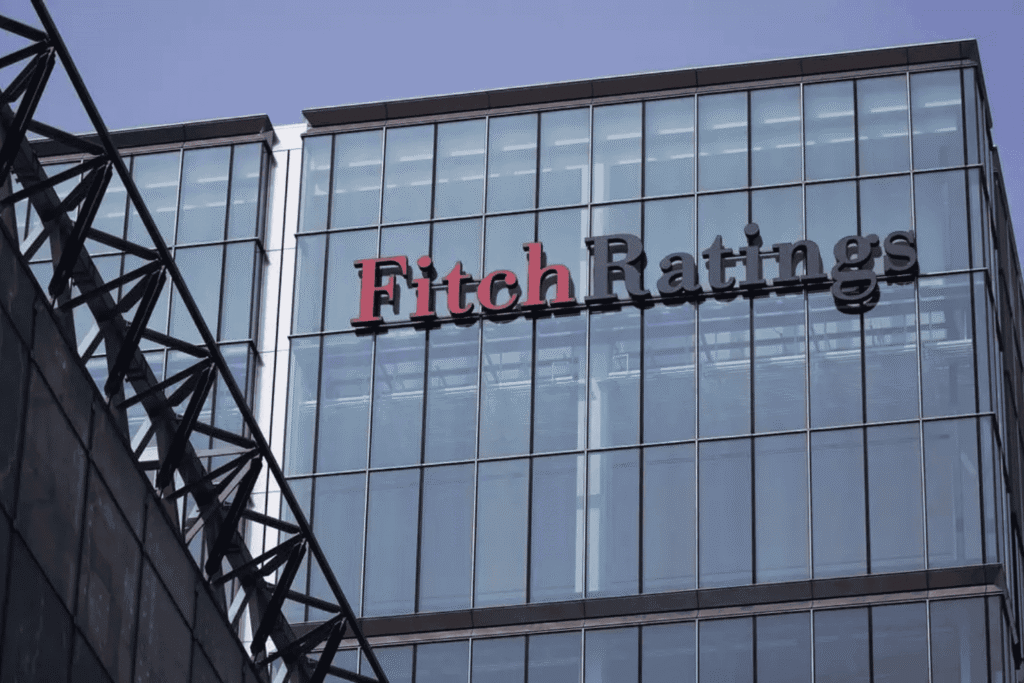
International credit rating agency Fitch Ratings has revised its outlook for Türkiye’s economy, upgrading the growth forecast for 2025 while expecting inflation to gradually slow down. The revision comes after stronger-than-expected economic activity in the second quarter of the year.

Taking into account recent developments in Türkiye’s economy since June, Fitch’s latest report paints a more optimistic picture of key macroeconomic indicators. The agency points to Türkiye’s continued tight monetary policy and some structural reforms as positive factors behind the improved projections.

Growth Projections for 2025 and Beyond

According to Fitch, Türkiye’s economy is expected to grow by 3.5 percent in 2025. This marks an increase of 0.6 percentage points from the previous forecast of 2.9 percent. The agency also expects growth of 3.5 percent in 2026, with a further acceleration to 4.2 percent in 2027.

These projections largely align with the Medium-Term Program (MTP) targets announced by Türkiye’s Ministry of Treasury and Finance, which aims for growth rates of 3.3 percent in 2025, 3.8 percent in 2026, and 4.3 percent in 2027 (Türkiye Treasury, 2024).

Key drivers behind Fitch’s upward revision include robust domestic demand, increased private sector investments, signs of export recovery, and a committed monetary policy stance.

Inflation Outlook

Fitch offers a more positive outlook on inflation, forecasting Türkiye’s annual inflation rate to decline to around 28 percent by the end of 2025. This would represent a significant improvement from the current inflation rate, which remains above 55 percent.

Inflation is projected to further fall to 21 percent in 2026 and 19 percent in 2027. The Central Bank of the Republic of Türkiye’s (CBRT) tight monetary policies and efforts to stabilize the exchange rate are expected to play a key role in achieving this decline (CBRT Inflation Report, 2025).

It is worth recalling that the CBRT raised its policy rate from 8.5 percent to 45 percent over the past year in a determined effort to combat inflation. The year 2025 is expected to mark a period where these measures start yielding results.

Interest Rate Cut Expectations

Fitch’s report predicts a total of 800 basis points in interest rate cuts by the CBRT during the upcoming months, bringing the policy rate down to 35 percent by the end of 2025. This suggests a gradual and controlled easing of monetary policy starting next year.

However, Fitch cautions that premature rate cuts before inflation reaches target levels could disrupt economic stability. The agency emphasizes the importance of a cautious, data-driven approach to monetary policy.

Current Account and External Financing

The report also discusses Türkiye’s current account balance, expecting a moderate narrowing in the deficit by 2025. Lower energy import costs, increased tourism revenues, and export recovery are seen as contributing factors to bringing the current account deficit to around 2.5-3 percent of GDP.

Türkiye’s external financing needs remain elevated but manageable. Recent increases in international reserves and renewed access to portfolio investments have helped mitigate some external financing risks.

Similar assessments have been made by institutions such as the International Monetary Fund (IMF) and the World Bank, which note Türkiye’s progress in rebalancing its external accounts.

Global Economic Context

Fitch Ratings revised its global growth forecast upward as well, projecting a 2.4 percent global growth rate for 2025, a 0.2 percentage point increase from earlier reports. The outlook for major economies like the United States, China, and the Eurozone remains mixed.

China’s growth forecast was raised to 4.7 percent, while the United States and Eurozone are expected to grow by 1.6 and 1.1 percent respectively. The ongoing high global interest rates, geopolitical tensions, and trade disputes continue to influence emerging markets’ performance.

For emerging economies like Türkiye, achieving stability and predictability in this challenging global environment is key to attracting investment and maximizing growth potential.

Risks and Uncertainties

While Fitch’s revisions are positive, the report highlights several risks that could impact Türkiye’s economic outlook, including:

  • Delays in reducing inflation

  • Potential deviations or premature easing in monetary policy

  • Volatility in global financial markets

  • Geopolitical tensions and regional risks

  • Household debt levels and private sector access to financing

These factors represent both opportunities and challenges for Türkiye’s macroeconomic stability.

Conclusion: An Increasingly Optimistic Outlook for Türkiye

Fitch’s latest assessment signals a gradual economic recovery for Türkiye in 2025 and beyond. The upward revision of growth forecasts and the expectation of easing inflation send positive signals to both domestic and international investors.

However, realizing this optimistic scenario requires Türkiye’s policymakers to maintain monetary discipline, advance structural reforms, and preserve a stable investment climate.

With these conditions met, Türkiye could enter 2025 with a more balanced and sustainable economic outlook, combining growth with price stability.