
WORLDEF Prime Antalya 2026 — Super Early Bird Discounts

Register Now

3 Signals Show China’s Trade Momentum Strengthening as Global Markets Shift

3 Signals Show China’s Trade Momentum Strengthening as Global Markets Shift

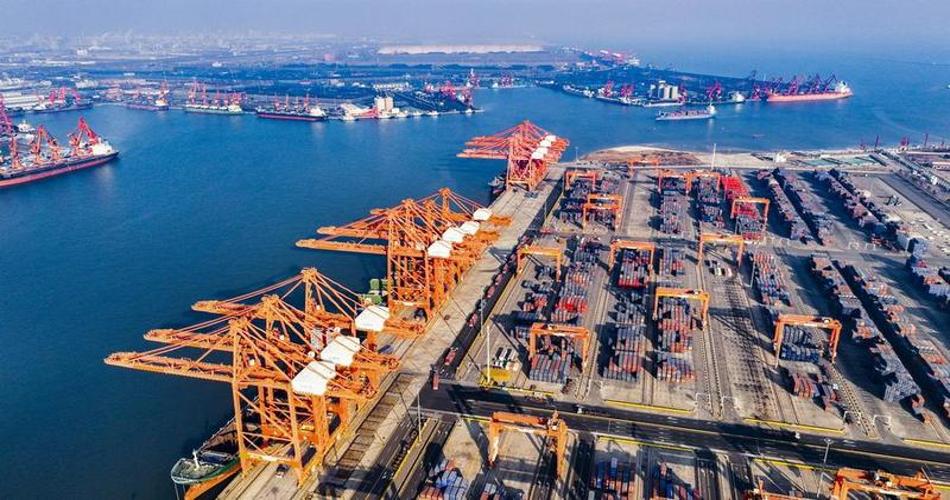
China is reinforcing its position in global trade as officials highlight steady progress in foreign trade performance and continued efforts to strengthen economic resilience.

At a recent briefing by the State Council Information Office (SCIO), authorities emphasized that China’s trade activity remains stable, supported by strong industrial capacity and ongoing policy measures aimed at improving trade quality and structure.

The update reflects a broader strategy focused not only on maintaining trade volumes but also on enhancing value creation and long-term sustainability.

Trade Structure Shifts Toward Higher Value

China is increasingly prioritizing the quality of its trade over sheer volume. Officials highlighted improvements in the composition of exports, with a growing share of high-value and technology-driven products.

This transition signals a move toward more advanced manufacturing and innovation-led trade. At the same time, efforts are underway to promote more balanced import and export dynamics while strengthening global supply chain stability.

Cross-Border E-Commerce Remains a Key Driver

Cross-border e-commerce continues to play a central role in China’s trade strategy. Digital platforms and streamlined logistics systems are enabling businesses to access global markets more efficiently.

Authorities have emphasized ongoing improvements in trade facilitation, including customs processes and digital infrastructure, to support faster and more reliable international transactions.

As global demand for online commerce grows, China is further integrating digital trade into its broader economic framework.

What This Means for Global Markets

China’s latest signals point to a more structured and resilient global trade environment. While geopolitical and economic pressures remain, the country’s focus on innovation, diversification and digitalization is shaping the next phase of international commerce.

As previously highlighted in WORLDEF’s coverage of global trade trends, the future of cross-border trade is increasingly defined by efficiency, data-driven systems and strategic expansion.

China’s direction reflects this shift. Trade is no longer driven by scale alone, but by the ability to adapt to a more complex and competitive global landscape.

Source: SCIO

Alibaba Revenue Rises 1.7% but Misses Estimates as Profit Drops 66%

alibaba revenue rises 17percent but misses estimates as profit drops 66percent

Alibaba reported a modest 1.7% increase in quarterly revenue, reaching approximately 284.84 billion yuan ($41.28 billion), but the figure came in below analyst expectations. The results highlight continued pressure on China’s e-commerce sector, where consumer demand remains weak despite ongoing promotional efforts.

Heavy spending on discounts and faster delivery options has not been enough to significantly boost consumption. Ongoing concerns around income stability and the broader economic environment continue to weigh on consumer confidence, limiting the impact of major shopping campaigns.

Profit Declines Sharply Amid Rising Costs

While revenue showed slight growth, profitability declined sharply. Alibaba’s net income fell by 66.3%, reflecting rising operational costs and continued investments in logistics, pricing strategies, and user acquisition. The company, like many of its competitors, appears to be prioritizing market share over short-term profitability in an increasingly competitive landscape.

Cloud and AI Business Shows Strong Momentum

At the same time, Alibaba’s cloud business delivered strong results, with revenue growing 36% year-on-year. The growth is largely driven by increasing demand for artificial intelligence solutions and cloud infrastructure. As AI adoption accelerates, this segment is becoming a key pillar of the company’s long-term strategy.

Alibaba is also restructuring parts of its business to focus more heavily on AI-driven services. New initiatives are aimed at expanding its capabilities in digital assistants and enterprise solutions, signaling a broader shift beyond traditional e-commerce. However, while AI usage is growing, monetization and long-term user engagement are still developing.

Market Reaction and Outlook

Following the earnings release, Alibaba’s U.S.-listed shares fell more than 6%, reflecting investor concerns over weaker-than-expected performance and declining profitability. The reaction underscores the challenges the company faces as it navigates slower growth in its core business while investing in future technologies.

Alibaba’s latest results point to a transition phase. As its e-commerce engine faces pressure, the company is increasingly positioning itself around AI and cloud to support future growth.

Source: Reuters

JD.com Launches Joybuy Across 6 European Countries in Bold Expansion

JD.com launches Joybuy e-commerce platform in Europe to compete with Amazon

Chinese e-commerce giant JD.com has launched its new online retail platform Joybuy across six European countries, marking one of the company’s most significant international expansion moves to date. The rollout signals JD.com’s ambition to challenge established players such as Amazon in one of the world’s most competitive digital retail markets.

The platform debuted in the United Kingdom, Germany, France, the Netherlands, Belgium and Luxembourg, offering a broad assortment of products ranging from consumer electronics and home appliances to beauty items and groceries. At launch, the marketplace includes more than 100,000 products from global brands including Apple and Samsung.

JD.com Accelerates Global Expansion

The European launch comes as JD.com looks beyond its domestic market for growth. Competition in China’s e-commerce sector has intensified in recent years, pushing major platforms to explore new international opportunities.

By introducing Joybuy in Europe, JD.com is positioning itself as a direct competitor to Amazon while also expanding the global reach of both Chinese and international brands through its marketplace infrastructure.

Founded by billionaire entrepreneur Liu Qiangdong, JD.com has grown into one of the world’s largest online retailers. The company generated more than $150 billion in annual revenue and has built a reputation for its integrated logistics network and fast delivery capabilities.

Fast Delivery at the Core of the Strategy

A key feature of Joybuy’s European rollout is its focus on rapid delivery. JD.com plans to leverage its logistics infrastructure to provide same-day and next-day delivery services in major cities. Orders placed earlier in the day may arrive within hours, giving the platform a competitive advantage in markets where delivery speed is increasingly critical to consumer choice.

The company has invested heavily in logistics infrastructure across Europe, including dozens of warehouses and distribution centers that support its proprietary delivery network. This integrated supply chain approach has long been a defining feature of JD.com’s operations in China and is expected to play a central role in its European strategy.

Competing in Europe’s Crowded E-Commerce Market

Europe represents one of the most developed and competitive e-commerce markets globally. Amazon currently dominates much of the region’s online retail sector, while Chinese platforms such as Temu and Shein have also been expanding aggressively across Western markets.

JD.com hopes its combination of competitive pricing, global brands and fast delivery will help the company attract European consumers looking for alternatives to existing platforms.

Industry analysts note that the move could intensify competition in the region, particularly as global e-commerce companies continue to expand logistics networks and cross-border marketplaces.

A Long-Term Bet on Overseas Growth

The Joybuy launch represents JD.com’s largest overseas expansion initiative so far and highlights the company’s long-term strategy to reduce reliance on China’s domestic market.

If successful, the platform could become a major new channel for international brands while also giving Chinese merchants broader access to European consumers.

Source: Business Standard