WORLDEF Prime Antalya 2026 — Super Early Bird Discounts

Register Now

EU Imposes Record Fine on AliExpress: €550 Million Penalty for Illegal Products

AliExpress

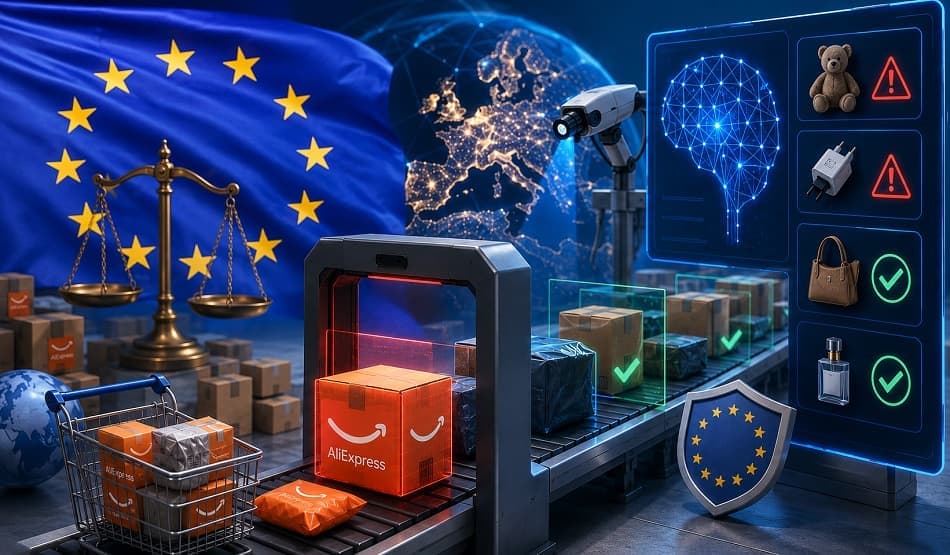
The European Commission fined AliExpress €550 million on the grounds that it failed to adequately assess and mitigate the risks related to the sale of illegal, unsafe, and counterfeit products. The decision marked the highest fine the European Union has imposed on an e-commerce platform to date under the Digital Services Act.

Deficiencies Identified in AliExpress’s Monitoring Systems

In the investigation launched in March 2024, it was determined that AliExpress had not assigned a sufficient number of employees to detect illegal products on the platform. According to European Commission sources, some employees had only 10 to 20 seconds to assess the risks posed by the products.

The Commission stated that AliExpress had overstated the effectiveness of its automated product detection systems and relied largely on a single quantitative indicator to measure moderation performance. It was also noted that the platform’s recommendation and advertising systems increased the circulation of illegal products.

Algorithmic Controls Were Easily Circumvented

It was stated that sellers were able to bypass compliance checks by placing products in incorrect categories. The mandatory “brand authorization” system used to prevent counterfeit products was reported to have failed to deliver the expected results due to insufficient staffing and ineffective controls.

As a result of these deficiencies, counterfeit clothing, unsafe toys, and dangerous cosmetic products remained on sale for weeks despite being detected. It was also reported that some sellers who had been sanctioned for violating the rules continued to operate on the platform.

Of the €550 million fine, €110 million was attributed to inadequate risk assessment, while €440 million was related to the failure to implement effective risk mitigation measures. The fine exceeded the €120 million penalty imposed on X and the €200 million sanction applied to Temu.

AliExpress Will Appeal the Decision

AliExpress described the fine as “disproportionate,” stating that it had cooperated with the European Commission, improved its risk management system, and introduced voluntary measures. The company announced that it would appeal the decision.

AliExpress, which has 193 million users in Europe, is required to submit an action plan containing compliance measures to the Commission by October 20, 2026. If the plan is found to be insufficient, additional fines may be imposed on the platform.

Finland E-Commerce Market 2025: AI, Social Commerce and Global Competition Reshape the Industry

Finland E-Commerce Market 2025: AI, Social Commerce and Global Competition Reshape the Industry

Finland E-Commerce Market Reaches €5.6 Billion in 2025

Finland e-commerce market continues to expand, with total online retail spending reaching approximately €5.6 billion in 2025. The market grew by 4.8% year-on-year, confirming that digital commerce remains a core part of consumer behavior.

However, the nature of this growth is evolving. Rather than uniform expansion, the market is now driven by category-specific trends, shifting consumer habits and increasing global competition.

Finland E-Commerce Trends Show Strong Growth in Grocery, Health and Electronics

Growth within the Finland e-commerce ecosystem is not evenly distributed. Consumer electronics, cosmetics and health products, and grocery categories are leading the market.

Grocery e-commerce has reached a new level of maturity, with around 30% of consumers purchasing food or beverages online. This signals a structural shift where e-commerce is no longer limited to discretionary spending but is becoming embedded in everyday consumption.

In contrast, the fashion segment is facing pressure due to price competition from international platforms and the rise of second-hand commerce.

Top-Selling Categories in Finland E-Commerce Market

According to the report, the Finland e-commerce market is led by a small number of dominant product categories.

Consumer electronics is the largest category, accounting for approximately 23% of total online spending. It is followed by fashion (21%) and cosmetics and health products (17%), making these three segments the core of Finland’s e-commerce market

Other key categories include:

Food and beverages (13%)
Spare parts and DIY products (9%)
Home and interior products (8%)
Hobbies, leisure and pet products (7%)

This distribution shows that while traditional strong categories such as electronics and fashion continue to dominate, everyday consumption categories are gaining share.

In particular, the growth of groceries and health-related products indicates that Finland e-commerce is moving beyond occasional purchases toward more frequent, necessity-driven consumption.

Finland E-Commerce Platforms Face Rising Global Competition

Domestic platforms continue to dominate Finland e-commerce traffic. Local players such as K-Ruoka, Verkkokauppa.com and Tokmanni remain among the most visited platforms.

At the same time, international marketplaces including Temu, Amazon and AliExpress are increasing their presence. These platforms compete aggressively on pricing, assortment and mobile experience, making the competitive landscape more complex.

Cross-border e-commerce is also growing, with Finnish consumers increasingly purchasing from outside the European Union. This trend is intensifying pressure on local players to differentiate beyond price.

Social Media Becomes a Key Driver in Finland E-Commerce

One of the most important Finland e-commerce trends is the growing role of social media in the purchasing journey.

More than half of consumers now receive purchase inspiration from social platforms. This influence is expanding across all age groups, not just younger users.

A growing share of consumers are also making purchases directly through social platforms or through embedded links. This indicates that social commerce is becoming a core part of the e-commerce ecosystem.

AI Is Transforming Product Discovery in Finland E-Commerce

Artificial intelligence is emerging as a new layer in Finland e-commerce. Product discovery is increasingly shifting from traditional search engines to AI-driven systems.

This change requires businesses to rethink their visibility strategies. Structured product data, authentic customer reviews and machine-readable content are becoming critical for visibility.

E-commerce is moving toward AI-driven discovery models where recommendation systems play a central role.

Mobile Apps Are Reshaping Finland E-Commerce Behavior

Mobile apps are becoming increasingly important in Finland e-commerce. Adoption is particularly strong among younger consumers, who use apps for browsing, price comparison and purchasing.

Both local and international platforms are competing in this space, creating a hybrid ecosystem. Apps such as Vinted, Temu and AliExpress are gaining strong traction alongside domestic solutions.

Finland E-Commerce Outlook: Growth Continues but Market Becomes More Complex

The Finland e-commerce market is expected to continue growing in the coming years, but at a more moderate pace.

External factors such as logistics costs, global competition and geopolitical uncertainty are becoming more relevant for market performance.

More importantly, the structure of e-commerce is changing. The market is no longer defined only by digital adoption, but by platform competition, social influence and technological transformation.

Businesses operating in Finland e-commerce will need to adapt to this new reality. Success will depend on flexibility, strong positioning within digital ecosystems and the ability to integrate emerging technologies into the customer journey.