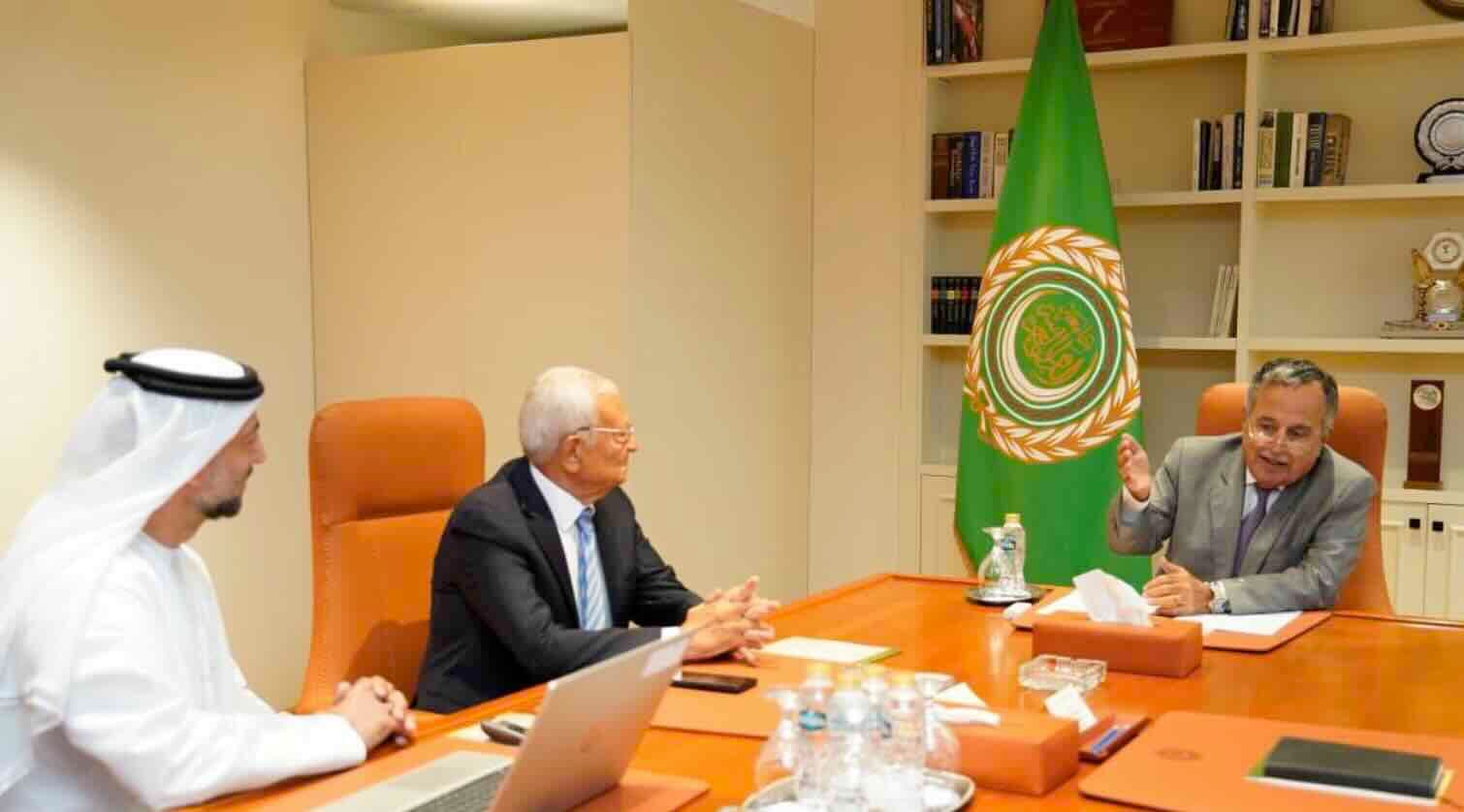
Arab League officials and digital economy leaders discussed AI preparedness, cross-border digital integration and investment initiatives aimed at turning technology adoption into measurable economic growth.
Arab digital transformation is entering a more ambitious phase as regional institutions look to artificial intelligence, data, digital trade and technology investment to strengthen economic growth and competitiveness.
Senior representatives of the League of Arab States and the Arab Federation for Digital Economy met in Cairo to discuss how Arab economies can respond to the rapid technological changes being driven by artificial intelligence and other emerging technologies.
The discussions focused on the implications of AI for investment, technology production, the data economy, human capital and the future of regional economic cooperation.
Participants also stressed that the next stage of Arab digital transformation should focus less on broad strategies and more on practical projects that deliver measurable economic and social results.
AI Creates New Priorities for Arab Digital Transformation
Artificial intelligence is expected to reshape labor markets, education, production, services, trade and investment across the Arab region.
The meeting examined how governments can prepare for these changes while ensuring that technological transformation contributes directly to economic development.
One of the central themes was the need to connect digital strategy with implementation.
Regional officials discussed more effective models for joint Arab action that combine policy, investment, technology projects and international partnerships.
The objective is to translate individual countries’ digital priorities into initiatives that can be implemented, measured and potentially scaled across the region.
This approach could become increasingly important as governments attempt to balance investment in emerging technologies with challenges surrounding skills development, regulation and access to capital.
Arab Digital Economy Vision Remains Central
Dr. Ali Mohammed Al Khouri, Chairman of the Board of Directors of the Arab Federation for Digital Economy, presented the Federation’s work across digital economy development, investment, education, food security, and international cooperation.
He also reviewed the Arab Digital Economy Vision, an initiative developed with support from the United Arab Emirates.
The strategy is intended to help Arab economies strengthen their ability to benefit from digital transformation, technology, and data.
The initiative has developed into a broader regional framework and has been adopted at the Arab Summit level.
Its priorities include improving digital infrastructure, strengthening digital capabilities, and creating economic environments that allow technology to generate greater value.
Digital Economy Index Measures Regional Progress
The meeting also discussed the Arab Digital Economy Index, which has been developed to measure the performance of Arab countries across different areas of the digital economy.
The index is designed to identify gaps, priorities, and areas where additional government or private-sector investment may be required.
Such measurement tools could become increasingly important as policymakers seek to understand why some countries can generate greater economic value from digital technologies than others.
Rather than focusing solely on technology adoption, governments are increasingly looking at indicators such as digital skills, investment capacity, business participation, and economic outcomes.
This shift could help Arab digital transformation strategies become more targeted and measurable.
Madar Platform Targets Digital Investment
Another initiative discussed during the meeting was Madar – Arab Platform for Digital Projects.
The platform aims to showcase investment opportunities and development projects across Arab countries while connecting them with companies, investors and international institutions.
Its broader objective is to attract capital, technology, and international expertise to projects identified as priorities by individual Arab economies.
The Federation is also seeking to use its international partnerships to create new channels between Arab countries and global investors, technology companies and markets.
This includes developing financing and partnership models that encourage greater participation from both foreign investors and the private sector.
Cross-Border Digital Integration Takes Priority
Interoperability between Arab digital systems and platforms was another major topic.
Participants discussed the importance of enabling digital infrastructure across countries to communicate more effectively.
Greater interoperability could support cross-border data exchange, digital services and regional trade.
It could also reduce friction for businesses operating across multiple Arab markets.
For E-commerce companies in particular, stronger regional digital integration could improve digital payments, logistics, identity verification, customs procedures, and cross-border services.
The Arab region currently consists of multiple markets with different regulations, digital infrastructures and levels of technological development.
Improved interoperability could therefore become an important component of deeper regional economic integration.
Skills Development Will Be Critical
Technology infrastructure alone will not determine whether Arab economies benefit from the AI era.
Digital education and workforce development were also identified as important priorities.
The Arab Federation for Digital Economy is developing education and training initiatives intended to connect digital skills more closely with labour market requirements.
As AI adoption expands, this issue is expected to become increasingly urgent.
Companies will require employees capable not only of using new technologies but also of integrating them into business operations, decision-making and customer services.
Governments will also face pressure to adapt education systems as demand changes for different technical and professional skills.
Digital Projects Must Produce Measurable Value
A recurring theme throughout the discussions was the need to move from strategy to implementation.
Al Khouri said the coming period should focus on converting existing visions and initiatives into practical projects and partnerships.
The emphasis is increasingly on linking the digital economy directly to growth, development, and economic value creation.
Professor Dr. Ahmed Mustafa Al-Sherbini, Secretary-General of the Arab Federation for Digital Economy, similarly highlighted the importance of turning the Federation’s projects into programs that can be expanded across the region.
The success of digital initiatives, he said, ultimately depends on whether they produce measurable economic and social outcomes.
Arab Digital Transformation Enters the AI Era
The rapid development of artificial intelligence is changing the definition of digital readiness.
For Arab economies, simply expanding connectivity or increasing technology adoption may no longer be enough.
Countries will increasingly need to demonstrate that digital investment improves productivity, supports businesses, strengthens trade and creates new economic opportunities.
Collaboration between governments, businesses and international institutions could therefore become one of the defining elements of the next stage of Arab digital transformation.
The region’s challenge will be to translate ambitious digital strategies into scalable projects that deliver tangible economic results.
As artificial intelligence reshapes the global economy, the ability of Arab countries to integrate technology, skills, investment and regional cooperation will play an increasingly important role in determining their competitiveness.