WORLDEF Prime Antalya 2026 — Early Bird Discounts

Register Now

The Store Is Not Dead. It Just Has a New Job

Store in not Dead

For more than a decade, retail has been framed as a simple competition, physical stores versus E-commerce.

One side was supposed to win. The other was supposed to disappear.

I increasingly believe that this framework is outdated.

The physical store is not surviving despite e-commerce. In many cases, it is becoming more valuable due to e-commerce.

Recent research published in Harvard Business Review offers a useful explanation. Researchers Ayşe Çetinel, Gürhan Kök, and Robert Rooderkerk examined physical store openings by an online-first, multi-brand electronics retailer and found that stores should not be judged solely by the revenue generated within their walls.

That sounds obvious. Yet many retailers still manage stores and E-commerce as separate businesses.

Stop Thinking in Channels

Retail organizations often have separate teams, targets, and P&Ls for stores and E-commerce.

The online team wants digital revenue to grow. The store team wants physical revenue to grow. Each side protects its own numbers.

Customers do not behave this way.

A consumer may discover a product on social media, compare it online, visit a store to see it, order it through an app, and return it in person.

For the customer, this is one journey.

For many retailers, it is still several departments.

The HBR study demonstrates the problem well. After three physical stores opened, nearby online net revenue initially declined by around 8% to 11%. Yet two large, experience-led stores increased total net revenue across channels by 21.7% and 23.2%. A smaller convenience-oriented store cannibalized online sales without producing meaningful overall growth.

The lesson is important: Cannibalizing your own channel is not necessarily a problem. Failing to increase total customer value is.

The Store Needs a New Job

Historically, stores existed because that was where transactions happened. Digital commerce changed that permanently.

If customers already know what they want, can order it in seconds and receive it quickly, a store that merely recreates an online catalog on shelves has limited strategic value. A modern store needs to solve something that digital cannot solve as well.

Research identifies three particularly important functions: helping consumers evaluate products, offering immediate fulfillment, and making returns or post-purchase problems easier to resolve.

I would go slightly further.

The store of the future is not simply a sales channel. It can simultaneously become a service center, fulfillment node, trust mechanism, showroom, and experience platform.

This matters particularly in furniture, beauty, electronics, luxury, eyewear and premium fashion, where touch, fit, scale, performance or expert advice can still materially change a purchasing decision.

These categories will not become less digital. Their digital journeys will become more sophisticated, while physical interaction remains valuable at specific moments.

Not Every Store Deserves to Survive

This argument should not be interpreted as a call to open more stores indiscriminately.

A bad store does not become strategically valuable simply because we describe it as omnichannel.

Even within the successful stores studied by the researchers, more than four in ten product categories produced no measurable uplift. Some benefited strongly from physical presence; others did not.

Retailers, therefore, need to become much more selective.

Televisions may justify demonstration zones. Furniture may need complete room settings. Beauty requires trial and consultation. Accessories may simply perform better when connected to destination products.

The question should not be: “How do we make every store more experiential?”

It should be: “Where does physical experience genuinely change the customer’s decision?”

The difference is enormous.

One creates expensive retail concepts. The other creates productive retail.

The Store Is Also Becoming Infrastructure

Physical stores increasingly have another role: fulfillment.

A location may support online orders, shorten delivery distances, hold inventory closer to customers, enable pickup, and simplify returns.

Once this happens, measuring the store only through its own sales becomes even less meaningful.

This is particularly important as fulfillment speed, inventory visibility and last-mile economics become central competitive factors in E-commerce.

Amazon taught the industry that logistics is part of the customer experience.

Omnichannel retailers are now discovering that the store itself can become part of logistics.

AI Makes the Question More Interesting

Artificial intelligence will make online shopping dramatically more efficient.

Search will become conversational. Recommendations will become deeply personalized. AI agents may increasingly compare products, identify the best offers, and eventually make some purchasing decisions for consumers.

And that creates an interesting paradox.

The more efficient digital commerce becomes, the more valuable physical presence may become in the moments when people still want judgment, reassurance, discovery, or sensory confirmation.

Routine transactions will continue migrating online.

Physical retail will increasingly concentrate on the moments where presence actually adds value.

That is not the store’s decline. It is specialization.

What Retailers Are Actually Looking For

We can already see this transition in the conversations retailers themselves are initiating.

Ahead of WORLDEF Prime Antalya, which will bring the retail and E-commerce ecosystem together on December 8–10, participating Hosted Retailers have been asked to identify the solutions and capabilities they are actively looking for before arriving.

The pattern is revealing.

Among the verified Hosted Retailer applications, 62% are looking for data, analytics, and AI solutions, 60% for commerce platforms, 45% for marketing solutions, 36% for web and mobile experience technologies, and 28% for CRM and customer-experience solutions. The participants also span logistics and fulfillment, digital product, technology infrastructure, and other functions that increasingly connect physical and digital retail.

To me, this is more interesting than simply saying retailers are “investing in digital.”

What they are really trying to build is an operating system in which channels no longer function independently.

That is also why the Hosted Retailers format at WORLDEF Prime Antalya is structured around declared business needs rather than random networking. Retail decision-makers specify their priorities in advance, and meetings are matched to actual requirements and relevant solutions.

The important point is not the event itself.

It is what these requirements tell us about where retail is going.

Retailers are no longer asking whether they should be physical or digital. They are trying to understand how AI, data, fulfilment, commerce technology and stores fit into one customer journey.

There Is Only Commerce

The biggest challenge may therefore no longer be technological.

Most large retailers already have websites, apps, CRM systems, digital payments and increasingly advanced logistics.

The deeper challenge is organizational.

If physical teams are rewarded for store revenue while digital teams are rewarded for online revenue, both sides will naturally defend their channels.

Research instead suggests evaluating performance through total net revenue, customer acquisition, purchase frequency, retention and returns across the whole customer relationship.

This is where retail needs to go next.

We should stop talking about E-commerce and physical retail as two competing worlds.

There is only commerce. The customer has already understood this. Retail organizations are the ones still catching up.

The winners of the next decade will not necessarily be those with the most stores or even those with the strongest E-commerce platforms.

They will be the companies that understand when digital convenience creates value, when physical presence creates value and how to connect the two without caring which channel receives credit for the transaction.

The store is not dead.

It simply has a much more demanding job description now.

E-Commerce Spending in Saudi Arabia Increased by 42 Percent

Saudi Arabia

Saudi Arabia recorded an increase in retail spending in the first quarter of 2026, driven by strong consumer demand, stable inflation, and growth in the non-oil economy. E-commerce spending in the country increased by 42 percent year-on-year.

According to Knight Frank data, consumer spending in the country rose by 6.8 percent compared with the same period last year, reaching 425 billion riyals, or approximately $113.3 billion. This amount included point-of-sale transactions, cash withdrawals, and online shopping.

E-Commerce Spending in Saudi Arabia Rose by 42 Percent

E-commerce spending in Saudi Arabia increased by 42 percent year-on-year in the first quarter of 2026. Growth in online shopping, together with physical stores, supported the country’s overall retail performance. Consumer spending conducted through official payment channels had reached a record level of 1.57 trillion riyals in 2025.

Non-Oil Economy Supported Retail

The country’s economy grew by 3 percent in the first quarter of 2026, while non-oil activities expanded by 2.9 percent. During the same period, inflation remaining at 1.8 percent contributed to maintaining consumer confidence despite regional geopolitical tensions.

Faisal Durrani, Head of Research for the Middle East and North Africa at Knight Frank, stated that consumer spending remained resilient against regional uncertainties. Durrani said that non-oil economic growth, stable inflation, and rising household incomes supported retailers’ confidence.

Shopping Malls Are Transforming into Experience Destinations

It was stated that consumers are increasingly turning to spaces offering family entertainment, education-focused activities, sports, events, and social activities in addition to shopping and food and beverage options. This trend is leading developers to redesign retail spaces in a way that provides more comprehensive customer experiences. (Saudi Arabia)

Under Vision 2030, the aim is to increase the annual number of visitors to 150 million by 2030 and raise tourism’s contribution to gross domestic product to 10 percent. The program is expected to support demand in the retail, hospitality, entertainment, and e-commerce sectors.

Cost Per Click in E-Commerce Increased by 15 Percent, ROAS Declined

Cost Per Click

The cost per click paid by e-commerce brands in Google Ads campaigns increased by 15 percent in the last year.

According to the “eCommerce Google Ads Benchmark” report published by Channable, cost per click in Google Shopping and Performance Max campaigns increased by an average of 0.06 euros across all campaign types between June 2025 and June 2026. In the same period, return on ad spend (ROAS) decreased by more than 40 percent.

1.38 Billion Euros in Ad Spend Analyzed

In the benchmark study prepared by Channable, the Netherlands-based e-commerce feed management platform, 1.38 billion euros in verified Google Ads spend belonging to more than 10,000 advertisers in the European e-commerce market was analyzed. The report enables online retail brands to compare their Google Ads performance with broader market averages.

Google Ads stands out as one of the paid advertising services used by brands to increase their visibility in search results and shopping areas. However, recent data shows that as competition in e-commerce increases, brands have to allocate higher budgets for the same visibility.

ROAS Declined While Cost Per Click Increased

According to the report, despite the increase in cost per click, the return from Google Ads campaigns decreased significantly. While average ROAS in Standard Shopping campaigns fell by 43 percent, average ROAS in Performance Max campaigns declined by 46 percent.

This picture reveals that brands are receiving lower returns despite paying more for advertising. Channable states that, in addition to rising cost per click, the 0.11-point decline in conversion rates in Performance Max campaigns also had an impact on the decrease in returns.

“Google Ads Should Be Seen as Core Data Infrastructure”

Channable Co-Founder and Chief Product Officer Stefan Hospes emphasized in his assessment of the results that brands should treat Google Ads not only as a budget line, but as core data infrastructure.

Hospes said, “The brands feeling this most acutely treated Google Ads as a budget line when they should have approached it as key data infrastructure. A 15 percent CPC increase is painful if you are bidding on the same listings as last year. It is manageable if your feed is optimized, your budget is structured for Q4, and your product data is working as hard as your campaigns.”

Ad Spend Increased in the Fourth Quarter

When Google Ads channels are evaluated together, cost per click in the fourth quarter of 2025 was 9.1 percent higher than in the first quarter. In the same period, total ad spend increased by 47.9 percent compared to the first quarter of the year.

This increase shows that e-commerce brands need larger advertising budgets to compete during peak sales periods such as Cyber Week, Black Friday and the holiday shopping season. AI-powered campaign management, product feed optimization and data-driven budget planning are becoming more critical for maintaining advertising efficiency in online retail.

WORLDEF ISTANBUL 2026 welcomed 22,000 visitors from 82 countries

WORLDEF Istanbul 2026

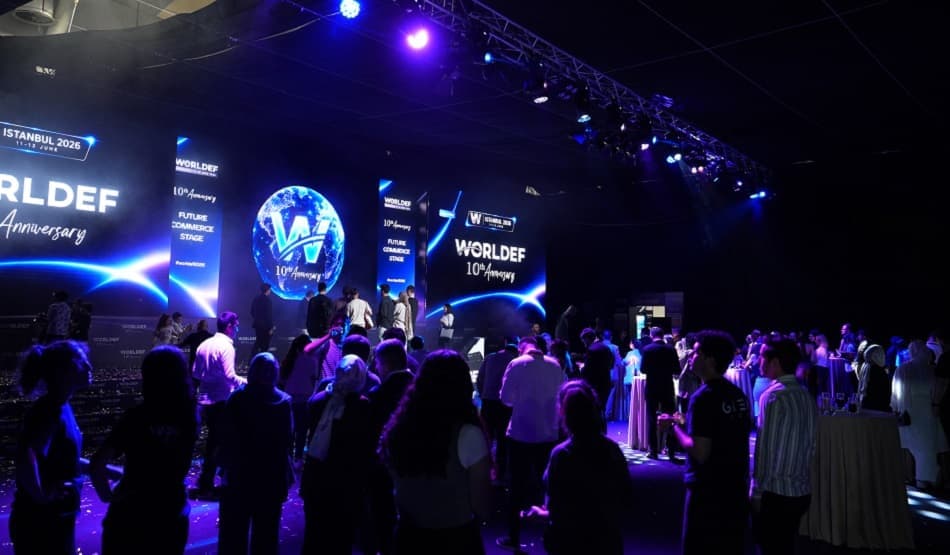
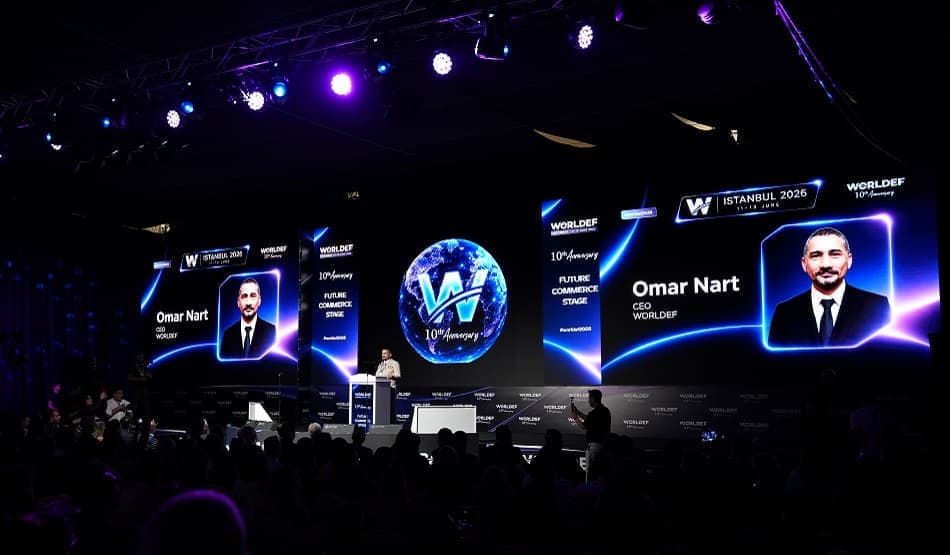
WORLDEF ISTANBUL 2026, which focused on the e-commerce, retail and artificial intelligence ecosystems, concluded with strong participation and significant international representation. The event brought visitors from 82 countries together in Istanbul. Brands shaping digital commerce, technology companies, retail leaders, logistics players, entrepreneurs, investors and decision-makers came together under one roof. WORLDEF CEO Omar Nart said, “WORLDEF ISTANBUL 2026 was not merely a trade fair or a conference; it became a powerful platform that enabled the e-commerce, retail, artificial intelligence and digital commerce ecosystems to grow together.”

WORLDEF ISTANBUL 2026 hosted 22,000 visitors over three days between June 11 and 13, 2026. At the event, 187 brands from different sectors exhibited at booths, while 250 speakers took part in the stage programs. Foreign visitors accounted for 35 percent of participants. As a result, WORLDEF ISTANBUL became a strong meeting point for the regional and global e-commerce and retail ecosystem.

At the event, which featured companies operating in e-commerce, retail, artificial intelligence, technology, logistics, fintech, SaaS, digital marketing and cross-border e-commerce, new collaborations, strategic meetings, brand gatherings and networking opportunities stood out. WORLDEF ISTANBUL 2026 brought together not only brands in Türkiye but also companies seeking to expand into global markets with international stakeholders.

Omar Nart: It became a powerful platform that enabled digital commerce ecosystems to grow together

WORLDEF CEO Omar Nart stated that WORLDEF ISTANBUL 2026 achieved significant success for the e-commerce, retail and artificial intelligence ecosystem, saying: “WORLDEF ISTANBUL 2026 was not merely a trade fair or a conference; it became a powerful platform that enabled the e-commerce, retail, artificial intelligence and digital commerce ecosystems to grow together. Welcoming 22,000 visitors from 82 countries in Istanbul once again demonstrated Türkiye’s potential to become a regional trade hub. The collaborations and connections established throughout the event generated highly valuable and productive results for brands seeking to expand into global markets.”

Omar Nart also underlined WORLDEF’s global vision, stating: “Digital commerce has now become an ecosystem that transcends borders, is strengthened by technology and grows through collaboration. As WORLDEF, our goal is to carry brands emerging from the MENA region and Türkiye to the world, bring global brands together with the region’s strong players, and build a sustainable business network that shapes the future of e-commerce and retail. The strong interest we witnessed at WORLDEF ISTANBUL 2026 shows that this vision has been strongly embraced by the industry.”

It offered new opportunities for the e-commerce, retail and artificial intelligence sectors

Stage sessions, panels and special meetings held as part of the event addressed artificial intelligence, digital transformation, next-generation retail, cross-border e-commerce, logistics technologies, marketplace strategies, customer experience and global growth models. Leading speakers from the industry shared their experiences and future visions regarding the transformation of digital commerce with participants.

With its exhibition booths, stage programs, special networking events and global participant profile, WORLDEF ISTANBUL 2026 offered new opportunities for the e-commerce and retail sectors. The event stood out as an important platform where trends shaping the future of digital commerce were discussed, brands evaluated their strategies for entering new markets, and international collaborations were developed.

WORLDEF’s next event will be held in Antalya

WORLDEF will continue to support brands’ growth journeys through events that bring the e-commerce and retail ecosystems together on a global scale in the coming period. WORLDEF’s next event will be the “WORLDEF PRIME Matchmaking Summit,” which will be held in Antalya between December 8 and 10, 2026.

The summit, which will bring together e-commerce and retail professionals from around the world, is positioned as a special matchmaking platform designed to establish important connections among decision-makers, brand executives, investors, technology providers and industry leaders. The organization, to be held at Antalya Kremlin Palace, will bring together industry representatives from more than 50 countries. One-on-one meetings and strategic sessions held throughout the event will contribute to the expansion of global e-commerce networks.

The Worlds of E-Commerce, Retail and Artificial Intelligence Came Together at WORLDEF ISTANBUL

WORLDEF ISTANBUL

WORLDEF ISTANBUL 2026 opened its doors at the Yenikapı Event Area. Hosting nearly 25 thousand participants from all around the world, WORLDEF ISTANBUL brought together the e-commerce, retail, technology, artificial intelligence and digital commerce ecosystems.

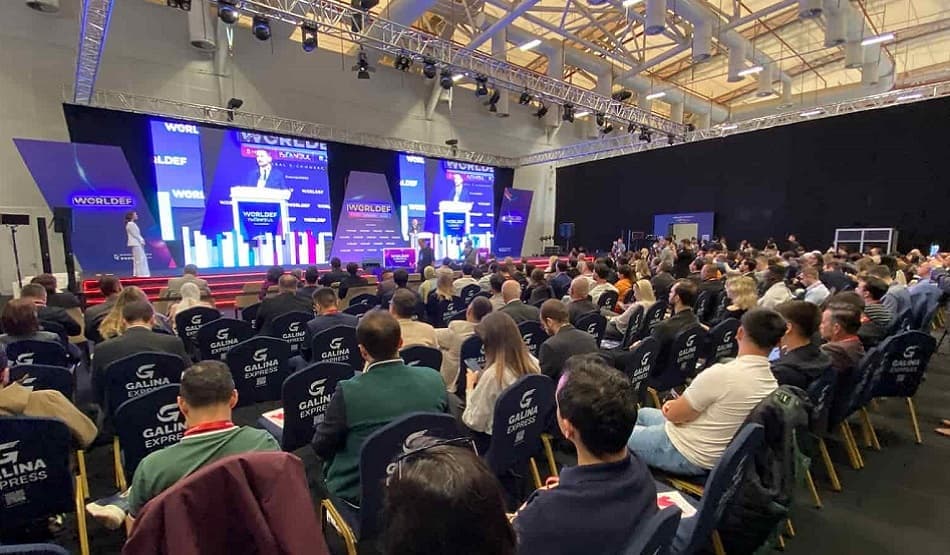
WORLDEF ISTANBUL began with a magnificent opening ceremony held at the Yenikapı Event Area. Held on June 11-13, 2026, the WORLDEF ISTANBUL is positioned as one of the most important gatherings of the e-commerce, retail, technology, artificial intelligence and digital commerce ecosystems. Taking place with the participation of nearly 25 thousand people from approximately 60 countries, the event brought together sector professionals, brands, entrepreneurs, technology companies, investors, marketplaces, logistics companies and digital commerce leaders under the same roof.

A magnificent opening ceremony was held for WORLDEF ISTANBUL 2026. The WORLDEF ISTANBUL ceremony, hosted by WORLDEF CEO Ömer Nart, was attended by Deputy Minister of Trade Mahmut Gürcan, Ministry of Trade Director General of Exports Mehmet Ali Yalçınkaya, Dubai Airport Free Zone and Dubai CommerCity Director General Amna Lootah, Dubai CommerCity Vice President Arjun Sarkar, and senior executives of e-commerce, retail and artificial intelligence companies.

Ömer Nart: New investments will be discussed and new success stories will begin over three days

WORLDEF CEO Ömer Nart, in his WORLDEF ISTANBUL opening speech, said, “At WORLDEF ISTANBUL, new collaborations will be established, new investments will be discussed, new ideas will emerge and new success stories will begin over three days. In recent years, Türkiye has gained very significant momentum in trade, exports, entrepreneurship, technology and digital transformation. Thanks to the vision set forth by our President, Mr. Recep Tayyip Erdoğan, the work of our Ministry of Trade and the entrepreneurial spirit of our private sector, our country is becoming stronger in global trade with each passing day.”

Saying, “As WORLDEF, we are very proud to be a part of this transformation,” Nart thanked Deputy Minister of Trade Mahmut Gürcan, who attended the event, and said, “We believe that Türkiye has the potential to become one of the most important centers of digital commerce.”

Amna Lootah: Growth happens when people, businesses and governments work together

Dubai Airport Free Zone and Dubai CommerCity Director General Amna Lootah said, “Just a short time ago, digital commerce was seen as an opportunity; today, it has become a necessity that transforms how businesses grow and how economies compete. In my role at Dubai CommerCity, I see that businesses are looking for three things: speed, access and certainty. We established Dubai CommerCity to create a seamless environment where companies can focus on innovation while we simplify the complexity of cross-border trade.”

Lootah continued as follows: “Technology, especially artificial intelligence, is changing operations; however, technology alone is not enough. Growth happens when people, businesses and governments work together. The developing relationship between the UAE and Türkiye, with a trade volume exceeding 45 billion dollars, is a strong example of this. I look forward to welcoming many of you in Dubai for WORLDEF Dubai 2027, where we can continue building the future of digital commerce together.”

Mahmut Gürcan: E-commerce has now become the main carrier of trade

Deputy Minister of Trade Mahmut Gürcan also stated, “E-commerce channels, digital marketplaces and next-generation logistics solutions are reshaping the structure of trade with each passing day. As Türkiye, in 2025, we realized goods exports of 273.5 billion dollars and services exports of 122 billion dollars; in total, we reached a level of 396 billion dollars. While the global retail e-commerce volume is expected to approach 7 trillion dollars in 2026, e-commerce has now become the main carrier of trade.”

Gürcan noted the following: “As the Ministry of Trade, we attach importance to our companies benefiting from e-export supports; we have increased the number of our target countries from 26 to 35. By establishing strategic collaborations with marketplaces such as eBay, Walmart, Amazon and TikTok Shop, we are increasing the global visibility of Turkish brands. In addition, we are training e-export specialists through the Export Academy and university collaborations. With our strong logistics network and production infrastructure, we will continue to work with all our strength toward becoming a regional hub in digital commerce.”

E-commerce, retail and artificial intelligence were discussed

Within the scope of WORLDEF ISTANBUL, approximately 200 booths were opened, while a broad ecosystem was represented at the event area, from e-commerce infrastructures to payment systems, from logistics solutions to artificial intelligence technologies, and from retail innovations to marketplace solutions. Participants had the opportunity to establish direct contact with companies from different sectors, develop new collaborations and evaluate opportunities for global markets.

Throughout the WORLDEF ISTANBUL, more than 200 speakers will take the stage and make important assessments on topics such as the future of e-commerce, transformation in retail, the impact of artificial intelligence on commerce, cross-border sales strategies, digital payment systems, logistics technologies and next-generation customer experience. The event will bring together the leading names, decision-makers and brands of the sector over three days, hosting new business connections, strategic partnerships and inspiring sessions.

WORLDEF Istanbul 2026 to Host MENA and Türkiye’s Largest E-Commerce, Retail and Artificial Intelligence Gathering

WORLDEF Istanbul 2026

WORLDEF Istanbul 2026 brings together the e-commerce, retail and artificial intelligence ecosystems under one roof. Positioned as MENA and Türkiye’s largest e-commerce, retail and artificial intelligence event, the organization will be held at Yenikapı Event Area between June 11-13, 2026. The event will bring together industry professionals, brands, entrepreneurs, technology companies, marketplaces, investors and digital commerce leaders on a global scale. WORLDEF CEO Ömer Nart said, “As WORLDEF, we aim to establish a strong trade and cooperation bridge between Türkiye and the MENA region. Within this framework, Istanbul is becoming one of the global meeting points of digital commerce.”

Organized under the leadership of WORLDEF, the global e-commerce and retail platform, “WORLDEF Istanbul 2026” brings together more than 30,000 visitors from over 50 countries and more than 240 companies. More than 200 speakers will take part across three different stages at the event. Offering a comprehensive platform where the trends, technologies and business opportunities shaping the future of the digital commerce and retail world will be discussed, the event will be one of the strongest gatherings in the region in terms of knowledge sharing, networking, new collaborations, brand visibility and international growth opportunities.

The future of digital commerce will be discussed in WORLDEF Istanbul 2026

WORLDEF Istanbul 2026 will address the transformation taking place in the world of e-commerce and retail with a focus on artificial intelligence, digital marketing, logistics, payment systems, marketplace strategies, cross-border trade, customer experience, data-driven growth and next-generation technologies. Throughout the event, leading names in the industry will share with participants the growth journeys of brands, changing consumer behaviors, global trade dynamics and the future of the digital economy. By combining conference and exhibition concepts, WORLDEF Istanbul 2026 stands out as a strategic event that enables brands to expand into new markets, technology providers to meet the right customers, investors to discover emerging ventures and industry professionals to build global connections.

Ömer Nart: Istanbul is becoming one of the global meeting points of digital commerce

WORLDEF CEO Ömer Nart said that WORLDEF Istanbul 2026 is not only an event, but also a global meeting point that shapes the future of the e-commerce, retail and artificial intelligence ecosystems. Nart said, “Today, digital commerce is transforming into a much more integrated structure in which brands, technology companies, marketplaces, logistics and payment systems providers grow together. As WORLDEF, we aim to establish a strong trade and cooperation bridge between Türkiye and the MENA region at the center of this transformation. Within this framework, Istanbul is becoming one of the global meeting points of digital commerce.”

Ömer Nart noted the following: “With the ECOM BRANDS 100 award ceremony to be held as part of the event, we will make visible the brands that demonstrate real success in the e-commerce and retail world, while with the ECOM TOP VOICES competition, we will bring the sector’s new thought leaders to the stage. When Istanbul’s strategic location, Türkiye’s production and trade power, the rapidly growing digital economy of the MENA region and the transformation created by artificial intelligence in the business world come together, we believe that WORLDEF Istanbul 2026 represents not only today, but also the trade vision of the future. We invite all industry stakeholders to be part of this major gathering.”

Success in e-commerce and retail will be rewarded with ECOM BRANDS 100

The ECOM BRANDS 100 award ceremony, to be held as part of the event, will reward brands that create real volume in the e-commerce and retail ecosystem. Designed with the motto “Celebrating Excellence in E-Commerce and Retail,” ECOM BRANDS 100 aims to make visible not only brands with high recognition, but also brands that are growing, scaling and demonstrating real performance in digital commerce.

With an evaluation approach based on data rather than perception, ECOM BRANDS 100 will highlight brands that generate strong sales volume in the e-commerce and retail world, show effective growth in digital channels and contribute to the development of the sector. The award ceremony will offer an important area of prestige in terms of representing brands’ success in digital commerce on an international stage.

The top 10 names of the ECOM TOP VOICES competition will take the WORLDEF stage

One of the notable program highlights of WORLDEF Istanbul 2026 will be the winners of the “ECOM TOP VOICES” competition. Among participants who stand out with their strong ideas, experiences and field-driven insights in the fields of e-commerce, retail, artificial intelligence and digital transformation, the top 10 ranking individuals will have the opportunity to speak on the WORLDEF Istanbul 2026 stage. ECOM TOP VOICES will contribute to the visibility of new voices, experts, entrepreneurs and thought leaders in the sector on a global platform. The competition aims to bring together with the sector not only experienced speakers, but also next-generation leaders who offer strong perspectives on the future of digital commerce.

A strategic platform for global networking and new collaborations

WORLDEF Istanbul 2026 will bring together e-commerce and retail professionals from different regions of the world in Istanbul, creating a strong foundation for global collaborations. Participants will have the opportunity to establish direct contact with brands, marketplaces, payment systems, logistics companies, technology providers, investors and service providers. While building digital commerce bridges between the MENA region and Türkiye, the event will position Istanbul as one of the important centers of the global e-commerce ecosystem. WORLDEF Istanbul 2026 will offer its participants not only the opportunity to follow trends, but also the opportunity to be directly involved in the transformation of the sector.

WORLDEF’s next event will be in Antalya

WORLDEF’s next event will be the “WORLDEF PRIME Matchmaking Summit,” to be held in Antalya between December 8-10, 2026. Bringing together e-commerce and retail professionals from all around the world, the summit is positioned as a special matchmaking platform that aims to establish important connections among decision-makers, brand executives, investors, technology providers and industry leaders. The organization, which will be held at Kremlin Palace in Antalya, will host industry representatives from more than 50 countries. The one-to-one meetings and strategic sessions to be held throughout the event will contribute to the expansion of global e-commerce networks.

Detailed Information!