WORLDEF Prime Antalya 2026 — Super Early Bird Discounts

Register Now

Fashion Remains Western Europe’s Largest E-Commerce Category as Gen Z Reshapes Growth

Fashion Remains Western Europe’s Largest E-Commerce Category as Gen Z Reshapes Growth

Western Europe’s online fashion market is entering a more mature phase, with fashion continuing to account for around 20% of total online consumer spending despite slower category growth. According to NielsenIQ’s latest research, evolving consumer behavior, second-hand shopping, and value-focused platforms are redefining competition across the region.

Fashion Holds Strong Despite Market Maturity

Fashion remains one of the most resilient sectors in Western European e-commerce, representing approximately one-fifth of total online spending across major markets. However, while overall e-commerce sales increased by 5% over the past year, online fashion sales grew at a slower pace of 3%, signaling a shift toward a more mature market where brands must compete through innovation rather than rapid category expansion. 

The findings come from NielsenIQ’s “Decoding the Fashion E-commerce European Market in 2026” report, which analyzed purchasing behavior from more than two million online shoppers across ten European countries. 

Fragmented Competition Creates New Winners

The report highlights a rapidly evolving competitive landscape where traditional online fashion retailers are facing increasing pressure from diverse business models. Consumers are now shopping across marketplaces, direct-to-consumer brands, off-price retailers, resale platforms, and social commerce channels.

Major platforms including Zalando, Amazon, Vinted, Shein, Temu, and TikTok Shop continue to attract shoppers by serving different priorities such as affordability, convenience, sustainability, and product discovery. This growing fragmentation is making customer acquisition and loyalty more challenging for fashion brands. 

Gen Z and Resale Drive the Next Growth Phase

Generation Z is emerging as one of the strongest forces shaping Europe’s digital fashion economy. Younger consumers increasingly favor value-oriented shopping experiences, social commerce, and second-hand fashion, accelerating the mainstream adoption of resale platforms.

At the same time, consumers aged 40-44 remain among the highest spenders in online fashion, giving premium and omnichannel retailers opportunities to balance growth across multiple customer segments. 

Sportswear Continues to Outperform

Sportswear remains one of the fastest-growing segments within European online fashion. According to the report, 71% of sportswear brands recorded growth during the past year, compared with 51% of fashion brands overall.

The continued popularity of the “gorpcore” trend-combining outdoor-inspired apparel with everyday fashion-is helping drive higher consumer spending and stronger category performance. 

Black Friday and Value Shopping Stay Critical

Promotional events continue to play a major role in online fashion sales. Black Friday now represents approximately 9% of annual online fashion revenue across Europe, while shoppers are increasingly willing to experiment with new brands during major discount periods.

As consumers become more price-conscious, retailers that combine competitive pricing with personalized shopping experiences are expected to gain market share in the coming years. 

Looking Ahead

NielsenIQ concludes that Western Europe’s fashion e-commerce market is entering a new stage where sustainable growth will depend less on market expansion and more on understanding evolving consumer preferences. With Gen Z, resale platforms, sportswear, and value-driven retail models reshaping purchasing behavior, brands that invest in customer insights and differentiated shopping experiences will be best positioned for long-term success.

Source

NeoFashion.ai Unveils AI Photography Platform to Help Fashion Brands Scale Visual Content

NeoFashion.ai Unveils AI Photography Platform to Help Fashion Brands Scale Visual Content

New Platform Enables Fashion Labels to Generate Brand-Consistent AI Imagery

NeoFashion.ai has officially launched its AI-powered photography platform, introducing a solution designed specifically for fashion brands seeking to accelerate content production while maintaining a consistent visual identity. The platform enables retailers, designers, and e-commerce businesses to create high-quality product photography, campaign visuals, and marketing assets using artificial intelligence tailored to each brand’s unique style. 

Unlike general-purpose AI image generators, NeoFashion.ai focuses on preserving the creative identity of fashion labels. The platform analyzes a brand’s existing visual assets-including product images, campaigns, styling preferences, and creative references-to develop a customized AI model capable of producing imagery aligned with the brand’s established aesthetic. 

Personalized AI Models for Fashion Brands

The company says its technology is built around the concept of “Brand DNA,” allowing fashion businesses to generate images that reflect their signature look rather than generic AI-generated visuals. By learning details such as garment presentation, lighting preferences, model styling, color palettes, and editorial direction, the platform aims to deliver outputs that remain visually consistent across marketing channels.

Brands begin by uploading reference materials and product assets. The AI then creates a customized model that teams can use to generate product photography, campaign imagery, lifestyle visuals, and promotional content through simple text prompts. 

Faster Content Creation for E-Commerce Teams

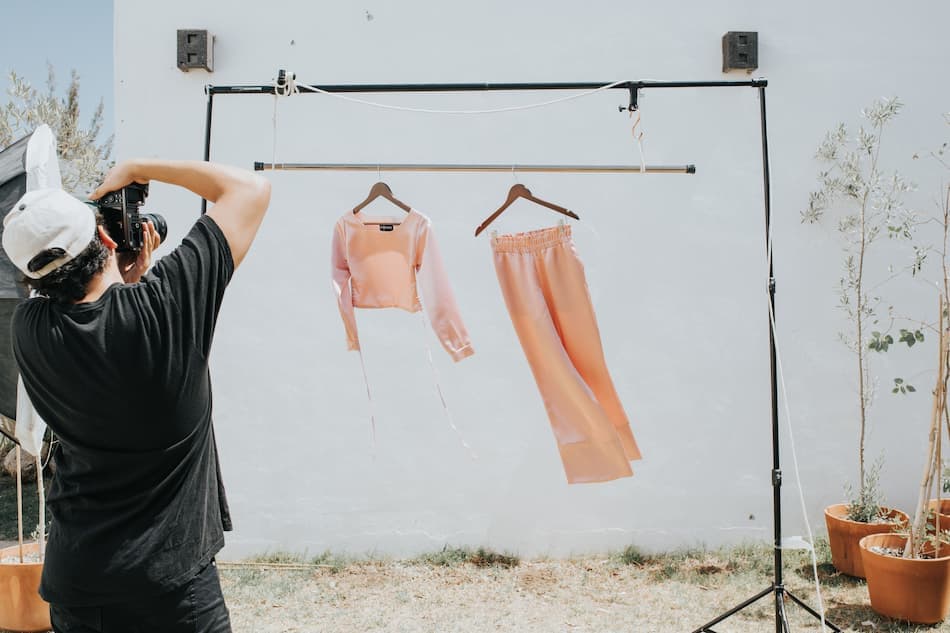
NeoFashion.ai is designed to streamline the content production process for fashion retailers managing large product catalogs and frequent collection launches. Traditional fashion photography often requires extensive planning, studio bookings, photographers, models, and post-production, while AI-generated workflows can significantly reduce production timelines.

The platform enables creative, marketing, and e-commerce teams to produce new visual assets more quickly, helping brands respond faster to seasonal campaigns, product launches, and evolving consumer trends without compromising visual consistency. 

Supporting Modern Fashion Marketing

As AI adoption continues to grow across the retail and fashion industries, brands are increasingly exploring technology that enhances efficiency while protecting their creative identity. NeoFashion.ai positions its platform as a specialized solution built exclusively for fashion businesses, offering AI-generated product photography, campaign images, and video content that remain aligned with each brand’s established style.

The launch reflects the growing demand for AI-powered creative tools that support scalable content production while giving fashion companies greater control over how their products and brand image are presented across digital commerce channels.

Source

Flipkart Entered the Zero Commission Era for All Products in the Fashion Category

Flipkart

Flipkart expanded its zero commission policy to cover all fashion products in order to support sellers in the fashion category in India’s e-commerce market. The company removed the price limit in the commission exemption that was previously valid only for fashion products priced at 1,000 rupees and below. With the new application, approximately 90,000 active fashion sellers on the platform are aimed to preserve their full margins.

Price Limit Removed for Flipkart Sellers

Flipkart’s new decision includes all products in the fashion category under zero commission, regardless of price level. In the previous model, the commission exemption was applied only up to the price limit of 1,000 rupees. With this change, sellers will not pay platform commission on fashion sales, regardless of the product price.

According to the company’s statement, this step will support sellers in acting more comfortably in the areas of product variety, brand investment, and innovation while increasing their profitability. The application is expected to create significant space especially for SMEs, local brands, and D2C fashion companies selling directly to consumers.

Competition and Retail Impact in Fashion E-Commerce

Kapil Thirani, Vice President of Flipkart Fashion, described the expansion of the zero commission policy to the entire fashion category as a “seller-first” initiative. Thirani stated that this decision is a long-term investment to enable sellers to make investments in innovation, expanding their product range, and brand building more confidently.

As competition in online fashion retail increases in India, steps by marketplaces to reduce seller costs are also coming to the fore. Flipkart’s commission move aims to enable sellers to list more products on the platform, increase category diversity, and offer consumers a wider fashion selection.

Flipkart Strengthens Its Digital Marketplace Infrastructure

Founded in 2007, Flipkart has more than 500 million registered users and more than 1.4 million sellers. With its new commission model, the company aims to increase seller participation in the fashion category and strengthen its position in the digital retail ecosystem. The removal of commission costs stands out as an important change in terms of seller economics, pricing, product visibility, and data-driven category management on e-commerce platforms. Flipkart’s new model in the fashion category is positioned as a new retail step that supports the growth plans of marketplace sellers.