Syria e-commerce is entering a new growth phase as digital payments, foreign investment and new platforms reconnect the country with global commerce.
Syria’s e-commerce market is entering a new phase as the country reconnects with international payment systems, attracts fresh Gulf investment and begins rebuilding its digital economy after more than a decade of isolation.
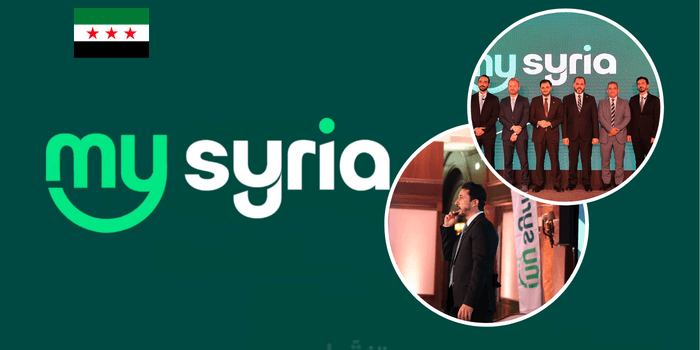
One of the clearest signs of this shift is the launch of My Syria, a new digital platform that enables users to book services and make international card payments inside the country.
The platform, launched in Damascus in August, reportedly attracted 12,000 active users in its first 15 days, highlighting early demand for digital services in a market that remains heavily dependent on cash.
Syria reconnects with digital payments
For more than a decade, one of the biggest barriers to e-commerce in Syria has been limited access to international payment networks.
Visa and Mastercard operations were largely absent from the Syrian market after sanctions and financial restrictions intensified from 2011 onwards.
That situation is now gradually changing.
Mastercard signed an agreement with the Central Bank of Syria in 2025 as part of efforts to restore card payment infrastructure, while banking and payment companies have begun exploring opportunities to re-enter the market.
The return of international payment services could prove particularly important for Syria e-commerce, allowing local businesses to accept online payments from both domestic and international customers.
A new digital consumer market is emerging
My Syria currently provides eight services, including hotel reservations, car rentals, holiday-home bookings and tourism experiences.
The company plans to expand to around 40 services and eventually operate across the country.
The model reflects a broader opportunity in Syria: bringing traditionally offline and cash-based services into a digital marketplace.
For Syrian consumers, this could simplify access to services and payments. For businesses, it could create new digital sales channels and improve access to foreign customers.
The development is particularly relevant for sectors such as tourism, transportation, accommodation, retail and logistics.
Tourism could accelerate e-commerce adoption
Syria’s tourism sector is already showing signs of recovery.
Visitor arrivals reportedly reached 3.52 million in the first half of 2026, up from 1.67 million during the same period a year earlier.
As international visitors return, demand for online booking, card payments and digital service platforms is expected to increase.
This could make tourism one of the first sectors to accelerate digital payment adoption in Syria.
For foreign visitors in particular, the ability to reserve hotels, transport and experiences online could help reduce one of the major friction points of travelling in a predominantly cash-based economy.
Gulf investment strengthens Syria’s recovery
The growth of Syria’s digital economy is taking place alongside a broader increase in foreign investment.
Gulf investors committed an estimated $28 billion to Syria in 2025, while UAE-based logistics company DP World announced an $800 million investment linked to a 30-year concession for the Port of Tartous.
Economic ties between Syria and the UAE have also expanded.
UAE Minister of Foreign Trade Dr Thani Al Zeyoudi led a business delegation to Damascus as both countries moved to deepen commercial relations.
These developments are important for e-commerce because the growth of digital trade depends not only on online marketplaces but also on banking, logistics, payments and cross-border infrastructure.
A major market remains to be rebuilt
Despite the positive momentum, Syria’s digital economy remains in its early stages.
Large parts of the economy are still cash-based, while banking infrastructure and compliance systems require significant modernization.
The wider reconstruction challenge is also substantial.
The World Bank estimates Syria’s reconstruction needs at around $216 billion, underlining the scale of investment required across infrastructure, logistics, financial services and technology.
For e-commerce companies and technology investors, however, this also creates a potentially significant long-term opportunity.
Syria represents a market where much of the digital infrastructure still needs to be built.
Syria e-commerce enters a new phase
The launch of platforms such as My Syria should therefore be viewed as part of a wider transformation rather than simply the arrival of another mobile application.
The return of international payments, rising tourism, stronger Gulf investment, and improving commercial links are gradually creating the conditions for a functioning digital economy.
If banking connectivity and payment infrastructure continue to improve, Syria e-commerce could become one of the most closely watched emerging digital markets in the region.
For international marketplaces, payment providers, logistics companies and technology investors, Syria’s reopening may offer an early-stage opportunity in a market that is only beginning to reconnect with global commerce.