WORLDEF Prime Antalya 2026 — Super Early Bird Discounts

Register Now

Russia’s E-Commerce Warehouses Became Targets of War: 8 Dead, 60 Injured

e-commerce warehouse

Two major e-commerce warehouses belonging to Wildberries, one of Russia’s largest online retailers, were targeted in drone attacks carried out by Ukraine. Eight people were killed and more than 60 were injured in fires that broke out at logistics centers in the Moscow and Tambov regions.

E-Commerce Warehouses Struck in Two Different Regions

One of the attacks on the e-commerce warehouses took place in the city of Kotovsk in the Tambov region, approximately 360 kilometers from the Ukrainian border. The other attack targeted a Wildberries logistics center in the city of Elektrostal, located around 50 kilometers east of Moscow. Major fires broke out at both facilities, while footage released from Elektrostal showed thick smoke covering the sky.

Tambov Regional Governor Yevgeny Pervyshov announced that seven people working the night shift at the warehouse in Kotovsk died at the scene, while 25 others were injured. Pervyshov stated that 28 drones approaching the facility were shot down by air defense systems.

According to Moscow Regional Governor Andrei Vorobyov, dozens of people were injured in the attacks in and around Elektrostal. One of the injured later died in hospital. Drone debris also struck a kindergarten and caused a fire.

Statement on Drone Production and Navigation Equipment

Ukrainian President Volodymyr Zelensky confirmed that two major logistics facilities in the Moscow and Tambov regions were hit in the attacks. Zelensky claimed that the centers were used to supply sanctioned components used in drone production and navigation equipment. Ukraine also announced that it had targeted an oil facility in Noginsk that it said supplied fuel to the Russian military.

Wildberries Co-Founder and CEO Tatyana Kim described the attacks as a “terrible night” for both the company and Russia, and offered her condolences to the families of those who lost their lives. The company reported that the fire in Kotovsk had been brought under control. (e-commerce warehouse)

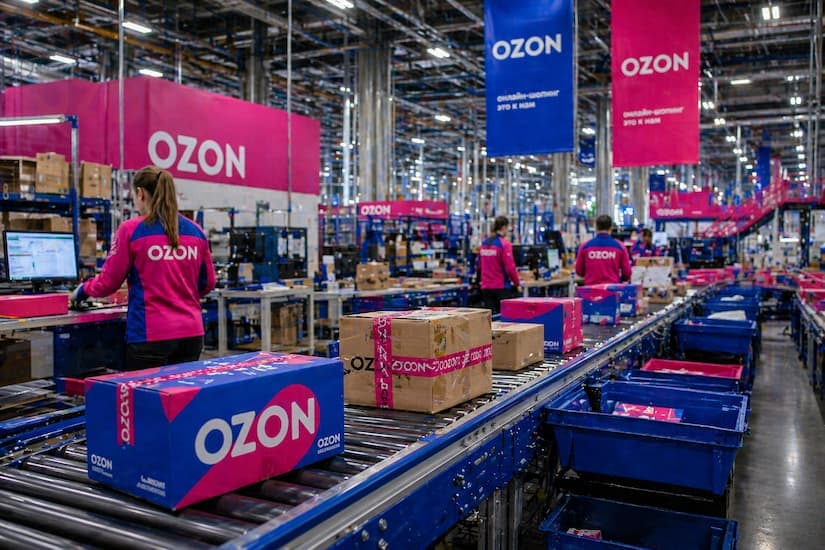
Ozon Global Shares Strong Growth and New Seller Opportunities in Latest Update

Ozon Global Shares Strong Growth and New Seller Opportunities in Latest Update

Ozon Global Türkiye has announced a series of platform updates and performance highlights, reinforcing its rapid expansion and growing appeal among international sellers, particularly from Türkiye.

The company reported that 2025 marked a strong growth year, with total revenue reaching approximately $49.99 billion, representing a 45% increase year-over-year. At the same time, the total number of delivered orders climbed to 2.48 billion, up 69%, while average annual orders per customer rose to 38, reflecting stronger user engagement.

Marketplace Momentum Continues

The platform’s growth is also visible in seller performance. Turkish merchants recorded a 48% increase in revenue, highlighting rising cross-border demand and the effectiveness of Ozon’s marketplace tools.

In addition, the company strengthened its position in the regional tech ecosystem, ranking second among Russia’s most valuable internet companies, with a valuation of around $28 billion.

As one of the leading multi-category e-commerce platforms in the region, Ozon continues to leverage its extensive logistics network and marketplace infrastructure to expand internationally and attract new sellers.

New Logistics and Seller Tools

To further support cross-border commerce, Ozon Global introduced a new air cargo delivery channel via TT Express TR, enabling faster shipments from Türkiye to Russia.

Alongside logistics improvements, the company launched updated seller onboarding guides, focusing on product listing optimization and logistics models such as rFBS. These resources aim to simplify entry for new merchants and improve operational efficiency.

Community Engagement and Expansion

Ozon Global is also investing in its seller ecosystem through offline engagement. A recent networking event in Istanbul brought together over 100 participants, offering insights into the Russian market and opportunities for Turkish businesses.

Strategic Outlook

With continued investment in logistics, seller enablement, and marketplace growth, Ozon Global is positioning itself as a key gateway for cross-border e-commerce between Türkiye and Russia.

The latest updates underline a clear strategy:

  • expand international seller participation
  • enhance delivery infrastructure
  • and strengthen platform usability

As global e-commerce competition intensifies, Ozon’s combination of scale, logistics capabilities, and localized seller support is expected to play a central role in its next phase of growth.

Source

Chinese Sellers Gain 1 Big Advantage on Russia’s Fast-Growing Shopping Platforms

Chinese Sellers Gain 1 Big Advantage on Russia’s Fast-Growing Shopping Platforms

Chinese sellers are expanding their presence across Russia’s fast-growing shopping platforms, as cross-border e-commerce between the two countries continues to strengthen. A new CGTN report published on April 19 highlights how Chinese merchants are finding new momentum in Russia’s online retail market, supported by rising demand, improving logistics, and a broader shift in regional trade patterns.

This trend reflects more than just marketplace growth. It shows how digital trade is becoming a practical bridge between neighboring economies at a time when supply chains, payment systems, and market access are being reshaped. Russian consumers are increasingly turning to large online marketplaces for price-competitive goods, while Chinese sellers are responding with a wider product range and faster fulfillment options.

Why Every Seller Is Targeting Russia’s E-Commerce Growth

One of the key reasons behind this growth is infrastructure. As cross-border logistics routes improve, Chinese products can reach Russian buyers faster and more reliably than before. Warehousing, customs processing, and marketplace integration are becoming more streamlined, helping sellers operate at greater scale. That operational progress matters because online retail success increasingly depends not only on product pricing, but also on delivery speed, inventory visibility, and customer trust.

The development also underlines the growing strategic role of shopping platforms in international commerce. Marketplaces are no longer just sales channels; they are becoming ecosystems that connect merchants, consumers, logistics providers, and payment networks. In the Russia-China corridor, that ecosystem is giving Chinese sellers a stronger foothold in a market that continues to adapt to new trade realities.

For the wider e-commerce industry, this story is another sign that regional digital trade corridors are becoming more influential. As businesses seek growth beyond traditional Western markets, neighboring high-demand markets with scalable marketplace infrastructure are attracting greater attention. Chinese sellers thriving on Russia’s shopping platforms is therefore not just a bilateral trade story. It is also a signal of how e-commerce is evolving into a more regional, resilient, and platform-driven model of global retail.

Source