WORLDEF Prime Antalya 2026 — Super Early Bird Discounts

Register Now

Syria E-Commerce Market Opens Up as Digital Payments Return

Syria E-Commerce

Syria e-commerce is entering a new growth phase as digital payments, foreign investment and new platforms reconnect the country with global commerce.

Syria’s e-commerce market is entering a new phase as the country reconnects with international payment systems, attracts fresh Gulf investment and begins rebuilding its digital economy after more than a decade of isolation.

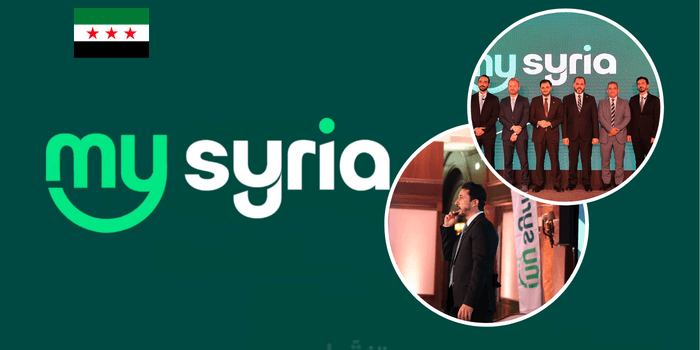
One of the clearest signs of this shift is the launch of My Syria, a new digital platform that enables users to book services and make international card payments inside the country.

The platform, launched in Damascus in August, reportedly attracted 12,000 active users in its first 15 days, highlighting early demand for digital services in a market that remains heavily dependent on cash.

Syria reconnects with digital payments

For more than a decade, one of the biggest barriers to e-commerce in Syria has been limited access to international payment networks.

Visa and Mastercard operations were largely absent from the Syrian market after sanctions and financial restrictions intensified from 2011 onwards.

That situation is now gradually changing.

Mastercard signed an agreement with the Central Bank of Syria in 2025 as part of efforts to restore card payment infrastructure, while banking and payment companies have begun exploring opportunities to re-enter the market.

The return of international payment services could prove particularly important for Syria e-commerce, allowing local businesses to accept online payments from both domestic and international customers.

A new digital consumer market is emerging

My Syria currently provides eight services, including hotel reservations, car rentals, holiday-home bookings and tourism experiences.

The company plans to expand to around 40 services and eventually operate across the country.

The model reflects a broader opportunity in Syria: bringing traditionally offline and cash-based services into a digital marketplace.

For Syrian consumers, this could simplify access to services and payments. For businesses, it could create new digital sales channels and improve access to foreign customers.

The development is particularly relevant for sectors such as tourism, transportation, accommodation, retail and logistics.

Tourism could accelerate e-commerce adoption

Syria’s tourism sector is already showing signs of recovery.

Visitor arrivals reportedly reached 3.52 million in the first half of 2026, up from 1.67 million during the same period a year earlier.

As international visitors return, demand for online booking, card payments and digital service platforms is expected to increase.

This could make tourism one of the first sectors to accelerate digital payment adoption in Syria.

For foreign visitors in particular, the ability to reserve hotels, transport and experiences online could help reduce one of the major friction points of travelling in a predominantly cash-based economy.

Gulf investment strengthens Syria’s recovery

The growth of Syria’s digital economy is taking place alongside a broader increase in foreign investment.

Gulf investors committed an estimated $28 billion to Syria in 2025, while UAE-based logistics company DP World announced an $800 million investment linked to a 30-year concession for the Port of Tartous.

Economic ties between Syria and the UAE have also expanded.

UAE Minister of Foreign Trade Dr Thani Al Zeyoudi led a business delegation to Damascus as both countries moved to deepen commercial relations.

These developments are important for e-commerce because the growth of digital trade depends not only on online marketplaces but also on banking, logistics, payments and cross-border infrastructure.

A major market remains to be rebuilt

Despite the positive momentum, Syria’s digital economy remains in its early stages.

Large parts of the economy are still cash-based, while banking infrastructure and compliance systems require significant modernization.

The wider reconstruction challenge is also substantial.

The World Bank estimates Syria’s reconstruction needs at around $216 billion, underlining the scale of investment required across infrastructure, logistics, financial services and technology.

For e-commerce companies and technology investors, however, this also creates a potentially significant long-term opportunity.

Syria represents a market where much of the digital infrastructure still needs to be built.

Syria e-commerce enters a new phase

The launch of platforms such as My Syria should therefore be viewed as part of a wider transformation rather than simply the arrival of another mobile application.

The return of international payments, rising tourism, stronger Gulf investment, and improving commercial links are gradually creating the conditions for a functioning digital economy.

If banking connectivity and payment infrastructure continue to improve, Syria e-commerce could become one of the most closely watched emerging digital markets in the region.

For international marketplaces, payment providers, logistics companies and technology investors, Syria’s reopening may offer an early-stage opportunity in a market that is only beginning to reconnect with global commerce.

Syria’s Startup Ecosystem Reaches Milestone as Labby Secures $10 Million

Syria’s Startup Ecosystem Reaches Milestone as Labby Secures $10 Million

Syria’s emerging startup ecosystem has reached a historic milestone after Damascus-based super app Labby secured $10 million in funding from a consortium of investors from the United Arab Emirates and Saudi Arabia. The investment is being described by Syrian officials as the country’s first direct foreign investment in a technology startup, signaling renewed regional confidence in Syria’s digital economy. 

Founded in 2024 by Mohammad Fawaz, Labby has rapidly positioned itself as one of Syria’s most ambitious technology companies by building an integrated digital platform designed to simplify everyday consumer services.

Building Syria’s First Super App

Labby operates as a super app, bringing together multiple services within a single platform. Its ecosystem currently includes:

  • Ride-hailing
  • Food delivery
  • E-commerce
  • Digital payments
  • Additional on-demand services

The company aims to make digital transactions more accessible while expanding technology-enabled services for consumers across Syria. 

Funding to Accelerate Expansion

The newly raised capital will be used to:

  • Accelerate product development
  • Expand digital service offerings
  • Strengthen technology infrastructure
  • Grow operations across Syria
  • Invest in talent acquisition and innovation

The funding is expected to help Labby scale its platform while supporting the country’s broader digital transformation initiatives. 

A Turning Point for Syria’s Startup Landscape

Beyond Labby itself, the investment represents a significant step for Syria’s startup ecosystem. Regional investors backing a locally developed technology company may encourage additional cross-border investments and contribute to rebuilding confidence in the country’s innovation sector.

The announcement also aligns with Syria’s recent efforts to strengthen its digital economy through initiatives supporting entrepreneurship, technology infrastructure, and startup development. 

Outlook

Labby’s $10 million funding round demonstrates growing interest from regional investors in Syria’s technology sector. As the company expands its super app and digital services, the investment could pave the way for more venture capital activity, helping accelerate innovation and digital transformation across the country.

Source

UAE and Syria Open a New Economic Chapter With First Positive Business Forum Since Assad’s Fall

UAE and Syria Open a New Economic Chapter With First Positive Business Forum Since Assad’s Fall

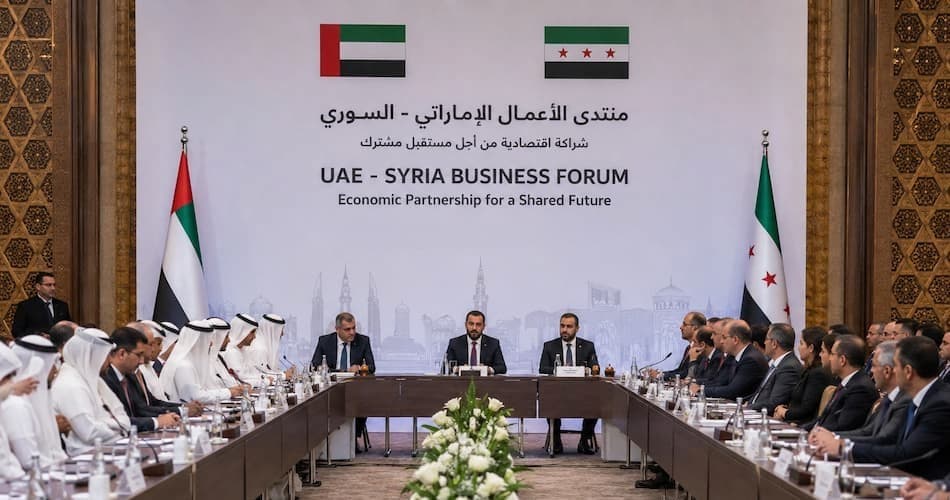
The United Arab Emirates and Syria have taken a significant step toward rebuilding economic relations with the launch of their first bilateral business forum since the fall of former Syrian president Bashar Al Assad. Held in Damascus, the forum brought together government representatives, investors, and business leaders from both countries, highlighting a renewed regional push toward economic recovery, investment, and long-term cooperation.

The event reflects a broader transformation taking place across the Middle East, where regional powers are increasingly prioritizing economic diplomacy and reconstruction opportunities in post-conflict markets. For Syria, the forum represents more than a symbolic diplomatic development, it signals an effort to reposition the country as an emerging investment destination after years of political isolation and economic instability.

Economic Cooperation Between the UAE and Syria Gains New Momentum

Delegations from the UAE explored opportunities across several sectors considered critical for Syria’s recovery, including infrastructure, logistics, construction, tourism, technology, healthcare, energy, and real estate. Syrian officials emphasized the importance of attracting foreign direct investment to help rebuild damaged industries and modernize the country’s economic foundations.

The UAE’s growing interest in Syria aligns with its broader regional strategy of expanding economic influence through trade, infrastructure, and strategic investment partnerships. Emirati companies are already reported to be assessing major projects in cities such as Damascus and Latakia, particularly in urban development and hospitality. Analysts believe Gulf-backed investments could play an important role in accelerating Syria’s reconstruction process over the coming years.

The forum also arrives at a time when regional supply chains and trade routes are undergoing significant shifts. Syria’s geographic position has historically made it a strategic gateway connecting the Gulf, the Levant, and Europe. Renewed commercial activity between the UAE and Syria could eventually strengthen logistics corridors, cross-border trade, and regional connectivity initiatives.

Beyond economics, the meeting demonstrates how business cooperation is increasingly becoming a tool for political normalization in the region. Following leadership changes in Syria in late 2024, several Middle Eastern countries have gradually reopened channels of communication with Damascus, focusing on stability, economic integration, and regional development.

For Syrian businesses, the forum provides an opportunity to reconnect with Gulf investors and re-enter regional markets after years of limited international engagement. For UAE companies, Syria offers long-term potential in sectors that require modernization, digital transformation, and infrastructure redevelopment.

While challenges including sanctions, financing conditions, and political uncertainties remain, the forum signals cautious optimism for a new phase of regional cooperation. As Gulf economies continue seeking new investment frontiers, Syria’s reconstruction could become one of the Middle East’s most closely watched economic stories in the years ahead.

Source