WORLDEF Prime Antalya 2026 - Upcoming Event

Register Now

Geopolitical Risk Pushes UK CFO Optimism to Six-Year Low

Geopolitical Risk Deloitte Report

Geopolitical risk has become the leading concern for UK finance leaders, as Deloitte’s latest CFO Survey shows weaker business optimism, sharper inflation worries, and a stronger focus on cost control.

Geopolitical risk has moved to the top of the agenda for UK chief financial officers, according to Deloitte’s latest CFO Survey for the first quarter of 2026. The survey shows that business optimism among CFOs at major UK companies has fallen to its lowest level in six years, reflecting growing concern over external uncertainty, the Middle East conflict, inflation, energy prices, and financing costs.

Geopolitical risk has become the leading concern for UK finance leaders

Deloitte’s quarterly CFO Survey has tracked sentiment and balance-sheet strategies among the UK’s largest businesses since 2007. The Q1 2026 edition points to a more cautious corporate environment, with finance leaders prioritizing resilience over expansion. According to Deloitte, geopolitical risk is now cited as the top external risk by UK CFOs, with concern reaching a record high.

The findings show how international instability is shaping business decision-making. Deloitte said the conflict in the Middle East has shaken CFO confidence, pushing optimism to levels not seen since the early stages of the COVID-19 pandemic. This suggests that geopolitical risk is no longer being treated as a distant macroeconomic issue, but as a direct business concern affecting costs, investment, margins, and planning.

For companies involved in retail, consumer goods, logistics, technology, and cross-border trade, the implications are significant. Geopolitical risk can affect business through multiple channels, including energy prices, shipping routes, supplier reliability, insurance costs, and currency volatility. Even when companies are not directly exposed to conflict zones, the wider economic impact can influence operational costs and consumer demand.

Deloitte’s survey also shows that concerns over inflation and interest rate rises have increased sharply. This is important because higher inflation can raise input costs, while higher financing costs can limit investment appetite. For CFOs, this creates a difficult balance: companies need to protect margins and cash flow while still investing in digital transformation, supply chain resilience, and long-term competitiveness.

Cost control and building up cash are now at the top of the priority list for finance leaders. This indicates a shift toward defensive corporate strategies. Rather than focusing mainly on aggressive growth, many CFOs appear to be preparing for a period of continued uncertainty. In practice, this may mean tighter budgeting, closer review of capital expenditure, delayed hiring plans, and stronger attention to working capital.

The focus on cash conservation also reflects the pressure created by geopolitical risk and tighter financial conditions. When external shocks become more difficult to predict, companies tend to value liquidity. Cash reserves provide flexibility if demand weakens, borrowing becomes more expensive, or supply chains face disruption.

For the retail and e-commerce sectors, the survey’s findings are especially relevant. Retailers are exposed to consumer confidence, logistics costs, import prices, and discretionary spending patterns. If geopolitical risk continues to push energy prices higher or disrupt trade routes, retailers may face higher operating costs. At the same time, consumers under inflationary pressure may reduce spending on non-essential categories.

However, a more cautious CFO environment does not necessarily mean that companies will stop investing. Instead, investment priorities may become more selective. Businesses are likely to favor projects that improve efficiency, reduce costs, strengthen supply chains, or produce measurable returns. In retail and e-commerce, this could support investment in automation, demand forecasting, inventory optimization, payments, and customer data systems.

Deloitte’s findings also suggest that corporate leaders are adapting to a world in which uncertainty has become a normal part of decision-making. Geopolitical risk, inflation, and financing costs are now closely connected in corporate planning. CFOs are not only assessing revenue growth, but also the resilience of their operating models.

The survey points to a business climate in which finance leaders are more cautious, but not necessarily inactive. The key difference is strategic discipline. Companies may continue to pursue growth, but with greater scrutiny over costs, capital allocation, and risk exposure.

Overall, Deloitte’s Q1 2026 CFO Survey shows that geopolitical risk is reshaping the corporate outlook in the UK. With optimism at a six-year low and external concerns at record levels, finance leaders are focusing on balance-sheet strength, cost control, and cash preservation. For global businesses, the message is clear: growth strategies in 2026 will need to be built around resilience as much as expansion.

Amazon’s Major Investment Move of Over 17 Billion Euros in the United Kingdom

Amazon

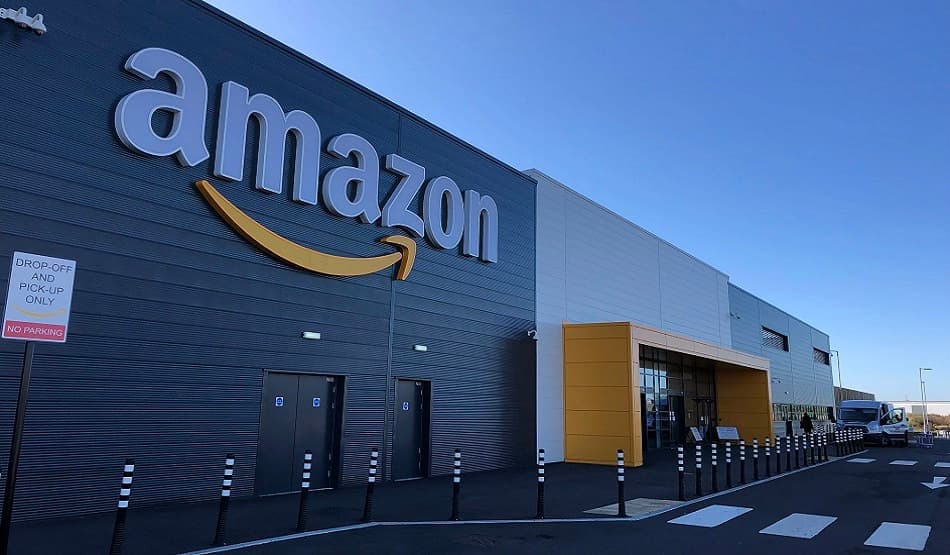
As Amazon accelerates its growth strategy in Europe, it is also increasing its investments in the United Kingdom. In 2025, the company invested more than 17 billion euros in the country, strengthening its logistics infrastructure and supporting its employment creation targets.

According to the data announced by Amazon, the United Kingdom is the company’s third-largest market globally after the United States and Germany. While the revenue generated from the company’s operations in the country exceeded 34 billion euros in 2025, the taxes it paid also increased by 20 percent year-on-year, exceeding 1.5 billion euros.

Amazon Will Establish New Distribution Centers in the UK

In line with the investment plan it had previously announced, Amazon aims to invest a total of 46 billion euros in the United Kingdom by the end of 2027. Within this scope, four new logistics and distribution centers will be established in the central and northern regions of England.

The company plans to provide additional employment for thousands of people once the new facilities become operational. Amazon, which currently directly employs approximately 75,000 people across the United Kingdom, stands out as one of the country’s largest private sector employers.

Strengthening Its Logistics Network in Europe

The United Kingdom investment is seen as an important part of Amazon’s expansion strategy across Europe. The company had recently announced that it would invest 15 billion euros in France over a three-year period. Within the scope of this investment, new distribution centers will be established and logistics infrastructure will be developed.

While the increasing investments strengthen Amazon’s competitiveness in the European market, they are also expected to make a significant contribution to the region’s e-commerce and logistics ecosystem. In particular, investments in warehousing, distribution, and technology infrastructure are expected to further increase the company’s operational efficiency in the coming years.

Fulfilmentcrowd Expands into 7 European Fulfilment Centers with Fulfilment.nl Acquisition

Fulfilmentcrowd Expands into 7 European Fulfilment Centers with Fulfilment.nl Acquisition

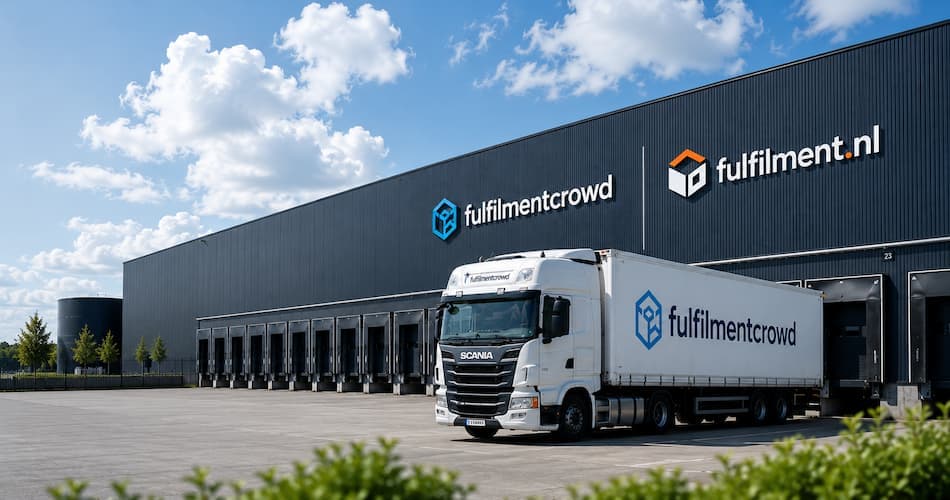
UK-based logistics technology company fulfilmentcrowd has acquired Dutch ecommerce logistics specialist Fulfilment.nl as part of its strategy to accelerate European expansion and strengthen cross-border fulfilment capabilities across the EU.

The acquisition marks another major milestone for fulfilmentcrowd, which is backed by private equity firm Palatine. With the addition of Fulfilment.nl, the company’s European fulfilment network now expands to seven fulfilment centers, supporting ecommerce brands looking to scale internationally with faster and more localized delivery solutions.

According to the company, the Netherlands was selected as a strategic expansion market due to its role as one of Europe’s most important logistics hubs. Fulfilment.nl brings local operational expertise, strong customer relationships, and scalable logistics infrastructure to the growing fulfilmentcrowd ecosystem.

Fulfilmentcrowd Strengthens European Ecommerce Logistics Network

The deal reflects a broader trend in the ecommerce logistics sector, where fulfilment providers are racing to build pan-European networks capable of supporting omnichannel retail growth and cross-border commerce. Industry observers say demand for localized inventory management and faster EU-wide delivery is increasing rapidly as ecommerce brands seek more efficient international operations.

fulfilmentcrowd stated that the partnership will combine:

  • Local market expertise
  • Advanced fulfilment technology
  • Expanded EU delivery capabilities
  • Scalable logistics infrastructure

The company also welcomed Fulfilment.nl founder Robin Gerrits, General Manager Mart van der Heijden, and the broader Dutch team as part of the acquisition.

The acquisition follows several recent expansion moves by fulfilmentcrowd, including new fulfillment locations in the United States and leadership team changes aimed at supporting global growth ambitions.

Source

E-Commerce Under Pressure: Why 1 Retailer Is Shutting Down Its Online Store

E-Commerce Reality Check: Why 1 Retailer Is Shutting Down Its Online Store

The decision by UK retailer The Works to exit e-commerce is drawing attention across the retail industry, highlighting a growing shift toward profitability over digital expansion.

After more than a decade of online operations, the company has chosen to close its e-commerce channel and refocus entirely on its physical store network – a move that challenges the assumption that online retail is always essential for growth.

Why The Works Is Leaving E-Commerce

The Works first launched its e-commerce platform in 2012, but online sales never became a core revenue driver. More than 90% of total sales continued to come from physical stores, reflecting strong in-store customer demand.

At the same time, maintaining an online operation introduced ongoing challenges, including:

  • high operational costs
  • dependency on third-party logistics
  • complexity in managing fulfillment

Over time, these factors made it difficult for the company to achieve sustainable profitability online.

Refocusing on What Works

By exiting e-commerce, the retailer aims to simplify its business model and improve financial performance. The move is expected to reduce costs and allow the company to concentrate on its strongest channel – its extensive store network.

Rather than serving as a transactional platform, the company’s website will now act as a product browsing tool, encouraging customers to visit physical stores to complete purchases.

A Strategic, Not Emotional Decision

Industry insight suggests that this move has been under consideration for some time. For retailers operating on tight margins, e-commerce can introduce more pressure than value if not executed at scale.

In such cases, focusing on a store-led strategy can offer:

  • greater control over costs
  • improved margins
  • stronger customer engagement in physical locations

A Wider Signal for Retail?

While global e-commerce continues to expand, The Works’ decision reflects a more nuanced reality:

👉 Digital is not always profitable
👉 Omnichannel is not always necessary

Retailers are increasingly reassessing whether their digital channels truly support long-term growth – or simply add complexity.

What This Means for E-Commerce

The closure of The Works’ online store does not signal a decline in e-commerce itself, but rather a shift toward more disciplined, profit-driven strategies.

As the retail landscape evolves, businesses are moving away from “being everywhere” toward focusing on channels that deliver real value.

For some, that may still be digital-first.
For others, like The Works, the answer is clear – back to stores.

Source: InternetRetailing