
JD.com Opens Seoul Buying Office to Expand Korean Product Sourcing
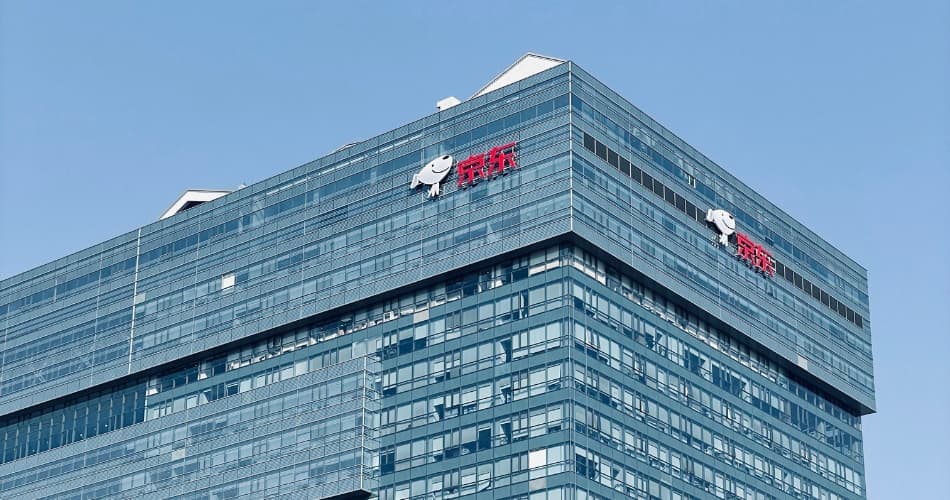
China’s e-commerce giant JD.com has opened a direct sourcing office in Seoul as it seeks to expand its procurement of Korean consumer goods and respond to growing demand for Korean products among Chinese shoppers.
The new purchasing unit marks a deeper integration between Korean brands and China’s rapidly expanding digital retail ecosystem, while offering Korean exporters a more direct route to reach Chinese consumers.
Korean Consumer Goods Exports Rebound
The move comes as Korean consumer-goods exports show signs of recovery following several years of post-pandemic weakness.
Shipments across five major categories, cosmetics, food, fashion, household goods and pharmaceuticals, increased 8.7% year-on-year to $3.44 billion in the first half of 2026, compared with $3.16 billion during the same period a year earlier, according to Korea Customs Service data cited by The Korea Times.
Trade officials see China’s digital commerce platforms as an increasingly important channel for Korean brands seeking to rebuild their presence in the market.
JD.com, alongside platforms such as Douyin and Alibaba, is becoming part of a broader shift toward direct digital distribution rather than relying exclusively on traditional export intermediaries.
JD.com Signs $1.5 Million in Supply Deals
To mark the opening of its new Seoul purchasing unit, Korea’s Ministry of Trade, Industry and Resources and the Korea Trade-Investment Promotion Agency (KOTRA) hosted a business matchmaking event with JD.com executives.
The delegation included 12 senior JD.com executives, led by Vincent Yang, the company’s vice chairman and head of cross-border business.
Around 200 Korean consumer brands participated in the event, where JD.com conducted 54 one-on-one procurement meetings.
Following the meetings, JD.com signed supply contracts with nine Korean companies worth a combined $1.5 million over the next year.
Among the companies was fashion brand Reclow, which will sell its apparel through a self-operated flagship store on JD.com. Jewelry brand Lloyd was also among the businesses entering supply agreements with the Chinese platform.
For Korean SMEs, direct platform integration could help reduce some of the logistical, payment and market-entry challenges associated with exporting to China.
China’s E-Commerce Market Creates New Opportunities
China’s online retail sector has expanded significantly in recent years.
Online sales accounted for around 30% of China’s total retail market in 2020, but that share has now risen to more than 44%, highlighting the growing importance of digital channels in reaching Chinese consumers.
Changing consumer behavior is also influencing the types of products Korean companies are bringing to the Chinese market. Value-conscious spending, demographic changes and the continued shift toward online shopping are encouraging brands to adapt their products and sales strategies.
For Korean exporters, selling directly through major Chinese platforms can provide access to established digital infrastructure and a large consumer base without depending entirely on conventional distribution networks.
JD.com Plans Dedicated Korean Goods Section
JD.com plans to expand a dedicated section for Korean products on its platform and work with KOTRA to identify additional Korean companies with export potential.
The platform already operates a logistics entity in Korea that provides customs and fulfillment services, giving Korean sellers access to infrastructure that can support cross-border transactions.
Kim Min-hwa, head of JD.com’s Korea office, said Korean consumer goods continue to perform steadily on the platform, citing their quality and appeal among Chinese consumers.
The company’s expanded sourcing operation could therefore provide Korean brands with a more structured route into JD.com’s marketplace.
Direct Platform Integration Becomes More Important
KOTRA is increasingly emphasizing direct purchasing relationships between Korean exporters and major Chinese e-commerce platforms.
The strategy reflects a broader transformation in cross-border commerce, where marketplaces are moving beyond simply providing a digital storefront and are becoming more closely involved in sourcing, logistics, fulfillment and international distribution.
For Korean SMEs, these relationships could create more predictable order flows while lowering some of the operational barriers traditionally associated with entering overseas markets.
JD.com’s Seoul sourcing office represents another step toward this model, connecting Korean manufacturers directly with one of the world’s largest e-commerce ecosystems.
As Chinese consumers continue to shift their spending online, closer integration between Korean suppliers and Chinese digital platforms could become an increasingly important driver of cross-border trade.
Source: The Korea Times
Read more on
About the author
Leila Gadirli Pirgulieva
253 stories on WORLDEF since March 2026.
More from Leila Gadirli Pirgulieva →Related
Kyrgyzstan Partners With Chinese Firm to Build New E-Commerce Platform

Alo Launches Exclusive E-Commerce Platform in China via Tmall

EU Regulators Challenge JD.com’s $2.5B Economy Acquisition

$527M Crackdown: China Imposes Record Fines on 7 E-Commerce Giants Over Food Safety Violations
The week in commerce, before your competitors.
1,452 stories since January 2025, distilled into three newsletters. Pick the ones you want.