
Nigeria’s Role in $216B Digital Economy Signals Positive Growth for West Africa
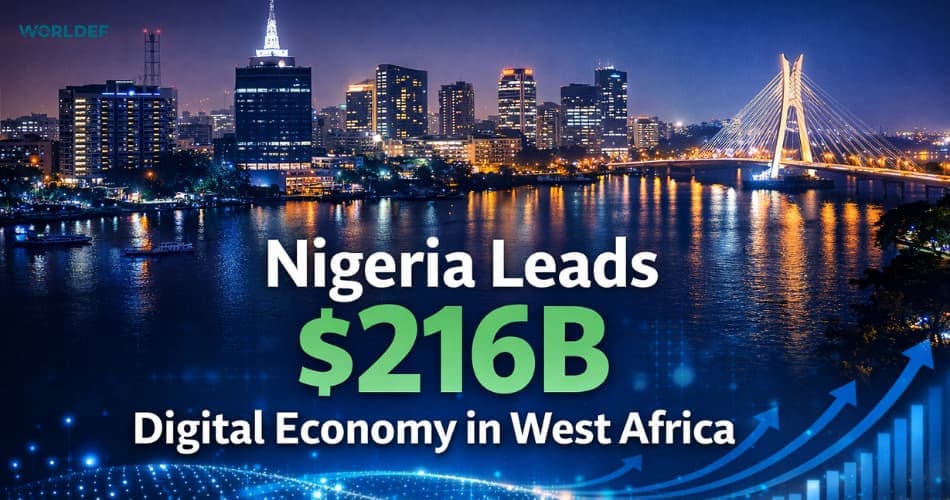
West Africa’s digital economy is rapidly expanding, now valued at an estimated $216 billion, with Nigeria emerging as the dominant force driving this growth. The development highlights the region’s increasing importance in the global digital landscape, as governments and regulators push for stronger coordination and innovation.
According to recent reports, Nigeria accounts for the largest share of digital activity in the region, supported by its population size, growing tech ecosystem, and expanding mobile connectivity. As the biggest economy in West Africa, the country continues to lead in areas such as fintech, e-commerce, and digital services, positioning itself as a regional hub for innovation.
This momentum is being reinforced by the efforts of the West Africa Telecommunications Regulators Assembly (WATRA), which is working to create a more unified and secure digital environment across its member states. Through regulatory alignment and collaboration, WATRA aims to unlock further growth potential and ensure that digital transformation benefits both businesses and consumers across the region.
Nigeria Leads West Africa’s Digital Economy Expansion
A key driver behind this growth is the rapid adoption of mobile technologies and digital financial services. Across West Africa, mobile connectivity continues to expand, enabling millions of users to access online platforms, digital payments, and e-commerce services. These technologies are not only improving financial inclusion but also creating new opportunities for startups and entrepreneurs.
Nigeria, in particular, has seen strong growth in fintech and digital platforms, attracting both local and international investment. The country’s digital ecosystem is increasingly supported by innovation hubs, government initiatives, and a young, tech-savvy population eager to engage with new technologies.
At the same time, regional cooperation is becoming more critical. WATRA’s recent initiatives focus on building a secure, inclusive, and resilient digital ecosystem, addressing key areas such as cybersecurity, 5G deployment, and infrastructure development. These efforts are essential for ensuring sustainable growth and reducing fragmentation across markets.
However, challenges remain. Regulatory differences, infrastructure gaps, and cybersecurity risks continue to pose barriers to full digital integration across West Africa. Addressing these issues will require ongoing collaboration between governments, regulators, and private sector stakeholders.
Looking ahead, the outlook remains highly positive. As digital technologies continue to evolve, West Africa is expected to play an increasingly important role in the global economy. With Nigeria leading the charge, the region’s $216 billion digital economy represents not just current growth, but a foundation for long-term transformation in commerce, finance, and connectivity.
Read more on
About the author
Leila Gadirli Pirgulieva
253 stories on WORLDEF since March 2026.
More from Leila Gadirli Pirgulieva →Related
E-Commerce Faces Checkout Challenge as 3 Payment Options Drive 30% More Conversions

Türkiye Plans $200B Energy Investment by 2035 to Expand Renewables and Modernize Grid
Latin American E-Commerce Market Projected to Reach $215 Billion in 2026

Kyrgyzstan Partners With Chinese Firm to Build New E-Commerce Platform

The week in commerce, before your competitors.
1,466 stories since January 2025, distilled into three newsletters. Pick the ones you want.