
Temporary Trade Corridor in Hormuz for Gulf Countries: Iran and Oman Prepare a New Transit Plan

Following weeks of negotiations with Oman, Iran is preparing to present Gulf countries with a temporary maritime corridor plan that would allow limited commercial vessel passage through the Strait of Hormuz. The new arrangement in the strait, which is one of the key transit points for regional trade and energy shipments, envisages the controlled passage of certain vessels rather than the full reopening of the waterway.
Iran to Retain Control Over the Temporary Corridor in Hormuz
Under the plan, Hormuz will not be fully reopened. While Iran is expected to maintain control over which vessels are allowed to pass, Tehran and Muscat will continue discussions on the details of the arrangement, including possible fees to be charged to ships using the corridor. Iranian Foreign Minister Abbas Araghchi had described the planned regional meeting as an important step in the confidence-building process.
Oman had planned to bring together the foreign ministers of Gulf Cooperation Council countries in Salalah. However, Omani Foreign Minister Badr Albusaidi announced that the meeting had been postponed in order to achieve regional consensus. Iranian officials also stated that Tehran and Muscat would continue coordinating to determine a new date for the meeting.
Diplomatic Activity Accelerates in the Gulf
The process came to the agenda following a meeting between Abu Dhabi Crown Prince Sheikh Khaled bin Mohamed bin Zayed Al Nahyan and Iranian President Masoud Pezeshkian on the sidelines of the BRICS Summit in India. During the meeting, both sides emphasized the need to reduce regional tensions and strengthen stability. Bahrain, meanwhile, had announced that it would not attend the planned regional meeting, citing Iran-backed attacks.
As pressure on Hormuz continues, Saudi Arabia temporarily shut down the 1,200-kilometer East-West oil pipeline, which bypasses the strait, following a drone attack. The pipeline had recently been used as one of the alternative export routes, carrying approximately 4 to 5 million barrels of oil per day.
Alternative Routes Gain Importance in E-Commerce and Retail Logistics
According to the World Trade Organization, following disruptions linked to Hormuz, global transportation companies have introduced multimodal logistics solutions combining sea, road, and rail in order to maintain access to Gulf markets. DHL also states that disruptions in the region are affecting delivery times, freight rates, fuel costs, and insurance expenses. This process also includes e-commerce and retail operations that depend on international shipments.
During the same period, the use of artificial intelligence-supported planning tools is also expanding in the logistics sector. Maersk states that artificial intelligence has begun to be used in demand forecasting, inventory planning, routing decisions, and delivery date predictions, while real-time visibility and decision support are becoming particularly prominent in e-commerce logistics. In this way, the commercial transportation agenda around Hormuz is progressing alongside alternative logistics networks and digital supply chain applications.
Read more on
Related
Saudi Arabia, UAE and Oman Activate New Cargo Routes to Counter Strait of Hormuz Risks

Shipping Resumes Between Iran and UAE as Direct Cargo Routes Reopen
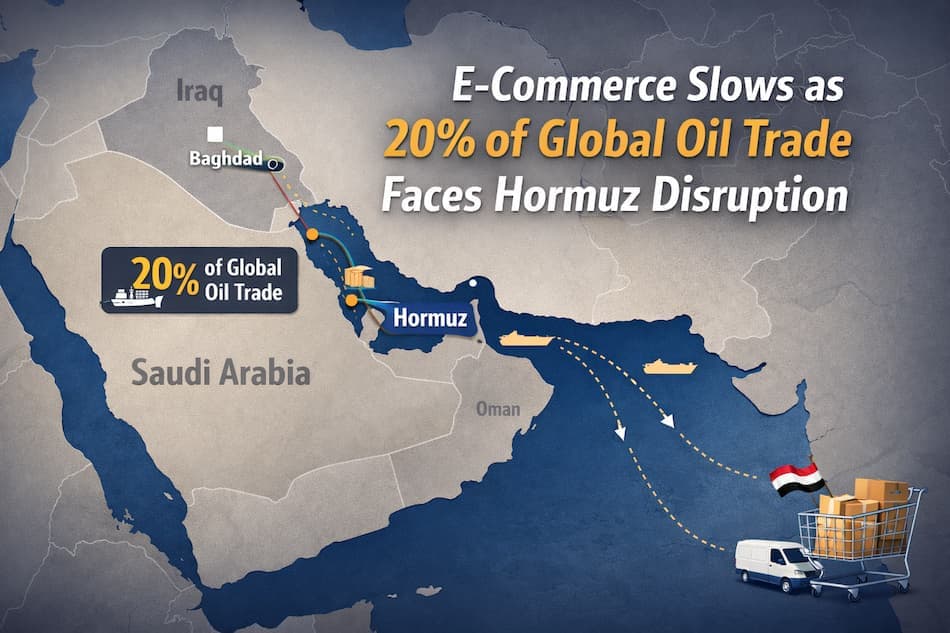
E-Commerce Hit by Hormuz Crisis as 20% of Global Oil Trade Is Affected
Number of Counterfeit Products Seized in the EU Hits Record 196 Million
The week in commerce, before your competitors.
1,473 stories since January 2025, distilled into three newsletters. Pick the ones you want.