De Minimis Import Exemption Ends August 29
The United States will eliminate its longstanding de minimis tariff exemption on August 29, ending duty‑free import treatment for all packages valued at $800 or less.

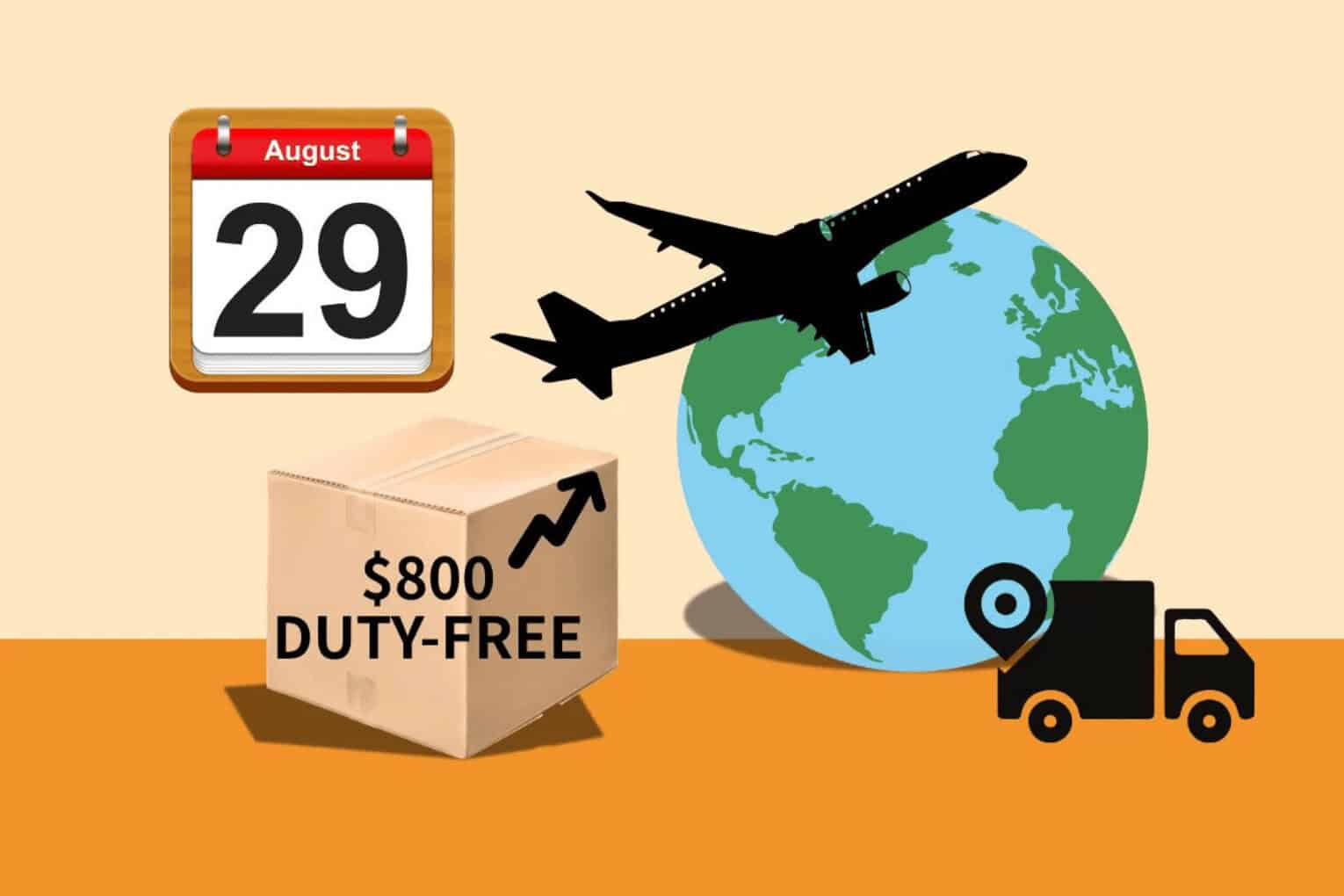
The United States will eliminate its longstanding de minimis tariff exemption on August 29, ending duty‑free import treatment for all packages valued at $800 or less. The change, enacted by an executive order from President Trump, expands beyond a previous focus on China and Hong Kong, making the policy global in scope. Previously, low‑value goods could enter the U.S. without duties, but this exemption has now been revoked due to concerns about smuggling, tariff avoidance, and public safety risks (AP News).
What Is the De Minimis Rule and Why Is It Ending?
Originally introduced in the 1930s and raised to an $800 threshold in 2016, the de minimis rule was intended to streamline customs operations. It allowed many consumer goods to enter without duties, accounting for roughly 1.36 billion shipments valued at $64.6 billion in 2024 alone. However, critics have long argued that it became a tool for illicit use, including the import of illicit substances and unsafe products, while eroding domestic retail businesses’ competitiveness.
President Trump described the exemption as a “big scam” that harmed American interests. The policy’s removal comes amid efforts to tighten trade enforcement, address manufacturing competition, and combat drug smuggling, including synthetic opioids shipped through low‑value parcels .
New Tariffs and Fees on Small Imports
Under the new policy, all packages valued at $800 or less will now be subject to either standard ad valorem tariffs or a temporary flat fee ranging from $80 to $200 per package. The flat‑fee structure, applied by postal carriers, will be in place for six months as a transitional measure. After that, only percentage‑based tariffs will apply. Exceptions remain for personal gifts under $100 and in‑person imports up to $200 (AP News.)
Postal and Shipping Disruptions Worldwide
International postal and logistics providers have already responded. In Europe, Asia, and Australia, several postal services including Royal Mail and Australia Post—have suspended or modified shipment routes to the U.S., citing insufficient time to adapt to new customs procedures (AP News). These disruptions affect both commercial imports and individual shipments, particularly from small and medium‑sized sellers.
Retailers and Payment Platforms Respond
Companies that rely on low‑cost e commerce goods, such as Shein and Temu, have started adjusting prices or reducing deliveries to the U.S. market. Some retailers have suspended U.S. shipping until clarity emerges around customs processes (WSJ).
Adyen, a European fintech provider, projected significant financial pressure due to the change. The company warned that the tariff revision would negatively affect its Asia‑Pacific clients selling into the U.S., leading it to temper its full‑year revenue expectations and triggering an approximate 18 percent drop in its stock value.
Shifts in Import Strategies and Trade Infrastructure
To manage increased charges and delays, many e‑commerce providers and importers are turning to U.S. Foreign Trade Zones (FTZs). These zones allow imports to be stored duty‑free until they are needed for sale. Logistics firms like ShipBob have doubled their FTZ storage capacity, enabling companies to defer duty payments until sale and reduce administrative burdens (WSJ).
Consumer Impact and Advice
Consumers should prepare for rising prices and potential delays, especially during the holiday shopping season. Courtney Griffin of the Consumer Federation of America notes that many packages are expected to take longer due to added customs scrutiny. Experts recommend purchasing domestically, reviewing shipping policies for added fees, and guarding against scams.
Lori Wallach, of the American Economic Liberties Project, adds that increased inspections resulting from the elimination of the de minimis rule will enhance safety and compliance, even if it means short‑term inconvenience.
Legal and Regulatory Background
Earlier in 2025, U.S. Customs and Border Protection (CBP) issued proposed regulatory changes to tighten de minimis use. Shipments under $800 covered by tariffs—such as Section 201, 232, or 301 duties would be disallowed from the exemption, and importers must include 10‑digit tariff classifications when importing under the basic process. Additionally, a new “enhanced entry process” requiring advance electronic data was introduced provisionally.
These proposals aimed to close loopholes exploited by e‑commerce platforms and address enforcement gaps while maintaining consumer protections.