
Innovation Clusters 2025: Mapping Global and Regional Leaders
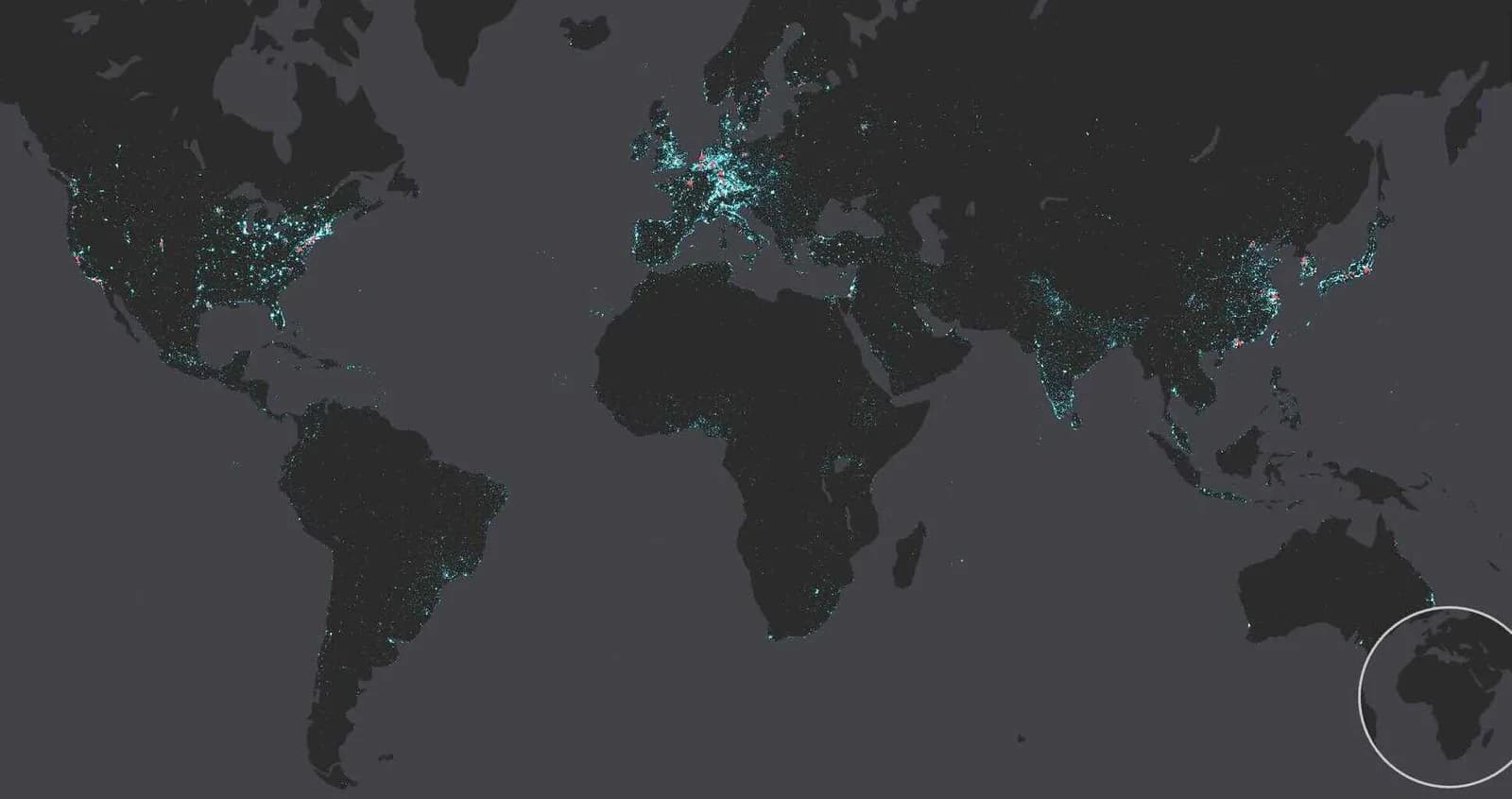
The Global Innovation Index 2025 highlights once again the centrality of East Asia and North America in the world’s innovation geography. The top five clusters alone generate nearly 20% of all international patent applications…
Innovation Clusters 2025: Mapping Global and Regional Leaders
The Global Innovation Index (GII) 2025 reaffirms that innovation is increasingly concentrated in metropolitan clusters that bridge research, entrepreneurship, and investment. The world’s top 100 clusters now account for nearly 70% of global patent filings and venture capital activity, underlining their role as engines of economic transformation. Innovation Clusters 2025
Global Top Five: Asia and Silicon Valley Lead
The world’s most dynamic hubs remain firmly in East Asia and North America. Thanks to its strength in venture capital, Shenzhen-Hong Kong-Guangzhou takes the top spot, edging out Tokyo-Yokohama. San Jose-San Francisco holds third place, with Beijing and Seoul completing the global top five. Together, these clusters generate almost one in every five international patent applications. Other global climbers include New York City (7th), London (8th), and Los Angeles (10th), reflecting how the inclusion of VC data reshaped the rankings in favour of highly financialised ecosystems.
| Rank Global | City / Cluster | Notes |
|---|---|---|
| 1 | Shenzhen, Hong Kong, Guangzhou (China / Hong Kong) | Cross-border giant, now the world’s top cluster; strong in patents and VC. |
| 2 | Tokyo, Yokohama (Japan) | Japan’s largest innovation hub, leading in patent filings and scientific output. |
| 3 | San Jose, San Francisco (United States) | Silicon Valley powerhouse, unrivaled in venture capital deal activity. |
| 4 | Beijing (China) | Research and tech hub driven by Tsinghua University and major tech firms. |
| 5 | Seoul (Republic of Korea) | Anchored by Samsung and Seoul National University; strong corporate R&D and publications. |
Türkiye and MENA in the Rankings
Tel Aviv, Jerusalem (19th) continues to lead in the Middle East and North Africa, underscoring Israel’s strong research-commercialisation pipeline. The Cairo cluster (83rd) represents Africa’s only top-100 hub, marking Egypt’s growing R&D and startup base. For Türkiye, Istanbul ranks 58th, led by Arçelik and Istanbul Technical University as top applicants and research anchors. This positions Istanbul as the only Turkish cluster in the global top 100, but one with significant symbolic weight for linking European and Middle Eastern innovation corridors. Innovation Clusters 2025
Iran’s Tehran (63rd) also consolidates its place. At the same time, Saudi Arabia’s Riyadh narrowly missed the top 100, ranked 101st, a sign of momentum in the GCC as the Kingdom invests heavily in R&D and venture ecosystems.
| Rank in MENA | City / Cluster | Global Rank |
|---|---|---|
| 1 | Tel Aviv, Jerusalem (Israel) | 19th globally |
| 2 | Istanbul (Türkiye) | 58th globally |
| 3 | Tehran (Iran) | 63rd globally |
| 4 | Cairo (Egypt) | 83rd globally |
| 5 | Riyadh (Saudi Arabia) | 101st (just outside the Top 100) |
GCC and UAE: Rising Prospects
While the UAE does not yet host a cluster in the top 100, the report signals potential shifts. The Gulf’s concentration of capital, coupled with global ambitions in AI, renewable energy, and fintech, suggests that Emirates hubs like Dubai and Abu Dhabi are on the cusp of joining the list. Riyadh’s near-entry reinforces this narrative: GCC cities are moving from trade and finance to science-and-technology production. The lesson for policymakers and business leaders is clear; regional collaboration across the GCC could catalyse the emergence of a world-class innovation cluster, with Dubai and Abu Dhabi poised to benefit most from their global connectivity. Innovation Clusters 2025
A Story of Emerging Economies
Beyond the established giants, including Mexico City, Oslo, and Dublin, highlights how smaller economies are carving out niches in the global innovation map. In Asia, Indian clusters (Bengaluru, Delhi, Mumbai) recorded steep upward moves due to strong venture funding, signalling the power of entrepreneurial ecosystems in rebalancing innovation geography.
Beyond the Top 100: Emerging Middle-Income Hubs
A notable subplot in the 2025 cluster landscape is the rise of middle-income economy hubs outside the global Top 100. Four cities illustrate this momentum: Bangkok (Thailand), Ankara (Türkiye), Rio de Janeiro (Brazil), and Buenos Aires (Argentina). Each appears in the extended ranking and signals broader diversification of innovation geography beyond the traditional North America-Europe-East Asia triad. In parallel, Riyadh (Saudi Arabia) sits at 101st- effectively “next in line”with Dammam also featured in the extended table, underscoring the GCC’s accelerating push to convert capital depth into science, tech output and venture formation. Innovation Clusters 2025
These findings emphasise a dual challenge and opportunity for the MENA digital trade ecosystem. Türkiye, Israel, and Egypt provide proof of concept that the region can sustain globally visible clusters. The GCC, particularly the UAE and Saudi Arabia, is the next frontier. With venture capital inflows rising and AI research intensifying, Dubai could soon claim its place alongside Istanbul and Tel Aviv on the world’s innovation map. Innovation Clusters 2025 Innovation Clusters 2025 Innovation Clusters 2025 Innovation Clusters 2025
Read more on
About the author
WORLDEF Editors
921 stories on WORLDEF since January 2025.
More from WORLDEF Editors →Related
Russian E-Commerce Market Faces Loss of 400 Million Orders and 400 Billion Rubles in Revenue

YouTube and Amazon Form Major E-Commerce Partnership: Videos Turn Into Shopping Channels

IGEXX 2026 to Bring Global E-Commerce Leaders to Istanbul

Dubai Economic Zones Reach 96% Occupancy as Company Numbers and AI Activity Surge
The week in commerce, before your competitors.
1,458 stories since January 2025, distilled into three newsletters. Pick the ones you want.