
Qatar DHL Hub
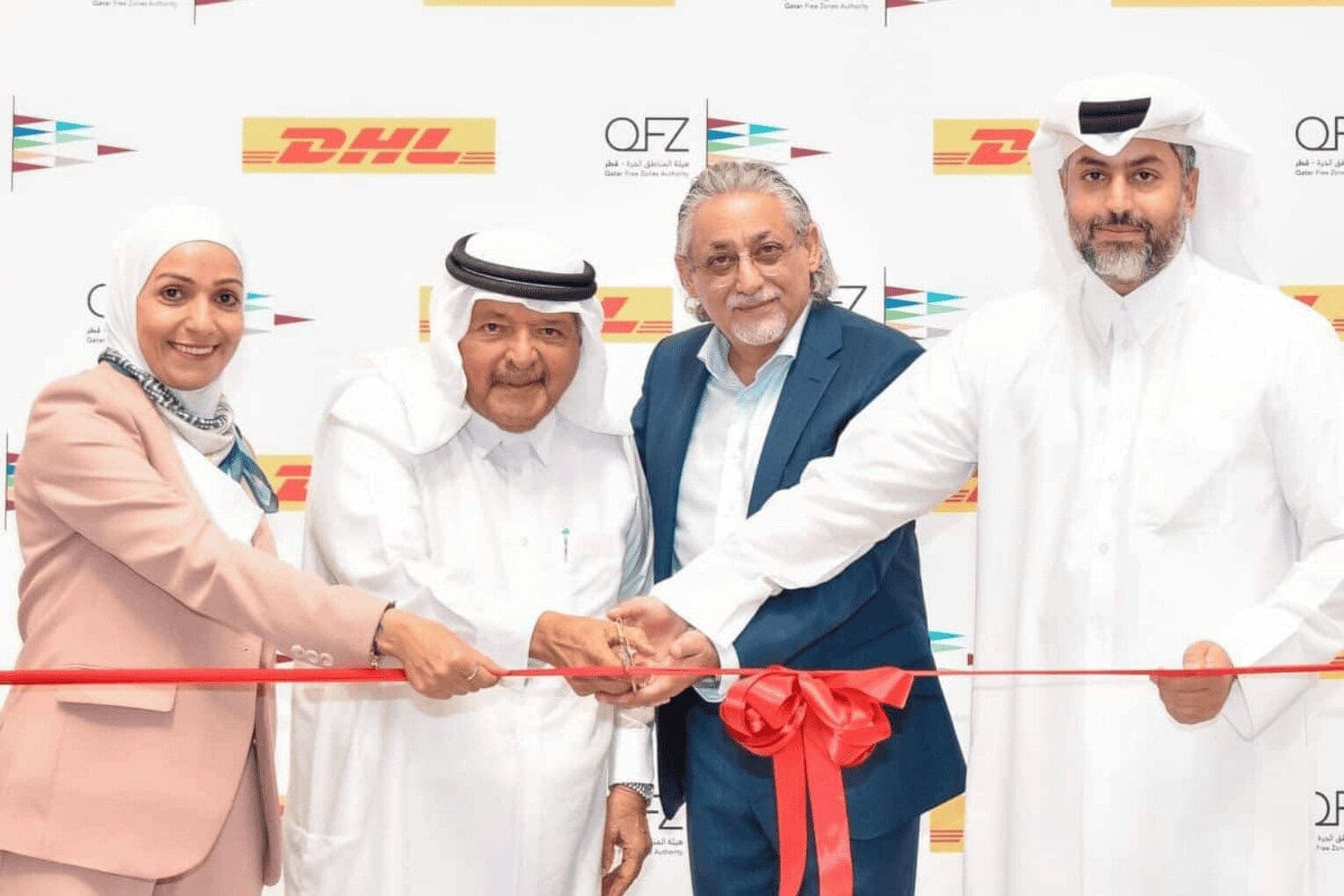
DHL Global Forwarding, the freight division of Deutsche Post DHL Group, has officially opened a new regional logistics facility in Qatar’s Ras Bufontas Free Zone. The launch marks a major milestone for both DHL and the Qatar Free Zones Authority (QFZ), as the Gulf nation continues to position itself as a strategic hub for multimodal logistics across the Middle East, Africa, and Asia.
(logisticsmiddleeast.com)
The 1,200-square-metre facility is located just minutes from Hamad International Airport and offers integrated services including air and ocean freight, warehousing, customs clearance, and last-mile distribution. It is part of DHL’s regional expansion strategy aimed at enhancing speed, efficiency, and capacity for customers operating across the GCC, particularly in high-growth industries such as e-commerce, healthcare, manufacturing, and energy.
A Strategic Expansion
According to the Qatar Free Zones Authority, DHL’s decision to establish operations in Ras Bufontas underscores Qatar’s growing appeal as a logistics gateway for global trade. The zone offers direct connectivity to Hamad International Airport and close proximity to Hamad Port two of the country’s most important logistics assets.
Mohammed bin Hamad bin Faisal Al-Thani, CEO of QFZ, said during the inauguration that the facility reflects Qatar’s strategic shift from being a transit point to becoming a fully integrated logistics hub. “This partnership highlights Qatar’s growing importance as a regional logistics leader,” he said. “The presence of global operators such as DHL enhances our ability to provide agile, efficient, and world-class supply-chain services to international markets.”
Location and Infrastructure Advantages
Ras Bufontas Free Zone is strategically situated next to Hamad International Airport and has been designed to accommodate logistics, technology, and light industrial tenants. Companies operating in the zone benefit from 100 percent foreign ownership, tax exemptions, and streamlined customs procedures.
For DHL, this location offers immediate access to key trade routes between Asia, Africa, and Europe. The company can now consolidate shipments, manage air-sea multimodal transfers, and serve clients across the Gulf region more efficiently. The site is expected to become a central node in DHL’s Gulf network, linking its existing operations in Dubai, Bahrain, and Saudi Arabia.
Strengthening Regional Supply Chains
The new facility comes at a time when global supply chains are being reconfigured to emphasize resilience, speed, and regional diversification. By establishing its regional hub in Qatar, DHL aims to capitalize on the country’s advanced transport infrastructure and pro-business environment.
Samer Kaissi, CEO of DHL Global Forwarding for the Gulf Cluster, said the company’s investment demonstrates long-term confidence in Qatar’s logistics potential. “Our goal is to bring the world closer to Qatar,” he explained. “With this facility, we can enhance our air freight and multimodal capabilities, offering faster and more flexible solutions for our customers across the Middle East and Africa.”
Kaissi added that the Ras Bufontas site will also serve as a model for sustainable operations, incorporating energy-efficient technologies and digital tools for shipment tracking and optimization.
Catalyst for Qatar’s Vision 2030
The opening of the DHL facility aligns with Qatar’s National Vision 2030, which prioritizes economic diversification and innovation-driven growth. The Free Zones Authority plays a key role in this vision by creating specialized industrial ecosystems that attract international investment and high-value industries.
By hosting companies like DHL, the free zones not only stimulate trade but also create employment opportunities for skilled workers in logistics, engineering, and supply chain management. Local experts believe that partnerships with global players can accelerate Qatar’s transition into a knowledge-based economy with strong logistics capabilities.
QFZ officials have indicated that more global logistics firms are in discussions to establish regional operations in the zones, signaling continued investor interest in Qatar’s infrastructure and regulatory advantages.
Features and Services
The new DHL site is designed to handle high-volume, high-velocity cargo. It includes temperature-controlled storage, customs inspection areas, and dedicated zones for pharmaceutical and high-value shipments. The facility will also serve as a consolidation point for air and sea freight, streamlining operations for clients with complex supply-chain needs.
According to Logistics Middle East, DHL plans to use the Qatar hub to serve several industries, including healthcare, aviation, and e-commerce sectors where rapid growth has increased demand for specialized logistics. The company’s digital platforms, such as MyDHLi, will be fully integrated with the Ras Bufontas operations to allow real-time visibility of shipments and advanced analytics for clients.
Regional and Global Impact
Analysts say the DHL-QFZ partnership reflects a broader trend in the Gulf logistics sector, where governments are leveraging free zones and infrastructure investment to attract multinational companies. For Qatar, the move supports its ambition to become a logistics bridge between East and West, complementing its existing strengths in aviation and maritime transport.
The Gulf region has seen a surge in foreign investment in logistics, with DHL, UPS, and FedEx all expanding their regional presence. Qatar’s focus on sustainable logistics, combined with its world-class airport and port infrastructure, makes it a natural competitor to traditional hubs such as Dubai and Bahrain.
Sustainability and Innovation
DHL has emphasized sustainability as a key pillar of its global strategy. The Ras Bufontas facility will utilize solar-powered systems, energy-efficient lighting, and digital process automation to reduce emissions. The company also plans to introduce electric delivery vehicles and sustainable aviation fuel solutions in coordination with local partners over the coming years.
These efforts align with Qatar’s national environmental goals and with DHL’s global target of achieving carbon-neutral operations by 2050. By adopting green technologies early, the company aims to demonstrate how large-scale logistics operations can coexist with environmental stewardship.
Future Prospects
Qatar Free Zones Authority has confirmed that the partnership with DHL is only the beginning of a broader plan to attract logistics, e-commerce, and tech companies. The authority envisions the Ras Bufontas and Umm Alhoul zones as complementary hubs one focused on air freight, the other on maritime logistics creating a fully integrated multimodal ecosystem.
For DHL, the success of this operation will depend on regional demand growth, efficient regulatory coordination, and sustained collaboration with QFZ. Early indicators suggest that Qatar’s strategic location and world-class infrastructure give it a strong advantage as regional trade continues to expand.
Conclusion
The opening of DHL’s regional logistics facility in Qatar’s Ras Bufontas Free Zone represents a milestone for both the company and the country. It strengthens Qatar’s credentials as a global logistics hub and reinforces DHL’s leadership in the region’s fast-evolving supply-chain landscape.
As global trade patterns shift and demand for resilient logistics solutions rises, partnerships like this one highlight how strategic investment and innovation can redefine connectivity across the Middle East and beyond.
Read more on
About the author
WORLDEF Editors
921 stories on WORLDEF since January 2025.
More from WORLDEF Editors →Related
Russian E-Commerce Market Faces Loss of 400 Million Orders and 400 Billion Rubles in Revenue

YouTube and Amazon Form Major E-Commerce Partnership: Videos Turn Into Shopping Channels

IGEXX 2026 to Bring Global E-Commerce Leaders to Istanbul

Dubai Economic Zones Reach 96% Occupancy as Company Numbers and AI Activity Surge
The week in commerce, before your competitors.
1,458 stories since January 2025, distilled into three newsletters. Pick the ones you want.