Erdogan’s Gulf Tour: Ankara’s Renewed Focus on the Gulf’s Strategic Axis
Turkish President Recep Tayyip Erdoğan will embark on a three-day diplomatic tour of Kuwait, Qatar, and Oman between October 21 and 23, signalling Ankara’s renewed attention to deepening the Gulf’s political, economic, and defence partnerships.

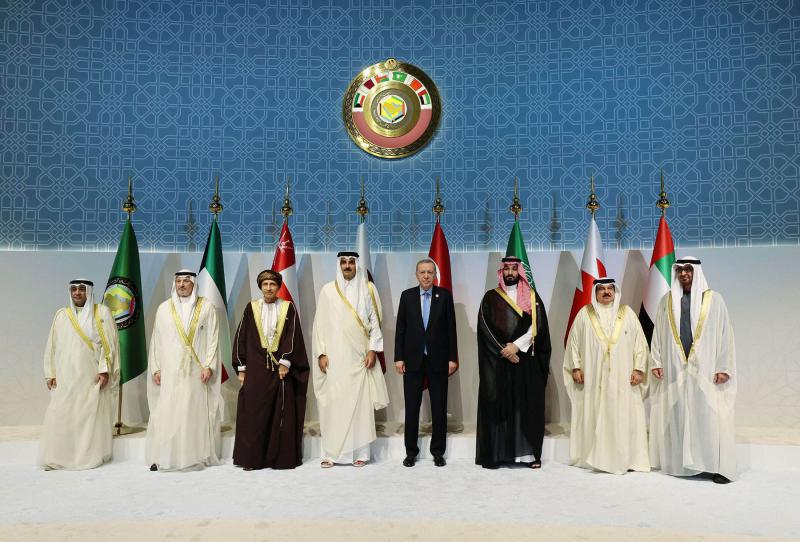
Turkish President Recep Tayyip Erdoğan will embark on a three-day diplomatic tour of Kuwait, Qatar, and Oman between October 21 and 23, signalling Ankara’s renewed attention to deepening the Gulf’s political, economic, and defence partnerships. The visits, confirmed by Presidential Communications Director Burhanettin Duran, will include bilateral meetings, the signing of cooperation agreements, and wide-ranging discussions on regional developments.
Duran noted that Erdoğan’s engagements will “review relations in all aspects and explore new avenues of cooperation,” emphasising trade, energy, investment, and defence industries. The tour follows a series of high-level contacts between Ankara and Gulf capitals since 2023, reflecting Turkey’s strategic effort to consolidate its role as a stabilising partner in the broader Middle East.
Kuwait: A Durable Partnership with Untapped Potential
According to Dr Betül Doğan Akkaş, an expert on Gulf studies at Ankara Yıldırım Beyazıt University, “Erdoğan’s visit to Kuwait symbolises the resilience of Turkey–Kuwait relations, which have quietly maintained continuity even through periods of regional turbulence.”
While Ankara and Kuwait enjoy strong political alignment and defence dialogue, their economic cooperation remains below potential. In 2022, Turkey’s exports accounted for just $975 million of Kuwait’s $64.6 billion import volume, and Turkey’s share in Kuwait’s defence trade rose modestly from 0.26% in 2021 to 0.64% in 2023.
Despite these modest figures, both sides see room for growth. The Kuwait 2035 Development Plan already features several Turkish contractors in infrastructure projects. Turkish Ambassador Tuba Nur Sönmez recently confirmed that bilateral trade reached $700 million in 2023, intending to double it “within the next few years.”
Dr Doğan Akkaş highlights that economic diversification agendas in both countries could create new synergies: “Kuwait is opening to foreign investment and institutional reforms, while Turkey seeks new Gulf markets for construction, defence, and technology exports. Erdoğan’s visit may help transform these shared intentions into measurable outcomes.”
A Broader Regional Architecture
Turkey’s outreach to the Gulf extends well beyond bilateral diplomacy. Ankara is now the first non-GCC country to have established a strategic dialogue mechanism with the Gulf Cooperation Council (GCC) in 2008. In March 2025, Turkey and the GCC agreed to launch negotiations on a Free Trade Agreement, a move Turkish Trade Minister Ömer Bolat said could “create one of the world’s largest free trade zones.” GCC Secretary-General Jasem Al-Budaiwi echoed this optimism, arguing that such frameworks “serve income diversification and sustainable growth objectives” across the region.
This institutional backdrop gives Erdoğan’s October tour additional weight: it positions Turkey as a long-term stakeholder in the Gulf’s economic transformation rather than a transactional partner.
The e-commerce corridor between Türkiye and the Gulf is becoming a serious economic channel. According to the Trade Ministry, Türkiye’s domestic e-commerce volume surged to TRY 1.85 trillion (≈ USD 79.4 billion) in 2023, and e-exports reached USD 6.4 billion in 2024, up 27.4% year-on-year. In the GCC, the UAE’s online retail market hit AED 32.3 billion (USD 8.8 billion) in 2024 and is projected to cross AED 50.6 billion (USD 13.8 billion) by 2029, while Qatar and Kuwait are estimated at USD 4.5 billion and USD 1.85 billion in 2025, respectively. These dynamics suggest clear headroom for Türkiye–GCC cross-border e-commerce, especially in categories like fashion, beauty, home, and consumer electronics, where Turkish brands already have brand recognition in the Gulf.
Qatar and Oman: Sustaining the Momentum
In Doha, Erdoğan is expected to meet Emir Sheikh Tamim bin Hamad Al Thani to reaffirm what remains Ankara’s most dynamic partnership in the region. The Turkey–Qatar axis has matured into a multi-dimensional alliance from defence cooperation to investment. Turkish officials suggest new memoranda on technology investment, food security, and supply-chain integration are on the table.
The final leg in Muscat will focus on Oman’s balancing diplomacy and its interest in infrastructure and logistics connectivity. Omani firms are exploring participation in Turkey’s Development Road Project, launched earlier this year with Iraq, Qatar, and the UAE, a project Erdoğan has described as “the new artery of the Gulf’s northward trade.”
Strategic Equilibrium in the Gulf
Dr Doğan Akkaş underlines that “in a region where intra-Gulf competition and shifting threat perceptions dominate, Turkey’s strategy is to maintain balanced relations with all monarchies while deepening defence and economic ties.” She links this to the April 2024 Iraq visit, when Ankara, Doha, Abu Dhabi, and Baghdad jointly endorsed the Development Road corridor, a sign that Turkey’s Gulf policy increasingly rests on connectivity diplomacy rather than ideology.
As the Gulf economies accelerate diversification under Vision 2030 and Vision 2035 programs, Ankara’s hybrid role, as a trading partner and an infrastructure enabler, gains significance. Each stop on Erdoğan’s October itinerary reinforces that trajectory: Kuwait as a test of durable partnership, Qatar as a strategic anchor, and Oman as a bridge to new trade geographies.
Erdoğan’s upcoming Gulf tour is not merely a sequence of state visits; it represents a strategic recalibration of Turkey’s place within the Gulf’s emerging order. As economic diplomacy merges with defence and connectivity projects, the Turkey-GCC relationship evolves from episodic engagement to institutionalised cooperation.
For both Ankara and its Gulf partners, the success of this new phase will be measured less by photo opportunities and more by how swiftly memoranda translate into projects, pipelines, and shared prosperity.